Last updated: March 27, 2026
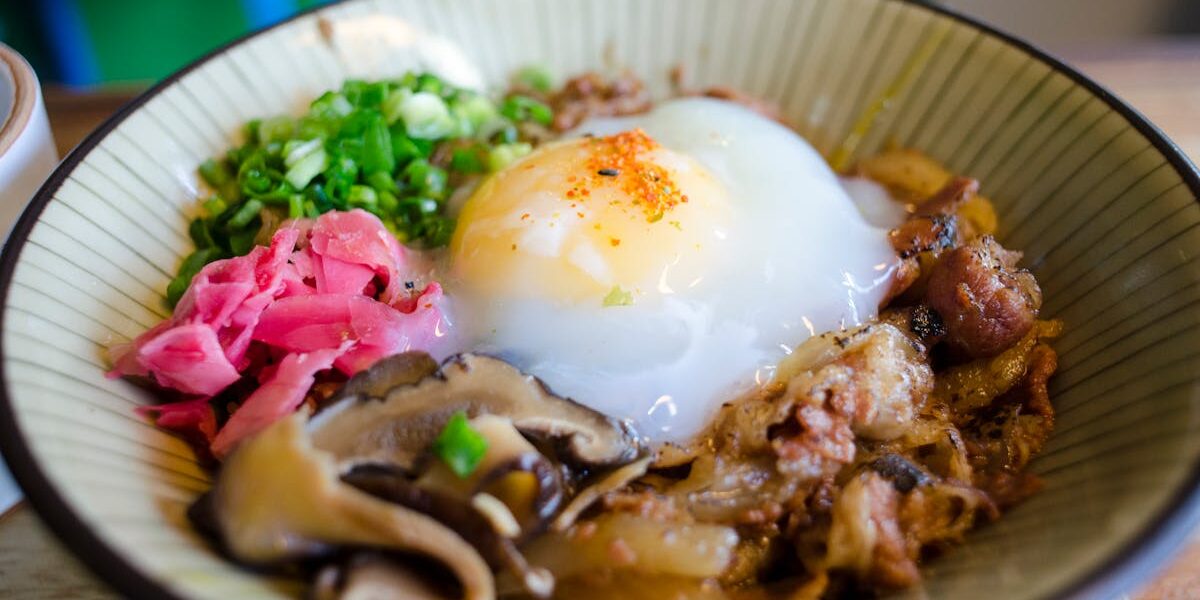
Crack open an onsen tamago and you get a quiet kind of magic: the white is barely set, the texture of warm silken tofu, while the yolk is custardy, glossy, and just thick enough to coat the back of a spoon. It is the egg you find draped over a steaming bowl of shoyu ramen, sliding off a mound of fluffy rice for breakfast, or pooling into a dashi-soaked broth in a small lacquer cup. The technique comes from Japan’s onsen towns, where eggs were lowered into volcanic hot springs and pulled out perfectly tender. You do not need a hot spring at home, just a thermometer, a few liters of water, and a little patience.
This guide walks through everything you need to make onsen tamago consistently in a home kitchen: the science behind why the yolk and white reverse their cooking order, the exact temperature window, the equipment options from sous vide circulators to insulated coolers, and the most common mistakes that produce a rubbery white or a runny mess. By the end you will know how to hit the sweet spot every time, how to scale from one egg to a dozen, and how to serve them in classic dishes from itamae kitchens to your own breakfast table.
What Is Onsen Tamago?
Onsen tamago (温泉卵) literally means ”hot spring egg,” and the dish is one of the most elegant examples of low-temperature cooking in Japanese cuisine. Unlike a poached, soft-boiled, or hard-boiled egg, an onsen tamago is cooked in its shell at a temperature low enough that the egg white never fully sets, while the yolk slowly thickens into a custardy, gel-like texture. The result is an egg you can crack into a small bowl where the white pools like warm cream around a soft, intact yolk.
The dish originated in Japanese hot spring resorts, where natural mineral springs sit in a remarkably consistent temperature range around 65 to 70 degrees Celsius. Locals discovered that eggs left in mesh bags inside the springs for forty minutes to an hour came out with this unusual texture, neither raw nor fully cooked. Today, the technique is replicated worldwide using sous vide circulators, insulated containers, and stovetop methods, and it has become a signature touch in ramen shops, kaiseki restaurants, and modern brunch menus alike.
The Science: Why the Yolk Sets Before the White
Onsen tamago is one of the rare dishes where the yolk cooks before the white, the opposite of what happens in a regular poached or boiled egg. The reason comes down to the different proteins inside the egg and the temperatures at which they coagulate. Egg yolks contain proteins that begin to thicken around 64 degrees Celsius and become firm around 70 degrees Celsius. Egg whites are made of multiple proteins with different setting points: the largest fraction, ovotransferrin, sets at around 61 degrees Celsius, while ovalbumin, the dominant protein in the white, does not fully coagulate until 80 degrees Celsius.
When you cook an egg in water held at 65 to 68 degrees Celsius, the yolk thickens steadily into a custard while the white stays loose and jelly-like because most of its proteins never reach the temperature they need to firm up. Boiling water, by contrast, races past every setting point and produces a hard white before the yolk has time to fully cook through. Mastering onsen tamago is essentially about parking the egg in that narrow temperature window long enough for the yolk to thicken without ever pushing the white over the edge.
Equipment You Need
You do not need a fancy setup to make excellent onsen tamago, but you do need to control temperature accurately. The single most important piece of equipment is an instant-read thermometer that can register between 60 and 75 degrees Celsius with at least one degree of precision. Beyond that, the choice of vessel depends on how many eggs you want to make and how much active attention you want to give the process.
- Sous vide immersion circulator: The most reliable tool. Holds water at a precise temperature indefinitely, so you can batch-cook a dozen eggs at once.
- Insulated cooler or thermal flask: The classic home workaround. A small insulated container holds heat well enough for forty-five minutes of passive cooking.
- Heavy stockpot with a lid: Works with the stovetop method, where you bring water to temperature, add eggs, cover, and walk away. Heavier pots hold heat better.
- Digital thermometer: Essential. Eyeballing the bubbles is not accurate enough at this temperature window.
- Slotted spoon or skimmer: For lowering eggs into water without cracking the shells.
- Small bowls or sake cups: Traditional serving vessels that hold a single egg with dashi sauce.
- Egg pricker or thumbtack: Optional, but useful for releasing pressure and reducing the chance of cracking.
The Ideal Temperature and Time Range
Onsen tamago lives within a narrow but forgiving range. The classic target is 65 to 68 degrees Celsius (149 to 154 degrees Fahrenheit) held for 40 to 60 minutes. Within that range, small changes in temperature and time produce noticeably different textures. The chart below maps the spectrum so you can dial in the exact result you want.
| Temperature | Time | Yolk Texture | White Texture | Best Use |
|---|---|---|---|---|
| 63 C (145 F) | 45 min | Pourable, glossy | Very loose, milky | Sauce drizzle, tare |
| 64 C (147 F) | 45 min | Loose custard | Soft, barely set edges | Over hot rice |
| 65 C (149 F) | 45 min | Soft custard | Jelly-like, partially set | Classic onsen tamago |
| 66 C (151 F) | 45 min | Set custard | Soft set, slight body | Ramen topping |
| 67 C (153 F) | 45 min | Firmer custard | Mostly set, still tender | Salad garnish |
| 68 C (154 F) | 50 min | Firm but creamy | Set white, milky pool | Slicing, plating |
| 70 C (158 F) | 15 min | Thick, scoopable | Just set, fragile | Quick stovetop method |
Most home cooks settle on 65 degrees Celsius for 45 minutes as their default. The yolk is luxuriously custardy, the white is softly set with a milky perimeter, and the egg holds together well enough to plate cleanly. If you prefer a runnier yolk you can drop to 64 degrees Celsius; if you want a sliceable egg, push to 68 degrees Celsius for slightly longer.
Step-by-Step: Sous Vide Method
If you own an immersion circulator, this is the foolproof route. The water stays at a precise temperature, so the eggs cook evenly regardless of batch size and the timing is forgiving by several minutes. This method is what most ramen shops and modern Japanese kitchens use to produce dozens of perfect eggs per service.
- Set up your bath. Fill a deep pot or sous vide container with enough water to fully submerge your eggs by at least two inches. Clip on your circulator and set it to 65 degrees Celsius (149 degrees Fahrenheit).
- Bring eggs to room temperature. Take eggs out of the fridge thirty minutes before cooking. Cold eggs from the fridge will lower the water temperature briefly when added.
- Lower eggs gently. Use a slotted spoon to place eggs in the water once it has reached temperature. Lower slowly to avoid cracking the shells against the bottom of the pot.
- Set a timer. Cook for 45 minutes at 65 C. For a softer yolk, drop to 64 C for the same time. For a firmer set, increase to 68 C.
- Pull and serve immediately, or shock briefly in cold water if you want to hold them. Crack into a small bowl, pour over dashi sauce, and serve warm.
One advantage of the sous vide approach is that eggs can sit in the bath comfortably for up to 90 minutes without overcooking, since the protein behavior plateaus near these temperatures. This makes it easy to prep eggs for a brunch service or party.
Step-by-Step: Insulated Cooler Method
Before sous vide circulators became affordable, Japanese home cooks used insulated containers to hold water at temperature for the time required. This method still works beautifully and produces results almost identical to sous vide if you start with the right ratio of water to eggs.
- Boil 1 liter of water and let it sit for thirty seconds off the heat. Add 200 milliliters of cold tap water. This brings the temperature to roughly 75 degrees Celsius.
- Pour the water into a thermos or small insulated cooler that has been pre-warmed by rinsing with hot tap water. The pre-warming prevents the container from sapping heat from your bath.
- Add four to six room-temperature eggs. The temperature will drop into the target zone of 65 to 68 degrees Celsius as the eggs absorb heat.
- Seal the container and let it sit for 30 to 35 minutes on the counter. Do not open the lid during this time, as that releases heat.
- Remove eggs with tongs and serve immediately, or run briefly under cool water to stop the cooking.
The ratio of water to eggs matters here: too few eggs in too much water means the water stays hot and the whites overset, while too many eggs in too little water drags the temperature down too far and the yolks come out underdone. Four to six large eggs per 1.2 liters of water is the sweet spot for most home thermoses.
Step-by-Step: Stovetop Method
If you have neither a circulator nor an insulated container, you can still produce excellent onsen tamago using a heavy stockpot, a thermometer, and a little vigilance. This method requires more active attention but works well for one to four eggs.
- Heat 2 liters of water in a heavy stockpot until it reaches 75 degrees Celsius.
- Add 200 milliliters of cold water to bring the temperature down to about 68 degrees Celsius.
- Slip in cold eggs straight from the fridge using a slotted spoon. The cold eggs will pull the bath down to roughly 65 degrees Celsius.
- Cover the pot with a tight lid and remove from the heat. Let it sit on a cool surface for 20 minutes.
- Check the temperature halfway through. If the water has dropped below 63 degrees Celsius, turn the burner on the lowest setting for one minute and turn it off again.
- After 20 minutes, lift eggs out and crack one open to check doneness. If it needs more time, return it to the warm water for another five minutes.
This method works because a heavy pot, tightly covered, retains heat well over the cooking window. The risk is that ambient temperature, pot material, and lid fit all affect heat loss. A thermometer is non-negotiable for this approach.
Choosing the Right Eggs
The egg matters more than you might think. Onsen tamago shows off the yolk in a way that scrambling, frying, or hard-boiling never will, so the quality of the egg becomes the headline of the dish. Look for the freshest eggs you can find, ideally within a week of being laid. Fresh eggs have firmer whites and rounder, more upright yolks that hold their shape when cracked from the shell.
Large or extra-large eggs of around 55 to 65 grams are the standard for the timings given in this guide. If you only have small or jumbo eggs, you will need to adjust: small eggs reach doneness faster, so check at the 35-minute mark, while jumbo eggs may need up to an hour. Brown or white shells make no difference, but pasture-raised eggs from chickens with varied diets tend to have richer, deeper-colored yolks that look stunning in a clear dashi pool.
If you can find Japanese-style eggs labeled for raw consumption, such as those from producers with strict salmonella protocols, they make especially fine onsen tamago since the white stays slightly underdone. Pasteurized eggs work well too, though their whites can be a touch looser due to mild protein denaturation during pasteurization.
The Classic Dashi Sauce
Onsen tamago is traditionally served with a small drizzle of warm, lightly seasoned dashi-based sauce that pools at the bottom of the bowl. The sauce is salty, sweet, and savory enough to balance the rich yolk without overwhelming it. You can make a batch in five minutes and keep it in the fridge for a week.
Combine all ingredients in a small saucepan, bring to a gentle simmer, then remove from heat and let cool to warm. Pour two tablespoons over each egg in its serving bowl. Garnish with thinly sliced scallions, grated daikon, or a sprinkle of bonito flakes for extra umami.
How to Crack and Plate an Onsen Tamago
Cracking an onsen tamago is different from cracking a regular egg because the white never fully sets. If you crack it like a fried egg you will end up with the loose white running everywhere and the yolk slipping out the side. The right move is to crack into a separate bowl first.
- Tap the wide end of the egg on a hard surface to crack the shell. Onsen tamago shells crack more cleanly than raw shells because the inner membrane has firmed slightly.
- Hold the egg over a small bowl and pull the shell apart with your thumbs. The contents will slide out in a loose pour, with the yolk surrounded by a soft, milky white.
- Tilt the bowl gently to drain off the most watery part of the white if you prefer a cleaner presentation. Some chefs save this thin liquid for soup garnishes.
- Slide the egg into your serving cup over rice, ramen, or a pool of dashi sauce. Aim to keep the yolk intact and centered.
- Garnish lightly and serve immediately while the egg is still warm.
Common Mistakes Table
Most onsen tamago failures fall into a small set of categories. The table below diagnoses the most frequent problems and points to a clear fix.
| Mistake | What Went Wrong | How to Fix |
|---|---|---|
| White is fully set and rubbery | Water was above 70 C or held too long at upper end | Drop to 65 C, time accurately with a thermometer |
| Yolk is liquid and pourable | Temperature too low or cooking time too short | Hold for full 45 minutes at 65 C minimum |
| White is completely raw and watery | Water never reached 63 C, or insulation was too poor | Pre-warm thermos, use heavier pot, verify with thermometer |
| Eggs crack during cooking | Cold eggs hit hot water, or eggs banged into pot | Bring eggs to room temp, lower with slotted spoon |
| Inconsistent results across eggs | Uneven heat in pot, eggs touching cold bottom | Use sous vide circulator or stir water before adding |
| Yolk breaks when plating | Cracked egg directly into final bowl | Crack into a separate small bowl first, then slide over |
| Egg tastes flat | No sauce or seasoning | Always serve with dashi-based tare or light salt |
| White peels off with shell | Eggs were too fresh and stuck to membrane | Use eggs 5 to 10 days old, not within 48 hours of laying |
| Texture turns watery after sitting | Egg released liquid after cracking | Drain excess liquid before plating, serve immediately |
| Water cools too fast in insulated method | Container not pre-warmed, ratio off | Rinse thermos with boiling water first, use 4 to 6 eggs |
Practice Exercises for Building Skill
Onsen tamago looks simple but rewards practice. The cook who can pull off a perfect egg on demand has internalized how their specific pot, thermometer, and water source behave. These exercises will accelerate that learning.
- The temperature mapping drill. Cook three eggs at 64 C, three at 66 C, and three at 68 C for 45 minutes each, all using the same method. Crack each one and compare the textures side by side. This builds intuition for how the protein behavior changes with each degree.
- The time mapping drill. Hold the temperature at 65 C and cook eggs for 30, 45, and 60 minutes. See how the yolk thickens and the white settles as time progresses.
- The insulation test. Try the same recipe in a vacuum-insulated thermos, a foam cooler, and a covered Dutch oven. Check the water temperature at the start and end. This tells you how well each vessel holds heat in your kitchen.
- The egg-age comparison. Buy a carton of eggs and cook one immediately, then cook another one a week later using the same exact method. The week-old egg will release more cleanly from the shell because the inner membrane has loosened.
- The blind plating challenge. Make four onsen tamago and crack them at one-minute intervals. Plate them and have someone else taste them in random order, identifying which is which. This trains your eye for plating consistency.
Advanced Tips from Ramen Shops and Kaiseki Kitchens
Once you have the basic technique down, a few advanced tricks separate the home cook from the professional. These are the small adjustments that ramen masters and kaiseki chefs use to make every egg look and taste deliberate.
- Pre-shock with a quick boil. Some chefs dip the eggs in boiling water for ten seconds before transferring them to the 65 C bath. The brief shock partially sets the outer layer of the white, giving a cleaner pour when cracked. Stop after exactly ten seconds, no more.
- Marinate after cooking. Shell the eggs and steep them in a soy and mirin tare for twenty minutes. The result is a hybrid between onsen tamago and ajitsuke tamago, with a subtly seasoned yolk and a flavored white perimeter. Excellent on ramen.
- Hold for service in warm water. If you cook in advance, keep finished eggs in 55 C water (warm but not cooking) for up to an hour before serving. They will not overcook and will arrive at the table warm.
- Use Japanese A-grade eggs if you can find them. The yolk membranes are firmer, which holds the yolk shape better when cracked.
- Adjust for altitude. Above 1,500 meters, water boils at a lower temperature, but the onsen tamago range is well below boiling, so altitude itself does not change the recipe. Air pressure does affect insulation slightly, so you may need to add five minutes at high elevation when using the cooler method.
- Try the double-temperature method. Cook at 64 C for 30 minutes, then raise the bath to 70 C for the final 8 minutes. This sets the white more cleanly while preserving a soft yolk, a technique popularized by modernist Japanese chefs.
- Salt the water lightly. A teaspoon of salt per liter of cooking water helps the egg release from the shell more cleanly if any cracks form. It does not flavor the egg.
Serving Ideas and Recipe Examples
Onsen tamago is rarely the star of a meal on its own. Its job is to enrich something else: rice, broth, vegetables, noodles. Below are several classic and modern ways to use the egg in a complete dish.
Onsen Tamago Over Rice (Tamago Kake Gohan Style)
The simplest preparation is also one of the most beloved in Japan. Scoop a generous mound of freshly steamed Japanese short-grain rice into a bowl, make a small well in the center, and crack the onsen tamago into the well. Drizzle with a tablespoon of dashi soy sauce, scatter with thinly sliced scallions and a sprinkle of furikake, and stir gently before eating. The warm yolk coats every grain of rice with a creamy, savory richness.
Onsen Tamago Ramen Topping
Slide a freshly cooked onsen tamago over a steaming bowl of shoyu ramen or miso ramen and let the yolk break into the broth as you eat. The custardy yolk enriches the soup, while the soft white floats in shimmering ribbons. This is one of the most photogenic uses of the technique and a fixture in modern ramen shops from Tokyo to New York. For best results, time the egg so it lands on the noodles right before serving.
Onsen Tamago with Cold Soba
In summer, serve a chilled portion of buckwheat soba noodles in tsuyu dipping sauce alongside a warm onsen tamago. The contrast between the cool, nutty noodles and the warm, rich egg is one of the most refreshing Japanese summer dishes. Stir the egg into the tsuyu before dipping the noodles for extra body and umami.
Onsen Tamago with Steamed Vegetables and Ponzu
For a lighter dish, arrange blanched seasonal vegetables such as asparagus, spinach, or daikon strips in a shallow bowl. Place an onsen tamago in the center and dress with ponzu. The citrus-soy sauce cuts the richness of the yolk and brightens the whole plate.
Donburi with Onsen Tamago Crown
Any rice bowl is improved by a slow-poached egg on top. Try it on top of teriyaki chicken, sliced grilled steak with garlic soy sauce, sauteed mushrooms, or a vegetable curry. The yolk doubles as a built-in sauce that ties everything together. Crack the egg directly over the assembled bowl just before serving.
Storage, Make-Ahead, and Reheating
Onsen tamago is best served the moment it comes out of the water, but you can hold cooked eggs successfully if you understand a few principles. Once cooked, the eggs can be transferred to an ice bath to halt cooking, then refrigerated in their shells for up to three days. The texture firms slightly during storage but rebounds when reheated.
To reheat, place cold eggs in still-shell into 60 C water for five to seven minutes. Do not microwave them, since uneven heating will scramble the white and overcook the yolk. For batch service, hold finished eggs in a 55 C water bath, which is warm enough to keep them at serving temperature but cool enough that no further cooking occurs.
If you find yourself with leftover cooked onsen tamago at the end of a meal, you can mash them with mayonnaise and soy sauce for an exceptional Japanese-style egg salad sandwich filling. The custardy texture means you barely need to do any work to get a creamy result.
Onsen Tamago vs Other Japanese Eggs
Japanese cuisine has more techniques for cooking eggs than perhaps any other tradition. Knowing how onsen tamago differs from its cousins helps you choose the right egg for the right dish.
| Egg Style | Method | Texture | Typical Use |
|---|---|---|---|
| Onsen tamago | Slow-poached in shell at 65 C | Custard yolk, jelly white | Rice bowls, ramen, dashi sauce |
| Ajitsuke tamago | Soft-boiled then marinated in soy tare | Jammy yolk, set white | Ramen topping |
| Tamago kake gohan | Raw beaten egg over hot rice | Glossy, lightly thickened | Breakfast bowl |
| Tamagoyaki | Rolled omelet with dashi | Layered, sliceable | Bento, sushi, breakfast |
| Chawanmushi | Steamed egg custard with dashi | Silky pudding | Kaiseki, appetizer course |
| Hanjuku tamago | Boiled soft for 6 to 7 minutes | Set white, runny yolk | Snack, side dish |
The closest cousin is tamagoyaki, the rolled omelet, which uses similar dashi seasoning but a completely different technique. Ajitsuke tamago is the marinated soft-boiled egg you find in ramen, made by a quick boil rather than a slow poach. Chawanmushi is a savory steamed custard with dashi and additions like shrimp or chicken.
Health and Nutrition Notes
One large onsen tamago contains roughly 70 calories, 6 grams of protein, 5 grams of fat, and less than 1 gram of carbohydrate. Because the egg is cooked slowly at a low temperature, more of the heat-sensitive nutrients such as B vitamins and certain antioxidants are preserved compared to a hard-boiled egg. The yolk in particular retains more of its choline and lutein content when cooked gently.
That said, there is a food safety conversation to have. Salmonella is destroyed at 60 degrees Celsius held for several minutes, so a 65 C bath for 45 minutes more than satisfies the safety margin. The USDA pasteurization equivalent is well within this window. Still, if you are pregnant, immunocompromised, or serving young children or elderly diners, use pasteurized eggs for full peace of mind. Pasteurized eggs cook identically with this technique.
Scaling the Technique for a Crowd
One of the most elegant features of onsen tamago is that it scales gracefully. The same 65 C bath that cooks one egg also cooks twenty. The only requirements are enough water to maintain temperature stability and enough room for the eggs to sit without touching each other or stacking.
- Up to 6 eggs: Any of the three methods work. Insulated thermos is great for this volume.
- 6 to 12 eggs: Use a sous vide circulator with at least 6 liters of water, or two thermoses.
- 12 to 24 eggs: Sous vide setup with at least 10 liters and a larger container. Add eggs in two batches if needed.
- 24 or more eggs: Restaurant-style approach with a large water bath and a temperature controller. Time the cook so eggs come out as service begins.
When cooking large batches, always preheat the water fully before adding eggs, and add eggs in small groups to avoid dropping the water temperature too far at once. Stir gently with a long spoon every fifteen minutes to ensure even circulation. A larger volume of water gives you more thermal mass and forgiveness, which is why professional kitchens prefer big baths.
Frequently Asked Questions
Can I make onsen tamago in a rice cooker?
Some rice cookers have a ”keep warm” function that holds water around 65 to 75 degrees Celsius, which is in the right ballpark. The challenge is that most rice cookers run hotter than 70 C on keep-warm, which will overcook the white. Test your specific cooker with a thermometer first. If it holds at 65 to 68 C, you can use it like an insulated cooker by adding hot water and eggs and pressing keep warm for 30 to 40 minutes.
Why is my onsen tamago white still raw?
The white never fully sets in an onsen tamago, that is the defining feature. It should look like a soft jelly with a milky liquid pool around the firmer perimeter, not like a cooked poached egg. If the white seems completely watery and clear with no body at all, your water temperature was too low. Aim for 65 to 68 C minimum and hold for the full time.
How long do onsen tamago last in the fridge?
Cooked onsen tamago in the shell will keep in the refrigerator for up to three days. Cool them quickly in an ice bath before refrigerating to halt residual cooking. Reheat gently in 60 C water for five minutes before serving.
Can I freeze onsen tamago?
No, freezing destroys the custard texture of the yolk and turns the white into something rubbery and unappetizing once thawed. Cook only what you will eat within a few days.
What is the difference between onsen tamago and sous vide eggs?
They are essentially the same technique. Onsen tamago is the traditional Japanese version that predates sous vide circulators by centuries, using hot spring water as the temperature-controlled bath. A modern sous vide egg cooked at 65 C for 45 minutes is functionally identical to a classic onsen tamago.
Are onsen tamago safe to eat?
Yes. Holding eggs at 65 C for 45 minutes provides more than enough heat exposure to kill salmonella and other pathogens. The USDA considers this pasteurization equivalent. If you are immunocompromised or pregnant, use pasteurized eggs for an extra margin of safety.
Why are my onsen tamago all different textures?
Uneven cooking usually points to one of three issues: eggs of different sizes, uneven water temperature in your pot, or eggs touching cold spots like the bottom of the pan. Use eggs of uniform size, stir the water once before adding eggs, and consider a circulator for the most consistent results.
Can I use duck eggs or quail eggs?
Duck eggs work beautifully but need slightly more time, around 55 minutes at 65 C, due to their larger yolk and thicker white. Quail eggs are too small for the technique to be practical; their tiny mass means they overcook in just five minutes and are hard to time accurately. Stick with chicken eggs for best results.
Do I need to peel onsen tamago?
No. You crack onsen tamago directly into a bowl rather than peel them, because the white is too soft to hold its shape if you removed the shell. The shell is the structural support during cooking and serving.
What if my water temperature drifts during cooking?
Small drifts within plus or minus 1 C are fine. If your water drops below 62 C for an extended period, the white will not set at all and the yolk may stay too loose. If it climbs above 70 C, the white will firm up too much. Use a heavy pot, a tight lid, and check the temperature every 15 minutes if you are not using a circulator.
Final Notes on the Onsen Tamago Mindset
The deeper lesson of onsen tamago is that low-temperature cooking is a different kind of skill than fast, high-heat techniques like stir-frying or grilling. There is no sear, no caramelization, no aroma drama. Instead the cook controls a quiet, gentle process where small changes in temperature produce big changes in texture. The discipline is patience, measurement, and trust in the science of protein coagulation.
Once you have mastered the basic egg, you can apply the same mindset to other slow-poached proteins and gentle Japanese techniques. The same temperature window that works for eggs also works for delicate seafood like salmon belly or scallops, just for shorter times. A pot of water held at 65 C is a quiet, versatile tool. Onsen tamago is a doorway into that whole approach to cooking. Crack one open over a bowl of hot rice or steaming broth and you will understand immediately why this technique has lasted as long as the hot springs that gave it its name.

Mei Lin Chen
Mei Lin Chen is an Asian food writer and recipe developer. Melbourne-raised and London-based, she has spent over a decade exploring the rice paddies, hawker stalls, and home kitchens of South-East and East Asia. Her recipes balance traditional technique with everyday practicality.