Last updated: March 06, 2026
Stir-frying is the single most important cooking technique in Asian cuisine. It is fast, versatile, and — once you understand the fundamentals — remarkably easy to do at home. From Chinese chow fun to Thai pad kra pao, from Korean japchae to Indonesian nasi goreng, stir-frying is the thread that connects kitchens across the continent. Yet most home cooks in the West get it wrong: soggy vegetables, pale meat, and a sauce that pools at the bottom of the plate instead of glazing every ingredient.
This guide will change that. We will walk you through everything — the science of high-heat cooking, how to choose and prepare your pan, how to organize your mise en place, and how to execute each stage of the stir-fry with confidence. By the end, you will understand not just how to stir fry, but why each step matters, so you can improvise your own stir-fries without a recipe.
What Is Stir-Frying? A Brief Overview
Stir-frying (炒, chǎo in Mandarin) is a high-heat, quick-cooking technique in which small, uniformly cut ingredients are tossed rapidly in a lightly oiled pan. The method originated in China during the Han Dynasty, roughly 2,000 years ago, as a practical response to fuel scarcity: by cutting food into small pieces and cooking over intense flame, families could prepare meals using minimal firewood.
What distinguishes stir-frying from Western sautéing is speed and temperature. A proper stir-fry happens at temperatures between 400°F and 700°F (200°C–370°C), with cooking times measured in seconds rather than minutes. This extreme heat creates the Maillard reaction on the surface of proteins and vegetables, producing complex savory flavors while keeping interiors juicy and crisp.
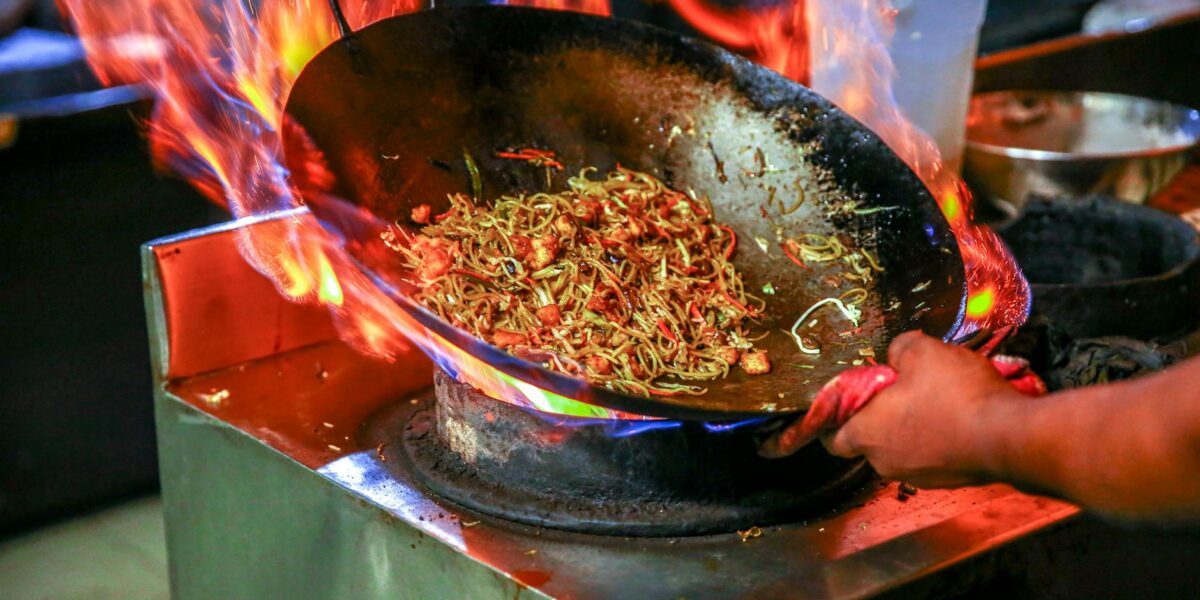
In Chinese cooking, this characteristic smoky, charred flavor is called wok hei — literally, ”the breath of the wok.” It is the hallmark of a well-executed stir-fry and the reason restaurant dishes taste different from what most people make at home.
The Science Behind Stir-Frying
Understanding the science makes you a better stir-fry cook. Three processes happen simultaneously during a stir-fry:
1. The Maillard Reaction. When proteins and sugars are exposed to temperatures above 280°F (140°C), they undergo a cascade of chemical reactions that produce hundreds of flavor compounds. This is what gives seared meat its savory depth. The reaction only happens on dry surfaces, which is why removing excess moisture from your ingredients is critical.
2. Caramelization. Natural sugars in vegetables begin to caramelize at around 320°F (160°C), creating sweetness and color. This is why stir-fried bok choy or snap peas develop slightly charred, sweet edges.
3. Steam Management. Every ingredient releases moisture when heated. In a stir-fry, the goal is to evaporate this moisture almost instantly. If your pan is not hot enough or you have added too much food, steam accumulates, the temperature drops, and your ingredients braise instead of fry. This is the number one reason home stir-fries fail.
The takeaway: heat management and moisture control are the twin pillars of stir-frying. Every piece of advice in this guide ultimately serves one or both of these goals.
Essential Equipment for Stir-Frying
You do not need a commercial kitchen to stir-fry well, but the right tools make a significant difference. Here is what you need and why each item matters.
The Wok
A 14-inch round-bottomed carbon steel wok is the gold standard. Carbon steel is lightweight, heats quickly, and develops a natural nonstick patina over time (learn how in our guide to seasoning a wok). Round-bottomed woks work best on gas burners with a wok ring. If you have an electric or induction stove, use a flat-bottomed wok or a heavy 12-inch carbon steel skillet.
Not sure which one to buy? Our best wok buying guide covers every option.
The Spatula
A Chinese wok spatula (锅铲, guō chǎn) has a wide, slightly curved blade that matches the wok’s contour. It lets you scoop, flip, and press ingredients against the hot metal. A long-handled metal spatula works as a substitute. Avoid silicone or plastic — they cannot handle the heat.
Other Useful Tools
- Spider strainer or slotted spoon — for blanching and draining ingredients
- Prep bowls — small bowls for organized mise en place
- Sharp chef’s knife or Chinese cleaver — for uniform cutting
- Paper towels — for drying proteins and vegetables
- Small ladle — for adding sauce quickly
How to Stir Fry: Step-by-Step Technique
This is the core method. Master these steps and you can stir-fry anything — chicken, beef, shrimp, tofu, vegetables, noodles, or rice. Each step has a specific purpose; skipping any of them degrades the final result.
Step 1: Prepare Your Mise en Place
Stir-frying is too fast for mid-cook preparation. Everything must be sliced, measured, and arranged before the burner is turned on.
- Cut uniformly. All pieces should be roughly the same size — about ¼ inch thick for proteins and ½ inch for vegetables. This ensures even cooking.
- Separate by cook time. Group ingredients by how long they take to cook. Dense vegetables like carrots go in first; leafy greens like bok choy go in last.
- Pre-mix your sauce. Combine soy sauce, mirin, sesame oil, cornstarch slurry, and any other sauce ingredients in a small bowl. Stir it right before adding — cornstarch settles.
- Marinate your protein. A quick 15- to 30-minute marinade of soy sauce, rice wine, cornstarch, and a drizzle of oil tenderizes meat and helps it brown. For silky-smooth results, use the velveting technique.
- Dry everything. Pat proteins and vegetables with paper towels. Surface moisture is the enemy of a good sear.
Step 2: Heat the Wok
Place the empty wok over the highest heat your burner can produce. Wait until the metal changes color slightly — you should see a faint blue-gray haze and a wisp of smoke. On a gas stove, this takes 1 to 2 minutes. On electric, it may take 3 to 4 minutes. A properly preheated wok prevents sticking and initiates the Maillard reaction immediately.
Test readiness by flicking a few drops of water into the wok. If the water evaporates on contact, you are ready.
Step 3: Add Oil
Add 1 to 2 tablespoons of a high-smoke-point oil: peanut oil, vegetable oil, or avocado oil. Swirl the oil around the wok’s sides to coat the surface. The oil should shimmer immediately and begin to smoke within 5 to 10 seconds. If it does not shimmer instantly, the wok was not hot enough — let it heat more before continuing.
Do not use sesame oil for stir-frying — its smoke point is too low. Save it as a finishing oil.
Step 4: Cook Aromatics
Add minced garlic, ginger, and scallion whites. Stir constantly for 10 to 15 seconds — just until fragrant. Aromatics burn within seconds at these temperatures, so work fast. Some cooks prefer to add aromatics after the protein; either approach works, but adding them first infuses the oil with flavor.
Step 5: Sear the Protein
Push the aromatics to the side and add your protein in a single layer. Do not move it for 30 to 45 seconds — let it develop a sear. Then stir and toss for another 60 to 90 seconds until it is about 80 percent cooked. The protein will finish cooking when it is returned to the wok later.
Critical rule: never crowd the wok. For a standard 14-inch wok on a home burner, cook no more than 8 ounces (225g) of protein at a time. If you are cooking for four people, do two batches. Overcrowding drops the wok’s temperature and steams the meat instead of searing it.
Transfer the protein to a clean plate.
Step 6: Stir-Fry Vegetables
Return the wok to high heat and add a splash more oil if needed. Add vegetables in order of density: hard vegetables first (carrots, broccoli stems), then medium-density vegetables (bell peppers, snap peas, mushrooms), and finally tender vegetables (bean sprouts, leafy greens). Toss constantly and cook for 1 to 3 minutes total. Vegetables should be bright in color, slightly charred at the edges, and still have a firm bite.
Step 7: Combine and Sauce
Return the protein (and any resting juices) to the wok. Give your pre-mixed sauce a quick stir and pour it down the side of the wok — this lets the sauce hit the hot metal and reduce before it reaches the food. Toss everything together for 15 to 30 seconds. The cornstarch in the sauce will thicken almost instantly, coating every piece with a glossy glaze.
Step 8: Finish and Serve
Turn off the heat. Add any finishing ingredients: a drizzle of toasted sesame oil, a splash of rice vinegar, sliced scallion greens, toasted sesame seeds, or fresh herbs. Serve immediately on a warmed plate. A stir-fry waits for no one — every second it sits, it steams and loses its texture.
Common Mistakes When Stir-Frying (and How to Fix Them)
Most stir-fry failures come down to a handful of recurring mistakes. Identify yours in the table below and correct it.
| Mistake | What Happens | The Fix |
|---|---|---|
| Wok not hot enough | Food steams instead of searing; pale color, no browning | Preheat the empty wok for 1–2 minutes on maximum heat until smoking |
| Overcrowding the wok | Temperature drops; vegetables release water and go limp | Cook in batches — no more than 8 oz of protein or 2 cups of vegetables at a time |
| Wet ingredients | Oil splatters; ingredients boil instead of fry | Pat all proteins and vegetables dry with paper towels before cooking |
| Cutting unevenly | Some pieces overcook while others stay raw | Cut everything to uniform thickness (¼ inch for protein, ½ inch for vegetables) |
| Adding sauce too early | Sauce waters down and never glazes; soggy result | Add sauce only after all ingredients are in the wok and hot |
| Using the wrong oil | Oil burns, producing bitter, acrid smoke | Use peanut, vegetable, or avocado oil (smoke point above 400°F) |
| Stirring too much | Protein never develops a sear or crust | Let protein sit undisturbed for 30–45 seconds before tossing |
| Cooking everything at once | Proteins and vegetables cook unevenly | Cook proteins and vegetables separately, then combine at the end |
| Skipping the marinade | Bland, tough protein | Marinate for at least 15 minutes with soy sauce, cornstarch, and rice wine |
| Not having mise en place ready | Ingredients burn while you scramble to prep the next item | Prepare, measure, and arrange everything before turning on the burner |
How to Build a Stir-Fry Sauce
A well-balanced stir-fry sauce is the difference between a forgettable weeknight dinner and a restaurant-quality dish. Every great stir-fry sauce balances five flavor elements: salty, sweet, sour, umami, and heat. Here is a formula you can customize endlessly.
The Universal Stir-Fry Sauce Formula
For one serving (1 pound of protein plus vegetables):
- Salty base (2 tablespoons): soy sauce, tamari, or fish sauce
- Sweet element (1 tablespoon): sugar, honey, mirin, or hoisin sauce
- Sour/acidic note (1 teaspoon): rice vinegar, lime juice, or tamarind
- Umami booster (1 tablespoon): oyster sauce, miso paste, or doubanjiang
- Heat (to taste): chili flakes, sriracha, sambal oelek, or gochujang
- Thickener (1 teaspoon): cornstarch dissolved in 1 tablespoon of cold water
Mix everything together in a bowl. Adjust proportions to taste — there is no single correct ratio, and regional cuisines emphasize different elements. A Cantonese stir-fry sauce leans salty and sweet; a Thai stir-fry sauce emphasizes sour, sweet, and fishy; a Sichuan sauce foregrounds heat and numbing spice.
Stir-Fry Sauce Variations by Cuisine
| Cuisine | Sauce Profile | Key Ingredients | Example Dishes |
|---|---|---|---|
| Cantonese | Savory, lightly sweet | Light soy sauce, oyster sauce, sugar, Shaoxing wine | Beef with broccoli, choy sum in oyster sauce |
| Sichuan | Spicy, numbing, savory | Doubanjiang, dark soy, Sichuan peppercorn, chili oil | Kung pao chicken, mapo tofu |
| Thai | Sweet, sour, salty, fishy | Fish sauce, palm sugar, lime, Thai chilies | Pad kra pao, pad Thai |
| Korean | Sweet-spicy, sesame-rich | Gochujang, soy sauce, sesame oil, sugar, garlic | Bulgogi, japchae |
| Japanese | Sweet, savory, mild | Soy sauce, mirin, sake, dashi | Teriyaki chicken, yasai itame |
| Vietnamese | Light, fresh, umami | Fish sauce, sugar, garlic, lime, lemongrass | Bun cha, thit bo xao |
| Indonesian | Sweet-savory, aromatic | Kecap manis, shrimp paste, tamarind, palm sugar | Nasi goreng, cap cay |
How to Stir Fry Specific Ingredients
Different ingredients demand slightly different approaches. Here are the specific techniques for the most common stir-fry components.
How to Stir Fry Chicken
Use boneless, skinless thighs cut into ¾-inch pieces. Thigh meat has more fat and flavor than breast and stays juicier at high heat. Marinate for 15 to 30 minutes in a mixture of 1 tablespoon soy sauce, 1 teaspoon cornstarch, and 1 teaspoon rice wine. Spread pieces in a single layer in the hot wok and let them sear undisturbed for 45 seconds before tossing. Cook for about 2 to 3 minutes total.
How to Stir Fry Beef
Use flank steak, skirt steak, or sirloin. Slice against the grain into strips about ¼ inch thick. For maximum tenderness, use the velveting technique with an egg white and cornstarch marinade. Sear in small batches — no more than 6 ounces at a time — for 60 to 90 seconds. Beef overcooks quickly; remove it while still slightly pink in the center. It will carry over cooking from residual heat. See our beef stir fry recipe for a complete walkthrough.
How to Stir Fry Noodles
The key to great stir-fried noodles is controlling moisture. Cook rice noodles or wheat noodles until just underdone (about 1 minute less than the package directions), then drain and toss with a small amount of oil to prevent sticking. When stir-frying, spread the noodles in a single layer and let them crisp for 30 seconds before tossing. Add sauce gradually — just enough to coat, not drench. For inspiration, try our chow mein recipe, lo mein recipe, or char kway teow recipe.
How to Stir Fry Rice
Great fried rice starts with day-old rice that has been refrigerated uncovered. Freshly cooked rice is too moist and will clump and steam. Break cold rice apart with your hands before adding it to the wok. Push the rice up the sides of the wok to maximize contact with the hot surface. Season with soy sauce by drizzling it around the edge of the wok, not directly onto the rice — this lets it caramelize and prevents soggy spots. Check out our fried rice recipe and chicken fried rice recipe for detailed instructions.
How to Stir Fry Vegetables
Sort vegetables by density and add them in stages. Hard vegetables (carrots, broccoli florets) need 2 to 3 minutes; medium-density vegetables (bell peppers, snap peas, mushrooms) need 1 to 2 minutes; delicate vegetables (bean sprouts, spinach, scallion greens) need just 15 to 30 seconds. A splash of water or stock (about 2 tablespoons) can help steam-cook dense vegetables without making the dish soggy — add it and immediately cover the wok for 30 seconds, then remove the lid and continue stir-frying.
How to Stir Fry Tofu
Use extra-firm or firm tofu, pressed for at least 20 minutes to remove excess water. Cut into ¾-inch cubes and pat completely dry. Use slightly more oil than you would for meat — about 2 to 3 tablespoons. Place tofu cubes in a single layer and do not touch them for 2 minutes. When the bottom is golden and crisp, flip and sear the other side. Remove, stir-fry your vegetables, then add the tofu back for saucing.
Practice Exercises for Beginners
The best way to learn stir-frying is through deliberate practice. Start with simple dishes and progressively increase complexity. Here are five exercises, in order of difficulty.
Exercise 1: Simple garlic stir-fried greens. Stir-fry bok choy or Chinese broccoli (gai lan) with garlic, salt, and a splash of Shaoxing wine. This teaches you heat control and timing with a single vegetable.
Exercise 2: Egg fried rice. Use day-old rice, two eggs, scallions, and soy sauce. This teaches you to manage multiple components and saucing. Follow our fried rice recipe for guidance.
Exercise 3: Shrimp stir fry. Shrimp cooks very quickly and teaches you to recognize doneness by color change and shape — perfectly cooked shrimp curls into a loose C; overcooked shrimp curls into a tight O.
Exercise 4: Kung pao chicken. This Sichuan classic introduces batch cooking, multiple sauce components, and a complex flavor profile — salty, sweet, sour, and spicy in every bite.
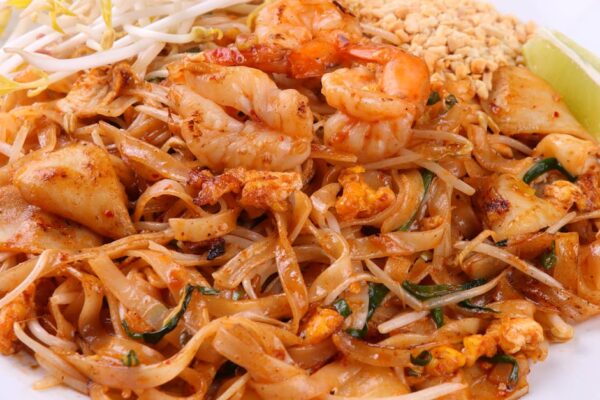
Exercise 5: Pad Thai. Noodle stir-fries are the most challenging because you must manage noodle texture, sauce absorption, and multiple protein and vegetable elements simultaneously. If you can make good pad Thai, you can stir-fry anything.
Advanced Stir-Frying Tips
Once you have the fundamentals down, these techniques will take your stir-fries to the next level.
Chase the wok hei. On a home gas burner, you can approximate wok hei by tilting the wok slightly toward the flame as you toss, allowing the oil vapors to ignite briefly. This deposits smoky flavor on the food. Practice over low flame first — and keep a lid nearby in case the flame gets too enthusiastic.
Use the dry stir-fry technique (干煸, gān biān). In Sichuan cuisine, dry-frying means cooking ingredients in minimal oil over moderate heat for an extended time until they are deeply browned, chewy, and concentrated in flavor. It works beautifully with green beans, shredded beef, and cauliflower. The result is very different from the quick, saucy stir-fry — it is dry, intensely flavored, and slightly crispy.
Velvet your proteins. Professional Chinese chefs almost always velvet their proteins before stir-frying — coating them in a mixture of egg white, cornstarch, and sometimes oil, then passing them through warm oil or boiling water. This creates a silky coating that protects the meat from overcooking. It is one of the biggest secrets of Chinese restaurant cooking.
Season the wok, not just the food. Professional cooks often splash Shaoxing wine directly onto the hot wok surface rather than onto the food. This technique, called ”passing through the wok,” creates an aromatic steam that infuses the entire dish. It works with soy sauce too — pour it along the edge of the wok where the metal is hottest.
Layer your aromatics. Instead of adding all aromatics at the start, try a layered approach: garlic and ginger at the beginning, fermented black beans or doubanjiang in the middle, and fresh scallions or cilantro at the end. Each layer adds depth at a different point in the cooking process.
Use two heat zones. A round-bottomed wok naturally creates two heat zones: the very bottom is scorching hot, while the sides are progressively cooler. Use this to your advantage by pushing cooked ingredients up the sides while searing new ones at the bottom. This keeps cooked food warm without overcooking it.
Recipe Examples to Practice Your Stir-Fry Technique
Now that you understand the method, put it into practice with these tried-and-tested recipes from our kitchen. Each one highlights a different aspect of stir-frying.
- Thai Basil Chicken (Pad Kra Pao) — A fast, fiery stir-fry that teaches you to work with intense heat and aromatic herbs. Ground chicken hits the wok hard, and the holy basil goes in at the very end to wilt without burning.
- Kung Pao Chicken — The benchmark Sichuan stir-fry. Practices batch cooking, complex sauce balancing, and the art of toasting dried chilies without burning them.
- Beef Stir Fry — A 20-minute weeknight classic that focuses on achieving a good sear on thinly sliced beef while keeping vegetables crisp.
- Chow Mein — The definitive noodle stir-fry. Teaches you noodle texture management and the push-crisp-toss rhythm that produces both soft and crunchy noodles in one dish.
- Nasi Goreng — Indonesia’s beloved fried rice shows how stir-fry principles adapt to rice: high heat, small batches, and bold seasoning with kecap manis and shrimp paste.
- Japchae — Korean glass noodle stir-fry demonstrates the concept of cooking each component separately and combining at the end — the purest expression of the batch-cooking principle.
- Sweet and Sour Chicken — Teaches you to work with a thicker, more complex sauce that must coat and glaze without becoming gummy.
- Mapo Tofu — While technically a braise-stir-fry hybrid, mapo tofu teaches you to handle delicate tofu in a wok alongside a powerfully flavored Sichuan sauce.
Stir-Frying on Different Stovetops
Not everyone has a high-powered gas burner. Here is how to adapt your stir-frying technique to different heat sources.
Gas stove (standard home burner, ~10,000–15,000 BTU): This is the most common setup and works well for stir-frying with proper technique. Use a round-bottomed wok with a wok ring or a flat-bottomed wok directly on the grate. The key is patience during preheating and discipline with batch sizes. You can achieve very good results with a standard gas burner.
Electric coil or glass-top stove: Use a flat-bottomed wok or a heavy 12-inch carbon steel skillet. Preheat longer (3 to 5 minutes) because electric elements cycle on and off. Cook in even smaller batches. One advantage: electric stoves often have a higher sustained output than gas, so once the pan is hot, it maintains temperature well.
Induction stove: Use a flat-bottomed carbon steel or cast iron wok. Induction provides excellent heat control and can get extremely hot. It is actually one of the best home setups for stir-frying because of its rapid heat response. Make sure your wok is magnetic — test with a refrigerator magnet.
Outdoor wok burner (100,000+ BTU): This is the closest you will get to professional Chinese restaurant cooking at home. With this kind of firepower, everything happens faster: preheating takes 30 seconds, proteins sear in 15 seconds, and an entire stir-fry can be done in under 2 minutes. If you are serious about stir-frying, an outdoor wok burner is a worthwhile investment.
Frequently Asked Questions About Stir-Frying
What is the best oil for stir-frying?
Peanut oil is the traditional choice in Chinese cooking because of its high smoke point (450°F/232°C) and mild, slightly nutty flavor. Vegetable oil and avocado oil are excellent neutral alternatives. Avoid olive oil, butter, and sesame oil for the cooking stage — they burn at stir-fry temperatures.
Can I stir-fry without a wok?
Yes. A large (12-inch), heavy carbon steel or stainless steel skillet works. You will not get the same tossing action or heat concentration as a wok, but you can still achieve good browning. Avoid nonstick pans — their coatings degrade at the high temperatures needed for stir-frying, and they do not develop the same Maillard browning.
Why is my stir-fry watery?
Three likely reasons: your ingredients were not dried before cooking, you added too much food to the wok at once, or the wok was not hot enough. All three cause the same problem — moisture accumulates faster than it can evaporate, and the food braises in its own liquid.
How do I get restaurant-style stir-fry flavor at home?
Three things make the biggest difference: (1) get the wok screaming hot before adding oil, (2) cook in small batches so the temperature stays high, and (3) velvet your proteins before stir-frying. These three practices account for most of the gap between home and restaurant stir-fries.
Should I marinate my protein before stir-frying?
Always. Even a quick 15-minute marinade of soy sauce, cornstarch, and rice wine dramatically improves texture and flavor. The cornstarch forms a thin coating that helps the protein brown, retain moisture, and hold onto the stir-fry sauce.
What vegetables are best for stir-frying?
Almost any vegetable works if you adjust the timing. Best results come from: bok choy, snap peas, bell peppers, broccoli, green beans, mushrooms, carrots (sliced thin), bean sprouts, zucchini, cabbage, and corn. Avoid very watery vegetables like tomatoes or cucumber unless you want a saucier dish.
How do I prevent food from sticking to the wok?
Three steps: (1) make sure your wok is properly seasoned, (2) preheat it until smoking hot before adding oil, and (3) do not move the food for the first 30 seconds after it hits the pan. Food sticks to a wok that is not hot enough — once a proper sear forms, the food releases naturally.
Can I stir-fry frozen vegetables?
It is possible but not ideal. Frozen vegetables release a large amount of water as they thaw, which drops the wok’s temperature and creates steam. If you must use frozen vegetables, thaw them completely first, then spread them on a towel-lined sheet pan to absorb as much moisture as possible before stir-frying.
The Essential Stir-Fry Pantry
Stock your pantry with these staples and you will always be able to pull together a stir-fry. Every item below is available at Umami Cart.
- Light soy sauce — the backbone of most stir-fry sauces
- Dark soy sauce — for color and a deeper, more malty flavor
- Oyster sauce — thick, savory, and slightly sweet
- Toasted sesame oil — finishing oil, never cooking oil
- Shaoxing rice wine — adds depth; dry sherry is a substitute
- Fish sauce — essential for Thai and Vietnamese stir-fries
- Rice vinegar — mild acidity for balance
- Cornstarch — for marinades and sauce thickening
- Chili flakes or chili oil — for heat
- Fresh garlic, ginger, and scallions — the aromatic trinity of Asian stir-frying
Final Thoughts
Stir-frying is not complicated, but it is unforgiving. The technique rewards preparation, speed, and respect for high heat. Get your mise en place organized, preheat your wok until it smokes, cook in small batches, and sauce at the end. Do these four things consistently and your stir-fries will rival what comes out of any restaurant kitchen.
Start with the practice exercises above, work through the recipe examples, and pay attention to what the wok tells you — the sound of the sizzle, the color of the sear, the smell of the aromatics hitting hot oil. Stir-frying is as much about sensory awareness as it is about following steps. The more you cook, the more instinctive it becomes.
For more technique guides, browse our complete collection of Asian cooking techniques. And when you are ready to stock your pantry with the sauces, oils, and aromatics that make great stir-fries possible, explore our curated selection of Asian cooking ingredients.

Mei Lin Chen
Mei Lin Chen is an Asian food writer and recipe developer. Melbourne-raised and London-based, she has spent over a decade exploring the rice paddies, hawker stalls, and home kitchens of South-East and East Asia. Her recipes balance traditional technique with everyday practicality.