Last updated: March 26, 2026
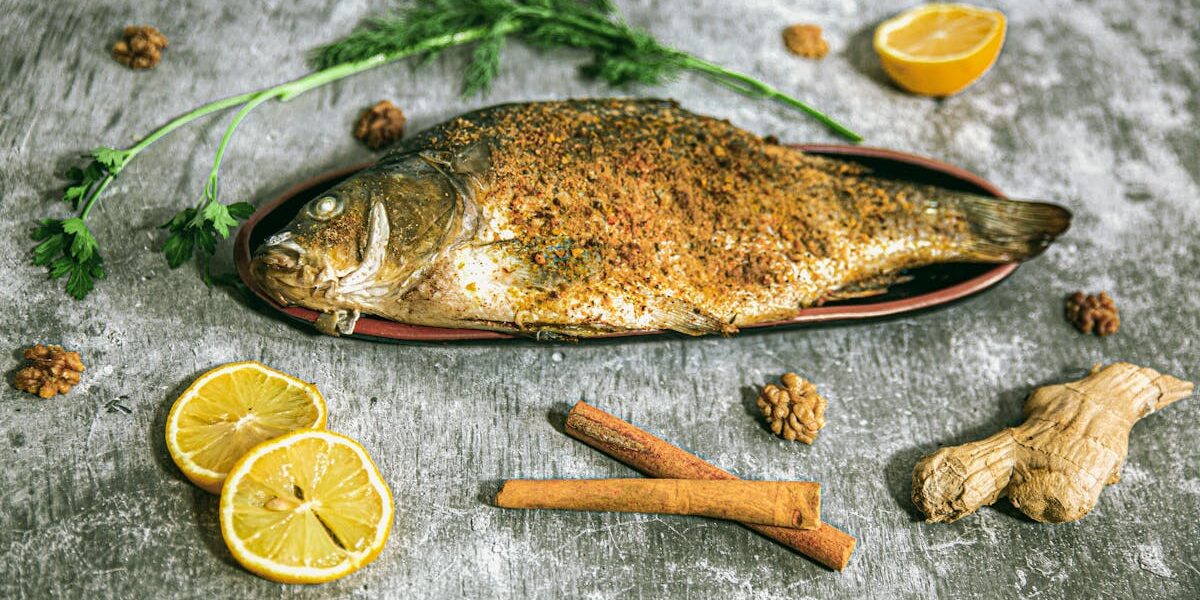
Salt baking is one of the most dramatic cooking techniques in Asian cuisine. A whole fish, a whole chicken, or even a head of bok choy is buried in a thick mound of coarse salt and roasted until the salt becomes a crackling, rock-hard shell. When you crack it open at the table, steam billows out and the food underneath is moist, silky, and seasoned right through to the bone. This is salt-baked fish in the Chinese, Cantonese, and broader East and Southeast Asian tradition, and once you understand the technique, it becomes one of the easiest ”wow factor” methods in your repertoire.
This guide walks through everything you need to know to salt bake fish at home: the science behind why it works, the fish to buy, the salt to use, the equipment you actually need, a precise step-by-step method, the most common mistakes (and how to avoid them), regional variations from Guangdong to Hakka country, and recipe examples you can use tonight. Whether you are a first-time home cook or a serious enthusiast looking to add a restaurant-grade Asian roasting method to your toolkit, you will leave this article ready to bake.
What Is Salt Baking in Asian Cooking?
Salt baking, called yan ju (盐焗) in Mandarin and jim guk in Cantonese, is a dry-heat cooking method where the protein is encased in a thick layer of coarse salt and roasted in the oven, on a stovetop, or buried in a wok of hot salt. The salt is not eaten. It is a cooking medium, in the same way that water is the medium for poaching or oil is the medium for deep frying. As the salt heats up, it transfers energy into the food evenly, slowly, and gently, while also trapping moisture and aroma inside the shell.
In Chinese cooking, the technique is most famously associated with Hakka salt-baked chicken (yan ju gai), but the same principle is applied to whole snapper, sea bass, branzino, pomfret, croaker, and even shrimp throughout Cantonese, Teochew, and coastal Fujianese cuisines. Japanese cooks use a thinner salt crust called shio-gama for ceremonial sea bream. Korean restaurants offer sogeum-gui, salt-grilled mackerel with crusted skin. Thai and Lao street vendors split open whole fish stuffed with lemongrass, paint them with brine, and grill them over coals so the skin cures into a salt jacket. The unifying idea: salt as both seasoning and oven.
Why the Technique Works: The Science of the Salt Crust
A salt crust solves three problems at once that home cooks struggle with when roasting whole fish: uneven heat, lost moisture, and under-seasoning. Understanding how it works will help you adapt the method to whatever fish or oven you have.
Even heat distribution. Coarse salt has poor thermal conductivity compared to metal. That sounds bad, but it is actually the secret. Once the salt mound is preheated by the oven or hot wok, it transfers energy into the fish slowly and uniformly from all sides, instead of blasting one side with radiant heat the way a bare sheet pan does. The result is a fish that cooks edge-to-center at a steady rate, with no overcooked tail or undercooked shoulder.
Moisture retention. The crust seals the fish in its own micro-steam chamber. Water evaporating from the skin has nowhere to go, so it condenses on the underside of the crust and keeps the flesh humid. The fish essentially poaches in its own juices while the exterior dry-roasts. This is why a salt-baked snapper tastes more like a steamed fish than a baked one, even though no water is added.
Controlled seasoning. Most cooks worry the fish will be inedibly salty. It will not be. Salt only penetrates through the skin in the small areas of direct contact, and because the cooking is quick, only a thin layer of flesh is seasoned. The salt that contacts skin pulls out a tiny amount of surface moisture and dissolves into a brine that lightly cures the skin. The interior remains gently seasoned, not aggressive. The result is a fish that tastes seasoned all the way through without ever needing a marinade.
Equipment You Need (and What You Do Not)
One of the appeals of salt baking is that you need almost no specialty equipment. If you have an oven and a sheet pan, you can do this tonight. Here is the realistic kit list.
- Heavy-duty sheet pan or roasting tray. A standard half-sheet pan with a lip works. Avoid thin cookie sheets — they will warp under the weight of the salt.
- Parchment paper. Lining the pan keeps the salt from sticking and makes cleanup trivial. Banana leaves or lotus leaves are the traditional Cantonese choice and they add a faint floral aroma.
- A whole fish, gutted and scaled. The fishmonger should do this for you. Leave the head and tail on — they help the fish hold its shape under the crust.
- About 3 to 5 pounds of coarse salt. Yes, that much. For a 2-pound fish you need roughly 4 pounds of salt to fully bury it.
- Egg whites (optional). Whisked egg whites turn the salt into a workable paste that holds its shape better and produces a more dramatic shell.
- A mallet, the back of a heavy knife, or a wooden spoon. For cracking the crust at the table.
- A small offset spatula or fish lifter. For transferring the cooked fish to a serving plate without tearing it.
- An instant-read thermometer. Optional but recommended for beginners. Fish is done at 130 to 135 degrees Fahrenheit at the spine.
You do not need a fish-shaped salt crust mold, a tagine, a smoker, or a sous vide. You also do not need an outdoor grill, though if you have a kamado-style grill or a wok large enough to hold the fish, those work beautifully as alternative heat sources.
Choosing the Right Fish
The technique works best with fish that are sturdy enough to hold up under the crust and lean enough to benefit from the moisture lock-in. Oily fish like salmon and mackerel can be salt baked, but they shine more with grilling. Below is a buying guide aligned with how each fish performs.
| Fish | Weight Range | Why It Works | Typical Bake Time at 400°F |
|---|---|---|---|
| Branzino (European sea bass) | 1 to 1.5 lb | Tender, mild, perfect skin-to-flesh ratio | 20 to 25 min |
| Red snapper | 2 to 3 lb | Firm flesh, classic Cantonese choice | 30 to 40 min |
| Black sea bass | 1.5 to 2 lb | Sweet, dense, holds shape well | 25 to 30 min |
| Whole pomfret | 1 to 1.5 lb | Common in Teochew salt-baked dishes | 20 to 25 min |
| Yellow croaker | 1 to 1.5 lb | Classic in Chinese coastal cooking | 20 to 25 min |
| Rainbow trout | 1 to 1.5 lb | Affordable, widely available in the U.S. | 18 to 22 min |
| Whole flounder or sole | 1.5 to 2 lb | Delicate, needs careful crust handling | 18 to 22 min |
| Dorade (gilthead bream) | 1 to 1.5 lb | Mediterranean cousin of branzino | 20 to 25 min |
Look for clear eyes, bright red gills, firm flesh that springs back when pressed, and no fishy smell. Ask the fishmonger to scale and gut the fish but leave the head, tail, and fins intact. The scales matter — they are a structural element that helps the skin survive the crust. If you scale the fish, the salt will adhere directly to bare skin and the skin will tear when you pull off the crust.
Choosing the Right Salt
This is where home cooks most often go wrong. Not all salt is suitable. The wrong salt will either over-season the fish, fail to form a proper crust, or both.
- Coarse kosher salt. The American workhorse. Diamond Crystal and Morton both work, though Diamond Crystal’s hollow flakes pack a bit tighter. Use about 4 pounds for a 2-pound fish.
- Coarse sea salt. The traditional Asian choice. Look for unrefined, large-grain sea salt at Chinese, Korean, or Japanese markets. It is cheap when bought in bulk bags.
- Rock salt. Used by some restaurants for the largest crusts. Works well but you may want to mix with finer salt so the layer adheres to the fish.
- Avoid table salt. Too fine. It packs into a dense, brittle plaster that over-seasons the fish and is hard to crack at the table.
- Avoid flake finishing salts. Maldon, fleur de sel, and Jacobsen are wasted here. Save them for the table.
- Avoid pink curing salt. This is sodium nitrite-based and is not safe to use in this quantity.
Some recipes add water or egg white to the salt to make a paste. Both methods work and produce slightly different results. Plain dry salt produces a more dramatic, harder crust that shatters at the table. A salt-and-egg-white paste produces a more even, sculpted shell that browns to a faint gold and looks more refined. A salt-and-water mixture is the easiest beginner option and is forgiving.
Step-by-Step: Classic Chinese Salt-Baked Fish
The following method produces a whole fish that is moist, gently salted, and ready to serve with rice and a soy-ginger dipping sauce. It serves two to four people depending on the size of the fish.
Step 1: Preheat the oven to 400 degrees Fahrenheit (200°C). Position the rack in the center. A pizza stone on the rack helps but is not necessary. Give the oven a full 25 minutes to come to temperature — you want even, saturated heat, not a cold oven that has just hit the setpoint.
Step 2: Prepare the fish. Rinse the whole fish under cold water inside and out. Pat completely dry with paper towels — moisture on the skin will dissolve the inner layer of salt and cause leakage. Score the thickest part of the flesh with three diagonal slashes on each side, cutting just to the bone. This is optional but helps the fish cook evenly and lets aromatics perfume the flesh.
Step 3: Stuff the cavity. Inside the fish, place 3 thick slices of fresh ginger, 2 split scallions, a small bundle of cilantro stems, and 2 strips of lemon or yuzu peel. Some cooks add a stalk of bruised lemongrass or a slice of galangal. Do not season the cavity with extra salt — the crust handles that. A splash of Shaoxing wine inside the cavity is traditional.
Step 4: Wrap the fish (optional but recommended). Wrap the prepared fish loosely in a single layer of parchment paper, or better, banana leaf or lotus leaf. The wrap is not airtight; it just creates a thin barrier between the salt and the skin, making the crust easier to remove. Some Cantonese recipes skip the wrap entirely and rely on the scales as the barrier.
Step 5: Mix the salt. In a large bowl, combine about 4 pounds of coarse salt with 3 lightly beaten egg whites. Mix with your hands or a wooden spoon until the salt feels like wet sand and holds its shape when squeezed. If using the no-egg method, sprinkle the salt with ¼ cup of water and toss until evenly damp.
Step 6: Build the salt bed. Line your sheet pan with parchment. Spread a 1-inch-thick layer of salt the length of the fish in the center of the pan. Lay the wrapped fish on top.
Step 7: Encase the fish. Pile the remaining salt over the fish, packing it firmly with your hands. The fish should be completely covered with at least ¾ inch of salt on all sides. Pay special attention to the head, the belly, and the tail — these are the spots that tend to break open during baking. Smooth the dome and shape it into a clean mound. If you want to be theatrical, sculpt fins and a tail into the salt with a butter knife.
Step 8: Bake. Slide the pan into the oven. For a 1.5- to 2-pound fish, bake for 25 to 30 minutes. For a 2.5- to 3-pound fish, plan on 35 to 40 minutes. A reliable internal-temperature reading is 130 to 135°F at the thickest part of the fish, taken by gently piercing the crust with a thin metal probe.
Step 9: Rest. Pull the pan from the oven and let the fish rest inside the salt crust for 5 to 10 minutes. The fish will continue to cook gently, and the resting time lets the juices redistribute.
Step 10: Crack and serve. At the table, give the salt crust two firm taps with the back of a wooden spoon or the dull side of a heavy knife. The crust should split along a clean line down the spine of the fish. Carefully brush away the loose salt, lift off the top half of the crust, and peel back the skin. Use a spoon or fork to lift portions of flesh off the bones onto serving plates. Spoon a teaspoon of warm seasoned sauce over each portion.
The Soy-Ginger Sauce: Non-Negotiable
Even though the fish is gently seasoned by the salt, every Cantonese kitchen serves salt-baked fish with a small ramekin of soy-ginger sauce. The classic preparation comes from the steamed-fish tradition: a mixture of light soy sauce, a touch of sugar, water, and white pepper, brought to a quick simmer and poured over julienned scallions and ginger that have been fried in hot peanut oil so they sizzle.
A simple ratio: 3 tablespoons light soy sauce, 1 tablespoon sugar, 3 tablespoons water, a pinch of white pepper, simmered together for 30 seconds. Pour this over a small mountain of fresh julienned scallion and ginger arranged on top of the fish. Heat 2 tablespoons of peanut oil in a small pan until smoking, then pour the hot oil directly over the scallion and ginger. The sizzle is part of the experience.
Common Mistakes and How to Fix Them
| Mistake | What Happens | How to Fix It |
|---|---|---|
| Skipping the parchment wrap | Salt sticks to skin, the skin tears when you remove the crust | Wrap the fish in a single layer of parchment or banana leaf before burying in salt |
| Not enough salt | Crust cracks open mid-bake, moisture escapes, fish dries out | Use at least 4 pounds of salt for a 2-pound fish, packed at least ¾ inch thick |
| Using fine table salt | Dense plaster that over-seasons and is hard to crack | Always use coarse kosher, sea, or rock salt |
| Wet fish skin | Salt dissolves on contact, salty water leaks through the crust | Pat the fish bone-dry with paper towels before salting |
| Cold oven start | Crust does not set quickly, fish overcooks waiting for the oven | Preheat at least 25 minutes; verify with an oven thermometer |
| Scaling the fish | Skin tears badly when crust comes off | Leave scales on. They are a structural barrier, not for eating |
| Overcooking | Flesh becomes chalky and dry, the technique loses its appeal | Pull at 130 to 135°F internal; carry-over heat will finish it |
| Cracking the crust too early | Steam escapes before the flesh rests, fish is unevenly hot | Rest 5 to 10 minutes inside the crust before serving |
| Forgetting aromatics in the cavity | Mild, slightly bland flesh, no depth of flavor | Stuff with ginger, scallion, citrus peel, herbs, and a splash of Shaoxing wine |
| Reusing the cooked salt | It is dirty, fishy, and full of moisture | Discard after one use. Compost-safe? No, the salt content is too high |
Practice Exercises to Master the Technique
If you have never salt baked before, do not start with a 4-pound red snapper for a dinner party. Build up. The following progression takes most home cooks two or three weekends to work through and produces real confidence.
Exercise 1: Salt-baked potato. Yes, a potato. A medium russet, buried in a salt-and-egg-white paste and baked at 425°F for 50 minutes, is the perfect proof of concept. The skin will be lightly seasoned, the inside fluffy and steam-cooked. The potato is cheap and forgiving, and it teaches you exactly how the crust behaves: how to pack it, how it sets in the oven, how it cracks when you break it open. Do this twice.
Exercise 2: Salt-baked beets. Two medium red beets, salt-encased and roasted at 400°F for 60 minutes, will teach you how the crust behaves with high-moisture food. The beets will release liquid that the salt absorbs, and the texture will be silkier than any roasted beet you have made before. The technique is identical to fish, just longer cooking time. Use the cooked beets in a Chinese-inflected salad with sesame oil, soy, ginger, and toasted sesame seeds.
Exercise 3: Salt-baked chicken legs. A pair of bone-in, skin-on chicken thighs buried in salt and baked at 400°F for 35 minutes will introduce you to salt baking with meat. Chicken is more forgiving than fish — there is less risk of overcooking. Rub the chicken with five-spice and a tiny pinch of white pepper before wrapping. The result tastes like a midway point between Hakka salt-baked chicken and a Cantonese roast.
Exercise 4: A small whole trout. Now you are ready for fish. A 1-pound rainbow trout, scaled and gutted but with head and tail on, is the best fish to start with. It is cheap, widely available, and forgiving. Follow the full method above and reduce baking time to 18 minutes. Once you can cleanly crack open the crust on a trout, you can do it on anything.
Exercise 5: A 2-pound branzino or sea bass for company. This is the dinner-party finale. By this point, you have an internal mental map of how the salt sets, how the flesh cooks, and how to time the rest. Branzino’s mild, sweet flavor and clean white flesh take to salt baking beautifully.
Advanced Tips From Cantonese Kitchens
Once you have the basic method down, the following techniques separate a good salt-baked fish from a great one. These are the moves restaurant cooks rely on.
Bloom the salt with Sichuan peppercorn or star anise. Before mixing the salt into a paste, toast a tablespoon of Sichuan peppercorns and a single star anise in a dry pan over medium heat for two minutes. Crush coarsely and stir into the salt. The aromatics will perfume the crust as it bakes, and a faint floral, citrusy note will infuse the fish skin. Do not overdo it — a little goes a long way.
Mix the salt with sand for ultra-traditional Hakka chicken. The original Hakka salt-baked chicken was buried in a wok of preheated rough sea sand mixed with salt, not pure salt. The sand transfers heat differently and produces a deeper, richer roast. You can simulate this at home by mixing the coarse salt with an equal volume of unwashed rice (yes, rice). Rice grains transfer heat in a similar way and add an almost-smoky toasted note to the food.
Brush the fish skin with melted lard before wrapping. A thin coat of pork fat under the parchment gives the skin a luxurious, slightly crispy finish when the crust comes off. Cantonese restaurants use this trick for whole steamed and baked fish alike.
Use a banana leaf wrap when you can find them. Frozen banana leaves are widely available at Latin American, Filipino, and Southeast Asian grocers. Pass the leaf over a flame for 5 seconds to make it pliable, then wrap the fish like a tamale before burying in salt. The leaf releases a subtle green-vanilla aroma during baking that pairs especially well with snapper and pomfret.
Test for doneness without breaking the crust. Push a metal cake tester or thin skewer straight down through the crust into the thickest part of the fish, then touch the metal to your lower lip. If it is uncomfortably warm, the fish is done. If it is barely warm, give the fish another 5 minutes. This is faster than a digital thermometer and the small puncture seals itself.
Pre-salt the fish before encasing. Some chefs sprinkle a tiny amount of salt directly on the fish 15 minutes before encasing it in the crust. This is similar to dry-brining a steak. The fish flesh seasons very slightly from the inside, while the crust continues to do its work from the outside. Do this only if you are confident in your salt control — it is easy to oversalt.
Regional Variations Across Asia
Salt-crust cooking is not a single technique. It is a family of related methods practiced from southern China to Japan to Southeast Asia, each with its own preferred fish, aromatics, and crust style.
Hakka (Chinese inland). The Hakka people are credited with the modern Chinese salt-bake tradition. Their version traditionally uses a wok filled with hot coarse sea salt, into which a whole paper-wrapped chicken is buried. Recently, home cooks have adapted the method to ovens. Sichuan peppercorn, star anise, and shaoxing wine are typical aromatics. Hakka salt-baked chicken (kheh yim guk gai) is one of the most famous Hakka dishes worldwide.
Cantonese (southern coastal China). Cantonese kitchens favor salt-baked whole fish using snapper, sea bass, or pomfret. The crust is often built with egg white for a clean, dome-shaped shell. Service is theatrical: the dish is brought to the table whole, cracked open in front of the diners, and dressed with hot peanut oil poured over julienned scallion and ginger.
Teochew (Chaoshan). Teochew salt-baking tends to use pomfret or eel and is sometimes paired with a clear soy-vinegar dipping sauce instead of the soy-oil sizzle. Teochew cooks are known for their light touch with seasoning, so the fish often comes out gentler in flavor than Cantonese versions.
Japanese (shio-gama). The Japanese equivalent is shio-gama, a ceremonial salt-encased preparation traditionally used for whole sea bream at celebrations such as weddings and births. The salt is typically mixed with egg white and is much thinner than Chinese versions — almost a crust rather than a mound. The fish is served whole and is considered an auspicious symbol because of its red color.
Korean (sogeum-gui). Korean salt grilling is closer to a cure than a true salt bake. A whole mackerel or yellow croaker is heavily salted, then grilled over high heat. The salt forms a crusted, blistered skin rather than a separate shell. The flesh is intensely seasoned and the technique is the backbone of Korean rice-and-fish meals at restaurants like baekban.
Thai and Lao (pla pao gleua). Street vendors in Bangkok and Vientiane stuff whole tilapia, snakehead, or sea bass with lemongrass and pandan leaves, then encase the fish in a paste of coarse salt and rice flour. The fish is grilled over charcoal until the crust hardens into a cracked, mahogany-colored shell. The technique produces a smokier flavor than oven baking and is served with a green nam jim sauce.
Filipino (inihaw na bangus). Filipino salt-grilled milkfish takes the Southeast Asian street method and applies it to the country’s national fish. The grilling happens over banana leaves on top of charcoal, and the salt-encased fish is served with a calamansi-soy dipping sauce.
Recipe Example 1: Cantonese Salt-Baked Whole Sea Bass
Serves 4. Active time 20 minutes. Total time 1 hour.
Ingredients: one 2-pound whole sea bass, scaled and gutted; 4 thick slices fresh ginger; 3 scallions, halved; a small bunch of cilantro; 1 strip lemon peel; 1 tablespoon Shaoxing wine; 4 pounds coarse kosher or sea salt; 3 large egg whites, lightly beaten; 1 tablespoon Sichuan peppercorns, lightly toasted and crushed; 1 large piece parchment paper or banana leaf. For the sauce: 3 tablespoons light soy sauce, 1 tablespoon sugar, 3 tablespoons water, pinch of white pepper, 2 tablespoons peanut oil, 1 scallion julienned, 1 thumb fresh ginger julienned, a few cilantro leaves for garnish.
Method: Preheat the oven to 400°F. Rinse and dry the fish thoroughly. Stuff the cavity with the ginger, scallions, cilantro, and lemon peel. Splash in the Shaoxing wine. Wrap loosely in parchment. In a bowl, combine the salt, egg whites, and crushed Sichuan peppercorns. Mix to a coarse paste. Line a sheet pan with parchment, spread a 1-inch bed of salt, lay the fish on top, and bury under the remaining salt mixture, packing firmly so the fish is fully covered. Bake for 28 to 32 minutes. Rest 5 minutes. At the table, tap the crust with the back of a heavy knife, brush away the salt, and peel off the skin. While serving, simmer the soy, sugar, water, and white pepper in a small pan for 30 seconds. Pour over the fish topped with the julienned scallion and ginger, then drizzle smoking peanut oil over the top to sizzle.
Recipe Example 2: Thai Charcoal-Grilled Salt-Crusted Snapper
Serves 4. Active time 25 minutes. Total time 45 minutes plus grill prep.
Ingredients: one 2 to 2.5-pound whole red snapper, scaled and gutted; 2 stalks lemongrass, bruised; 3 pandan leaves (or kaffir lime leaves); 1 cup coarse sea salt; ¼ cup rice flour; 3 tablespoons water; charcoal grill or kamado. For dipping (nam jim seafood): 4 Thai bird’s eye chiles, 4 cloves garlic, 2 tablespoons fish sauce, 2 tablespoons lime juice, 1 tablespoon palm sugar or brown sugar, small handful cilantro.
Method: Build a hot charcoal fire, then let the coals burn down to a moderate red glow. Rinse and dry the fish. Stuff the cavity with the bruised lemongrass and pandan leaves. Mix the salt, rice flour, and water in a bowl to a wet-sand consistency. Pack this mixture firmly all over the fish in a layer about half an inch thick, leaving the head and tail uncovered (or wrap with foil to protect). Grill the fish directly over the coals, turning once, for 12 to 15 minutes per side. The salt crust will crack, blacken, and harden into a shell. Crack open at the table. Pound the dipping sauce ingredients in a mortar to a coarse paste, adjust seasoning to taste, and serve with sticky rice.
Recipe Example 3: Japanese Shio-Gama Sea Bream
Serves 2. Active time 20 minutes. Total time 45 minutes.
Ingredients: one 1.5-pound whole sea bream (or red snapper or branzino as substitute), scaled and gutted; 2 strips kombu; 2 thin slices yuzu peel (or lemon peel); 1 tablespoon sake; 3 pounds coarse sea salt; 2 large egg whites, lightly beaten; small amount of beni shoga (pickled ginger) for garnish; ponzu sauce for serving.
Method: Preheat the oven to 400°F. Rinse and dry the fish. Tuck the kombu and yuzu peel into the cavity. Splash with sake. Wrap loosely in parchment. Mix the salt and egg whites to a damp-sand consistency. Line a sheet pan with parchment, build a salt bed, lay the fish on top, and cover with the remaining salt mixture, packing firmly into a smooth, slightly thinner dome than the Chinese version. Some Japanese cooks score a fish silhouette into the crust for presentation. Bake for 22 to 25 minutes. Rest 5 minutes. At the table, crack open the crust with a wooden spoon. Lift the fish onto a serving platter, garnish with beni shoga, and serve with ponzu on the side.
Serving, Presentation, and Pairings
The drama of salt baking lives in the presentation. Bring the unbroken crust to the table on a heatproof platter or wooden board. Have a clean kitchen towel, a wooden spoon, a small offset spatula, and a serving plate ready. Crack the crust with two confident taps along the spine. Brush away the loose salt with a small pastry brush and then peel off the skin in long strips. Lift portions of flesh from the bones using a spoon, working from the head toward the tail to keep the flesh intact.
Salt-baked fish is best with very simple side dishes. The fish has done all the work. Steamed jasmine rice, plain congee, or rice noodles soak up the juices and the dipping sauce. Stir-fried gai lan, choy sum, or Napa cabbage with garlic adds a green vegetable. A small bowl of clear chicken broth with goji berries or a light egg drop soup makes the meal feel complete. For drinks, dry Riesling, Champagne, and clean Japanese sake (junmai or junmai ginjo) all pair beautifully. A traditional Chinese pot of jasmine or tieguanyin tea is the non-alcoholic gold standard.
Make-Ahead, Storage, and Leftovers
Salt baking is best eaten fresh, immediately after the crust is cracked. Once the crust is broken, the fish cools rapidly and the textural magic fades. That said, you can do a meaningful amount of prep ahead of time without sacrificing quality.
The salt mixture can be made up to 4 hours ahead and held at room temperature, covered with plastic. The fish can be cleaned, stuffed, and wrapped in parchment up to 2 hours ahead and refrigerated. Bring the fish back to room temperature for 20 minutes before encasing in salt; a cold fish from the refrigerator will throw off your baking time by 5 to 10 minutes.
Leftover fish can be flaked off the bones and refrigerated in an airtight container for up to 2 days. Use the leftover flesh in a Cantonese-style fish congee, a Thai fried rice with lime and bird’s eye chile, or a cold Vietnamese-style salad with fish sauce, herbs, and rice noodles. The salt crust itself is single-use; discard it after cracking, as it has absorbed moisture and fish flavor and is not safe for further cooking.
Salt Baking Beyond Fish: What Else You Can Try
Once you are comfortable with the basic technique, the same method opens up a wide range of dishes. Whole chicken is the most famous extension — Hakka salt-baked chicken is one of the great dishes of Chinese cuisine and uses almost identical technique with longer cooking times (about 1 hour for a 3.5-pound bird). Whole duck is harder but spectacular when done right. Heads of cabbage, beets, celery root, and even kabocha squash all take to salt baking and emerge silky, deeply seasoned, and steam-cooked from within. For a vegetarian dinner, try a whole salt-baked celery root with a miso-butter sauce — the texture is closer to roasted bone marrow than to any other vegetable preparation.
Shrimp can be salt baked in their shells: a single layer of jumbo head-on shrimp buried in a 1-inch layer of salt and baked at 425°F for 8 minutes produces sweet, snappy shellfish with a faint cured edge. This is a Hong Kong restaurant classic.
Frequently Asked Questions
Will the fish be too salty? Almost never. As long as you use coarse salt (not table salt), leave the scales on or wrap the fish, and pull it from the oven on time, the fish will taste evenly seasoned, not aggressive. The crust acts as both insulation and a controlled seasoning agent.
Do I have to use egg whites in the salt mixture? No. Egg whites help the salt hold its shape and bind into a more dramatic shell, but a salt-and-water mixture works perfectly well. Plain dry salt without any binder also works; it cracks more easily and is the easiest to clean up.
Can I use a frozen fish? You can, but defrost the fish completely in the refrigerator overnight, then pat it bone-dry. Frozen fish has slightly more moisture in the flesh, and a salt-baked frozen fish will sometimes weep liquid through the crust. The texture is also slightly mushier than fresh.
What if my crust cracks during baking? Small cracks are normal and not a problem. Wide gaps that release steam are a sign you did not pack the salt firmly enough. If you see a major crack at the 10-minute mark, you can pull the pan out, patch the crack with extra wet salt, and slide it back in.
Can I reuse the salt? No. The crust has absorbed moisture, fat, and fish flavor and is not suitable for cooking again. Throw it away. Compost is not a good destination either — the salt content will damage soil.
What is the best fish for a first attempt? A 1- to 1.5-pound rainbow trout is the most forgiving and the cheapest. Branzino is a very close second and is a more refined choice for company. Both are widely available in the U.S. and require no special sourcing.
Do I need to eat the skin? No. The skin is gently salt-cured during baking and many people eat it, but you can also peel it off and discard. Cantonese tradition is to eat the skin; Japanese shio-gama tradition often discards the very top layer where the salt was densest.
Can I salt bake fish fillets instead of whole fish? Not really. Fillets have no skin or bone structure to protect the flesh and will absorb too much salt. This technique is specifically designed for whole fish (or whole chicken, or whole vegetables). For fillets, use steaming or pan-roasting instead.
Is the technique safe? Will the salt explode or anything dramatic? Completely safe. The salt is doing nothing more interesting than transferring heat. There is no chemistry to fear. The only risk is that a very wet salt mixture can take longer to set than a dry one, which simply extends bake time by a few minutes.
How does it compare to steaming fish? Steaming and salt baking produce surprisingly similar results in the flesh: moist, tender, gently seasoned. Steaming is faster (10 to 12 minutes for a whole 1.5-pound fish) and uses no oven. Salt baking is more dramatic, produces a slightly more concentrated flavor, and is better for entertaining. If you steam your fish often, learning salt baking gives you a different texture and presentation in your repertoire — they are complementary, not competing.
Can I do this on a grill instead of in an oven? Yes. A kamado-style grill or a covered kettle grill running at 400°F with the lid closed is the equivalent of an oven for this purpose. The cooking time is the same. The bonus is a faint smoke flavor that perfumes the fish through the crust. Charcoal works better than gas because of the dry, radiant heat.
Final Notes
Salt baking is one of the rare techniques in Asian cooking that is both ancient and beginner-friendly. The shopping list is short, the equipment is what you already own, and the result is restaurant-grade in a single pass. The hardest part is psychological — accepting that you will pour 4 pounds of salt over a fish. Once you cross that mental threshold, the rest is muscle memory. Practice on a potato, then a chicken thigh, then a trout. By your fourth attempt, you will be cracking open a 2-pound branzino at the table and watching guests gasp at the steam. That is the experience this technique has delivered for centuries across Chinese, Japanese, Korean, and Southeast Asian kitchens, and there is no reason it should not be part of yours.
If you are building out an Asian cooking repertoire, salt baking fits naturally alongside steaming fish, red braising, clay-pot cooking, and stir-frying. Each technique gives you a different way to coax flavor and texture out of a whole protein or vegetable. Together they cover most of what restaurant Asian kitchens do every night. Start with one fish. The rest follows.

Mei Lin Chen
Mei Lin Chen is an Asian food writer and recipe developer. Melbourne-raised and London-based, she has spent over a decade exploring the rice paddies, hawker stalls, and home kitchens of South-East and East Asia. Her recipes balance traditional technique with everyday practicality.