Last updated: March 25, 2026
Tamil cuisine is one of the oldest continuously practiced food traditions on earth, with cooking methods, ingredient lists, and meal structures documented in Sangam-era Tamil literature more than two thousand years ago. It is the food of Tamil Nadu in southern India, the Tamil-majority north and east of Sri Lanka, and a global Tamil diaspora that stretches from Malaysia and Singapore to South Africa, Mauritius, Fiji, the United Kingdom, Canada, and the United States. Where many people first meet ”South Indian food” through a stainless-steel plate of idli, dosa, and sambar at a chain restaurant, the real cuisine is enormously broader: temple food cooked without onion or garlic, fiery Chettinad dry meat masalas, sour tamarind kuzhambus that taste like the coast they come from, dry-fish curries from fishing villages on the Coromandel coast, and elegant banana-leaf feasts served with a precise order of dishes.
This guide walks through everything you need to understand Tamil food as a cuisine rather than a single restaurant menu — its regions, its essential pantry, the dishes you should actually try first, the techniques that define its flavor, and how to build a balanced Tamil meal at home. If you have already read our complete guide to Indian cuisine, think of this as the deep dive into one of its richest regional traditions.
A Short History of Tamil Cuisine
Tamil cuisine is rooted in the agricultural landscape of the Kaveri river delta and the broader Tamil country, where rice has been the dominant grain for at least three thousand years. The classical Tamil Sangam corpus, composed roughly between 300 BCE and 300 CE, already describes a sophisticated food culture: it names cooking pots, references fermented gruels, distinguishes between hill, forest, pastoral, agricultural, and coastal landscapes — the famous aintinai or ”five landscapes” — and assigns characteristic foods to each. That landscape-based thinking still echoes in modern Tamil cooking, where what you eat depends on whether you grew up near rice paddies, dry red soil, salt-pan coastlines, or forested hills.
From roughly the 9th to the 13th century, the Chola empire turned Tamil Nadu into a major trading power, exporting black pepper, cardamom, and rice across the Indian Ocean and importing ideas in return. The Cholas built temples on a vast scale, and temple kitchens became laboratories of refined vegetarian cooking, codifying dishes like puliyodarai (tamarind rice), sakkarai pongal (sweet rice with jaggery), and the milk-based payasam family of desserts still served as prasadam today.
Later layers added depth. Muslim communities in towns like Vaniyambadi, Ambur, and Tirunelveli developed a distinct Tamil Muslim biryani style — short-grain seeraga samba rice, a wet ”kuska” gravy, and pieces of bone-in mutton or chicken. The French presence in Pondicherry left behind baguettes and a hybrid Creole-Tamil cooking. Tamil migrants to Malaya and Ceylon in the 19th century carried curry leaves, mustard seeds, and tempering technique into what became Malaysian Indian food and Sri Lankan Tamil food. By the time Tamil food began traveling to the United States and Europe in the mid-20th century, it was already a global cuisine, even if Western restaurant menus reduced it to dosa and sambar.
The Regions of Tamil Food
Tamil food is not one thing. Within Tamil Nadu itself, every two or three districts cook differently, and any honest overview has to start by breaking the cuisine into its main regional styles.
Chettinad
The Chettiar trading community of Sivaganga district developed what is now the most internationally famous Tamil regional style. Chettinad food is built on dry roasting whole spices — fennel, star anise, kalpasi (black stone flower lichen), maratti mokku (dried flower buds), and Marathi moggu — then grinding them fresh for each dish. The result is meat and seafood preparations that are intensely aromatic, drier in finish than most North Indian curries, and famous for heat from dried red chilies rather than fresh green ones. Chicken Chettinad, kola urundai (meatballs), and prawn masala are signatures.
Madurai and the Southern Districts
Around the temple city of Madurai and further south into Tirunelveli, Tamil food becomes earthier and more meat-forward. Jigarthanda, a chilled almond-and-milk drink with sarsaparilla syrup, is a Madurai street icon. Paruthi paal (cottonseed milk), kari dosai (with minced meat baked into the batter), and kothu parotta — shredded layered flatbread tossed on a flat griddle with eggs, meat, and salna gravy — define late-night eating across the region. Tirunelveli is famous for its halwa, a wheat-starch sweet cooked in ghee until translucent.
Kongunadu (the Western Belt)
The western districts around Coimbatore, Erode, and Salem form Kongunadu, a region historically built on millets rather than rice. Kongu food makes heavy use of coconut, turmeric, and groundnut, and signature dishes like arisi paruppu sadam (rice cooked with toor dal and coconut tempering) and Kongu chicken kuzhambu are simpler, sharper, and less spice-loaded than Chettinad. The millet revival of the 2020s drew renewed attention to old Kongu dishes like ragi koozh and kambu dosai.
The Kaveri Delta and Thanjavur
The Kaveri delta produces the rice that the rest of the cuisine depends on, and it is also the heartland of Brahmin temple cooking — a strict vegetarian, satvik tradition that avoids onion, garlic, and many roots. Dishes like vatha kuzhambu (sun-dried vegetables in a thick tamarind gravy), more kuzhambu (yogurt-based curry), and Tanjavur paniyaram come from here, along with the most refined banana-leaf meal traditions.
The Coast
The Coromandel coast, running from Chennai through Pondicherry, Karaikal, Nagapattinam, and down to Rameswaram, has its own seafood-driven cuisine. Meen kuzhambu (tamarind fish curry), nethili meen varuval (fried anchovies), crab masala, and stingray fry are everyday dishes. Closer to Pondicherry you find a small but distinct Creole Tamil tradition with rougails, fish in tomato-onion sauce, and yeasted bread alongside rice.
Tamil Sri Lanka and the Diaspora
Across the Palk Strait, Sri Lankan Tamil food shares roots but diverges sharply. It uses unroasted Sri Lankan curry powder, leans on coconut milk far more heavily than mainland Tamil cooking, and produces dishes like Jaffna crab curry and odiyal kool (a thick palmyra-flour seafood stew). In Malaysia and Singapore, Tamil immigrants gave the region banana-leaf rice, fish-head curry, and a distinctive style of mamak food. Each diaspora cuisine is a legitimate branch of Tamil cooking, not a watered-down version of it.
Essential Tamil Ingredients
A well-stocked Tamil pantry is built around a handful of ingredients used over and over in different proportions. Mastering these is more important than memorizing dozens of recipes — they are the building blocks that nearly every Tamil dish shares.
| Ingredient | Tamil Name | What It Does | Where You’ll See It |
|---|---|---|---|
| Curry leaves | Karuveppilai | Aromatic, slightly citrus and nutty when bloomed in hot oil | Tempering for almost every savory dish |
| Tamarind | Puli | Primary souring agent, gives kuzhambu its backbone | Sambar, rasam, vatha kuzhambu, puli kuzhambu |
| Mustard seeds | Kadugu | Pop and add pungency to tempering oil | Every tadka, pickles, podi mixes |
| Asafoetida | Perungayam | Onion-garlic depth without using either; aids digestion | Sambar, rasam, satvik temple food |
| Coconut | Thengai | Fresh grated, paste, or milk; richness and body | Chutneys, kurmas, coastal curries |
| Toor dal | Thuvaram paruppu | Yellow split pigeon peas, the protein base | Sambar, dal, paruppu sadam |
| Sesame oil | Nallennai | The traditional cooking fat with a deep, nutty flavor | Pickles, kuzhambu, podi |
| Jaggery | Vellam | Unrefined cane or palm sugar; balances sour and spicy | Pongal, payasam, kuzhambu balancing |
| Red chilies | Milagai | Heat and color; varieties include Guntur, Ramnad, Salem Gundu | Sambar powder, milagai podi, masalas |
| Fenugreek | Vendhayam | Bitter, slightly sweet; in seed and leaf form | Sambar powder, vendhaya kuzhambu, dosa batter |
| Black pepper | Milagu | Tamil Nadu’s original chili before red chilies arrived | Rasam, pepper chicken, milagu kuzhambu |
| Coriander seeds | Dhania | Earthy, slightly citrus; the bulk of spice blends | Sambar powder, rasam powder, masalas |
| Cumin seeds | Jeeragam | Warm, earthy; often paired with pepper in rasam | Rasam, jeera rice, biryani |
| Urad dal | Ulundu | Black gram, hulled; protein and fermentation partner | Dosa, idli, vada, podi |
| Rice | Arisi | The grain everything else orbits | Steamed, ground, parboiled, fermented |
If you are building a pantry from scratch, start with curry leaves, mustard seeds, urad dal, tamarind, asafoetida, toor dal, and a bottle of cold-pressed sesame oil. These eight items unlock probably eighty percent of everyday Tamil home cooking. Most of these — along with the right sambar powder and pickled green chilies — are easy to find through US-based Asian grocers like Umamicart, and they keep for months. For more on the souring agent that ties so many of these dishes together, see our guide to tamarind, and for the leaf that tempers almost every dish, our guide to curry leaves.
12 Must-Try Tamil Dishes
If you are new to Tamil food, these are the dishes to seek out first. They are not a ”best of” list — they are deliberately chosen to cover the cuisine’s main techniques (steaming, frying, fermenting, tempering, slow-cooking) and its main regions.
1. Sambar
The defining Tamil lentil-and-vegetable stew, made by cooking toor dal until soft, then simmering it with tamarind water, vegetables (drumstick, brinjal, pumpkin, shallots, tomato), and freshly ground sambar powder. Finished with a tempering of mustard seeds, fenugreek, dried red chilies, asafoetida, and curry leaves in hot ghee or sesame oil. The trick is the balance of sour and savory, and the right consistency — not soup, not a paste, but a pourable gravy that coats rice.
2. Rasam
The other essential Tamil broth — thinner, sourer, more aromatic. Tamarind water is cooked with crushed tomato, freshly pounded rasam powder (coriander, cumin, black pepper, dried red chili), and finished with crushed garlic, curry leaves, and coriander. Drunk straight as a digestive soup, poured over rice, or used as a remedy when you are sick. Pepper rasam (milagu rasam) is the version Tamil mothers cook when someone has a cold.
3. Idli
Steamed cakes of fermented rice and urad dal batter, soft as a cloud and tangy from natural fermentation. The mark of a good idli is that it stands tall, springs back when pressed, and tastes faintly sour. Eaten with sambar, coconut chutney, and a dab of milagai podi (gunpowder spice) tossed in sesame oil.
4. Dosa
The same fermented rice-urad batter, spread thin on a hot cast-iron griddle and cooked until lacy and golden. A masala dosa is wrapped around a turmeric-spiced potato filling; a paper roast dosa is stretched razor-thin and folded into a long tube. Done properly, the edges shatter and the center stays soft. The cooking is closer to French crepe technique than to anything else in Indian cuisine.
5. Chicken Chettinad
Bone-in chicken simmered in a freshly ground masala of dry-roasted fennel, coriander, peppercorns, cinnamon, star anise, dried red chilies, and the distinctive kalpasi lichen. Finished with curry leaves and a hit of fresh ground black pepper. The dish should be aromatic enough to identify from across a room, slightly dry in finish, and forcefully hot. It is the gateway dish to all Chettinad cooking.
6. Meen Kuzhambu
Tamil tamarind fish curry — typically seer fish, pomfret, or king fish — simmered in a thin, blood-red gravy of tamarind, ground coconut, shallots, fenugreek, and red chili powder. Tastes better the next day. In coastal homes it is often cooked in a seasoned clay pot, which adds a slight mineral note. Pair with steamed parboiled rice (matta or ponni).
7. Kothu Parotta
Madurai’s signature street food: layered Malabar parotta is shredded on a hot flat griddle, then tossed with beaten eggs, minced chicken or mutton, onions, green chilies, and salna gravy. The cook beats it with two flat metal blades — the rhythm of kothu parotta stalls is part of the experience. Eat it scorching hot with extra salna on the side.
8. Pongal
Two versions, both made from rice cooked until soft with split moong dal. Ven pongal (savory) is finished with ghee, peppercorns, cumin, cashews, ginger, and curry leaves — comfort food served at breakfast with coconut chutney and sambar. Sakkarai pongal (sweet) replaces the savory tempering with jaggery, ghee, cashews, raisins, and cardamom, and is the dish that gives the harvest festival of Pongal its name.
9. Biryani (Tamil Muslim Style)
Distinct from Hyderabadi or Lucknowi biryani. Tamil biryanis — Ambur, Dindigul, Vaniyambadi — use seeraga samba, a small, fragrant short-grain rice, cooked together with meat and a wet ”kuska” gravy rather than separately layered. The dishes are less heavy on whole spices than North Indian biryanis but carry a deep, oniony, slightly sour finish. Served with brinjal pachadi and a hard-boiled egg. For the layered, dum-cooked Hyderabadi style, see our chicken biryani recipe.
10. Puliyodarai (Tamarind Rice)
Cooked rice mixed with a long-keeping tamarind paste — pulikachal — made from tamarind extract simmered with sesame oil, mustard seeds, peanuts, chana dal, urad dal, dried red chilies, asafoetida, and turmeric. Temple staple, lunchbox staple, road-trip staple. Tastes better hours after cooking, when the rice has absorbed all the sour-spicy oil.
11. Adai
A thicker, denser cousin of dosa made from a mix of rice and several dals — chana, toor, urad — coarsely ground, with chopped onions, green chilies, ginger, and curry leaves stirred in. Higher in protein than a plain dosa and traditionally eaten with avial (mixed vegetables in coconut-yogurt sauce) or jaggery on the side.
12. Payasam
The Tamil family of milk-based desserts. Paal payasam is rice slow-cooked in milk until the milk reduces and turns pinkish. Semiya payasam uses fine vermicelli noodles. Paruppu payasam swaps the rice or noodles for moong dal and jaggery. Almost every Tamil celebratory meal ends with a small bowl of payasam.
Core Tamil Cooking Techniques
Tamil food has its own grammar. A handful of techniques recur everywhere, and once you can recognize them you can start to read any Tamil recipe quickly.
Tadka (Thaalippu / Tempering)
Almost every savory Tamil dish is finished — or sometimes started — with a tempering: a small pot of hot oil or ghee in which whole spices are bloomed in a specific order. Mustard seeds first, then urad and chana dal, then dried red chilies, asafoetida, and finally curry leaves, which sputter and release their characteristic aroma. This is the dish’s signature top note. Our complete guide to tadka technique goes deep on the order, the oil choice, and the common mistakes.
Dry-Roasting and Grinding Fresh Masala
Pre-made curry powder is rare in serious Tamil kitchens. Sambar powder, rasam powder, biryani masala, and Chettinad masala are dry-roasted and ground in small batches, ideally the week of cooking. The dry-roasting step is non-negotiable — it transforms raw, grassy spices into something deep, slightly bitter, and three-dimensional.
Fermentation
Idli and dosa batters, koozh (cooled fermented millet porridge), and pickled vegetables all rely on wild fermentation. Soaked rice and urad dal are wet-ground, mixed, and left to ferment overnight; the rise depends on ambient temperature, the freshness of the urad, and the proportion (typically 4:1 rice to dal for dosa, slightly higher for idli). The light tang in a properly fermented batter is part of what makes the finished dish taste right.
Steaming
Tamil cuisine has a deeper steaming tradition than most non-Tamils realize. Idli, kozhukattai (steamed rice-flour dumplings), pidi kozhukattai (savory steamed rice balls), and the modak-like Ganesha Chaturthi sweets all rely on tiered steamers. The technique is closer to Chinese bamboo-steamer cooking than to most other Indian regional cuisines, and many of the same principles apply — for a deep dive on steaming Asian style, see our guide to using a bamboo steamer.
Tawa and Griddle Cooking
Dosa, uttapam, adai, and parotta all live on the flat iron griddle — the tawa. Seasoning the tawa is as important as seasoning a wok or a carbon-steel pan: rub with oil, heat until it smokes lightly, then wipe down. A properly seasoned tawa releases a dosa cleanly without needing oil under it. Cold and wet, the same tawa will tear the dosa to shreds.
Clay-Pot Cooking
Tamil curries — especially meen kuzhambu and vatha kuzhambu — taste different out of a seasoned clay pot. The porous clay holds heat gently and contributes a slight earthy minerality. Tamil home cooks often keep one dedicated clay pot for fish, another for vegetables, since fish flavor permeates the clay. Our broader clay-pot cooking guide covers seasoning, care, and the science of how unglazed clay changes a dish.
Tamil Food vs Other South Indian Cuisines
Tamil food is often lumped together with Kerala, Karnataka, and Andhra cooking under the ”South Indian” label, but the cuisines have distinct personalities. The comparison below is broad-brush — every region has its own outliers — but it captures the general flavor logic that home cooks operate by.
| Region | Souring Agent | Fat of Choice | Spice Profile | Signature Dishes |
|---|---|---|---|---|
| Tamil Nadu | Tamarind (heavy use) | Sesame oil, ghee | Coriander-cumin-pepper, dried red chili, kalpasi (Chettinad) | Sambar, rasam, Chicken Chettinad, dosa |
| Kerala | Kokum, tamarind, raw mango | Coconut oil | Black pepper, curry leaves, mustard, garam masala | Avial, fish moilee, Kerala beef fry, appam |
| Karnataka (Udupi) | Tamarind, raw mango | Coconut oil, ghee | Coriander-jaggery balance, milder | Bisi bele bath, neer dosa, Mangalore buns |
| Andhra / Telangana | Tamarind, lime | Sesame oil, peanut oil | Guntur chili (fierce), gongura (sour leaf) | Gongura mamsam, pesarattu, Hyderabadi biryani |
| Sri Lankan Tamil | Tamarind, lime, goraka | Coconut oil | Unroasted curry powder, pandan | Jaffna crab curry, odiyal kool, kothu roti |
The biggest tells are the souring agent and the fat. If a curry tastes overwhelmingly of tamarind and is fried in sesame oil, you are probably eating Tamil. If it leans on coconut milk, coconut oil, and pandan, it is more likely Kerala or Sri Lankan. Andhra food hits you with chili heat before anything else. Karnataka leans sweeter than its neighbors.
The Tamil Banana-Leaf Meal
A traditional Tamil meal — sometimes called saapadu, sometimes virundhu when it is a feast — is not just a collection of dishes, it is a sequence served on a fresh banana leaf in a specific order. Knowing the order is the difference between eating in a Tamil home as a guest who knows what they are doing and one who is politely guessing.
The leaf is placed with the tapered end pointing to the diner’s left. A small portion of salt and a pickle (urugai) go top-left as anchors. Then come the dry curries (poriyal) and gravy curries (kootu), followed by appalam (papadum). Rice is mounded in the center. The first round of rice is eaten with sambar; the second with rasam, mixed thinner and almost drunk by hand; the third with curd (thayir) or buttermilk (mor) to cool the system. Payasam, if there is one, is served partway through or at the end depending on family tradition. The whole meal is meant to walk the body through six tastes: sweet, sour, salty, bitter, pungent, and astringent.
When the meal ends, the leaf is folded toward you — never away — to signal a satisfied meal. Folding it away from you is a gesture of mourning.
Meal Planning: Building a Tamil Menu at Home
The hardest part of cooking Tamil food at home is not any single dish — it is choreographing a meal where four or five things land on the table hot at the same time. The trick is to think in layers, the way Tamil home cooks do, instead of trying to cook everything in parallel.
Weeknight Tamil Dinner for 2
The everyday template: one rice, one gravy, one dry vegetable, one chutney or pickle, one papadum or yogurt. For example: steamed ponni rice, simple onion-tomato sambar, beans poriyal with coconut, a spoon of milagai podi mixed with sesame oil, and a small bowl of yogurt. Total active cooking: about 45 minutes if your sambar powder is ready and your dal is pre-pressure-cooked.
Weekend Banana-Leaf Lunch for 6
Cook the slow elements the night before: pre-soak rice and dal for idli batter, dry-roast and grind a fresh sambar powder, make a tamarind pulikachal. The morning of, cook sambar, rasam, one kootu, one poriyal, puliyodarai, curd rice, appalam, and one payasam. The lunch should land on the leaf in this order: salt, pickle, vegetable dishes, papadum, rice with ghee, sambar, rasam, then curd. The payasam is usually served before the curd rice, after the sambar course, so the meal ends on something cool and mild.
Weekend Tiffin (Breakfast) Spread
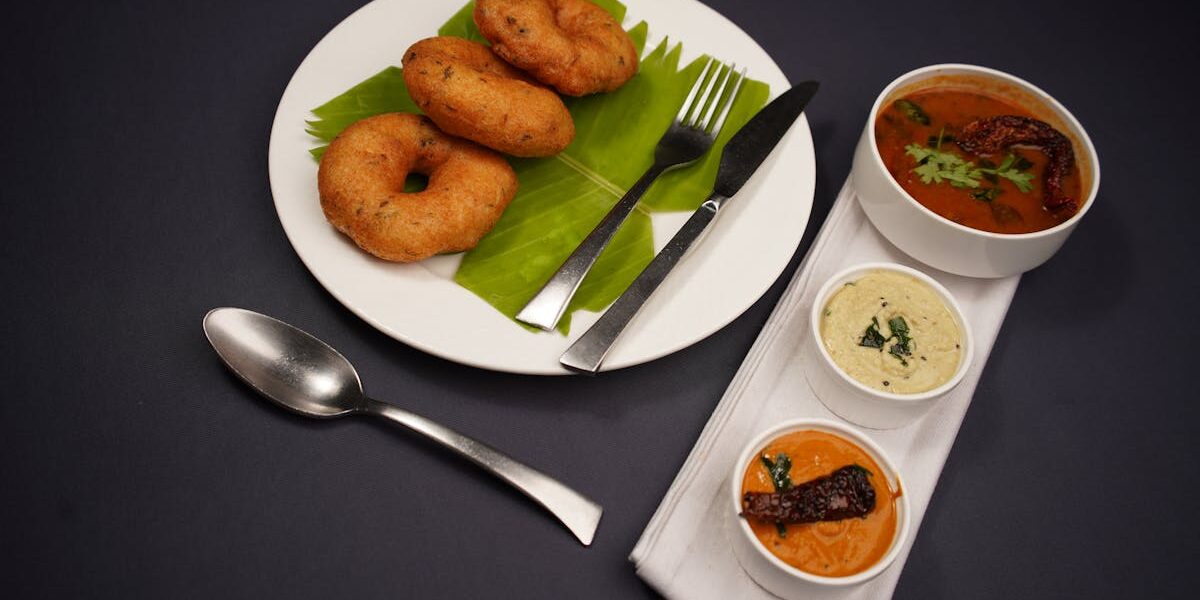
Tamil weekend breakfasts — known collectively as ”tiffin” — are a category of their own. A good spread might include two or three of these: idli, dosa or uttapam, pongal, upma, vada. The standard accompaniments are sambar, coconut chutney, tomato chutney, and milagai podi. The trick is to do one batter and one chutney really well rather than five poorly.
Tamil Food and Vegetarianism
Tamil Nadu has one of the largest concentrations of lifelong vegetarians in the world, especially among Brahmin communities, the Saiva Vellalar, and many trading castes. Tamil vegetarian food is therefore not an adaptation or compromise — it is a fully developed tradition with its own techniques (avoiding onion and garlic in temple food, using asafoetida as a substitute), its own protein sources (lentils, fresh paneer, dairy), and its own deep bench of dishes.
The satvik temple cooking style — pure vegetarian, no onion, no garlic — is sometimes mistakenly called ”boring.” In practice it builds depth through asafoetida, dry roasting, sour-sweet balancing with tamarind and jaggery, and elaborate use of seasonal vegetables. Dishes like more kuzhambu (yogurt curry with coconut-cumin paste), aviyal-style mixed vegetables, vatha kuzhambu, and a wide range of poriyals demonstrate that you do not need meat or alliums to build a complete meal.
At the same time, Tamil non-vegetarian cooking is rich and varied — coastal seafood, Chettinad meats, Tamil Muslim biryanis, Christian Tamil pork curries from the south. The cuisine sustains both traditions side by side without either dominating the other.
Festivals and Seasonal Eating
Tamil food is bound tightly to the agricultural calendar. The harvest festival of Pongal, celebrated in mid-January, gives the eponymous sweet-and-savory dish its name; freshly harvested rice is cooked in a new clay pot with milk and jaggery until it boils over — a moment greeted with shouts of ”Pongalo Pongal!” Tamil New Year in mid-April calls for mango pachadi, a dish that contains all six tastes in one bite — sweet jaggery, sour raw mango, bitter neem flowers, pungent mustard, astringent turmeric, salt — symbolizing the variety of the year ahead.
Karthigai Deepam in November-December brings appam (sweet rice-flour fritters with jaggery) and pori urundai (puffed rice and jaggery balls). Diwali in Tamil Nadu emphasizes savory sundal (boiled chickpea or peanut snacks tempered with coconut and curry leaves) more than the sweets-heavy versions seen further north. During the nine nights of Navratri, a different sundal is prepared each day, paired with bommai golu doll arrangements in the home.
Seasonal eating is also baked into everyday cooking. Mangoes from March through June dominate pickles, pachadis, and chutneys. Drumsticks (moringa pods) appear in sambar through the summer. The cooler months bring sun-dried vegetables — vathal — that get fried into vatha kuzhambu year-round but are made in family batches between January and March, when the sun is reliable and the humidity is low.
Tools Worth Owning for Tamil Cooking
Tamil cooking does not need fancy equipment, but a few pieces of kit make a real difference and pay for themselves quickly.
- Tawa (flat iron griddle). The single most important pan for a Tamil kitchen, used for dosa, adai, uttapam, parotta. A heavy carbon-steel or cast-iron flat griddle, well seasoned, is non-negotiable.
- Stovetop idli steamer. A multi-tier stand with shallow round molds. A stainless-steel version lasts a lifetime.
- Wet grinder or high-powered blender. Traditional Tamil cooks use a tabletop stone wet grinder for idli-dosa batter because it keeps the batter cool and aerated. A strong Vitamix or Indian-style mixer-grinder gets you 80% of the way there.
- Clay kuzhambu pot. Once seasoned and dedicated, this changes the flavor of fish and tamarind curries dramatically.
- Stone mortar and pestle (ammikkal). For chutneys and small spice grinds. A small Indian-style stone ammi or even a heavy granite mortar will do.
- Pressure cooker. A 5-litre stovetop pressure cooker is standard in every Tamil kitchen for cooking dal, rice, and meat quickly.
- Sharp knife. Most Tamil prep is chopping vegetables — a heavy chef’s knife or, for the Asian fusion home, a Chinese cleaver as covered in our cleaver knife skills guide.
Stocking a Tamil Pantry Outside India
If you are shopping for Tamil ingredients in the United States, focus on freshness over price. Curry leaves should be deep green and intensely fragrant — bagged, dried curry leaves are nearly useless. Tamarind should be a dark, sticky block, not powder. Sesame oil should be cold-pressed and labeled ”gingelly” or ”Indian sesame oil,” not Chinese toasted sesame oil, which is darker and more intensely flavored.
Buy spices whole and grind them yourself in small batches — the difference between a fresh sambar powder and a six-month-old pre-mix is immediately obvious. For rice, look for ponni boiled rice or seeraga samba; idli rice (a parboiled short-grain) is essential if you want to make idli batter from scratch. Lentils — toor dal, urad dal, chana dal, moong dal — should be sourced from a high-turnover store, since dal that has sat for years takes much longer to cook and never quite gets soft.
Tamil Food on the Global Stage
Tamil restaurants outside India have evolved on their own terms. In Singapore and Malaysia, banana-leaf rice — a Tamil-Malaysian invention — has become a national favorite. In Toronto, Sri Lankan Tamil refugees built one of North America’s most underrated curry scenes, with kothu roti, lamprais, and string hopper kothu turning up in food halls. In London, Tamil restaurants in Tooting and Wembley range from no-frills mess-style dining rooms to fine-dining reinterpretations.
In the United States, the wave of South Indian engineers who arrived in the 1990s and 2000s built the now-familiar Saravana Bhavan and Madras Cafe chains in tech hubs like the Bay Area, New Jersey, and Seattle. More recently, modern Tamil restaurants in New York and Los Angeles — places willing to call themselves ”Tamil” rather than ”Indian” — have started cooking from family recipes rather than corporate menus. The shift is consistent with a broader 2026 trend toward named, place-specific regional Asian cooking and away from generic ”Indian” or ”Asian-inspired” branding.
Common Mistakes When Cooking Tamil Food at Home
- Skipping the tempering. The tadka is not optional flourish — it is the dish’s flavor signature. A sambar without bloomed mustard seeds, asafoetida, and curry leaves is just a lentil stew.
- Using old, dull spices. Whole spices lose their oils within a year. If your sambar powder smells faintly like cardboard, your dish will too. Buy whole, store in airtight jars, grind in small batches.
- Treating tamarind as a ”splash.” Tamil dishes use tamarind in volume — a sambar might want half a lime-sized ball soaked and squeezed. Underdoing the tamarind is the most common reason Western home cooks find their sambar bland.
- Trying to make dosa on the first try. Dosa is an expert dish. Start with adai, which is more forgiving — it does not need fermentation and accepts a wider range of thickness.
- Cooking poriyal too long. Vegetables in Tamil dry curries should still have texture. They are tempered, lightly cooked, and finished with grated coconut, not braised to mush.
- Substituting Chinese sesame oil for gingelly oil. Indian sesame oil is light, golden, and made from raw seeds. Toasted Chinese sesame oil is dark, intense, and will overpower a Tamil dish. They are not interchangeable. Our guide to sesame oil covers the differences in detail.
- Forgetting to balance sweet, sour, salt, heat. Tamil flavor logic is about all four landing on the palate at once. A pinch of jaggery in your sambar, a squeeze of lime in your rasam — these are the small adjustments that take the dish from ”fine” to ”right.”
Tamil Food FAQ
Is Tamil food the same as South Indian food?
No. ”South Indian food” is an umbrella that includes the cuisines of Tamil Nadu, Kerala, Karnataka, and Andhra Pradesh / Telangana — four distinct culinary traditions. Tamil food is one of them. The four cuisines share certain ingredients (curry leaves, coconut, mustard seeds, dosa-style batters) but differ sharply in their souring agents, fats, and spice profiles.
Is all Tamil food vegetarian?
No. Tamil Nadu has both a deep vegetarian tradition (especially among Brahmin and Saiva communities) and a deep meat-eating tradition, especially in Chettinad, Madurai, the coastal districts, and Tamil Muslim communities. The vegetarian half of the cuisine is more visible in restaurants abroad, but home cooking is often non-vegetarian, particularly seafood.
Is Tamil food very spicy?
Some of it is, some of it is not. Chettinad food can be aggressively hot. Temple food and many home dishes are mild — built more on sour and umami than on chili heat. Pepper, rather than chili, was the original Tamil heat source; chilies arrived from the Americas via Portuguese trade only in the 16th century.
What is the difference between sambar and dal?
Dal is a generic Indian word for lentils or a lentil-based dish. Sambar is a specific Tamil (and broader South Indian) dish in which cooked toor dal is combined with tamarind water, vegetables, ground sambar powder, and a tempering. A sambar is a kind of dal-based dish, but most dals are not sambars.
What is the difference between idli and dosa batter?
Both are fermented batters of rice and urad dal. Idli batter is slightly thicker, with a higher proportion of urad dal (closer to 3:1 or 4:1 rice to dal) and often uses parboiled idli rice, which produces fluffier steamed cakes. Dosa batter is thinner, with more rice (often 4:1 or 5:1), so it spreads thin and crisps on the griddle. Many Tamil households make a single multipurpose batter and adjust the consistency with water.
What does Tamil food taste like compared to North Indian food?
Tamil food is sourer (heavy use of tamarind), lighter on dairy (no cream-based curries), tempered with mustard and curry leaves rather than cumin and garam masala, and built on rice rather than wheat. It uses sesame oil and coconut oil instead of ghee or mustard oil. The closest North Indian analogue in flavor — though still very different — would be parts of Maharashtrian cooking that use jaggery, tamarind, and coconut.
Can I make idli without a wet grinder?
Yes, with a high-powered blender. Soak the rice and urad dal separately for 4–6 hours, grind the urad dal first with cold water until light and fluffy, then grind the rice to a slightly coarse texture, mix, salt, and ferment overnight in a warm spot. The blender heats the batter more than a stone grinder does, so use cold water and grind in short pulses.
What rice should I use for Tamil cooking?
For everyday meals, ponni boiled rice or sona masuri. For biryani, seeraga samba (a small short-grain variety). For idli batter, parboiled idli rice. For dosa batter, raw sona masuri or idli rice. Basmati is uncommon in Tamil home cooking — it is a North Indian rice, and its long, separate grains are wrong for the soft, slightly sticky texture Tamil cooking expects.
Is Tamil food gluten-free?
Most of it is, naturally — rice and lentils form the base, and very few traditional Tamil dishes contain wheat. The main exceptions are parotta (made with wheat) and dishes adopted from North Indian or Anglo-Indian traditions (chapati, naan, samosa). If you are gluten-free, Tamil food is one of the easier Asian cuisines to navigate.
How do I eat Tamil food properly?
Traditionally with the right hand, mixing rice and gravy with the fingertips and bringing the small ball to the mouth. The tips of all four fingers do the mixing; the thumb pushes the food in. The act of mixing is half the eating — the diner controls the ratio of rice to sambar to vegetable in each bite. A spoon is perfectly acceptable in casual settings, but if you want the food to taste the way it is meant to, eat with your hand at least once.
Bringing Tamil Cuisine Into Your Kitchen
The smartest way to learn Tamil cooking is to pick one dish, cook it five times, and only then move on. Start with rasam — it is fast, forgiving, and teaches you the central balance of tamarind, pepper, cumin, garlic, and tempering. From rasam, move to sambar, which adds dal and vegetable management. From sambar, move to dosa, which adds the discipline of fermentation. By the time you can produce a clean, lacy dosa on demand, you have most of the cuisine in your hands.
The other thing worth saying is that Tamil food rewards patience in the pantry more than in the kitchen. A great cook with stale spices and tired curry leaves will produce a mediocre meal; a beginner with fresh, fragrant ingredients will produce something that tastes recognizably right. Stock the basics — curry leaves, sesame oil, tamarind, mustard seeds, urad dal, asafoetida, fresh sambar powder — and the cuisine begins to open up. Tamil food is one of the world’s great regional traditions, and once you can taste the difference between a sambar made with last-week’s powder and one ground that morning, you will not go back.

Mei Lin Chen
Mei Lin Chen is an Asian food writer and recipe developer. Melbourne-raised and London-based, she has spent over a decade exploring the rice paddies, hawker stalls, and home kitchens of South-East and East Asia. Her recipes balance traditional technique with everyday practicality.