Last updated: March 26, 2026
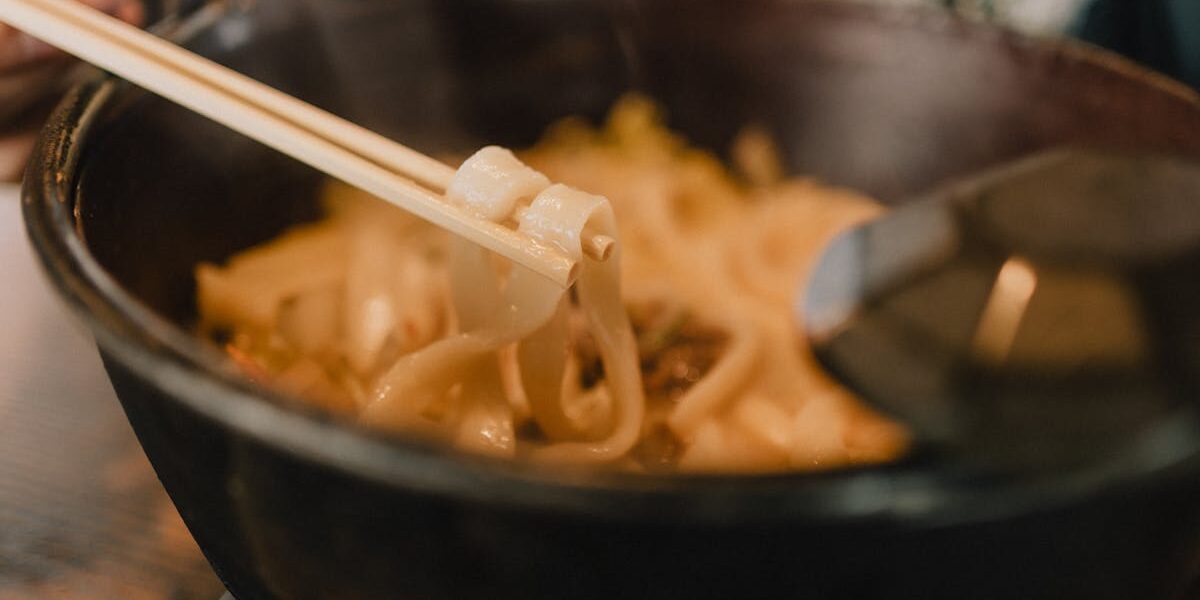
Udon are the thick, chewy, springy wheat noodles that anchor some of Japan’s most beloved bowls — from steaming kake udon on a cold Tokyo morning to chilled sanuki udon dipped in tsuyu on a humid Kagawa afternoon. Most home cooks reach for the dried or vacuum-packed bricks at the grocery store, and those are perfectly serviceable. But fresh, hand-made udon is a different category of noodle entirely: bouncy, glassy, with that elastic snap the Japanese call koshi that store-bought simply cannot replicate.
The remarkable thing about udon is how few ingredients it requires — flour, water, salt — and how much technique lives inside those three. This guide breaks down the entire process: the flour to buy, the salt-to-water ratio for every season, the foot-kneading tradition, the rest periods that build koshi, the rolling and cutting that determines mouthfeel, and the boil that locks it all in. By the end, you will be able to make restaurant-grade udon in your home kitchen with nothing more than a mixing bowl, a rolling pin, and a sharp knife.
What Is Udon and Why Make It From Scratch
Udon (うどん) are thick Japanese wheat noodles, typically between 4 and 6 millimeters in width and square or rectangular in cross-section. They are made from a soft wheat flour dough that has been kneaded, rested, rolled, and cut into long ribbons, then boiled until tender but still elastic. The defining characteristic is koshi — a Japanese culinary term that describes the springy, almost rubbery bounce that a properly made udon noodle delivers when bitten.
The most famous regional style comes from Kagawa Prefecture on Shikoku Island, where sanuki udon is considered the gold standard. Sanuki udon is firmer and more elastic than other regional variants, with a glossy surface and a clean wheat flavor. Other significant styles include the softer Inaniwa udon from Akita, the flat hoto udon from Yamanashi cooked directly in miso soup, and the famously creamy Ise udon from Mie Prefecture.
Making udon from scratch matters because the texture is impossible to fake. Dried udon loses moisture and elasticity during processing; vacuum-packed noodles improve on that but still cannot match the glassiness of a fresh hand-cut strand. Beyond texture, the homemade version lets you control salt levels, gluten development, and noodle width — three variables that completely change the eating experience. Once you understand the principles in this guide, you can dial the noodle to the dish: thicker and chewier for hot kake udon, slightly thinner and silkier for chilled zaru udon, or wide and flat for nabeyaki hot pot.
The Three Ingredients That Make Udon
Udon dough is famously austere: just wheat flour, water, and salt. Each ingredient does specific work, and the ratios matter more than they appear to at first glance.
Flour
Udon is traditionally made from medium-protein wheat flour with around 9 to 10 percent protein content. In Japan this is called chuurikiko (中力粉), literally ”medium-strength flour.” It sits between cake flour and bread flour. The protein level is critical: too low and the dough lacks the gluten network needed for chew; too high and the noodles become tough and overly elastic, behaving more like Chinese hand-pulled noodles than Japanese udon.
Outside Japan, the easiest substitute is unbleached all-purpose flour. King Arthur all-purpose runs around 11.7 percent protein, which is slightly high but workable; Gold Medal and Pillsbury all-purpose typically sit at 10.5 percent, which is closer to ideal. If you want to dial in precisely, blend 80 percent all-purpose with 20 percent cake flour. Avoid bread flour and 00 pasta flour for udon — both will give you a tough, snappy noodle rather than the bouncy chew you want.
Water
Use cold filtered water. Tap water with heavy chlorination can affect gluten development and impart off-flavors to a dough this minimal. The water-to-flour ratio governs the chew and the workability: more water gives a softer, silkier noodle but a stickier, harder-to-handle dough. The sweet spot for home cooks is around 45 to 48 percent hydration by weight (450 to 480 grams water per 1000 grams flour).
Salt
Salt does three jobs in udon dough. It strengthens the gluten network, it controls fermentation by inhibiting wild yeast during long rest periods, and it slows starch absorption during boiling so the noodles cook from the outside in without going gummy at the center. Japanese udon makers adjust salt seasonally because gluten relaxes faster in warm weather: more salt in summer to firm the dough, less in winter when the cold already keeps it tight.
The Seasonal Salt Ratio Table
This is one of the oldest tricks in Japanese udon making, and most home recipes ignore it entirely. The salt and water ratios shift across the year. Use the table below as a working guide; you can fine-tune based on your kitchen temperature.
| Season | Approximate Kitchen Temp | Salt (% of flour weight) | Water (% of flour weight) | Notes |
|---|---|---|---|---|
| Summer (June–August) | Above 28°C / 82°F | 4.5–5% | 45–46% | More salt to firm slack dough |
| Spring & Autumn | 18–25°C / 64–77°F | 4% | 47% | Baseline ratios for most kitchens |
| Winter (December–February) | Below 15°C / 59°F | 3–3.5% | 48% | Less salt; dough already firm |
Dissolve the salt completely in the water before mixing — adding granular salt to flour produces uneven gluten development and salty pockets in the finished noodle. For a starting batch of 500 grams flour at spring/autumn ratios, that works out to 235 milliliters water with 20 grams salt fully dissolved.
Equipment You Actually Need
One of the joys of udon is how little gear is required. There is no special pasta machine, no extruder, no proofing box. Most home cooks already have everything they need.
- Digital kitchen scale — essential. Volume measurements for flour and water are too imprecise for a recipe this lean. Hydration is calculated by weight.
- Large mixing bowl — wide enough to combine 500 grams of flour without spillover.
- Bench scraper — useful for gathering shaggy dough and cleaning the work surface, though not strictly required.
- Heavy-duty zip-top freezer bag, gallon size — for the foot-kneading step. A clean folded kitchen towel works as a barrier on top.
- Rolling pin — preferably a long French-style straight pin, at least 18 inches. Tapered pins work but require more passes.
- Wide work surface — at minimum 24 by 24 inches of clear, lightly dusted counter.
- Sharp knife — a heavy cleaver or a long chef’s knife with a flat edge. The blade needs to cut cleanly through layered, floured dough without dragging.
- Large pot — minimum 5 liters / 5 quarts. Udon needs a lot of swimming room to cook evenly.
- Spider strainer or mesh skimmer — for lifting cooked noodles into ice water.
- Large bowl for ice bath — the post-boil shock is what locks in the koshi.
If you make udon frequently, two upgrades are worth considering. A traditional menbo (Japanese rolling dowel) is longer and thinner than a Western rolling pin and folds the dough around itself for faster, more even sheeting. A wooden komaita cutting guide ensures uniform noodle width once you have rolled the sheet. Neither is necessary for beginners. A standard kitchen setup will produce excellent results. If you appreciate the precision of a heavy Asian blade for cutting, our Chinese cleaver guide walks through technique that translates directly to udon cutting.
Step-by-Step: Making Udon From Scratch
This recipe yields four generous portions, about 500 grams of fresh udon. The active time is roughly 45 minutes spread across two days, with the majority of that being kneading and rolling. The remaining time is hands-off resting, which is non-negotiable — it is what transforms a stiff dough ball into a supple, bouncy noodle.
Step 1: Mix the Brine
Weigh 500 grams of all-purpose flour into a large mixing bowl and set aside. In a separate cup or jar, combine 235 grams of cold water with 20 grams of fine sea salt. Stir until the salt has fully dissolved — there should be no visible crystals at the bottom of the cup. Tilt the cup against a light; if it looks crystal-clear, you are ready.
Step 2: Combine and Hydrate
Pour the brine into the flour in a slow, steady stream while stirring with chopsticks or your fingertips. Do not pour it all in at once — you want every flour particle to get equal moisture. After about 90 seconds of stirring, the mixture should look like wet, ragged crumbles. Resist the urge to add more water; the dough will look dry now and become supple later. Switch from chopsticks to your hands and squeeze the crumbles together into one shaggy mass. Do not knead yet. Just consolidate.
Step 3: First Rest (Autolyse)
Press the shaggy dough into a rough disc, place it in a zip-top freezer bag, press out as much air as possible, and seal. Let it rest at room temperature for 30 minutes. During this rest, the flour fully absorbs the water and the gluten begins to organize itself with no work from you. The dough will go from rough and bumpy to noticeably smoother on the surface.
Step 4: The Foot Kneading
This is the famous technique that intimidates beginners and turns out to be the easiest part of the whole process. Place the sealed bag on a clean kitchen towel on the floor, fold a second towel over the top, and step on the dough with the balls of your feet (clean, of course). Walk back and forth across the bag for about 3 minutes, flattening it to roughly the size of a dinner plate.
Remove the dough from the bag, fold it into thirds like a letter, then in half so it becomes a small chunk again. Return it to the bag and repeat the stepping for another 3 minutes. Do this folding-and-stepping cycle two more times for a total of four passes. The purpose is to develop gluten powerfully and evenly without overheating the dough — your body weight applies far more pressure than your arms could, but it does so slowly and steadily, which is exactly what udon dough wants.
If you genuinely cannot bring yourself to step on dough, you can hand-knead instead: turn the dough out onto the counter and knead aggressively for 10 to 12 minutes, folding and pressing with the heel of your hand. The result is similar but takes more effort.
Step 5: Long Rest (Gluten Relaxation)
Reshape the kneaded dough into a smooth ball, return it to the sealed bag, and rest at cool room temperature for at least 2 hours — ideally 4 to 6 hours, or even overnight in the refrigerator. This rest period is where koshi develops. The gluten you built up in the foot-kneading relaxes and aligns, the salt continues to penetrate, and the starch hydrates fully. Skipping or shortening this rest is the single most common reason home-made udon turns out tough and brittle.
If you refrigerated the dough, pull it out about an hour before rolling so it returns to room temperature. Cold dough resists rolling and tears easily.
Step 6: Roll the Sheet
Dust your work surface generously with cornstarch — not flour. Cornstarch creates the silky, non-sticky barrier that traditional udon makers prize; it prevents the layered noodles from fusing in the next step. Turn the dough out, flatten with your palms into a rough oval, then begin rolling. Work from the center outward in all four directions to keep the sheet roughly rectangular.
Aim for a final thickness of 3 to 4 millimeters — roughly the thickness of two stacked credit cards. This sounds thick, but remember that udon swells substantially during boiling. A thinner sheet produces ramen-like skinny noodles; a thicker sheet produces dense, slightly underdone centers. Use a ruler the first few times until your eye learns the gauge.
Step 7: Fold and Cut
Dust the top of the rolled sheet generously with more cornstarch. Fold the sheet in thirds like a letter, then dust the top again. Position your knife perpendicular to the long edge. Cut straight down with a clean, even motion — do not saw, which crushes the dough and produces ragged noodles. Aim for 4 to 5 millimeter strips, the same width as the dough thickness, which produces the classic square-cross-section udon.
Lift each batch of strips with your fingers, gently shake to separate, then toss with a little more cornstarch to coat. Pile loosely in a basket or on a sheet pan. The noodles should look like glassy, slightly translucent ribbons. At this point you can cook immediately, refrigerate for up to 24 hours in a lightly covered container, or freeze in single-portion nests on a parchment-lined tray, then transfer to a bag once solid.
Step 8: The Boil
Bring at least 4 liters of unsalted water to a rolling boil in your largest pot. Do not salt the water — the dough already contains plenty. Shake excess cornstarch off your noodles and drop them in batches, stirring immediately with chopsticks so they do not clump. Fresh udon cooks fast: 8 to 10 minutes for noodles freshly cut, 10 to 12 for refrigerated, 12 to 14 for frozen (without thawing).
The water will likely foam up dramatically and threaten to boil over because of the salt and starch released by the noodles. Keep a cup of cold water beside the stove and pour a splash in whenever the foam climbs — a Japanese technique called sashimizu, which both calms the boil and helps the noodles cook from the outside without bursting.
Test for doneness by lifting one noodle and biting through it. The center should no longer have a white starchy core, but the noodle should still resist firmly between your teeth. When done, lift the noodles immediately with a spider strainer into a bowl of ice water.
Step 9: The Ice Bath
This is the second non-negotiable step. Plunge the cooked noodles into ice water and rub them gently between your hands for about 30 seconds. The sudden temperature shock contracts the outer starch layer, locks in the koshi, and washes away the surface starch that would otherwise make the noodles gummy. Drain, and either serve cold immediately (for zaru udon) or briefly rewarm in hot water before adding to a hot broth.
Common Mistakes and How to Fix Them
Almost every problem with homemade udon traces back to one of six issues. Use this troubleshooting table when something goes wrong.
| Symptom | Likely Cause | Fix Next Time |
|---|---|---|
| Noodles are tough and rubbery | Over-kneaded or wrong flour (too high protein) | Switch to all-purpose, reduce kneading by 25%, lengthen the long rest |
| Noodles fall apart in the boil | Under-kneaded or insufficient rest | Add a fourth foot-kneading pass, rest at least 4 hours before rolling |
| Gummy, starchy texture after boiling | Skipped the ice bath or did not rub off surface starch | Use a larger ice bath, rub noodles between palms for 30 seconds |
| Noodles fuse together while sitting | Used flour instead of cornstarch to dust | Always use cornstarch for cutting and storage dusting |
| Dough cracks while rolling | Dough is too cold or under-hydrated | Rest at room temperature for an hour, add 2% more water next batch |
| Cooked noodles have salty pockets | Salt was not fully dissolved in brine | Stir brine until completely clear; tilt cup to confirm |
| Noodles cook unevenly (firm outside, raw center) | Sheet rolled too thick or boil too vigorous | Roll thinner (3–4 mm), use sashimizu cold-water splashes |
| Surface looks dull and floury | Insufficient hydration or too much surface starch | Increase hydration by 2%; tap off excess cornstarch before boiling |
Practice Exercises to Build Your Skill
Udon technique improves rapidly with repetition because the variables are so few and the feedback loop is so quick. These three exercises, done over consecutive weekends, will take you from beginner to confident udon maker.
Exercise 1: The Hydration Ladder
Make three small batches in one session, each using 200 grams of flour. Hold the salt constant at 4 percent. Set the first batch at 44 percent hydration, the second at 47 percent, the third at 50 percent. Knead, rest, roll, and cut each one identically. Boil them in sequence and taste side by side. You will learn precisely what hydration looks and feels like in the dough, and which texture you personally prefer in the finished noodle. Most cooks land at 46 to 48 percent, but the lower-hydration version produces a noticeably firmer sanuki-style noodle that some prefer for chilled service.
Exercise 2: The Rest Test
Make a standard batch and divide the dough in half. Cook one half after a 1-hour rest and the other half after a 6-hour rest. The textural difference is dramatic. The short-rested noodle will be tighter, snappier, and slightly chewier in an unpleasant way. The long-rested noodle will have the silky bounce and clean break that characterizes good udon. This single side-by-side will permanently convince you to plan ahead.
Exercise 3: Three Knife Widths
Roll one sheet of dough to standard thickness, then cut three sections at three different widths: 3 millimeters (thin, almost ramen-like), 4 millimeters (classic udon), and 6 millimeters (wide, hoto-style). Cook each width to its proper doneness and serve them as kake udon in identical broth. You will quickly understand how cut width changes both the cooking time and the eating experience, and you will start cutting confidently to suit specific dishes.
Advanced Technique Tips From the Pros
Once you have made udon a few times and the basic process feels easy, these refinements will move your noodles from very good to genuinely restaurant-quality.
- Brine your salt overnight. Some Sanuki masters dissolve the salt in water the night before and refrigerate, then bring to room temperature before mixing. The fully matured brine integrates more cleanly with the flour. The effect is subtle but real over a tasting.
- Knead with seasonal rhythm. Foot-knead longer in winter when gluten is tight; reduce kneading time in summer when the gluten is already slack from heat. Watch the dough surface, not the clock — when the surface goes from rough to glossy, stop.
- Two-stage rest. Do an initial 30-minute autolyse before the foot kneading, then the long rest afterward. The double rest develops more koshi than a single long rest of equivalent total time.
- Use cornstarch, not flour, for dusting. Flour absorbs moisture and produces a starchy slime on the noodle surface during boiling. Cornstarch creates a clean, non-sticky barrier and washes off completely in the ice bath.
- Cut on the bias for hoto-style. For thick wide noodles destined for hot pot or miso simmers, cut at a slight angle and at 7 to 8 millimeters wide. The bias cut increases the surface area for sauce cling.
- Rest cut noodles before boiling. Even 15 minutes of rest after cutting allows the just-cut surfaces to dry slightly, which improves the boil and prevents fusing.
- Salt your serving broth, not your boil water. Udon dough already contains substantial salt that leaches into the boil. Adding more salt to the cooking water produces over-salty noodles. Save the seasoning for the tsuyu or kake broth.
- Reserve a cup of cooking water. For hot dishes, a splash of starchy udon water added to the broth at service tightens the soup body and helps it cling to the noodles — the same technique Italian cooks use for pasta water.
- Reheat with a hot dip, not a microwave. Cooked udon that has been refrigerated should be dipped in boiling water for 30 seconds to revive, not microwaved, which makes the noodles brittle and dry on the edges.
Recipe Example 1: Kake Udon (Hot Udon in Broth)
This is the simplest hot udon dish and the best showcase for fresh, hand-made noodles. The broth recipe scales easily; make extra and refrigerate for up to four days.
For the broth (serves 2): Combine 600 ml of dashi (made fresh from kombu and bonito flakes, see our dashi guide) with 2 tablespoons usukuchi (light) soy sauce, 1 tablespoon mirin, and 1/2 teaspoon sugar. Bring to a simmer, taste, and adjust salt with a pinch if needed. The broth should be clean, savory, and just barely sweet.
To serve: Cook 2 portions of fresh udon as described above, ice-bath them, then dip into a fresh pot of boiling water for 30 seconds to warm through. Drain and divide between two warm bowls. Ladle the hot broth over the noodles. Top with thinly sliced scallions, a small pile of grated fresh ginger, and a sheet of toasted nori cut into strips. Eat immediately, lifting the noodles with chopsticks and sipping the broth directly from the bowl.
Recipe Example 2: Zaru Udon (Chilled Dipping Udon)
Zaru udon is the summer favorite — cold noodles served on a bamboo mat with a cold dipping sauce called tsuyu. Fresh hand-made udon shines here because the chilled noodle showcases koshi at its purest.
For the tsuyu (serves 2): Combine 300 ml dashi, 4 tablespoons soy sauce, 3 tablespoons mirin, and 1 tablespoon sugar in a small saucepan. Bring to a gentle boil, simmer for 2 minutes, then cool completely. Refrigerate until ice-cold.
To serve: Cook 2 portions of fresh udon, ice-bath them aggressively, then drain thoroughly. Pile on a bamboo zaru mat or a flat plate. Divide the cold tsuyu between two small dipping cups. Set out a small dish of condiments: grated daikon, finely sliced scallions, grated ginger, and shichimi togarashi. Diners stir their preferred condiments into the tsuyu, then dip each mouthful of noodles before eating. For deeper flavor, this pairs beautifully with a side of homemade tempura.
Recipe Example 3: Curry Udon
Curry udon takes leftover Japanese curry and turns it into one of the most comforting weeknight dinners in Japan. The thick, chewy noodle is a perfect match for the rich, viscous sauce.
To prepare: Warm 500 ml of leftover Japanese curry in a saucepan. Thin with 200 ml of dashi until the consistency is loose enough to coat noodles without clumping. Adjust seasoning with a splash of soy sauce. Cook 2 portions of fresh udon, drain (skip the ice bath for this dish since the noodles will be served piping hot), and divide between bowls. Ladle the curry-dashi over the noodles, top with sliced scallions and a soft-boiled egg cut in half, and serve immediately. For a full Japanese weekend menu, this works beautifully alongside chilled homemade tsukemono.
How Udon Compares to Other Asian Noodles
Understanding how udon sits in the wider family of Asian wheat noodles helps you choose the right noodle for the right dish — and clarifies what makes the udon technique distinct.
| Noodle | Origin | Flour Protein | Hydration | Key Technique | Texture |
|---|---|---|---|---|---|
| Udon | Japan | 9–10% | 45–48% | Foot-knead, long rest, hand-cut | Thick, springy, bouncy |
| Ramen | Japan/China | 11–13% | 32–38% | Kansui (alkaline salts), machine roll | Thin, firm, yellow |
| Soba | Japan | Buckwheat-based | ~50% | Quick mix, careful roll, immediate use | Thin, earthy, delicate |
| Lamian (hand-pulled) | China | 13–14% | 50–55% | Alkali plus repeated pulling | Long, chewy, irregular |
| Somen | Japan | 9–10% | ~45% | Oil-coated, hand-stretched, sun-dried | Very thin, delicate, smooth |
| Hokkien noodles | Malaysia/Singapore | 12% | ~40% | Alkali plus light oil coating | Thick, yellow, firm |
If you want to explore further, our companion guides on ramen noodles and Chinese hand-pulled noodles show how each technique diverges from udon despite sharing the same base ingredients.
Regional Styles of Japanese Udon
Japan has dozens of regional udon styles, each with its own technique tweaks and signature dish. Knowing the major ones helps you choose what to make and what to seek out when traveling.
- Sanuki udon (Kagawa). The most famous style. Firm, glossy, square-cross-section, heavy on the koshi. Cooked at home using the technique in this guide.
- Inaniwa udon (Akita). Hand-stretched and air-dried, resulting in a thinner, paler, silkier noodle closer to somen than to classic udon. Almost always served chilled.
- Hoto udon (Yamanashi). Wide and flat, around 12 mm across. Cooked directly in miso soup with kabocha squash and root vegetables. The noodle releases starch into the broth, which thickens dramatically.
- Ise udon (Mie). Soft, plump, slightly underkneaded by sanuki standards, dressed in a thick, dark, sweet tamari-based sauce rather than served in broth.
- Kishimen (Aichi). Wide and flat like hoto but thinner, around 4 mm. The hyperlocal Nagoya specialty, usually served in a clear broth with bonito flakes.
- Yaki udon (nationwide). Not a noodle style but a preparation — udon stir-fried with vegetables, meat or seafood, and a savory-sweet sauce. Often made with refrigerated leftover udon.
Storing, Freezing, and Reheating Fresh Udon
One batch of this dough is too much for a single meal in most homes. Fresh udon stores remarkably well if you respect a few rules.
Refrigerator (uncooked, 24 hours). Toss the cut noodles generously with cornstarch, divide into single-portion nests, and store loosely covered with parchment between layers. Anything longer than 24 hours and the noodles start to fuse and discolor.
Freezer (uncooked, 4 weeks). The best long-term option. Toss with cornstarch, form into single-portion nests on a parchment-lined sheet pan, and freeze uncovered until solid (about 2 hours). Transfer the frozen nests to a zip-top bag and squeeze out the air. Cook directly from frozen, adding 2 to 4 minutes to the boil time. Do not thaw first — the noodles get sticky and uneven.
Refrigerator (cooked, 48 hours). After ice-bathing and draining cooked udon, toss lightly with neutral oil to prevent sticking and store in a sealed container. To reheat, dip in boiling water for 30 seconds and drain. Do not microwave — it makes the noodles brittle.
Dough (refrigerated, 24 hours). The kneaded dough ball itself can rest in the fridge overnight in its sealed bag. Bring to room temperature before rolling. Many home cooks find that the overnight cold rest actually improves koshi compared to a same-day 4-hour rest.
Frequently Asked Questions
Can I make udon without stepping on the dough?
Yes. Foot-kneading is traditional and efficient, but a vigorous 10-to-12-minute hand knead with the heel of your hand produces nearly the same result. A stand mixer with a dough hook on low speed for 8 minutes also works, though the texture is slightly less developed than with hand or foot work. The foot method’s advantage is leverage and even pressure, not magic.
Why use cornstarch instead of flour for dusting?
Flour absorbs moisture from the cut noodles and turns into a sticky paste during the boil, fusing the noodles and clouding the water. Cornstarch creates a non-absorbent barrier that prevents sticking and rinses away cleanly. Potato starch works equally well; rice flour is too coarse and gives the noodles a gritty surface.
Can I use bread flour to make udon?
You can, but the result will be tougher and more elastic than authentic udon — closer to Chinese lamian in mouthfeel. If bread flour is what you have, blend it 1:1 with cake flour to drop the protein content into the udon range. Pure bread flour also requires more water (around 50 percent hydration) and a longer rest to soften.
Is fresh udon healthier than dried udon?
Not significantly. The ingredients are identical and the calorie content is nearly the same — fresh udon is slightly higher in moisture and therefore lower in calories per gram of cooked noodle. The main differences are textural and culinary. If you are watching sodium, fresh udon does retain more salt from the dough; rinsing thoroughly after cooking helps.
Why do my udon noodles break when I lift them with chopsticks?
Breaking is almost always a sign of under-kneading or insufficient rest. The gluten network is not strong enough to hold the noodle together when stretched. Add a foot-kneading pass next time and lengthen the long rest to at least 6 hours. Overcooking also makes noodles fragile — pull them when the center has just lost its starchy white core.
How do I know when the dough has been kneaded enough?
The classic Japanese test is the earlobe test: pinch a small piece of dough and gently stretch it. It should feel about as soft and supple as your earlobe — pliable, smooth, springy, but not sticky or rubbery. If it tears immediately, knead more. If it stretches into a translucent membrane like bread dough, you have gone too far for udon and the noodles will be tough.
Can I add eggs to udon dough for richness?
Traditional udon does not contain eggs. Adding egg pushes the noodle toward a Chinese-style egg noodle or Italian pasta and changes the chew completely. If you want richness in the finished dish, build it into the broth or topping rather than the dough.
What broth pairs best with hand-made udon?
The classic match is a dashi-based broth seasoned with usukuchi (light) soy sauce and mirin — clean, savory, and translucent enough to showcase the noodle. Heavier broths like tonkotsu overpower the udon and are better paired with ramen. Curry sauces, miso soups, and chilled tsuyu all work well; cream-based or tomato-based sauces clash with the wheat-forward udon flavor.
Why does the recipe call for resting the dough so many times?
Each rest does a different job. The first rest (autolyse) hydrates the flour so the dough comes together smoothly with minimal effort. The long rest after kneading lets the gluten relax and align, which is the source of koshi. The brief rest after cutting allows the cut surfaces to dry slightly so they do not fuse. Skipping any of these produces a noticeably worse noodle.
Can I make udon gluten-free?
Not really. Udon’s defining texture comes entirely from the gluten network in wheat flour, and removing wheat removes the noodle’s identity. If you need a gluten-free thick noodle for similar dishes, look at rice noodles or shirataki, which use entirely different techniques and produce a different (but still good) eating experience.
Bringing It All Together
Fresh udon is one of the easiest authentic Asian noodles to make at home, and one of the most rewarding. Three ingredients, basic equipment, and a few hours of mostly hands-off time deliver a noodle that no supermarket package can match. The technique rewards patience: get the salt-to-water ratio right for your season, knead until the dough is smooth and earlobe-soft, rest long enough for the koshi to develop, roll evenly, cut cleanly, and shock the cooked noodles in ice. Do each step properly and the result is the springy, glossy, deeply satisfying udon you remember from your favorite Japanese restaurant.
Start with a single batch this weekend. Make kake udon for one meal, freeze the rest in single-portion nests, and use them across the following two weeks for curry udon, yaki udon, or chilled zaru udon. By the third or fourth batch, the whole process will feel natural, and you will start tweaking the hydration, salt, and cut width to suit your own preferences. That dialing-in is exactly what generations of Japanese udon masters have been doing for centuries — the craft is in the details, and the details are entirely within reach.

Mei Lin Chen
Mei Lin Chen is an Asian food writer and recipe developer. Melbourne-raised and London-based, she has spent over a decade exploring the rice paddies, hawker stalls, and home kitchens of South-East and East Asia. Her recipes balance traditional technique with everyday practicality.