Last updated: March 20, 2026
If you have ever sipped a perfect bowl of tom yum, taken a spoonful of rich Malaysian rendang, or scooped fragrant green curry over jasmine rice, you have already met galangal — even if you didn’t know its name. Often mistaken for ginger because of its knobby, beige appearance, galangal is one of the most distinctive aromatics in Southeast Asian cooking. It is sharper, woodier, more piney, and far more assertive than its better-known cousin, and it lends an unmistakable backbone to soups, curries, stir-fries, sambals, and pastes across Thailand, Indonesia, Malaysia, Vietnam, Laos, Cambodia, and beyond.
This complete guide walks you through everything you need to know about galangal: what it actually is, the different varieties you’ll encounter, how to choose and store it, the best substitutes when you can’t find it, plus five complete recipes that show off its flavor. We’ll also dig into its history, its nutritional benefits, and answer the most common questions home cooks ask about working with this remarkable rhizome.
What Is Galangal?
Galangal (pronounced guh-LANG-gul) is a rhizome — an underground stem — that belongs to the same botanical family as ginger and turmeric (Zingiberaceae). Despite the family resemblance, galangal is its own creature: paler, harder, more fibrous, and packed with essential oils that smell like a forest floor crossed with citrus peel and cracked black pepper. In Thailand it is called kha, in Indonesia laos or lengkuas, in Malaysia lengkuas, in Vietnam riềng, and in Cambodia romdeng.
Where ginger leans warm, sweet, and slightly spicy, galangal leans sharp, peppery, and resinous — somewhere between pine, cedar, mustard, and bright citrus. A tiny sliver can perfume an entire pot of broth. That intensity is exactly why it appears in nearly every classic Thai curry paste and forms the aromatic backbone of so many Indonesian and Malaysian rempahs (spice pastes).
A Brief History of Galangal
Galangal is native to the island of Hainan in southern China and to the wider tropical belt of maritime Southeast Asia. It has been cultivated for at least 2,000 years, and references to it appear in early Chinese medical texts where it was prescribed for digestive ailments, motion sickness, and respiratory complaints. By the time the great spice trade routes were established, galangal was traveling west alongside cloves, nutmeg, and pepper.
Medieval Europe knew galangal well. It appears in 12th-century writings by the German abbess and herbalist Hildegard of Bingen, who called it the ”spice of life” and praised its warming, restorative effects. It shows up in English, French, and Arabic cookbooks of the Middle Ages, often alongside ginger and grains of paradise. Then, as the New World spice trade flooded Europe with cheaper alternatives like black pepper and chilies, galangal slowly faded from Western kitchens.
In Southeast Asia, however, it never went anywhere. Galangal remained — and remains — a non-negotiable ingredient in regional cooking. From the laksas of Penang to the bumbus of Bali, the laaps of Laos to the soups of Isan, you cannot understand the flavor profiles of the region without it. The recent global interest in Thai street food, Indonesian satays, and Vietnamese home cooking has brought galangal roaring back into international pantries.
Varieties of Galangal
”Galangal” is actually an umbrella term for several closely related species. The differences matter, because their flavors are not interchangeable.
| Variety | Botanical name | Appearance | Flavor profile | Best used in |
|---|---|---|---|---|
| Greater galangal | Alpinia galanga | Large rhizome, pale cream to ivory with pink shoots, smooth skin | Sharp, piney, citrusy, mildly peppery | Thai curries, tom yum, tom kha, Malaysian rendang, Indonesian rempah |
| Lesser galangal | Alpinia officinarum | Smaller, darker reddish-brown skin, denser flesh | Much more pungent, hot, peppery, almost cardamom-like | Traditional Chinese medicine, some Cantonese dishes, herbal liqueurs |
| Sand ginger / kencur | Kaempferia galanga | Small, knobby, very pale flesh, almost camphorous aroma | Aromatic, slightly bitter, eucalyptus and pine notes | Indonesian sambals, Javanese soto, some Malaysian curries |
| Fingerroot / Chinese keys | Boesenbergia rotunda | Cluster of slim, finger-like roots, golden flesh | Earthy, slightly bitter, peppery | Thai jungle curry (kaeng pa), Cambodian fish dishes |
When a recipe simply says ”galangal” without qualification — which is almost always — it means greater galangal. That’s the variety you will find in Asian grocers, that goes into Thai curry pastes, and that this guide focuses on. The others are wonderful but more specialized; we’ll flag them by name when they matter.
Galangal vs. Ginger: Why They Aren’t Interchangeable
The single most common kitchen mistake with galangal is treating it like ginger. They look similar, they’re related, they’re sold side by side — and yet substituting one for the other will fundamentally change the dish.
| Trait | Galangal | Ginger |
|---|---|---|
| Skin | Smooth, pale, almost translucent with pinkish shoots | Tan, papery, often wrinkled |
| Flesh | Hard, dense, almost woody, ivory to pale yellow | Softer, juicier, pale yellow to gold |
| Aroma | Pine, citrus peel, pepper, slight medicinal note | Warm, sweet, fresh, lemony |
| Taste | Sharp, peppery, resinous, slightly soapy if used raw and uncooked | Warm-spicy, sweet, slightly fibrous |
| Texture when sliced | Very hard — needs a sharp knife | Yielding under a chef’s knife |
| Cooking behavior | Releases flavor slowly; usually added at the start | Releases flavor quickly; can be added at any stage |
If you’ve already explored our guide on fresh ginger in Asian cooking, think of galangal as ginger’s older, woodier, more aromatic sibling — the one that takes itself more seriously and refuses to be background flavor.
How to Buy Fresh Galangal
Galangal quality varies dramatically. A great piece will season a dish for weeks; a tired, fibrous old root will give you nothing but headache. Here is what to look for when shopping.
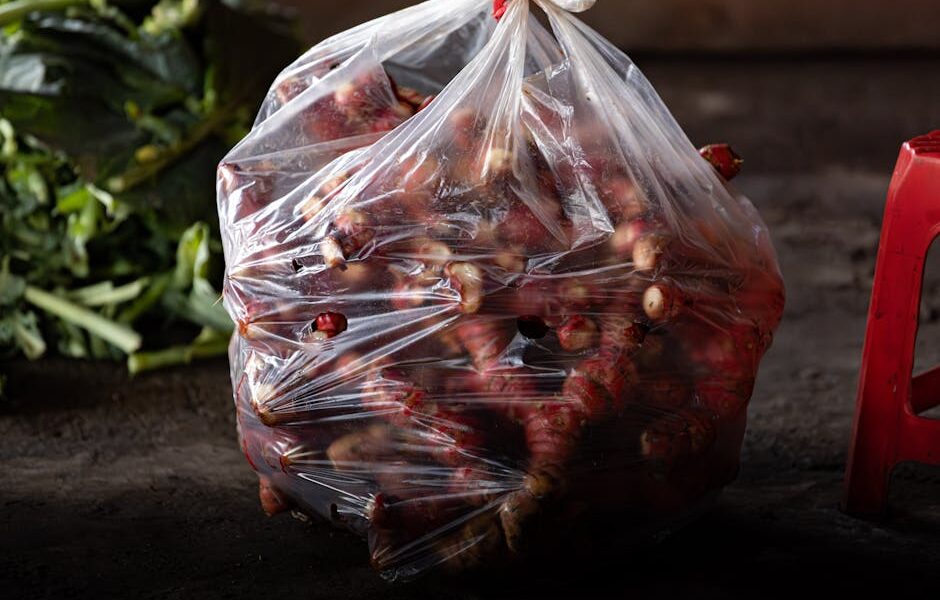
Fresh galangal at the market
- Color: Look for pale, creamy, almost ivory skin with bright pink-red tinged shoots. Avoid pieces that look gray, dull, or blackened.
- Firmness: A fresh rhizome should feel rock-hard, almost like a piece of wood. Soft spots, wrinkled skin, or any give when squeezed mean it is past its prime.
- Aroma: Snap off a small piece or gently scrape the skin with your nail. The cut surface should release a sharp, citrus-pine aroma immediately. If you smell nothing, walk away.
- Size: Bigger isn’t always better. Younger pieces with thinner skin and softer flesh are more tender and aromatic; older, larger pieces can be impossibly fibrous.
- Cut surface: If the vendor has cut a piece open, the flesh should look bright, almost glossy, and slightly moist. Dry, dull, or browning flesh means it’s been sitting around.
Frozen, dried, and powdered galangal
If fresh isn’t available, these alternatives can rescue a recipe — though each has trade-offs.
- Frozen whole galangal: The best fresh-alternative. Often pre-sliced and vacuum-sealed. It loses very little aroma and slices easily while still partially frozen.
- Frozen galangal paste: Convenient for curry pastes. Read the ingredient list — the best versions are 100% galangal with no fillers, salt, or oil.
- Dried galangal slices: Pale, hard, almost like wood chips. Excellent for long-simmered broths and soups; rehydrate in warm water for 30 minutes before using. Roughly 1 dried slice equals about 1 teaspoon fresh.
- Galangal powder: The weakest option. Acceptable for marinades and dry rubs, but lacks the freshness needed for soups or curry pastes. Use sparingly — it can taste dusty.
How to Store Galangal
Because fresh galangal is so dense and woody, it stores much better than you’d expect — but only if you treat it right.
| Method | How to store | Shelf life |
|---|---|---|
| Countertop | In a cool, dry, dark spot, wrapped loosely in paper towel | 5–7 days |
| Refrigerator (whole) | Wrap in dry paper towel, place in a perforated bag in the crisper drawer | 3–4 weeks |
| Refrigerator (cut) | Wrap exposed surface tightly in plastic, refrigerate; expect skin shrinkage | 10–14 days |
| Freezer (whole) | Wash, dry, double-bag, freeze whole | Up to 6 months |
| Freezer (sliced) | Slice into coins, freeze in a single layer, then transfer to a bag | Up to 6 months |
| Freezer (paste) | Blitz with a touch of neutral oil, freeze in ice cube trays, transfer to a bag | Up to 6 months |
| Dehydrated | Slice thinly, dry at 130°F (55°C) until brittle, store airtight | 1 year |
My favorite technique: slice an entire knob into coins on a Sunday afternoon, lay them flat on a parchment-lined tray, freeze for an hour, then dump into a zip-top bag. From then on you can pull out exactly how many coins you need and toss them straight into hot broth. No defrosting needed.
Galangal Substitutes
Nothing tastes exactly like galangal. If you can’t get it, the best strategy is usually to lean into other aromatics in your pantry — boost the lemongrass, add lime zest, throw in extra Thai basil — rather than pretend a single substitute will fill the gap. Still, here is what works when you have to improvise.
| Substitute | Ratio (vs. fresh galangal) | Best for | Notes |
|---|---|---|---|
| Fresh ginger + lime zest | 1:1 ginger + 1/4 tsp zest per inch | Curry pastes, marinades | The most accessible swap. The lime zest mimics galangal’s citrus-pine note. |
| Fresh ginger + ground mace | 1:1 ginger + pinch of mace | Soups, broths | Mace adds the warm, slightly resinous note galangal brings. |
| Dried galangal slices | 1 tsp dried = 1 tbsp fresh | Long-simmered broths only | Soak in warm water 30 minutes first. |
| Galangal powder | 1/2 tsp powder = 1 tbsp fresh | Dry rubs, spice blends | Don’t use in soups — texture is gritty. |
| Lesser galangal (fresh) | 1:2 (use half) | Stews and rich braises | Much more pungent — easy to overdo. |
| Fingerroot (krachai) | 1:1 | Thai jungle curry, fish dishes | Different but related; works in some Thai applications. |
| Lemongrass + ginger | 2 tbsp lemongrass + 1 tbsp ginger = 1 tbsp galangal | Tom yum, tom kha | Captures the bright top notes if not the woody depth. |
For more on the aromatics it most often partners with, see our guides on lemongrass and kaffir lime leaves — galangal lives inside the same flavor neighborhood.
How to Prep Galangal
Galangal is far harder than ginger, so technique matters. Here’s how to handle it without dulling your knife or losing flavor.
To peel or not to peel
Young galangal has thin, edible skin. Older pieces develop a tougher outer layer that’s worth removing — scrape it gently with the edge of a teaspoon, the way you would with ginger, rather than wasting flesh with a peeler. For broths where you’ll fish out the galangal later, you can skip peeling entirely.
Cutting techniques
- Coins or slices: Cut crosswise into 1/8-inch (3mm) coins for soups and broths. The pieces flavor the liquid and are usually left in but eaten around.
- Bruised stalks: For tom yum, cut into 2-inch (5cm) pieces, then smash with the flat side of a heavy knife to release oils.
- Julienne: Slice into thin coins, stack, then slice into matchsticks for stir-fries where the galangal is eaten.
- Minced or pasted: For curry pastes, slice thinly first, then pound in a mortar and pestle. A blender can work but needs liquid and a long blitz — galangal will bog down a food processor unless very finely sliced first.
- Grated: Use a microplane for marinades. Expect fibrous strings — you may want to press the grated mass through a fine sieve.
When to add it
Galangal releases its aromatics slowly, especially compared to ginger. In most dishes, add it early so it has time to perfume the cooking liquid or the oil base. Tom yum is an exception — there, freshly bruised galangal is added near the end so its citrus top notes don’t get cooked away.
5 Recipes Using Galangal
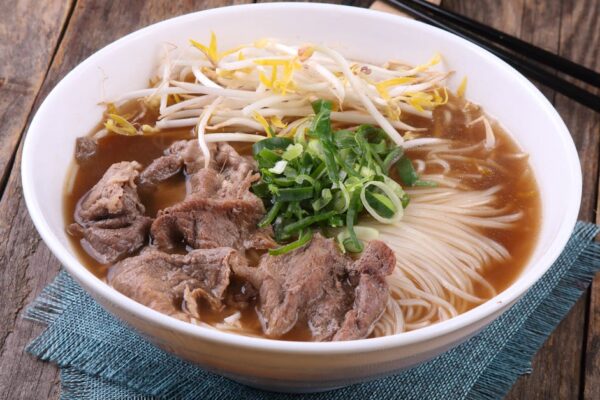
The best way to understand galangal is to cook with it. These five recipes show off different sides of the rhizome — from the sharp brightness it brings to tom yum to the deep, slow-cooked perfume it lends to rendang and beef pho.
Recipe 1: Tom Kha Gai (Thai Coconut Galangal Chicken Soup)
If there is one dish that lets galangal sing, it’s tom kha — literally ”boiled galangal.” The soup is creamy, sour, salty, and aromatic, and the galangal is unmistakably the star.
Ingredients (serves 4):
- 2 cups (480 ml) chicken stock
- 1 can (400 ml) full-fat coconut milk
- 3-inch piece galangal, sliced into thin coins
- 2 stalks lemongrass, bruised and cut into 2-inch lengths
- 4 kaffir lime leaves, torn
- 1 lb (450 g) boneless chicken thigh, sliced thin
- 1 cup (75 g) oyster or straw mushrooms, halved
- 3 tbsp fish sauce
- 2 tbsp lime juice (added at the end)
- 1–2 Thai bird’s eye chilies, lightly crushed
- Fresh cilantro and sliced scallions, to garnish
Method: Bring stock and coconut milk to a gentle simmer with the galangal, lemongrass, and lime leaves. Simmer 10 minutes — you’ll smell the kitchen transform. Add chicken and mushrooms, simmer 6–8 minutes until chicken is just cooked. Off the heat, stir in fish sauce, lime juice, and chilies. Garnish and serve immediately. The galangal coins are usually left in the bowl as decoration, not eaten — they’re too woody — but a piece that lands in your spoon won’t hurt you.
Recipe 2: Homemade Thai Red Curry Paste
Galangal is the woody backbone of Thai curry pastes. Once you’ve made your own, jarred paste will feel flat in comparison.
Ingredients (makes about 1 cup):
- 10 dried long red chilies, soaked in warm water 20 min, seeds removed
- 5 fresh red Thai chilies
- 2-inch piece galangal, finely chopped
- 2 stalks lemongrass, white parts only, thinly sliced
- 1 tbsp finely chopped kaffir lime zest (or 4 lime leaves, finely shredded)
- 8 cloves garlic
- 4 small shallots, chopped
- 2 tbsp chopped cilantro stems and roots
- 1 tsp ground white pepper
- 1 tsp ground coriander, toasted
- 1/2 tsp ground cumin, toasted
- 1 tbsp shrimp paste
- 1 tsp salt
Method: In a large mortar, pound the salt and dry spices first, then add galangal and lemongrass and pound until fibrous threads break down (this is where patience pays off — 5–8 minutes). Add lime zest, garlic, shallots, and cilantro stems; pound until a rough paste forms. Add the soaked chilies and pound again until smooth. Finally, work in the shrimp paste. The result should be a vibrant brick-red paste that smells like a Bangkok market. Refrigerated in a sealed jar, it keeps 2 weeks; frozen in ice cube trays, 3 months. For more on the variations, see our complete Thai curry paste guide.
Recipe 3: Indonesian Beef Rendang
Slow-cooked, coconut-rich, and complex, rendang relies on galangal alongside lemongrass and turmeric to anchor its deep, perfumed sauce.
Ingredients (serves 6):
- 2 lb (900 g) beef chuck, cut into 2-inch cubes
- 2 cans (800 ml) full-fat coconut milk
- 6 kaffir lime leaves
- 1 stalk lemongrass, bruised
- 2 tbsp tamarind paste
- 2 tbsp palm sugar
- 1 tbsp salt
For the spice paste (bumbu):
- 2-inch piece galangal, peeled and chopped
- 2-inch piece fresh turmeric (or 1 tbsp ground)
- 10 dried red chilies, soaked
- 2 stalks lemongrass, white parts
- 10 shallots, peeled
- 8 cloves garlic
- 1-inch piece ginger
- 4 candlenuts (or macadamia nuts)
Method: Blend all spice paste ingredients with a splash of water until smooth. Fry the paste in 3 tbsp oil for 8–10 minutes until deeply fragrant and the oil separates. Add beef and stir to coat. Pour in coconut milk, lime leaves, and bruised lemongrass; bring to a simmer. Cook uncovered, stirring often, for 2.5–3 hours, until the liquid reduces to a dark, glossy, almost dry coating clinging to the meat. Season with tamarind, palm sugar, and salt. The dish is finished when the oil glistens and the beef is fall-apart tender.
Recipe 4: Vietnamese Galangal Chicken (Gà Kho Riềng)
A homestyle Vietnamese braise where galangal does heavy lifting alongside caramel sauce and fish sauce. Sticky, savory, and deeply aromatic.
Ingredients (serves 4):
- 2 lb (900 g) bone-in chicken thighs and drumsticks, chopped through the bone
- 3-inch piece galangal, half julienned, half minced
- 4 shallots, minced
- 3 cloves garlic, minced
- 3 tbsp fish sauce
- 2 tbsp soy sauce
- 2 tbsp brown sugar
- 2 tbsp neutral oil
- 1 tsp ground black pepper
- 2 scallions, sliced
- 1 Thai chili, sliced (optional)
Method: Marinate chicken with the minced galangal, half the shallots and garlic, fish sauce, soy, and pepper for 30 minutes. In a heavy clay pot or skillet, melt the brown sugar in the oil until it caramelizes to a dark amber. Add remaining shallots, garlic, and the julienned galangal; stir 1 minute. Add chicken and all marinade; sear 5 minutes. Pour in 1/2 cup water, cover, and braise 25–30 minutes, uncovering for the last 5 to reduce the sauce to a sticky glaze. Garnish with scallions and chili. Serve with steamed jasmine rice.
Recipe 5: Galangal-Ginger Tea
A traditional warming drink across Southeast Asia, often sipped when you feel a cold coming on. Bracing, slightly bitter, fragrant. This is one of the few preparations where galangal’s medicinal side really shows.
Ingredients (serves 2):
- 4 cups (1 liter) water
- 2-inch piece galangal, sliced thin
- 1-inch piece ginger, sliced
- 2 tbsp honey or palm sugar
- Juice of 1/2 lime
- 2 lemongrass stalks, bruised (optional)
- A few pandan leaves, knotted (optional)
Method: Simmer everything except honey and lime juice for 15 minutes. Strain. Stir in honey and lime. Serve hot, or chill and pour over ice. Optional but excellent: a star anise pod or a cinnamon stick during the simmer for extra warmth.
Nutritional Benefits of Galangal
Galangal has been used in traditional Asian medicine — Ayurveda, traditional Chinese medicine, and Indonesian Jamu — for thousands of years. Modern research is gradually catching up. While you’d have to eat unrealistic amounts to use galangal as a primary nutrient source, it does pack a meaningful punch of bioactive compounds.
- Anti-inflammatory compounds: Galangal contains galangin, a flavonoid studied for its anti-inflammatory and antioxidant effects.
- Digestive support: Like ginger, galangal has been used to ease nausea, motion sickness, and indigestion. It stimulates digestive enzymes and bile flow.
- Antimicrobial activity: Lab studies suggest galangal essential oils have activity against certain bacteria and fungi — one reason it appears in fermented and preserved foods across the region.
- Low calorie, high flavor: A teaspoon of fresh galangal has negligible calories but adds enormous depth, which makes it a great tool when cooking lower-fat or lower-salt dishes.
- Antioxidants: Polyphenols in galangal contribute to its sharp flavor and may help neutralize free radicals.
- Traditional uses: In folk medicine it is used for coughs, asthma, sore throat, and as a circulation booster — though clinical evidence remains limited.
One small caveat: galangal in large medicinal doses can interact with blood-thinning medications and may not be appropriate during pregnancy in concentrated form. Culinary amounts — a few slices in a soup — are perfectly safe for almost everyone.
Common Mistakes When Cooking with Galangal
- Treating it like ginger. Galangal needs more time in the pot, slices much harder, and cannot be bitten through — even when cooked, the pieces stay fibrous. They are flavoring agents, not ingredients to eat.
- Using too much. Because galangal is so potent, a heavy hand can take a dish from aromatic to medicinal. Start with less than you think and taste as you go.
- Skipping the bruising step. For dishes where you keep the galangal in pieces, bruising with a heavy knife or pestle ruptures the cells and releases far more flavor than slicing alone.
- Adding it too late. In curries and braises, galangal needs at least 20 minutes of contact with hot oil or simmering liquid to release its oils. Last-minute additions waste it.
- Using old powder. Ground galangal goes stale quickly. If yours has been in the cupboard more than 6 months, it’s likely flavorless.
- Not removing it before serving (in soups). Even when properly cooked, galangal pieces are too tough to eat. Fish them out or warn your guests.
Pairing Galangal with Other Asian Aromatics
Galangal almost never plays a solo. It works best as part of a trio or quartet of aromatics. Here is how it commonly pairs across the region.
| Pairing | Typical cuisine | Where you’ll meet it |
|---|---|---|
| Galangal + lemongrass + kaffir lime | Thai | Tom yum, tom kha, green curry |
| Galangal + turmeric + lemongrass + candlenut | Indonesian / Malaysian | Rendang, soto, gulai |
| Galangal + ginger + fish sauce + caramel | Vietnamese | Kho dishes, broths |
| Galangal + Thai basil + chili + garlic | Thai / Lao | Jungle curry, larb-style stir-fries |
| Galangal + shrimp paste + chili | Cambodian | Kroeung pastes, fish amok |
If you’ve worked through our tom yum goong recipe or Malaysian rendang, you’ve already seen this aromatic logic in action.
Where to Buy Galangal in the US
- Asian grocery stores: Thai, Vietnamese, Indonesian, and Chinese markets almost always carry fresh galangal, usually in the produce section near ginger and lemongrass.
- Specialty Southeast Asian markets: Best selection of varieties — you’ll often find both greater and lesser galangal, plus frozen and dried.
- Major chain supermarkets: Increasingly carry fresh galangal in the international or organic produce sections, especially in urban areas. Whole Foods and Sprouts stock it sporadically.
- Farmers’ markets: In Florida, Hawaii, southern California, and parts of Texas, small farms grow galangal — sometimes labeled as ”Thai ginger.” Quality is exceptional when you can find it.
- Online: Umamicart and other Asian-grocery delivery services carry frozen sliced galangal, dried galangal, and galangal pastes shipped nationwide.
Tip: buy more than you think you’ll need. Galangal freezes beautifully and a small investment in a good knob can supply months of soups, curries, and braises.
Frequently Asked Questions About Galangal
Can I eat galangal raw?
Technically yes, but you almost never want to. Raw galangal is intensely sharp, woody, and slightly soapy — it can leave a numb, almost menthol-like tingle on the tongue. Cooking mellows it into the aromatic, fragrant flavor you expect from Southeast Asian dishes. In a few preparations like fresh Vietnamese herb plates or some Lao salads, very thin shavings of young galangal appear raw, but always in tiny amounts.
What does galangal taste like?
Imagine ginger that went to forestry school. Sharp citrus peel, fresh pine, cracked white pepper, a faint medicinal note, and a slight floral lift on the finish. It is more aromatic than spicy, and more woody than juicy. People often say ”ginger meets cardamom meets lime zest” when they describe it for the first time.
Is galangal the same as Thai ginger?
”Thai ginger” is a common — and confusing — English name for galangal. It is the same plant. So is ”Siamese ginger,” ”blue ginger” (which sometimes refers to lesser galangal), and ”Java root.” When a US recipe calls for Thai ginger, it almost always means greater galangal.
Can I grow galangal at home?
Yes — if you live in USDA zones 9–11 (like Florida, southern Texas, southern California, Hawaii) you can grow it outdoors. Elsewhere, treat it as a houseplant or grow it in a large pot you can bring indoors for winter. Plant a fresh, healthy rhizome with visible ”eyes” in well-drained, organic-rich soil, keep moist and warm (70–85°F / 21–29°C), and be patient — galangal takes 8–10 months to mature.
Is galangal spicy?
It has a peppery bite, but it isn’t ”hot” the way chili is. The sensation is sharper and more aromatic — closer to white pepper or fresh horseradish than to capsaicin heat. Most people describe a tingling, slightly numbing sensation rather than burning.
How long does fresh galangal last?
About 5–7 days at room temperature, 3–4 weeks in the refrigerator if wrapped properly, and up to 6 months in the freezer. Properly dried slices keep for a year. See the storage table above for details.
Can I use galangal powder instead of fresh?
For dry rubs and spice blends, yes. For soups, curries, and any dish where galangal is a primary aromatic — no, the difference is dramatic. Fresh or frozen galangal is essential for tom yum, tom kha, rendang, and curry pastes.
What’s the difference between greater and lesser galangal?
Greater galangal (the kind you’ll find in most recipes) is larger, paler, and more aromatic — citrus-pine notes dominate. Lesser galangal is smaller, darker, and considerably more pungent — closer to a peppery, almost cardamom-like flavor. Use lesser galangal sparingly; it’s traditionally more medicinal than culinary in Chinese cooking.
Can I substitute ginger for galangal in tom yum or tom kha?
In a pinch, but the result tastes noticeably different — warmer and sweeter instead of bright and piney. If you must substitute, add lime zest and a pinch of ground mace to mimic galangal’s signature top notes.
Do you eat the galangal pieces in soups?
Generally, no. Even after long simmering, galangal stays woody and fibrous. Treat the slices like bay leaves — they flavor the dish and are left aside on the plate.
Is galangal good for digestion?
Traditional medicine systems have used galangal for nausea, indigestion, and motion sickness for centuries. Modern research supports some of these claims, though clinical studies are limited. As a flavor agent in food, it’s a gentle, well-tolerated aromatic for most people.
Where can I find galangal recipes beyond Thai food?
Look to Indonesian (rendang, soto, gulai), Malaysian (laksa, rendang), Vietnamese (kho dishes), Cambodian (amok, kroeung), and Laotian cooking. Our Thai food guide, Indonesian recipes guide, and Malaysian recipes guide all feature galangal-forward dishes.
Final Thoughts: Why Galangal Belongs in Your Pantry
For a long time, galangal felt like a specialty ingredient — something you only sought out when a recipe demanded it. That has changed. As Southeast Asian cooking has moved from ”interesting weeknight option” to ”everyday staple” in homes across the US and the world, galangal has graduated to essential pantry status alongside ginger, garlic, and lemongrass. A small frozen stash will dramatically expand the range of authentic dishes you can pull off without a special shopping trip.
Start with one knob of fresh galangal, slice and freeze most of it, and use the rest in a pot of tom kha gai this week. By next month, you’ll wonder how your kitchen ever got along without it.

Mei Lin Chen
Mei Lin Chen is an Asian food writer and recipe developer. Melbourne-raised and London-based, she has spent over a decade exploring the rice paddies, hawker stalls, and home kitchens of South-East and East Asia. Her recipes balance traditional technique with everyday practicality.