Last updated: March 29, 2026
A truly great banh mi is a study in contrast. The baguette shatters on the first bite, releasing a cloud of fragrant steam, before yielding to layers of savory pork, bright pickled vegetables, fresh herbs, and a creamy, garlicky mayo. It is at once Vietnamese and French, street-corner casual and surprisingly refined, and it has become one of the most beloved sandwiches in the world. This guide walks you through every component of an authentic Vietnamese banh mi at home, from the right bread to the perfect quick pickle, with detailed instructions, variations, storage tips, and answers to the most common questions home cooks have when they first attempt this iconic sandwich.
What Is Banh Mi?
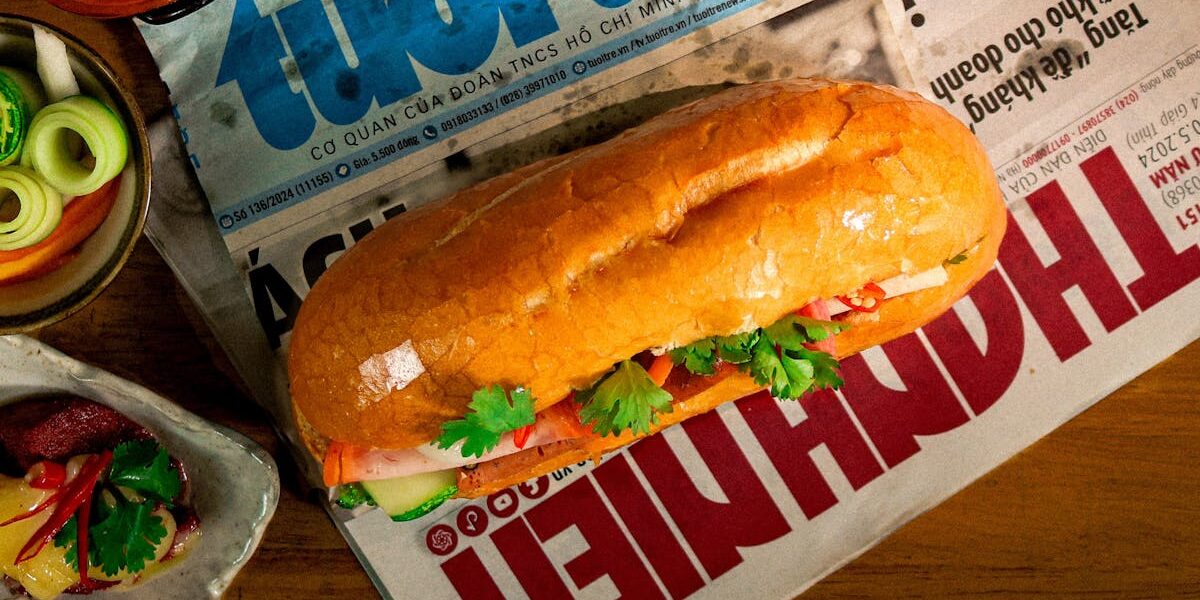
Banh mi (bánh mì) literally translates to ”bread” in Vietnamese, but in modern usage it refers specifically to a Vietnamese-style sandwich built on an airy, thin-crusted baguette. The bread itself is a legacy of French colonial influence in the late nineteenth and early twentieth centuries, but the sandwich as we know it today is fully Vietnamese, having evolved through the 1950s and 1960s in Saigon into a distinctly local creation. The classic version, often called banh mi thit, layers cured cold cuts, pâté, mayonnaise, pickled carrot and daikon, cucumber, cilantro, jalapeño, and a few dashes of seasoning sauce inside a crackling baguette.
What makes banh mi so distinctive is not any single ingredient but the architecture of contrasts: hot meat against cold pickles, soft mayo against crisp cucumber, rich pâté against bright herbs, sweet against salty against sour against spicy. Once you understand the structure, the variations are almost infinite. You can make banh mi with grilled lemongrass pork, Vietnamese cold cuts, shredded chicken, fried tofu, meatballs in tomato sauce, sardines, or even fried eggs for a breakfast version. This recipe focuses on the most popular and approachable home version: a grilled lemongrass pork banh mi with the full lineup of classic accompaniments.
A Brief History of the Vietnamese Sandwich
The story of banh mi begins with the French arrival in Vietnam in the mid-1800s, when European-style bread first appeared in Saigon. For decades, baguettes were considered a luxury food associated with the colonial class, eaten with butter and pâté. After the French departed in 1954 and Vietnamese bakers gained access to the trade, two important shifts occurred. First, bakers began incorporating rice flour into the dough, which produced a lighter, airier crumb suited to the humid climate and the local palate. Second, street vendors started filling these adapted baguettes with affordable, familiar fillings: leftover roast meats, fresh herbs, and homemade pickles. By the 1960s the sandwich had its modern shape, and it traveled with the Vietnamese diaspora across the world during and after the war years.
Today, banh mi is recognized by serious sandwich aficionados worldwide and has been celebrated by everyone from Anthony Bourdain to The New York Times as one of the great sandwiches of the world. It remains profoundly democratic: in Vietnam it is sold from street carts for the price of a coffee, and in cities from Los Angeles to Berlin to Sydney it has inspired generations of Vietnamese-owned bakeries that still hand-make their bread fresh every morning.
Why You Will Love This Recipe
- Authentic flavors at home. This recipe captures the bright, balanced flavor of a great Vietnamese sandwich shop without requiring specialty equipment.
- Faster than it looks. The marinade does most of the work, the pickles come together in 30 minutes, and the entire assembly takes under an hour of active time.
- Endlessly customizable. Once you master the base, you can swap the protein, adjust spice, or scale up for a crowd.
- Make-ahead friendly. The pickles, marinade, and even the cooked pork keep beautifully, making this a smart choice for meal prep or hosting.
- Better than takeout. Most American banh mi shops are excellent, but a homemade version made the same day is almost always brighter, fresher, and more aromatic.
Ingredient List with Quantities
This recipe yields four large banh mi, enough for four hearty dinners or six lighter portions. The ingredient list is long because banh mi has many components, but each component is simple and most can be prepped in parallel.
For the Lemongrass Pork Marinade
- 1.5 pounds (680 g) pork shoulder or boneless pork loin, sliced 1/4 inch thick
- 3 stalks fresh lemongrass, tender white parts only, finely minced (about 3 tablespoons)
- 4 cloves garlic, finely minced
- 2 small shallots, finely minced
- 3 tablespoons fish sauce
- 2 tablespoons light brown sugar
- 1 tablespoon soy sauce
- 1 tablespoon oyster sauce
- 1 tablespoon vegetable oil, plus more for grilling
- 1 teaspoon freshly ground black pepper
- 1 teaspoon toasted sesame oil
- 1/2 teaspoon ground turmeric (optional, for color)
For the Pickled Carrots and Daikon (Do Chua)
- 1 large carrot, peeled and julienned (about 1.5 cups)
- 1 small daikon radish, peeled and julienned (about 1.5 cups)
- 1 teaspoon kosher salt
- 1/2 cup rice vinegar
- 1/2 cup warm water
- 1/4 cup granulated sugar
For the Garlic Mayo
- 1/2 cup good-quality mayonnaise (Kewpie or homemade preferred)
- 2 cloves garlic, very finely minced or grated
- 1 teaspoon fresh lime juice
- 1/2 teaspoon fish sauce
- Pinch of white pepper
For Assembly
- 4 small Vietnamese-style baguettes (about 8 inches each) or 2 long French baguettes cut in half
- 1 English cucumber, sliced into long thin strips
- 1 bunch fresh cilantro, larger stems removed
- 2 jalapeños or 4 Thai bird’s eye chilies, thinly sliced
- 2 to 3 tablespoons pork or chicken liver pâté (optional, for traditional flavor)
- Maggi seasoning sauce or soy sauce, for finishing
Equipment You Will Need
Banh mi does not require fancy tools, but a few items will make the process smoother and the results more authentic.
- Sharp knife or mandoline. Julienning carrots and daikon goes much faster with a mandoline, but a sharp chef’s knife and patience will do.
- Mortar and pestle. Useful for pounding lemongrass, garlic, and shallots into a fragrant paste. A small food processor is a fine substitute.
- Cast iron skillet or grill pan. The pork needs high, dry heat to develop the characteristic caramelized edges. A cast iron pan, charcoal grill, or even a hot outdoor grill all work.
- Bread knife. A serrated knife is essential for slicing the baguette without crushing the crumb.
- Glass jar or non-reactive container. For the pickles. Avoid metal containers, which can react with vinegar.
Step-by-Step Cooking Instructions
Step 1: Make the Pickles First
Begin with the pickles because they need at least 30 minutes to develop flavor (overnight is even better). Place the julienned carrot and daikon in a colander, sprinkle with the kosher salt, and toss gently. Let them sit for 15 minutes. This step draws out excess moisture, which keeps the pickles crisp rather than soggy, and removes some of the sharp sulfurous edge from raw daikon. After 15 minutes, rinse the vegetables under cold water and squeeze them gently with your hands to remove additional liquid. They should bend without snapping.
In a clean glass jar or bowl, whisk together the rice vinegar, warm water, and sugar until the sugar has fully dissolved. Add the carrots and daikon, pressing them down so they are submerged in the brine. Cover and refrigerate for at least 30 minutes; for maximum flavor, refrigerate for 2 to 24 hours. The pickles will keep, refrigerated, for up to three weeks.
Step 2: Marinate the Pork
Slice the pork shoulder against the grain into thin pieces, no more than a quarter inch thick. If your pork is slightly frozen, slicing will be much easier. Place the slices in a large bowl.
In a mortar and pestle, pound the minced lemongrass, garlic, and shallots into a coarse paste. If using a food processor, pulse the aromatics until they form a rough paste. This step releases the essential oils from the lemongrass and makes the marinade far more fragrant than if you simply chop the ingredients.
Add the aromatic paste to the bowl with the pork, then add the fish sauce, brown sugar, soy sauce, oyster sauce, oil, black pepper, sesame oil, and turmeric if using. Mix thoroughly with clean hands or tongs until every piece of pork is coated. Cover and refrigerate for at least 2 hours, ideally 4 to 8 hours. The pork can be marinated up to 24 hours in advance.
Step 3: Mix the Garlic Mayo
In a small bowl, whisk together the mayonnaise, grated garlic, lime juice, fish sauce, and white pepper. Taste and adjust: it should be savory, slightly tangy, and unmistakably garlicky without being aggressive. Cover and refrigerate until ready to use. The mayo can be made up to three days ahead.
Step 4: Cook the Pork
Heat a cast iron skillet or grill pan over medium-high heat until it is smoking hot. Add a thin film of vegetable oil. Working in batches to avoid crowding, lay the marinated pork slices in a single layer and let them cook undisturbed for 2 to 3 minutes, until the edges have caramelized and a deep brown crust has formed. Flip and cook another 1 to 2 minutes on the second side. The pork should be cooked through but not dry, with visibly charred bits where the sugar in the marinade has caramelized. Transfer to a plate and tent loosely with foil. Repeat with the remaining pork, adding more oil to the pan as needed.
If you prefer to grill outdoors, thread the pork onto skewers, then grill over a hot fire for 2 to 3 minutes per side. The smoky char from a charcoal grill is closest to the way street vendors in Saigon traditionally prepare this dish.
Step 5: Prepare the Baguette
This is the step that separates a good homemade banh mi from a great one. Preheat your oven to 400°F (200°C). Place the baguettes directly on the oven rack and warm them for 4 to 5 minutes until the crust is shatteringly crisp and the inside is hot and pillowy. Remove and let cool just enough to handle.
Using a serrated knife, slice each baguette lengthwise, but only three-quarters of the way through, leaving a hinge along one side. This keeps everything contained inside the sandwich. If your baguette has excessive interior crumb, pull out a thin layer of bread from each side to create more room for fillings, a technique used by many Vietnamese bakers.
Step 6: Assemble the Sandwich
Order matters when building a banh mi. Each layer protects the bread from moisture and creates the right balance of flavors in every bite.
- Spread a generous layer of garlic mayo on both the top and bottom interior surfaces of the baguette. This creates a moisture barrier between the bread and the wet fillings.
- If using pâté, spread a thin layer on the bottom half.
- Layer the warm grilled pork along the bottom, slightly overlapping the slices.
- Drain the pickled carrots and daikon and pile a generous handful on top of the pork.
- Add 3 to 4 long strips of cucumber.
- Top with a tangle of fresh cilantro, including the tender stems, which carry much of the herb’s flavor.
- Scatter jalapeño slices to taste. Start with fewer and add more if you want more heat.
- Finish with 4 to 6 dashes of Maggi seasoning sauce. This umami-rich condiment is the secret signature of authentic Vietnamese banh mi.
- Close the sandwich, press gently, and serve immediately.
The Architecture of a Perfect Banh Mi
Vietnamese cooks have spent decades perfecting the architecture of banh mi, and the order of layers is not arbitrary. The mayo on both the top and bottom of the baguette acts as both flavor and waterproofing, preventing the pickle brine from seeping into the crumb. The protein goes next so it is in direct contact with the bread and can warm the crumb slightly from below. The pickles sit above the meat where their tangy juices drip down to season the protein. The herbs and chilies rest on top, releasing their aromas right under your nose with every bite. The Maggi at the end laces through the sandwich without being absorbed by a single layer.
The table below summarizes the role each component plays in the overall balance of the sandwich.
| Component | Flavor Role | Texture Role |
|---|---|---|
| Baguette | Neutral, slightly sweet | Shattering crisp crust, airy crumb |
| Lemongrass pork | Savory, umami, smoky | Tender, caramelized edges |
| Pickled carrots and daikon | Sweet, sour, salty | Crunchy, juicy |
| Cucumber | Cooling, fresh, slightly grassy | Crisp, watery |
| Cilantro | Bright, citrusy, herbaceous | Soft, leafy |
| Jalapeño or bird’s eye chili | Hot, fruity | Crisp bite |
| Garlic mayo | Rich, garlicky, tangy | Creamy |
| Pâté | Deep, savory, slightly liver-rich | Smooth, spreadable |
| Maggi seasoning | Salty, deeply umami | Liquid |
The Bread: Why a Vietnamese Baguette Is Different
The single most important ingredient in a banh mi is the bread. A traditional Vietnamese baguette is shorter, thinner, and lighter than its French counterpart, with a crackling crust that practically explodes under pressure and an airy crumb that compresses easily under the weight of fillings. The dough is typically made with a mix of wheat and rice flour, which produces a more elastic crumb and helps the bread retain crispness in humid climates.
If you live in or near a city with a Vietnamese community, the easiest path to authentic banh mi is to buy fresh baguettes from a Vietnamese bakery the day you plan to eat the sandwich. If a Vietnamese bakery is unavailable, look for thin, crusty French baguettes from a quality bakery (avoid the soft supermarket variety, which will collapse). Whichever bread you choose, refresh it in a hot oven for 4 to 5 minutes before assembling. This single step is the difference between a good and great banh mi.
Tips for the Best Banh Mi
- Slice pork against the grain. Look at the muscle fibers and slice perpendicular to them. This produces tender bites, even with a tougher cut like shoulder.
- Use cold-pressed fish sauce. A high-quality fish sauce such as Red Boat 40°N or Three Crabs makes a noticeable difference in marinade depth. Learn more in our complete guide to fish sauce.
- Salt your pickle vegetables. Skipping the salting step gives you limp, watery pickles. Do not skip it.
- Heat your bread separately. Toasting baguettes after filling them softens the crust. Toast first, then build.
- Eat within 30 minutes. Banh mi waits for no one. The interplay of textures is at its peak immediately after assembly.
- Use the right mayo. Japanese Kewpie mayo, made with egg yolks and rice vinegar, has a richer, more umami flavor than American mayonnaise and is widely used by Vietnamese banh mi shops.
- Embrace the char. Real banh mi pork has dark, caramelized edges. Do not flip the pork too early.
- Mince lemongrass finely. Lemongrass fibers do not soften during cooking. Mince as fine as you can or use a food processor.
- Press the sandwich gently before slicing. A light press helps the fillings settle and makes the sandwich easier to eat.
Variations on the Classic
Banh Mi Ga (Chicken Banh Mi)
Replace the pork with boneless, skinless chicken thighs using the same lemongrass marinade. Chicken thighs stay juicy under high heat better than chicken breasts. Grill or pan-fry as you would the pork. Some cooks shred poached chicken and toss it with fish sauce, sugar, lime, and herbs for a lighter, cold version.
Banh Mi Bo Nuong (Grilled Beef Banh Mi)
Substitute thinly sliced flank steak or skirt steak. Reduce the marinade time to one hour to prevent the lemongrass from overpowering the beef.
Banh Mi Chay (Vegetarian Banh Mi)
Use extra-firm tofu sliced into planks and marinated for at least an hour. Pan-fry until deeply golden on both sides. Replace fish sauce with light soy sauce or vegetarian fish sauce. Add sautéed mushrooms or shredded jackfruit for additional texture.
Banh Mi Op La (Egg Banh Mi)
A popular breakfast version made with sunny-side-up eggs whose runny yolks soak into the bread. Often served with a few slices of Vietnamese ham or cured pork on the side. Garnish with all the usual fixings.
Banh Mi Xiu Mai (Pork Meatball Banh Mi)
Tender pork meatballs simmered in a light tomato sauce, popular in southern Vietnam. The juicy meatballs and sauce make this a particularly comforting version, though you may need a fork.
Banh Mi Ca Moi (Sardine Banh Mi)
An affordable street version made with tinned sardines in tomato sauce. Surprisingly delicious with all the classic fixings, especially extra cilantro and chili.
Nutritional Information
The values below are estimates per sandwich (one large banh mi) based on the lemongrass pork version with garlic mayo, classic pickles, and standard add-ins. Actual values vary based on bread size, exact pork cut, and toppings.
| Nutrient | Amount per Sandwich | % Daily Value |
|---|---|---|
| Calories | 620 kcal | 31% |
| Total Fat | 26 g | 33% |
| Saturated Fat | 6 g | 30% |
| Cholesterol | 95 mg | 32% |
| Sodium | 1480 mg | 64% |
| Total Carbohydrates | 58 g | 21% |
| Dietary Fiber | 4 g | 14% |
| Sugars | 14 g | — |
| Protein | 36 g | 72% |
| Vitamin A | 4500 IU | 90% |
| Vitamin C | 20 mg | 22% |
| Iron | 4 mg | 22% |
Storage Tips and Make-Ahead Strategy
Banh mi is best eaten the moment it is assembled, but every component can be made ahead, which makes it surprisingly weeknight-friendly. The trick is to store everything separately and assemble only when you are ready to eat.
- Pickles. Keep refrigerated in their brine for up to three weeks. They actually improve after the first 24 hours.
- Marinated raw pork. Up to 24 hours in the refrigerator before cooking. Beyond that, freeze in zip-top bags for up to two months.
- Cooked pork. Refrigerate in an airtight container for up to 4 days. Reheat in a hot skillet for 2 minutes to restore the crisp edges. Microwave reheating produces dry meat.
- Garlic mayo. Refrigerated for up to 3 days. The garlic flavor mellows over time.
- Cut cucumber, sliced chilies, and washed cilantro. Wrap in a damp paper towel inside a zip-top bag, refrigerated for up to 2 days.
- Baguettes. Best the day they are baked. If you must store them, freeze whole baguettes and refresh in a hot oven directly from frozen.
- Assembled sandwich. Best within 30 minutes. If you must hold one for lunch, wrap tightly in parchment and eat within 4 hours. The bread will soften.
What to Serve with Banh Mi
In Vietnam, banh mi is almost always eaten on its own as a street snack or quick lunch. For a more substantial home meal, consider pairing with one or two of the following.
- Vietnamese iced coffee (ca phe sua da). Strong dark-roast Vietnamese coffee with sweetened condensed milk. The bittersweet richness cuts through the sandwich beautifully.
- Fresh spring rolls. Goi cuon, with shrimp, rice noodles, and herbs in rice paper, makes a light, refreshing pairing.
- Pho on the side. A small bowl of beef pho turns banh mi into a substantial dinner. Our guide to making pho broth from scratch walks you through it.
- Sliced mango or pineapple. A simple plate of tropical fruit provides a cooling counterpoint.
- Fresh sugar cane juice or coconut water. Traditional Vietnamese drinks that balance the salty richness of the sandwich.
- Salt and chili lime. A bowl of muoi tieu chanh (salt, pepper, lime) for dipping cucumber and lettuce.
Common Mistakes to Avoid
- Using the wrong bread. Soft sandwich bread, ciabatta, or thick artisan baguettes will all fail. You need a thin, crackling Vietnamese-style baguette.
- Skipping the salting step on the pickles. You will end up with watered-down pickles that drip into the bread.
- Underseasoning the marinade. Banh mi pork should taste boldly sweet, salty, and aromatic. The bread, pickles, and herbs will balance it.
- Skipping the Maggi. Even a few dashes of Maggi seasoning sauce add a depth of flavor that distinguishes Vietnamese banh mi from any other sandwich.
- Overcrowding the pan when cooking pork. The pork will steam instead of caramelizing. Work in batches.
- Forgetting to refresh the bread. A cold, soft baguette is the death of a banh mi.
- Too many fillings. A balanced banh mi should be eatable in two hands. If you cannot close the bread, you have overfilled it.
- Cutting cucumber too thick. Long, thin strips are essential. Thick rounds make the sandwich awkward to bite.
Banh Mi in the Broader Vietnamese Repertoire
Once you have mastered banh mi at home, the techniques transfer beautifully to other classics of Vietnamese cooking. The same lemongrass marinade can flavor grilled meats for rice plates (com tam) or noodle bowls (bun thit nuong). The pickled carrots and daikon turn up in countless Vietnamese dishes from rice plates to spring rolls. Fresh herbs, fish sauce, lime, and chili form the flavor backbone of much of the cuisine. If you enjoy the bright, layered approach of banh mi, you will likely also enjoy thit kho (Vietnamese caramel pork belly), bun bo hue (spicy beef noodle soup), banh xeo (crispy sizzling crepes), and banh bao (steamed pork buns). For an overview of Vietnam’s distinctive regional cooking styles, see our central Vietnamese food guide.
Frequently Asked Questions
What does ”banh mi” actually mean?
It literally translates to ”bread.” In Vietnam, ordering ”banh mi” generally means ordering a sandwich, while a plain baguette is called banh mi khong (empty banh mi).
What is the best bread for banh mi?
A fresh Vietnamese-style baguette with a thin, shattering crust and a light, airy crumb. If you cannot find one, a quality thin French baguette works as a substitute, but make sure it is crisp, not soft.
Can I make banh mi without pâté?
Yes. Pâté adds depth and authenticity but the sandwich is still excellent without it. Many modern banh mi shops in the United States omit it by default and offer it on request.
What is Maggi seasoning and can I substitute it?
Maggi is a wheat-based liquid seasoning developed in Switzerland in the late 1800s and adopted into Vietnamese cuisine during the colonial era. It tastes like an intensely savory, slightly malty soy sauce. The closest substitute is a mix of soy sauce and a few drops of Worcestershire sauce, though no substitute fully replicates it.
Can I use chicken instead of pork?
Absolutely. Boneless chicken thighs work best because they remain juicy under high heat. Use the same marinade and cooking method.
What if I cannot find fresh lemongrass?
Frozen minced lemongrass, sold in many Asian groceries, is an excellent substitute. Avoid dried lemongrass, which loses most of the fresh citrus character. Lemongrass paste in tubes works in a pinch but is less aromatic.
How spicy is banh mi supposed to be?
Mildly to moderately spicy, depending on personal preference. The traditional approach is to add a few rings of jalapeño or Thai bird’s eye chili. You can also offer a side of sriracha for diners to add their own heat.
Can I make banh mi gluten-free?
Yes, but you will need a gluten-free baguette and a tamari or coconut aminos substitute for soy sauce. The flavor profile remains similar but the crisp baguette is harder to replicate gluten-free; some cooks use a gluten-free roll or even a lettuce wrap.
Why are my pickles soggy?
Most likely you skipped the salting step, or did not rinse and squeeze the vegetables firmly enough afterward. You can also use slightly less water in the brine for a more concentrated, crisp result.
How do I make banh mi for a crowd?
Scale the marinade and pickles up to 4 or 6 times the recipe. Set up a banh mi bar with warm baguettes, the cooked pork in a covered pan, and bowls of each topping. Let guests build their own sandwiches. This works beautifully for parties, baby showers, and casual dinners.
How long does cooked banh mi pork keep?
Refrigerated in an airtight container, up to 4 days. It also freezes well for up to 2 months. To reheat, sear briefly in a hot skillet rather than microwaving.
Is banh mi healthy?
Banh mi is a balanced sandwich by Vietnamese standards. It has lean protein, fresh vegetables, fermented condiments, and herbs. It is also high in sodium because of the fish sauce, soy sauce, and pickles, so it is best enjoyed in moderation. The portion of bread is generous; a smaller baguette will reduce the carbohydrates significantly.
What is the difference between banh mi and a French sandwich?
The bread is the most obvious difference: Vietnamese baguettes are thinner, lighter, and crispier. But the bigger difference is in the fillings. Banh mi balances rich proteins with pickled vegetables, fresh herbs, and aromatic condiments, producing a multidimensional sandwich that no traditional French sandwich attempts.
Final Thoughts
Banh mi is a sandwich that rewards both technique and intuition. The technical pieces (the slicing, the marinade, the bread refresh) are simple to master, but the magic lies in the way you balance the layers. The first time you bite into a banh mi you built yourself, with the crust crackling, the pork still warm, the pickles snapping back at you, the cilantro lifting everything, you will understand why this sandwich has traveled the world. It is humble street food in its purest, most generous form: a sandwich big enough to share, cheap enough to eat every day, and complex enough to keep cooks excited for a lifetime.
Make this recipe once exactly as written, then make it your own. Try the chicken version next week. Build a vegetarian one for a friend. Throw a banh mi night with friends, with everyone customizing their own. There is no wrong way to enjoy banh mi, only your way. And once you have built a great one at home, you will find the takeout version never tastes quite the same.

Mei Lin Chen
Mei Lin Chen is an Asian food writer and recipe developer. Melbourne-raised and London-based, she has spent over a decade exploring the rice paddies, hawker stalls, and home kitchens of South-East and East Asia. Her recipes balance traditional technique with everyday practicality.