Last updated: March 16, 2026
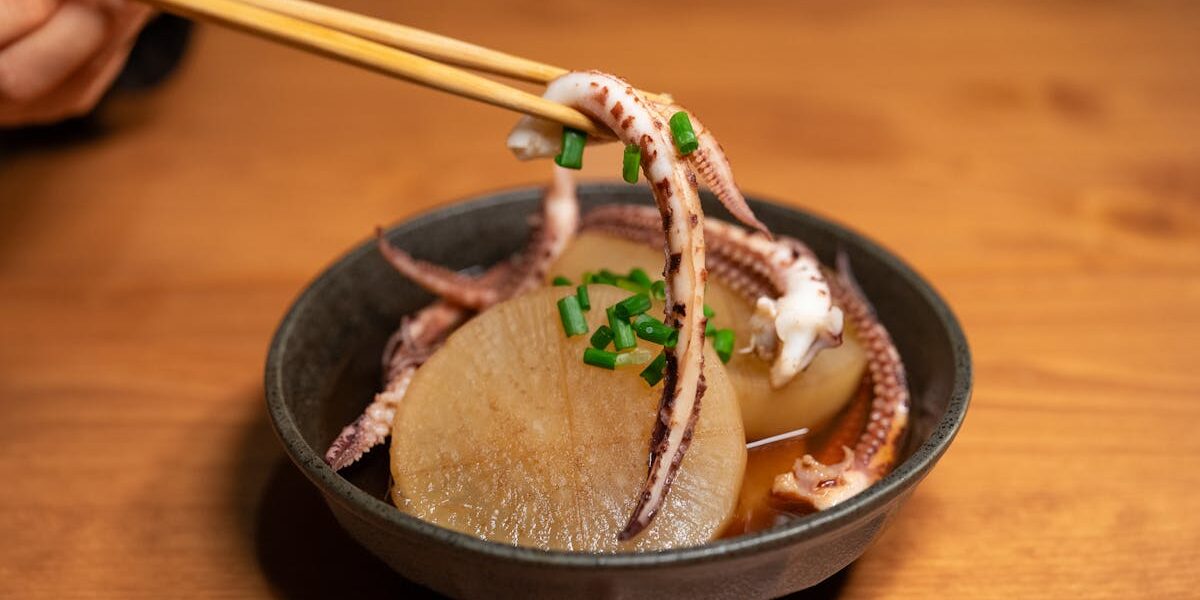
If you have ever eaten at a Japanese home or a teishoku set-meal restaurant, the small dish of glossy, deeply seasoned vegetables, fish, or chicken on the corner of the tray was almost certainly nimono (煮物), the family of Japanese simmered dishes that forms the quiet backbone of washoku cooking. Unlike stews from other cuisines that boil ingredients until they collapse into the sauce, nimono treats the simmering liquid as a flavor-delivery system: low, patient heat coaxes dashi, soy sauce, mirin, sake, and sugar into the very cells of the food while keeping each piece intact, recognizable, and seasonal. Done right, a piece of simmered daikon is creamy white outside, amber at the edge, and pours a warm sip of dashi when you bite it.
This guide walks through the complete nimono technique the way it is actually practiced in Japanese home kitchens: the four classical sub-styles, the precise equipment that solves uneven seasoning, the ratio shorthand cooks memorize instead of recipes, and the small physical habits—drop-lid placement, resting overnight, oil-blanching root vegetables—that separate a watery braise from the silky, sweet-savory simmered dish you remember from your favorite ryotei. Whether you are working with kabocha, daikon, fish, chicken thighs, or tofu, the same framework applies, and once you learn it you can stop following recipes and start cooking nimono from intuition.
What Is Nimono? The Heart of Japanese Home Cooking
Nimono literally means ”simmered things.” In the formal washoku meal structure of ichiju-sansai (one soup, three sides), nimono is one of the three sides, alongside a grilled dish (yakimono) and a vinegared or dressed dish (sunomono or aemono). Its job in the meal is to deliver deep, comforting flavor without competing with rice; nimono is rarely the loudest dish on the table, but it is almost always the one diners scrape clean.
What sets nimono apart from a Western braise or a Chinese red-cook is the temperature and the liquid level. The pot is usually kept just below a hard boil, the liquid covers the food only partway, and a drop-lid (otoshibuta) sits directly on the ingredients to recirculate flavor across the entire surface. The result is a dish that tastes seasoned all the way through, not just where it was submerged. Nimono is also typically finished and then rested, because soy sauce and dashi continue to migrate into ingredients as they cool—a piece of simmered pumpkin cooked at 3 p.m. and eaten at 6 p.m. is far better seasoned than the same piece eaten straight off the heat.
The technique appears across virtually every Japanese household repertoire. Nikujaga (meat and potatoes) is nimono. Kabocha no nimono (simmered pumpkin) is nimono. Saba no misoni (mackerel in miso) is nimono. The braised pork belly known as kakuni is technically a long-form nimono. Even the small bowl of simmered hijiki seaweed that comes free at a bento shop falls in this family. Once you recognize the pattern, you start spotting nimono everywhere in Japanese food, and you realize that mastering one technique unlocks dozens of dishes.
The Four Classical Styles of Nimono
Japanese culinary schools sort nimono into four named sub-styles based on the cooking liquid and seasoning balance. Knowing which style you are aiming at before you start cooking is the single biggest mental shift between recipe-following and actual nimono cooking, because the style dictates your ratios, your heat, and your finish.
Nitsuke (煮付け): Sweet-Salty Glaze Simmer
Nitsuke uses a strong sauce of soy, sugar, mirin, and sake reduced down until it coats the ingredients in a shiny glaze. It is the style most often used for fish—buri (yellowtail), saba (mackerel), karei (flounder)—and for tougher proteins that need to absorb assertive seasoning. The liquid starts shallow, the heat is moderate, and by the end of cooking the sauce has reduced by half or more. Expect a dark amber color and a sweet-salty finish.
Fukumeni (含め煮): Soak-Through Simmer
Fukumeni is the opposite philosophy. The pot is generous with dashi, the seasoning is gentle, and the ingredients essentially poach in flavor for a long time, then cool slowly in the liquid so the seasoning penetrates evenly. This is the style for kabocha, takenoko (bamboo shoots), koya-dofu (freeze-dried tofu), and any ingredient where the cook wants the natural color and shape to remain perfectly visible. The finished broth in a fukumeni dish should be light enough to drink.
Kanroni (甘露煮): Sweet Long-Simmer
Kanroni uses much more sugar and mirin than the other styles—roughly equal parts to soy—and cooks long enough that small whole fish (ayu, wakasagi) become edible from head to tail, bones included. The finished dish is glossy, sticky, and intensely sweet, with a syrup-thick liquid that holds the ingredients in place. Kanroni keeps for weeks refrigerated and traditionally appears in osechi New Year boxes for that reason.
Misoni (味噌煮): Miso Simmer
Misoni replaces some or all of the soy with miso paste, which transforms the entire character of the dish. The miso is added in two stages—half at the start to season, half at the end to perfume—and the simmering is kept gentle because miso scorches easily. Saba no misoni (mackerel in miso) is the textbook example, and the same technique works beautifully for pork belly, eggplant, and tofu.
Equipment: What You Actually Need for Nimono
Nimono is technically possible in any pot, but two pieces of equipment—the right pan shape and an otoshibuta—change the dish so dramatically that they are worth seeking out. The rest of the list is supportive but optional.
A Wide, Shallow Pan
The ideal nimono pot is wider than it is tall: a 10 to 12 inch sauté pan, a Japanese yukihira-nabe (single-handled aluminum pan with a pouring spout), or a shallow donabe clay pot. Width matters because nimono ingredients are arranged in a single layer with liquid coming only halfway up. A deep stockpot crowds the ingredients vertically and forces you to add too much liquid, which dilutes the seasoning and demands a longer reduction. A wide shallow pot also evaporates aromatic alcohol from the sake and mirin quickly at the start—a key step that prevents harsh raw notes in the finished dish.
Otoshibuta: The Drop-Lid
The single most distinctive nimono tool is the otoshibuta, a lightweight wooden, silicone, or metal disc that rests directly on top of the ingredients inside the pot. It serves three functions at once: it pushes ingredients down into the liquid so they cook evenly without needing more liquid; it creates a tiny pocket of recirculating vapor that bastes the tops of pieces sticking up above the surface; and it prevents the gentle simmer from tossing fragile pieces around and breaking them. A traditional wooden otoshibuta should be soaked in water for ten minutes before each use so it doesn’t leach tannin or absorb sauce.
If you don’t own one, a circle of parchment paper cut to the inside diameter of your pot, with a small vent hole in the center, works almost as well. A small plate that fits inside your pot also works. What does not work is using only the pan’s regular outer lid, because steam trapped under it drips back into the pot, dilutes the seasoning, and creates an inconsistent boil pattern.
Long Chopsticks and a Slotted Spoon
Long cooking chopsticks (saibashi) let you arrange fish skin-side up in the pot, turn pieces of root vegetable, and pull a single block of tofu out for tasting without breaking anything. A slotted spoon or shallow ladle is useful for skimming aku, the gray foam that rises during the first few minutes of simmering meat or fish.
A Reliable Heat Diffuser
If you cook on a strong gas range or induction hob, a flame tamer (heat diffuser) helps you hold the very gentle simmer that nimono requires. The bubbles should rise lazily once every second or two, not boil aggressively. On underpowered electric coil ranges this is rarely a problem; on commercial-grade home ranges, a diffuser is the difference between perfect simmered kabocha and a pot of mushy pumpkin.
The Core Ingredients: Dashi, Soy, Mirin, Sake, Sugar
Every nimono dish is built from some combination of five base ingredients. Once you understand what each one does, you can recognize ratios on sight and adjust without a recipe.
Dashi is the savory backbone—kombu and bonito broth that contributes glutamate and inosinate, the two amino acids whose synergy creates the umami sensation. The vast majority of nimono dishes use awase dashi, the standard kombu-and-katsuobushi infusion. Hot water with kombu-and-shiitake produces a vegetarian dashi that works perfectly for vegetable nimono. Instant dashi powder is widely used in Japanese homes and is acceptable, but freshly made dashi (which takes only fifteen minutes) noticeably improves the finished dish.
Soy sauce (shoyu) provides salt, color, and roasted-malt depth. Use a standard koikuchi shoyu for most nimono. For dishes where you want the natural color of the ingredients to show—simmered shrimp, lily bulbs, golden kabocha for an autumn box—switch to usukuchi (light-colored) soy, which is actually saltier than dark soy despite its paler color, so reduce the volume by about twenty percent.
Mirin is sweet rice wine that contributes glossy shine, a complex floral sweetness very different from sugar, and a tiny amount of alcohol that helps tenderize protein. Always use hon-mirin (true mirin, around 14% alcohol), not mirin-fu chomiryo (mirin-style seasoning), which is essentially sugar-water with no alcohol and produces dull-tasting nimono.
Sake (cooking sake or drinking sake) adds depth, tenderizes proteins, and helps strip raw or fishy notes from ingredients during the early high-heat phase of simmering. Cooking sake (ryori-shu) is sold salted; if you use it, slightly reduce the soy. Drinking sake works perfectly and gives a cleaner flavor.
Sugar adds sweetness, balances soy salt, and helps glaze surfaces. Japanese cooks usually use ordinary white sugar in nimono, but raw sugar (kibi-zato) or yellow rock sugar (zarame) contributes a deeper, more caramel-toned sweetness that pairs especially well with pork belly, mackerel, and pumpkin.
The Ratio Shorthand: How Japanese Cooks Think About Seasoning
Japanese home cooks rarely measure nimono seasoning by volume; instead they think in ratios of dashi to seasoning. The most common shorthand is the 8:1:1 rule, meaning 8 parts dashi to 1 part soy to 1 part mirin. From there, every nimono variant is a remembered modification of that base.
| Nimono Style | Dashi | Soy | Mirin | Sake | Sugar | Best For |
|---|---|---|---|---|---|---|
| Standard fukumeni (vegetables) | 8 | 1 | 1 | 1 | 0.5 | Kabocha, daikon, takenoko, koya-dofu |
| Nitsuke (fish glaze) | 3 | 1 | 1 | 1 | 1 | Mackerel, yellowtail, flounder |
| Nikujaga (meat & potatoes) | 6 | 1 | 1 | 1 | 1 | Beef and potato simmer |
| Kanroni (sweet preserve) | 2 | 1 | 2 | 1 | 2 | Small whole fish, ginger, chestnuts |
| Misoni (miso simmer) | 4 | 0.5 | 1 | 1 | 1 + 2 miso | Mackerel, pork belly, eggplant |
| Tsukudani (preserved bites) | 0 | 2 | 1 | 1 | 2 | Kombu strips, small clams |
These ratios are starting points, not laws. The defining habit of a confident nimono cook is tasting the broth before adding the ingredients and adjusting from there. If the cold seasoned dashi tastes balanced and pleasant on its own, the finished dish will too, because the ingredients absorb the broth they sit in.
Step-by-Step: The Universal Nimono Method
Almost every nimono dish, regardless of the ingredient, follows the same eight-step rhythm. Once you have practiced it three or four times, it becomes second nature and you stop needing a recipe.
Step 1: Prepare the Ingredients (Mentori, Aku-nuki, Shimofuri)
The preparation phase is where amateur nimono separates from restaurant nimono. Three specific Japanese prep techniques matter here. Mentori means rounding off the sharp cut edges of root vegetables with a paring knife so they don’t chip and cloud the broth during simmering—essential for daikon, kabocha, and lotus root. Aku-nuki removes bitter or harsh compounds by soaking ingredients in cold water (potatoes, eggplant), parboiling them in plain water (bamboo shoots, taro), or briefly blanching in salted water (greens). Shimofuri is a hot-water rinse for fish or meat: pour boiling water over the pieces in a colander until the surface turns opaque, then immediately rinse with cold water. This removes surface blood, scum, and the strongest fishy notes before the protein ever touches the seasoning liquid.
Step 2: Arrange in a Single Layer
Place the prepared ingredients in the wide pan in a single, compact layer. Don’t stack. If you have more food than the pan can hold in one layer, cook in two batches. Fish goes skin-side up; chicken thighs skin-side down; root vegetables flat-side down for the best contact with the bottom of the pan.
Step 3: Add Liquid to Roughly Half the Ingredient Height
Pour in the seasoned dashi mixture until it reaches about halfway up the ingredients—never all the way over the top. This is the most counterintuitive step for cooks coming from Western braising. The drop-lid will recirculate vapor to season the top of the ingredients; less liquid means a more concentrated seasoning that doesn’t require long reduction at the end.
Step 4: Burn Off the Alcohol Over High Heat
Turn the heat to high and bring the liquid to a rapid boil for about 30 to 60 seconds without the drop-lid. This evaporates the raw alcohol from the sake and mirin, which would otherwise contribute harsh, sour notes to the finished dish. You will smell the alcohol rising off the pot—wait until you can no longer smell it, then move on.
Step 5: Skim the Aku
For dishes with meat, fish, or root vegetables high in starch and saponins, a gray-brown foam (aku) will rise in the first two or three minutes. Skim it off with a slotted spoon or ladle. Don’t be aggressive—you only need to remove the foam itself, not the broth underneath. This step keeps the finished broth clear and prevents a bitter aftertaste.
Step 6: Drop the Otoshibuta and Lower the Heat
Place the soaked drop-lid directly on top of the ingredients. Reduce the heat to a gentle simmer—bubbles should rise lazily, not roll. From this point the dish cooks largely on its own. Cooking time depends on what you are simmering: tofu and quick fish take 10 to 15 minutes; chicken thigh takes 20 to 25 minutes; root vegetables and pork belly take 30 to 60 minutes or longer.
Step 7: Reduce the Liquid (or Don’t)
Near the end, decide what style you are aiming for. For a nitsuke-style glaze, remove the drop-lid in the last few minutes and turn the heat up to reduce the liquid to a syrupy coating. For a fukumeni-style soak, leave the lid on and stop cooking while there is still a generous pool of seasoned broth. For a misoni, whisk the second half of the miso into a small amount of broth in a separate cup and stir it back into the pot in the final minute, then turn off the heat—boiling miso destroys its aroma.
Step 8: Rest Before Serving
This is the secret step. Turn off the heat, leave the drop-lid in place, and let the dish sit at room temperature for at least 30 minutes—ideally an hour, and overnight in the refrigerator for fukumeni-style vegetables. Seasoning continues to migrate into the ingredients during cooling far more effectively than during active simmering. A pot of simmered daikon that tastes underseasoned at the moment you turn off the heat will taste perfectly seasoned an hour later, then again gently rewarmed at dinner. Skipping the rest is the single most common mistake in home nimono.
Common Mistakes and How to Fix Them
| Mistake | What Happens | The Fix |
|---|---|---|
| Boiling too hard | Ingredients fall apart, broth turns cloudy, fish skin tears | Lower to a bare simmer with bubbles every 1-2 seconds; use a heat diffuser |
| Too much liquid | Seasoning is diluted; you must over-reduce at the end and overcook the food | Add liquid only halfway up the ingredients; let the drop-lid recirculate |
| Skipping the drop-lid | Tops of ingredients taste under-seasoned while bottoms taste salty | Use otoshibuta, parchment circle, or small plate that rests on the food |
| Skipping the rest | Surface tastes salty, interior tastes bland | Cool 30 minutes minimum with lid in place; overnight for root vegetables |
| Adding miso early | Miso loses aroma, turns harsh and gritty | Split miso: half at start, half whisked in off-heat at the end |
| Not burning off alcohol | Harsh sour-yeasty taste from raw sake/mirin | Boil hard 30-60 seconds before lowering heat |
| Forgetting to round cut edges | Vegetables chip; broth turns starchy and cloudy | Bevel sharp corners with a paring knife (mentori) |
| Skipping shimofuri on fish | Broth tastes fishy, surface looks gray | Pour boiling water over fish in a colander, then rinse cold before simmering |
| Crowding the pot | Uneven cooking and uneven seasoning | Single layer only; cook in batches if needed |
| Stirring during simmering | Delicate ingredients break apart | Don’t stir; gently shake the pan or tilt to redistribute liquid |
| Using mirin-fu seasoning | Dull, sugary taste with no shine | Use true hon-mirin (around 14% ABV) |
| Wrong soy sauce for the dish | Vegetables turn dark instead of staying jewel-toned | Use usukuchi for color-sensitive dishes; reduce volume by 20% |
Practice Exercises: Build the Skill in Three Sessions
Nimono is a feel-based technique that rewards repetition more than recipe-collecting. Three deliberate practice sessions, each focused on a different sub-style, will teach you more than reading thirty recipes.
Practice 1: Kabocha no Nimono (Fukumeni)
Cut a small kabocha squash into 2-inch wedges, skin on. Bevel the corners. Arrange skin-side down in a wide pan with 1 cup dashi, 1 tablespoon soy, 1 tablespoon mirin, 1 tablespoon sake, and 1 teaspoon sugar. Boil 1 minute, drop the otoshibuta, simmer 12 minutes, turn off the heat, rest 1 hour. The exercise teaches you the fukumeni rhythm and the importance of resting—taste a piece at minute 12 and another piece an hour later, and the difference will permanently change how you cook.
Practice 2: Saba no Misoni (Misoni)
Take two mackerel fillets, score the skin lightly, and shimofuri them. In a pan combine ¾ cup dashi, 2 tablespoons sake, 2 tablespoons mirin, 1 tablespoon sugar, a few slices of ginger, and 1 tablespoon miso. Add the fish skin-side up, drop the lid, simmer 8 minutes, then whisk a second tablespoon of miso into a ladle of broth and stir back in for the final minute off-heat. This teaches the two-stage miso technique and the gentle handling of fish.
Practice 3: Nikujaga (Hybrid Nitsuke)
Brown thinly sliced beef chuck in 1 teaspoon of neutral oil in your nimono pan. Add quartered onions and chunks of waxy potato; pour in 1½ cups dashi, 3 tablespoons soy, 3 tablespoons mirin, 3 tablespoons sake, 1 tablespoon sugar. Boil 1 minute, skim aku, drop the lid, simmer 18 minutes, then remove the lid and reduce the broth 5 more minutes. This teaches the wider style of nimono where some browning is acceptable, ratios skew sweeter, and the family-friendly bowl emerges with both broth and glaze.
Advanced Techniques and Refinements
Abura-nuki: The Oil-Removing Hot Wash
For ingredients pre-fried before simmering—aburaage (fried tofu pouches), atsuage (thick fried tofu), satsuma-age (fried fish cake)—pour boiling water over them in a colander for ten seconds before they go into the pot. This removes the surface oxidized oil that would otherwise muddy the broth and cause a film on top of the finished nimono.
Roasting the Kombu
For an extra depth of dashi in misoni or kanroni, briefly toast a piece of kombu over a low flame until it just begins to smell sweet, then use it to build the dashi. The light Maillard browning adds a bass note that pairs well with rich proteins.
Salt-Sweet-Soy Sequence
A traditional Japanese teaching, ”sa-shi-su-se-so,” describes the order in which seasonings enter a dish: sugar (sa) first, salt (shi) next, vinegar (su), then soy (se), then miso (so). The reasoning is that sugar molecules are large and penetrate slowly, so they need a head start, while soy and miso provide aroma that boils away if added too early. For long nimono with sugar, this ordering produces a noticeable improvement in penetration and evenness.
The Two-Pot Cooling Trick
Restaurant cooks who need to serve nimono immediately—no overnight rest available—use a two-pot method: after the active simmer, transfer the entire pot contents to a slightly larger pot of cold water, like an ice bath. The rapid cooling pulls seasoning into the ingredients much faster than passive resting at room temperature. For fukumeni-style vegetables, this can compress an overnight rest into about 45 minutes.
Layering with Konnyaku and Shirataki
Konnyaku (yam cake) and shirataki (yam noodles) are common nimono additions, but they contain an alkali that can muddy the broth. Always parboil them in plain water for 2 minutes before adding to a nimono pot, and tear konnyaku by hand instead of cutting—the rough edges grip seasoning far better than knife-cut faces.
Recipe Examples: Five Classic Nimono Dishes
Buri Daikon (Yellowtail and Daikon Simmer)
A winter classic from the Sea of Japan coast. Bevel 1-inch-thick rounds of daikon and parboil in rice-water (water with a tablespoon of raw rice) for 10 minutes to remove bitterness. Shimofuri pieces of yellowtail collar or belly. Combine 1½ cups dashi, 3 tablespoons each of soy, mirin, and sake, and 1 tablespoon sugar; add the daikon, simmer 20 minutes under the drop-lid, add the fish, simmer 12 more minutes, rest 30 minutes. Garnish with julienned yuzu zest.
Chikuzenni (Mixed Vegetable and Chicken Simmer)
The Fukuoka regional dish that anchors many New Year tables. Sauté bite-sized pieces of chicken thigh, carrot, lotus root, gobo (burdock), shiitake, and konnyaku in sesame oil until aromatic. Add 1½ cups dashi, 2 tablespoons each soy, mirin, sake, and 1 tablespoon sugar. Simmer 25 minutes under the otoshibuta, uncover and reduce 5 minutes. Rest before serving.
Hijiki no Nimono (Hijiki Seaweed Simmer)
The small dark side dish that comes free at every bento shop. Rehydrate ½ cup dried hijiki in cold water for 30 minutes. Sauté with diced carrot and aburaage in a teaspoon of sesame oil. Add 1 cup dashi, 2 tablespoons each of soy, mirin, sake, and 1 tablespoon sugar. Simmer 15 minutes uncovered until liquid is almost gone. Keeps a week refrigerated and improves on day two.
Kabocha no Soboro-an (Pumpkin with Ground Chicken Sauce)
Cook kabocha wedges fukumeni-style as in Practice 1. Separately, simmer 4 ounces of ground chicken in ½ cup of the kabocha broth with 1 tablespoon soy and 1 teaspoon sugar. Thicken with 1 teaspoon potato starch slurry. Pour the chicken-thickened sauce over the simmered kabocha to serve. The combination of jewel-toned squash and pale chicken thread is one of the most photogenic nimono dishes you can make.
Kaki no Misoni (Oyster Miso Simmer)
An oyster-season specialty from Hiroshima. Rinse fresh shucked oysters in salted water, drain. In a wide pan combine ¾ cup dashi, 2 tablespoons sake, 2 tablespoons mirin, 1 tablespoon sugar, and 1 tablespoon red miso. Bring to a gentle simmer, add oysters and slivered ginger, cook 3 minutes, whisk in a final tablespoon of miso off-heat. Serve over rice; the oysters should be plump and just set, never tough.
Seasonal Nimono Throughout the Japanese Year
One reason nimono never gets boring in Japanese kitchens is that the ingredient changes constantly with the season. Building a nimono habit around seasonal produce is one of the easiest ways to feel the rhythm of Japanese home cooking.
| Season | Ingredient | Classic Nimono Dish | Style |
|---|---|---|---|
| Spring | Bamboo shoot (takenoko) | Takenoko no tosani | Fukumeni |
| Spring | Butterbur (fuki) | Fuki no aoni | Fukumeni |
| Early summer | New potato | Shin-jaga no nikorogashi | Nitsuke |
| Summer | Eggplant | Nasu no misoni | Misoni |
| Summer | Winter melon (togan) | Togan to ebi no nimono | Fukumeni |
| Autumn | Kabocha pumpkin | Kabocha no nimono | Fukumeni |
| Autumn | Taro (sato-imo) | Sato-imo no nikkorogashi | Nitsuke |
| Autumn | Mackerel | Saba no misoni | Misoni |
| Winter | Daikon radish | Buri daikon | Nitsuke |
| Winter | Yellowtail (buri) | Buri no terini | Nitsuke |
| Winter | Mixed root vegetables | Chikuzenni | Hybrid |
| Year-round | Hijiki seaweed | Hijiki no nimono | Tsukudani |
Storage, Reheating, and Make-Ahead Strategy
Nimono is one of the few dishes that improves with time, which makes it an outstanding meal-prep technique. Cooked nimono should be cooled in its broth, transferred (with broth) to a sealed glass container, and refrigerated for up to four days. Reheat gently on the stove with the broth, never in the microwave at high power, which boils the broth unevenly and toughens proteins.
For long-term storage, freeze nimono in single portions in the broth, leaving an inch of headspace. Defrost overnight in the refrigerator and rewarm on the stove. The texture of fish nimono suffers slightly after freezing; vegetable nimono freezes beautifully for up to two months. Kanroni and tsukudani, with their high sugar and salt content, keep in the refrigerator for two to three weeks and are the foundation of the make-ahead Japanese pantry.
A practical home strategy is to cook two batches of vegetable nimono each Sunday—one fukumeni and one tsukudani—and pull small portions throughout the week as the side dish for any rice-and-grilled-fish dinner. With even modest practice, this single weekly habit can lift your weeknight cooking from ”rice with something” to a complete washoku table.
Nimono in the Broader Context of Asian Simmering
Comparing nimono to other Asian simmering traditions reveals how distinctly Japanese the technique really is. Chinese red braising (hong shao) uses dark soy, rock sugar, and Shaoxing wine over higher heat and longer time, producing the deep mahogany glaze that defines dishes like hong shao rou. Chinese master stock (lu shui) uses a perpetually maintained aromatic liquid built around star anise, fennel, and cassia bark, and the same pot may be used for decades. Korean braises lean on soy, garlic, and ginger with rice syrup for shine and depth. Vietnamese kho (caramel braises) build flavor on a base of burnt-sugar caramel.
Nimono is the gentlest of all these. Where Chinese braises shout, Japanese simmers whisper. The dashi backbone gives every nimono dish a quiet umami depth that does not exist in soy-and-sugar braises elsewhere, and the low-temperature, half-submerged, drop-lidded approach preserves the integrity of each ingredient in a way that makes it instantly recognizable on the plate.
Frequently Asked Questions
Can I make nimono without dashi?
You can, but the result will taste flat. A pinch of MSG or a kombu strip steeped in plain hot water gives a passable substitute. For a fully vegetarian dashi, soak dried shiitake mushrooms with kombu in cold water for 6 hours—both contribute glutamate, and the combination has nearly the same umami impact as awase dashi. Avoid replacing dashi with chicken stock; the flavor profile becomes unrecognizable as nimono.
How long does nimono keep in the refrigerator?
Fish nimono lasts 2 days; chicken and pork nimono 3 days; vegetable nimono 4 days. Kanroni and tsukudani, which use much more sugar and salt, keep 2 to 3 weeks. Always store with the cooking liquid, not drained, and reheat gently in the same liquid.
Why is my nimono broth cloudy?
Three usual causes: a too-aggressive simmer that breaks ingredients apart, unskimmed aku from the first few minutes, or starch leaching from cut root-vegetable edges. Lower the heat, skim more carefully, and bevel the corners of daikon and kabocha before cooking.
Can I use an Instant Pot or pressure cooker for nimono?
A pressure cooker speeds up tough cuts like beef shank or pork belly nimono, but the gentle flavor absorption that defines nimono works best with the traditional open-pot, drop-lid, rest-overnight method. If you must use a pressure cooker, undercook by about a third, then finish open with the drop-lid for the final ten minutes to let the broth reduce and seasoning equalize.
Is nimono the same as ”Japanese stew”?
Not quite. Western stews submerge ingredients fully and rely on time at a low boil to tenderize and flavor. Nimono uses far less liquid, depends on the drop-lid for even seasoning, and treats the resting phase as part of cooking. Visually a nimono dish should leave each ingredient distinct, glossy, and recognizable; a stew typically blends into a unified sauce.
What’s the best pot if I don’t want to buy a yukihira-nabe?
Any wide, shallow sauté pan with a thick base works. A 10 or 12 inch enameled cast-iron skillet is excellent. A donabe clay pot is wonderful but optional. Avoid tall narrow stockpots, which force you to add too much liquid.
What can I serve with nimono?
The traditional pairing is a bowl of short-grain Japanese rice, a small bowl of miso soup, a pickled vegetable side (tsukemono), and a grilled fish or simple omelet. Nimono is the centerpiece of the side-dish lineup, not the main course, so cook in modest portions and let the rice and soup carry the meal.
How do I scale nimono up for a crowd?
Don’t simply scale the liquid linearly—larger surfaces absorb less proportionally. For double a recipe, use about 1.7x the liquid, and budget extra resting time because larger volumes cool more slowly. The drop-lid still needs to touch the ingredients, so if you scale up significantly, switch to a larger-diameter pan rather than a deeper one.
Can I make nimono vegan?
Absolutely. Build a kombu-and-shiitake dashi (no bonito), use plenty of soy and mirin, and lean on koya-dofu (freeze-dried tofu), kabocha, daikon, lotus root, gobo, atsuage, and konnyaku as the simmered ingredients. Add a tablespoon of sesame oil at the start of a chikuzenni-style mixed simmer for extra depth that compensates for the absence of bonito.
Is nimono difficult to learn?
It is one of the easiest Asian techniques to learn well, because the equipment is simple, the ingredients are forgiving, and the failure modes are mild. After three deliberate practice sessions—a fukumeni, a misoni, and a nitsuke—most home cooks can produce restaurant-quality nimono on demand. The hard part is not technique; it is patience to let the dish rest before eating it.
Final Thoughts: Why Nimono Belongs in Every Home Kitchen
Nimono is, in many ways, the opposite of the food we tend to associate with modern restaurant cooking. It is quiet. It is patient. It rewards making the dish hours before you eat it. The ingredients shine because nothing covers them—no thick sauce, no aggressive sear, no last-minute flourishes. The cook’s job is to set up the conditions and step back, then let dashi, soy, and time finish the work.
That patience is precisely why nimono is such a powerful technique to add to a home repertoire. A single weekly habit of cooking one batch of fukumeni vegetables and one batch of misoni protein turns your refrigerator into the foundation of a complete Japanese pantry: open the door, ladle out a portion, warm gently, serve over rice. Within a month of practice you stop thinking of recipes and start thinking of ratios, seasons, and timings—which is when nimono crosses from being a cuisine you cook to being a way you cook.
Start with kabocha this week, mackerel next week, and chikuzenni the week after, and by April you will be cooking nimono from instinct.

Mei Lin Chen
Mei Lin Chen is an Asian food writer and recipe developer. Melbourne-raised and London-based, she has spent over a decade exploring the rice paddies, hawker stalls, and home kitchens of South-East and East Asia. Her recipes balance traditional technique with everyday practicality.