Last updated: March 19, 2026
Hunan food is one of China’s eight great culinary traditions and one of the most intensely flavored cuisines on the planet. Known in Chinese as Xiang cai (湘菜), Hunan cuisine hails from the central-south province of Hunan and is built on a foundation of fresh chilies, smoked meats, and bold, layered seasonings that set it apart from every other Chinese regional style, including its frequently confused neighbor, Sichuan.
If you have ever bitten into a dish that hit you with pure, searing chili heat rather than the tingly numbness of Sichuan peppercorn, there is a good chance it was Hunan food. Where Sichuan cuisine leans on the málà combination of numbing and spicy, Hunan cooking relies on a direct, unapologetic fresh-chili burn that builds with every bite. The province’s humid subtropical climate made chili peppers a dietary staple centuries ago, and that fiery backbone still defines the cuisine today.
This guide covers everything you need to know about Hunan food: the history and geography that shaped it, the essential ingredients to stock in your pantry, more than a dozen must-try dishes, the key cooking techniques, and practical meal-planning advice so you can bring Hunanese flavors into your home kitchen.
A Brief History of Hunan Cuisine
Hunan province sits in the heart of south-central China, bordered by the Yangtze River to the north and ringed by mountains on three sides. Its fertile river valleys, terraced rice paddies, and dense network of lakes and waterways have made it one of China’s most agriculturally productive regions for over two thousand years. The old saying ”Huguang shu, tianxia zu” (when Hunan and Hubei have a good harvest, the whole country eats) speaks to the province’s central role in feeding the nation.
Archaeological evidence from the Mawangdui tombs, dating to around 160 BCE during the Western Han dynasty, revealed bamboo slips listing over 100 dishes and cooking methods, showing that Hunan already had a sophisticated culinary culture more than two millennia ago. Those early records mention stewing, roasting, smoking, and pickling — techniques that remain pillars of Hunanese cooking today.
Chili peppers arrived in China from the Americas during the late Ming dynasty (around the 16th to 17th century), and Hunan was among the first provinces to adopt them as a daily ingredient rather than a novelty. The hot, humid climate of the region created a cultural belief that eating spicy food helped the body expel dampness, a concept rooted in traditional Chinese medicine. By the Qing dynasty, chilies had become inseparable from Hunanese identity.
Hunan cuisine gained national prominence during the late Qing and Republican era, partly because several powerful political and military figures hailed from the province. Mao Zedong, born in Shaoshan, Hunan, was famously devoted to the spicy food of his homeland and is said to have declared that you cannot be a revolutionary if you do not eat chilies. His personal taste helped bring Hunan dishes to banquet tables across China.
The Three Regional Styles of Hunan Cuisine
Hunan cuisine is not a single monolithic style. The province’s varied geography produces three distinct sub-cuisines, each with its own character and specialties.
Xiang River Valley (Changsha Style)
The capital city Changsha and the surrounding Xiang River basin form the heartland of Hunan cuisine. This is the style most people encounter in restaurants outside China. Changsha cooking favors intense chili heat, heavy use of smoked and cured meats, and rich, oil-based sauces. Signature dishes include Chairman Mao’s red-braised pork (Mao shi hong shao rou), stinky tofu (chou doufu), and Changsha-style rice noodles (Changsha mi fen).
Dongting Lake Region
The area around Dongting Lake in northern Hunan is China’s freshwater fish heartland. This sub-cuisine emphasizes fresh fish, shrimp, crab, and lotus root. The cooking is somewhat lighter than Changsha style, with more steaming and stewing. Dishes like steamed fish head with chopped chilies (duo jiao yu tou) originate from this region. The abundant waterways also provide water chestnuts, wild rice stems, and other aquatic vegetables.
Western Hunan (Xiangxi Style)
The mountainous western part of the province, home to the Tujia and Miao ethnic minorities, has its own distinct food culture. Xiangxi cooking makes heavy use of smoked meats, wild game, sour pickles, and foraged ingredients. The flavors lean sour-and-spicy (suanla) rather than purely hot. Smoked bacon (larou), pickled vegetables, and dishes cooked with sour bamboo shoots are hallmarks of this rustic mountain cuisine.
Essential Hunan Ingredients
Stocking your kitchen with these core ingredients will let you tackle most Hunan recipes. Many of these are available from Asian grocery stores or online ingredient shops.
| Ingredient | Chinese Name | Role in Hunan Cooking | Substitute |
|---|---|---|---|
| Fresh red and green chilies | 鲜辣椒 (xiān làjiāo) | The backbone of Hunan heat; used raw, chopped, stir-fried, and pickled | Fresno or serrano peppers |
| Duo jiao (chopped salted chilies) | 剁椒 (duò jiāo) | Fermented chopped chilies used as a condiment and cooking ingredient | Sambal oelek mixed with a pinch of salt |
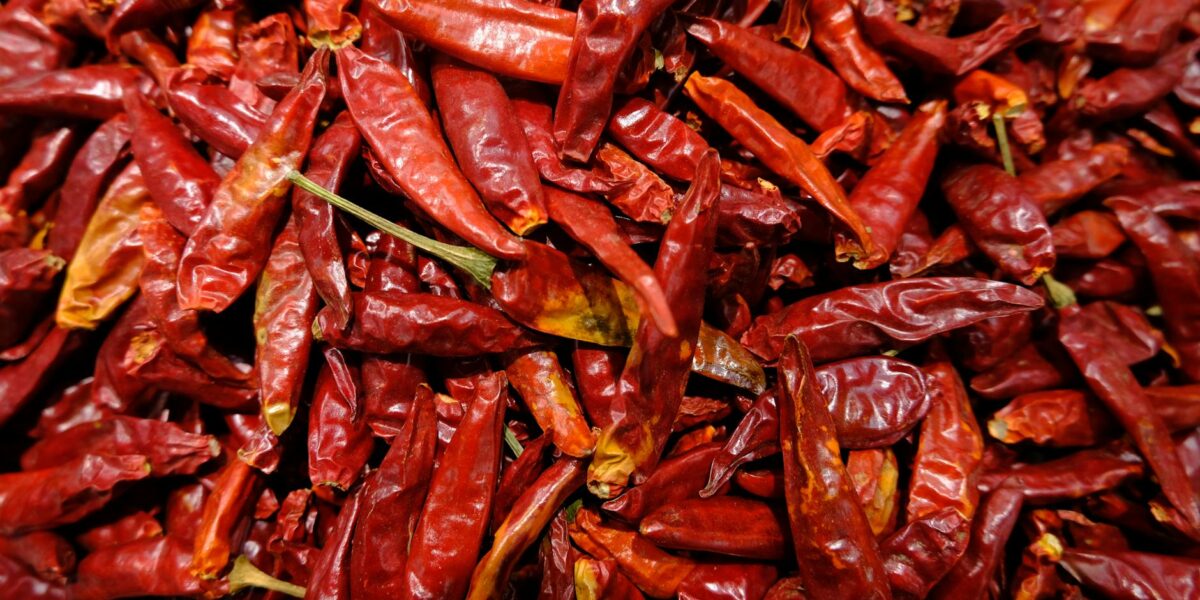
| Dried red chilies | 干辣椒 (gān làjiāo) | Toasted in oil to build smoky, roasted chili flavors | Chile de arbol |
| Smoked bacon (larou) | 腊肉 (làròu) | Smoke-cured pork belly; adds deep umami and smokiness | Double-smoked slab bacon |
| Fermented black beans (douchi) | 豆豉 (dòuchǐ) | Salty, funky seasoning for stir-fries and steamed dishes | Black bean garlic sauce |
| Shaoxing wine | 绍兴酒 (shàoxīng jiǔ) | Deglazing, marinades, and braising liquid | Dry sherry |
| Dark soy sauce | 老抽 (lǎo chōu) | Color and depth in red-braised dishes | Regular soy sauce plus a drop of molasses |
| Light soy sauce | 生抽 (shēng chōu) | Primary salt seasoning for stir-fries and dipping sauces | Japanese usukuchi soy sauce |
| Hunan black bean chili paste | 辣椒酱 (làjiāo jiàng) | Ready-made chili-bean condiment for quick weeknight cooking | Doubanjiang (Sichuan chili bean paste) |
| Sesame oil | 麻油 (máyóu) | Finishing oil for aroma; used sparingly | No perfect substitute; use toasted sesame oil specifically |
| Rice vinegar | 米醋 (mǐcù) | Sour notes in sour-and-spicy dishes | White wine vinegar diluted slightly |
| Ginger and garlic | 姜蒜 (jiāng suàn) | Aromatics in virtually every savory dish | No substitute needed; pantry staples |
Hunan Food vs. Sichuan Food: What Is the Difference?
This is the single most common question people ask about Hunan cuisine, and the differences run much deeper than both being spicy. Here is a detailed comparison.
| Category | Hunan Cuisine (Xiang Cai) | Sichuan Cuisine (Chuan Cai) |
|---|---|---|
| Primary heat source | Fresh chilies, dried chilies, duo jiao | Sichuan peppercorn plus dried chilies (málà) |
| Sensation | Pure, direct, burning heat | Numbing-and-spicy (málà) tingling |
| Flavor profile | Sour-spicy, smoky, savory, oily | Complex layered: numbing, spicy, sweet, sour, salty, fragrant, bitter |
| Signature condiment | Duo jiao (fermented chopped chilies) | Doubanjiang (chili bean paste) |
| Preserved meats | Heavily used; smoked bacon, cured sausages | Used but less central |
| Cooking oil | Tea-seed oil (traditional), vegetable oil | Rapeseed oil, chili oil |
| Common cooking methods | Stir-frying, smoking, steaming, dry-potting | Stir-frying, dry-frying, braising, boiling |
| Famous dish | Steamed fish head with duo jiao | Mapo tofu |
| Spice level | Often considered hotter overall | Heat is balanced by numbing sensation |
| Geography | Central-south China, humid lake country | Southwestern China, Sichuan Basin |
In short, if a dish hits you with a clean wall of chili fire, it is likely Hunanese. If the heat arrives with a buzzing, lip-tingling numbness, that is the Sichuan peppercorn talking. Both traditions are magnificent, but they are distinct.
15 Must-Try Hunan Dishes
These are the essential dishes that define Hunan cuisine, from iconic classics served at banquets to street-food staples you would find at a night market in Changsha.
1. Chairman Mao’s Red-Braised Pork (Mao Shi Hong Shao Rou)
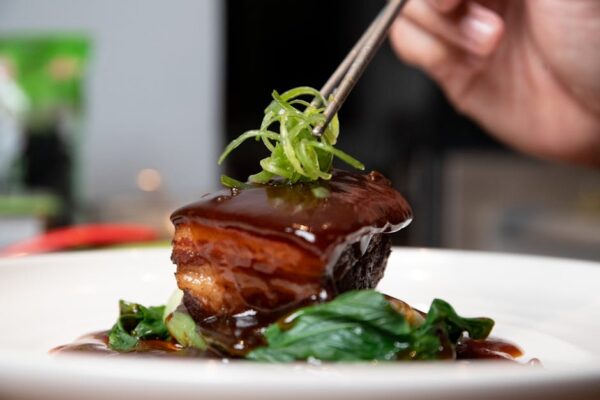
Perhaps the single most famous Hunan dish. Thick cubes of skin-on pork belly are slowly red-braised with soy sauce, sugar, Shaoxing wine, star anise, and dried chilies until the meat is meltingly tender and lacquered in a glossy, mahogany-colored sauce. The dish is associated with Mao Zedong’s birthplace, Shaoshan, and every Hunan restaurant has its own version. The Hunanese style is darker and spicier than Shanghai or Cantonese red-braised pork, with more caramelized sugar and a definite chili kick.
2. Steamed Fish Head with Chopped Chilies (Duo Jiao Yu Tou)
A massive bighead carp head is split open, seasoned with Shaoxing wine and soy sauce, smothered in a thick layer of duo jiao (fermented chopped red chilies), and steamed until the flesh is silky and infused with chili flavor. The dish is visually dramatic and is considered one of Hunan’s greatest culinary achievements. The best versions use a head weighing at least two pounds to ensure enough rich, gelatinous cheek meat.
3. Changsha Stinky Tofu (Chou Doufu)
Changsha’s most legendary street food. Blocks of tofu are fermented in a brine of black beans, vegetables, and spices until they develop a pungent aroma, then deep-fried until the exterior is jet-black and crackling crisp while the inside stays creamy. Served with a spicy-sour sauce, pickled vegetables, and fresh cilantro. The smell is intense, but the flavor is addictive — like a deeply savory, funky cheese.
4. Hunan Smoked Pork with Dried Bamboo Shoots (Larou Chao Sunci)
Slices of smoke-cured pork belly (larou) are stir-fried with rehydrated dried bamboo shoots, fresh chilies, and garlic over blazing wok hei. The smoky, chewy bacon plays against the crunchy, slightly sweet bamboo in one of the most satisfying textural contrasts in Chinese cooking. This dish is especially popular during Chinese New Year and the winter months when larou is freshly cured.
5. Dong’an Chicken (Dong’an Zi Ji)
One of China’s oldest named dishes, Dong’an chicken dates back over 1,000 years to the Tang dynasty. A whole young chicken is poached, then cut into pieces and stir-fried with rice vinegar, fresh chilies, a small amount of Sichuan peppercorn (one of the few Hunan dishes that uses it), ginger, and scallions. The result is a sour-spicy-savory chicken dish that is refreshingly bright and aromatic. It is one of the dishes on the official state banquet menu in China.
6. Hunan Dry Pot (Gan Guo)
Dry pot is Hunan’s answer to the communal dining experience without the broth of a hot pot. Ingredients like chicken wings, shrimp, pork belly, lotus root, potatoes, and cauliflower are stir-fried with a generous amount of dried chilies, cumin, garlic, and ginger, then served in a shallow metal pot over a small flame to keep everything sizzling. Diners pick out pieces at their own pace. It is one of the most popular communal dishes in modern Changsha.
7. Lotus Seed and Silver Ear Soup (Lianzi Yiner Tang)
Hunan is not all fire and smoke. This elegant sweet soup showcases the province’s famous Xiangtan lotus seeds, simmered with silver ear fungus, rock sugar, goji berries, and red dates until everything is translucent and silky. It is served as a dessert or between-course palate cleanser at banquets and is prized for its delicate texture and supposed health benefits.
8. Spicy Cumin Lamb (Ziran Yangrou)
Though cumin lamb is associated with northwestern Chinese cooking, the Hunan version cranks up the heat with heaps of dried chilies and fresh green peppers alongside the cumin. Thin slices of lamb are flash-fried in a screaming-hot wok with cumin seeds, dried chilies, onions, and cilantro. The dish is smoky, fiery, and intensely aromatic.
9. Stir-Fried Pork with Green Peppers (Xiao Chao Rou)
Sometimes called small-fried meat, this is Hunan’s quintessential home-cooked dish: thin slices of pork belly stir-fried with green long peppers, garlic, fermented black beans, and soy sauce. The dish is dead simple but perfectly demonstrates the Hunanese approach to cooking: high heat, fresh chilies, and no unnecessary complexity. Every family has their own version, and it is the dish Hunanese people say they miss most when they are away from home.
10. Beer Duck (Pijiu Ya)
A relatively modern Hunan creation that has become wildly popular across China. Duck pieces are braised in an entire bottle of beer with soy sauce, ginger, dried chilies, star anise, and sugar. As the beer reduces, it creates a rich, slightly malty sauce that clings to the duck. The alcohol cooks off completely, leaving behind depth and a subtle bitterness that complements the fatty duck beautifully.
11. Steamed Pork with Rice Powder (Fen Zheng Rou)
Slices of pork belly are coated in a mixture of toasted, ground rice and five-spice powder, then layered over sweet potato slices and steamed in a bamboo steamer until the meat is fall-apart tender. The rice coating absorbs the pork fat and creates a uniquely textured, almost grainy crust. This is a classic Hunan banquet dish that showcases the steaming technique at its finest.
12. Changsha Rice Noodles (Changsha Mi Fen)
Changsha’s breakfast of champions. Round rice noodles are blanched and topped with your choice of stewed beef, braised pork, pickled beans, or fried peanuts, then drenched in a spicy, oily broth. Unlike the delicate rice noodles of Guangdong or Vietnam, Changsha mi fen are thick and chewy with a satisfying bite. A bowl of these is how most Changsha locals start their day.
13. Hunan-Style Fried Eggplant (Shao Qiezi)
Chinese eggplant is fried until blistered and collapsing, then braised in a sauce of soy sauce, garlic, chopped chilies, and a splash of vinegar. The eggplant becomes silky and absorbs all the spicy, tangy sauce. This is one of the best vegetarian Hunan dishes and converts even self-proclaimed eggplant skeptics.
14. Sour Bean Stir-Fry (Suan Dou Jiao Chao Ji Za)
Pickled long beans (suan dou jiao) are chopped and stir-fried with minced chicken gizzards, fresh chilies, and garlic. The sour crunch of the pickled beans against the chewy, mineral richness of the gizzards is a textural masterpiece. This dish exemplifies the sour-spicy (suanla) dimension of Hunan cuisine that does not get enough international attention.
15. Lotus Root Stuffed with Sticky Rice (Nuomi Ou)
Sections of lotus root are stuffed with glutinous rice and simmered in a sweet syrup with red dates and osmanthus flowers. When sliced crosswise, the rice fills every hole in the lotus root, creating a beautiful mosaic pattern. This sweet dish showcases Hunan’s connection to the lakes and wetlands that produce some of China’s finest lotus.
Key Hunan Cooking Techniques
Hunan cuisine employs a wide range of techniques, but several are particularly central to its identity. Mastering these will unlock the majority of Hunanese recipes.
High-Heat Wok Stir-Frying (Bao Chao)
Like much of Chinese cooking, the wok is the primary tool in Hunan kitchens. Hunanese stir-frying tends to be fast, furious, and intensely hot. The goal is to sear ingredients quickly while keeping them crisp, achieving wok hei (the breath of the wok) that gives dishes their distinctive smoky flavor. A well-seasoned carbon steel wok is essential equipment.
Smoking and Curing (Xun and La)
Hunan is arguably China’s greatest province for smoked and cured meats. The traditional method involves salting pork belly, sausages, fish, or poultry, then smoking them over smoldering rice husks, tea leaves, sawdust, or citrus peels for days. The resulting larou (smoked bacon) has a deep amber color and an intensely savory, woodsy flavor that forms the backbone of many winter and spring dishes.
Steaming
Hunan steaming goes far beyond simple fish preparations. Steamed pork with rice powder, steamed fish head with duo jiao, and numerous vegetable and tofu dishes all use the bamboo steamer or metal steamer to gently cook ingredients while preserving their natural flavors. Steaming is considered a healthier alternative to frying and is a standard technique for banquet cooking.
Dry Pot Cooking (Gan Guo)
Dry pot is a technique that originated in Hunan and has since spread across China. Unlike hot pot, there is no broth. Instead, ingredients are stir-fried with aromatics and spices, then transferred to a shallow metal pot set over a burner. The food continues to cook and sizzle at the table, concentrating flavors as the moisture evaporates. It is an inherently social way to eat.
Pickling and Fermenting
Hunan’s pickling tradition is extensive. Beyond duo jiao (fermented chopped chilies), Hunanese cooks pickle long beans, mustard greens, radishes, ginger, and garlic. These pickled ingredients serve both as condiments and as starring ingredients in stir-fries. The sour-spicy (suanla) flavor profile, which combines pickled sourness with fresh chili heat, is uniquely Hunanese and distinguishes it from the málà (numbing-spicy) profile of Sichuan.
Red Braising (Hong Shao)
Red braising is practiced across China, but the Hunanese version stands out for its darker color (from heavy use of caramelized sugar and dark soy sauce) and its inclusion of dried chilies and sometimes duo jiao. Chairman Mao’s red-braised pork is the most famous example. The technique involves browning the protein, then simmering it slowly in a mixture of soy sauce, rock sugar, wine, and aromatics until the sauce reduces to a thick, glossy glaze.
Building a Hunan Pantry
Getting started with Hunan cooking at home is easier than you might think. Here is a priority-ordered shopping list for building your Hunanese pantry, starting with the most essential items.
Start here (the non-negotiables): Fresh red and green chilies, light soy sauce, dark soy sauce, Shaoxing wine, sesame oil, fresh ginger, and garlic. With just these ingredients, you can make xiao chao rou, basic stir-fries, and simplified red-braised dishes.
Level up (adds depth and authenticity): Duo jiao (fermented chopped chilies), fermented black beans (douchi), smoked bacon (larou), rice vinegar, star anise, and rock sugar. These open up the full range of Hunan classics, from duo jiao fish head to proper hong shao rou.
Deep cut (for the dedicated cook): Tea-seed oil (the traditional cooking oil of Hunan), Hunan black bean chili paste, dried bamboo shoots, pickled long beans, and five-spice powder. These take your cooking from good to genuinely Hunanese.
How to Order Hunan Food at a Restaurant
Hunan restaurants have become increasingly common in cities with large Chinese communities, though they are still outnumbered by Cantonese and Sichuan establishments. Here are some tips for navigating a Hunan restaurant menu.
Look for these menu clues: The words Xiang (湘, meaning Hunan), duo jiao (chopped chilies), larou (smoked pork), gan guo (dry pot), or Changsha in dish names are dead giveaways that you are looking at Hunan food rather than generic Chinese.
Balance your order: Do not order all spicy dishes. A well-composed Hunan meal includes one or two fiery dishes, a steamed dish for contrast, a vegetable, and a soup. This mirrors how Hunanese families actually eat.
Ask about heat levels honestly: Authentic Hunan restaurants often cook to Hunanese spice tolerance, which is significantly higher than most Americans expect. It is perfectly acceptable to ask for medium spice (zhong la) if you are building up your tolerance. A good kitchen will respect the request.
Do not skip the stinky tofu: If the restaurant offers Changsha-style stinky tofu, order it. It is one of the great street foods of China, and most non-Chinese diners have never tried the real thing. The smell is bold, but the flavor is transformative.
Meal Planning with Hunan Food
Hunan cuisine adapts beautifully to meal planning for the week. Many Hunanese dishes actually improve with a day of rest, and the bold flavors hold up well to reheating. Here are some practical strategies.
Weeknight Dinner Strategy
The fastest Hunan dishes are stir-fries that come together in under 20 minutes once your ingredients are prepped. Xiao chao rou (pork with green peppers) is a 10-minute dinner with rice. Stir-fried eggplant takes about 15 minutes. Prep all your aromatics (ginger, garlic, chilies) on Sunday and store them in separate containers in the fridge to shave time during the week.
Weekend Project Dishes
Chairman Mao’s red-braised pork, beer duck, and steamed pork with rice powder are ideal weekend cooking projects. They take 1 to 2 hours of mostly hands-off cooking and yield large batches that you can portion out for lunches throughout the week. Red-braised pork in particular tastes even better the next day as the flavors meld.
Sample Hunan Dinner Menu
For a balanced Hunan dinner for four people, try this combination: Chairman Mao’s red-braised pork (rich and spicy), steamed fish head with duo jiao (bold and aromatic), stir-fried bok choy with garlic (fresh and light), a simple egg drop soup (for sipping between bites), and steamed jasmine rice. This spread gives you a range of textures, temperatures, and spice levels that embodies the Hunanese approach to a complete meal.
Make-Ahead Ingredients
Several Hunan components can be made in large batches and stored. Duo jiao keeps for months in the refrigerator. A batch of basic Hunan chili sauce (blended fresh chilies, garlic, salt, and oil) lasts two to three weeks and can be spooned into any stir-fry for instant flavor. Smoked bacon keeps for weeks in the fridge or months in the freezer. Building up a store of these components makes weeknight Hunan cooking almost effortless.
Hunan Cuisine and Health
Hunan cuisine has some notable health dimensions worth understanding. The heavy use of fresh chilies provides capsaicin, which research has linked to increased metabolism, anti-inflammatory properties, and cardiovascular benefits. The province’s tradition of steaming, which uses no added oil, produces some inherently light dishes alongside the richer stir-fries and braises.
Fermented ingredients like duo jiao and pickled vegetables provide probiotics that support gut health. Fresh vegetables play a major role in everyday Hunanese home cooking, even if restaurant menus tend to emphasize meat dishes. The traditional Hunanese diet, eaten at home, is actually quite balanced: rice as the staple, plenty of vegetables, moderate amounts of protein, and a variety of fermented and pickled condiments.
That said, restaurant-style Hunan cooking can be heavy on oil, salt, and sugar (especially in red-braised dishes). When cooking Hunan food at home, you have full control over these elements. Reduce the sugar in hong shao rou by a third without losing the dish’s character, use less oil in stir-fries by working with a well-seasoned wok, and lean on rice vinegar and fresh chilies for flavor rather than relying solely on salt and soy sauce.
Where to Find Hunan Ingredients Online
Most Hunan ingredients are available at well-stocked Asian supermarkets and online stores. Soy sauce, Shaoxing wine, sesame oil, and star anise are widely available. Duo jiao (chopped salted chilies) is the one ingredient that can be harder to find outside major cities, but it is available online and can be made at home by salting and fermenting chopped fresh red chilies for a few days.
For smoked bacon (larou), look for Chinese-style cured pork belly at Asian butchers or specialty online shops. If you cannot find authentic larou, heavily smoked slab bacon from a European-style deli is a reasonable approximation, though it lacks the distinctive Chinese spice blend used in the curing process.
Frequently Asked Questions About Hunan Food
Is Hunan food spicier than Sichuan food?
In terms of pure chili heat, yes, Hunan food is often spicier. Sichuan cuisine uses Sichuan peppercorn to create a numbing sensation that actually moderates the perception of heat. Hunan cooking relies on straight chili fire without that numbing buffer, so the heat can feel more intense and direct even at comparable chili quantities.
What does Hunan food taste like?
Hunan food is characterized by bold, direct flavors. Expect fresh chili heat, smoky notes from cured and smoked meats, savory depth from fermented ingredients, and a sour-spicy tang from pickled components. The cuisine is oily and rich by design, as the oil carries the chili flavor and coats the palate. It is satisfying, unapologetically bold, and deeply savory.
What is the most famous Hunan dish?
Chairman Mao’s red-braised pork belly (Mao shi hong shao rou) is the most internationally recognized Hunan dish. Within China, steamed fish head with duo jiao and Changsha stinky tofu are equally iconic. If you are trying Hunan food for the first time, any of these three would be an excellent starting point.
Is Hunan food the same as Hunan chicken from American Chinese restaurants?
Not really. American Chinese Hunan chicken or Hunan beef is typically a generic spicy stir-fry with a sweet-savory brown sauce that bears little resemblance to authentic Hunanese cooking. Real Hunan food is smokier, more complex, and uses fresh and fermented chilies rather than a uniform chili sauce. If you have only had Americanized Hunan dishes, the real thing will be a revelation.
Can I make Hunan food vegetarian?
Absolutely. Many Hunan techniques work beautifully with vegetables and tofu. Stir-fried eggplant with chilies, dry-pot cauliflower, stir-fried greens, and braised tofu with duo jiao are all outstanding vegetarian dishes. The key flavoring agents (chilies, soy sauce, fermented black beans, vinegar, ginger, and garlic) are all plant-based. Skip the larou and oyster sauce, and you have a fully vegetarian Hunan repertoire.
What rice goes best with Hunan food?
Long-grain jasmine rice is the traditional accompaniment to Hunan food. Its fluffy, slightly fragrant character absorbs sauces beautifully without becoming sticky or gummy. Medium-grain rice also works well. Avoid sushi rice or other short-grain varieties, which are too sticky for Hunan-style eating.
How do I reduce the spice level in Hunan dishes?
The easiest method is to reduce the number of chilies and remove their seeds and white pith, which contain the most capsaicin. You can also balance the heat by serving extra rice, adding a small amount of sugar to sauces, or pairing spicy dishes with a mild steamed vegetable or soup. Do not try to mute the heat entirely, or you will lose the essential character of the cuisine. A moderate burn is part of the experience.
Explore More Chinese Regional Cuisines
Hunan cuisine is one piece of China’s extraordinarily diverse culinary map. If you enjoy the bold flavors of Hunanese cooking, explore these related guides to deepen your understanding of Chinese food:
- Sichuan Food: Essential Dishes and the Complete Guide to Sichuan Cuisine — Hunan’s fiery sibling with its own distinct numbing-spicy character
- Cantonese Food: Essential Dishes and the Complete Guide to Cantonese Cuisine — The refined, ingredient-driven cuisine of southern China
- Chinese Recipes: 30 Authentic Dishes to Cook at Home — A broad overview of dishes from across China
- Red Braising (Hong Shao): The Complete Guide — Master the technique behind Hunan’s most famous dish
- How to Stir Fry: The Complete Guide — Essential wok technique for any Hunan recipe

Mei Lin Chen
Mei Lin Chen is an Asian food writer and recipe developer. Melbourne-raised and London-based, she has spent over a decade exploring the rice paddies, hawker stalls, and home kitchens of South-East and East Asia. Her recipes balance traditional technique with everyday practicality.