Last updated: March 12, 2026
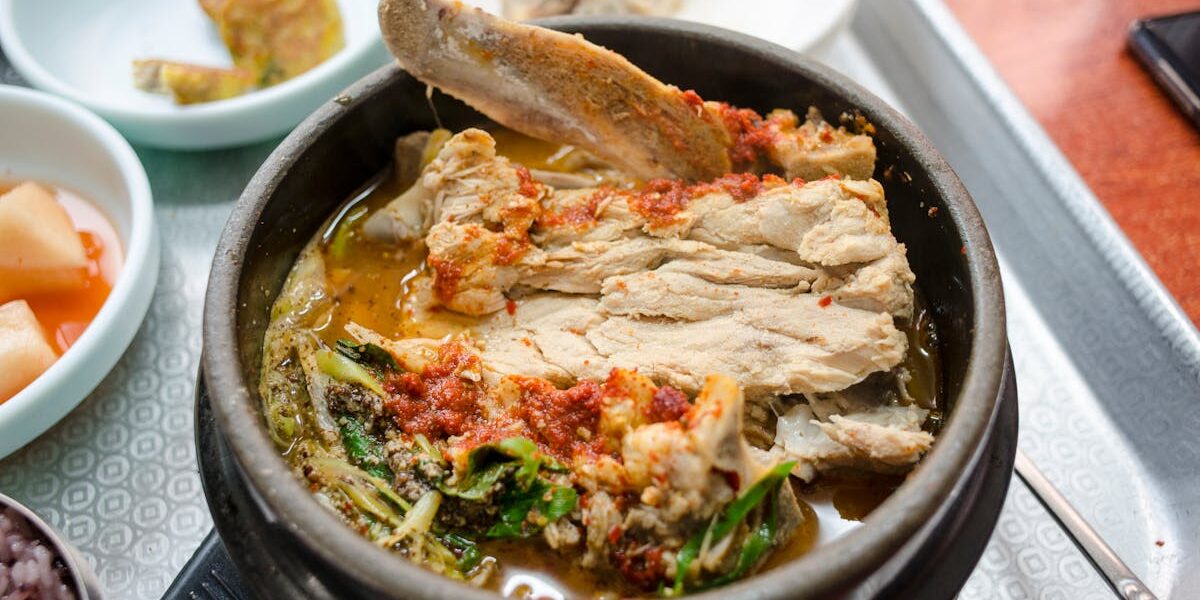
Gamjatang is the soul-warming Korean pork bone soup that fills Seoul’s late-night alleys with its unmistakable aroma of perilla, gochugaru, and slow-simmered pork. Despite its name translating literally to ”potato stew,” the true star of this iconic dish is the meaty pork spine that releases collagen, marrow, and deep porky sweetness into a fiery red broth over hours of patient simmering. The result is a bowl that delivers crimson chili heat, herbal complexity from earthy perilla, fork-tender meat that slides off the bone, and creamy potatoes that have soaked up every ounce of flavor.
This complete guide walks you through an authentic gamjatang recipe you can make in your own kitchen, including the exact technique Korean restaurants use to eliminate gaminess, build a rich crimson broth, and balance the trademark layers of spice, nuttiness, and umami. Whether you are chasing a hangover cure, a winter comfort dish, or simply the next great Korean stew to add to your repertoire, gamjatang delivers in every way.
What Is Gamjatang?
Gamjatang is a hearty Korean stew built on pork neck bones or pork spine, potatoes, napa cabbage, scallions, and a powerful seasoning paste of gochugaru (Korean red pepper flakes), gochujang, doenjang, garlic, ginger, and toasted perilla seed powder. It is simmered low and slow for two to three hours to coax collagen out of the bones, producing a silky red broth with body that coats the lips. The stew is typically served bubbling at the table in a wide, shallow pot, with diners pulling meat off the bones with chopsticks and tongs, scooping potatoes onto rice, and wrapping pieces in fresh perilla leaves.
The name has two interpretations: most native speakers translate gamja as ”potato” referring to the tubers in the stew, while a smaller theory suggests gamja was once used colloquially for the pork spine itself. Either way, the dish is recognizable for the dramatic stacked pork bones rising out of the bowl, the deep crimson surface dotted with green perilla and tan slices of dried perilla seed powder, and the unmistakable aroma of fermented bean paste mingling with chili and aromatics.
The History of Gamjatang
Gamjatang rose to popularity in South Korea during the post-war years of the 1960s, when pork spine was considered a cheap cut and home cooks needed inventive ways to feed families on tight budgets. The bones were simmered with potatoes, napa cabbage, and whatever spices were on hand, producing a stew that was filling, nutritious, and stretched a small amount of protein across many servings. As Korea industrialized and Seoul’s working-class neighborhoods expanded, gamjatang became a staple at late-night eateries near markets and factory districts, where shift workers, students, and night owls could refuel with a steaming bowl alongside soju or makgeolli.
Today the dish has earned dedicated districts. Seoul’s famous Gamjatang Alley near Sindorim Station houses dozens of specialized shops, many of which have been simmering the same lineage of broth for decades. A second, lighter cousin called ppyeo haejangguk (bone hangover soup) emerged from the same tradition, with a thinner broth and a tighter focus on the morning-after restorative qualities. Gamjatang’s reputation as a hangover cure rests on simple science: the warm, hydrating broth, the high collagen content that helps replenish the body, and the capsaicin from gochugaru that promotes sweating and circulation.
Why You’ll Love This Recipe
- Restaurant-level flavor at home: The two-blanch technique, careful aromatic build, and proper perilla seed powder finish produce a broth indistinguishable from Korean restaurant gamjatang.
- Affordable cut: Pork neck bones cost a fraction of premium cuts and produce more flavor and collagen than almost any other piece of the pig.
- Make-ahead friendly: The broth and seasoning paste both improve overnight, making gamjatang one of the rare stews that is better on day two.
- Customizable heat: Easily adjusted from family-mild to fiery by changing the gochugaru ratio and adding fresh chilies at the end.
- Naturally gluten-free: When made with gluten-free doenjang and gochujang, the entire dish contains no wheat.
- One-pot comfort: Serves a crowd, scales easily, and reheats beautifully for next-day lunches.
Ingredients for Authentic Gamjatang
Gamjatang relies on a small set of Korean pantry staples and a couple of cuts that may be unfamiliar. The good news is that almost every Korean or Asian grocery stocks them, and many can be ordered online. The list below serves four to six people generously, or six to eight as part of a larger meal with banchan.
For the Pork and Broth
- 3 to 4 pounds (1.4 to 1.8 kg) pork neck bones or pork spine, cut into manageable 3-inch pieces
- 1 large yellow onion, halved
- 1 head of garlic, halved horizontally
- 1 (3-inch) piece of fresh ginger, sliced
- 4 large scallions, white parts only (reserve greens for finishing)
- 10 whole black peppercorns
- 4 dried bay leaves
- 1/2 cup (120 ml) Korean cooking rice wine or sake
- 10 cups (2.4 liters) cold water for the main broth, plus extra for blanching
For the Yangnyeom (Seasoning Paste)
- 1/2 cup (60 g) gochugaru, Korean red pepper flakes (coarse grind preferred)
- 3 tablespoons gochujang, Korean fermented chili paste
- 3 tablespoons doenjang, Korean fermented soybean paste
- 2 tablespoons soup soy sauce (guk-ganjang) or regular soy sauce
- 2 tablespoons toasted sesame oil
- 10 cloves garlic, finely minced
- 1 tablespoon finely grated ginger
- 1 tablespoon sugar or honey
- 2 tablespoons fish sauce, optional but recommended
For the Stew
- 4 medium Yukon Gold or russet potatoes, peeled and halved
- 1/4 head napa cabbage, cut into 3-inch pieces (or 8 large leaves)
- 1 cup soybean sprouts, optional
- 3 tablespoons perilla seed powder (deulkkae garu)
- 20 fresh perilla leaves (kkaennip), stems removed
- 4 scallion greens, sliced on the bias
- 2 long green Korean peppers or jalapenos, sliced (optional)
- 1 long red chili, sliced (optional)
- 2 ounces (60 g) sweet potato glass noodles (dangmyeon), soaked, optional
Ingredient Substitution Chart
| Ingredient | Best Substitute | Notes |
|---|---|---|
| Pork neck bones | Pork back ribs or pork shanks | Country-style ribs work in a pinch; reduce cook time to 90 minutes |
| Gochugaru | Aleppo pepper plus cayenne (3:1) | Korean chili flakes have a uniquely fruity, smoky flavor that is hard to fully replicate |
| Gochujang | Miso plus sriracha (2:1) | Adds heat and fermented depth, though the result will be slightly thinner |
| Doenjang | White miso or red miso | Use 70 percent of the doenjang amount, as miso is saltier and milder |
| Perilla seed powder | Ground toasted sesame seeds | You lose the herbal note but keep the nuttiness; not a perfect swap |
| Fresh perilla leaves | Shiso or fresh basil and mint mix | Shiso is the closest cousin botanically and works beautifully |
| Soup soy sauce | Light soy sauce plus a pinch of salt | Soup soy sauce is saltier and clearer; adjust gradually |
| Soybean sprouts | Mung bean sprouts | Mung bean sprouts soften faster, so add at the end |
Equipment Needed
- A large 6- to 8-quart Dutch oven, stock pot, or Korean stone pot for serving
- A second large pot for the initial blanching step
- A fine mesh skimmer or slotted spoon for removing scum
- A sharp chef’s knife and a sturdy cutting board
- Tongs for handling the heavy pork bones
- A small mixing bowl for the seasoning paste
- A microplane or fine grater for ginger
- An optional immersion blender for extra-creamy broth
If you have a Korean clay pot (ttukbaegi) or a wide cast iron casserole, bring it to the table at the end for the most authentic presentation. Restaurants in Seoul finish gamjatang tableside on a portable burner so the broth keeps bubbling throughout the meal, which intensifies the perilla aroma and keeps the meat hot until the last bite.
How to Make Gamjatang Step by Step
Gamjatang is not technically difficult, but the dish hinges on a few non-negotiable steps that elevate it from average to outstanding. The most important: soaking the bones to remove blood, blanching to eliminate gaminess, building a clean broth before adding seasoning, and finishing with raw perilla seed powder and fresh leaves so their aromas stay vivid.
Step 1: Soak the Pork Bones
Place the pork neck bones in a large bowl, cover them with very cold water, and refrigerate for at least 2 hours and up to overnight. Change the water two or three times. This step pulls out the blood that would otherwise cloud the broth and contribute to a metallic, gamy flavor. You will see the water turn pinkish and then nearly clear by the final rinse. Drain the bones and rinse each piece under cold running water, paying particular attention to any visible bone fragments.
Step 2: Blanch the Bones
Transfer the rinsed bones to your largest pot. Cover them with cold water by 2 inches, then bring to a vigorous boil over high heat. As soon as the surface erupts in foam and gray scum, set a timer for 5 minutes and let it boil hard. The scum is denatured proteins and impurities, and ruthless removal here is the difference between a clean, restaurant-quality broth and a muddy one. After 5 minutes, drain the bones into a colander and rinse each piece under cool running water to remove any remaining scum clinging to the bones.
Step 3: Build the Aromatic Broth
Scrub out the pot, return the blanched bones, and add the halved onion, halved garlic head, sliced ginger, scallion whites, peppercorns, and bay leaves. Pour in the rice wine and 10 cups of fresh cold water. Bring to a boil over high heat, then immediately reduce to a gentle simmer. The surface should barely move, with just an occasional bubble breaking. Skim any foam that rises during the first 20 minutes. Simmer uncovered for 2 hours, or until a paring knife slides easily through the meat between the bones.
Step 4: Mix the Yangnyeom Paste
While the broth simmers, combine the gochugaru, gochujang, doenjang, soup soy sauce, sesame oil, minced garlic, grated ginger, sugar, and fish sauce in a small bowl. Stir into a thick, fragrant paste. Let it rest at least 30 minutes so the gochugaru fully hydrates and the flavors meld. If the paste seems too stiff, loosen it with a ladleful of the simmering broth.
Step 5: Strain and Season the Broth
Carefully lift the pork bones out of the pot and set them aside on a tray. Strain the broth through a fine mesh sieve into a clean bowl, discarding the aromatics. Wipe out the cooking pot, then return both the bones and the strained broth. Stir the yangnyeom paste into the hot broth until fully dissolved. The broth will transform from clear pale brown to deep crimson red almost instantly. Taste and adjust with more soy sauce or salt if needed; the broth should be assertively seasoned because the potatoes and cabbage will mellow it.
Step 6: Add Potatoes and Cabbage
Nestle the halved potatoes around the bones, then add the napa cabbage and optional soybean sprouts. Bring back to a simmer, cover loosely, and cook for 20 to 25 minutes. The potatoes should be fork-tender but not crumbling, and the cabbage should be silky and translucent at the edges. If the broth has reduced too much, top up with a cup of hot water.
Step 7: Finish with Perilla
Sprinkle in the perilla seed powder, stir gently to incorporate, and let it bloom in the broth for 2 minutes. Tear the fresh perilla leaves and scatter them across the surface along with the scallion greens and sliced chilies. If you are using glass noodles, drop them in now and cook 4 to 5 minutes until tender. Bring the entire pot to the table while still bubbling. Serve with bowls of short-grain steamed rice and a small dish of soy sauce mixed with extra gochugaru for dipping the pork.
Pro Tips for the Best Gamjatang
- Do not skip the soak: Two hours of cold water soaking is the single biggest factor in broth clarity. If you only have 30 minutes, change the water more frequently.
- Toast your perilla seed powder: If your perilla seed powder smells flat, dry-toast it in a skillet over low heat for 60 seconds. Bright, popcorn-like aroma signals readiness.
- Build the paste in advance: Yangnyeom paste can be made up to 5 days ahead and stored in the fridge. The flavor deepens significantly.
- Skim, skim, skim: The first 20 minutes of simmering set the broth’s character. A clean broth means a clean finish.
- Use the right potato: Yukon Gold holds its shape better than russet but absorbs less flavor; russet falls apart but thickens the broth. Half-and-half gives you the best of both.
- Save the bones for stock: After the meal, simmer the leftover bones again with fresh water for a delicate second-day broth perfect for noodles.
- Adjust heat at the end: Gochugaru continues to bloom as the stew rests, so taste 10 minutes before serving and only add more if you really need it.
- Rest before serving: Like many Korean stews, gamjatang tastes more harmonious after sitting off heat for 15 minutes. The fat rises, the seasoning settles, and the meat firms up just enough to lift cleanly off the bone.
Variations and Customizations
Mukkeunji Gamjatang (Aged Kimchi Version)
Substitute one cup of mukkeunji, very well-aged sour kimchi, for the napa cabbage. The lactic tang adds incredible depth and lifts the richness of the pork. Add the kimchi during step 5 so it has time to meld with the broth.
Mild Family-Style Gamjatang
Reduce the gochugaru to 3 tablespoons and the gochujang to 1 tablespoon. Add 2 extra tablespoons of doenjang to keep the fermented backbone. This version works well for children or anyone sensitive to heat without losing the signature flavor profile.
Seafood Gamjatang
Add 1 pound of head-on shrimp or fresh blue crab pieces during the final 10 minutes of cooking. The shellfish adds a sweet maritime note that complements the perilla beautifully, and the resulting broth carries hints of Korean coastal cooking.
Keto and Low-Carb
Skip the potatoes and glass noodles entirely. Replace with daikon radish chunks and extra napa cabbage, soybean sprouts, and enoki mushrooms. The broth remains satisfying while keeping carbs around 8 grams per serving.
Slow Cooker Gamjatang
Complete steps 1 through 4 on the stovetop, then transfer the blanched bones, aromatics, and water to a slow cooker. Cook on low for 8 hours. Strain, return to the slow cooker with the yangnyeom paste, potatoes, and cabbage, and cook on high for 1 more hour. Finish with perilla just before serving.
Instant Pot Gamjatang
Blanch the bones on the stovetop, then pressure cook the broth with aromatics for 45 minutes on high pressure with natural release. Switch to saute mode to add the yangnyeom, potatoes, and cabbage, simmering 20 minutes until tender. This cuts total cook time roughly in half.
What to Serve with Gamjatang
Gamjatang is a complete meal, but Korean dining always includes a sweep of small side dishes (banchan) and the obligatory bowl of rice. The classic accompaniments balance the stew’s richness and heat with cool, crunchy, or briny textures.
- Steamed short-grain rice: Non-negotiable. Use the rice as a sponge for the broth and to wrap with meat in perilla leaves.
- Kimchi: Classic napa cabbage kimchi or radish kimchi adds acid that cuts through the pork richness.
- Pickled radish (chicken-mu): The bright sweetness resets the palate between bites.
- Banchan plate: Korean sides like spinach namul, bean sprout salad, and seasoned dried anchovies pair beautifully.
- Soju or makgeolli: Both Korean rice wines stand up to the stew’s heat. Soju cleanses, makgeolli softens.
- Cold barley tea (boricha): Traditional non-alcoholic pairing that quietly soothes the palate.
- Bokkeum-bap (fried rice finish): When the meat and potatoes are gone, stir cooked rice and a sheet of crumbled gim into the remaining broth and toast it on the bottom of the pot for a crispy golden bonus course.
Storage and Reheating
Gamjatang is one of the rare stews that genuinely tastes better the next day, as the perilla aroma settles and the broth becomes even more deeply seasoned. Cool the stew quickly by transferring it to shallower containers, and refrigerate within 2 hours of cooking. The broth will solidify into a wobbling, collagen-rich gel in the fridge, which is a great sign of bone quality.
- Refrigerator: Store in airtight containers for up to 4 days. Reheat gently on the stove with a splash of water to loosen.
- Freezer: Freeze without the potatoes (they turn grainy) for up to 3 months. Thaw overnight in the fridge, add freshly cooked potatoes when reheating.
- Reheating: Always reheat on the stovetop over low heat, never the microwave for a full pot. Add fresh perilla leaves at the end of reheating to refresh the aroma.
- Leftover meat: Pull pork from the bones and shred into salads, rice bowls, kimchi fried rice, or Korean tacos with gochujang mayo.
Nutritional Information
The numbers below are approximate per serving, calculated for a six-portion yield of the full recipe. Sodium can vary widely based on the specific brands of doenjang, gochujang, and soy sauce you use.
| Nutrient | Per Serving | % Daily Value |
|---|---|---|
| Calories | 620 kcal | 31% |
| Total Fat | 34 g | 44% |
| Saturated Fat | 11 g | 55% |
| Cholesterol | 140 mg | 47% |
| Sodium | 1380 mg | 60% |
| Total Carbohydrates | 38 g | 14% |
| Dietary Fiber | 6 g | 21% |
| Sugar | 5 g | — |
| Protein | 42 g | 84% |
| Iron | 4.5 mg | 25% |
| Potassium | 1240 mg | 26% |
| Vitamin C | 32 mg | 36% |
| Calcium | 110 mg | 8% |
Troubleshooting Common Issues
My Broth Is Cloudy and Tastes Gamy
This is almost always a result of skipping or shortening the soak and blanch steps. Pork neck bones carry a lot of blood, and unless you remove it before the main simmer, you will end up with a muddy broth. Next time, extend the cold water soak and change the water more often. To partially rescue an already-gamy batch, strain the broth, return it to a simmer with a few thick slices of fresh ginger and a peeled apple, and cook 30 more minutes; the apple absorbs some of the off-flavors.
The Broth Is Too Thin
You may have undersimmered the bones, or your bones did not carry enough connective tissue. Continue simmering uncovered until the volume reduces by another 20 percent and the broth coats the back of a spoon. A second option: stir in 1 extra tablespoon of perilla seed powder, which thickens and adds body simultaneously. Mashing one of the cooked potatoes into the broth is another classic restaurant trick.
The Meat Will Not Come Off the Bone
The meat needs more time, plain and simple. Cover the pot, lower the heat to the gentlest simmer, and give it another 30 to 45 minutes. Modern pressure cookers can also rescue a stubborn batch in 15 minutes on high pressure.
The Stew Tastes Flat
Korean stews depend on a foundation of fermented umami, so first add another teaspoon of doenjang and let it cook for 5 minutes. If still flat, a splash of fish sauce or soup soy sauce usually completes the picture. Avoid adding plain salt; the dish wants depth, not just salinity.
The Surface Has Too Much Floating Fat
Cool the stew until the fat solidifies (about 1 hour in the fridge), lift off the disk of pork fat, and reheat. A modest cap of fat is desirable, but it should not coat your tongue.
How Gamjatang Compares to Other Korean Stews
| Stew | Main Protein | Heat Level | Best Known For |
|---|---|---|---|
| Gamjatang | Pork neck bones | Medium to hot | Collagen-rich broth, perilla aroma |
| Seolleongtang | Ox bones | None (mild) | Milky white broth, restorative |
| Yukgaejang | Shredded beef brisket | Hot | Spicy, packed with vegetables |
| Sundubu Jjigae | Silken tofu and seafood | Hot | Light, brothy, served bubbling |
| Galbitang | Beef short ribs | None (mild) | Clear, elegant, special-occasion soup |
| Budae Jjigae | Spam, sausage, kimchi | Medium | Korean War-era fusion, communal pot |
| Kimchi Jjigae | Pork belly, kimchi | Medium | Tangy, weeknight-friendly, fast |
Where to Find the Ingredients
The success of gamjatang rests almost entirely on the quality of its Korean pantry items. Many of these are available through online Asian grocers that ship nationwide in the United States. Look for gochugaru in vacuum-sealed bags from Korean brands, and check that the color is bright red rather than dull brown, which suggests staleness. Doenjang and gochujang should both list rice or soybeans as the primary ingredient, with minimal additives.
Pork neck bones are sold at most Korean and Asian supermarkets, often labeled gamjatang-yong, meaning ”for gamjatang.” If your local butcher carries pork spine or back ribs, ask them to portion the spine into 3-inch pieces; this is the most common request at H Mart butcher counters during the colder months. Fresh perilla leaves are available year-round at Korean grocers, though their season peaks in late summer when the flavor is most pronounced. The seed powder, called deulkkae garu, is sold in resealable bags and stores well in the freezer for up to a year.
Frequently Asked Questions
What does gamjatang taste like?
Gamjatang is rich, deeply savory, and gently spicy with a distinctive herbal nuttiness from perilla seed powder and fresh perilla leaves. The broth carries body from slow-cooked pork bones and a fermented depth from doenjang and gochujang. The first sip is layered: chili warmth, soy-fermented umami, sweet pork, and a finishing whisper of green herbs.
Is gamjatang the same as ppyeo haejangguk?
They are close cousins built on pork bones and similar seasonings, but ppyeo haejangguk is typically lighter, thinner, and served as a hangover soup with cabbage and bean sprouts dominating, while gamjatang is a thicker, more substantial stew where pork bones and potatoes share equal billing. Many home cooks treat the two recipes as variations of the same base.
Can I make gamjatang without perilla?
You can, but the dish loses one of its defining characteristics. As substitutes, use shiso leaves (the closest botanical cousin) and ground toasted sesame seeds in place of perilla seed powder. The result is delicious but reads more like generic Korean pork stew than authentic gamjatang.
Is gamjatang spicy?
Standard gamjatang sits at a medium heat level, comparable to kimchi jjigae or yukgaejang. It is not as fiery as buldak or extra-hot tteokbokki. The heat is easy to dial down by reducing the gochugaru, and there is no shame in serving a milder version to children.
What cut of pork should I use?
Pork spine (deungppyeo) and neck bones are the traditional cuts because they have the perfect ratio of meat, marrow, and connective tissue. Country-style ribs and pork shanks are acceptable swaps, but loin or shoulder will not deliver the collagen-rich broth that defines gamjatang.
Can I freeze gamjatang?
Yes, but leave the potatoes out before freezing; their texture turns mealy. The broth and pork freeze beautifully for up to 3 months. Add fresh potatoes when reheating, simmering them in the thawed broth until tender.
What is the difference between perilla seeds and sesame seeds?
Perilla seeds come from the same plant family as mint and basil and have a uniquely herbal, slightly anise-like aroma. Sesame seeds are nuttier and sweeter, with no herbal note. In gamjatang, perilla seed powder also acts as a thickener, while sesame contributes only flavor.
How long does gamjatang last in the fridge?
Stored in an airtight container, gamjatang stays fresh for 4 days in the refrigerator. The flavor improves over the first 2 days, then plateaus. Reheat gently with a splash of water and refresh with new perilla leaves just before serving.
Is gamjatang gluten-free?
The traditional version is mostly gluten-free, but doenjang, gochujang, and soy sauce often contain wheat. Check labels carefully and choose certified gluten-free Korean pantry staples to keep the dish safe for celiac diners.
Can I make gamjatang without fish sauce?
Absolutely. Fish sauce is a modern addition many cooks like for extra umami depth, but traditional gamjatang relies on doenjang and the bone broth itself for savoriness. Skip the fish sauce and bump the doenjang to 4 tablespoons if you want a vegetarian-friendly umami substitute (though the dish still contains pork).
Final Thoughts
Gamjatang is more than a stew. It is a study in patience, contrast, and the alchemy of Korean fermentation. The cheap cuts that once stretched post-war meals now serve as the foundation of one of Seoul’s most beloved late-night traditions, and recreating the dish at home rewards you with a fragrant, collagen-rich masterpiece that improves overnight and feeds a crowd with minimal hands-on effort.
The first time you stir perilla seed powder into a deep red bubbling broth and watch fresh kkaennip leaves wilt across the surface, you will understand why generations of Koreans have crowded into smoky alleyway shops for this exact pot. Pull the meat off the bones with your chopsticks, mash a piece of potato into the broth-soaked rice, and let the warmth do its job. Gamjatang is the kind of recipe that earns a permanent place in your cooking rotation, and the kind of meal that turns a cold March evening into something close to ceremonial.
Once you nail the technique, try the variations: aged kimchi for tang, seafood for sea-salt sweetness, slow cooker for hands-off ease. Pair it with a chilled bottle of soju, a stack of fresh perilla leaves, and a bowl of rice steaming next to it, and you will have everything you need for one of Korea’s most quietly perfect bowls of food. For another classic Korean stew on the spicier end, try our recipe for braised short ribs, or explore the foundation Korean ingredient that powers this dish in our complete guide to gochugaru and our deep dive into doenjang.

Mei Lin Chen
Mei Lin Chen is an Asian food writer and recipe developer. Melbourne-raised and London-based, she has spent over a decade exploring the rice paddies, hawker stalls, and home kitchens of South-East and East Asia. Her recipes balance traditional technique with everyday practicality.