Last updated: March 18, 2026
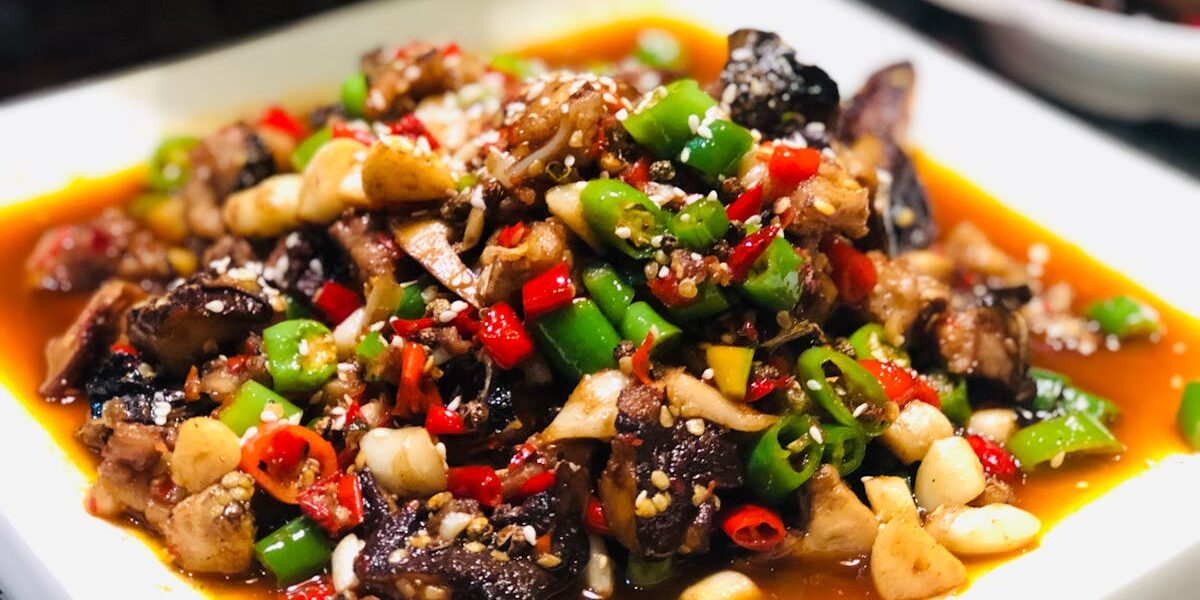
Mala xiang guo (麻辣香锅) is the bold, bone-warming Sichuan dish that has quietly taken over China’s casual dining scene and is now spilling onto American food feeds, college-town menus, and weeknight dinner tables. The name translates roughly to ”numbing-spicy fragrant pot,” but unlike the soupy hot pot most Westerners know, this version is dry: a glossy, chili-slicked stir-fry of whatever proteins, vegetables, mushrooms, and tofu you love, all tossed in a fiercely aromatic Sichuan sauce. Think of it as build-your-own hot pot, but stir-fried in a wok until every piece is lacquered with málà.
This complete recipe walks you through the authentic restaurant method used in Chongqing and Chengdu: blanching the ingredients first to par-cook them, then ripping them through a screaming-hot wok with Pixian doubanjiang, Sichuan peppercorns, dried chilies, and a handful of mala spices. By the end you’ll have a one-wok meal that serves 4 to 6 generously, plated with steamed rice and ready in under 45 minutes once your prep is done.
What Is Mala Xiang Guo?
Mala xiang guo is a Sichuan-style stir-fry that originated in Chongqing in the early 2000s and exploded in popularity across mainland China during the 2010s. It is sometimes translated as ”spicy dry pot,” ”mala dry pot,” or ”Sichuan stir-fry pot.” The defining flavor is málà — a two-character Mandarin word combining má (麻, the tingling numbness from green and red Sichuan peppercorns) and là (辣, the chili heat from dried Erjingtiao and facing-heaven peppers).
Unlike traditional hot pot, which is a communal pot of bubbling broth at the center of the table, mala xiang guo is plated and dry. Restaurants typically display dozens of raw ingredients on ice — beef tendon, lotus root, fish balls, quail eggs, wood ear mushrooms, lamb slices, cauliflower, frozen tofu — and customers pick what they want. The kitchen blanches your selections in flavored water, then flings everything into a wok with a custom mala sauce, sizzling chilies, and a final shower of toasted sesame seeds. The result is intensely fragrant, glossy, and addictive, with each bite delivering numbing tingle, slow-building heat, and savory depth.
You can absolutely make this at home, and once you have the spices on hand, the dish becomes one of the most flexible weeknight recipes in your rotation. The technique is closer to a classic Chinese stir-fry than to traditional hot pot, so if you can stir-fry, you can make mala xiang guo.
The Flavor Foundation: Málà Explained
The soul of this dish is two ingredients working in tandem: Sichuan peppercorns and dried chilies. Sichuan peppercorns are not actually peppercorns at all — they are the dried husks of the prickly ash tree, native to Sichuan Province. Bite one and a faint citrus-pine flavor blooms before your tongue starts to vibrate with a tingling, electric numbness. Scientists have measured this sensation at around 50 Hz, similar to a vibrating phone. The numbness is what makes málà dishes feel exciting without simply being painful — the chili heat lands on partially numbed tongues, which paradoxically lets you taste more of the underlying ingredients.
The chili side of the equation comes from two Sichuan staples: Erjingtiao peppers (long, wrinkled, mildly hot, very aromatic) and facing-heaven peppers (shorter, fatter, hotter, more punchy). Most home cooks use a mix, or default to ”Sichuan dried chilies” sold in Asian groceries. The dish also leans heavily on Pixian doubanjiang, the fermented broad bean and chili paste that gives many Sichuan classics their brick-red color and deep, salty-funky base.
Ingredients for Mala Xiang Guo
This recipe is designed for a 14-inch wok and serves 4 to 6 people as a main course with rice. Treat the protein and vegetable list as a starting point — pick 4 to 6 items totaling roughly 2 to 2.5 pounds. The sauce quantities stay the same regardless.
For the Mala Sauce Base
- 3 tablespoons neutral oil (canola, peanut, or grapeseed)
- 2 tablespoons beef tallow or pork lard (optional, for restaurant-style depth)
- 3 tablespoons Pixian doubanjiang (broad bean chili paste), chopped finely
- 1 tablespoon Sichuan peppercorns (red, whole)
- 1 teaspoon green Sichuan peppercorns (optional, for sharper tingle)
- 20 to 30 dried red chilies (Erjingtiao or Tianjin), stems trimmed
- 6 cloves garlic, smashed
- 1 thumb-sized piece of fresh ginger, sliced thin
- 4 scallions, white parts only, cut into 2-inch lengths (save greens for garnish)
- 2 star anise pods
- 1 small piece (1 inch) of cassia bark or cinnamon stick
- 2 bay leaves
- 1 black cardamom pod (optional)
- 1 tablespoon Shaoxing wine
- 2 tablespoons light soy sauce
- 1 tablespoon dark soy sauce
- 1 tablespoon oyster sauce
- 1 teaspoon sugar (rock sugar or granulated)
- 1/2 teaspoon ground white pepper
- 1 tablespoon toasted sesame oil (added at the end)
- 2 tablespoons toasted white sesame seeds, for garnish
- Handful fresh cilantro, chopped, for garnish
For the Proteins (Pick 2 to 3, Totaling About 1 Pound)
- 8 ounces beef sirloin or flank, sliced thin against the grain
- 8 ounces boneless chicken thigh, cut into bite-sized pieces
- 8 ounces medium shrimp, peeled and deveined
- 6 ounces fish balls or beef balls (frozen, halved)
- 6 ounces firm tofu, cut into 1-inch cubes, or 4 ounces fried tofu puffs
- 6 ounces sliced Spam or Chinese sausage (lap cheong), thinly sliced
- 4 quail eggs, hard-boiled and peeled (optional)
For the Vegetables (Pick 3 to 5, Totaling About 1 to 1.5 Pounds)
- 4 ounces lotus root, peeled and sliced into 1/4-inch coins
- 4 ounces potato, peeled and sliced into 1/4-inch coins
- 4 ounces cauliflower or broccoli, cut into small florets
- 2 ounces dried wood ear mushrooms, rehydrated (or 4 ounces fresh)
- 4 ounces king oyster, shiitake, or enoki mushrooms
- 2 ounces dried tofu skin (yuba), rehydrated and cut into strips
- 4 ounces napa cabbage, cut into 2-inch pieces
- 2 ounces celery, cut diagonally into 1-inch pieces
- 4 ounces bean sprouts
- 1 medium green bell pepper, cut into thin strips
- 4 ounces baby bok choy, halved
For Marinating the Meat
- 1 teaspoon Shaoxing wine
- 1 teaspoon light soy sauce
- 1/2 teaspoon cornstarch
- Pinch of white pepper
Equipment You Will Need
A well-seasoned carbon steel wok is the single most important piece of equipment for this dish. The high heat and rapid tossing develop wok hei — the smoky, slightly charred aroma that defines great Chinese stir-fries. A 14-inch flat-bottomed wok is the home cook’s sweet spot. If you don’t own a wok, the largest, heaviest skillet you own (cast iron, carbon steel, or stainless) will work; just cook in two batches so you don’t crowd the pan.
- 14-inch carbon steel wok or large heavy skillet
- Wok spatula or large slotted spoon
- Large pot (for blanching) plus a spider strainer or colander
- Sharp chef’s knife or Chinese cleaver
- Cutting board large enough to mise en place a dozen ingredients
- Several small bowls to organize prepped ingredients by cook time
Step-by-Step Cooking Instructions
Step 1: Prep Everything First (15 to 20 minutes)
Mala xiang guo is the definition of a mise en place dish. Once the wok is hot, you have maybe 5 minutes of cooking, and you don’t want to be slicing garlic while the chilies burn. Slice all meats thin against the grain. Cut the vegetables into bite-sized pieces — anything dense (lotus root, potato, carrot) gets thinner; anything quick-cooking (cabbage, sprouts, mushrooms) can stay larger. Smash garlic, slice ginger, separate scallion whites from greens.
Toss the meat with the marinade ingredients and let it sit while you do the rest. If you want a luxuriously tender, restaurant-style texture on beef or chicken, take five extra minutes to velvet the meat with a little egg white and a bit more cornstarch — it makes a big difference.
Step 2: Blanch the Ingredients (10 minutes)
This is the step home cooks most often skip — and it’s the one that separates a soggy stir-fry from a real mala xiang guo. Bring a large pot of water to a rolling boil. Add 1 tablespoon of salt and 1 tablespoon of neutral oil (the oil helps glaze the surfaces and keeps them from sticking together later).
Blanch ingredients in batches according to cook time, starting with the densest. Each batch goes in for 30 to 90 seconds, just until it loses its rawness, then comes out into a colander with a spider strainer. Do not overcook — these items will hit the wok again.
- 90 seconds: lotus root, potato, cauliflower, broccoli
- 60 seconds: mushrooms, tofu skin, fish balls, quail eggs (warm-through only)
- 45 seconds: meat (beef, chicken, pork) — done when it just loses pink
- 30 seconds: shrimp, napa cabbage, bok choy, celery
- 15 seconds: bean sprouts (a quick dip)
- Do not blanch: bell pepper or scallion greens (these go into the wok raw)
Spread blanched ingredients on a baking sheet or two large plates so they cool quickly and shed surface water. Pat the meat and tofu lightly dry with paper towels — wet ingredients in a hot wok produce steam, not sear.
Step 3: Build the Mala Aroma Oil (3 minutes)
Heat the wok over high heat until it just starts to smoke. Add the 3 tablespoons of neutral oil plus the optional 2 tablespoons of beef tallow or lard. Swirl to coat. Turn the heat down to medium — burned aromatics will ruin the dish.
Add the whole spices first: Sichuan peppercorns (red and green), star anise, cassia bark, bay leaves, and black cardamom if using. Stir gently for 30 to 45 seconds, until they smell intensely fragrant. Add the dried chilies and stir for another 20 seconds, just until they darken half a shade and become aromatic. If they blacken, you’ve gone too far — start over, because they will turn the entire dish bitter.
Push the spices to one side of the wok and add the doubanjiang to the cleared center. Let it sizzle in the oil for 30 to 45 seconds — you’ll see the oil turn brick red. This step is called ”frying out the red oil” and is essential for Sichuan depth. Now add the smashed garlic, ginger, and scallion whites; stir-fry 30 seconds, until fragrant.
Step 4: Stir-Fry Everything Together (4 to 6 minutes)
Crank the heat back to high. Add the blanched proteins first and toss aggressively for 60 to 90 seconds. The goal is to coat them in the red oil and develop a hint of char, not to cook them through — they’re already 80 percent done from the blanch.
Add the heartier vegetables next — lotus root, potato, cauliflower, mushrooms — and toss for 60 seconds. Then deglaze with the Shaoxing wine, splashed around the rim of the wok, and quickly follow with the light soy, dark soy, oyster sauce, sugar, and white pepper. Toss everything until evenly coated and glossy.
Add the remaining quick-cooking vegetables (cabbage, sprouts, bell pepper, bok choy) and toss for 60 to 90 seconds. The final mix should be glossy red, glistening but not pooling with sauce in the bottom of the wok. If it looks dry, drizzle in a tablespoon of water or chicken stock; if it looks wet, crank the heat and toss aggressively for another 30 seconds to drive off moisture — this dish is, after all, dry pot.
Step 5: Finish and Plate
Kill the heat. Drizzle in the toasted sesame oil and give one final toss. Slide everything onto a large warmed platter — the dish should look dramatic, with chilies, peppercorns, and whole spices visible throughout. Shower with toasted sesame seeds, chopped scallion greens, and a generous handful of fresh cilantro.
Serve immediately with steamed jasmine rice and ice-cold beer or chrysanthemum tea. The whole dish, from heating wok to plate, should take about 10 minutes once everything is blanched.
Recipe at a Glance
| Detail | Information |
|---|---|
| Prep time | 30 minutes |
| Blanching time | 10 minutes |
| Cook time | 10 minutes |
| Total time | 50 minutes |
| Servings | 4 to 6 |
| Cuisine | Sichuan (Chinese) |
| Course | Main with rice |
| Difficulty | Intermediate |
| Heat level | Medium to very high (adjustable) |
| Make ahead | Sauce base only |
Adjusting the Heat: Mild, Medium, or Volcanic
One of the joys of mala xiang guo is total heat control. Heat in this dish comes from two independent dials, and you can move them separately.
- Mild (American restaurant level): 8 dried chilies, 1 teaspoon Sichuan peppercorns, 2 tablespoons doubanjiang. Cut chilies in half so the seeds spill out — counterintuitively, this releases flavor but mellows perceived heat over the cook.
- Medium (default in this recipe): 20 to 30 chilies whole, 1 tablespoon Sichuan peppercorns, 3 tablespoons doubanjiang.
- Hot (Chongqing local): 40+ chilies, mix of Erjingtiao and facing-heaven, 1.5 tablespoons peppercorns, 4 tablespoons doubanjiang, plus a teaspoon of homemade Sichuan chili oil at the end.
- Volcanic (challenge level): add 1 to 2 tablespoons of chili oil sediment and a teaspoon of ground Sichuan chili powder along with the doubanjiang. Warn your guests.
Remember that Sichuan peppercorns and chilies operate on different receptors. If you want intense tingling without overwhelming heat, push the peppercorns up and the chilies down. If you want lasting heat without numbness, do the opposite. True Sichuan cooks always serve mala xiang guo with rice precisely so diners can control the burn from one bite to the next.
Pro Tips for Restaurant-Quality Results
- Buy doubanjiang from Pixian (Pi County). Look for ”Pixian douban” on the label, ideally aged ”chen nian” (陈年). It should be dark red-brown, slightly chunky, and smell deeply funky-savory. The cheap stuff sold in some American stores is too thin and too sweet.
- Chop the doubanjiang. Most jars contain whole pieces of fermented broad bean. Run your knife through it for 30 seconds before adding to the wok — it dissolves faster and distributes more evenly.
- Toast the peppercorns the day before. Dry-toast 2 tablespoons of red Sichuan peppercorns in a small skillet over low heat for 2 to 3 minutes, until fragrant. Store in an airtight jar. Freshly toasted peppercorns are dramatically more tingly than ones straight from a year-old bag.
- Don’t skip the blanching step. Yes, it’s an extra pot. Yes, it’s worth it. Blanched ingredients hit the wok at temperature, so they sear instead of steam, and you avoid raw lotus root or undercooked cauliflower in a sea of sauce.
- Use a real wok, screaming hot. Mala xiang guo is what wok hei was made for. If your stovetop can’t sear, finish under the broiler for 90 seconds after the wok step to drive off moisture and char the chilies slightly.
- Add the oyster sauce last. Long cooking dulls its sweet-briny edge. Stir it in only after the deglaze.
- Save the chilies but don’t eat them. The whole dried chilies in your finished dish look beautiful but are blast-furnace hot. Treat them as decor, not food, unless you know what you’re doing.
Variations: Make It Your Own
Vegetarian Mala Xiang Guo (Sushou Xiang Guo)
Skip the meat, oyster sauce, and animal fats. Use mushroom-based oyster sauce or extra soy plus a teaspoon of mushroom powder. Lean into texture variety: try frozen tofu (squeezed dry and torn into chunks), seitan, tofu puffs, lotus root, lily flowers, day lily buds, dried bean curd sticks, and at least three types of mushroom. The lack of meat is barely noticeable because the dish leans so heavily on aromatics.
Seafood-Forward Version
Lean into shrimp, squid rings, fish balls, scallops, and crab sticks. Add a splash of fish sauce along with the oyster sauce, and finish with a squeeze of lime instead of (or alongside) sesame oil. Coastal Sichuan-influenced restaurants in Shanghai often serve a version like this.
Northeastern (Dongbei) Style
Less peppercorn, more garlic, dial up the cumin. Add 1 teaspoon of whole cumin seeds and 1 teaspoon of toasted ground cumin with the spice oil. Skewer cubes of lamb and beef and add at the protein stage. The dish becomes closer to a Xinjiang night-market stir-fry, with smoky cumin sitting alongside the chili-pepper backbone.
Honey-Glazed (Sweeter) Style
Some Chongqing chains offer a ”sweet mala” that goes over well with American palates. Double the sugar (or replace with 2 tablespoons of honey), add 1 tablespoon of hoisin sauce, and reduce the doubanjiang to 2 tablespoons. The result is more lacquered, almost barbecue-like, while keeping the tingling backbone.
Quick Weeknight Version
Skip the blanching for a one-wok shortcut. Choose only quick-cooking proteins (chicken thigh, shrimp, sliced beef) and vegetables (cabbage, bell pepper, broccolini, mushrooms). The total cook time drops to 12 minutes from start to finish, though the texture won’t be quite as varied as the restaurant version.
What to Serve with Mala Xiang Guo
This dish is heavy, oily, and intense, so its accompaniments should be light and palate-cleansing.
- Steamed jasmine or short-grain rice — non-negotiable; it’s the cooling counterweight
- Smashed cucumber salad (pai huang gua) with rice vinegar, garlic, sesame oil, and a pinch of sugar
- Cold tofu drizzled with soy sauce and scallions
- A simple stir-fried green like garlic bok choy or empty heart vegetable (ong choy)
- Light vegetable soup such as tomato and egg soup or winter melon broth
- Chilled drinks: chrysanthemum tea, soy milk, light Asian lager (Tsingtao, Sapporo), or sweet plum wine
Nutrition Information (Per Serving, Approximate)
Nutrition varies significantly based on your ingredient mix. The values below assume one serving of the recipe as written, with mixed proteins (beef, chicken, tofu, shrimp), four cups of vegetables, and 6 servings total. Numbers are estimates and do not include rice.
| Nutrient | Amount per serving | % Daily Value* |
|---|---|---|
| Calories | 440 | 22% |
| Total fat | 26 g | 33% |
| Saturated fat | 5 g | 25% |
| Cholesterol | 105 mg | 35% |
| Sodium | 1,420 mg | 62% |
| Total carbohydrate | 22 g | 8% |
| Dietary fiber | 5 g | 18% |
| Total sugars | 6 g | — |
| Protein | 30 g | 60% |
| Vitamin A | — | 30% |
| Vitamin C | — | 110% |
| Iron | — | 20% |
| Potassium | 820 mg | 18% |
*Percent Daily Values are based on a 2,000 calorie diet. Sodium runs high because of soy sauce, doubanjiang, and oyster sauce — if that’s a concern, use low-sodium soy sauce and reduce the salt in the blanching water.
Storage and Reheating
Mala xiang guo is one of the rare stir-fries that actually improves with a night in the fridge — the spices have time to penetrate the proteins and the sauce becomes more cohesive. Here’s how to store and reheat without ruining the texture.
- Refrigerator: Up to 4 days in an airtight container. Let the dish cool fully before sealing, or the steam will turn vegetables soggy.
- Freezer: Up to 2 months. Best results if you freeze in a single layer first, then transfer to a freezer bag. Note that crunchy vegetables (bean sprouts, celery, lotus root) will soften noticeably; the proteins and mushrooms freeze well.
- Reheating in a wok or skillet (recommended): Heat 1 teaspoon of oil over high heat, add the leftovers, and toss for 2 to 3 minutes until sizzling. A splash of water or stock helps loosen the sauce.
- Reheating in the microwave: Cover with a damp paper towel and heat in 60-second bursts, stirring between. Convenient but textures will be softer.
- What to do with leftover sauce: Don’t toss it. Toss it with cold cooked noodles for an instant mala mian, or use it as a topping for steamed eggs or rice porridge.
Where to Buy the Key Ingredients
The good news for American home cooks is that all the specialty ingredients in mala xiang guo are now widely available. Below is a quick reference for what to look for and what to avoid.
| Ingredient | What to look for | Common substitution |
|---|---|---|
| Pixian doubanjiang | Dark red, chunky, label reads ”Pixian” | Sambal oelek + miso (not as deep) |
| Sichuan peppercorns | Reddish-brown husks, fragrant, no seeds | None — buy this one |
| Dried Erjingtiao chilies | Long, wrinkled, mild-medium heat | Dried guajillo or arbol |
| Facing-heaven chilies | Short, fat, hot | Dried Thai bird chilies |
| Shaoxing wine | Amber color, ”Hua Diao” or ”Shaoxing” | Dry sherry (not cooking sherry) |
| Light soy sauce | Pearl River Bridge or Lee Kum Kee | Regular soy + a pinch of salt |
| Dark soy sauce | Thicker, slightly sweet, for color | Soy + 1/4 tsp molasses |
| Oyster sauce | Lee Kum Kee Premium | Mushroom oyster sauce (vegetarian) |
| Fish balls / beef balls | Asian grocery frozen aisle | Cubed cooked sausage |
| Lotus root | Heavy, unblemished, segmented | Daikon or jicama |
Common Mistakes and How to Fix Them
- ”It tastes bitter.” You burned the chilies or peppercorns. Next time, lower the heat to medium before they go in, and pull them out within 30 to 45 seconds. If a current batch is already bitter, stir in a teaspoon of sugar and a splash of black vinegar to balance.
- ”It’s too oily.” You probably used too much beef tallow or the heat wasn’t high enough during the final toss. Dial back the rendered fats, and finish over the highest possible flame to drive off excess oil.
- ”The vegetables are mushy.” Either you over-blanched (cut times in half next round) or you crowded the wok during stir-fry. Work in two batches if your wok isn’t large enough.
- ”It tastes flat.” The doubanjiang wasn’t toasted long enough. The 30 to 45 seconds of frying out red oil is non-negotiable — that’s where Sichuan depth comes from.
- ”It’s not numbing enough.” Your Sichuan peppercorns are stale. They lose tingle after about 6 months in an open jar. Buy fresh ones, dry-toast them, and grind a final pinch of peppercorn powder over the plate just before serving.
- ”It’s too salty.” Doubanjiang and soy sauce stack quickly. Cut both by a third next time, and add a small pinch of sugar to soften any remaining edge.
A Brief History of Mala Xiang Guo
Mala xiang guo was born in Chongqing in the late 1990s and early 2000s, when street vendors began stir-frying hot pot ingredients on the side for customers who wanted something dry, portable, and intensely flavored. By 2005 it had spread to Sichuan Province proper and was appearing in the more progressive corners of Beijing and Shanghai. By the early 2010s it was a chain restaurant staple, with brands like Yang Guo Fu and Yang’s Mala Xiang Guo opening hundreds of outlets across China.
The dish reflects two larger trends in Chinese eating: the rise of customization (point-and-pick service models) and the dominance of Sichuan flavors in young urban diets. While traditional Sichuan cuisine includes deeply complex banquet dishes like fish-fragrant pork or mapo tofu, mala xiang guo represents a more casual, weekday face of the cuisine — heavy, generous, customizable, and ideal for sharing among friends.
In the United States, mala xiang guo took off post-2015 in college towns with large Chinese student populations: Boston, Pittsburgh, Champaign-Urbana, Ann Arbor. By 2026 most major American cities have at least one dedicated mala xiang guo restaurant, and the dish has become a TikTok favorite for its visual drama and customization.
Frequently Asked Questions
Is mala xiang guo the same as hot pot?
No. Hot pot is a communal, soup-based meal where diners cook raw ingredients in a bubbling pot of broth at the table. Mala xiang guo uses the same ingredient categories — proteins, vegetables, tofu, mushrooms — but the dish is stir-fried and served dry, plated and shared family-style. The Sichuan flavor base of málà appears in both, which is why the dishes are often confused.
Can I make mala xiang guo without Sichuan peppercorns?
You can make a similar spicy stir-fry, but without Sichuan peppercorns it isn’t really mala xiang guo — the ”ma” is gone. There is no substitute for the tingling numbness. If you can’t find them locally, they’re widely available online and on Asian grocery delivery apps. Once you have them, store in a sealed jar away from light and use within 6 months for maximum potency.
What’s the difference between Pixian doubanjiang and regular doubanjiang?
Pixian doubanjiang, sometimes spelled Pi Xian, comes from Pi County in Sichuan and is made through a slow fermentation of broad beans and chilies that can stretch over months or years. Generic doubanjiang sold under the same broad name can be made faster and thinner. For mala xiang guo and any serious Sichuan cooking, splurge on a jar of true Pixian, ideally aged. The flavor difference is significant.
Do I have to blanch the ingredients?
For best results, yes. Blanching pre-cooks the dense ingredients (lotus root, potato, cauliflower) so they’re tender by the time the dish is plated, while giving the proteins a clean, par-cooked surface that takes on the sauce well. If you skip the blanch, you’ll need to either cut the dense ingredients much smaller or accept that some may stay crunchier than ideal.
How spicy is mala xiang guo, really?
It depends entirely on the cook. Restaurant versions in Chongqing are genuinely punishing — Westerners often find them eye-watering. American versions are generally milder. The recipe above lands at a confident medium heat that most spicy-food fans will love but won’t burn out anyone who eats hot wings. Adjust the chili and peppercorn quantities up or down to suit your table.
Can I make mala xiang guo ahead of time?
The dish is best straight out of the wok, but leftovers reheat beautifully. You can also make a ”mala oil base” up to a month ahead: fry the spices, doubanjiang, and aromatics in oil; cool and store in a jar in the fridge. When you want to cook, you skip Step 3 entirely and pick up at the protein stir-fry.
What’s the best wok for this dish?
A 14-inch carbon steel wok with a flat bottom and a long wooden handle is the gold standard for American kitchens. Carbon steel heats fast, gets seasoned to nonstick over time, and develops the smoky wok hei flavor. Avoid nonstick coatings — they can’t safely take the high heat needed for a proper mala dry pot. See our guide to the best woks for current recommendations.
Are the dried whole chilies in the finished dish meant to be eaten?
Traditionally, no. They’re aromatic decoration and a visual marker that you’ve cooked the dish properly. A few chili enthusiasts crunch through them anyway. If you’d rather not see chilies on the plate, you can fish out the largest ones with chopsticks before serving — but most of the smaller pieces will blend in and add background heat.
Is mala xiang guo gluten-free?
As written, no — soy sauce, oyster sauce, and Shaoxing wine all contain gluten. To make it gluten-free, substitute tamari for both soy sauces, use a gluten-free oyster sauce or vegetarian mushroom version, and swap the Shaoxing wine for dry sherry or a 1:1 mix of mirin and water. Check that your doubanjiang is gluten-free; most are, but some include wheat.
Can kids eat mala xiang guo?
Kids who eat spicy food usually love it once you tone down the heat. For an introduction, cut the chilies in half and seed them, reduce Sichuan peppercorns to 1 teaspoon, and reduce doubanjiang to 1.5 tablespoons. The dish stays plenty flavorful from the aromatics and the savory sauce base. Many Chinese-American families pull aside a portion of the meal before the chilies hit the wok and finish it as a simple stir-fry for the youngest eaters.
Final Thoughts
Mala xiang guo is the rare Sichuan dish that scales from intimidating to effortless once you’ve made it twice. The first time, it feels like a lot — the blanching, the spice list, the heat management. By the third attempt, you’ll be improvising with whatever is in the fridge: leftover roast chicken, half a bag of frozen mushrooms, a stray bell pepper. That flexibility is the whole point of the dish in modern Sichuan cuisine, and it’s why mala xiang guo is on track to be the dish American home cooks reach for when they want something fast, flexible, and intensely flavored.
Keep a jar of Pixian doubanjiang and a small container of toasted Sichuan peppercorns within easy reach, and you’ll be 80 percent of the way to dinner on any given Tuesday. Pair the dish with steamed rice, a cucumber salad, and a cold beer or cup of jasmine tea, and you’ve recreated one of China’s most beloved casual meals — without leaving your kitchen.

Mei Lin Chen
Mei Lin Chen is an Asian food writer and recipe developer. Melbourne-raised and London-based, she has spent over a decade exploring the rice paddies, hawker stalls, and home kitchens of South-East and East Asia. Her recipes balance traditional technique with everyday practicality.