Last updated: March 05, 2026
Dashi is the invisible backbone of Japanese cuisine. This clear, umami-rich stock forms the foundation of miso soup, noodle broths, simmered dishes, and countless sauces. Unlike Western stocks that simmer for hours, dashi comes together in minutes — yet delivers a depth of flavor that transforms every dish it touches. Learning how to make dashi is the single most important technique for anyone serious about Japanese cooking at home.
In this complete guide, you will learn how to make dashi from scratch using traditional methods, understand the different types of dashi, master the equipment and ingredients you need, and troubleshoot common mistakes. Whether you are making your first bowl of miso soup or refining a complex multi-course Japanese dinner, this technique will elevate everything you cook.
What Is Dashi?
Dashi (出汁) is a Japanese cooking stock made by extracting umami-rich flavors from a small number of dried ingredients. The word ”dashi” literally translates to ”extracted liquid,” and that simplicity is the key to understanding it. Where French fond or Chinese superior stock relies on long simmering of bones and aromatics, dashi depends on the concentrated umami locked inside just two or three dried ingredients — most commonly kombu (dried kelp) and katsuobushi (dried bonito flakes).
The science behind dashi is fascinating. Kombu is one of the richest natural sources of glutamic acid, the amino acid responsible for umami taste. Katsuobushi contains high levels of inosinic acid, another umami compound. When these two ingredients combine in water, their umami compounds create a synergistic effect — the perceived umami intensity multiplies by up to eight times compared to either ingredient alone. This phenomenon, called umami synergy, is why dashi tastes so much more complex than its simple ingredient list would suggest.
Dashi appears in virtually every category of Japanese cooking. It is the base of miso soup, the simmering liquid for oden and nimono, the braising liquid for soy-simmered vegetables, the sauce base for tempura dipping sauce (tentsuyu), and the seasoning liquid for dashimaki tamago (rolled omelette). Understanding dashi is understanding the flavor architecture of Japan.
Types of Dashi: A Complete Overview
Not all dashi is the same. Japanese cooks use different types depending on the dish, with each variety offering distinct flavor characteristics. Here are the main types you should know.
| Dashi Type | Key Ingredients | Flavor Profile | Best Used For |
|---|---|---|---|
| Awase Dashi (combined) | Kombu + katsuobushi | Full, balanced umami with smoky depth | Miso soup, noodle broths, all-purpose |
| Ichiban Dashi (first extraction) | Kombu + katsuobushi (first steep) | Delicate, clean, refined | Clear soups (suimono), chawanmushi, dipping sauces |
| Niban Dashi (second extraction) | Used kombu + katsuobushi (re-steeped) | Milder, slightly deeper | Simmered dishes, stews, cooking rice |
| Kombu Dashi | Kombu only | Subtle, clean, oceanic | Vegetarian/vegan dishes, light soups, tofu dishes |
| Iriko/Niboshi Dashi | Dried baby sardines (+ optional kombu) | Robust, fishy, earthy | Hearty miso soup, udon broth, regional dishes |
| Shiitake Dashi | Dried shiitake mushrooms | Earthy, deep, woodsy | Vegetarian dishes, noodle sauces, Buddhist cuisine |
| Ago Dashi | Dried flying fish | Smoky, refined, complex | Ramen broth, premium soups, Kyushu-style dishes |
For home cooking, awase dashi (the combined kombu and bonito version) is the most versatile and the one you should master first. Once you are comfortable with this foundational version, you can explore the others to match specific dishes.
Essential Equipment for Making Dashi
One of the beauties of making dashi is that it requires very little specialized equipment. You likely already have everything you need in your kitchen.
A medium to large pot (2-3 quarts): Any pot works, but a wide-bottomed pot is ideal because it allows the kombu to lie flat and release its flavors evenly. Avoid reactive metals like unlined aluminum or copper, which can affect the delicate flavor. Stainless steel, enameled cast iron, or ceramic-coated pots are all excellent choices.
A fine-mesh strainer: You will need this to strain out the bonito flakes. A standard fine-mesh strainer works well, but for the clearest dashi, line it with cheesecloth or a clean cotton kitchen towel. Japanese cooks often use a specialized sarashi (cotton cloth) for this purpose.
A kitchen thermometer (recommended): While not strictly essential, a thermometer takes the guesswork out of heating water to the right temperature. Kombu should steep in water between 140°F and 160°F (60-70°C) — boiling it releases bitter compounds. A simple instant-read thermometer is sufficient.
A kitchen scale (recommended): Japanese cooking relies on precise ratios. Measuring kombu and bonito by weight ensures consistent results every time. A basic digital scale accurate to 1 gram is all you need.
A large bowl: For catching the strained dashi. Glass or ceramic is preferred as these materials will not absorb odors or impart flavors.
You do not need a specialized wok or any Japanese-specific equipment. The technique is about precision with simple tools, not specialized gear.
Key Ingredients: Choosing and Sourcing Quality Dashi Components
The quality of your dashi depends almost entirely on the quality of your ingredients. With only two or three components, there is nowhere to hide — each one matters enormously.
Kombu (Dried Kelp)
Kombu is a type of dried edible kelp harvested primarily from the cold waters around Hokkaido, Japan. It is the glutamate powerhouse of dashi. When shopping for kombu, look for thick, dark green to brownish-black sheets with a white powdery coating on the surface. That white powder is not mold — it is crystallized glutamic acid and mannitol, both of which contribute to umami flavor. Never wash or scrub this powder off. Simply wipe the kombu gently with a damp cloth to remove any surface grit.
The best kombu varieties for dashi include Rishiri kombu (clean, refined flavor ideal for clear soups), Ma-kombu (rich, full-bodied flavor for all-purpose dashi), Rausu kombu (the most intensely flavored, considered the finest), and Hidaka kombu (softer texture, good for eating after making dashi). For everyday home cooking, any high-quality Japanese kombu labeled for dashi will work beautifully.
Katsuobushi (Dried Bonito Flakes)
Katsuobushi is made from skipjack tuna (bonito) that has been filleted, simmered, smoked, sun-dried, and fermented — a process that can take up to six months. The resulting block is one of the hardest foods in the world. For home cooking, you will use pre-shaved bonito flakes (kezuribushi or hanakatsuo), which come in thin, pink-beige curls packed in bags.
Fresh bonito flakes have a delicate, smoky aroma and will dance when placed on hot food (a phenomenon called katsuobushi no odori). When buying, look for packaging that indicates the flakes are from Japan, check the expiration date, and choose bags that are vacuum-sealed or nitrogen-flushed. Once opened, bonito flakes oxidize quickly and lose their aroma, so use them within a few weeks and store them in an airtight container in the freezer.
Dried Shiitake Mushrooms (for Vegetarian Dashi)
For a fully plant-based dashi, dried shiitake mushrooms provide guanylic acid — a third umami compound that synergizes beautifully with the glutamic acid in kombu. Look for shiitake with thick, cracked caps (called donko) for the richest flavor. These require a longer cold-water soak (ideally overnight) to extract maximum umami without bitterness.
Niboshi/Iriko (Dried Baby Sardines)
These small dried sardines create a robust, assertive dashi popular in western Japan and commonly used for everyday miso soup. Before using, snap off the heads and remove the dark innards to prevent bitterness. Silver, shiny niboshi with intact bodies indicate freshness. Store them in the freezer to preserve quality.
How to Make Dashi: Step-by-Step Method
This is the standard awase dashi method — the all-purpose version that every Japanese cook learns first. Master this, and you have the foundation for hundreds of dishes.
Ichiban Dashi (First Dashi) — The Gold Standard
Makes approximately 4 cups (1 liter)
Ingredients:
- 4 cups (1 liter) water
- 10 grams kombu (about one 4×4 inch piece)
- 10-15 grams katsuobushi (bonito flakes, about 1 packed cup)
Step 1: Soak the kombu. Place the kombu in a pot with the cold water. Let it soak for at least 30 minutes, and up to several hours or overnight in the refrigerator. This cold extraction draws out glutamic acid gently without releasing bitter or slimy compounds. The water will turn slightly yellowish-green — this is normal and desirable.
Step 2: Heat slowly. Place the pot over medium-low heat. You want the water to come up to temperature gradually over about 10 minutes. This slow heating continues to extract umami from the kombu without shocking it. Watch for tiny bubbles forming on the kombu surface and around the edges of the pot.
Step 3: Remove the kombu before boiling. When the water reaches approximately 160°F (70°C) — or just before it begins to simmer — remove the kombu. If you see bubbles actively rising but the surface is not yet rolling, that is your cue. Boiling kombu releases alginic acid, which makes the dashi slimy and bitter. This is the single most critical step in making dashi.
Step 4: Bring to a brief boil. After removing the kombu, increase the heat and bring the water to a full boil.
Step 5: Add bonito flakes. Turn off the heat, then add the bonito flakes all at once. Do not stir — let the flakes settle naturally into the water. They will absorb liquid and slowly sink to the bottom over 1-2 minutes.
Step 6: Steep without agitation. Let the bonito flakes steep for 30 seconds to 2 minutes. For delicate clear soups, steep only 30 seconds. For all-purpose dashi, 1-2 minutes is ideal. Do not press or squeeze the flakes, as this releases bitter oils.
Step 7: Strain. Set a fine-mesh strainer (lined with cheesecloth for the clearest result) over a large bowl. Pour the dashi through in one steady stream. Let gravity do the work — do not press the bonito flakes. The finished ichiban dashi should be pale gold and crystal clear, with a clean, subtly smoky aroma.
Niban Dashi (Second Dashi) — Waste Nothing
The used kombu and bonito from ichiban dashi still contain extractable flavor. Japanese cooks never waste them.
Method: Place the used kombu and bonito flakes back into a pot with 3 cups (750 ml) of water. Bring to a gentle boil over medium heat, then reduce to a low simmer for 10-15 minutes. Optionally, add a small handful (5 grams) of fresh bonito flakes in the last minute for a flavor boost. Strain as before. Niban dashi is milder but still full of umami — perfect for simmered dishes (nimono), cooking rice, or any preparation where the dashi is not the star of the dish.
Vegetarian and Vegan Dashi Methods
Traditional dashi relies on fish products, but excellent plant-based versions exist. These are essential for shojin ryori (Buddhist temple cuisine) and for accommodating dietary preferences.
Kombu Dashi (Vegan)
Use 15-20 grams of kombu per liter of water (slightly more than the combined method since there is no bonito to supplement). Cold-steep the kombu in water overnight in the refrigerator for the cleanest, most refined result. Alternatively, use the slow-heat method described above but extend the heating time to 20-25 minutes before removing the kombu just below boiling. Kombu dashi is subtle — it works beautifully for tofu dishes, light vegetable preparations, and as a base for vegetable miso soup.
Kombu-Shiitake Dashi (Vegan)
This is the most flavorful vegan option. Soak 10 grams of kombu and 4-6 dried shiitake mushrooms in 4 cups of cold water overnight in the refrigerator. The next day, remove the kombu, then gently heat the shiitake soaking liquid to 160°F (70°C). Remove the shiitake and strain. The combination of glutamic acid from kombu and guanylic acid from shiitake creates powerful umami synergy, producing a stock that rivals traditional dashi in depth. Use this for hearty vegetable stews, noodle broths, and rich miso soup.
Dashi from Dashi Powder: The Quick Method
Instant dashi powder (dashi no moto) and dashi packets (dashi packs) offer convenience for weeknight cooking. While they cannot match the clean, nuanced flavor of scratch dashi, good-quality products come surprisingly close and are a legitimate tool in the Japanese home kitchen.
Dashi powder (granules): Brands like Shimaya and Ajinomoto Hondashi dissolve instantly in hot water. Use about 1 teaspoon per cup of water. Be aware that most contain added salt and MSG, so adjust your dish’s seasoning accordingly. These are best for everyday miso soup and quick simmered dishes.
Dashi packets (teabag style): These contain ground kombu, bonito, and sometimes sardines or shiitake in a small filter bag. Steep in simmering water for 3-5 minutes. They produce a noticeably better dashi than granules, with more nuance and no artificial additives in premium brands. Kayanoya and Marumo are excellent options.
How to make dashi stock with Hondashi: Bring water to a boil, remove from heat, and stir in 1 teaspoon of Hondashi per cup of water until dissolved. That is the entire process — it takes under a minute. While convenient, taste your dashi before adding more soy sauce or salt to your dish, as Hondashi is already seasoned.
Common Mistakes When Making Dashi (and How to Fix Them)
Dashi is simple, but small errors can significantly impact the result. Here are the most frequent mistakes and their solutions.
| Mistake | What Goes Wrong | How to Fix It |
|---|---|---|
| Boiling the kombu | Releases alginic acid, making dashi slimy and bitter | Always remove kombu before the water reaches a full boil (around 160°F/70°C) |
| Washing kombu aggressively | Removes the white umami-rich powder (glutamic acid crystals) | Only wipe gently with a damp cloth to remove surface debris |
| Squeezing bonito flakes | Extracts bitter compounds and oils, making dashi cloudy | Let gravity drain the flakes; never press, wring, or stir aggressively |
| Steeping bonito too long | Dashi becomes overly fishy and harsh | Steep 30 seconds to 2 minutes maximum, then strain immediately |
| Using stale bonito flakes | Flat, cardboard-like aroma with no depth | Store opened bonito in the freezer; use within 2-3 weeks of opening |
| Not soaking kombu first | Weaker umami extraction; rushed flavor | Cold-soak kombu at least 30 minutes, ideally several hours or overnight |
| Heating water too quickly | Uneven extraction; some flavors missing, others overdeveloped | Use medium-low heat; bring to temperature over 10+ minutes |
| Using too little kombu | Thin, watery dashi with insufficient body | Use 10g kombu per liter (about 1% by weight) as the baseline ratio |
| Skipping niban dashi | Wasted ingredients and money | Always make second dashi from used kombu and bonito — it is still packed with flavor |
| Storing dashi too long | Flavor degrades rapidly; can develop off-flavors | Use within 3-5 days refrigerated or freeze in ice cube trays for up to 1 month |
Practice Exercises: Building Your Dashi Skills
Like any foundational technique, making great dashi improves with deliberate practice. Here are exercises designed to train your palate and refine your method.
Exercise 1: The Tasting Comparison
Make three small batches side by side: one with kombu only, one with bonito only, and one with both. Taste each plain, without any seasoning. Notice how the kombu version tastes round and vegetal, the bonito version tastes smoky and oceanic, and the combined version delivers something greater than the sum of its parts. This exercise teaches you to identify umami synergy firsthand.
Exercise 2: The Temperature Test
Make two batches of kombu dashi — one where you remove the kombu at 160°F (70°C) as recommended, and one where you let the kombu boil for 5 minutes. Taste both side by side. The boiled version will taste noticeably more bitter and may have a slightly viscous texture. This exercise demonstrates why temperature control matters so much.
Exercise 3: Instant vs. Scratch Blind Tasting
Make a scratch ichiban dashi and a Hondashi version using the same amount of water. Have someone else present them to you unlabeled. Taste both plain and with a small amount of white miso dissolved in each. Notice the differences in clarity, aroma, aftertaste, and depth. This exercise calibrates your palate and helps you decide when scratch dashi is worth the effort and when instant is perfectly adequate.
Exercise 4: The Cold-Brew Method
Place kombu and bonito flakes in a jar of cold water in the refrigerator and leave it for 8-12 hours. Strain and taste. This mizudashi (water-extracted dashi) method produces an exceptionally clean, delicate stock. Compare it to your heat-extracted version. Many professional chefs prefer this method for refined preparations — practice it and decide for yourself.
Exercise 5: Niban Dashi Challenge
After making ichiban dashi, make niban dashi from the same ingredients. Use the niban dashi to cook rice (substitute it for water in your rice cooker) or as the base for a quick nimono (simmered vegetables). Notice how even the ”weaker” second extraction adds meaningful flavor compared to plain water.
Advanced Dashi Techniques
Once you have mastered the basics, these advanced techniques will help you take your dashi to professional-level quality.
Blending Dashi Types
Professional Japanese chefs often blend multiple dashi types for complex preparations. A common technique is to make kombu dashi as the base, then steep bonito in one portion and shiitake in another, blending them in different ratios depending on the dish. For example, a rich ramen-style broth might use a 70/30 blend of bonito dashi and niboshi dashi, while a delicate steamed custard (chawanmushi) might use pure ichiban dashi.
Layering Umami
The concept of umami layering means building multiple sources of umami into a single dish. Start with dashi as the base, then add miso (fermented soybean paste), soy sauce (fermented soybean and wheat), and mirin (sweet rice wine). Each ingredient adds a different dimension of umami and fermented depth. This is how a simple bowl of miso soup achieves such extraordinary complexity from humble ingredients.
Controlling Extraction with Temperature
Advanced dashi makers use precise temperature control for different results. At 140°F (60°C), kombu releases primarily glutamic acid with minimal other compounds — ideal for the purest dashi. At 160°F (70°C), more complex polysaccharides extract, giving the dashi more body. At 175°F (80°C) and above, bitter and slimy compounds begin to emerge. Using a sous vide circulator or a careful stovetop technique, you can hold kombu at exactly 140°F for 1 hour to create an exceptionally refined extraction.
Smoking and Toasting for Depth
Some chefs lightly toast kombu over a gas flame before soaking it, which adds a subtle roasted dimension. Others use arabushi-style bonito (smoked but not mold-fermented) versus karebushi-style (fully fermented with Aspergillus mold, related to the same koji mold family). Karebushi produces a more refined, cleaner dashi, while arabushi gives a more assertive, smoky character. Experiment with both to understand the spectrum.
Recipe Examples Using Dashi
Here are five classic dishes that showcase dashi in different roles, from front-and-center to supporting player.
1. Classic Miso Soup (Misoshiru)
Bring 3 cups of ichiban dashi to a gentle simmer. Add cubed silken tofu and sliced wakame seaweed. Turn off the heat and dissolve 2-3 tablespoons of miso paste by pressing it through a small strainer into the pot, stirring gently. Serve immediately topped with sliced scallions. Never boil miso — the heat kills the beneficial probiotics and dulls the flavor. For a complete guide, see our miso soup recipe.
2. Tentsuyu (Tempura Dipping Sauce)
Combine 1 cup ichiban dashi, 3 tablespoons soy sauce, and 3 tablespoons mirin in a small saucepan. Bring to a brief boil and remove from heat. Serve warm alongside freshly fried tempura with grated daikon radish and fresh ginger on the side. The dashi provides the savory backbone that balances the richness of deep-fried foods.
3. Dashimaki Tamago (Japanese Rolled Omelette)
Whisk 3 eggs with 3 tablespoons of ichiban dashi, 1 teaspoon soy sauce, 1 teaspoon mirin, and a pinch of sugar. Cook in a rectangular tamagoyaki pan, rolling the egg in thin layers as each addition sets. The dashi makes the omelette remarkably tender and juicy compared to a plain egg omelette. This is a staple of Japanese bento boxes and a fundamental test of a cook’s skill.
4. Nikujaga (Meat and Potato Stew)
Sauté sliced onions and thinly sliced beef in a pot. Add chunked potatoes, sliced carrots, and shirataki noodles. Pour in 2 cups of niban dashi along with 2 tablespoons soy sauce, 2 tablespoons mirin, 1 tablespoon sugar, and 1 tablespoon sake. Simmer until the potatoes are tender and the liquid has reduced to a glossy sauce, about 20 minutes. Niban dashi is perfect here — its gentle umami supports the rich, sweet-savory braising liquid without overpowering it.
5. Kake Udon (Hot Udon in Broth)
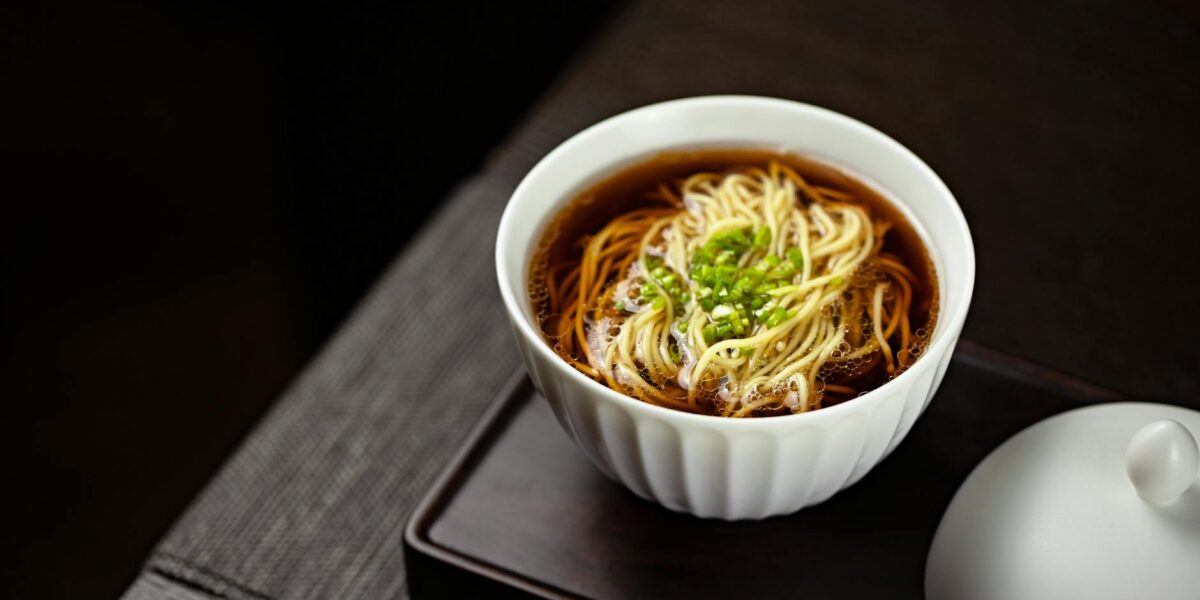
Combine 3 cups ichiban dashi with 2 tablespoons light soy sauce (usukuchi), 2 tablespoons mirin, and a pinch of salt. Bring to a simmer. Cook udon noodles according to package directions, drain, and place in bowls. Ladle the hot broth over the noodles. Top with sliced scallions, a sheet of nori, and a sprinkle of shichimi togarashi. The beauty of this dish is that the dashi broth is completely exposed — there is nothing to hide behind. Great dashi makes this simple bowl extraordinary.
How to Store Dashi
Fresh dashi is always best, but proper storage extends its usefulness significantly.
Refrigerator: Store dashi in an airtight container in the refrigerator for up to 3-5 days. Glass jars work best. The flavor begins to dull after the second day, so use it promptly for the best results.
Freezer: Pour dashi into ice cube trays and freeze. Once solid, transfer the cubes to a freezer bag. Each standard ice cube is roughly 2 tablespoons. Frozen dashi keeps for up to 1 month without significant flavor loss. This is an excellent way to always have dashi on hand — pop a few cubes directly into a pot for quick miso soup or simmered dishes.
Used kombu and bonito: If you are not making niban dashi immediately, store the used ingredients in a sealed container in the refrigerator for up to 2 days, or freeze them until you are ready. You can also repurpose used kombu by slicing it thinly and simmering it with soy sauce, mirin, and sesame seeds to make tsukudani — a savory, umami-rich condiment served over rice.
Dashi Substitutes and Alternatives
When you cannot make dashi from scratch or source the traditional ingredients, these alternatives can work in a pinch.
Instant dashi powder: The most practical substitute. Hondashi is widely available at Asian grocery stores and online. Use 1 teaspoon per cup of water.
Chicken stock + soy sauce: A light, unsalted chicken stock with a splash of soy sauce mimics the savory depth of dashi, though it lacks the specific oceanic character. This works adequately for simmered dishes and stir-fry sauces.
Mushroom soaking liquid: The liquid from rehydrating any dried mushrooms (shiitake, porcini, or mixed) provides umami depth. It is an excellent vegan option.
Anchovy stock: Common in Korean cooking, anchovy stock shares the fishy umami character of niboshi dashi. It works well as a base for hearty soups and stews, and pairs naturally with dishes like tteokbokki and bibimbap broth.
Vegetable broth + kombu: If you have kombu but no bonito, steep kombu in warmed vegetable broth for a hybrid approach that adds umami to an already flavorful base.
Frequently Asked Questions About Dashi
Can I reuse kombu and bonito flakes?
Yes — that is exactly what niban dashi (second dashi) is for. After making ichiban dashi, simmer the used ingredients in fresh water for 10-15 minutes to extract remaining flavor. You can also repurpose used kombu into tsukudani (simmered condiment) or add it to stir-fries. Used bonito can be dried in a low oven and ground into furikake (rice seasoning).
Is dashi the same as fish stock?
No. Fish stock is made by simmering fish bones, heads, and aromatics for 30-60 minutes. Dashi is made by briefly extracting flavor from dried, preserved ingredients — it takes minutes, not hours. The flavor profiles are also different: fish stock tastes of fresh seafood, while dashi tastes of concentrated umami with a smoky, oceanic quality from the fermented and smoked bonito.
Do I need to use Japanese water for authentic dashi?
No, but water quality matters. Japanese water tends to be soft (low mineral content), which extracts kombu flavors more efficiently. If you have very hard tap water, consider using filtered water. Distilled water works but may produce a slightly flat taste. Standard filtered water is ideal for most home cooks.
Can I make dashi in advance?
Yes. Refrigerate dashi in an airtight container for up to 3-5 days, or freeze it in ice cube trays for up to 1 month. However, fresh dashi tastes noticeably better, so make it fresh when the dish centers on the dashi (like clear soups), and use frozen for dishes where it plays a supporting role (like simmered vegetables).
Is dashi gluten-free?
Traditional dashi made from kombu and katsuobushi is naturally gluten-free. However, some instant dashi powders may contain wheat-derived ingredients, so always check the label if you have celiac disease or gluten sensitivity.
Why does my dashi taste bitter?
The most likely causes are boiling the kombu (which releases bitter alginic acid), steeping the bonito flakes too long (which extracts harsh compounds), or pressing/squeezing the bonito during straining. Review the common mistakes table above and adjust your technique accordingly.
Can I use dashi powder instead of homemade?
Absolutely. Dashi powder is used in millions of Japanese home kitchens daily. It is a practical, legitimate shortcut. Use homemade dashi when the stock is the star (clear soups, chawanmushi) and instant when it plays a supporting role (braised dishes, quick miso soup). For a comparison, try Practice Exercise 3 above.
What is the difference between ichiban dashi and niban dashi?
Ichiban (first) dashi is the initial extraction — lighter, more refined, and more aromatic. It is used for delicate dishes where the dashi is prominent. Niban (second) dashi is made by re-simmering the used ingredients — it is milder but still flavorful, perfect for simmered dishes, cooking rice, and preparations where other seasonings dominate.
How much dashi do I need per serving?
For miso soup, plan on about 1 to 1.5 cups (250-350 ml) of dashi per serving. For noodle soups like udon or soba, plan on 1.5 to 2 cups per serving. For simmered dishes, the amount varies but 1-2 cups for a dish serving 4 people is typical. Making 4 cups (1 liter) at a time is a practical batch size for most home meals.
The Bottom Line: Why Dashi Matters
Dashi is the technique that unlocks all of Japanese cooking. It takes minutes to make, requires only two or three ingredients, and transforms everything it touches with clean, pure umami. Once you experience the difference between a dish made with real dashi and one made without, there is no going back.
Start with the basic awase dashi method described in this guide. Practice the tasting exercises to train your palate. Experiment with different types of dashi as you grow more confident. And remember — even the simplest version you make at home will be better than no dashi at all. The ingredients are affordable, the technique is forgiving once you understand the temperature rules, and the reward is immediate in every bowl, broth, and sauce you make.
For more essential techniques, explore our guides to Asian cooking techniques, learn about koji (the mold behind many of dashi’s companion ingredients), or try our wonton soup recipe where stock is equally central to the dish.

Mei Lin Chen
Mei Lin Chen is an Asian food writer and recipe developer. Melbourne-raised and London-based, she has spent over a decade exploring the rice paddies, hawker stalls, and home kitchens of South-East and East Asia. Her recipes balance traditional technique with everyday practicality.