Last Updated: March 2026
Bok choy recipes are one of the fastest routes to a bright, satisfying vegetable side that costs almost nothing and takes under 10 minutes. We’ll walk through everything from selecting the right variety at the supermarket to plating a finished dish that feels both familiar and genuinely good.
Key Takeaways
- Choose the right size of bok choy for the dish you’re planning — baby for stir-fries, full-size for soups.
- Wash thoroughly to remove hidden grit between stalks and leaves before cooking.
- Slice or halve according to cooking method; stalks always need a few extra seconds over leaves.
- High heat preserves the vivid green colour and delivers a satisfying crisp-tender bite.
- Pair with classic Cantonese aromatics — garlic, ginger, soy sauce, sesame oil — to let the vegetable shine.
What Is Bok Choy?
Bok choy, sometimes written pak choi, is a leafy Chinese vegetable that has found its way into supermarkets worldwide. It belongs to the Brassica family — specifically Brassica rapa subsp. chinensis — the same botanical family as cabbage, broccoli, and kale. The plant produces a compact head of white or pale green stalks topped with dark, glossy leaves that have a mild, slightly peppery flavour. For anyone building confidence with Asian cooking ingredients, bok choy is one of the most approachable places to start.
Baby Bok Choy vs Full-Size Bok Choy
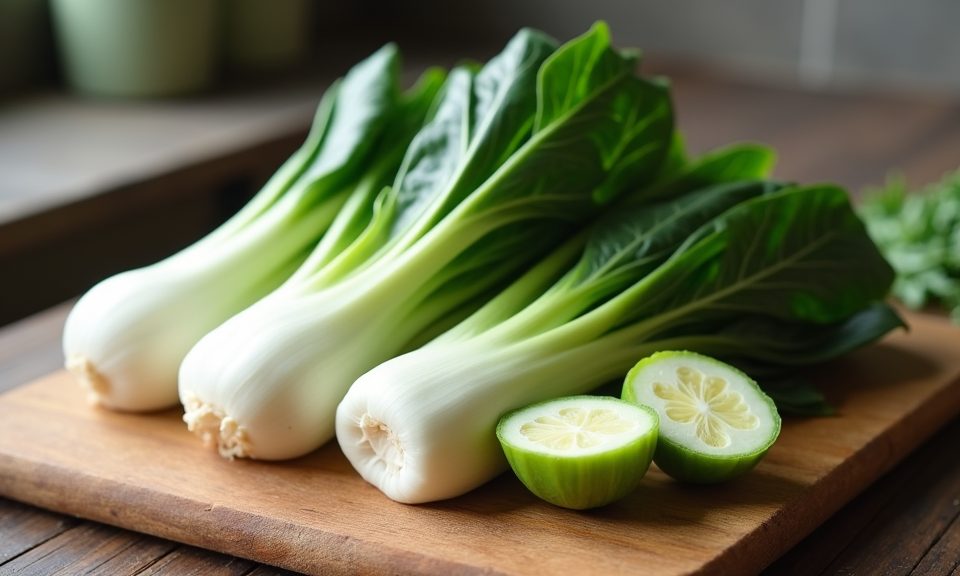
Baby bok choy is harvested young, before the plant reaches full maturity, so the stalks are slender, pale white, and noticeably more tender than their larger counterpart. The leaves are small and delicate, with a gentle sweetness that holds up beautifully to high-heat cooking. Because the heads are compact — typically around 10–12 cm long — they can be halved lengthwise and cooked whole, which makes for an attractive presentation on any plate.
Full-size bok choy grows considerably larger, with thick, crunchy white stalks that can measure several centimetres across. The leaves are broader, with a faintly bitter edge that adds depth to soups and longer-cooked dishes. Where baby bok choy is elegant and fast, full-size bok choy is hearty and better suited to braises or dishes where more body is welcome.
Both varieties deliver serious nutritional value for minimal calories. A 100 g serving of raw bok choy contains approximately 45 mg of vitamin C — around 50% of the recommended daily value — along with calcium, vitamin K, and vitamin A. That vitamin C content also helps explain why the greens hold their vivid colour through a quick flash in a hot wok: the antioxidants resist heat well at short cooking times.
Shanghai Bok Choy
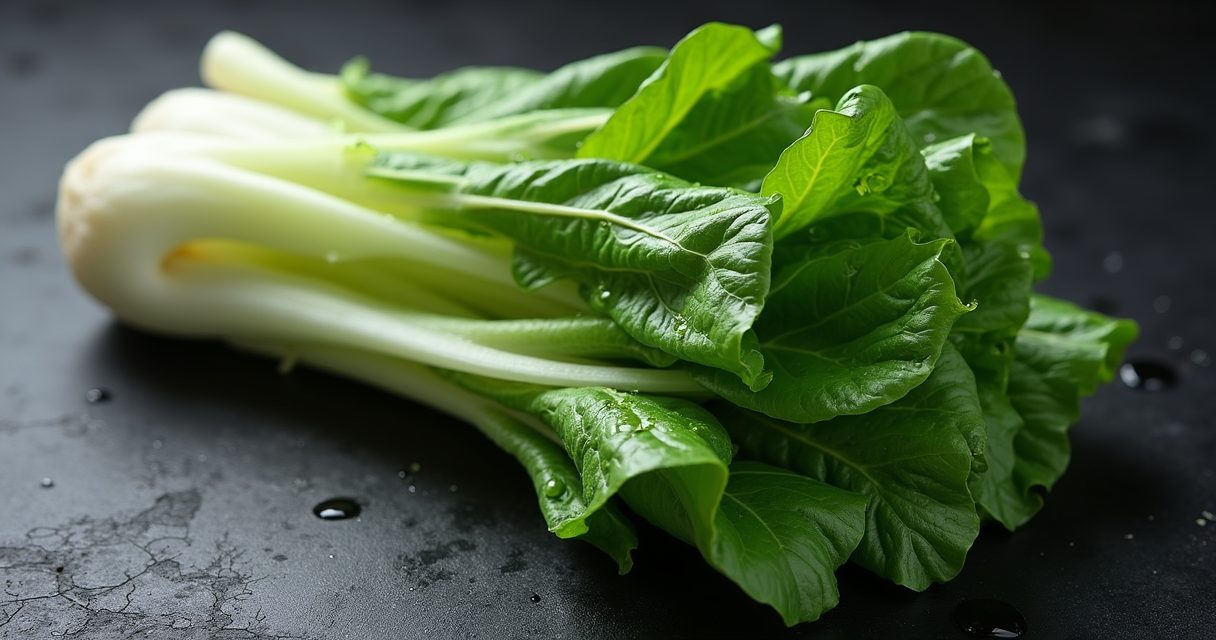
Shanghai bok choy is a close relative that many of us first discover in Asian grocery shops. The most obvious difference is the colour of the stalks: instead of stark white, they are a soft, translucent pale green. The heads are also more slender, tapering into a spoon-shaped base that feels smooth and almost waxy to the touch.
The flavour of Shanghai bok choy is noticeably sweeter than standard varieties, with less bitterness in the leaves. This makes it a great choice for quick stir-fries where you want the vegetable itself — rather than a sauce — to carry the dish. Because the stalks are thinner than those of full-size bok choy, they cook slightly faster, so adjust your timing by about 30 seconds.
If you spot a bunch with a gentle, fresh-earth aroma and a glossy sheen to the leaves, you are likely looking at Shanghai bok choy. It is worth buying whenever you see it, as it adds a softness to stir-fries and soups that the standard variety cannot quite replicate.
Nutrition and When to Buy
Bok choy is one of the most nutrient-dense low-calorie vegetables available. A 100 g raw serving contains just 13 calories, yet delivers vitamin K (46 µg), calcium (105 mg), vitamin A (223 µg), and vitamin C (45 mg). For a complete nutritional breakdown, the data is available via NutritionData. This combination of calcium and vitamin K is particularly valuable for bone health, and the vitamin C content supports immune function year-round.
As a cool-weather crop, bok choy reaches peak quality during autumn and winter in the Northern Hemisphere. Warm summers can cause the plant to bolt — sending up a flower stalk and turning the leaves bitter — so the sweetest, most tender heads arrive between October and March. That said, modern supply chains mean it is available year-round in most supermarkets, and the quality is generally reliable.
When choosing bok choy at the shop, look for firm white stalks that snap cleanly rather than bending. The leaves should be a deep, vibrant green with no yellowing, brown spots, or wilting at the edges. A fresh head feels dense and slightly heavy for its size. Avoid any bunch where the base looks wet, slimy, or is starting to separate — that indicates age.
How to Prepare Bok Choy
How to Wash Bok Choy
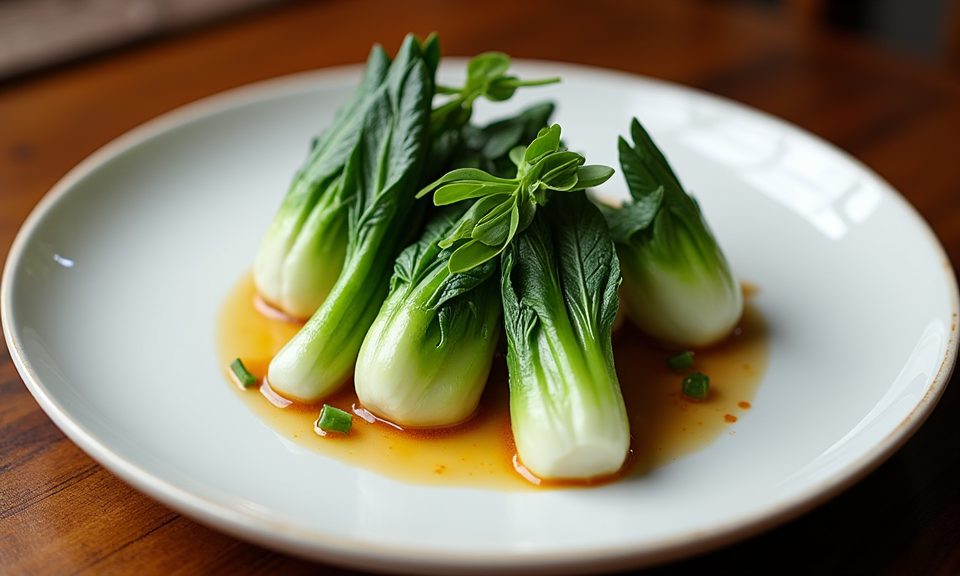
Grit is the one thing that can ruin an otherwise excellent bok choy dish. The base of the stalks, where they cluster together at the root end, is a hiding place for soil and fine sand that comes in from the field. A quick rinse under the tap is rarely enough to remove it entirely.
For individual leaves — as when preparing full-size bok choy for a soup — separate each leaf and hold it under cold running water, running your fingers along the base where it widens. Baby bok choy halved lengthwise is best rinsed cut-side up under a gentle stream, letting the water flush out any grit trapped between the stalk and leaf junctions. If the bok choy looks particularly sandy, a 1–2 minute soak in a bowl of cold water works well, after which you lift the heads out (rather than pour the water off) and give a final rinse.
The process takes less than two minutes once it becomes habit. We rinse cold water only — never hot, which can start wilting the leaves before they even reach the pan. Pat dry gently with a clean kitchen towel if you want a proper stir-fry sear, since excess surface moisture will steam the bok choy rather than fry it at the critical first contact with the wok.
Cutting Methods for Different Dishes
Three cuts cover nearly every situation you will encounter with bok choy. The first is the lengthwise halve: cut the head straight down through the root, keeping each half intact. This preserves the visual structure of the vegetable and is ideal for stir-fries, steaming, and braising. The flat cut surface also caramelises beautifully when placed face-down in a hot wok.
The second cut is separating the leaves entirely from the base and giving them a rough chop. This approach works best for soups, ramen, and fried rice, where the bok choy will blend into the dish rather than stand as a centrepiece. It also helps the thicker stalk pieces cook evenly alongside the leaves when they are cut into similar-sized pieces.
The third cut is a crosswise slice of the stalks into half-inch rounds, used when you want smaller, uniform pieces that will distribute through a stir-fry or grain bowl. Whatever the cut, the principle is the same: stalks go into the pan first, leaves last, with a gap of about 60–90 seconds between them. This simple timing rule is the single biggest factor in whether your bok choy comes out crisp-tender or waterlogged.
Cooking Times and Heat
Bok choy moves fast in the pan — it is one of those vegetables that rewards attention. Baby bok choy halved lengthwise is ready in 3–4 minutes on high heat. Full-size stalks take 4–6 minutes. These are short windows, and the difference between crisp-tender and overcooked is easily a minute in either direction.
The wok or frying pan must be genuinely hot before the bok choy goes in — not warm, not medium-hot, but actively smoking at the edges. This high-heat entry creates immediate contact searing: the sugars in the stalks caramelise, the leaves wilt quickly, and the whole process is over before moisture has time to build up and steam the vegetable soft. A common mistake in Western kitchens is adding bok choy to an insufficiently heated pan, which turns what should be a stir-fry into a slow braise.
Watch the colour as the most reliable signal: bright, vivid green with translucent stalks is the target. When the leaves begin to turn a deeper, dull green and the stalks lose their snap, the window has closed. Pull the pan off the heat immediately and serve — bok choy does not hold well in residual heat.
5 Easy Bok Choy Recipes
These recipes have been tested for busy weeknights, and each one showcases a different way to treat this versatile green. You will find quick stir-fries, a comforting noodle soup method, a classic Cantonese steam, and a hearty fried rice. For more inspiration, take a look at our full collection of Asian recipes.
Garlic Stir-Fried Bok Choy
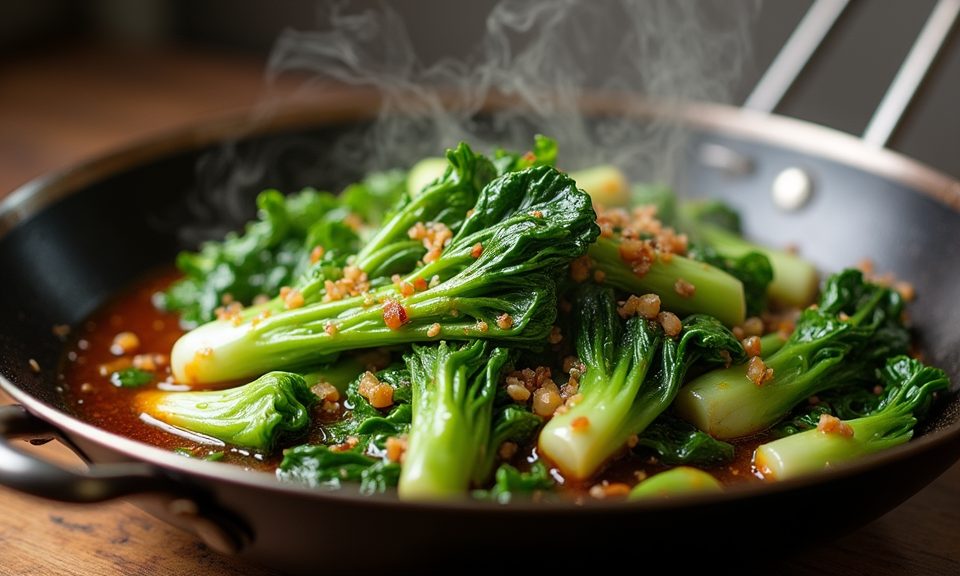
Garlic bok choy is the dish that convinces people this vegetable deserves a permanent place in the weekly shop. The combination is simple — sliced garlic, high heat, a splash of soy sauce — yet the result is fragrant, glossy, and deeply satisfying in a way that is hard to explain until you have eaten it. It works as a side to almost any Asian main, and it is ready before the rice finishes cooking.
The technique is less about recipes and more about timing and temperature. The garlic goes in first, for just 30 seconds, long enough to release its fragrance without burning. The bok choy follows at high heat, cut-side down, where the flat surface picks up colour and flavour directly from the pan. A splash of soy sauce at the end glazes everything in a savoury lacquer.
This recipe is also the best introduction to the wok’s behaviour for anyone new to it. The speed, the sizzle, the immediate transformation of the vegetable — these are the things that make high-heat Chinese cooking feel alive rather than mechanical.
Serves: 2–3 as a side
Prep time: 5 minutes
Cook time: 4 minutes
Ingredients:
- 400g baby bok choy (about 4–5 heads), halved lengthwise
- 3 cloves garlic, finely sliced
- 1½ tbsp neutral oil (vegetable or sunflower)
- 1 tbsp soy sauce
- 1 tsp sesame oil
- Pinch of white pepper
Method:
- Wash and halve the bok choy lengthwise.
- Heat oil in a wok or large frying pan over high heat until shimmering.
- Add garlic and stir-fry 30 seconds until fragrant but not browned.
- Add bok choy cut-side down and stir-fry 2 minutes.
- Add soy sauce, toss to coat, cook another 1–2 minutes until stalks are just tender and leaves are wilted.
- Drizzle sesame oil, toss, and serve immediately.
A hot wok and that final drizzle of sesame oil are what separate a good garlic bok choy from a great one. The sesame oil should never cook — it goes in off the heat, just before serving, so the fragrance is fresh rather than cooked out. For extra crunch, finish with toasted sesame seeds; for extra heat, add a pinch more white pepper or a few drops of chili oil.
To get restaurant-quality results at home, dry your bok choy thoroughly after washing. Surface water turns the first contact with the wok into steam rather than a sear, and you lose that caramelised edge on the cut side. Thirty seconds of patting with a kitchen towel makes a noticeable difference.
Oyster Sauce Bok Choy
This is the dish that appears on nearly every Chinese restaurant table, often arriving alongside other dishes as an unannounced bonus of glossy greens. The sauce — oyster sauce thinned with a little stock, sweetened with a pinch of sugar — clings to each stalk and leaf with a glossy coat that looks as good as it tastes. It is one of those recipes where the result is considerably more impressive than the effort.
Oyster sauce is the star ingredient here. It brings a deep, rounded savouriness — umami without the sharpness of soy alone — that makes Chinese vegetables taste distinctly Cantonese. A good oyster sauce (look for one with a real oyster content percentage on the label) transforms even mediocre bok choy into something worth eating slowly.
For a vegan version, mushroom-based oyster sauce is a reliable substitute. The flavour is slightly less complex but still provides the umami depth that makes this dish work. The technique and timing remain identical — and the glossy result is just as appealing.
Serves: 2–3 as a side
Prep time: 5 minutes
Cook time: 5 minutes
Ingredients:
- 400g baby bok choy, halved
- 2 tbsp oyster sauce
- 1 tbsp light soy sauce
- 1 tsp sugar
- 3 tbsp water or chicken stock
- 2 cloves garlic, minced
- 1 tbsp neutral oil
- 1 tsp cornflour (cornstarch), optional, to thicken sauce
Method:
- Mix oyster sauce, soy sauce, sugar, and water or stock in a small bowl. Set aside.
- Heat oil in a pan over high heat. Add garlic and fry 20 seconds.
- Add bok choy, toss, and cook 2 minutes.
- Pour sauce over bok choy and toss to coat.
- If using cornflour, mix with 1 tsp cold water and add to pan. Cook 30 seconds until sauce thickens slightly and turns glossy.
- Serve immediately with steamed rice.
The cornflour step is optional but worth doing if you want that restaurant-style sauce that clings rather than pools at the bottom of the plate. Mix it with cold water first — never hot — to prevent lumps. One teaspoon of cornflour is enough for this volume of sauce; more will make it gluey.
The sweet-savoury balance of this sauce also makes it a good candidate for other vegetables: choy sum, gai lan, or even tenderstem broccoli respond well to the same treatment. Think of this less as a fixed recipe and more as a technique you can apply whenever you want a quick, glossy Asian greens side.
Bok Choy in Ramen or Noodle Soup
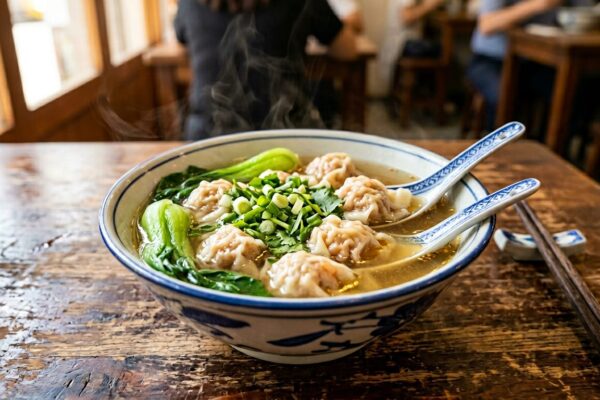
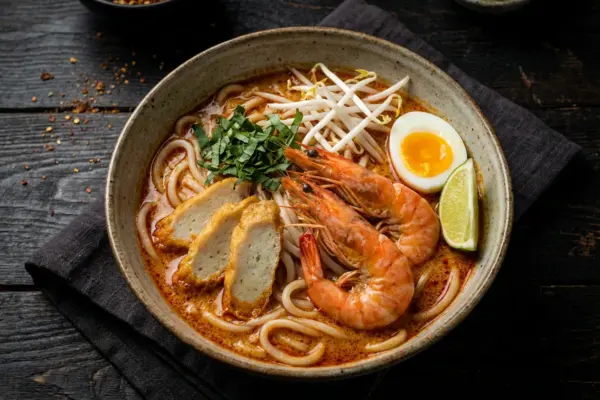
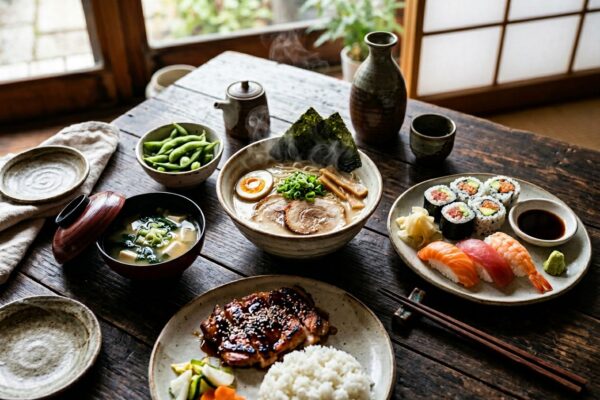
Bok choy and hot noodle broth are a natural partnership. The vegetable adds a clean, slightly peppery freshness that cuts through rich ramen broth, miso soup, or pho, and it takes almost no effort — no separate pan, no extra fat, just the vegetable and the heat of the broth doing the work together.
The method depends on how you like the texture. For stalks with some bite, blanch them separately in the boiling broth for 60 seconds before adding the leaves for a final 20 seconds. For something softer — more appropriate for a delicate miso broth — simply arrange the bok choy in the bowl and pour the hot soup over it, letting the residual heat wilt the leaves gently without any direct cooking.
The leaves should stay bright green. If they turn dull or khaki, the broth was not hot enough to cook them quickly, or the bok choy sat too long before serving. Work fast: hot broth, fresh bok choy, table in under 2 minutes from assembly.
Quick method for noodle soups:
- Separate the bok choy leaves from the stalks and rinse thoroughly.
- Bring your broth to a rolling boil.
- Add stalk pieces first and cook 60 seconds.
- Add leaves and cook a further 20 seconds.
- Ladle into bowls over noodles immediately.
- Finish with sesame oil, white pepper, and sliced spring onions.
This approach works in ramen, pho, tonkotsu, miso, and any clear Asian broth. The bok choy is not the focus — it is the element that makes the bowl feel balanced rather than heavy.
Steamed Bok Choy with Ginger Sauce
Steaming is one of the quieter cooking methods in the Chinese kitchen — less drama than a wok, less noise, less oil — but the flavour it produces can be extraordinary when finished correctly. This recipe uses a technique that is as old as Cantonese home cooking: steam the vegetable to perfect tenderness, then pour a punishing drizzle of smoking-hot oil over a ginger-soy sauce laid across the leaves.
The sizzle is not theatrical. The contact between the hot oil and the cold sauce cooks the ginger slightly, releases its volatile aromatics, and creates a fragrance that fills the kitchen in an instant. It is a contrast of quiet preparation and dramatic finish — the vegetable calm on the plate, the oil arriving like a statement.
This technique — known loosely as the ”pour-oil” method — appears throughout Cantonese cooking, most famously on steamed whole fish. The same logic applies here: let the main ingredient cook gently, then activate the sauce with heat at the last moment rather than building it separately on the stove.
Serves: 2–3 as a side
Prep time: 5 minutes
Cook time: 5 minutes
Ingredients:
- 400g baby bok choy, halved
- 2 tbsp soy sauce
- 1 tbsp rice wine (Shaoxing wine) or dry sherry
- 1 tsp sugar
- 1 tbsp fresh ginger, finely grated
- 2 tbsp neutral oil
- 1 spring onion (scallion), thinly sliced
Method:
- Steam bok choy over boiling water for 3–4 minutes until stalks are just tender.
- Arrange on a serving plate.
- Mix soy sauce, rice wine, sugar, and grated ginger in a small bowl. Pour over bok choy.
- Heat oil in a small pan until it begins to smoke. Pour directly over the bok choy — it will sizzle loudly.
- Garnish with spring onion and serve immediately.
The oil must be genuinely smoking — not warm, not shimmering, but smoking — for the technique to work properly. Use a ladle or a heatproof jug to pour it safely. The sizzle you hear is the sauce being cooked in place, and the ginger fragrance that follows is the reward.
Variations are worth trying once you have the base technique. A splash of chili oil over the top adds heat; swapping soy for tamari makes it gluten-free; finely shredded spring onion and a pinch of white pepper give it a sharper, more aromatic edge. The structure of the recipe — steam, sauce, hot oil — remains constant regardless of what you add.
Bok Choy Fried Rice
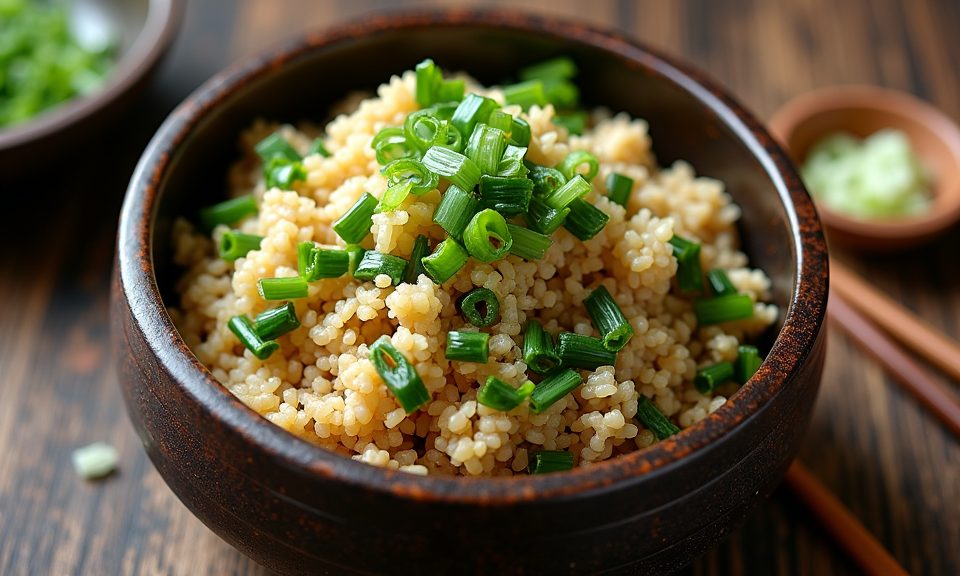
Bok choy fried rice turns a handful of leftover ingredients into a full meal, and it is arguably the best possible use of day-old rice. The bok choy adds both colour and a crisp-tender texture that plain egg fried rice cannot offer, and the combination of garlic, soy sauce, and sesame oil pulls everything into a cohesive, deeply savoury dish.
Day-old rice is genuinely non-negotiable here. Freshly cooked rice contains too much moisture — the grains clump together and the wok cannot get them hot enough to fry properly. Rice that has been refrigerated overnight loses surface moisture and separates easily, allowing each grain to fry individually and pick up colour and flavour directly from the wok. This is the same principle used in every serious fried rice kitchen, from the Cantonese restaurant to the Thai street stall.
For anyone who wants to turn this into a complete meal, the protein options are straightforward: diced firm tofu, sliced chicken breast, prawns, or leftover roast pork all work well. Add the protein after the garlic and before the bok choy, letting it cook through before the vegetables go in. For a reference on fried rice technique that goes deeper, our guide to fried rice covers the method in full.
Serves: 2–3
Prep time: 10 minutes
Cook time: 10 minutes
Ingredients:
- 2 cups cooked jasmine rice (day-old, cold from the fridge)
- 200g bok choy, leaves separated and roughly chopped
- 2 eggs, lightly beaten
- 3 cloves garlic, minced
- 2 tbsp soy sauce
- 1 tbsp oyster sauce
- 1 tsp sesame oil
- 2 tbsp neutral oil
- 3 spring onions, sliced
- White pepper to taste
Method:
- Heat oil in a wok over high heat until smoking.
- Add garlic and fry 20 seconds. Add bok choy stalks first and cook 1 minute. Add leaves and cook 30 seconds more.
- Push vegetables to one side. Add beaten eggs and scramble until just set.
- Add cold rice and break up any clumps. Toss everything together over high heat for 2–3 minutes.
- Add soy sauce and oyster sauce. Toss vigorously for 1 minute.
- Remove from heat. Drizzle sesame oil, add spring onions, season with white pepper.
- Serve immediately.
The secret to good fried rice is confidence at the wok: keep the heat high, keep the rice moving, and do not stop tossing. A rice that sits still in the wok will steam rather than fry, and you will lose the characteristic dry, slightly smoky finish. Thirty seconds of vigorous tossing after the sauces go in is worth more than any special ingredient.
Bok Choy Substitutes
Choy Sum
Choy sum — also called flowering Chinese cabbage — is the most natural substitute for bok choy in stir-fries and quick side dishes. The stalks are more slender and the plant often has tiny yellow flowers that add a visual note and a hint of gentle bitterness. The flavour profile is close enough to bok choy that most people will not notice the swap in a dish with a strong sauce.
The key adjustment is timing. Because choy sum stalks are finer, they cook about 30 seconds faster than baby bok choy. Start checking at the 2.5-minute mark rather than 3. Overcooked choy sum becomes limp very quickly, so err on the side of under-cooking: the stalks should still have a slight resistance when you pull one out and bite it.
Choy sum is also slightly more available in Western cities than it used to be, appearing in larger supermarkets alongside other Asian greens. If you find it fresh, it is worth using wherever you would normally use bok choy — the texture and appearance in a finished dish are nearly identical.
Gai Lan (Chinese Broccoli)
Gai lan, known in English as Chinese broccoli, takes a more assertive approach than bok choy. The stems are thick and fibrous, the leaves are a deep blue-green, and the flavour is noticeably more bitter — closer to broccoli rabe than to the mild sweetness of bok choy. This is not a criticism; it is a characteristic that makes gai lan an excellent match for bold, rich sauces like oyster sauce.
Because of the thicker stems, gai lan often benefits from a quick blanch before stir-frying. Drop the stems (stalks first, then leaves after 30 seconds) into boiling salted water for 1–2 minutes, then refresh under cold water before finishing in the wok. This softens the fibrous texture and removes some of the raw bitterness. Add 1–2 minutes to the total cooking time compared to bok choy.
Gai lan is a particularly good substitute in the oyster sauce recipe above. The stronger flavour stands up to the rich sauce in a way that bok choy, with its more delicate character, cannot always match. If you find yourself cooking for people who enjoy a more pronounced vegetable flavour, this is often the better choice.
Napa Cabbage
Napa cabbage — pale, tightly packed, sweet, and high in water content — is the substitute that most Western cooks already have in the fridge. It lacks the slight bitterness of bok choy and has a much softer texture once cooked, but it holds its shape well in soups and adds a pleasant mild sweetness to fried rice.
Allow an extra 2–3 minutes in the pan compared to bok choy. The high water content means napa cabbage releases moisture as it cooks, which can thin out sauces; if you are using it in the oyster sauce recipe, reduce the added water or stock by half. For soups and broths, the extra liquid is welcome and the substitution is largely seamless.
The one technique where napa cabbage does not work as a substitute is the steamed bok choy with hot-oil sizzle. The leaves are too delicate and too high in water to benefit from the technique — the hot oil simply steams them rather than activating the sauce. For that recipe, stick with bok choy, choy sum, or Shanghai bok choy.
| Substitute | Flavour | Best Used In | Cook Time vs Bok Choy |
|---|---|---|---|
| Choy Sum | Slightly bitter | Stir-fries, soups | -30 seconds |
| Gai Lan | More bitter, bold | Oyster sauce dishes | +1–2 minutes |
| Napa Cabbage | Mild, sweet | Soups, fried rice | +2–3 minutes |
| Spinach | Mild, earthy | Soups only | -2 minutes |
| Swiss Chard | Earthy, slightly sweet | Stir-fries, soups | Similar |
FAQ
What is the best way to eat bok choy?
Stir-frying over high heat with garlic and a splash of soy sauce is the most popular method, and for good reason — it keeps the leaves bright and the stalks crisp-tender in under 5 minutes. Bok choy also works beautifully in soups, steamed with ginger sauce, or even raw and shredded in salads dressed with rice vinegar and sesame oil.
Which is the most common method for cooking bok choy?
Stir-frying is by far the most common method in both home kitchens and restaurants. A quick flash in a very hot wok with garlic preserves the colour, retains the nutrition, and produces that satisfying crunch that makes bok choy so appealing. Most Cantonese families cook it this way in under 5 minutes with nothing more than garlic, oil, and soy sauce.
What does bok choy pair well with?
Garlic, ginger, soy sauce, oyster sauce, and sesame oil are the classic pairings that appear in virtually every bok choy recipe. On the protein side, it works well with tofu, chicken, prawns, pork, and beef. In liquid dishes, it is at home in ramen broth, pho, miso soup, and tonkotsu.
Can I eat bok choy raw?
Yes — shredded baby bok choy adds a pleasant crunch to salads. The stalks provide clean texture and the leaves contribute a mild, slightly peppery flavour that works well against a dressing of rice vinegar, sesame oil, and a dash of soy sauce. Full-size bok choy is slightly too fibrous for raw eating but works well pickled.
How do I store bok choy?
Wrap the unwashed heads in a damp paper towel, place inside a plastic bag or airtight container, and keep in the crisper drawer of the refrigerator. Stored this way, bok choy lasts 3–5 days. Wash only when you are ready to cook — excess moisture on the leaves accelerates decay and can cause the outer leaves to turn slimy.
Is bok choy good for diabetics?
Bok choy is very low in carbohydrates and has a low glycaemic index, making it a smart choice for blood sugar management. With only 2.18 g of carbohydrates per 100 g, it fits comfortably into most diabetic meal plans without causing significant glucose spikes. Always consult a healthcare professional for personalised dietary advice.

Mei Lin Chen
Mei Lin Chen is an Asian food writer and recipe developer. Melbourne-raised and London-based, she has spent over a decade exploring the rice paddies, hawker stalls, and home kitchens of South-East and East Asia. Her recipes balance traditional technique with everyday practicality.