Last updated: March 03, 2026
Banh xeo (bánh xèo) is one of Vietnam’s most beloved street foods — a giant, shatteringly crispy rice flour crepe stuffed with shrimp, pork, bean sprouts, and fresh herbs. The name literally translates to ”sizzling cake,” from the dramatic hissing sound the batter makes when it hits a blazing hot skillet. Wrapped in lettuce leaves and dipped in nuoc cham, every bite delivers an irresistible contrast of crispy, savory, fresh, and tangy.
This banh xeo recipe teaches you how to make authentic Vietnamese crepes at home with a perfectly crispy shell, flavorful filling, and the classic dipping sauce. Whether you’ve had banh xeo at a Vietnamese restaurant or you’re trying it for the first time, this guide covers everything — from nailing the batter consistency to folding technique and serving traditions.
What Is Banh Xeo?
Banh xeo is a Vietnamese savory crepe made from a rice flour batter tinted golden yellow with turmeric and enriched with coconut milk. The batter is poured into a hot, oiled skillet where it sizzles and crisps into a thin, lacy shell. The crepe is then filled with a combination of shrimp, sliced pork belly, mung beans, and bean sprouts before being folded in half like an omelet.
Unlike Western crepes, banh xeo is not eaten with a fork and knife. Instead, you tear off a piece of the crispy crepe, wrap it in a lettuce leaf along with fresh herbs like mint, cilantro, and perilla, then dip the whole bundle into nuoc cham — a sweet, sour, salty, and spicy dipping sauce made from fish sauce, lime juice, sugar, garlic, and chili.
The dish exists across Vietnam with significant regional variations. Southern Vietnamese banh xeo tends to be large (sometimes 12 to 14 inches across), loaded with coconut milk in the batter, and generously filled. Central Vietnamese versions from Hue and Da Nang are smaller, often called banh khoai, with a thicker, more eggy batter. Northern versions are smaller still and simpler in filling.
Why This Banh Xeo Recipe Works
This recipe is modeled on the southern Vietnamese style — the most popular and widely recognized version, both in Vietnam and internationally. Here is what makes it reliable for home cooks:
- Rice flour + cornstarch combo: A small amount of cornstarch added to the rice flour batter creates extra crispiness that holds up even after a few minutes on the plate.
- Coconut milk in the batter: This is essential for the signature flavor and helps the edges crisp up beautifully. Do not skip it.
- Turmeric for color and flavor: Ground turmeric gives banh xeo its iconic golden-yellow hue and adds a subtle earthy warmth.
- High heat technique: The key to a crispy (not soggy) banh xeo is a blazing hot, well-oiled pan. This recipe walks you through exact heat management.
- Proper resting of batter: Letting the batter rest for 30 minutes allows the rice flour to hydrate fully, resulting in a smoother, crispier crepe.
Ingredients for Banh Xeo
Here is everything you need. Most of these ingredients are available at Asian grocery stores or online at Umami Cart.
For the Batter
| Ingredient | Amount | Notes |
|---|---|---|
| Rice flour | 1 1/2 cups (200g) | Use regular white rice flour, not glutinous rice flour |
| Cornstarch | 2 tablespoons | For extra crispiness |
| Ground turmeric | 1/2 teaspoon | For golden color; use fresh turmeric if available (1 tsp grated) |
| Salt | 1/2 teaspoon | |
| Sugar | 1/2 teaspoon | |
| Coconut milk | 3/4 cup (180ml) | Full-fat canned coconut milk |
| Water | 1 cup (240ml) | Cold water; adjust for desired consistency |
| Scallions | 2 stalks | Thinly sliced, green parts only, added to batter |
For the Filling
| Ingredient | Amount | Notes |
|---|---|---|
| Shrimp | 1/2 lb (225g) | Medium size, peeled and deveined, halved lengthwise |
| Pork belly or pork shoulder | 1/2 lb (225g) | Thinly sliced against the grain |
| Yellow mung beans | 1/2 cup | Soaked for 2 hours, then steamed or boiled until tender |
| Bean sprouts | 2 cups | Fresh mung bean sprouts |
| Yellow onion | 1 medium | Thinly sliced into half-moons |
| Garlic | 3 cloves | Minced |
| Vegetable oil | 1/4 cup + more for cooking | Neutral oil with high smoke point |
| Salt and pepper | To taste | For seasoning the protein |
For the Nuoc Cham Dipping Sauce
- 3 tablespoons fish sauce
- 3 tablespoons warm water
- 2 tablespoons sugar
- 2 tablespoons fresh lime juice (about 1 lime)
- 1 clove garlic, minced
- 1 Thai chili or bird’s eye chili, thinly sliced
- 1 tablespoon rice vinegar (optional, for extra tang)
For the Herb and Lettuce Platter
- 1 head butter lettuce or red leaf lettuce, leaves separated
- 1 bunch fresh mint
- 1 bunch fresh cilantro
- 1 bunch fresh Thai basil or perilla leaves (tia to)
- Pickled daikon and carrots (do chua), optional but recommended
Step-by-Step Banh Xeo Instructions
Step 1: Make the Batter (5 minutes + 30 minutes resting)
In a large mixing bowl, whisk together the rice flour, cornstarch, turmeric, salt, and sugar until combined. Pour in the coconut milk and cold water, whisking until you have a smooth, lump-free batter. The consistency should be similar to thin crepe batter — it should coat the back of a spoon lightly but run off easily. If it is too thick, add water one tablespoon at a time.
Stir in the sliced scallion greens. Cover the bowl and let it rest at room temperature for at least 30 minutes. This hydration step is critical — it allows the rice flour particles to absorb liquid fully, which translates directly to crispiness.
Step 2: Prepare the Mung Beans (if using)
Drain the soaked mung beans and place them in a small pot. Add enough water to cover by 1 inch. Bring to a boil, then reduce to a simmer and cook for 15 to 20 minutes until the beans are tender but not mushy. Drain and set aside. Alternatively, you can steam them in a bamboo steamer for 20 minutes. Mung beans add a subtle sweetness and starchy texture that is traditional in southern-style banh xeo.
Step 3: Prepare the Filling
Season the sliced pork with a pinch of salt and pepper. Do the same with the shrimp. Heat 1 tablespoon of oil in a skillet or wok over medium-high heat. Sear the pork slices for 2 to 3 minutes until lightly browned but not fully cooked through — they will finish cooking inside the crepe. Transfer to a plate. In the same pan, quickly sear the shrimp for about 1 minute per side until they turn pink. Transfer to the plate with the pork.
You do not need to cook the bean sprouts or onions separately — they will be added raw to the crepe and will wilt from the residual heat.
Step 4: Make the Nuoc Cham
Dissolve the sugar in the warm water by stirring well. Add the fish sauce, lime juice, rice vinegar (if using), minced garlic, and sliced chili. Taste and adjust — it should be a balanced sweet-sour-salty-spicy sauce. If it is too salty, add more sugar or lime juice. If too sweet, add more fish sauce. Set aside. This sauce keeps well in the fridge for up to a week.
Step 5: Cook the Banh Xeo
This is the most important step. Getting the technique right ensures a crispy, golden crepe every time.
Heat the pan: Place a 10- to 12-inch nonstick skillet or well-seasoned carbon steel pan (a seasoned wok also works beautifully) over medium-high heat. Add about 1 tablespoon of vegetable oil and swirl to coat. Let the pan get very hot — you should see the oil shimmer and just begin to smoke lightly.
Add the filling first: Place 3 to 4 shrimp halves, a few slices of pork, a small handful of onion slices, and a spoonful of mung beans in the center of the hot pan. Stir briefly for about 15 seconds.
Pour the batter: Give the batter a good stir (rice flour settles quickly). Using a ladle, pour about 1/3 cup (80ml) of batter into the pan. Immediately pick up the pan and swirl it in a circular motion so the batter spreads into a thin, even layer across the entire surface, similar to making a French crepe. The batter should sizzle loudly on contact.
Add bean sprouts: Quickly scatter a generous handful of bean sprouts over one half of the crepe.
Cover and cook: Reduce heat to medium. Cover the pan with a lid and cook for 2 to 3 minutes. The steam will help cook the filling and wilt the bean sprouts while the bottom crisps up.
Crisp uncovered: Remove the lid, drizzle a small amount of oil (about 1/2 teaspoon) around the edges of the crepe, and increase heat back to medium-high. Cook uncovered for another 1 to 2 minutes until the bottom is deeply golden and the edges are lacy and pull away from the pan. You will hear a satisfying crackling sound.
Fold and serve: Using a spatula, fold the crepe in half over the bean sprout side, like an omelet. Slide it onto a serving plate. The outside should be crispy and golden; the inside should be filled with tender shrimp, pork, sprouts, and mung beans.
Repeat with the remaining batter and filling. This recipe makes about 6 to 8 crepes depending on your pan size and how thin you spread the batter. Keep finished crepes warm in a 200 degree F (95 degree C) oven while you cook the rest.
Step 6: Assemble the Herb Platter
Arrange the lettuce leaves, fresh herbs, and pickled vegetables on a large platter. This herb platter is not a garnish — it is an essential component of the dish. Each bite of banh xeo should be wrapped in lettuce and herbs for the full flavor experience.
How to Eat Banh Xeo
If you have never eaten banh xeo before, here is the traditional method:
- Tear off a piece of the crispy crepe with your hands (do not use a knife and fork).
- Place the piece on a lettuce leaf.
- Add a few fresh herb leaves — mint, Thai basil, cilantro, or perilla.
- Add a small piece of pickled carrot and daikon if you have it.
- Wrap the lettuce around everything into a tight bundle.
- Dip the bundle into the nuoc cham sauce.
- Eat in one or two bites.
The combination of crispy crepe, fresh crunchy vegetables, aromatic herbs, and the bright tangy sauce is what makes banh xeo one of the most satisfying dishes in all of Vietnamese cuisine.
Tips for the Crispiest Banh Xeo
Crispiness is the single most important quality of a good banh xeo. Here is how to guarantee it:
- Do not skimp on oil. Banh xeo is not a health food in its traditional form. The batter needs to fry, not just cook. Use enough oil to generously coat the pan and add a little more around the edges while cooking.
- Get the pan screaming hot. The batter should sizzle aggressively the moment it hits the pan. If it does not sizzle, the pan is not hot enough — lift and wait.
- Keep the batter thin. A thick crepe will be soft and doughy in the center. Swirl quickly and confidently. Less batter equals more crisp.
- Rest the batter. At least 30 minutes. Overnight in the fridge is even better. Hydrated rice flour crisps far better than freshly mixed batter.
- Use coconut milk. The fat content in coconut milk contributes significantly to the crispy texture. Do not substitute with regular milk.
- Add beer or soda water (optional trick). Replacing 2 to 3 tablespoons of the water with beer or sparkling water adds carbonation that creates an extra-light, crispy shell. Many Vietnamese home cooks swear by this.
- Cook in batches of one. Do not try to make two at once. Each crepe needs your full attention and a properly heated pan.
- Serve immediately. Banh xeo is best eaten within minutes of cooking. It loses its crispiness as it sits.
Banh Xeo Variations
Once you master the basic recipe, there are many ways to customize your banh xeo:
Protein Variations
- Chicken: Substitute thinly sliced chicken breast or thigh for the pork. Season with a little soy sauce before searing.
- Tofu: Press and slice firm tofu into thin strips. Pan-fry until golden before adding to the crepe. This makes a great vegetarian option.
- Squid or crab: Common in coastal Vietnamese versions. Slice squid into rings or use crab meat for a seafood-forward crepe.
- Mushrooms: Sliced shiitake, king oyster, or wood ear mushrooms work beautifully as a filling.
Regional Variations
- Banh khoai (Hue style): Smaller, thicker crepes with a more eggy batter. Often served with a peanut-based dipping sauce instead of nuoc cham.
- Northern style: Smaller, simpler crepes with just pork and bean sprouts. Less coconut milk or none at all in the batter.
- Cambodian banh chiao: A close cousin, typically larger and filled with pork and bean sprouts, served with a distinctive sweet fish sauce.
Dietary Variations
- Gluten-free: This recipe is naturally gluten-free since it uses rice flour. Just verify your soy sauce is gluten-free or use tamari.
- Vegan: Skip the shrimp and pork. Use mushrooms and tofu as the filling. Replace fish sauce with vegan fish sauce or soy sauce mixed with a squeeze of lime in the dipping sauce.
- Low-carb: You can make a modified version using a batter of eggs and coconut flour, though it will not be traditional banh xeo.
Nutritional Information
Nutritional values per serving (1 crepe with filling and sauce, based on recipe making 6 crepes):
| Nutrient | Amount per Serving | % Daily Value |
|---|---|---|
| Calories | 385 kcal | 19% |
| Total Fat | 18g | 23% |
| Saturated Fat | 7g | 35% |
| Cholesterol | 95mg | 32% |
| Sodium | 680mg | 30% |
| Total Carbohydrates | 38g | 14% |
| Dietary Fiber | 2g | 7% |
| Sugars | 5g | — |
| Protein | 18g | 36% |
| Vitamin C | 12mg | 13% |
| Calcium | 55mg | 4% |
| Iron | 2.5mg | 14% |
Note: Nutritional values are approximate and will vary depending on exact ingredients, portion sizes, and how much oil is used for cooking. Eating banh xeo wrapped in lettuce and herbs adds minimal calories but significant vitamins and minerals.
Storage and Make-Ahead Tips
Batter: The batter can be made up to 24 hours in advance and stored in the refrigerator. In fact, overnight-rested batter produces crispier crepes. Stir well before using, as the rice flour will settle to the bottom.
Cooked crepes: Banh xeo is best eaten immediately. If you must store leftovers, place cooled crepes in a single layer on a baking sheet lined with parchment paper. Refrigerate for up to 2 days. Reheat in a 400 degree F (200 degree C) oven or air fryer for 5 to 7 minutes to restore crispiness. Do not microwave — this will make them soggy.
Filling components: The pre-cooked pork and shrimp can be prepared up to a day ahead and refrigerated. Mung beans can also be cooked in advance. Bean sprouts should be fresh and added just before cooking.
Nuoc cham: The dipping sauce stores beautifully in an airtight container in the refrigerator for up to one week. The flavors actually meld and improve after a few hours.
Herbs and lettuce: Wash and dry thoroughly, then wrap in slightly damp paper towels and store in a sealed bag in the fridge for up to 3 days.
Freezing: While you can freeze cooked banh xeo between layers of parchment paper in a freezer bag for up to 1 month, the texture will never be as good as freshly made. If you want to meal prep, freeze the batter instead and cook fresh crepes when ready to eat.
Essential Equipment
You do not need specialized equipment for banh xeo, but having the right pan makes a big difference:
- Nonstick skillet (10-12 inches): The easiest option for beginners. The crepe will release cleanly without sticking.
- Carbon steel pan or wok: A well-seasoned carbon steel pan gives the best crispiness and heat distribution. Many Vietnamese cooks use a wok, which allows you to swirl the batter up the sides for a thinner, crispier crepe.
- Lid: Essential for the steaming step that cooks the filling through.
- Ladle: For pouring a consistent amount of batter each time.
- Wide spatula: For folding the crepe without breaking it.
The History and Culture of Banh Xeo
Banh xeo has roots that stretch back centuries in Vietnamese culinary history. The dish is believed to have originated in central Vietnam, possibly influenced by Chinese-style rice crepes brought by immigrants during the 15th and 16th centuries. Over time, it evolved into a distinctly Vietnamese creation, adapting to local ingredients like coconut milk, turmeric, and the abundant fresh herbs of Southeast Asia.
In Vietnam today, banh xeo is primarily a street food and home-cooking dish rather than a restaurant specialty. In Ho Chi Minh City, you will find dedicated banh xeo stalls where cooks work over roaring gas burners, turning out dozens of golden crepes per hour. The most famous banh xeo street is in District 1, where vendors have been perfecting the dish for generations.
The communal nature of eating banh xeo makes it a social food. Families and friends gather around a table piled with lettuce, herbs, and freshly fried crepes, tearing, wrapping, and dipping together. In the Mekong Delta region, banh xeo is often enjoyed with coconut water to drink, emphasizing the connection between the coconut-rich batter and the coconut palms that line the delta’s waterways.
The golden color of banh xeo also carries symbolic weight. During Tet (Lunar New Year) celebrations, the turmeric-tinted crepe is associated with gold and prosperity. Many families include banh xeo as part of their holiday spread alongside other auspicious dishes.
Common Mistakes and How to Avoid Them
- Using the wrong flour: Glutinous (sweet) rice flour will produce a chewy, sticky crepe — the opposite of what you want. Use regular white rice flour. Check the label carefully, as the packaging can look similar.
- Batter too thick: If your batter is as thick as pancake batter, it is too thick. Banh xeo batter should be thin and pourable, like a very light crepe batter. Add more water to thin it out.
- Pan not hot enough: This is the number one reason for soggy banh xeo. The batter must sizzle on contact. If it quietly pools in the pan, your heat is too low.
- Too much filling: Overstuffing the crepe makes it impossible to fold cleanly and prevents the batter from crisping. Use a moderate amount of filling — the crispy shell is the star, not the stuffing.
- Skipping the herb platter: Without the fresh herbs and lettuce, banh xeo is incomplete. The greens provide the textural contrast and freshness that balance the richness of the fried crepe.
- Using a cold pan for each new crepe: After removing one crepe, give the pan 30 to 45 seconds to reheat before adding oil and batter for the next one.
- Flipping the crepe: Unlike a pancake, banh xeo should not be flipped. Only the bottom gets crispy; the top is steamed under the lid. Flipping risks breaking the delicate crepe and ruins the textural contrast.
Pairing Suggestions
Banh xeo is substantial enough to be a complete meal on its own, but here are some dishes that complement it beautifully:
- Vietnamese iced coffee (ca phe sua da): The bold sweetness of Vietnamese coffee pairs perfectly with the savory crepe.
- Bun cha: If you are hosting a Vietnamese-themed dinner, serving bun cha alongside banh xeo creates a generous spread.
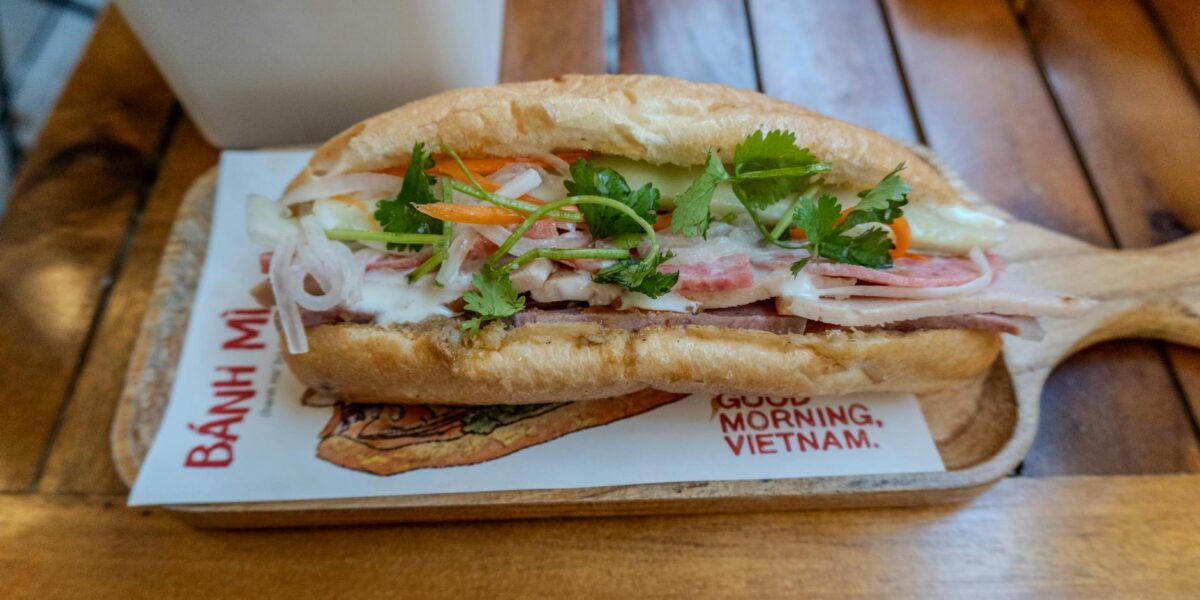
- Banh mi: A smaller banh mi on the side adds another texture dimension.
- Light beer or white wine: A crisp lager or dry Riesling cuts through the richness beautifully.
- Canh chua (sweet and sour soup): A light, tamarind-based soup is a classic Vietnamese companion to fried dishes.
Frequently Asked Questions
Can I use store-bought banh xeo flour mix?
Yes. Brands like Vinh Thuan and Bot Banh Xeo sell pre-mixed banh xeo flour that includes rice flour, turmeric, and sometimes coconut powder. These mixes are convenient and produce good results. Simply add water and coconut milk per the package instructions. However, making the batter from scratch gives you more control over consistency and flavor.
What is the difference between banh xeo and a French crepe?
While they share a similar shape, banh xeo and French crepes are fundamentally different. French crepes use wheat flour, eggs, and butter, producing a soft, pliable texture. Banh xeo uses rice flour, coconut milk, and turmeric, and is cooked in significantly more oil to achieve a crispy, shattering shell. The eating method is also completely different — banh xeo is torn by hand and wrapped in lettuce and herbs.
Why is my banh xeo not crispy?
The three most common reasons are: insufficient heat (the pan must be very hot), too much batter (keep it thin), and not enough oil. Banh xeo essentially needs to shallow-fry in the pan. Also ensure you have let the batter rest for at least 30 minutes before cooking. If you have checked all of these factors, try adding a tablespoon of beer or soda water to the batter for extra crispiness.
Is banh xeo gluten-free?
Yes, traditional banh xeo is naturally gluten-free since the batter is made from rice flour. However, some store-bought mixes may contain wheat flour as a filler, so always check the ingredients list. Also ensure your soy sauce (if using) is gluten-free, or substitute with tamari.
Can I make banh xeo in advance for a party?
You can make the batter, prepare all the fillings, and make the dipping sauce and herb platter in advance. However, the crepes themselves should be cooked to order for the best experience. For a party, set up a cooking station and make them in front of your guests — it is a fun, interactive experience. Alternatively, keep finished crepes warm on a wire rack in a 200 degree F (95 degree C) oven for up to 20 minutes.
How many banh xeo does this recipe make?
This recipe makes approximately 6 to 8 crepes using a 10- to 12-inch pan. That is enough for 3 to 4 people as a main dish, or 6 to 8 people as part of a multi-dish meal. You can easily double the batter recipe for larger gatherings.
What can I substitute for coconut milk in the batter?
Coconut milk is a key ingredient that contributes to both flavor and crispiness. If you have a coconut allergy, you can substitute with an equal amount of water, but the crepe will be less flavorful and slightly less crispy. Adding an extra tablespoon of oil to the batter can help compensate for the lost fat content. There is no perfect substitute for the flavor that coconut milk brings to banh xeo.
What is the best pan for banh xeo?
A well-seasoned carbon steel skillet or wok is ideal because it retains high heat well and gives the crepe excellent crispiness. A nonstick skillet is the most forgiving option for beginners, as the crepe will not stick. Avoid stainless steel pans unless they are very well-oiled, as the batter tends to stick. Cast iron works but can be too heavy to swirl efficiently.
Bring Vietnamese Street Food Home
Banh xeo is one of those dishes that looks impressive on the table but is surprisingly simple to make at home. Once you have nailed the batter-to-heat ratio, you will find yourself making these crispy Vietnamese crepes regularly — they are that good. The beauty of banh xeo lies in the interactive eating experience: tearing, wrapping, dipping, and sharing with friends and family around the table.
Whether you keep it traditional with shrimp and pork or experiment with vegetarian fillings, this recipe gives you a rock-solid foundation. Pair it with an herb platter, a bowl of nuoc cham, and cold drinks, and you have a meal that is as fun to eat as it is delicious.
For more authentic Vietnamese recipes, check out our Vietnamese recipes collection. And if you need ingredients like rice flour, fish sauce, or coconut milk, you will find everything at our Asian ingredients guide.

Mei Lin Chen
Mei Lin Chen is an Asian food writer and recipe developer. Melbourne-raised and London-based, she has spent over a decade exploring the rice paddies, hawker stalls, and home kitchens of South-East and East Asia. Her recipes balance traditional technique with everyday practicality.