Last updated: March 31, 2026
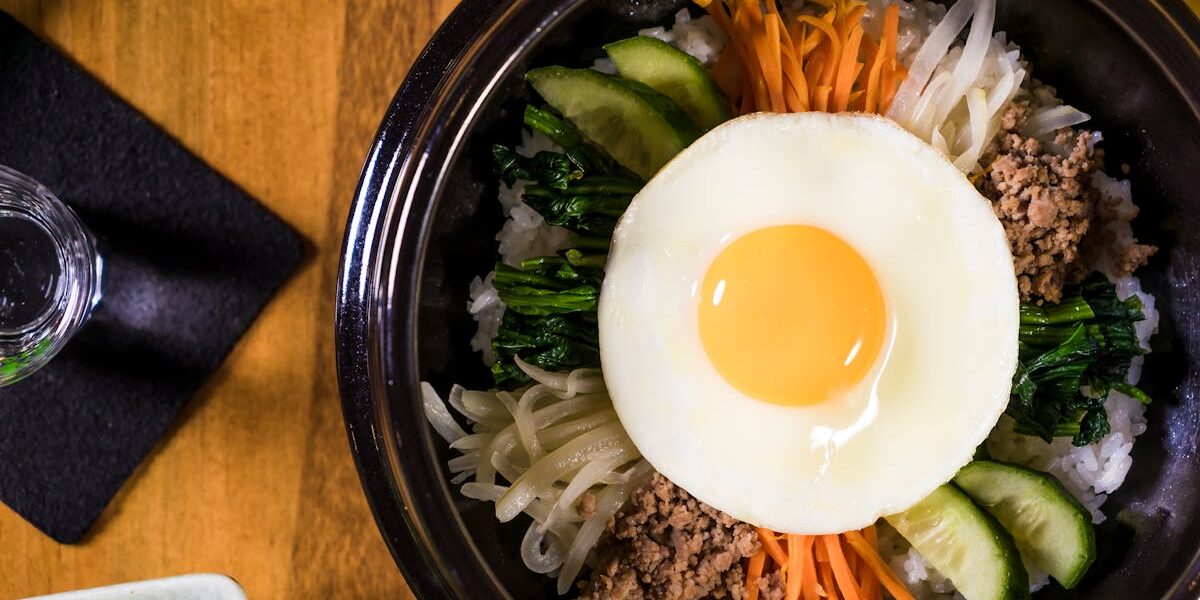
Bibimbap is the rare dish that looks like it was designed by a colorist and tastes like it was designed by a grandmother. A warm bowl of seasoned short-grain rice gets crowned with an ordered ring of separately cooked vegetables, a portion of marinated beef, a glossy yolked egg, and a spoonful of bright red gochujang sauce. You stir everything together at the table, and what looked like a still life becomes a study in temperature, texture, and umami: warm rice catching savory beef juices, crisp bean sprouts collapsing into spinach, the egg yolk loosening the gochujang into a sauce that coats every grain. This recipe walks you through an authentic Korean home-style bibimbap, including the crackling rice version made in a stone pot called dolsot bibimbap, with every banchan-style vegetable explained, the precise sauce ratio, and the doneness cues that separate a tired buffet bowl from a bibimbap worth eating in silence.
What Is Bibimbap?
Bibimbap (비빔밥) translates literally as ”mixed rice.” The word breaks down into bibim, meaning to mix or stir, and bap, meaning cooked rice. It is one of the four or five dishes most Americans can name from the Korean canon, alongside kimchi, Korean fried chicken, and Korean barbecue, and it has the distinction of being both a humble home meal and a banquet centerpiece. The defining feature is not any one ingredient but the practice of arranging multiple seasoned components on a bed of rice and combining them at the moment of eating. Each topping is cooked and seasoned individually, often with sesame oil, garlic, soy sauce, or a pinch of salt, before being placed on top of the rice in a deliberate radial pattern. The diner does the final cooking step with a spoon.
This composition style has a name in Korean cuisine: it is called namul, referring to the technique of preparing vegetables individually with simple seasonings to preserve their distinct flavor. Bibimbap is essentially a portable banchan spread relocated onto a single bed of rice. The genius of the dish is structural rather than ingredient-driven: any vegetable you have, treated with the right salt and oil, becomes part of a coherent meal.
A Brief History of Bibimbap
The earliest written reference to a dish resembling bibimbap appears in Siuijeonseo, a Korean cookbook from the late nineteenth century, under the name goldongban—roughly ”stirred-up rice.” Several origin theories circulate among food historians, none of them definitive. One tradition holds that bibimbap began as a way to clear ancestral ritual offerings (jesa) on the lunar new year by mixing the symbolic foods into a single bowl rather than letting them go to waste. Another connects it to royal court cuisine, where small-portioned vegetable side dishes were combined for visual balance and nutritional completeness. A third school of thought traces the dish to Jeonju, the city in North Jeolla Province that today claims bibimbap as a regional specialty and stages an annual bibimbap festival.
The Jeonju version, considered the canonical preparation, uses a beef broth-cooked rice base, raw beef tartare called yukhoe, and locally grown soybean sprouts that are particularly long and crisp. Outside Jeonju, regional variants include tongyeong bibimbap built on seafood, jinju bibimbap served cold with raw beef and a clear soup on the side, and haeju bibimbap from North Korea that omits the namul vegetables entirely in favor of stir-fried meat. The stone-pot or sizzling-hot version, dolsot bibimbap, became popular in the late twentieth century and is now the version most diners encounter in Korean restaurants in the United States.
The Anatomy of a Proper Bibimbap
A traditional bibimbap is built in four layers: the rice base, the seasoned vegetables, the protein, and the sauce that ties them together. The vegetable component, called namul, typically includes five to seven items chosen for color balance—a Korean concept called obangsaek that designates five symbolic colors (white, yellow, red, green, and black) representing the five elements. The vegetables most commonly used are seasoned spinach, soybean or mung bean sprouts, julienned carrot, sautéed zucchini, sautéed shiitake mushrooms, and seasoned bracken or fernbrake (gosari) when available.
The protein is most often a soy-marinated ground or thinly sliced beef cooked quickly in a hot pan, but it can be raw beef tartare, fried egg, tofu, or any combination. The sauce is built around gochujang, Korea’s fermented chili paste, thinned with sesame oil, sugar, and rice vinegar into a glossy paste. A drizzle of toasted sesame oil over the finished bowl ties the components together at the table.
Equipment You’ll Need
Bibimbap is forgiving on equipment, but a few items make the work much easier. A heavy-bottomed pot or rice cooker for the rice itself; the rice must be properly steamed short-grain or medium-grain Korean rice so it has the slight stickiness that allows it to bind the toppings as you mix. A large nonstick skillet or carbon steel pan handles the proteins and vegetables in quick sequence. A small saucepan or wok is helpful for blanching the spinach and bean sprouts. A sharp chef’s knife is essential for julienning the carrot and zucchini into uniform matchsticks—uneven cuts cook unevenly and break the visual logic of the finished bowl. If you want to make the dolsot version with the crackling rice crust, you need a stone pot (ttukbaegi or a true dolsot) that has been preheated thoroughly. A cast iron skillet is a workable substitute. Finally, a wide shallow bowl is the right serving vessel for the room-temperature version because it lets the components stay visually distinct until the diner mixes.
Authentic Korean Bibimbap Recipe
Yield: 4 servings. Active time: 45 minutes. Total time: 1 hour 15 minutes including rice cooking.
Ingredients
For the rice
- 2 cups short-grain or medium-grain Korean rice (about 400 g)
- 2 1/4 cups cold water (about 530 ml)
For the seasoned beef (bulgogi-style)
- 12 oz beef sirloin, ribeye, or 80/20 ground beef (about 340 g)
- 2 tablespoons soy sauce
- 1 tablespoon brown sugar or honey
- 1 tablespoon toasted sesame oil
- 1 tablespoon mirin or dry sherry
- 2 garlic cloves, finely grated
- 1 teaspoon finely grated ginger
- 1/4 teaspoon freshly ground black pepper
- 1 teaspoon toasted sesame seeds
For the seasoned vegetables (namul)
- 6 oz fresh spinach (about 170 g, one large bunch)
- 8 oz soybean or mung bean sprouts (about 230 g)
- 1 large carrot, cut into 2-inch matchsticks
- 1 medium zucchini, cut into 2-inch matchsticks
- 4 oz shiitake mushrooms, stems removed and caps thinly sliced (about 115 g)
- 3 tablespoons toasted sesame oil, divided
- 3 garlic cloves, finely minced, divided
- 1 teaspoon kosher salt, divided
- 1 tablespoon soy sauce
- 2 teaspoons toasted sesame seeds
- Neutral oil for sautéing
For the gochujang sauce
- 3 tablespoons gochujang (Korean fermented chili paste)
- 1 tablespoon toasted sesame oil
- 1 tablespoon honey or brown sugar
- 2 teaspoons rice vinegar
- 1 teaspoon toasted sesame seeds
- 1 garlic clove, finely grated
- 1 to 2 tablespoons water, as needed to thin
To finish
- 4 large eggs
- Neutral oil for frying
- 1 sheet roasted seaweed (gim/nori), cut into thin strips, optional
- Additional toasted sesame oil, for drizzling
- Additional toasted sesame seeds, for garnish
Step-by-Step Instructions
Step 1: Cook the rice
Place the rice in a fine-mesh strainer and rinse under cold running water, gently agitating with your fingers, until the water runs nearly clear (about 30 seconds to 1 minute). Korean short-grain rice has a high surface starch content; rinsing removes excess starch so the cooked grains hold their distinct texture instead of becoming gummy. Transfer the rice to a heavy-bottomed pot with a tight-fitting lid or a rice cooker. Add 2 1/4 cups cold water and let the rice soak for 20 minutes—this hydrates the grains so they cook evenly. If using a stovetop pot, cover and bring to a boil over high heat. Once boiling, reduce to the lowest possible heat and cook covered for 15 minutes. Remove from heat and let stand, covered, for an additional 10 minutes to finish steaming. Fluff with a wooden paddle or fork just before serving. If using a rice cooker, simply press the white rice setting and let it run.
Step 2: Marinate the beef
If using whole-muscle beef, freeze it for 20 minutes to make slicing easier, then cut against the grain into thin strips no thicker than 1/8 inch. In a medium bowl, combine the soy sauce, brown sugar, sesame oil, mirin, grated garlic, grated ginger, black pepper, and sesame seeds. Add the beef (sliced or ground) and toss to coat thoroughly. Let marinate at room temperature for at least 15 minutes while you prepare the vegetables. The sugar in the marinade does double duty—it sweetens the beef and accelerates browning when the meat hits the hot pan. Longer marination is fine, up to overnight in the refrigerator, but is not necessary for tender cuts like ribeye.
Step 3: Blanch and season the spinach
Bring a small pot of water to a rolling boil and add 1 teaspoon of salt. Drop the spinach in and blanch for 30 to 45 seconds, until just wilted. Drain immediately and shock under cold running water to stop the cooking and lock in the bright green color. Squeeze the spinach firmly with your hands to remove as much water as possible—this is the most common mistake in bibimbap preparation. Watery spinach dilutes the rice and unbalances the bowl. Roughly chop the squeezed spinach and transfer to a small bowl. Season with 1 minced garlic clove, 1 teaspoon sesame oil, a pinch of salt, and a sprinkle of sesame seeds. Toss to combine and set aside.
Step 4: Blanch and season the bean sprouts
In the same pot of boiling water, add the bean sprouts and blanch for 2 minutes for soybean sprouts (which have a starchy yellow head that needs to cook through) or 1 minute for mung bean sprouts. Undercooked soybean sprouts have a beany, raw flavor; properly cooked ones taste sweet and nutty. Drain, shock in cold water, and squeeze gently to remove excess moisture without crushing them. Transfer to a small bowl and season with 1 minced garlic clove, 1 teaspoon sesame oil, 1 tablespoon soy sauce, and a sprinkle of sesame seeds. Toss and set aside.
Step 5: Sauté the carrot
Heat 1 teaspoon of neutral oil in a large skillet over medium-high heat. Add the julienned carrot and a pinch of salt and stir-fry for 1 to 2 minutes—just enough to take the raw edge off while keeping the carrots crisp and bright orange. The carrot in bibimbap is meant to provide crunch and color contrast, not to be fully softened. Transfer to a plate and wipe out the skillet.
Step 6: Sauté the zucchini
Heat another teaspoon of oil in the same skillet over medium-high heat. Add the zucchini matchsticks and a pinch of salt and stir-fry for 2 minutes, until the zucchini is just tender but still has bite. Avoid overcooking—zucchini turns watery and unpleasant when cooked past tender. Transfer to a separate spot on the plate.
Step 7: Sauté the shiitake mushrooms
Heat 1 teaspoon of oil in the skillet over medium-high heat. Add the sliced shiitake mushrooms and stir-fry for 3 to 4 minutes, until any released moisture has cooked off and the mushrooms are browned and concentrated. Add 1 minced garlic clove and 1 teaspoon sesame oil during the final 30 seconds. Season with a pinch of salt and transfer to the plate.
Step 8: Cook the beef
Wipe the skillet clean and return to high heat. When the pan is smoking hot, add 1 teaspoon of neutral oil and immediately add the marinated beef in a single layer. Let the meat sear undisturbed for 1 minute, then stir-fry for an additional 1 to 2 minutes until cooked through and the marinade has reduced into a glossy glaze. If using ground beef, break it up as it browns. Remove from heat and set aside.
Step 9: Mix the gochujang sauce
In a small bowl, whisk together the gochujang, sesame oil, honey, rice vinegar, sesame seeds, and grated garlic until smooth. The sauce should be the consistency of thick cream—pourable but with body. If it is too stiff to drizzle, add water 1 teaspoon at a time until it loosens. Taste and adjust: more honey for a sweeter sauce, more vinegar for brightness, more gochujang for heat. The finished sauce should be balanced enough that you could eat it on plain rice and be satisfied.
Step 10: Fry the eggs
Heat 1 tablespoon of neutral oil in a nonstick skillet over medium-high heat. Crack the eggs into the pan, leaving space between them, and fry sunny-side up for 2 to 3 minutes until the whites are set and crisp at the edges but the yolks are still liquid. A runny yolk is essential to bibimbap—when stirred, the yolk enriches the rice and binds the gochujang sauce, creating the silky mouthfeel that defines the finished bowl. Season with a tiny pinch of salt.
Step 11: Assemble the bibimbap
Divide the cooked rice among four wide shallow bowls, gently pressing it down so the surface is flat. Arrange the toppings on top of the rice in a radial pattern, keeping each component in its own section: spinach, bean sprouts, carrot, zucchini, mushrooms, and beef each get a wedge of the surface. Place a fried egg in the center of each bowl. Spoon 1 tablespoon of gochujang sauce alongside the egg, drizzle the whole bowl with a few drops of toasted sesame oil, and scatter sesame seeds and seaweed strips over the top. Serve immediately with the remaining sauce on the side.
Step 12: Mix at the table
To eat, instruct each diner to break the egg yolk with their spoon, then stir the entire bowl vigorously until the rice, sauce, egg, and toppings are completely combined. The visual presentation matters for the first thirty seconds; the eating experience depends on a thorough mix. Bibimbap is not a dish you nibble politely around—it is a dish you stir until it becomes one cohesive thing.
How to Make Dolsot Bibimbap (the Sizzling Stone-Pot Version)
The dolsot version is the same composition served in a preheated stone pot. As the rice sits against the screaming-hot stone, the bottom layer caramelizes and crackles into a golden crust called nurungji. The crust is the entire point: it is what separates a memorable bibimbap from a competent one. To make it, heat a stone pot or small cast iron skillet over medium heat for 5 minutes until it is uniformly hot. Brush the inside generously with sesame oil. Pack 1 1/2 cups of cooked rice into the pot, pressing it flat against the bottom and partway up the sides. Arrange the toppings as for the room-temperature version, crack a raw egg yolk into the center (or place a fried egg on top), and bring the pot to the table while still sizzling. Hand the diner the sauce and instruct them to wait 2 minutes before stirring—this lets the bottom crust develop fully. When they stir, the nurungji will release in golden shards through the rice.
Pro Tips for Better Bibimbap
- Season each vegetable separately. The whole point of namul is that each ingredient retains its own character. Tossing everything in one big bowl of seasoning produces a muddle. The three minutes you save is not worth what you lose.
- Squeeze water out of blanched vegetables. Spinach and bean sprouts release water as they sit. Soggy namul is the single biggest cause of disappointing homemade bibimbap. Squeeze hard—almost to the point you think you are damaging them.
- Use the right rice. Korean short-grain rice (sold as baekmi) or sushi-grade Japanese short-grain rice is correct. Long-grain rice falls apart when stirred and cannot pick up the sauce.
- Get the pan screaming hot for the beef. The marinade contains sugar, which needs high heat to caramelize into the glossy lacquer that defines bulgogi-style beef. A lukewarm pan steams the beef instead of searing it.
- Make the sauce ahead. The gochujang sauce keeps for at least a month in the refrigerator and improves after 24 hours as the flavors meld. Triple the recipe and use the extra on rice bowls, eggs, and roasted vegetables throughout the week.
- Mind the egg yolk. A truly runny yolk is non-negotiable in the room-temperature version because it functions as a sauce binder. If you cannot eat runny egg, scramble the egg with a splash of sesame oil into thin sheets and slice them into ribbons.
- Cut vegetables to similar size. The carrot and zucchini should be roughly the same matchstick length and thickness so they cook evenly and look composed on the plate.
- Build in batches. Bibimbap looks elaborate but every component except the egg can be made hours in advance and kept at room temperature for up to 2 hours before serving, or refrigerated overnight and brought back to room temperature.
Variations
Vegetarian and Vegan Bibimbap
Replace the beef with pan-seared firm tofu cubes marinated in the same soy-sesame mixture, or use a portion of king oyster mushrooms sliced into thick coins and pan-seared until deeply browned. Omit the egg or substitute a slab of seasoned tofu cooked separately. Vegan bibimbap loses no structural integrity because the dish is, in its bones, a vegetable composition with meat as a single component among many.
Chicken Bibimbap
Substitute boneless chicken thighs, cut into bite-size pieces, for the beef. Marinate with the same ingredients and pan-fry over high heat until the edges caramelize. Chicken thighs hold the marinade better than chicken breast and stay juicy through the high-heat cook.
Seafood Bibimbap (Hoedeopbap)
Replace the cooked beef with sashimi-grade raw fish—typically tuna, salmon, or flounder—cut into small dice. This variation is served cold over chilled rice with a sauce often called chojang, made by adding extra vinegar and a small amount of ketchup or apple to the gochujang base for a brighter, fruitier sauce.
Yukhoe Bibimbap (Raw Beef Tartare)
The most traditional Jeonju-style version uses raw beef tartare hand-cut from a tender muscle like top round, seasoned with sesame oil, soy sauce, sugar, garlic, and pine nuts. The raw egg yolk on top is essential here; the yolk cooks slightly against the warm rice as you stir, lightly binding the tartare.
Bibimbap Bowl Meal-Prep Style
For weekday lunches, portion each namul vegetable and the beef into separate compartments of a lunch container along with the rice. Pack the sauce in a small jar on the side. Microwave the rice and beef for 1 minute to warm through, fry an egg fresh in the morning, and assemble in the bowl just before eating.
Common Mistakes and How to Avoid Them
| Mistake | What Goes Wrong | Fix |
|---|---|---|
| Using long-grain rice | Grains slide apart, sauce cannot coat | Always use Korean or Japanese short-grain rice |
| Skipping the rinse | Rice becomes gummy and clumps | Rinse until water runs nearly clear |
| Not squeezing the spinach | Watery puddle pools at the bottom | Squeeze hard with two hands until barely damp |
| Combining vegetables in one bowl | Flavors mute into one note | Season each namul separately, taste each one |
| Cooking sprouts too briefly | Beany, raw flavor | Blanch soybean sprouts a full 2 minutes |
| Cold pan for the beef | Steamed gray meat instead of caramelized | Heat pan until smoking before adding oil |
| Fully cooking the egg yolk | Bowl tastes dry, no sauce binder | Keep the yolk runny until stirred |
| Drowning the bowl in sauce | Heat and saltiness overpower vegetables | Start with 1 tablespoon and add to taste |
| Mixing too gently | Some bites are bland, others overseasoned | Stir vigorously for 30 seconds before eating |
| Stone pot not hot enough | No crispy rice crust forms | Preheat dolsot for at least 5 minutes |
Storage and Reheating
Bibimbap is best assembled and eaten fresh, but the components store individually with excellent results. Store each prepared namul vegetable in its own covered container in the refrigerator for up to 3 days. The cooked beef keeps for 3 to 4 days refrigerated. The gochujang sauce keeps for at least a month in a sealed jar in the refrigerator. Cooked rice should be stored covered in the refrigerator for up to 2 days; reheat by sprinkling with a teaspoon of water and microwaving covered for 1 to 2 minutes, or by steaming briefly.
To reheat a fully assembled bibimbap, the easiest method is to convert it into a fried-rice-style dish: heat 1 tablespoon of sesame oil or neutral oil in a large skillet over medium-high heat, dump in the entire bowl (including the cold sauce), and stir-fry for 3 to 4 minutes until heated through and slightly crispy at the edges. Crack in a fresh egg if you like and stir to incorporate. This is sometimes called ”bibimbap-style fried rice” and is, by many accounts, even better than the original.
Do not refrigerate or reheat a dolsot bibimbap as a unit—the stone pot will not heat evenly and the crust will go soggy. Always make dolsot fresh.
Nutritional Information
Per serving (approximately 1 assembled bowl, based on the recipe above and using 80/20 ground beef):
| Nutrient | Per Serving | % Daily Value |
|---|---|---|
| Calories | 610 | 30% |
| Total Fat | 24 g | 31% |
| Saturated Fat | 6 g | 30% |
| Cholesterol | 245 mg | 82% |
| Sodium | 1180 mg | 51% |
| Total Carbohydrates | 71 g | 26% |
| Dietary Fiber | 6 g | 21% |
| Sugars | 9 g | — |
| Protein | 30 g | 60% |
| Iron | 5 mg | 28% |
| Vitamin A | 720 mcg | 80% |
| Vitamin C | 22 mg | 24% |
| Calcium | 140 mg | 11% |
| Potassium | 980 mg | 21% |
Nutritional values are estimates. Actual values depend on specific ingredients, brands, and substitutions. Sodium content is heavily influenced by the soy sauce and gochujang brands used; reduce by using low-sodium soy sauce and a smaller portion of sauce.
What to Serve with Bibimbap
Bibimbap is a complete meal on its own—rice, protein, vegetables, and sauce in one bowl. But Korean meals are rarely solitary affairs. Traditional accompaniments include a clear broth like mu doenjang guk (radish soybean paste soup) or a simple seaweed soup; a small dish of kimchi; and a chilled cup of barley tea (boricha). For a fuller spread, add a plate of grilled bulgogi, a side of seasoned pickled radish (danmuji), or a small dish of savory jeon pancakes. The contrast between the warm mixed rice and a crisp, cold banchan is the whole architecture of Korean meal balance.
Where to Source Authentic Korean Ingredients
The flavor difference between a generic supermarket bibimbap and one made with proper Korean pantry items is dramatic. The most important ingredients to source carefully are gochujang, sesame oil, and short-grain rice. Look for gochujang with a five-spice rating (called maeun jeongdo) printed on the tub; level 3 is a balanced medium heat suitable for most home cooks. Sesame oil should be toasted (sold as chamgireum) and ideally from a Korean brand—the toasting depth of Korean sesame oil is significantly more pronounced than the Japanese style. Korean short-grain rice is sold simply as baekmi or under brand names like Kokuho Rose or Nishiki at most Asian markets. If you cannot find Korean rice, sushi-grade Japanese short-grain rice is the next best substitute.
Other helpful pantry items worth keeping on hand for bibimbap and other Korean cooking include gochugaru (Korean red pepper flakes), doenjang (Korean soybean paste) for making the soup that traditionally accompanies bibimbap, and toasted sesame seeds in bulk because you will use them constantly.
Frequently Asked Questions
Is bibimbap supposed to be served hot or cold?
It depends on the version. Standard bibimbap is served at room temperature or warm—the rice is warm and the toppings can be any temperature, since most of them are cooked ahead and arranged. Dolsot bibimbap is served in a sizzling-hot stone pot. Hoedeopbap (the seafood variation) is intentionally served cold over chilled rice. There is no single right temperature; the dish accommodates the situation.
Why is my bibimbap watery?
Almost always because the blanched vegetables—usually the spinach—were not squeezed thoroughly. After blanching and shocking, take handfuls of spinach and squeeze them like a sponge over the sink until no more water comes out. Bean sprouts release water too. Excess vegetable moisture is the single most common bibimbap failure.
Can I make bibimbap without gochujang?
You can omit the sauce or substitute a thinned-out doenjang (Korean soybean paste) sauce, but the dish loses its defining flavor. There is no exact substitute for gochujang—Sriracha is too sharp and one-dimensional, sambal oelek is too acidic, and chili crisp is too oil-heavy. If you have no gochujang, a workable approximation is a paste made from miso, tomato paste, gochugaru, sugar, and sesame oil whisked together to a glossy consistency. The result is recognizably bibimbap-adjacent.
Is bibimbap healthy?
Bibimbap is one of the more balanced rice bowls in the global recipe canon. It delivers carbohydrate, protein, fat, fiber, and a substantial vegetable portion in one serving. The sodium content can be high depending on how much soy sauce and gochujang sauce you use, so people watching sodium should be conscious of portion size. For a lower-calorie version, use lean ground beef or chicken thigh, reduce the rice to 1/2 cup per serving, and use the sauce sparingly.
What is the difference between bibimbap and dolsot bibimbap?
Bibimbap is served in a regular bowl at room temperature or warm. Dolsot bibimbap is served in a preheated stone pot (dolsot) where the rice continues cooking against the hot stone, forming a crispy golden crust at the bottom called nurungji. The toppings and sauce are identical. Dolsot is the more dramatic restaurant presentation; standard bibimbap is the everyday home version.
Can I prepare the components ahead of time?
Yes, and you should. Every component except the fried egg can be made up to 24 hours in advance. Store each namul vegetable and the cooked beef in separate covered containers in the refrigerator, and bring them back to room temperature before assembling. The gochujang sauce keeps for a month or more. This makes bibimbap an excellent dinner-party dish: do all the prep in the afternoon, and assembly takes 5 minutes once the rice finishes.
What kind of pot do I need for dolsot bibimbap?
A traditional dolsot is a heavy stone or earthenware pot that holds heat exceptionally well. Korean markets sell them inexpensively. A 6- to 8-inch cast iron skillet is a workable substitute and will produce a comparable crust. Avoid thin metal pans—they will not retain heat long enough to develop the crust before the rice dries out.
How spicy is bibimbap?
It depends entirely on how much gochujang sauce you add. The sauce itself is moderately spicy—gochujang carries fermented sweetness alongside its heat—but the bowl as a whole is mild. Diners control the heat by adding more or less sauce. Children and people sensitive to spice can have a perfectly enjoyable bibimbap with a small drizzle of sauce or none at all.
Can I freeze bibimbap?
Not really. The cooked rice, beef, and even the sauce freeze fine, but the namul vegetables lose their texture in the freezer—they thaw into a wet, limp version of themselves. If you want to freeze components, freeze only the beef and the cooked rice in portioned bags, and prepare the vegetables fresh.
What is the origin of bibimbap?
There are several theories. The dish is first documented in late nineteenth-century Korean cookbooks under the name goldongban. Folk explanations link it to lunar new year ancestral ritual food, to royal court cuisine, and to the agricultural cooking of Jeonju in North Jeolla Province, which today claims bibimbap as a regional specialty. No single origin story is universally accepted, but Jeonju is widely considered the dish’s spiritual home.
What’s the difference between bibimbap and a rice bowl?
The difference is the namul technique. A rice bowl is rice plus toppings—any combination, any seasoning, often layered or mixed before serving. Bibimbap specifically refers to short-grain rice topped with multiple individually seasoned Korean vegetables arranged in a deliberate pattern, served with gochujang-based sauce, and stirred together at the moment of eating. A rice bowl is a category; bibimbap is a specific Korean dish within that category with its own rules.
Final Thoughts
Bibimbap rewards exactly the kind of careful, deliberate cooking that many of us avoid on weeknights. There is no shortcut for blanching the spinach in a separate pot, sautéing the carrot and zucchini separately, browning the mushrooms long enough to concentrate, getting the pan hot enough for the beef, and frying the eggs at the last second. Each one of those steps takes two or three minutes, none is hard, and the cumulative effect is a bowl of food that feels purpose-built for you. The first time you stir together a fresh bibimbap and the runny yolk meets the gochujang and binds the warm rice to the still-crisp carrots and the deeply savory beef, you understand what the dish is doing—it is teaching you that simple ingredients, treated individually, can produce something more than the sum of their parts. There are very few dishes in the global rice canon that achieve this. Bibimbap is one of them.
Once you have the basic recipe down, treat it as a template. Swap the beef for tofu or chicken. Trade the spinach for kale or chard. Use whatever mushrooms are at the market that week. Add a spoonful of kimchi for a sour, crunchy contrast. The namul approach—season each component individually, arrange thoughtfully, stir vigorously at the table—is a portable Korean cooking philosophy that works on any vegetables you have. Once you have it in your repertoire, you have a default dinner for the rest of your cooking life.

Mei Lin Chen
Mei Lin Chen is an Asian food writer and recipe developer. Melbourne-raised and London-based, she has spent over a decade exploring the rice paddies, hawker stalls, and home kitchens of South-East and East Asia. Her recipes balance traditional technique with everyday practicality.