Last updated: March 16, 2026
Sichuan food is one of the most exciting and boldly flavored cuisines on earth. Originating from the Sichuan province in southwestern China, this cuisine has captivated millions of diners worldwide with its signature mala sensation — a thrilling combination of numbing heat from Sichuan peppercorn and fiery spice from dried chilies. But Sichuan cuisine is far more than just heat. It encompasses a sophisticated system of 24 distinct flavor profiles, centuries of culinary tradition, and a remarkable diversity of dishes that range from gentle and aromatic to explosively spicy.
Whether you are already a devotee of mapo tofu and kung pao chicken, or you are just beginning to explore the world of Sichuan cooking, this guide covers everything you need to know — from the history and geography that shaped the cuisine, to the essential ingredients you need in your pantry, to the must-try dishes that define this extraordinary food tradition.
What Is Sichuan Cuisine?
Sichuan cuisine (川菜, Chuāncài) is one of the Eight Great Traditions of Chinese cooking and arguably the most famous regional cuisine in all of China. It hails from Sichuan province, a vast, fertile basin surrounded by mountains in China’s southwest. The province’s capital, Chengdu, was designated a UNESCO City of Gastronomy in 2010 — the first city in Asia to receive this honor.
What sets Sichuan food apart from other Chinese regional cuisines like Cantonese food is its unapologetic embrace of bold, layered flavors. While Cantonese cooking prizes the natural sweetness of fresh ingredients, Sichuan cooking revels in complexity — building dishes with layers of spice, tanginess, sweetness, and that famous numbing tingle known as má (麻).
The cuisine is governed by what Chinese culinary scholars call the ”24 flavor profiles” (二十四味型), which include combinations like mala (numbing-spicy), yuxiang (fish-fragrant), guaiwei (strange flavor), and suanla (hot-and-sour). This systematic approach to flavor building is what gives Sichuan cooking its remarkable depth and variety.
The History and Origins of Sichuan Food
Sichuan’s culinary tradition stretches back over 2,000 years. The region’s unique geography — a fertile basin ringed by mountains with a humid, subtropical climate — created ideal conditions for agriculture and, eventually, one of the world’s most distinctive food cultures.
Ancient Foundations
Even before chili peppers arrived from the Americas in the 16th century, Sichuan cooking was already known for its bold flavors. Ancient Sichuan cooks relied on native Sichuan peppercorns (花椒, huājiāo), ginger, garlic, and fermented bean pastes to build flavor. Historical records from the Han Dynasty (206 BCE – 220 CE) describe the region’s food as distinctly pungent and aromatic. The famous poet and gourmand Su Dongpo (1037–1101 CE) wrote extensively about Sichuan cooking, and the braised pork dish Dongpo Rou is still attributed to him today.
The Chili Revolution
The arrival of chili peppers from the New World in the late Ming Dynasty (around the 1600s) transformed Sichuan cooking forever. The province’s humid climate, which makes cold feel colder and heat feel hotter, made spicy food a natural fit — locals believed that eating fiery food helped expel dampness from the body according to traditional Chinese medicine principles. Chili peppers quickly became inseparable from Sichuan peppercorns, creating the iconic mala pairing that defines the cuisine today.
Modern Sichuan Cuisine
In the 20th century, Sichuan food spread throughout China as millions of Sichuan natives migrated to other provinces. By the 1990s and 2000s, Sichuan restaurants had become ubiquitous across China, and the cuisine began its global expansion. Today, cities like New York, London, Sydney, and Toronto have thriving Sichuan dining scenes, and ingredients like doubanjiang and chili oil have become pantry staples for adventurous home cooks worldwide.
Regional Variations Within Sichuan Cuisine
Sichuan province is enormous — roughly the size of France — and its cuisine varies significantly by region. Understanding these sub-regional styles helps explain the remarkable diversity within Sichuan food.
Chengdu Style (上河帮, Shàng Hé Bāng)
The capital city’s cooking is considered the most refined branch of Sichuan cuisine. Chengdu-style dishes tend to be more nuanced and aromatic, with a sophisticated balance of flavors. Signature dishes include mapo tofu, dan dan noodles, and the elaborate banquet dishes that showcase the full range of Sichuan flavor profiles. Street food culture in Chengdu is legendary — the city’s narrow alleyways are lined with vendors selling everything from spicy rabbit heads to sweet water noodles (甜水面).
Chongqing Style (下河帮, Xià Hé Bāng)
Chongqing, once part of Sichuan province (now a separate municipality), produces the most aggressively spicy branch of Sichuan cooking. Chongqing-style dishes are known for their uncompromising heat, liberal use of dried chilies, and bold, rustic flavors. This is the birthplace of Chongqing hot pot, mala xiang guo (spicy stir-fry pot), and the famous laziji (辣子鸡) — a mountain of crispy chicken buried in a sea of dried chilies. Chongqing cooking tends to use more fresh chili peppers and dried chilies compared to Chengdu’s reliance on doubanjiang and fermented chili pastes.
Zigong Style (小河帮, Xiǎo Hé Bāng)
The Zigong region, historically a salt-producing area in southern Sichuan, has its own distinct culinary identity. Zigong cooking is known for its emphasis on fresh, clean flavors and its creative use of the region’s famous well salt. Dishes from this area tend to be more delicate than Chongqing-style cooking but bolder than Chengdu fare. The region is particularly known for its cold dishes, beef preparations, and the unique use of frog and rabbit in local cooking.
Essential Sichuan Ingredients
To cook authentic Sichuan food at home, you need a well-stocked pantry of key ingredients. Many of these are shelf-stable and will serve you across dozens of Sichuan recipes. Here are the essentials:
| Ingredient | Chinese Name | Role in Sichuan Cooking | Substitutes |
|---|---|---|---|
| Doubanjiang (Chili Bean Paste) | 豆瓣酱 | The ”soul of Sichuan cuisine” — a fermented paste of broad beans and chilies used as the flavor base in countless dishes | Gochujang + miso (in a pinch) |
| Sichuan Peppercorn | 花椒 | Provides the signature numbing (má) sensation; used whole, ground, or infused in oil | No true substitute; black pepper + lemon zest approximates |
| Dried Red Chilies (Facing Heaven) | 朝天椒 | Provides heat and aroma when toasted in oil; used whole in stir-fries and braises | Dried Thai chilies or chile de arbol |
| Chili Oil | 辣椒油 | A finishing condiment and cooking ingredient; essential for cold dishes and noodles | Homemade is best; store-bought Lao Gan Ma works |
| Yacai (Preserved Mustard Greens) | 芽菜 | Adds savory, funky depth to noodle dishes and stir-fries, especially dan dan noodles | Zha cai (Sichuan preserved radish) |
| Shaoxing Wine | 绍兴酒 | Deglazing, marinades, and adding depth to sauces | Dry sherry |
| Fermented Black Beans (Douchi) | 豆豉 | Adds a salty, fermented umami punch to stir-fries and steamed dishes | Black bean sauce (jarred) |
| Chinkiang Black Vinegar | 镇江香醋 | Provides acidity and complexity in sauces, dressings, and braises | Balsamic vinegar (reduced) or rice vinegar + soy sauce |
| Toasted Sesame Paste | 芝麻酱 | Base for cold noodle sauces and dipping sauces; adds nutty richness | Tahini (slightly different flavor) |
| Light and Dark Soy Sauce | 生抽 / 老抽 | Light soy for seasoning; dark soy for color and slight sweetness | Tamari for gluten-free option |
| Rock Sugar | 冰糖 | Adds a cleaner sweetness than granulated sugar in braises and sauces | Granulated sugar (use slightly less) |
| Fresh Ginger | 姜 | Aromatic base in almost every Sichuan dish; used sliced, minced, or julienned | No good substitute |
The 24 Flavor Profiles of Sichuan Cuisine
One of the most fascinating aspects of Sichuan food is its systematic approach to flavor. While most people associate the cuisine only with mala heat, trained Sichuan chefs recognize at least 24 distinct flavor profiles. Understanding even a handful of these profiles will transform how you approach Sichuan cooking and help you appreciate the true breadth of this cuisine.
Mala (麻辣, numbing-spicy): The most iconic Sichuan flavor. Sichuan peppercorns and dried chilies combine to create a sensation that is simultaneously numbing and burning. Found in mapo tofu, hot pot, and mala xiang guo.
Yuxiang (鱼香, fish-fragrant): Despite the name, this profile contains no fish. It gets its name because the combination of pickled chilies, ginger, garlic, scallions, sugar, and vinegar was traditionally used to cook fish. The same aromatics are applied to pork, eggplant, and other ingredients in classics like yuxiang rousi (fish-fragrant shredded pork).
Guaiwei (怪味, strange flavor): A complex combination of sweet, salty, sour, spicy, numbing, and aromatic — all in one bite. Used primarily in cold dishes and appetizers.
Suanla (酸辣, hot-and-sour): Vinegar and chili combine for a bright, sharp flavor. The base of hot-and-sour soup and many cold noodle preparations.
Jiaoyan (椒盐, pepper-salt): A simple but effective combination of toasted Sichuan peppercorn and salt, often used as a dipping seasoning for fried items.
Hongyu (红油, red oil): Chili oil-based flavor profile used in cold dishes, wontons, and noodles. The oil carries both heat and a deep, toasted chili aroma.
Tianpi (甜皮, sweet-crispy): A lightly sweet glaze, often used on roasted duck, creating a lacquered, mahogany-colored skin.
These are just seven of the 24 profiles. Others include lychee flavor (荔枝味), garlic paste (蒜泥味), five-spice (五香味), and smoky flavor (烟香味). The takeaway is clear: Sichuan cuisine is an entire universe of flavor, not just a single note of heat.
15 Must-Try Sichuan Dishes
From fiery stir-fries to delicate cold dishes, these are the Sichuan dishes every food lover should experience at least once.
1. Mapo Tofu (麻婆豆腐)
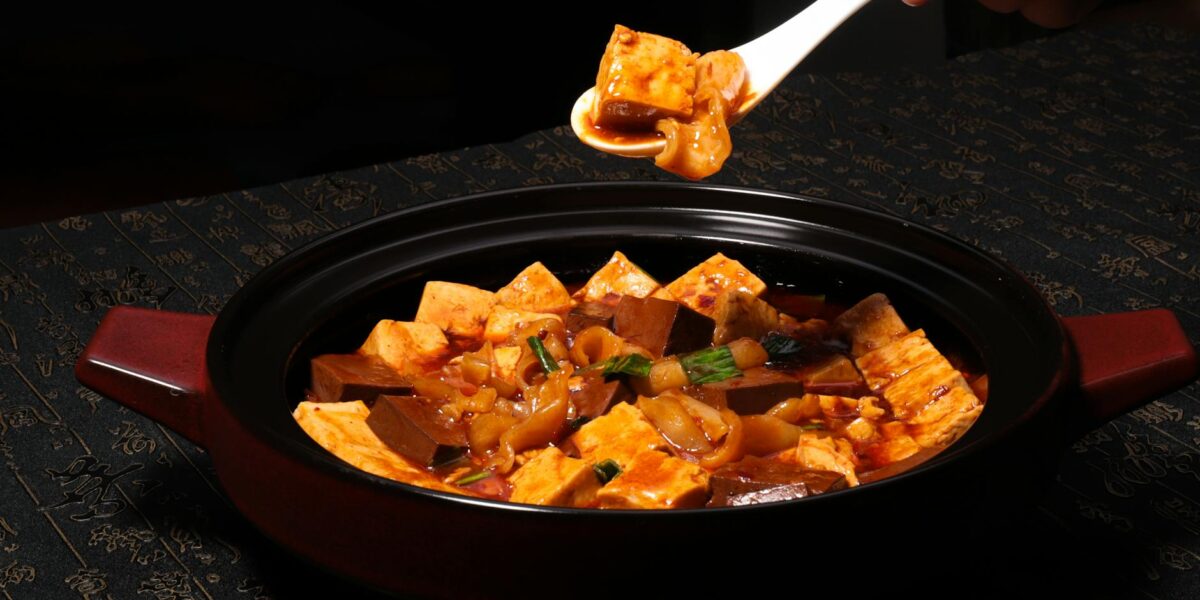
Perhaps the single most famous Sichuan dish worldwide. Silky soft tofu is simmered in a fiery sauce of doubanjiang, ground pork (or beef), fermented black beans, and a generous showering of ground Sichuan peppercorn. The dish was invented in the 1860s by a pockmarked old woman (má pó) at a small restaurant in Chengdu, and the name has stuck ever since. A properly made mapo tofu should be simultaneously numbing, spicy, hot, fragrant, and silky — a showcase of the mala flavor profile at its finest.
2. Kung Pao Chicken (宫保鸡丁)
Named after a Qing Dynasty governor (Ding Baozhen, whose title was Gong Bao), this stir-fry of diced chicken, roasted peanuts, and dried chilies is a masterclass in balance. The sauce combines sweet, sour, salty, and spicy elements, while the Sichuan peppercorns add their signature tingle. Unlike the Westernized version, authentic kung pao chicken is not battered or drenched in sweet sauce — it is a quick, elegant stir-fry with a complex flavor that unfolds in waves.
3. Dan Dan Noodles (担担面)
These spicy, nutty noodles originated as a street food sold by vendors who carried their wok and ingredients on a bamboo pole (dan) balanced across their shoulders. A tangle of thin wheat noodles is dressed with a rich sauce of sesame paste, chili oil, Sichuan peppercorn, minced pork, and preserved vegetables (yacai). The authentic Chengdu version uses very little broth, allowing the concentrated sauce to coat every strand. Try our dan dan noodles recipe for an authentic version at home.
4. Sichuan Hot Pot (四川火锅)
The communal dining experience that has taken over the world. A bubbling cauldron of chili-and-peppercorn-laden broth sits at the center of the table, and diners cook thinly sliced meats, vegetables, tofu, and noodles to their liking. Chongqing-style hot pot uses a bright red, intensely spicy beef tallow broth, while Chengdu-style tends to be slightly more balanced. Either way, Sichuan hot pot is as much a social event as a meal.
5. Twice-Cooked Pork (回锅肉, Huí Guō Ròu)
Widely considered the quintessential home-cooked Sichuan dish. Pork belly is first simmered whole until just cooked, then sliced and stir-fried with doubanjiang, fermented black beans, leeks, and garlic. The ”twice-cooked” method gives the pork a unique texture — slightly chewy edges with tender, melt-in-your-mouth fat. Many Sichuan natives consider this the ultimate comfort food and the true test of a home cook’s skill.
6. Water-Boiled Fish (水煮鱼, Shuǐ Zhǔ Yú)
Do not let the mild-sounding name fool you. This is one of the most dramatically spicy dishes in the Sichuan repertoire. Tender slices of white fish (often catfish or grass carp) are poached in a bath of chili-laden broth, then topped with a mountain of dried chilies and Sichuan peppercorns. Sizzling hot oil is poured over the top tableside, creating an explosive sizzle and releasing a wave of fragrant chili aroma. The technique of finishing with hot oil is quintessentially Sichuan.
7. Fish-Fragrant Eggplant (鱼香茄子, Yúxiāng Qiézi)
A beloved vegetarian-friendly dish that showcases the yuxiang flavor profile. Chinese eggplant is fried until silky soft, then braised in a vibrant sauce of pickled chilies, ginger, garlic, scallions, sugar, and vinegar. The sauce is the star — simultaneously sweet, sour, salty, and spicy, with an aromatic punch from the ginger and garlic. Despite its name, there is absolutely no fish in this dish.
8. Mala Xiang Guo (麻辣香锅, Spicy Stir-Fry Pot)
Think of this as dry hot pot — all the bold mala flavors without the broth. Diners select their choice of proteins, vegetables, and starches, and the cook stir-fries everything together with a potent blend of dried chilies, Sichuan peppercorn, cumin, and aromatic spices. The result is a fragrant, intensely seasoned mountain of ingredients served on a huge plate. Mala xiang guo has become one of the most popular dishes in China and is rapidly gaining fans internationally.
9. Laziji (辣子鸡, Chili Chicken)
A Chongqing specialty that is as visually dramatic as it is delicious. Small pieces of bone-in chicken are deep-fried until extremely crispy, then stir-fried with an enormous quantity of dried chilies and Sichuan peppercorns. The dish arrives at the table looking like a pile of chilies with hidden treasures of crunchy chicken inside. The key is the contrast between the crispy, salty chicken and the fragrant, toasted dried chilies.
10. Suan Cai Yu (酸菜鱼, Pickled Vegetable Fish)
A comforting sour-and-spicy fish soup that balances the fiery dishes elsewhere on a Sichuan table. Tender slices of freshwater fish swim in a broth made tangy with Sichuan pickled mustard greens (suan cai). The sourness cuts through the richness, and the dish has a gentler heat than many Sichuan preparations. It has become wildly popular across China, with restaurant chains dedicated solely to this single dish.
11. Fuqi Feipian (夫妻肺片, Husband-and-Wife Lung Slices)
Despite the alarming English translation, this cold appetizer is one of the most beloved Sichuan dishes. Thinly sliced beef and offal (tripe, tongue, or heart) are dressed in a glossy, deeply flavorful sauce of chili oil, Sichuan peppercorn, sesame, soy sauce, and sugar. The dish was invented by a husband-and-wife team in 1930s Chengdu and originally did include lung, though most modern versions omit it. The balance of textures — tender beef, chewy tripe — and the complex dressing make this an unforgettable appetizer.
12. Mouth-Watering Chicken (口水鸡, Kǒushuǐ Jī)
Poached chicken served cold under a lavish blanket of chili oil, sesame paste, Sichuan peppercorn, garlic, and soy sauce. The name literally means ”saliva chicken” because the dish is so delicious it makes your mouth water just thinking about it. The chicken should be silky and moist from careful poaching, and the sauce should hit every note — spicy, numbing, nutty, garlicky, and savory.
13. Chongqing Small Noodles (重庆小面)
The everyday breakfast of millions in Chongqing. Simple wheat noodles are tossed with a powerfully seasoned sauce of chili oil, Sichuan peppercorn, sesame paste, peanuts, scallions, and preserved vegetables. Despite having no meat (in its purest form), the complexity of the sauce makes this humble bowl deeply satisfying. Every Chongqing native has an opinion on where the best small noodles can be found.
14. Zhangcha Duck (樟茶鸭, Camphor-Tea Smoked Duck)
One of the most elaborate dishes in the Sichuan repertoire. A whole duck is marinated with Sichuan peppercorn and spices, then smoked over camphor wood and tea leaves, steamed until tender, and finally deep-fried until the skin is crackling and golden. The four-step process creates layers of flavor — smoky, aromatic, tender, and crispy — that no single cooking method could achieve. This is a banquet-worthy dish that showcases the refined side of Sichuan cooking.
15. Red Oil Wontons (红油抄手, Hóngyóu Chāoshǒu)
Sichuan’s answer to the wonton, these delicate dumplings are filled with seasoned pork and served swimming in a pool of vivid red chili oil. Unlike the clear-broth wonton soup of Cantonese tradition, Sichuan wontons are all about the sauce — a carefully balanced blend of chili oil, soy sauce, vinegar, sugar, garlic, and ground Sichuan peppercorn. Each silky wonton is a vehicle for the addictive red oil dressing.
Key Sichuan Cooking Techniques
Sichuan chefs employ a wide range of cooking techniques, many of which are shared with broader Chinese culinary tradition. However, several techniques are particularly central to Sichuan cooking or have been refined to a distinctive Sichuan style.
Dry-Frying (干煸, Gānbiān): Ingredients are stir-fried over high heat with minimal oil until the surface moisture evaporates, creating a chewy, slightly charred texture. Dry-fried green beans (干煸四季豆) is the classic example. This technique concentrates flavors and creates textural contrast that is uniquely satisfying.
Water-Boiling (水煮, Shuǐzhǔ): Despite the name, this is not a gentle simmer. Protein is briefly poached in a spicy broth, then served with dried chilies and Sichuan peppercorns, and finished with a dramatic pour of sizzling hot oil. The hot oil blooms the aromatics and creates an intense, fragrant dish. Water-boiled fish and water-boiled beef are the signature applications.
Quick Stir-Frying (爆炒, Bàochǎo): Lightning-fast stir-frying over the highest possible heat. The goal is to sear the ingredients quickly while keeping them tender inside. A properly seasoned carbon steel wok is essential for achieving the elusive wok hei (breath of the wok) that elevates Sichuan stir-fries.
Chili Oil Infusion (炼红油, Liàn Hóngyóu): Making chili oil is considered an art form in Sichuan cooking. Oil is heated to a precise temperature (usually around 150–180°C / 300–350°F) and poured over a carefully selected blend of ground chilies, often in stages to develop different layers of flavor. Different temperatures extract different compounds — too cool and the oil lacks color and fragrance; too hot and the chilies burn bitter. Our guide to making chili oil walks through the full process.
Smoking (熏, Xūn): Used primarily for duck, pork, and fish. Ingredients are smoked over a mixture of tea leaves, camphor wood chips, and rice. Smoking adds a distinctive aromatic layer that is then complemented by steaming and/or frying. Zhangcha duck is the most famous smoked Sichuan dish.
Pickling and Preserving (泡制, Pàozhì): Sichuan’s humid climate makes preservation essential, and the province has one of China’s richest traditions of pickled and fermented foods. Sichuan paocai (泡菜) — vegetables fermented in a brine of salt, Sichuan peppercorn, and baijiu — is a home-cooking staple. Pickled chilies, preserved mustard greens, and fermented bean pastes are all cornerstones of the cuisine.
Sichuan Food vs. Other Chinese Regional Cuisines
To truly appreciate what makes Sichuan food unique, it helps to compare it with other major Chinese culinary traditions.
| Feature | Sichuan (川菜) | Cantonese (粤菜) | Shandong (鲁菜) | Hunan (湘菜) |
|---|---|---|---|---|
| Primary Flavors | Mala (numbing-spicy), complex layered sauces | Light, sweet, emphasis on natural ingredient flavor | Salty, savory, seafood-focused | Pure chili heat, sour, smoked |
| Signature Spice | Sichuan peppercorn + dried chilies | White pepper, ginger | Scallion, garlic | Fresh chili peppers |
| Heat Level | High (numbing + spicy) | Low to none | Low | High (direct, sharp heat) |
| Key Technique | Dry-frying, water-boiling, mala infusion | Steaming, roasting, dim sum | Quick-frying, braising, seafood prep | Smoking, steaming, stewing |
| Signature Condiment | Doubanjiang, chili oil | Oyster sauce, hoisin | Soy paste, vinegar | Duo jiao (chopped chili) |
| Famous Dish | Mapo tofu, kung pao chicken | Dim sum, char siu | Sweet and sour carp, braised sea cucumber | Chairman Mao’s red-braised pork, steamed fish head |
| Dining Style | Communal, family-style, street food | Dim sum, banquet | Formal banquet, family-style | Family-style, rustic |
The key distinction between Sichuan and Hunan cooking — the two ”spicy” cuisines of China — is the type of heat. Sichuan food uses the mala combination of Sichuan peppercorn (numbing) plus dried chilies (spicy), creating a complex, tingling sensation. Hunan food tends to use fresh chili peppers for a more direct, sharp, and slightly sour heat without the numbing element.
Sichuan Meal Planning: How to Build a Balanced Sichuan Dinner
A traditional Sichuan meal, like most Chinese meals, is built around balance — not just flavors, but textures, temperatures, and levels of heat. Here is how to plan a well-rounded Sichuan dinner at home.
The Structure of a Sichuan Meal
A proper Sichuan dinner typically includes:
- 1-2 cold dishes (凉菜) to start — mouth-watering chicken, fuqi feipian, or a smashed cucumber salad dressed in chili oil and garlic
- 1 soup — suan cai yu, hot-and-sour soup, or a light winter melon soup to provide contrast and hydration
- 2-3 hot main dishes — a mix of intensities. Pair a fiery dish (mapo tofu or water-boiled fish) with something milder (twice-cooked pork or fish-fragrant eggplant)
- 1 vegetable dish — dry-fried green beans, stir-fried bok choy with garlic, or tiger-skin peppers
- Steamed rice — Sichuan cuisine is always served with plain steamed rice, which acts as a palate cleanser between bites of intensely flavored dishes
Sample Sichuan Dinner Menus
Weeknight Dinner for 2: Mapo tofu + dry-fried green beans + steamed rice. Total time: about 30 minutes.
Weekend Dinner for 4: Mouth-watering chicken (cold, make ahead) + suan cai yu (pickled vegetable fish soup) + twice-cooked pork + stir-fried bok choy + steamed rice.
Dinner Party for 6-8: Fuqi feipian + red oil wontons (cold starters) + water-boiled fish + kung pao chicken + fish-fragrant eggplant + dry-fried green beans + congee or steamed rice.
Tips for Taming the Heat
If you or your guests are sensitive to spice, do not skip Sichuan food entirely — adapt it instead. Reduce the number of dried chilies in recipes by half. Remove the seeds from dried chilies before cooking (the seeds carry extra heat). Serve plenty of steamed rice, which absorbs capsaicin. Offer a mild soup or a cooling cucumber side dish. And remember: the numbing from Sichuan peppercorn actually moderates the perception of heat over time, so the first bite is often the most intense.
Where to Buy Sichuan Ingredients
Building a Sichuan pantry has never been easier. Here is where to find the key ingredients:
Online: Umamicart carries a curated selection of authentic Sichuan ingredients including Sichuan peppercorns, Pixian doubanjiang, chili oil, and fermented black beans — all shipped to your door.
Chinese grocery stores: Look for Pixian doubanjiang (the most prized brand has a brown label with a red sash), whole dried facing-heaven chilies, and yacai preserved vegetables. The refrigerated section will have fresh Sichuan peppercorns (green huajiao) when in season.
General supermarkets: Increasingly, mainstream stores carry chili oil (Lao Gan Ma and Fly by Jing are widely available), soy sauce, sesame oil, and rice vinegar. For more specialized items, an Asian grocery or online source is your best bet.
Sichuan Food Culture and Dining Etiquette
Food is at the absolute center of life in Sichuan province. Chengdu’s residents are famous across China for their love of leisure, tea-drinking, and, above all, eating. The phrase ”吃在四川” (chī zài Sìchuān — ”eat in Sichuan”) is a Chinese proverb acknowledging that Sichuan is the best place to eat in all of China.
Street food culture: Sichuan has one of the most vibrant street food scenes in Asia. In Chengdu, neighborhoods like Jinli Ancient Street and Kuanzhai Alley are packed with vendors selling skewered rabbit heads, cold noodles, jianbing (savory crepes), and bowls of fiery noodles for a few yuan. Bo cai (钵钵鸡) — cold chicken skewers soaked in spicy red oil — is another beloved street snack.
Tea house culture: Sichuan is as famous for its tea houses as its restaurants. Drinking tea (especially jasmine-scented green tea) is an essential accompaniment to Sichuan meals and a daily ritual for locals. Tea helps cleanse the palate between fiery bites and aids digestion.
Communal dining: Sichuan meals are almost always shared family-style. Multiple dishes are placed in the center of a round table, and diners serve themselves. This communal approach encourages variety and balance — a table full of dishes ranging from mild to volcanic ensures everyone finds something they enjoy.
Hot pot etiquette: When dining at a Sichuan hot pot restaurant, the broth is communal but your dipping sauce is personal. Most restaurants offer a build-your-own sauce bar with sesame oil, garlic, cilantro, oyster sauce, and vinegar. Cook items in the correct order — heartier items first, delicate greens and noodles last — and never fish around in the broth with your chopsticks for items that are not yours.
Health Benefits of Sichuan Cuisine
Sichuan food is not just delicious — many of its key ingredients have documented health benefits grounded in both traditional Chinese medicine and modern nutritional science.
Capsaicin from chilies has been shown to boost metabolism, reduce inflammation, and may support cardiovascular health. Studies published in the British Medical Journal have found that people who eat spicy food regularly tend to have lower mortality rates.
Sichuan peppercorn contains hydroxy-alpha-sanshool, which has anti-inflammatory and analgesic properties. Traditional Chinese medicine has long prescribed it for digestive issues and toothache.
Fermented ingredients like doubanjiang and pickled vegetables are rich in probiotics that support gut health. The fermentation process also increases the bioavailability of certain nutrients.
Garlic and ginger, used abundantly in Sichuan cooking, have well-established antimicrobial and anti-inflammatory properties.
That said, many Sichuan dishes do use generous amounts of oil and salt. As with any cuisine, moderation and variety are key to enjoying Sichuan food as part of a healthy diet.
Frequently Asked Questions About Sichuan Food
Is Sichuan food the same as Szechuan food?
Yes. ”Sichuan” and ”Szechuan” refer to the same cuisine and the same Chinese province. ”Sichuan” is the modern pinyin romanization, while ”Szechuan” is an older Wade-Giles romanization. You may also see ”Szechwan.” All three spellings refer to the same culinary tradition. The pinyin spelling ”Sichuan” is now standard in most food writing.
Is all Sichuan food spicy?
No. While Sichuan cuisine is famous for its mala (numbing-spicy) dishes, a significant portion of the cuisine is not spicy at all. Sweet dishes, ginger-scented dishes, lychee-flavored stir-fries, and many banquet preparations are mild. Even in Sichuan province, a family meal typically includes both fiery and gentle dishes to create balance.
What makes Sichuan peppercorn different from black pepper?
Sichuan peppercorn and black pepper are completely unrelated botanically. Black pepper (Piper nigrum) creates a sharp, biting heat. Sichuan peppercorn (Zanthoxylum bungeanum) creates a unique numbing, tingling sensation caused by the compound hydroxy-alpha-sanshool, which activates touch receptors in the mouth rather than heat receptors. The sensation is often described as a gentle electrical buzzing on the lips and tongue.
What is the best Sichuan dish for beginners?
Kung pao chicken is an excellent starting point — it has manageable heat, a familiar protein, and a well-balanced sauce. Twice-cooked pork is another approachable option. If you enjoy tofu, mapo tofu at a mild-to-medium spice level introduces the mala flavor without overwhelming the palate. For cold dishes, smashed cucumber salad with chili oil is simple, refreshing, and addictive.
Can Sichuan food be made vegetarian or vegan?
Absolutely. Many Sichuan dishes are naturally vegetarian or easily adapted. Fish-fragrant eggplant, dry-fried green beans, mapo tofu (omit the ground pork or use plant-based mince), smashed cucumber salad, and dan dan noodles (with mushrooms instead of pork) are all excellent vegetarian Sichuan dishes. The bold seasonings — doubanjiang, chili oil, Sichuan peppercorn, garlic, ginger — provide so much flavor that meat is not missed. Make crispy tofu a centerpiece for protein.
What is mala, and why does it make my lips tingle?
Mala (麻辣) literally means ”numbing-spicy.” The numbing (má) comes from Sichuan peppercorn, which contains hydroxy-alpha-sanshool — a compound that stimulates tactile nerve endings in a way similar to a mild electrical current. The spicy (là) comes from chili peppers. Together, they create a multidimensional sensation that is unlike any other spice combination in the world. The tingling is harmless and temporary, typically lasting 10-15 minutes after eating.
How do I store Sichuan peppercorns?
Store whole Sichuan peppercorns in an airtight container away from light and heat. They will keep their potency for up to a year. Ground Sichuan peppercorn loses its numbing quality much faster — grind small amounts as needed, ideally just before cooking. If your peppercorns no longer make your tongue tingle when you bite one, it is time to replace them.
Start Cooking Sichuan Food at Home
Sichuan cuisine rewards the curious cook. With a well-stocked pantry of a few key ingredients — doubanjiang, Sichuan peppercorns, dried chilies, and good chili oil — you can produce dishes at home that rival what you would find in Chengdu’s best restaurants. The flavors are bold, the techniques are accessible, and the results are unforgettable.
Start with our mapo tofu recipe or dan dan noodles recipe for an authentic introduction, then branch out to kung pao chicken and water-boiled fish as your confidence grows. Once you master the mala flavor profile, the entire world of Sichuan cooking opens up — 24 flavor profiles, hundreds of dishes, and one of the most exciting culinary traditions on the planet, all waiting to be explored in your own kitchen.
Browse our full collection of Chinese recipes for more authentic dishes, and explore our guides to essential ingredients like doubanjiang, Sichuan peppercorn, and chili oil to build your Sichuan pantry.

Mei Lin Chen
Mei Lin Chen is an Asian food writer and recipe developer. Melbourne-raised and London-based, she has spent over a decade exploring the rice paddies, hawker stalls, and home kitchens of South-East and East Asia. Her recipes balance traditional technique with everyday practicality.