Last updated: March 17, 2026
Takoyaki — crispy-on-the-outside, creamy-on-the-inside Japanese octopus balls — are one of the most iconic street foods in all of Japan. Originating from Osaka in the 1930s, these golden spheres of dashi-infused batter filled with tender chunks of octopus have captivated food lovers around the world. With the right pan and a little practice, you can make restaurant-quality takoyaki at home in about 30 minutes.
This recipe walks you through every detail: the batter ratio for that signature custardy interior, how to flip each ball for even browning, and the essential toppings — from tangy takoyaki sauce and Japanese mayonnaise to dancing bonito flakes and bright green aonori. Whether you are a complete beginner or a seasoned home cook looking to perfect your technique, this is the only takoyaki recipe you will ever need.
What Is Takoyaki?
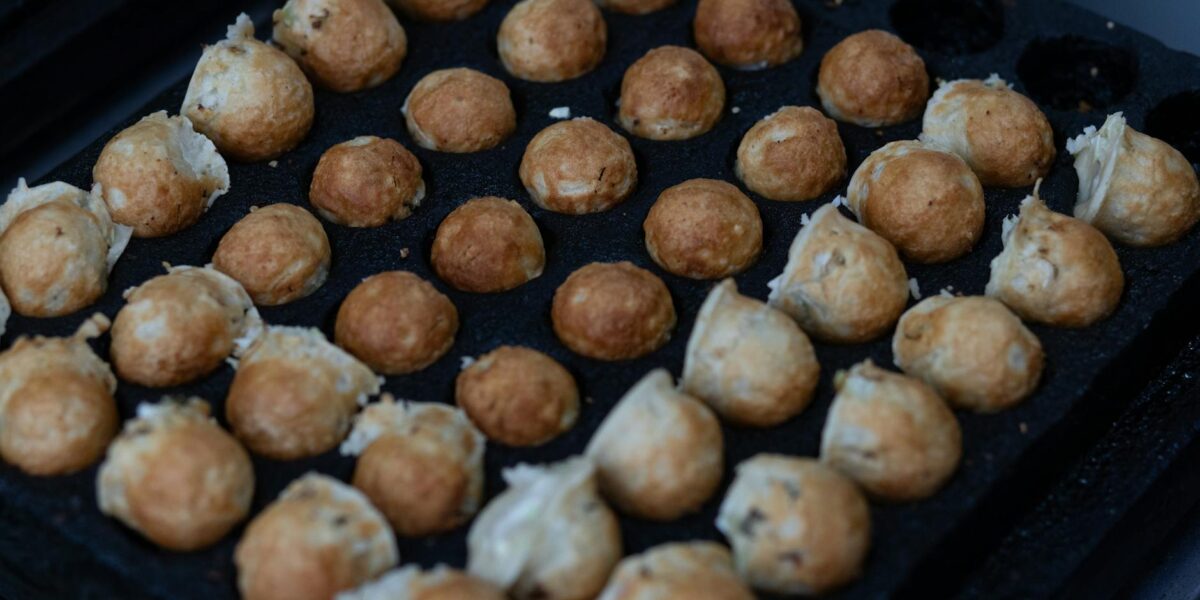
Takoyaki (たこ焼き) literally translates to ”grilled octopus” in Japanese. The dish consists of small, round balls of wheat-flour batter cooked in a specially molded pan, each one filled with a piece of octopus (tako), pickled ginger (beni shoga), green onion, and tenkasu (tempura scraps). The balls are cooked until the exterior is lightly crisp and golden, while the inside stays almost molten and creamy — a texture the Japanese call toro-toro.
Street vendor Tomekichi Endo is widely credited with inventing takoyaki in Osaka around 1935. He adapted an earlier snack called rajioyaki (radio balls), which used ground beef instead of octopus. When Endo swapped in octopus — an ingredient abundant in Osaka’s Nishinari ward — takoyaki was born. Today, Osaka remains the undisputed takoyaki capital, with an estimated 5,000 takoyaki vendors across the city. The dish has since spread throughout Japan and across the globe, becoming a staple at Japanese festivals, night markets, and home kitchens alike.
Why This Takoyaki Recipe Works
Many takoyaki recipes produce balls that are either too dense, too runny, or lacking in flavor. This recipe solves those problems with a few key decisions:
- High liquid-to-flour ratio: The batter uses more dashi stock than most Western adaptations call for, which creates that signature custardy, almost pudding-like center.
- Real dashi, real flavor: Instead of water, the batter base is made with proper dashi — a combination of kombu and bonito flakes. This is the single biggest flavor difference between homemade and restaurant takoyaki.
- Eggs for structure: Two eggs per batch give the batter enough protein to hold its spherical shape without becoming rubbery.
- Tenkasu for texture: These crunchy tempura scraps melt into the batter as the takoyaki cooks, adding an irresistible richness.
- Proper heat management: The recipe guides you through the exact heat levels needed at each stage — high to set the batter, then medium to cook through without burning.
Essential Equipment
The most important piece of equipment is a takoyaki pan (takoyaki-ki). This specialized pan has hemispherical molds — typically 12 to 24 cavities — that shape the batter into perfect balls. Here are your options:
| Pan Type | Best For | Pros | Cons |
|---|---|---|---|
| Cast iron takoyaki pan | Gas stove, serious cooks | Superior heat retention, excellent crust, lasts forever | Heavy, requires seasoning, slow to heat |
| Electric takoyaki maker | Beginners, tabletop cooking | Even heat, easy to use, great for parties | Limited heat output, may not get as crispy |
| Nonstick takoyaki pan | Casual home cooks | Easy release, lightweight, affordable | Less crispy results, coating wears over time |
Beyond the pan, you will need a few tools: takoyaki picks (long, pointed skewers for turning the balls — bamboo skewers or chopsticks work in a pinch), an oil brush or squeeze bottle for greasing the molds, and a small ladle or squeeze bottle for pouring batter.
Ingredients for Takoyaki
This recipe makes approximately 24 takoyaki balls, enough to serve 2-3 people as a main dish or 4-6 as an appetizer or snack.
For the Batter
- 1 cup (120g) all-purpose flour
- 1½ cups (360ml) dashi stock, cooled to room temperature
- 2 large eggs
- ½ teaspoon salt
- 1 teaspoon soy sauce
- ½ teaspoon baking powder (optional, for extra fluffiness)
For the Filling
- 5 oz (150g) boiled octopus (tako), cut into ½-inch pieces
- 3 tablespoons tenkasu (tempura scraps)
- 2 tablespoons pickled red ginger (beni shoga), finely chopped
- 3 green onions (scallions), thinly sliced
For the Toppings
- Takoyaki sauce or okonomiyaki sauce (or Worcestershire-based sauce)
- Japanese Kewpie mayonnaise
- Katsuobushi (bonito flakes)
- Aonori (dried green seaweed flakes)
How to Make Dashi for Takoyaki
Dashi is the backbone of takoyaki batter. Without it, your takoyaki will taste flat. If you already have dashi prepared, skip ahead to the batter section. Otherwise, here is a quick method:
- Add 2 cups of water and one 4-inch piece of kombu (dried kelp) to a saucepan. Let it soak for at least 15 minutes (or up to overnight in the fridge).
- Place the saucepan over medium heat. Just before the water boils — when you see small bubbles forming around the edges — remove the kombu.
- Add ½ cup (about 10g) of katsuobushi (bonito flakes). Let them steep for 30 seconds to 1 minute without stirring.
- Strain through a fine-mesh sieve or cheesecloth. Do not press the bonito flakes — this keeps the dashi clear.
- You should have roughly 1½ cups of dashi. Let it cool completely before using in the batter.
For a deeper dive into dashi, including vegan alternatives using only kombu and dried shiitake mushrooms, see our complete guide on how to make dashi.
Step-by-Step Takoyaki Recipe
Step 1: Make the Batter
In a large mixing bowl, whisk together the flour, salt, and baking powder (if using). Create a well in the center and crack in the eggs. Whisk the eggs into the flour, gradually incorporating the dry ingredients from the edges. Slowly pour in the cooled dashi while whisking continuously to prevent lumps. Add the soy sauce and whisk until smooth. The batter should be very thin — much thinner than pancake batter, closer to the consistency of heavy cream. If you still see small lumps, strain the batter through a fine-mesh sieve.
Pro tip: Let the batter rest in the fridge for 15-30 minutes. This allows the gluten to relax, resulting in a more tender interior. You can also make the batter the night before — cold batter actually performs better because it creates a greater temperature differential when it hits the hot pan, producing a crispier shell.
Step 2: Prepare the Fillings
While the batter rests, prepare all your fillings and arrange them within arm’s reach of the stove. Cut the boiled octopus into roughly ½-inch (1.5cm) pieces — you want one piece per takoyaki ball. Finely chop the pickled ginger. Slice the green onions thin. Have the tenkasu ready in a small bowl. Organization is critical because once you start cooking, you will need to work quickly.
Step 3: Heat and Oil the Pan
Place the takoyaki pan over medium-high heat (or turn on the electric maker). Generously brush each cavity with neutral oil — vegetable oil or canola work best. Do not skimp on the oil. The cavities should be glistening. Let the pan heat for 2-3 minutes until a drop of batter sizzles immediately on contact.
Step 4: Pour the Batter
Give the batter a final stir (it tends to settle). Using a ladle, squeeze bottle, or measuring cup with a spout, pour the batter into each cavity until it just reaches the top. It is perfectly fine — even encouraged — to slightly overfill and let the batter spill onto the flat surface between the cavities. This excess batter will be folded back in during flipping to create perfectly round balls.
Step 5: Add the Fillings
Working quickly, drop one piece of octopus into each cavity. Scatter tenkasu, chopped pickled ginger, and sliced green onions across the entire surface. Do not worry about precision — the fillings will end up inside the balls when you flip them.
Step 6: The First Flip (90 Degrees)
After about 2 minutes, the bottom half of each takoyaki should be set and lightly golden. This is the moment of truth. Using a takoyaki pick, bamboo skewer, or chopstick, poke into the edge of a takoyaki ball where the cooked batter meets the flat surface. Gently push any overflowing batter back into the cavity, then rotate the ball 90 degrees. The uncooked batter will flow down to fill the bottom of the mold. Do not worry if the ball does not look perfect — it will come together.
Reduce the heat to medium at this point.
Step 7: The Second Flip (Full 180 Degrees)
After another 1-2 minutes, flip each ball a full 180 degrees so the seam is now facing down. Continue rotating the balls every 30-60 seconds, using gentle quarter-turns to ensure even browning on all sides. The total cooking time is about 5-7 minutes from when you first pour the batter.
Step 8: Finish and Serve
The takoyaki are ready when they are uniformly golden-brown on the outside and spin freely in their cavities with a gentle nudge. Transfer them to a plate. Working quickly while they are still hot:
- Drizzle generously with takoyaki sauce — the sweet, tangy, Worcestershire-like sauce that defines the dish.
- Squeeze thin lines of Kewpie mayonnaise across the top in a zigzag pattern.
- Sprinkle a generous handful of katsuobushi (bonito flakes). The heat from the takoyaki will make the paper-thin flakes dance and wave — this is one of the most satisfying moments in all of cooking.
- Finish with a dusting of aonori (dried green seaweed flakes).
Serve immediately. Takoyaki are best eaten straight off the pan — the contrast between the crispy shell and the molten center is what makes them special, and that contrast fades within minutes.
Warning: The inside of a fresh takoyaki is extremely hot. The custardy batter retains heat far longer than you would expect. Take a small bite first and let steam escape before eating the whole ball.
How to Make Takoyaki Sauce
Store-bought takoyaki sauce is convenient and perfectly good. But if you want to make your own — or if you cannot find it at your local Asian grocery — it is simple to mix at home.
Homemade Takoyaki Sauce Recipe
- 3 tablespoons Worcestershire sauce
- 2 tablespoons ketchup
- 1 tablespoon oyster sauce
- 1 tablespoon sugar
- ½ tablespoon soy sauce
Whisk all ingredients together in a small bowl until the sugar dissolves. Taste and adjust — add more ketchup for sweetness, more Worcestershire for tanginess. The sauce should be thick, glossy, and deeply savory with a slight fruitiness. It keeps in the refrigerator for up to two weeks.
Tips for Perfect Takoyaki
Making takoyaki is a skill that improves dramatically with practice. Here are the tips that will accelerate your learning curve:
Batter Tips
- Thin batter is correct batter. If your batter feels thick, add more dashi. The ratio should be roughly 3 parts liquid to 1 part flour by volume.
- Stir before every pour. The flour settles to the bottom quickly. Give the batter a stir each time you refill the pan.
- Cold batter, hot pan. This temperature contrast helps create a crispier exterior.
- Add a tablespoon of mirin to the batter for a subtle sweetness and improved browning.
Cooking Tips
- Oil liberally. Takoyaki need a lot of oil to develop their characteristic crust and to release from the mold. Re-oil between batches.
- Do not rush the first flip. Wait until the bottom is truly set before attempting to turn the ball. If the batter sticks and tears, give it another 30 seconds.
- Keep rotating. The more evenly you rotate the balls, the rounder and more evenly browned they will be.
- Work in sections. If you have a 24-cavity pan, try working on 6-8 balls at a time until you build speed and confidence.
- Brush extra oil on the flat surface between cavities. This prevents the overflow batter from sticking.
Octopus Tips
- Buy pre-boiled octopus from your Asian grocery store (usually found frozen). It saves significant prep time and is reliably tender.
- Cut pieces to a uniform size — about ½ inch — so they cook evenly and each takoyaki gets the same amount of filling.
- Pat the octopus dry before adding it to the batter. Excess moisture can cause the oil to splatter.
Takoyaki Variations
Once you have mastered the basic technique, the takoyaki pan becomes a platform for endless creativity. Here are popular variations you can try:
Protein Swaps
- Shrimp takoyaki (ebi-yaki): Replace octopus with small pieces of raw shrimp. They cook through quickly in the hot batter.
- Cheese takoyaki: Add a small cube of mozzarella or cream cheese to each cavity along with (or instead of) octopus. The cheese melts into a gooey center.
- Bacon and corn: A kid-friendly variation popular in Japan. Dice bacon and add a few kernels of sweet corn.
- Kimchi and pork: For a Korean-Japanese fusion, fill with finely chopped kimchi and seasoned ground pork.
- Vegetarian/vegan: Use cubed firm tofu, edamame, or mushrooms as the protein. Replace dashi with kombu-only or shiitake dashi, and use plant-based mayo for topping.
Sauce and Topping Variations
- Mentaiko mayo: Mix Kewpie mayonnaise with spicy cod roe (mentaiko) for a rich, umami-packed topping.
- Ponzu and grated daikon: A lighter, more refreshing option. Drizzle with ponzu sauce and top with grated daikon and chopped scallions.
- Curry takoyaki: Add ½ teaspoon of Japanese curry powder to the batter and serve with curry sauce for dipping.
- Spicy takoyaki: Add sriracha or gochujang to the takoyaki sauce.
- Negitako: Extra green onions in the batter and as a topping, finished with a squeeze of lemon — the Osaka purist’s favorite.
Nutritional Information
The following nutritional values are approximate and based on a serving of 8 takoyaki balls (one-third of the full recipe) with standard toppings.
| Nutrient | Per Serving (8 balls) | % Daily Value |
|---|---|---|
| Calories | 320 kcal | 16% |
| Total Fat | 12g | 15% |
| Saturated Fat | 2.5g | 13% |
| Cholesterol | 135mg | 45% |
| Sodium | 780mg | 34% |
| Total Carbohydrates | 32g | 12% |
| Dietary Fiber | 1g | 4% |
| Sugars | 4g | — |
| Protein | 18g | 36% |
| Calcium | 55mg | 4% |
| Iron | 2.5mg | 14% |
Takoyaki is a moderately calorie-dense snack thanks to the oil used in cooking and the batter itself. However, octopus is an excellent source of lean protein, providing roughly 18 grams per serving with minimal saturated fat. The dish is also a good source of iron and B12 from the octopus. To reduce calories, use less oil and go lighter on the mayonnaise topping.
How to Store and Reheat Takoyaki
Takoyaki are undeniably best fresh, but you can store and reheat them with decent results.
Refrigerator Storage
Let cooked takoyaki cool completely, then store in an airtight container in the fridge for up to 2 days. Store them without toppings — the sauce and mayo will make them soggy. Reheat in a preheated oven or toaster oven at 400°F (200°C) for 8-10 minutes, or until the exterior is crispy again. Then add fresh toppings.
Freezer Storage
Takoyaki freeze remarkably well. Spread cooked, unsauced takoyaki on a baking sheet in a single layer and freeze until solid (about 1 hour). Transfer to a freezer bag, removing as much air as possible. They keep for up to 1 month. Reheat from frozen in the oven at 400°F (200°C) for 12-15 minutes — no need to thaw. You can also reheat in an air fryer at 375°F (190°C) for 8-10 minutes for extra-crispy results.
Avoid microwaving if possible. The microwave will make takoyaki soft and rubbery, destroying the textural contrast that makes them special.
The History and Culture of Takoyaki
Understanding takoyaki means understanding Osaka. The city has long been called ”Japan’s kitchen” (tenka no daidokoro), and Osakans take their street food culture seriously. Takoyaki fits perfectly into this identity — it is affordable, communal, endlessly customizable, and best eaten standing at a street stall with friends.
Tomekichi Endo’s original 1935 creation evolved rapidly. By the 1950s and 60s, takoyaki had spread across Japan, with regional variations emerging. In Tokyo, vendors adopted a lighter, crispier style. In Akashi (near Kobe), a related dish called akashiyaki — using an egg-heavy batter and served floating in a warm dashi broth for dipping — predates takoyaki and is considered by some historians to be its ancestor.
Today, takoyaki culture extends far beyond Japan. You will find takoyaki vendors in night markets across Taiwan, Thailand, and the Philippines. Korean-style takoyaki stalls line the streets of Myeongdong in Seoul. In the United States, takoyaki has moved from Japanese festival food to a mainstream snack found in food halls, ramen shops, and Asian fusion restaurants.
In Osaka itself, many households own a takoyaki pan — some surveys suggest over 80% of Osaka homes have one. Takoyaki parties (tako-pa) are a popular social activity where friends and family gather around the tabletop grill, each person making and customizing their own batch.
Where to Buy Takoyaki Ingredients
Most takoyaki ingredients are available at well-stocked Asian grocery stores or online. Here is what to look for:
- Boiled octopus: Found in the frozen seafood section of Japanese, Korean, or Chinese grocery stores. Look for pre-boiled legs — they are ready to slice and use.
- Tenkasu (tempura scraps): Sold in bags in the Japanese ingredients aisle. In a pinch, you can make your own by drizzling thin tempura batter into hot oil.
- Beni shoga (red pickled ginger): Do not confuse with the pink gari served with sushi. Beni shoga is bright red, shredded, and has a more assertive vinegar bite. Found in jars in the refrigerated section.
- Takoyaki sauce: Otafuku brand is the gold standard. Look for it near the soy sauce and Japanese sauces.
- Kewpie mayonnaise: The Japanese mayo in the distinctive squeeze bottle with the Kewpie doll logo. Its egg-yolk-forward richness and slight tang are essential — regular American mayo is not a good substitute.
- Katsuobushi (bonito flakes): Available in small bags. You will use them both for the dashi and as a topping.
- Aonori: Dried green seaweed flakes, usually near the nori and seaweed products.
- Kombu: Dried kelp for making dashi.
Common Mistakes to Avoid
Even experienced cooks can stumble with takoyaki. Here are the most common mistakes and how to avoid them:
- Batter too thick: This is the number one mistake. Thick batter produces dense, bready balls instead of the desired custardy interior. The batter should pour like heavy cream.
- Not enough oil: Takoyaki need a generous amount of oil in the cavities. Without it, the batter sticks and tears when you try to flip.
- Flipping too early: If the bottom is not fully set, the ball will fall apart. Wait until you see the edges start to turn golden and the batter firms up before attempting the first turn.
- Heat too high throughout: Start on medium-high to sear the batter, then reduce to medium for even cooking. Sustained high heat will burn the outside before the inside cooks through.
- Using water instead of dashi: Water-based batter tastes flat. The umami from dashi is non-negotiable for authentic takoyaki flavor.
- Letting them sit too long: Takoyaki should be eaten within minutes of coming off the pan. The longer they sit, the more the crispy exterior softens. Serve each batch immediately while the next one cooks.
- Overcrowding the fillings: Too much octopus or too many toppings in each cavity can make the balls hard to flip and uneven in shape. One piece of octopus and a light scatter of other fillings is plenty.
Frequently Asked Questions
Can I make takoyaki without a takoyaki pan?
It is very difficult to replicate the spherical shape without the proper pan. However, you can make a flat version — sometimes called takoyaki-style pancakes — by pouring the batter with fillings into a regular nonstick skillet and cooking it like a small okonomiyaki. Some people also use aebleskiver (Danish pancake) pans, which have similarly shaped cavities, though the molds tend to be larger. A cake pop maker can also work in a pinch, though the size will be smaller than traditional takoyaki.
What can I use instead of octopus?
Shrimp is the most popular substitute. You can also use squid, crab stick (surimi), diced chicken, sausage, cheese, or vegetables like corn and edamame. In Japan, takoyaki vendors often offer non-octopus options alongside the classic version.
Why is my takoyaki falling apart when I flip?
This usually means either the batter has not set enough on the bottom (give it more time), there is not enough oil in the cavity (add more before the next batch), or the pan is not hot enough. Make sure the pan is thoroughly preheated before adding batter.
Can I make takoyaki batter ahead of time?
Yes. Takoyaki batter can be refrigerated for up to 24 hours. In fact, resting the batter improves the texture. Just give it a thorough whisk before using, as the flour will settle to the bottom.
What is the difference between takoyaki and akashiyaki?
Akashiyaki, from the city of Akashi near Kobe, uses a much more egg-heavy batter (some recipes use only egg and dashi, no flour), resulting in a softer, more custard-like ball. Akashiyaki are also served submerged in a warm dashi broth for dipping, while takoyaki are eaten with sauce and toppings. Some food historians consider akashiyaki to be the predecessor of takoyaki.
Is takoyaki gluten-free?
Traditional takoyaki is not gluten-free because it uses wheat flour. However, you can make a gluten-free version by substituting with rice flour or a gluten-free all-purpose flour blend. The texture may be slightly different — rice flour tends to produce a crispier, less chewy exterior. You will also need to ensure your soy sauce and Worcestershire sauce are gluten-free (use tamari and check labels).
How do I clean a takoyaki pan?
For cast iron pans, wipe each cavity with a paper towel while still warm, then lightly re-oil. Never use soap on a well-seasoned cast iron pan — it strips the seasoning. For nonstick pans, let them cool completely, then wash gently with warm soapy water and a soft sponge. Electric makers usually have removable plates that can be wiped clean.
How many takoyaki does this recipe make?
This recipe yields approximately 24 takoyaki balls — enough for 2-3 people as a main course or 4-6 people as an appetizer or snack. The recipe scales easily: simply double or triple all ingredients for a larger batch or a takoyaki party.
More Japanese Recipes to Try
If you enjoy takoyaki, explore more of Japan’s incredible food tradition with these recipes:
- Okonomiyaki Recipe — Japanese savory pancakes, takoyaki’s larger cousin from the same Osaka street food tradition.
- Yakitori Recipe — Juicy grilled chicken skewers with tare sauce, perfect alongside a batch of takoyaki.
- Tonkatsu Recipe — Crispy breaded pork cutlets with a satisfying crunch.
- Easy Ramen Recipe — Build a bowl of rich, comforting noodle soup at home.
- Gyoza Recipe — Pan-fried Japanese dumplings with a crispy bottom and juicy filling.
- Chicken Katsu Recipe — The chicken version of tonkatsu, golden and incredibly crunchy.
- Miso Soup Recipe — The essential Japanese soup made with real dashi and fresh miso.
- Tempura Batter Guide — Master the art of light, crispy Japanese frying.

Mei Lin Chen
Mei Lin Chen is an Asian food writer and recipe developer. Melbourne-raised and London-based, she has spent over a decade exploring the rice paddies, hawker stalls, and home kitchens of South-East and East Asia. Her recipes balance traditional technique with everyday practicality.