Last Updated: March 23, 2026
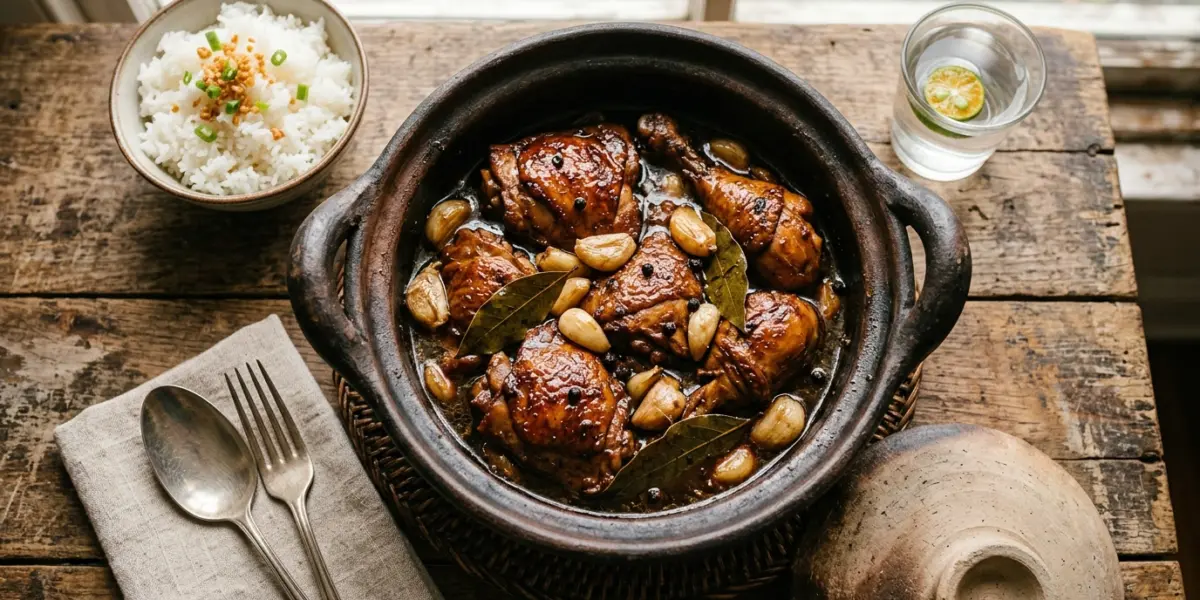
Chicken adobo recipe is the dish every Filipino home cook has a version of — and every version is correct. We have tested this braise obsessively across a dozen batches, adjusting vinegar ratios, experimenting with the dry-fry finish, and mapping the regional variations so you can cook this exactly the way you want it. The result is fall-off-the-bone chicken in a deep, glossy sauce that only gets better the next day.
- The vinegar-to-soy ratio is the single most important variable — we recommend 1:1 as a starting point.
- Bone-in, skin-on chicken thighs produce the best result. Boneless thighs work but the sauce is thinner.
- Adobo is a natural preservative dish — the acidity of white vinegar inhibits bacterial growth, making leftovers safe at room temperature for up to two days in a cool kitchen.
- Two distinct finishes exist: saucy (classical) and dry-fry caramelized (Visayan style). Both are authentic.
- The coconut milk variation (adobo sa gata) is associated with the Bicol region and transforms the dish into something richer and milder.
What Is Chicken Adobo — The Philippines’ Most Beloved Dish
The Origins of Philippine Adobo
The word adobo reaches us through Spanish — from adobar, meaning to marinate or to season — but the cooking technique it describes in the Philippines predates Spanish colonization by centuries. When the Spanish arrived in the archipelago in the 1560s, they found a preservation method already in use: meat and fish braised in vinegar and salt to extend shelf life in a tropical climate without refrigeration. They gave this existing method a name they recognized, and the word stuck.
What the Spanish term obscures is how fundamentally Filipino the dish is. Philippine adobo is not a transplant from Spain. Spanish adobo is a spiced marinade paste used on cured meats; Philippine adobo is a braising technique built around the interplay of souring agents, salt, and aromatics. The Spanish connection is etymological, not culinary. Filipino food historians and writers including the late Doreen Fernandez have argued this point clearly, and the distinction matters when you understand why the dish works the way it does.
Today, adobo is widely recognized as the unofficial national dish of the Philippines — a designation that carries real weight in a country of 7,000-plus islands, each with distinct food traditions. That near-universal agreement is the most telling thing about the recipe: in a cuisine defined by regional specificity, adobo is the one dish that belongs to everyone.
Why Vinegar Is the Heart of the Dish
White vinegar — in Filipino kitchens, traditionally sukang maasim made from fermented sugarcane — does three things in chicken adobo that no other ingredient can replicate. First, it tenderizes the meat by breaking down muscle fibres during the braise, which is why even cheap cuts of chicken emerge from an adobo pot with a texture that reads as slow-cooked. Second, it acts as the primary souring agent that balances the saltiness of the soy sauce (toyo), producing the dish’s characteristic bright-savory flavor profile. Third, and most practically, it is a natural preservative.
The acidity of vinegar lowers the pH of the braising liquid to a point where most spoilage bacteria cannot survive. This is why adobo has always been the food Filipino mountaineers, farmers, and travelers packed for long journeys — it stays safe without refrigeration for a day or two in temperate conditions, and the flavor deepens rather than degrades as it sits. That last point is not incidental. Adobo genuinely tastes better on day two. The acids mellow, the fat from the chicken skin emulsifies into the sauce, and the aromatics integrate fully. We always make a double batch for this reason.
Soy Sauce and the Modern Standard Recipe
The version most people around the world recognize — chicken braised in white vinegar, soy sauce, garlic, bay leaves, and black peppercorns — became the standard through the 20th century as toyo (soy sauce) became widely available and affordable across the Philippines. Before that, many adobo preparations used only vinegar and salt, producing a paler dish sometimes called adobong puti (white adobo). Both versions are traditional. The white adobo is actually older.
We develop our base recipe around the modern soy-and-vinegar standard because it is what most home cooks outside the Philippines recognize and can source easily. But understanding that the dish existed before soy sauce is useful context: it tells you that the vinegar is the non-negotiable element, and the soy sauce, garlic, and bay leaves are the supporting cast. Adjust them freely. The vinegar must stay.
Ingredients for Chicken Adobo — What You Need and Why
The Chicken: Why Thighs Win Every Time
We use bone-in, skin-on chicken thighs, and we are firm on this. Chicken thighs have a higher fat content than breast meat and a more open muscle structure that absorbs the braising liquid deeply. The skin renders during searing and releases fat into the sauce, which later emulsifies with the vinegar to produce the glossy, clingy coating that makes adobo so satisfying over steamed rice. The bone adds collagen to the braise, giving the sauce a richer body that boneless thighs simply cannot match.
Breast meat produces dry, stringy results in a long braise. If you prefer white meat, add it for the final 15 minutes only — do not braise it from the start. Boneless, skinless thighs are an acceptable compromise for weeknight speed but expect a slightly thinner sauce and a less developed flavor. Drumsticks work excellently as a substitute for thighs and give the dish a more rustic character. Whole chicken pieces (a cut-up whole bird) is the traditional home-cooking approach in many Filipino households.
For this recipe, we call for 1.5 kg (about 3.3 lbs) of bone-in, skin-on chicken thighs, which gives four generous servings. If you are feeding a crowd, this recipe scales linearly — double the chicken, double every ingredient, and extend the braising time by roughly 10 minutes.
Vinegar: The Right Type and Why It Matters
In the Philippines, the preferred vinegar for adobo is sukang maasim — a white sugarcane vinegar with a clean, sharp acidity and a faintly fruity undertone. Outside the Philippines, the most faithful substitute is distilled white vinegar (5% acidity), which is widely available and produces a virtually identical result in cooked dishes. Do not use apple cider vinegar as a direct swap — it adds a fruity sweetness that throws the flavor balance off. If apple cider is all you have, reduce the quantity by 20% and accept a slightly sweeter profile.
Rice vinegar (unseasoned) is a reasonable middle-ground option with a milder acidity. If you use it, increase the quantity slightly to compensate for the lower acid punch. Red wine vinegar will change the character of the dish significantly and we do not recommend it. The ratio of vinegar to soy sauce is the most important variable in the whole recipe — our base is 1:1 by volume, which produces a balanced braise. More vinegar pushes the dish sharper and brighter; more soy sauce pushes it saltier and darker. Both adjustments are valid.
Aromatics: Garlic, Bay Leaves, and Black Peppercorns
Garlic is used generously in adobo — we use a full head (roughly 10 cloves), left whole or lightly crushed rather than minced. Whole cloves soften during the long braise and become sweet, almost jammy, making them a welcome addition to the plate alongside the chicken. Minced garlic will dissolve into the sauce and provide flavor without the texture reward of whole cloves. We do both: half the head crushed and added to the marinade for maximum aromatic penetration, the other half whole and added to the pot for texture.
Bay leaves (laurel leaves) are the other non-negotiable aromatic. Use three to four dried bay leaves, or two fresh ones if you have access to them — fresh bay leaves have a more intense eucalyptus-herbal note. Do not skip the bay leaves; they provide an earthy, slightly bitter counterpoint that prevents the dish from reading as simply ”soy and vinegar.” Whole black peppercorns rather than ground pepper are traditional — they contribute a mild heat and a floral spice note as they steep in the braising liquid, and biting into one on the plate is part of the eating experience.
How to Make Chicken Adobo — The Step-by-Step Method
Step 1 — Marinate the Chicken (10 Minutes to Overnight)
Combine the soy sauce, white vinegar, crushed garlic (half the head), bay leaves, and black peppercorns in a large bowl. Add the chicken thighs and turn to coat thoroughly. A minimum of 10 minutes at room temperature is enough to develop surface flavor; an overnight marinade in the refrigerator produces a noticeably deeper result with the aromatics fully penetrating the meat. If you are marinating overnight, transfer to a zip-lock bag or cover the bowl tightly with cling film to prevent the vinegar aroma from permeating other items in the refrigerator.
One technique worth noting: do not add oil to the marinade. The soy sauce and vinegar work as a tenderizing brine, and added oil would coat the surface of the meat and prevent the brine from penetrating. The oil comes in at the searing stage, where it serves a different purpose entirely.
When you are ready to cook, remove the chicken from the marinade and pat it dry with paper towels. Reserve the marinade — every drop of it goes back into the pot. Patting the chicken dry is non-negotiable for the searing step: wet chicken steams rather than browns, and the fond (the caramelized bits that stick to the pan) is what drives the deep color and flavor of the finished sauce.
Step 2 — Sear the Chicken Until Golden
Heat two tablespoons of neutral oil in a wide, heavy-bottomed pan or Dutch oven over medium-high heat until shimmering. Place the chicken thighs skin-side down in a single layer — do not crowd the pan. If your pan is not large enough, sear in two batches. Cook undisturbed for 4 to 5 minutes until the skin is deep golden brown and releases easily from the pan. Flip and sear the other side for 2 minutes. Remove the chicken to a plate.
This step is technically optional in the sense that adobo will still taste good without it. But the Maillard reaction — the browning of proteins at high heat — generates hundreds of new flavor compounds that simply do not appear in a pale, un-seared braise. The caramelized skin also provides a textural contrast that survives the subsequent braising phase, at least partially. We consider the sear non-negotiable for a result that distinguishes itself from boiled chicken in sauce.
Pour off any excess fat from the pan, leaving roughly one tablespoon. If you used boneless thighs (no skin), you may need to add a touch more oil at this stage. Add the remaining whole garlic cloves to the pan and cook over medium heat for about 60 seconds, stirring, until fragrant and beginning to color. This brief bloom of the garlic in the residual fat builds another aromatic layer before the liquid goes in.
Step 3 — Braise, Then Reduce
Return the chicken to the pan. Pour in the reserved marinade along with half a cup of water. Bring to a boil, then reduce to a steady simmer. Cover the pan and cook for 20 minutes — the chicken should be cooked through by this point, with the internal temperature reaching 74°C (165°F). Remove the lid and continue simmering for a further 15 to 20 minutes, turning the chicken occasionally, until the sauce reduces by roughly half and becomes syrupy and glossy.
The reducing stage is where adobo transforms from a braise into something more concentrated and complex. As the water evaporates, the vinegar and soy sauce intensify, the sugars in the soy caramelize slightly, and the fat from the chicken skin emulsifies into the sauce. Watch the heat carefully at this stage — too high and the sauce can catch and burn; too low and the reduction takes too long and the chicken overcooks. A moderate, active simmer is what you want.
Taste the sauce toward the end of the reduction. If it is too sharp, a pinch of sugar (brown sugar, ideally) rounds it off. If it is too salty, a small splash of additional vinegar brightens and balances. This is the calibration moment. Trust your palate over the recipe measurements at this stage — every chicken releases different amounts of fat and moisture into the sauce, and the final seasoning is always a live adjustment.
Regional Variations — How Adobo Changes Across the Philippines
Adobo sa Gata: The Coconut Milk Version from Bicol
The Bicol region in the southeastern tip of Luzon is famous throughout the Philippines for a love of coconut milk (gata) and chili heat. Bicolano adobo — adobo sa gata — takes the standard vinegar-soy braise and adds one can (400ml) of full-fat coconut milk in the final 10 minutes of cooking, transforming the sharp, punchy sauce into something richer, creamier, and notably milder in acidity. The coconut milk absorbs and softens the vinegar tang while adding a natural sweetness and body to the sauce.
We tested adobo sa gata alongside our standard version during recipe development, and the two dishes are genuinely different eating experiences. The standard version is sharper, more concentrated, and suits the role of a ”bold main over steamed rice” perfectly. The coconut milk version is rounder, more mellow, and works as a centerpiece dish for guests unfamiliar with adobo’s characteristic tartness. Both versions finish with the same glossy coating over the chicken; the sauce of the gata version is thicker and creamier rather than the dark, syrupy reduction of the classic.
To make adobo sa gata, follow our standard recipe but reduce the water to a quarter cup (the coconut milk provides the additional liquid volume). After the 20-minute covered braise, remove the lid, pour in the coconut milk, and stir gently to incorporate. Simmer uncovered for a further 10 to 15 minutes, stirring occasionally, until the sauce thickens to a creamy consistency. Add a sliced red chili at this stage for the authentic Bicolano heat profile.
The Dry Adobo: Visayan Adobong Tuyo
In the Visayas — the central island group of the Philippines — a version of adobo exists that takes the dish in the opposite direction from the coconut milk variation. Adobong tuyo (”dry adobo”) is braised in the standard way, but once the chicken is cooked through, the sauce is allowed to fully evaporate and the chicken is then fried in its own rendered fat until the skin crisps up and the exterior caramelizes. The result is intensely flavored, slightly sticky, crisp-edged chicken — nothing like the saucy version but unmistakably adobo in flavor.
Achieving this finish requires patience and careful attention. Once the sauce has reduced to a very small amount and begins to look almost dry, reduce the heat to medium-low and continue cooking, turning the chicken frequently. The natural sugars in the soy and any residual fat will caramelize on the surface of the chicken. Do not walk away from the pan at this stage — the transition from caramelized to burnt happens quickly. The dry version is extraordinary served with plain steamed rice and a fried egg; the contrast between the crisp, savory chicken and the clean rice is one of those flavor combinations that justifies the extra effort entirely.
Other Regional Variations Worth Knowing
Beyond the two major variations above, regional adobo takes many other forms across the archipelago. In Cavite province south of Manila, a white adobo (adobong puti) is made without soy sauce entirely — vinegar, garlic, and bay leaves only — producing a pale, intensely sour dish that is closer in character to the pre-colonial original. In Laguna province, adobo flakes (adobong dilaw) uses turmeric (locally called luyang dilaw) which gives the sauce a golden yellow color and a faintly earthy, slightly peppery note alongside the standard aromatics.
”The genius of adobo is that it is not a recipe but a technique. The parameters are few: souring agent, salt, garlic, bay leaf. Within those parameters, an entire country cooks differently.” — adapted from food historian Doreen Fernandez’s writings on Philippine cuisine.
Understanding that adobo is a technique rather than a fixed formula is genuinely liberating when you cook it at home. The table below maps the major variations we cover so you can navigate the options at a glance.
| Variation | Key Difference | Region | Flavor Profile | Best For |
|---|---|---|---|---|
| Classic soy-vinegar | Standard base recipe | Nationwide | Sharp, savory, glossy | Everyday cooking |
| Adobo sa gata | Coconut milk added | Bicol | Rich, creamy, mellow | Guests / special occasions |
| Adobong tuyo | Sauce fully evaporated, fried dry | Visayas | Intense, caramelized, crispy | Meal prep, lunchboxes |
| Adobong puti | No soy sauce — vinegar and salt only | Cavite | Very sour, pale, clean | Traditional / historic cooking |
| Adobong dilaw | Turmeric added | Laguna | Earthy, golden, mildly spiced | Variety / color contrast |
Pork Adobo and Other Protein Variations
Pork Adobo: The Classic Alternative
Pork adobo — adobong baboy — is arguably as common as the chicken version in Filipino home cooking, and the two are sometimes cooked together in what is called adobong manok at baboy (chicken and pork adobo). Pork belly is the preferred cut: the fat layers render beautifully into the braising liquid, producing an even richer, more unctuous sauce than chicken alone. Pork shoulder works equally well and is leaner. Pork ribs cut into sections are another traditional option that gives the dish a more rustic, finger-food character.
The method for pork adobo is identical to chicken but the timing differs significantly. Pork belly requires 45 to 60 minutes of covered braising before the meat is tender; pork shoulder takes a similar time depending on cut thickness. The extended braising time actually benefits the sauce — the collagen from the pork bones and connective tissue dissolves into the liquid and produces a sauce with a sticky, almost gelatinous quality when cooled. This is a feature, not a flaw. Cold pork adobo sauce sets like a light jelly, and reheating it produces one of the most satisfying meals imaginable.
Squid Adobo (Adobong Pusit)
Squid adobo is one of the most dramatic-looking dishes in the Filipino repertoire: the ink from the squid is added to the braising liquid, turning the sauce jet black and giving the dish an intense, briny depth that is entirely unlike the chicken or pork versions. Adobong pusit is a coastal dish, most associated with fishing communities across the Philippines. The cooking time is very short — squid overcooks in minutes — so the braise is more of a rapid simmer (10 to 12 minutes) than a long reduction. The ink sac is pricked and squeezed directly into the pot once the squid has cooked through.
Vegetable Adobo for a Plant-Based Option
The adobo technique translates well to firm vegetables, making it an excellent framework for plant-based cooking. Water spinach (kangkong) adobo is one of the most common vegetable versions — the greens wilt quickly in the braising liquid and absorb the vinegar-soy flavor deeply. Eggplant (talong), green beans, and firm tofu are other candidates. For a satisfying plant-based main, we recommend combining firm tofu (pressed and pan-fried first) with mushrooms in the standard adobo braise — the mushrooms provide umami depth while the tofu absorbs the sauce like a sponge. Reduce the braising time to 15 to 20 minutes total.
Tips for the Best Chicken Adobo
The Ratio Rule: Getting the Vinegar-Soy Balance Right
The 1:1 vinegar-to-soy ratio in our recipe is a deliberate starting point, not a fixed rule. Understanding how the ratio shifts the dish helps you cook adobo confidently without measuring. Increase the vinegar proportion (towards 1.5:1 vinegar-to-soy) and the dish becomes brighter, sharper, and more acidic — this is closer to older, more traditional recipes that predate the mass availability of soy sauce. Decrease the vinegar (toward 0.5:1) and the dish becomes saltier, darker, and sweeter — closer to the sweeter style popular in urban Manila recipes. Neither is wrong; they reflect different regional and generational preferences. Our 1:1 base hits the middle ground that works for the broadest range of palates.
One practical note on the vinegar: acidity softens during cooking. A sauce that tastes aggressively sharp at the start of the braise will mellow significantly by the end of the reduction. Do not add extra vinegar partway through cooking unless you have actually tasted the sauce and found it genuinely flat — what seems sharp raw often tastes balanced cooked.
For internal links on technique and ingredient guidance, our Asian cooking techniques guide explains the braising method in detail alongside other classic Southeast Asian cooking approaches. For the perfect accompaniment, our how to cook rice guide covers jasmine, short-grain, and long-grain methods so your adobo always has the right base.
Make-Ahead and Storage
Adobo improves with time in a way that very few dishes do. On the day it is cooked, the vinegar can still taste a little sharp and the sauce slightly disjointed. By day two, the acids have mellowed, the fat has integrated fully, and the flavors have married into a rounder, more complex whole. This makes adobo one of the best meal-prep dishes in any cuisine. We routinely cook a double batch on Sunday and use it across three meals: once fresh over steamed rice, once reheated with fried eggs for a quick weeknight dinner, and once shredded and used as a filling in fried rice or tacos.
Refrigerated in an airtight container, chicken adobo keeps for up to five days without any quality loss. Frozen, it keeps for three months — thaw overnight in the refrigerator and reheat gently in a pan with a splash of water to loosen the sauce. The vinegar’s preservative effect means the dish is more forgiving than most braised meats in terms of safe storage. You can also leave it at room temperature (covered) overnight in a cool kitchen — the acid content protects it, and it is genuinely ready to eat cold the next morning as a traditional Filipino breakfast with garlic fried rice (sinangag) and a fried egg.
Common Mistakes and How to Avoid Them
The most frequent error we see in adobo is adding the vinegar too early and then cooking it on high heat, which produces a harsh, one-note acidity that never mellows. The fix is simple: keep the heat at a moderate simmer throughout the braising phase and resist the urge to rush the reduction. Patience is the primary technique here, not skill.
The second common mistake is skipping the sear. We understand the appeal of a one-step braise — put everything in the pot, cover, cook. But the color and flavor depth that comes from seared chicken skin is not replicable any other way. Three extra minutes of active cooking at the beginning pays off across the entire dish. The third mistake is using too-thin a pan. A thin-bottomed skillet will produce hot spots that burn the sauce during the reduction stage. Use a cast-iron skillet, a Dutch oven, or a heavy stainless sauté pan.
What to Serve with Chicken Adobo
The Required Pairing: Steamed Rice
Chicken adobo and steamed rice are not suggestions — they are a system. The dish is designed to be eaten with plain, unseasoned steamed rice, which acts as the neutral canvas that absorbs the intensely flavored adobo sauce. The ratio of chicken to rice in a Filipino serving is typically generous on the rice side: a standard meal might feature two to three cups of cooked rice alongside one or two pieces of chicken, with the sauce spooned liberally over the rice. The rice does not merely accompany the chicken; it is the medium through which the sauce is fully appreciated.
We recommend long-grain jasmine rice for its fragrance, which complements the aromatics in the adobo without competing with them. Short-grain Japanese rice works beautifully too, especially for the dry-fry variation where the stickier grain holds the caramelized sauce fragments. See our how to cook rice guide for ratios and methods across both styles. For a more traditional Filipino setup, serve the adobo family-style in the center of the table with a large bowl of rice alongside blanched kangkong (water spinach) or simple sautéed bok choy.
Vegetables That Work Well Alongside
The strong flavors of adobo pair best with simply prepared, lightly seasoned vegetables that provide contrast rather than competition. Blanched or stir-fried bok choy with a little garlic and oyster sauce is the combination we reach for most often — the slight bitterness of the greens cuts through the richness of the adobo sauce cleanly. Cucumber salad (a simple Filipino version is just thinly sliced cucumber with a little white vinegar and sugar — echoing the adobo’s own flavor profile, fittingly) provides a cooling, refreshing counterpoint. Steamed or pan-fried eggplant absorbs the adobo drippings beautifully if served on the same plate.
Adobo as the Base for Other Dishes
Leftover adobo is one of the most versatile ingredients in an Asian-leaning kitchen. The most beloved use is sinangag-style fried rice: shred or chop the leftover chicken, fry it briefly in a very hot wok with day-old cooked rice, and season with the leftover adobo sauce instead of soy sauce. The result is a deeply savory, fragrant fried rice that beats any restaurant version. Adobo chicken also works shredded into pancit (Filipino stir-fried noodles), used as a filling in pan de sal rolls, or flaked over congee for a breakfast that is as satisfying as it is practical. For more ideas on incorporating adobo into a wider Asian meal repertoire, see our Asian recipes collection.
Chicken Adobo Recipe Card
Chicken Adobo (Authentic Filipino Classic)
Prep Time: 10 minutes (plus optional 1-hour or overnight marinating)
Cook Time: 45 minutes
Total Time: 55 minutes
Servings: 4
Cuisine: Filipino
Course: Main Course
Calories: Approximately 380 per serving
Ingredients
- 1.5 kg (3.3 lbs) bone-in, skin-on chicken thighs (about 6–8 pieces)
- ⅓ cup (80ml) white vinegar (sukang maasim or distilled white vinegar)
- ⅓ cup (80ml) soy sauce (regular or low-sodium)
- 1 whole head of garlic — half the cloves crushed, half left whole
- 4 dried bay leaves (or 2 fresh)
- 1 tablespoon whole black peppercorns
- ½ cup (120ml) water
- 2 tablespoons neutral oil (canola, sunflower, or vegetable)
- 1 teaspoon brown sugar (optional, to round off acidity at the end)
Instructions
- Marinate: Combine soy sauce, vinegar, crushed garlic, bay leaves, and black peppercorns in a large bowl. Add chicken thighs and turn to coat. Marinate for a minimum of 10 minutes at room temperature, or up to overnight in the refrigerator.
- Pat dry: Remove chicken from the marinade and pat dry thoroughly with paper towels. Reserve all the marinade liquid.
- Sear: Heat oil in a large heavy-bottomed pan or Dutch oven over medium-high heat. Place chicken skin-side down and sear undisturbed for 4–5 minutes until deep golden brown. Flip and sear for 2 more minutes. Remove to a plate.
- Bloom garlic: Reduce heat to medium. Add the remaining whole garlic cloves to the pan and cook for 60 seconds, stirring, until fragrant.
- Braise: Return chicken to the pan. Pour in reserved marinade and water. Bring to a boil, then reduce to a steady simmer. Cover and cook for 20 minutes.
- Reduce: Remove the lid and continue simmering for 15–20 minutes, turning chicken occasionally, until the sauce reduces by half and becomes syrupy and glossy.
- Season and serve: Taste the sauce. Add brown sugar if it tastes too sharp. Serve immediately over steamed rice, with sauce spooned generously over the top.
Notes
- Vinegar type: Distilled white vinegar is the most faithful substitute for Filipino sugarcane vinegar. Apple cider vinegar will work but adds sweetness — reduce quantity by 20%.
- Coconut milk variation: For adobo sa gata, reduce water to ¼ cup. After the covered braise, add 1 can (400ml) full-fat coconut milk and simmer uncovered for 10–15 minutes.
- Dry adobo finish: After the standard reduction, allow the sauce to fully evaporate and continue cooking the chicken in its own rendered fat, turning frequently, until caramelized and crisp-edged.
- Make-ahead: Flavor improves significantly on day two. Store refrigerated for up to 5 days or freeze for up to 3 months.
- Scaling: Recipe scales directly. Double all ingredients and add 10 minutes to the braising time.
Frequently Asked Questions About Chicken Adobo
What is the difference between Filipino adobo and Spanish adobo?
Filipino adobo and Spanish adobo share only a name. Spanish adobo is a spiced paste or marinade used primarily to cure and flavor meats before smoking or drying — think of the red adobo paste used on pork in Mexican-influenced cooking, which traces its roots to Spanish culinary tradition. Filipino adobo, by contrast, is a wet braising technique in which meat is cooked in a liquid of vinegar, salt or soy sauce, and aromatics. The cooking method, the result, and the flavor profile are completely different. The Spanish simply named an existing Filipino technique using a word from their own culinary vocabulary when they encountered it in the 16th century.
Can I make chicken adobo without soy sauce?
Yes — and in doing so, you would be cooking a version that is historically closer to the original. Adobong puti (white adobo) is made with vinegar, salt, garlic, bay leaves, and peppercorns only. It produces a pale, intensely sour dish with a very clean flavor. To make adobong puti, replace the soy sauce with 1 teaspoon of salt and proceed with the recipe exactly as written. The sauce will not reduce to the same dark, glossy consistency — it stays pale and light — but the flavor is genuinely excellent and distinct from the soy version.
Why does adobo taste better the next day?
Three things happen to adobo as it rests that improve its flavor. First, the acetic acid in the vinegar continues to interact with the proteins in the chicken and the other aromatic compounds in the sauce, mellowing the sharp edge that the vinegar contributes when freshly cooked. Second, the fat from the chicken skin — which sits in suspension in the sauce immediately after cooking — emulsifies more completely as it cools and reheats, producing a glossier, more integrated sauce texture. Third, the aromatic compounds from the bay leaves, garlic, and peppercorns continue to migrate from the solids into the sauce, deepening its complexity. The net effect is a rounder, more harmonious dish the following day.
How long does chicken adobo last without refrigeration?
The vinegar content of adobo provides genuine antimicrobial protection. A properly made adobo (with a minimum 1:1 ratio of vinegar to soy by volume) can safely sit at room temperature in a covered container for up to 24 hours in a kitchen at or below 25°C (77°F). Beyond that, or in warmer conditions, refrigeration is advisable. This preservative property is historically significant — it is why adobo became the travel food of choice for Filipino farmers, mountaineers, and sailors. Refrigerated, the dish keeps for up to five days with no quality loss.
Can I use chicken breast for adobo?
You can, but we do not recommend it for the standard recipe. Chicken breast lacks the fat and collagen of thigh meat, and the long braising time that produces perfect thighs will overcook breast meat into dry, stringy fibres. If you prefer white meat, use bone-in chicken breast pieces and reduce the covered braising time to 12 to 15 minutes — the chicken should reach 74°C (165°F) internal temperature and no more. Then remove the breast pieces and reduce the sauce separately before adding the chicken back for the final two minutes. Alternatively, cook chicken thighs in the pot alongside one or two breast pieces added for the final 15 minutes only.
Is chicken adobo spicy?
The standard version of chicken adobo is not spicy. The black peppercorns provide a mild warmth but nothing that most palates would classify as heat. The dish is savory, sour, and richly flavored — but not chili-hot. If you want heat, the Bicolano tradition of adding fresh or dried red chilies to the braise is the most authentic route: add two to three sliced bird’s eye chilies or a single sliced long red chili when you add the marinade to the pot. The adobo sa gata (coconut milk) variation is also traditionally served with chili heat.

Mei Lin Chen
Mei Lin Chen is an Asian food writer and recipe developer. Melbourne-raised and London-based, she has spent over a decade exploring the rice paddies, hawker stalls, and home kitchens of South-East and East Asia. Her recipes balance traditional technique with everyday practicality.