Last updated: March 29, 2026
Tsukemono — the Japanese word literally means ”pickled things” — is the country’s quietly indispensable side dish. Every traditional Japanese meal, from the humblest bowl of rice to the most refined kaiseki, carries a small dish of these brightly colored, briny vegetables. They cleanse the palate, cut richness, supply enzymes and probiotics, and connect the cook to a tradition that predates refrigeration by more than a thousand years. Most home cooks outside Japan think of tsukemono as a single category, but it is actually an umbrella covering at least eight distinct techniques, each with its own medium, timeline, and flavor profile.
This guide walks through every major tsukemono method you can practice at home: shiozuke (salt), shoyuzuke (soy sauce), suzuke (vinegar), misozuke (miso), kasuzuke (sake lees), nukazuke (rice bran), shibazuke (red shiso), and the lightning-fast asazuke. You will learn the science behind osmosis, salt ratios by weight, fermentation timelines, the equipment that makes pickling foolproof, and the small adjustments that separate a flaccid, oversalted cucumber from one that snaps between your teeth.
What Is Tsukemono and Why Every Japanese Meal Includes It
Tsukemono (漬物) refers to any vegetable — and occasionally fruit, fish, or meat — preserved by salt, fermentation, or a combination of both. Archaeological evidence suggests Japanese pickling predates the Nara period (710–794), with early references to vegetables packed in salt and stored in earthenware jars. Buddhist temple cuisine, called shojin ryori, refined the practice during the Kamakura period when monks needed shelf-stable, plant-based protein and minerals through long winters.
The traditional Japanese meal — ichiju sansai, ”one soup, three sides” — formally includes a small mound of tsukemono. They are eaten throughout the meal, not as an appetizer, and never as a main. The role is structural: salt and acid reset the palate between bites of fatty fish, sweet simmered vegetables, or starchy rice. In the home, the same logic applies. A bowl of plain steamed rice is transformed by a single piece of bright-yellow takuan or magenta umeboshi.
Beyond flavor, tsukemono carry real nutritional weight. Lacto-fermented styles like nukazuke deliver lactobacilli and B vitamins; salt-pressed cucumbers retain their full spectrum of water-soluble vitamins. The technique itself is also a remarkable lesson in restraint. A perfect cucumber asazuke uses three ingredients and twenty minutes; mastering it teaches you more about salt and timing than a week of complicated recipes.
The Eight Major Categories of Tsukemono
Japanese pickle-makers classify tsukemono by the medium that transforms the vegetable. The medium determines flavor, color, texture, and timeline. Choose the wrong medium for a given vegetable and you will end up with mush, brown-edged unpleasantness, or a pickle that never develops the savor you wanted.
| Type | Medium | Timeline | Best vegetables | Flavor profile |
|---|---|---|---|---|
| Asazuke | Salt + light seasoning | 20 minutes – 4 hours | Cucumber, cabbage, daikon, carrot | Fresh, crisp, mildly salty |
| Shiozuke | Salt only | 1 – 7 days | Daikon, eggplant, turnip, ume | Pure, briny, vegetal |
| Shoyuzuke | Soy sauce + mirin | 1 – 5 days | Garlic, ginger, daikon, gobo | Savory, dark, deeply seasoned |
| Suzuke | Rice vinegar + sugar + salt | 30 minutes – 3 days | Lotus root, ginger, cucumber, daikon | Bright, tart, refreshing |
| Misozuke | Miso paste | 1 – 14 days | Daikon, gobo, fish, egg yolk, tofu | Funky, malty, deeply umami |
| Kasuzuke | Sake lees (kasu) | 3 days – several months | Cucumber, melon, fish, uri | Sweet-funky, alcoholic finish |
| Nukazuke | Fermented rice bran | 4 hours – several days | Cucumber, daikon, carrot, eggplant | Tangy, lactic, mineral, complex |
| Shibazuke | Red shiso + salt | 2 weeks – several months | Eggplant, cucumber, myoga | Sour-floral, brilliant magenta |
Asazuke (”shallow pickle”) and shiozuke are where every beginner should start. They forgive uneven salt distribution, work in any kitchen, and produce results within a single afternoon. The fermented styles — nukazuke and shibazuke — require a sustained living medium that you will tend to like a sourdough starter, but they reward patience with depth and complexity that no fast pickle can match.
Equipment You Need to Make Tsukemono at Home
The equipment list is forgiving. Most styles require nothing more than a bowl, salt, and a heavy weight. A few specialized tools, however, transform the experience from ”this works” to ”I want to make this every week.”
Tsukemonoki (Japanese Pickle Press)
A tsukemonoki is a plastic or wooden container with a screw-down lid that applies even pressure to whatever sits inside. The press accelerates osmosis: pressure forces water out of vegetables faster than salt alone, producing a crisper, more concentrated pickle in less time. A 1-quart press is enough for most home batches and runs $20–$35. If you don’t own one, a glass mixing bowl topped with a flat plate and a 2- to 3-pound weight (a sealed jar of water, a heavy can, or a clean stone) does the same job.
Glass or Ceramic Containers
Avoid reactive metals. Salt, vinegar, and lactic acid pull metallic flavors out of aluminum and unlined steel within hours. Glass jars with plastic lids, wide-mouth ceramic crocks, and food-grade plastic tubs are all safe. For nukazuke specifically, a traditional nukadoko-yo — an enameled or ceramic crock with a lid — keeps the rice bran bed at stable humidity.
A Digital Scale
Salt ratios in tsukemono are expressed by weight, not volume. The Japanese standard is 2–3% salt by total weight of vegetables for asazuke, climbing to 6–10% for long-keeping shiozuke. A scale that reads in 1-gram increments removes guesswork and is the single most consequential upgrade a home pickler can make.
Salt: What Kind to Use
Use a non-iodized fine sea salt or kosher salt. Iodized table salt can suppress lactic fermentation and impart a metallic edge. The classic Japanese choice is arajio — a coarse, mineral-rich sea salt — but Diamond Crystal kosher and Maldon work fine. Avoid pink Himalayan and other heavily mineralized salts for fermented styles, where their trace metals can shift color.
Vegetable Knife and Cutting Board
An usuba or nakiri — Japanese vegetable cleavers — produce cleaner cuts than a chef’s knife and minimize bruising. Bruised cells leak water unevenly and brown faster. If you don’t have a Japanese knife, a sharp Western chef’s knife is acceptable; a dull blade is not.
The Science: How Salt and Time Transform a Vegetable
Pickling is applied osmosis. Plant cells are full of water bound inside vacuoles. When you sprinkle salt on a sliced cucumber, the salt creates a hypertonic environment outside the cell wall. Water rushes out to equalize concentration, dragging soluble flavors with it. The cell walls collapse slightly and the vegetable becomes denser, more compact, and more flavorful per bite.
For asazuke, this is the entire mechanism. You salt, you wait, you eat. For longer-keeping styles, salt also performs a second function: it suppresses the spoilage microbes that would otherwise rot the vegetable while allowing salt-tolerant lactobacilli to thrive. Below 2% salt, spoilage organisms compete and you risk off-flavors. Above roughly 12%, even lactobacilli give up and the vegetable simply preserves without fermenting. The sweet spot for fermented tsukemono — nukazuke especially — is 4–8%.
Time is the second variable. Within minutes you get freshness. Within hours you get penetration of seasoning. Within days you get equilibrium between vegetable and brine. Within weeks fermentation produces lactic acid, esters, and the funky, almost cheesy notes that distinguish a great nukazuke from a great asazuke.
Step-by-Step: How to Make Asazuke (The Foundational Technique)
If you only ever make one style of tsukemono, make this one. Asazuke produces a clean, crunchy, lightly seasoned pickle in under an hour. Master it and the principles transfer directly to every other technique on this list.
Ingredients
- 2 medium Japanese cucumbers (or 1 English cucumber), about 300 g
- 6 g fine sea salt (2% of vegetable weight)
- 1 small piece of kombu, 5 cm square
- 1 small dried red chili, deseeded and torn (optional)
- 1 tsp toasted white sesame seeds (optional, for serving)
Method
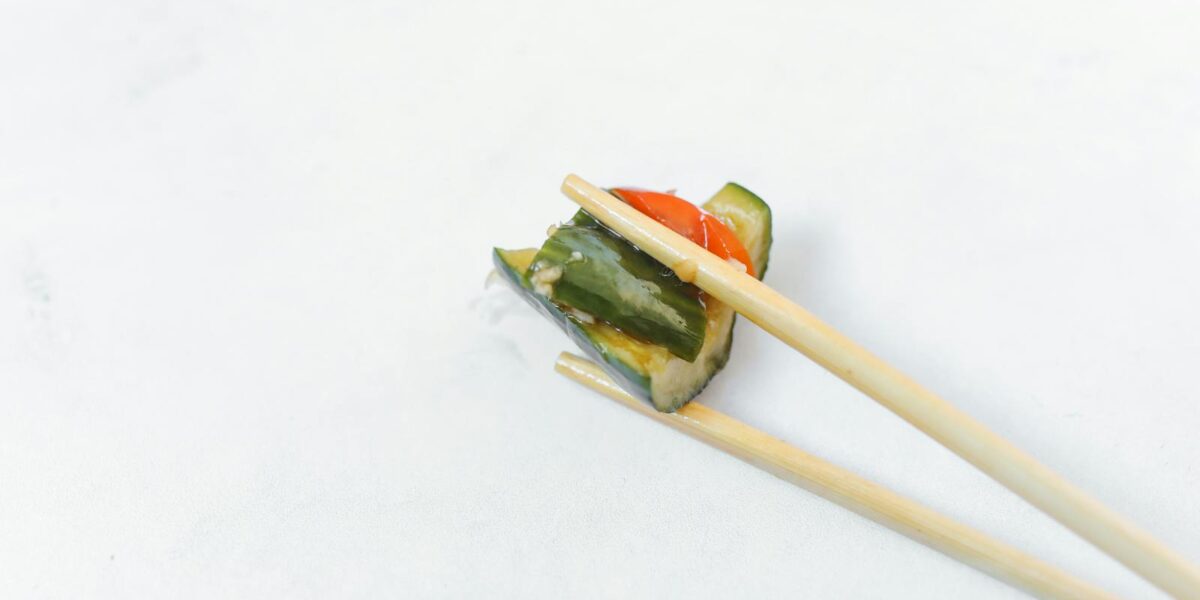
- Prep the cucumber. Trim the ends. Roll the cucumber on the cutting board pressing firmly with your palm — this lightly bruises the skin so it absorbs salt faster. Cut into bite-sized irregular chunks (rangiri) to maximize surface area.
- Weigh. Place the cucumber in a bowl on a tared digital scale. Note the weight; calculate 2% in grams. For 300 g of cucumber, that is 6 g of salt.
- Combine. Toss the cucumber with the salt, the kombu, and the chili if using. Massage briefly with your hands until you feel beads of moisture appear on the surface.
- Press. Transfer to a tsukemonoki and screw down the lid, or move to a smaller bowl, top with a plate and a 2- to 3-pound weight.
- Wait. Hold at room temperature for 30 minutes for a light, fresh pickle. For deeper seasoning, refrigerate for up to 4 hours.
- Drain and serve. Pour off the expelled liquid. Discard or save the kombu (it will have softened and is delicious chopped fine and added to rice). Sprinkle with sesame seeds.
The kombu is doing real work here. Its glutamates bind to the cucumber while it sits, transferring umami across the brine. This is the same principle that makes kombu the foundation of Japanese dashi — and the reason a properly made asazuke tastes seasoned in a way plain salted cucumber never does.
Step-by-Step: Shiozuke for Daikon and Turnip
Shiozuke is the longer-keeping cousin of asazuke. Salt percentage rises to 4–6%, the timeline stretches to days, and the resulting pickle takes on a faint lactic tang as wild lactobacilli begin to colonize the brine.
- Cut a 500 g daikon radish into ½-cm half-moons or thin rounds. Reserve the green tops if attached.
- Weigh and calculate 5% salt. For 500 g of daikon, that is 25 g of salt.
- Layer the daikon in a clean jar, sprinkling salt evenly between layers. Add 2 strips of kombu and the daikon greens, washed and roughly chopped.
- Seal and weight. Press for 24 hours at room temperature.
- Brine should rise above the vegetables. If not, add a tablespoon of water and re-press.
- After day one, refrigerate. Eat from day 3 through day 14.
Daikon shiozuke pickled this way is the ancestor of takuan, the bright-yellow fermented daikon found in nearly every Japanese supermarket. Authentic takuan adds turmeric or saffron for color and ferments for several months in rice bran. The shiozuke version is faster, fresher, and cleaner.
Step-by-Step: Misozuke (Miso-Marinated Vegetables)
Misozuke produces deeply flavored, almost meaty pickles. The miso bed slowly releases salt and umami into the vegetable while drawing out water. The same technique works on fish, tofu, and even hard-boiled egg yolks — the technique that produces the famous ”miso-cured yolk” featured in modern Japanese restaurants.
- Combine 200 g white or red miso, 2 tablespoons mirin, and 2 teaspoons sugar in a small bowl. Stir to a smooth paste.
- For vegetables, choose firm options: 2 small Japanese turnips quartered, a 4-inch length of daikon halved lengthwise, or thick rounds of carrot. Salt them lightly first (1% by weight) and rest 30 minutes; pat dry.
- Spread half the miso paste in a glass container. Wrap each vegetable piece in a single layer of cheesecloth (this lets you remove them cleanly). Lay the wrapped pieces on the miso. Cover with the remaining miso, pressing to eliminate air pockets.
- Seal. Refrigerate 2–7 days depending on size and desired intensity.
- Unwrap, scrape off excess miso (save it — it can be reused 2–3 times for fresh batches), and slice thinly to serve.
White miso (shiro miso) gives a sweeter, milder result; red miso (aka miso) produces a more aggressive, savory pickle with a darker color. For a more complex bed, blend in a tablespoon of shio koji, the salt-fermented rice malt that adds enzymatic depth and tenderizes the vegetable from the inside.
Step-by-Step: Building and Maintaining a Nukadoko (Rice Bran Bed)
Nukazuke is the most demanding tsukemono technique and the most rewarding. The nukadoko — the bed itself — is a living culture of lactobacilli and yeasts that you feed daily with vegetable scraps. A well-tended bed lasts decades; some Japanese families inherit nukadoko five generations old. Here is how to start one from scratch.
Building the Bed
- Toast 1 kg of rice bran (nuka) in a dry skillet over low heat for 5 minutes, stirring constantly, until it smells nutty and is just warm to the touch. This kills off bran-borne mold spores and develops flavor. Cool completely.
- In a large mixing bowl, combine the toasted bran, 130 g coarse sea salt (13% of bran weight), 1 piece of dried kombu (10 cm), 2 small dried red chilies, and 800 ml warm water. Mix with your hands until the texture resembles wet sand that holds together when squeezed.
- Transfer to a wide ceramic crock or food-grade plastic tub. Press flat and clean the sides.
- Push 2–3 ”starter vegetables” (cabbage outer leaves, radish trimmings, the green tops of carrots) deep into the bed. These provide food for the lactobacilli that will colonize from the air and from the vegetables themselves.
- Cover with a clean cloth and store at room temperature.
- Once daily for the first week, dig your hands into the bed and turn it from the bottom up. This aerates the bed and keeps anaerobic bacteria — the ones that produce off-flavors — from dominating. Replace the starter vegetables every 2 days.
- The bed is ready when it smells distinctly tangy and fruity, with notes of yogurt and beer, around days 7–14.
Pickling in the Bed
- Wipe vegetables clean and rub them with a small amount of salt. Bury fully in the bed, pressing the bran around them to eliminate air pockets.
- Timing varies by vegetable: cucumbers 4–8 hours, daikon halves 24–48 hours, carrots 12–24 hours, eggplant 8–16 hours.
- Pull, rinse off the bran, slice, and serve.
- Turn the bed daily. If you skip a day, the surface develops a white film of yeast (kahami) that is harmless but produces off-flavors; mix it back in and refresh with a small handful of fresh bran and salt.
If you travel or want to take a break from daily turning, refrigerate the entire bed. Cold suspends fermentation. The bed will resume happily when returned to room temperature.
Common Mistakes and How to Fix Them
| Mistake | What goes wrong | How to fix it |
|---|---|---|
| Measuring salt by volume instead of weight | Coarse salt is half the density of fine salt; results vary wildly | Always use a scale. Salt percentage is by total vegetable weight. |
| Using iodized table salt | Suppresses lactic fermentation; metallic aftertaste | Switch to fine sea salt, kosher, or Japanese arajio. |
| Skipping the weight or press | Vegetable expels water unevenly; texture is soggy | Apply 2–3 lb of even pressure for the full pickling time. |
| Pickling at warm room temperature for too long | Spoilage bacteria outcompete lactobacilli; off odors | Refrigerate after the initial press. Above 75°F, halve all times. |
| Not turning the nukadoko daily | Anaerobic bacteria dominate; bitter, alcoholic flavors | Mix the bed thoroughly once per day, scraping the corners. |
| Using cucumbers with thick wax coating | Salt cannot penetrate the wax; pickle stays bland | Use Japanese, Persian, or Kirby cucumbers, or peel English cukes in stripes. |
| Pickling wet vegetables | Excess surface water dilutes salt and slows fermentation | Pat completely dry before adding to any pickling medium. |
| Reusing miso bed too many times | Bed thins out, loses salt, develops off-flavors | Reuse 2–3 times maximum, then refresh with fresh miso. |
| Storing in metal containers | Salt and acid pull metallic ions; bitter, dull color | Use only glass, ceramic, or food-grade plastic. |
| Adding sugar too early to suzuke | Sugar interferes with osmosis; texture turns rubbery | Salt first, drain, then add sweetened vinegar. |
Practice Exercises to Build the Skill
Mastering tsukemono is repetition. The same vegetable, treated three different ways, teaches more than ten different recipes. Run through these exercises in order over the course of two weeks and your intuition for salt, time, and texture will sharpen rapidly.
Exercise 1: The Salt Calibration Test
Buy 600 g of cucumber. Divide into three equal portions of 200 g each. Salt one at 1.5%, one at 2%, and one at 3%. Press all three for 30 minutes under identical pressure. Taste side by side. The 1.5% will read as ”fresh vegetable, lightly seasoned.” The 2% is the textbook target — bright and balanced. The 3% will be too aggressive but instructive: you now know exactly what overshooting feels like.
Exercise 2: The Time Calibration Test
Salt 400 g of daikon at 4%. Pull samples at 1 hour, 4 hours, 12 hours, and 24 hours, refrigerated after the first hour. Note when the daikon transitions from ”raw vegetable with surface seasoning” to ”evenly seasoned throughout” to ”concentrated and crunchy” to ”starting to soften.” The inflection points are usually around hours 4 and 18, but every fridge and every daikon is slightly different.
Exercise 3: Single Vegetable, Three Mediums
Take three small Japanese cucumbers. Make one as asazuke with kombu, one as suzuke with rice vinegar and sugar, and one as misozuke with white miso. Eat them on the same day side by side. The same vegetable expresses three completely different flavor profiles. This single tasting teaches you what each medium contributes — and what to reach for when you want a specific character at the table.
Exercise 4: The Nukadoko Diary
Once you have a nukadoko built, keep a one-line diary for two weeks. Note ambient temperature, what vegetables went in and out, and what the bed smelled like. By day 14 you will read your bed faster than any thermometer or pH meter. The smell of ”good nukadoko” — yogurt, beer, gentle funk — becomes immediately recognizable.
Advanced Techniques and Refinements
Pre-Salting (Itazuri)
Before pickling cucumbers especially, roll them on a salted cutting board with the heel of your hand for 30 seconds. The technique, called itazuri, slightly bruises the skin, removes microscopic spines on Japanese cucumbers, and dramatically accelerates salt penetration. Rinse off the surface salt and proceed with the recipe; the head start in cell wall breakdown produces a noticeably crisper finished pickle.
Sun-Drying for Concentration
Traditional takuan recipes hang whole daikon in the sun for one to two weeks before salting. The gentle dehydration concentrates sugars and changes texture from snappy to almost chewy. At home, lay sliced daikon on a rack in front of a sunny window for 6–24 hours before salting. The pickle that follows will have a deeper, more honeyed flavor than the same vegetable salted fresh.
Adding Aromatic Boosters
Beyond kombu, several traditional aromatics deepen any tsukemono:
- Yuzu peel: Fresh strips lift any salt-based pickle; especially good in winter daikon.
- Dried shiitake: Snapped into small pieces and added to a salt pickle, they bloom in the brine and release earthy umami over 24 hours.
- Sansho peppercorns: A small pinch contributes a citrusy tingle to misozuke and shoyuzuke.
- Red shiso: Imparts the brilliant magenta of shibazuke and a distinct floral-mint character. Available frozen or dried in well-stocked Japanese markets.
Layering Mediums
Restaurant-style tsukemono often pass through more than one medium. A classic technique salts a daikon for 24 hours, drains and pats it dry, then transfers to a miso bed for another 48 hours. The two-stage approach removes surface water before the miso step, which prevents the miso from becoming too thin and produces a denser, more concentrated final pickle. Layering also works with rice vinegar: a salted vegetable transferred to sweetened vinegar produces a brighter, crisper suzuke than starting in vinegar alone.
Temperature Manipulation
Cool fermentation produces cleaner, slower flavor development. Warm fermentation moves faster and develops more aggressive funk. For nukazuke, a steady 65–70°F is ideal. If your kitchen runs warmer in summer, refrigerate the bed during the day and bring it out for an evening turn. In winter, an unheated pantry is often better than a kitchen counter.
Recipe: Sokuseki Asazuke (Instant Cucumber Pickle in 20 Minutes)
- 2 Japanese or Persian cucumbers, 250 g
- 5 g fine sea salt
- 1 piece of kombu, 4 cm square
- 1 tsp soy sauce
- ½ tsp toasted sesame oil
- Pinch of toasted sesame seeds
Roll the cucumbers under salt to itazuri-prep, then cut into bite-sized rangiri pieces. Toss with salt and kombu in a zip-top bag. Press the air out and weight with a heavy book or pan for 15 minutes. Drain. Transfer to a serving bowl, drizzle with soy sauce and sesame oil, scatter sesame seeds. Serve immediately. Total time: 20 minutes.
Recipe: Quick Daikon and Carrot Suzuke (Sweet Vinegar Pickle)
- 200 g daikon, julienned
- 100 g carrot, julienned
- 6 g salt (2% of vegetable weight)
- 120 ml rice vinegar
- 40 g sugar
- 1 piece kombu, 5 cm square
- 1 small dried chili, deseeded
Toss daikon and carrot with salt; rest 30 minutes; squeeze gently to expel water. Meanwhile, warm vinegar, sugar, kombu, and chili in a small saucepan until sugar dissolves; cool completely. Pack vegetables into a clean jar; pour brine over. Refrigerate at least 4 hours; best at 24 hours. Keeps 3 weeks. This is the side dish that accompanies grilled fish, rich braises, and any heavy main where a spike of brightness is needed.
Recipe: Misozuke Egg Yolks (Shoyu-Miso Cured Yolks)
- 4 large egg yolks, fresh
- 200 g white miso
- 2 tbsp mirin
- 1 tbsp soy sauce
- 1 tsp sugar
Whisk the miso, mirin, soy sauce, and sugar into a smooth paste. Spread half the paste in a small glass container. Lay a square of cheesecloth over the paste. Press 4 small wells into the cheesecloth with the back of a tablespoon. Slip one yolk into each well. Lay another square of cheesecloth over the yolks. Cover with the remaining miso paste. Refrigerate 48 hours. Lift out the cheesecloth, peel off the top layer, and the yolks emerge firm, jewel-bright orange, and concentrated. Slice over hot rice or grate fine over pasta.
How Tsukemono Fits Into a Japanese Meal
The traditional Japanese dinner places tsukemono in a small dish slightly behind the rice bowl, never in front. They are eaten throughout the meal as a palate refresher, not as a starter. The classic pairing for a bowl of rice is two pickles in contrasting colors and flavors — for instance, bright-yellow takuan against magenta umeboshi, or crisp green cucumber asazuke against earthy nukazuke daikon.
Beyond the home table, tsukemono have applications in modern cooking that reach far past Japan. Drape a slice of asazuke over grilled steak to cut richness. Fold finely chopped misozuke daikon into tartare. Spoon a tangle of suzuke onto banh mi for a Japanese twist. Stir nukazuke into rice porridge to brighten an otherwise blank breakfast. The technique is portable; once you understand the principles, you can pickle nearly any firm vegetable and make it sing in any cuisine.
Tsukemono pair beautifully with most of the dishes anchored in our Japanese recipes collection — from oyakodon and grilled yakitori to silky miso soup. Anywhere a Japanese meal needs sharpness or contrast, tsukemono are the answer.
Tsukemono vs. Kimchi vs. Western Pickles
Three of the world’s great pickling traditions share basic chemistry but diverge sharply in style. Understanding the differences helps a home cook choose the right tool for the right meal.
| Tradition | Primary medium | Heat level | Texture | Function at table |
|---|---|---|---|---|
| Tsukemono | Salt, miso, vinegar, bran | Mild, almost never spicy | Crisp, dense, refined | Palate cleanser, side dish |
| Kimchi | Salt brine + chili paste | Moderate to high | Crunchy, juicy, fermented | Side dish, ingredient, condiment |
| Western pickles | Vinegar (cold or hot pack) | Mild | Crisp to soft | Sandwich/burger condiment |
The biggest practical difference: tsukemono lean toward purity of vegetable flavor, while kimchi pulls vegetables into a unified seasoning matrix dominated by chili, garlic, and fermented seafood. Both are ”pickled cabbage” in literal terms; on the plate they fill very different roles. A meal with rich grilled meats benefits from kimchi’s punch. A delicate fish dinner is served better by tsukemono’s restraint.
Storage, Shelf Life, and Food Safety
| Type | Refrigerated shelf life | Watch out for |
|---|---|---|
| Asazuke | 3–4 days at peak | Goes soft after day 4; lose crunch fast |
| Shiozuke | 1–2 weeks | Surface white film (yeast) is fine; fuzzy mold is not |
| Shoyuzuke | 2–3 weeks | Becomes saltier and darker over time; thin slices to serve |
| Suzuke | 3–4 weeks | Loses crunch over time; flavor stays |
| Misozuke | 1–2 weeks once removed from miso bed | Bed itself reusable 2–3 batches |
| Kasuzuke | 1–3 months | Distinctive sweet-funky aroma is correct |
| Nukazuke | Eat within 1 week of removal | Bed lasts indefinitely with daily turning |
| Shibazuke | 3–6 months | Color deepens over time; flavor mellows |
Two safety rules: any tsukemono that smells genuinely rotten — sulfur, ammonia, or putrid — should be discarded along with the medium it sat in. The smell of healthy fermentation is sour, slightly funky, even cheesy; it never reads as decay. Second, never reuse a brine that has held raw fish or meat for vegetable pickling, and vice versa; cross-contamination is real and pickling salt levels are not always high enough to prevent pathogen growth on protein-derived surfaces.
Frequently Asked Questions
Can I use any cucumber for tsukemono?
Use thin-skinned varieties: Japanese, Persian, Korean, or Kirby cucumbers. English cucumbers work if peeled in stripes. Standard American slicing cucumbers have heavy wax coatings and bitter skins that resist salt penetration; they make poor tsukemono.
Is tsukemono safe for people on low-sodium diets?
Tsukemono are intentionally salty; that is the technique. A typical 50 g serving of asazuke contains 800–1,200 mg of sodium. Eat in small amounts — the traditional portion is two or three small pieces, not a salad-sized helping. People on strict sodium restrictions should consult a doctor before adding fermented pickles to their diet.
What is the white film that appears on my nukadoko?
It is kahami, a harmless yeast that grows when the bed is exposed to air for too long. Mix it back into the bed thoroughly. If the surface develops fuzzy colored mold (green, black, pink), discard the top inch and refresh with new bran and salt. Persistent colored mold means the bed is contaminated and must be restarted.
Can I make tsukemono without a press?
Yes. A bowl topped with a flat plate and a 2- to 3-pound weight (a sealed jar of water, a heavy mortar, a clean stone) duplicates the function of a press. The pressure needs to be steady and even; a wobbly setup produces uneven pickling.
Does tsukemono need to be refrigerated?
Asazuke and short-term shiozuke can rest at cool room temperature for the first 1–4 hours, then move to the refrigerator. Long-keeping fermented styles like nukazuke and shibazuke ferment at room temperature; once you remove pickled vegetables from the bed, refrigerate them. The bed itself can be refrigerated when you travel.
Why does my pickle taste bitter?
Three common causes. First, iodized table salt: switch to sea salt or kosher. Second, over-fermentation: timeline overshot the sweet spot, so reduce time on the next batch. Third, contact with reactive metal: glass and ceramic only.
Can vegan or vegetarian cooks make all styles of tsukemono?
Yes. Every technique in this guide — including misozuke and nukazuke — is plant-based. Some traditional shiozuke and shoyuzuke recipes incorporate dried bonito flakes for additional umami; substitute extra kombu and a small piece of dried shiitake to replicate the depth without animal products.
How do tsukemono compare to commercial Japanese pickles in stores?
Most commercial Japanese pickles add sweeteners, MSG, artificial colorings, and preservatives to extend shelf life and standardize flavor. Homemade tsukemono are cleaner-tasting, lower in sugar, and dramatically more flavorful — but more perishable. Once you taste fresh asazuke at home, the shrink-wrapped supermarket version reads as flat by comparison.
What is the connection between tsukemono and shio koji?
Shio koji — the salt-fermented rice malt made with Aspergillus oryzae — is increasingly used as a tsukemono medium in modern Japanese kitchens. Its enzymes break down vegetable proteins and starches, producing a tender, deeply seasoned pickle in 24–48 hours. Substitute 8% shio koji by weight for traditional shiozuke salt percentages and you have an enzymatically supercharged version of the technique.
Bringing Tsukemono Into Daily Cooking
The strongest argument for learning tsukemono is not tradition but practicality. Once a small jar of cucumber asazuke or a daikon shiozuke lives in your refrigerator, every meal that follows gets sharper. A bowl of plain rice becomes a complete lunch. A pan-roasted piece of fish gets the bright counterpoint it needs without another twenty minutes of work. A grain bowl, a sandwich, even a green salad can be lifted by a tablespoon of finely chopped misozuke.
The investment is small. A digital scale, a glass jar, a bag of fine sea salt, and any vegetable in your refrigerator — that is genuinely the entire setup for asazuke. Start there. Run the salt and time calibration exercises above. Within a week you will have an instinct for ratios and timing that will inform every other style you eventually try.
For broader Japanese kitchen technique, our guide to essential Asian cooking techniques covers the methods that complete the table — wok work, dashi, steaming, and more. Tsukemono are quiet, but they are the side dish that announces the cook is paying attention. Once you start serving them with every meal, you will not stop.

Mei Lin Chen
Mei Lin Chen is an Asian food writer and recipe developer. Melbourne-raised and London-based, she has spent over a decade exploring the rice paddies, hawker stalls, and home kitchens of South-East and East Asia. Her recipes balance traditional technique with everyday practicality.