Last updated: March 11, 2026
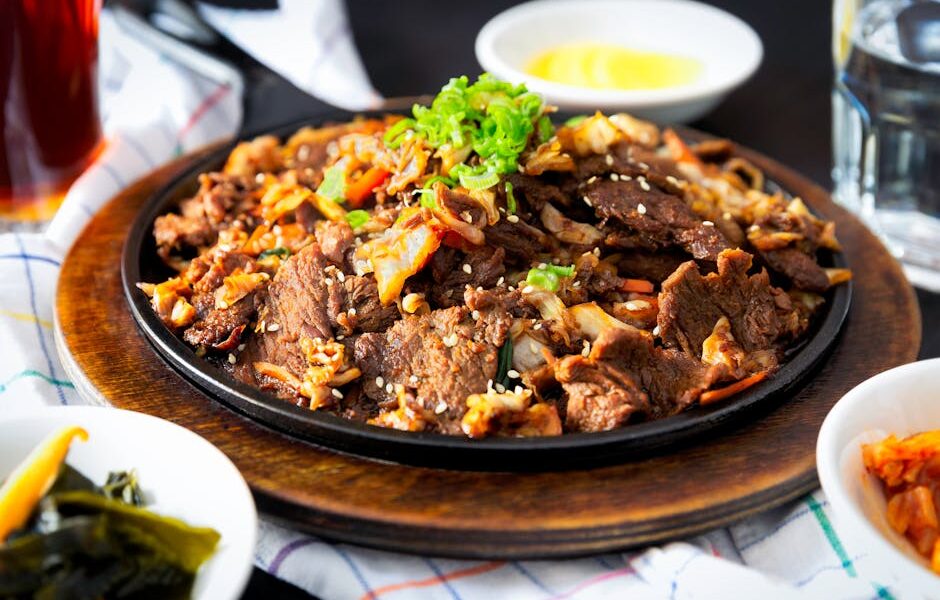
Bulgogi, which translates literally to ”fire meat” in Korean, is one of the most beloved and instantly recognizable dishes in Korean cuisine. Thin slices of beef are bathed in a glossy marinade of soy sauce, Asian pear, garlic, ginger, sesame oil, and sugar, then seared hot and fast until the edges caramelize into smoky, savory-sweet ribbons of flavor. It is the quintessential introduction to Korean cooking for many home cooks around the world and a permanent fixture on Korean BBQ menus everywhere.
While bulgogi has been served at royal banquets and family tables for over a thousand years, its appeal in 2026 has never been higher. A new generation of cooks is rediscovering Korean home cooking through K-dramas, K-pop, and the explosive popularity of Korean ingredients like gochujang and doenjang. The good news is that bulgogi is genuinely one of the easiest authentic Korean dishes to make at home. With a sharp knife, a hot pan, and a properly balanced marinade, you can put a restaurant-quality plate of caramelized beef on the table in under thirty minutes.
This complete guide walks you through every detail of authentic bulgogi: the right cut of beef, how to slice it thin enough at home without specialty equipment, the science behind the Asian pear marinade, three cooking methods (stovetop, grill pan, and outdoor grill), traditional accompaniments, regional variations, storage tips, and answers to the most common questions about Korean BBQ beef. Whether you serve it over rice in a bowl, wrap it in lettuce ssam-style, or grill it tableside on a cast iron plate, this is the only bulgogi recipe you will ever need.
What Is Bulgogi?
Bulgogi (불고기) is a Korean grilled or pan-fried beef dish made from thinly sliced cuts of beef that have been marinated in a sweet, savory, garlicky soy-based sauce. The name combines bul (불), meaning ”fire,” and gogi (고기), meaning ”meat.” Despite the name, modern bulgogi is just as often cooked indoors on a hot pan or specialized domed grill as it is over open flame.
The dish traces its origins to maekjeok, a skewered grilled meat from the Goguryeo era (37 BCE to 668 CE), and later to neobiani, a thinly sliced grilled beef dish served in the royal courts of the Joseon Dynasty. Modern bulgogi as we know it took shape in the twentieth century, when home cooks began layering the marinated beef onto domed cast-iron pans called bulgogi pan, allowing the juices to pool around the edges and serve as a built-in dipping sauce.
Two key elements define authentic bulgogi. First, the beef is sliced paper-thin against the grain so that it cooks in seconds and stays remarkably tender. Second, the marinade always contains some form of fruit puree, traditionally Asian pear or kiwi, whose natural enzymes tenderize the meat while balancing the saltiness of soy sauce with a clean, floral sweetness. This combination of slicing technique and enzymatic marinade is what gives bulgogi its signature melt-in-your-mouth texture.
Why You Will Love This Bulgogi Recipe
- Fast weeknight friendly. From the moment beef hits the pan, the entire dish takes under five minutes to cook. Total active time including marinade prep is around 25 minutes.
- Better than takeout. Restaurant bulgogi is often over-sweetened with corn syrup. Homemade bulgogi lets you balance soy, sugar, and pear to your taste, and use higher-quality beef than most Korean BBQ chain restaurants.
- Authentic flavor profile. Asian pear, sesame oil, toasted sesame seeds, and garlic give this recipe a true Seoul home-cooking flavor, not a westernized teriyaki imitation.
- Endlessly adaptable. Serve it over rice as a deopbap bowl, with lettuce wraps for ssam, in a sandwich, in tacos, or as the star of a full Korean BBQ spread with banchan.
- Crowd pleaser. Bulgogi is mild, sweet, and beloved by kids and adults alike. It is the perfect gateway dish for anyone new to Korean food.
Choosing the Right Cut of Beef
The traditional cut for bulgogi in Korea is ansim (안심), or beef tenderloin, but at most Korean butcher shops in the United States you will find chadolbaegi-style sliced brisket and especially ribeye labeled as bulgogi-cut. Ribeye is the most popular choice in modern Korean home cooking because it offers an ideal ratio of intramuscular marbling to lean muscle. The fat melts during the quick sear and bastes the beef from the inside.
If you cannot find ribeye, here are the next best options:
- Sirloin (top sirloin or tri-tip): Leaner than ribeye but still tender enough for bulgogi. Choose well-marbled cuts and slice extra thin.
- Top round or flank steak: Budget-friendly. They require longer marinating (at least 4 hours) to break down the connective tissue.
- Pre-sliced bulgogi beef: Most Korean supermarkets and many H Mart locations sell beef that is already sliced about 1/16-inch thick on long, frozen-firm sheets. This is the easiest option and is what most Korean home cooks buy.
- Chuck eye or shoulder: Works in a pinch, but trim aggressively and slice as thinly as possible.
Avoid skirt steak and hanger steak. While excellent for fajitas, their pronounced grain makes them chewy when sliced for bulgogi. Stay away from extra-lean cuts like eye of round, which become dry and tough at high heat.
How to Slice Beef Thin for Bulgogi
The single biggest secret to restaurant-quality bulgogi at home is slicing the beef so thin that it cooks in 30 seconds and stays buttery-tender. Korean BBQ shops use commercial meat slicers, but you do not need one. The home cook’s trick is to freeze the beef partially before slicing.
- Step 1: Place your beef on a sheet tray or plate and slide it uncovered into the freezer for 60 to 90 minutes. You want the meat to be firm to a finger press but not rock solid.
- Step 2: Identify the grain. The grain is the direction the muscle fibers run. You will slice across (perpendicular to) the grain.
- Step 3: Using a long, sharp knife (a chef’s knife or sashimi knife works great), slice the beef into pieces no thicker than 1/8 inch (3 mm). Thinner is better. Aim for 1/16 inch if you are confident with the knife.
- Step 4: Lay each slice flat. If the slices are wide, cut them into bite-sized strips about 2 to 3 inches long.
If the beef begins to thaw and shred under the knife, return it to the freezer for 15 minutes before continuing. Keep your knife sharp; a dull blade tears the meat and ruins the texture before it even hits the marinade. For more on Asian knife skills, see our guide on how to use a Chinese cleaver.
Bulgogi Ingredients
This recipe serves 4 people generously over rice or 6 as part of a larger Korean BBQ spread.
For the Beef
- 1.5 pounds (680 g) ribeye, sirloin, or pre-sliced bulgogi beef, sliced 1/8 inch thick against the grain
- 1 small yellow onion, halved and sliced thin
- 3 scallions, cut into 2-inch lengths and split lengthwise
- 1 medium carrot, julienned thin (optional, traditional)
For the Marinade
- 1/2 medium Asian pear (about 1/2 cup), peeled, cored, and grated on the small holes of a box grater (or pureed)
- 5 tablespoons (75 ml) Korean soy sauce or regular Japanese-style soy sauce
- 3 tablespoons (45 g) light brown sugar, packed
- 1 tablespoon (15 ml) honey or Korean rice syrup (mulyeot)
- 2 tablespoons (30 ml) toasted sesame oil
- 2 tablespoons (30 ml) mirin or dry sherry
- 6 garlic cloves, finely minced or grated
- 1 tablespoon fresh ginger, finely grated
- 1 tablespoon toasted white sesame seeds
- 1/2 teaspoon freshly cracked black pepper
- 1 tablespoon (15 ml) neutral oil such as grapeseed or avocado
For Serving
- Short-grain white rice, freshly steamed
- Red leaf, butter, or perilla (kkaennip) lettuce leaves
- Sliced fresh garlic and green chili (for ssam)
- Ssamjang or gochujang dipping sauce
- Banchan: kimchi, pickled daikon, seasoned spinach, bean sprouts
- Extra toasted sesame seeds and chopped scallion for garnish
Step-by-Step Cooking Instructions
Step 1: Make the Marinade (5 minutes)
In a medium bowl, combine the grated Asian pear, soy sauce, brown sugar, honey, sesame oil, mirin, garlic, ginger, sesame seeds, and black pepper. Whisk thoroughly until the sugar has dissolved and the marinade looks like a glossy, mahogany-brown slurry. Taste it. You should sense the bright sweetness of the pear first, then the deep umami of soy, then a quiet burn of garlic and ginger. Adjust with an extra teaspoon of sugar if it tastes too sharp, or a splash more soy if it tastes flat.
Step 2: Marinate the Beef (30 minutes to overnight)
Place the sliced beef in a large bowl or zip-top bag. Pour the marinade over the beef. Add the sliced onion, scallions, and carrot. Using clean hands, massage the marinade into the beef for about 30 seconds, separating any clumped slices. Cover and refrigerate for at least 30 minutes and up to 12 hours. The minimum 30 minutes will give you good flavor; 4 to 8 hours is the sweet spot for both flavor and tenderness.
Important: do not marinate longer than 24 hours. The enzymes in fresh Asian pear continue to break down the meat indefinitely, and the beef will turn mushy and lose its texture.
Step 3: Heat the Pan Until Smoking Hot
Place a large cast-iron skillet, carbon steel pan, or wok over high heat. Let it preheat for 2 to 3 full minutes. The pan must be ripping hot. Add 1 tablespoon of neutral oil and swirl it to coat. When the oil shimmers and the first wisp of smoke appears, you are ready. A cool pan steams the beef instead of searing it and gives you grey bulgogi with no caramelization. For more on this principle, see our guide on wok hei, the ”breath of the wok.”
Step 4: Sear the Beef in Batches (3 to 5 minutes)
Using tongs, lift a handful of beef and onion from the marinade, letting excess liquid drip off, and lay it flat in a single layer in the pan. Do not overcrowd. You should be able to see pan between the slices. Cook undisturbed for 60 to 90 seconds, until the bottom is deeply browned. Flip or toss the beef and cook 30 seconds more, just until no pink remains. Transfer to a serving platter and repeat with the remaining beef.
For the second and subsequent batches, add a small splash of the leftover marinade to the pan as the beef cooks. The marinade will rapidly reduce into a sticky, lacquered glaze that coats the meat in deep brown caramelization. This step is the difference between average bulgogi and the kind that disappears off the platter.
Step 5: Garnish and Serve
Pile the finished bulgogi onto a warm platter. Scatter with extra toasted sesame seeds and a generous handful of thinly sliced scallions. Serve immediately with hot rice, lettuce leaves for wrapping, a small bowl of ssamjang, and an assortment of banchan. The dish is best eaten at the table, family-style, while the beef is still sizzling.
Three Ways to Cook Bulgogi
| Method | Best For | Pros | Watch Out For |
|---|---|---|---|
| Cast iron skillet (stovetop) | Weeknight dinners, indoor cooking | Maximum caramelization, easy cleanup, no special equipment | Smoke; turn on the hood fan and open a window |
| Outdoor grill or BBQ | Summer gatherings, smoky flavor | Authentic charcoal flavor, large batches | Thin slices fall through grates; use a grill basket or perforated tray |
| Domed bulgogi pan | Tabletop dining, traditional presentation | Juices pool around the rim for dipping rice and lettuce wraps | Requires a portable butane burner; one-time investment in the pan |
For outdoor grilling, preheat the grill to high (about 500°F / 260°C). Place a cast iron griddle or grill basket directly on the grates and let it preheat for 5 minutes before adding beef. Cook in batches just as you would indoors. The radiant heat from charcoal or wood adds a smokiness you simply cannot replicate on a stovetop. Our complete guide to Korean BBQ at home walks through equipment and side dishes in more depth.
The Science of the Marinade
Asian pear is the secret ingredient that separates Korean home bulgogi from generic teriyaki-style beef. Asian pears (also called Korean pear or nashi) contain a protease enzyme called calpain, similar to the bromelain in pineapple and the actinidin in kiwi, but gentler. These enzymes cleave the long proteins in muscle fiber, transforming chewy beef into something almost butter-soft within an hour.
The pear also contributes natural fructose and sorbitol, sugars that caramelize aggressively under high heat. This is what gives properly cooked bulgogi its dark, glistening, almost lacquered crust. Brown sugar and honey provide additional caramelization while balancing the salty depth of soy sauce.
If you cannot find Asian pear, the best substitutes in order of preference are:
- 1/2 cup grated regular Bosc or D’Anjou pear plus 1 teaspoon extra sugar
- 1/2 cup grated tart apple (Granny Smith) with skin removed
- 1/4 cup pineapple juice (use sparingly; reduce marinating time to 20 minutes maximum)
- 1 kiwi, peeled and pureed (very strong; marinate no more than 15 minutes)
Essential Tips for Perfect Bulgogi
- Slice while semi-frozen. This is non-negotiable for home cooks without a deli slicer. Thinner beef cooks faster and tastes infinitely more tender.
- Always cut against the grain. Look at the lines of muscle fiber and cut perpendicular to them. This shortens the fibers and prevents chewiness.
- Use a screaming hot pan. A cool pan steams the beef and releases all the liquid. A blazing hot pan sears, caramelizes, and creates the deep umami crust.
- Sear in batches. Overcrowding drops the pan temperature and creates a soupy, grey result. Better to cook in three smaller batches than one giant mound.
- Reserve some marinade for finishing. Adding a spoonful of marinade in the last 30 seconds creates an instant glaze.
- Do not over-marinate. 30 minutes is enough; 4 to 8 hours is ideal; over 24 hours and the beef turns mushy.
- Add onions to the marinade, not on top. Onions sweeten as they soak and add a hidden layer of flavor to the beef.
- Toast your sesame seeds. Pre-toasted sesame seeds (or quickly toasted in a dry pan for 60 seconds) are dramatically more aromatic than raw seeds.
- Rest the beef for 60 seconds. Just one minute off heat lets the juices redistribute and the glaze set.
- Serve immediately. Bulgogi is a sizzling, just-cooked dish. It is great as leftovers, but at its absolute peak in the first ten minutes after the pan.
Bulgogi Variations
Spicy Bulgogi (Maeun Bulgogi)
For a spicy version, add 2 tablespoons of gochujang and 1 tablespoon of gochugaru (Korean red pepper flakes) to the marinade. The result is sweet, spicy, and deeply savory; a perfect counterpart to a cold beer.
Bulgogi Jeongol (Hot Pot Style)
Arrange marinated beef in a wide, shallow pan with sliced mushrooms, glass noodles, tofu, and lots of vegetables. Add a cup of beef broth and bring to a simmer at the table. This is the cozy winter version of bulgogi, half stir-fry and half stew.
Pork Bulgogi (Dwaeji Bulgogi)
Substitute thinly sliced pork shoulder or pork belly. Pork bulgogi is almost always made spicy with gochujang and gochugaru. It is slightly cheaper than beef bulgogi and equally popular in Korea.
Chicken Bulgogi (Dak Bulgogi)
Use thinly sliced boneless chicken thighs and reduce marinating time to 1 hour. Chicken bulgogi is a fantastic kid-friendly option and is often the lower-fat version served in Korean lunchboxes.
Bulgogi Bowls (Bulgogi Deopbap)
Serve sliced bulgogi over a bowl of rice with a runny fried egg, kimchi, julienned cucumber, and a drizzle of toasted sesame oil. This is the easiest weeknight format and a favorite in Korean lunch counters.
Bulgogi Cheesesteak
A Korean-American invention that has gone viral on social media: pile bulgogi into a toasted hoagie roll with melted American cheese, caramelized onions, and a dollop of kimchi mayo. Wildly delicious.
What to Serve with Bulgogi
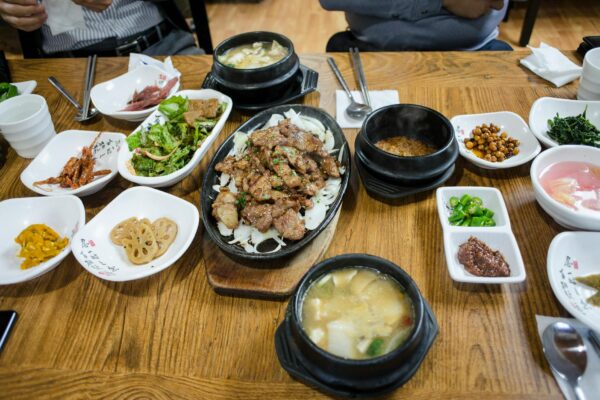
Bulgogi is rarely served alone in Korea. A traditional bulgogi meal includes rice, a number of banchan (small side dishes), and lettuce wraps. Here is a complete spread you can pull together:
- Steamed short-grain rice: The default base. Sushi rice or Korean white rice both work perfectly.
- Lettuce wraps (ssam): Red leaf or butter lettuce, with whole perilla leaves on the side. Wrap a slice of beef, a smear of ssamjang, a sliver of raw garlic, and a spoon of rice inside a leaf and eat in one bite.
- Kimchi: Crisp, tangy fermented napa cabbage cuts the richness of the beef. Try making your own with our kimchi recipe.
- Banchan: Seasoned spinach (sigeumchi namul), bean sprouts (kongnamul), pickled daikon (danmuji), spicy cucumber salad (oi muchim).
- Doenjang jjigae: A small bubbling pot of soybean paste stew on the side is the most classic pairing in a Korean home meal.
- Soju or beer: The traditional drink pairings. Light Korean lagers or cold soju cocktails balance the sweet-savory beef perfectly.
Nutritional Information
Approximate values per serving (recipe serves 4, beef only, not including rice or banchan):
| Nutrient | Amount per Serving | % Daily Value |
|---|---|---|
| Calories | 485 kcal | 24% |
| Total Fat | 28 g | 36% |
| Saturated Fat | 10 g | 50% |
| Cholesterol | 125 mg | 42% |
| Sodium | 1,180 mg | 51% |
| Total Carbohydrates | 18 g | 7% |
| Sugars | 14 g | — |
| Fiber | 1 g | 4% |
| Protein | 38 g | 76% |
| Iron | 4.2 mg | 23% |
| Vitamin B12 | 3.8 mcg | 158% |
Bulgogi is high in protein and iron and naturally low in carbohydrates if you skip the rice. To reduce sodium, you can use low-sodium soy sauce and cut total soy by 1 tablespoon. To reduce sugar, halve the brown sugar and rely on the natural sweetness of the pear.
Storage, Freezing, and Reheating
Refrigerator
Cooked bulgogi keeps for 3 to 4 days in an airtight container in the refrigerator. The flavor often deepens overnight, making leftover bulgogi excellent for next-day bowls, fried rice, or sandwiches.
Freezer
You can freeze bulgogi two ways. The first is to freeze the raw marinated beef in a zip-top bag, flat, for up to 2 months. Thaw overnight in the fridge before cooking. The second is to freeze cooked bulgogi in portion-sized containers for up to 3 months. Cooked bulgogi reheats beautifully and is a meal-prep staple in many Korean-American households.
Reheating
- Stovetop (best): Heat a non-stick pan over medium-high. Add bulgogi with 1 to 2 teaspoons of water and toss until heated through, about 90 seconds.
- Microwave: Cover and microwave on high for 60 to 90 seconds.
- Oven: 350°F (175°C) for 8 to 10 minutes, covered with foil.
Avoid reheating bulgogi multiple times; the high-sugar marinade can burn and the beef can dry out. Reheat only what you plan to eat in one sitting.
Common Mistakes to Avoid
- Cutting with the grain. This is the #1 reason home bulgogi turns out chewy. Always slice across the grain.
- Slicing too thick. Bulgogi should be paper-thin. If you cannot slice thin at home, buy pre-sliced bulgogi beef from a Korean market.
- Cooking on low heat. Low heat means braising, not searing. The beef will release water and you will lose the signature caramelized crust.
- Overcrowding the pan. One layer at a time. Always.
- Skipping the pear. The pear is the soul of bulgogi. If you skip it, you have made teriyaki, not bulgogi.
- Marinating overnight with kiwi or pineapple. Powerful enzymes will turn the beef into baby food. Use Asian pear or limit alternative fruits to short marination times.
- Skipping the rest after cooking. Even a 60-second rest helps the juices redistribute and the glaze set.
A Short History of Bulgogi
The deep history of bulgogi stretches back almost 2,000 years to the Goguryeo Kingdom, where a dish called maekjeok involved skewered, marinated beef grilled over an open fire. During the Joseon era (1392 to 1897), royal chefs refined this into neobiani (literally ”the thinly spread one”), where beef was tenderized by pounding, marinated in soy and sesame, and grilled on metal grates over hot coals. Neobiani was a luxury dish; beef was scarce on the Korean peninsula due to Buddhist influences against animal slaughter and the high cost of cattle.
The modern term ”bulgogi” began appearing in Korean dictionaries in the 1950s. After the Korean War, beef became more widely available, and tabletop grilling at restaurants exploded in popularity in postwar Seoul. The 1980s saw the rise of the domed bulgogi pan and the inclusion of vegetables, broth, and glass noodles in what is now called bulgogi jeongol.
Today, bulgogi is officially recognized as one of the world’s most delicious foods. CNN Travel named it #23 on its list of the world’s 50 best foods. It is one of the most ordered Korean dishes on global delivery apps, and it serves as the gateway dish that has introduced millions of non-Korean eaters to Korean cuisine.
Equipment You Will Need
- Sharp chef’s knife or sashimi knife: Essential for thin slicing.
- Cast iron skillet, carbon steel pan, or wok: Anything that holds high heat. Avoid non-stick coatings, which cannot get hot enough. See our best wok buying guide for recommendations.
- Box grater or microplane: For grating Asian pear, garlic, and ginger.
- Large mixing bowl or zip-top bag: For marinating.
- Tongs: For flipping beef quickly.
- Optional: domed bulgogi pan and butane burner for tabletop dining.
Frequently Asked Questions
What does bulgogi mean in Korean?
Bulgogi (불고기) means ”fire meat” in Korean. Bul means fire and gogi means meat. The name refers to the traditional method of cooking marinated meat over an open flame, although today bulgogi is just as often pan-fried indoors.
What is the difference between bulgogi and galbi?
Both are Korean marinated grilled beef, but they use different cuts. Bulgogi uses thinly sliced ribeye, sirloin, or brisket and is marinated in a soy-pear-garlic sauce. Galbi (or kalbi) uses bone-in or boneless short ribs cut thicker, typically marinated in a similar but sweeter sauce. Bulgogi cooks in seconds; galbi grills for several minutes per side. For a braised version of short ribs, see our galbi jjim recipe.
Can I make bulgogi without Asian pear?
Yes. The best substitutes are regular Bosc pear, Granny Smith apple, pineapple juice (small amount, brief marinade), or kiwi (very brief marinade). Each will give a slightly different flavor and tenderizing effect, but all approximate the function of the Asian pear.
How long should I marinate bulgogi?
The minimum is 30 minutes for good flavor. The ideal is 4 to 8 hours for maximum tenderness and depth. Do not exceed 24 hours, because the enzymes in fresh pear will eventually turn the meat mushy.
Is bulgogi spicy?
Classic bulgogi is not spicy. It is a sweet-savory dish dominated by soy, garlic, and pear. A spicy version called maeun bulgogi exists, made with gochujang and gochugaru, but it is a separate variation rather than the standard recipe.
What cut of beef is best for bulgogi?
Ribeye is the most popular choice for its marbling and tenderness. Top sirloin is a leaner alternative. For budget cooking, flank steak or top round works well with extra marinating time. Pre-sliced ”bulgogi beef” from Korean markets is the easiest option.
Can I make bulgogi ahead of time?
Yes. Marinate the beef up to 12 hours in advance. You can also freeze marinated raw beef for up to 2 months, or freeze cooked bulgogi for up to 3 months. For best texture, sear right before serving.
Is bulgogi healthy?
Bulgogi is rich in protein, iron, and B vitamins. It is moderate in fat depending on cut and high in sodium due to soy sauce. For a healthier version, use low-sodium soy, reduce sugar by half, choose lean sirloin, and serve with extra vegetables and lettuce wraps instead of large portions of rice.
Can I cook bulgogi in an air fryer?
You can, although the texture will be different. Spread marinated beef on a perforated air fryer tray in a single layer and cook at 400°F (200°C) for 6 to 8 minutes, tossing halfway. The result is a drier, slightly chewier bulgogi without the deep caramelization of a hot pan, but it is convenient and lower in fat.
What does bulgogi taste like?
Bulgogi tastes simultaneously sweet, savory, and umami-rich. The dominant flavors are caramelized soy sauce, toasted sesame, garlic, and the floral sweetness of Asian pear. Properly cooked bulgogi has a slightly smoky, almost charred edge from a hot pan, with a tender, almost buttery texture.
Can vegetarians or vegans make bulgogi?
Yes. Mushroom bulgogi is a popular vegetarian version, especially using king oyster mushrooms sliced thin or shredded with a fork to mimic beef texture. Marinate and sear exactly as you would beef. Soy curls, seitan, and firm tofu also work as plant-based alternatives.
What is ssamjang and how do I use it with bulgogi?
Ssamjang is a thick Korean dipping sauce made from fermented soybean paste (doenjang), gochujang, garlic, sesame oil, and aromatics. It is the traditional condiment for lettuce wraps. To eat bulgogi ssam-style, place a slice of beef on a lettuce leaf, top with a small dab of ssamjang, a sliver of raw garlic, and a spoon of rice. Fold the lettuce and eat in one bite.
Final Thoughts on Mastering Bulgogi at Home
Bulgogi is one of those rare dishes that delivers maximum flavor for minimum effort. Once you have made it a few times, you will internalize the rhythm: slice thin, marinate properly, sear blazing hot, and serve sizzling. The technique transfers directly to pork, chicken, and even mushroom variations, opening up an entire family of Korean recipes built on the same foundation.
The most important advice for new cooks is to take the slicing seriously. The single biggest leap in your bulgogi will not come from a more elaborate marinade or a fancier pan; it will come from learning to cut your beef paper-thin against the grain. Once that step is locked in, every subsequent batch will be tender, glossy, and irresistible.
Pair this with a steaming bowl of rice, a stack of crisp lettuce leaves, a generous spoon of kimchi, and a small dish of ssamjang, and you have a Korean home-cooked meal that rivals anything you would find on a busy street in Seoul. Make it on a Tuesday after work. Serve it to friends on a Saturday night. Pack the leftovers in bento boxes for the office. Bulgogi adapts to every occasion, which is exactly why it has remained one of the most beloved dishes in Korean cuisine for centuries and continues to win new fans worldwide in 2026.

Mei Lin Chen
Mei Lin Chen is an Asian food writer and recipe developer. Melbourne-raised and London-based, she has spent over a decade exploring the rice paddies, hawker stalls, and home kitchens of South-East and East Asia. Her recipes balance traditional technique with everyday practicality.