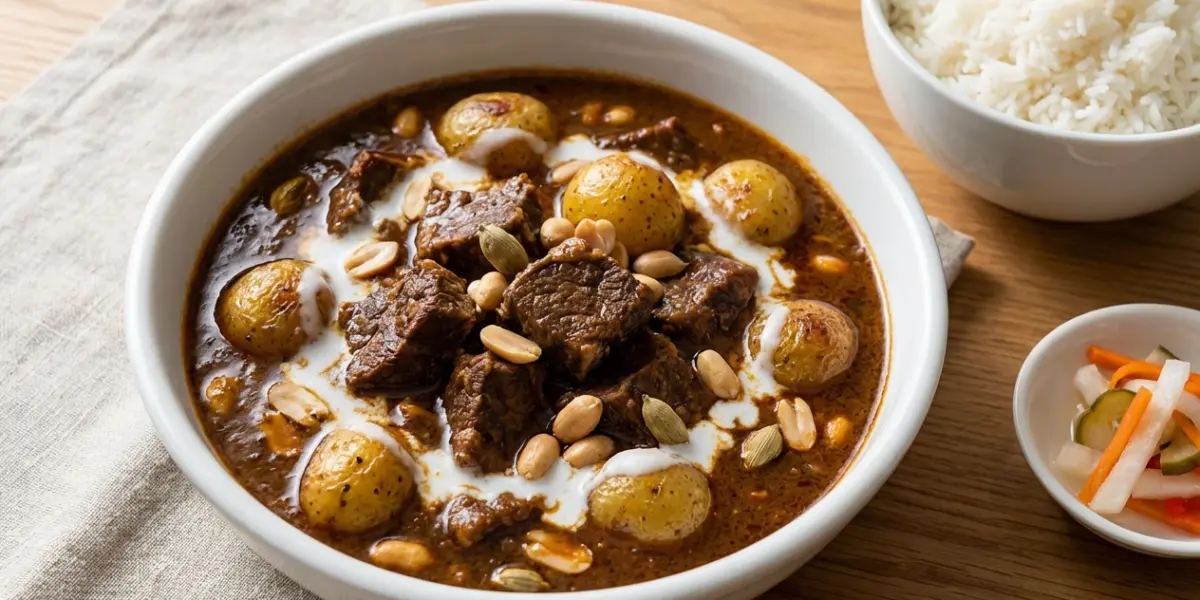
Massaman curry is one of Thailand’s most beloved dishes — a rich, gently spiced coconut curry with deep roots in Southern Thai cooking and centuries of cultural exchange. Unlike the fiery green or red curries you might associate with Thai cuisine, massaman is notably mild, aromatic, and almost sweet, drawing from Persian and Malay spice traditions that travelled along ancient trade routes. Once you make it from scratch, you’ll understand why it has been called one of the most delicious dishes in the world.
What Is Massaman Curry?
Massaman curry (แกงมัสมั่น) is a Southern Thai dish that originated in the Muslim communities of Thailand, which is reflected in its name — a local rendering of ”Mussulman,” an older word for Muslim. The dish is believed to have been introduced to Thailand as far back as the 17th century by Persian or Malay traders and diplomats, and it gradually became woven into the fabric of Southern Thai and Royal Thai cuisine.
What sets massaman apart from other Thai curries is its spice profile. The paste is built on warm, aromatic spices common in Persian and Indian cooking — cardamom, cinnamon, cloves, star anise, and cumin — rather than the fresh green chillies and kaffir lime that define other Thai curries. The result is a complex, layered sauce that is simultaneously rich from coconut milk, fragrant from toasted spices, and gently sweet from the addition of palm sugar and tamarind.
Traditionally, massaman is made with beef, which holds up beautifully to long, slow simmering. Chicken is also very common and cooks more quickly. The curry always includes waxy potatoes and roasted peanuts, which give it substance and texture. It is a celebratory dish in Thai Muslim communities, often prepared for weddings and religious festivals, and it occupies a place of pride on the Thai Royal court menu dating back hundreds of years.
Ingredients
For the Curry
- 700g (1.5 lb) beef chuck or chicken thighs, cut into large chunks (about 4cm / 1.5 inches)
- 400ml (1 can / 13.5 fl oz) full-fat coconut milk
- 250ml (1 cup) beef or chicken stock
- 300g (10 oz) waxy potatoes (such as Yukon Gold or Charlotte), peeled and quartered
- 1 medium brown onion, peeled and cut into wedges
- 80g (1/2 cup) roasted unsalted peanuts
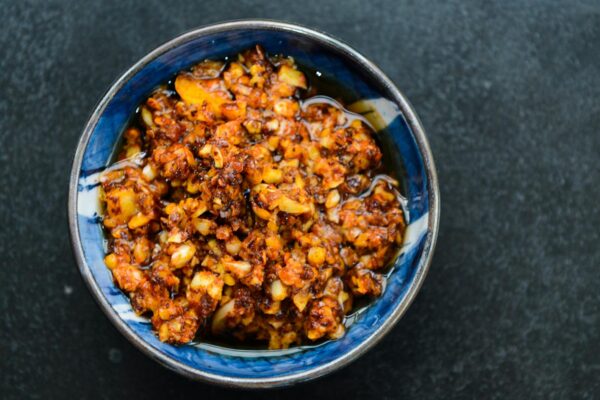
- 3–4 tablespoons massaman curry paste (store-bought or homemade, see note)
- 2 tablespoons palm sugar (or light brown sugar)
- 2 tablespoons fish sauce
- 1.5 tablespoons tamarind paste (or 2 tablespoons tamarind concentrate dissolved in water)
- 2 tablespoons vegetable or coconut oil
- 3 dried bay leaves
- 1 cinnamon stick
- 3 cardamom pods, lightly crushed
Key Ingredient Notes
- Massaman curry paste: Maesri and Mae Ploy are two widely available Thai brands that produce good quality massaman paste. If using Mae Ploy, start with 3 tablespoons as it is quite concentrated. Homemade paste, made with dried chillies, lemongrass, galangal, garlic, shallots, and the characteristic warm spices, will give a noticeably more vibrant flavour.
- Beef chuck: Choose a braising cut with some connective tissue. It will become tender and silky after 45–60 minutes of simmering. Avoid lean cuts, which will dry out.
- Tamarind paste: Use pure tamarind paste from a block dissolved in warm water, or a quality tamarind concentrate. Avoid ”tamarind sauce,” which is pre-sweetened.
- Palm sugar: Available in Asian grocery stores as discs or blocks. Light brown sugar is an acceptable substitute.
How to Make Massaman Curry
- Prepare your ingredients. Cut the beef (or chicken) into large chunks. Peel and quarter the potatoes. Cut the onion into wedges. Have all your aromatics measured and ready before you start cooking, as the process moves quickly once the paste hits the pan.
- Fry the curry paste. Heat the oil in a large heavy-bottomed pot or wok over medium heat. Add the massaman curry paste and fry, stirring constantly, for 2–3 minutes until it deepens slightly in colour and becomes very fragrant. This step is important — frying the paste in oil activates the fat-soluble aromatics and eliminates the raw taste.
- Add the coconut milk. Pour in about half the coconut milk (200ml / roughly 3/4 cup) and stir to combine with the paste. Bring to a gentle simmer and cook for 3–4 minutes, stirring frequently, until the coconut milk begins to reduce slightly and the oil starts to separate from the surface. This ”cracking” of the coconut milk concentrates the flavour.
- Brown the meat. Add the beef (or chicken) pieces to the pot and stir to coat in the paste and coconut milk mixture. Cook over medium-high heat for 4–5 minutes, turning the pieces, until lightly browned on the outside.
- Add liquids and whole spices. Pour in the remaining coconut milk and the stock. Add the bay leaves, cinnamon stick, and crushed cardamom pods. Stir well and bring the pot to a simmer.
- Season the curry. Add the fish sauce, palm sugar, and tamarind paste. Stir to dissolve the sugar. Taste the broth — it should have a good balance of savoury, sweet, and sour. Adjust with more fish sauce for saltiness, palm sugar for sweetness, or tamarind for acidity.
- Simmer low and slow (beef). If using beef, reduce the heat to low, cover the pot partially, and simmer for 40–50 minutes until the beef is nearly tender. For chicken thighs, the total simmering time will be 20–25 minutes. Stir occasionally and check that the liquid level is maintained — add a splash of water or stock if it reduces too much.
- Add the potatoes and onion. Add the quartered potatoes and onion wedges to the curry. Stir to submerge them in the sauce and continue simmering, uncovered, for a further 20–25 minutes until the potatoes are fully cooked through and the beef (if using) is very tender.
- Add the peanuts. Stir in the roasted peanuts during the last 5–10 minutes of cooking. This preserves some of their texture. If you prefer softer peanuts, add them earlier with the potatoes.
- Final seasoning. Taste the curry once more and adjust seasoning. The sauce should be thick, glossy, and deeply flavoured. Remove the whole spices (cinnamon stick, cardamom pods, bay leaves) before serving if preferred.
- Rest and serve. Allow the curry to rest off the heat for 5 minutes before serving. This allows the flavours to settle and the sauce to thicken slightly. Serve with jasmine rice or roti bread.
Tips for the Best Massaman Curry
- Don’t rush the paste. Frying the curry paste properly in oil — until it smells intensely fragrant and the colour deepens — is the foundation of a great curry. Cutting this step short results in a flat, slightly raw-tasting sauce.
- Balance the seasoning throughout. Massaman should have a complex interplay of sweet, sour, salty, and savoury. Taste the curry multiple times during cooking and make small adjustments. Fish sauce adds salt and depth; palm sugar tempers the heat and acidity; tamarind lifts the whole dish with brightness.
- Use waxy potatoes, not floury ones. Waxy varieties such as Yukon Gold, Charlotte, or new potatoes hold their shape during the long simmer and absorb the curry sauce beautifully. Floury potatoes like Russets will disintegrate and make the sauce starchy.
- Make it a day ahead. Massaman curry, like most braises, tastes significantly better the next day after the flavours have had time to meld and deepen. If you can, cook it the evening before and reheat gently before serving.
- Choose the right coconut milk. Full-fat coconut milk is essential for the richness and texture of massaman. Low-fat versions will produce a thin, watery curry that lacks body. Look for brands with a high coconut extract percentage — Thai brands such as Aroy-D or Chaokoh work very well.
Variations
Chicken Massaman Curry
Chicken thighs are the most popular substitute for beef. They stay moist and absorb the curry sauce well. Reduce the simmering time significantly — add the chicken to the paste and coconut milk, then add potatoes at the same time, simmering for 25–30 minutes total. Bone-in chicken thighs add extra flavour to the sauce, though boneless are easier to eat.
Lamb Massaman Curry
Lamb shoulder works beautifully in massaman and is particularly popular in Muslim communities in Malaysia and Southern Thailand. Cut lamb shoulder into 4–5cm (1.5–2 inch) chunks and treat it exactly as you would beef chuck, simmering for 50–60 minutes until very tender. The slightly gamey flavour of lamb pairs exceptionally well with the warm spice profile of the curry.
Vegetarian / Vegan Massaman
Replace the meat with a combination of firm tofu, sweet potato, and butternut squash. Use soy sauce or tamari in place of fish sauce (vegan fish sauce is also now widely available). Ensure your curry paste is vegan — some contain shrimp paste, so check the label or make your own. A handful of baby spinach added right at the end adds colour and freshness.
What to Serve With Massaman Curry
- Jasmine rice: The classic pairing. Steamed Thai jasmine rice is fragrant, slightly sticky, and perfect for soaking up the rich curry sauce. Rinse the rice well before cooking to remove excess starch.
- Roti bread: In the Muslim communities of Southern Thailand and Malaysia, massaman is traditionally served with roti canai (flaky, layered flatbread) for dipping into the sauce. Store-bought frozen roti canai is available at most Asian grocery stores and cooks in minutes.
- Cucumber salad: A simple Thai cucumber relish (ajad) — thinly sliced cucumber and shallots dressed with rice vinegar, sugar, and a pinch of salt — cuts through the richness of the curry beautifully and provides a refreshing contrast.
- Steamed vegetables: Lightly steamed bok choy, broccolini, or green beans alongside the curry add freshness and colour to the plate without competing with the flavour of the sauce.
Storage and Reheating
Massaman curry stores exceptionally well. Allow it to cool completely before transferring to an airtight container. It will keep in the refrigerator for up to 4 days. The flavour will actually improve after 24–48 hours as the spices continue to infuse into the sauce.
For longer storage, massaman freezes well for up to 3 months. Potatoes can become slightly grainy in texture after freezing, so if you plan to freeze the curry, consider leaving the potatoes out and adding freshly cooked potatoes when reheating. Store in individual portions for easy weeknight meals.
To reheat, place the curry in a saucepan over medium-low heat and warm gently, stirring occasionally, until heated through. Add a splash of water or coconut milk if the sauce has thickened too much during storage. Avoid boiling vigorously during reheating, which can cause the coconut milk to separate and the meat to toughen. The microwave works fine for single portions — cover and heat in 90-second intervals, stirring between each.