Last updated: March 29, 2026
Soy sauce is the single most important seasoning in Asian cooking. It is older than written Chinese history in its earliest paste forms, it is the backbone of Japanese, Korean, Chinese, Filipino, Indonesian, Malaysian, and Vietnamese kitchens, and it is now in nearly every American pantry. But the word ”soy sauce” hides an enormous family of liquids. A bottle of Kikkoman shoyu, a jar of Korean ganjang, a syrupy puddle of Indonesian kecap manis, and a thin Cantonese light soy are all called soy sauce in English, yet they behave so differently in a pan that swapping one for another can ruin a dish.
This guide breaks down what soy sauce actually is, where it comes from, the major regional varieties you will see on store shelves, how to read a label, how to store an open bottle, how to substitute when you run out, and five recipes that show off what good soy sauce can do. Use it as a working reference rather than a one-time read.
What Soy Sauce Actually Is
At its core, soy sauce is a fermented liquid seasoning made from four ingredients: soybeans, a grain (usually wheat, sometimes barley or rice), salt, and water. The transformation that turns those four humble inputs into a deep, brown, glossy sauce relies on a mold called Aspergillus oryzae, the same organism used to make miso, sake, and Japanese rice vinegar. In the soy sauce world this living culture is called koji, and it is the engine of the entire fermentation.
The process looks roughly the same across cultures. Cooked soybeans are mixed with roasted, cracked wheat and inoculated with koji spores. After a few days the koji breaks the soy protein down into amino acids, especially glutamate, the molecule responsible for savory umami flavor. This koji mass is then submerged in a salt brine to create a wet mash called moromi. Over the next several months to several years, lactic acid bacteria and yeasts continue to ferment the moromi, producing alcohol, aroma compounds, and the dark color we recognize. Finally the mash is pressed, the raw soy sauce is pasteurized, and it is bottled.
That is the traditional brewing path. The cheapest mass-market soy sauces skip months of fermentation entirely and instead use chemical hydrolysis, treating defatted soy meal with hydrochloric acid to release amino acids in days. The result is technically a soy-derived seasoning, but it tastes flat and slightly burnt next to a brewed bottle. Reading the label is the single most useful skill you can build as a buyer: look for the words ”naturally brewed” or ”traditionally brewed,” and an ingredient list that begins with whole soybeans rather than hydrolyzed vegetable protein.
History and Origin: From Jiang to Shoyu to Global Pantry Staple
Soy sauce traces its ancestry to ancient Chinese jiang, fermented pastes that predate the Han dynasty and were already documented more than two thousand years ago. The earliest jiang were not made from soybeans at all but from meat, fish, and grain. As soybean cultivation spread across northern China, soy-based jiang became cheaper, more reliable, and eventually dominant. By the sixth century, the Chinese text Qimin Yaoshu described detailed methods for fermenting soybeans with salt and grain, methods that look strikingly close to modern small-batch production.
Buddhist monks carried Chinese fermentation traditions to Japan in the seventh century, where the paste evolved into both miso (the paste) and tamari (the liquid that pooled on top of fermenting miso). Tamari is therefore the original Japanese soy sauce. Centuries later, around the Kamakura era, a monk named Kakushin returned from China with a refined brewing technique that added roasted wheat to the soybeans. That wheat-and-soy version became shoyu, and the small town of Noda eventually grew into the modern Kikkoman empire.
Korea took a different path. The peninsula’s national fermentation tradition is built around meju, blocks of cooked, mashed, and aged soybeans that are dropped into salt brine. The liquid that develops becomes Korean soy sauce, ganjang, and the solids become doenjang, the country’s beloved fermented soybean paste. The two products are siblings born from the same pot. Southeast Asia, meanwhile, developed its own sweet, dark soy sauces. Indonesia’s kecap manis is a syrupy palm-sugar-laced version that gave the English word ”ketchup” its origin.
Soy sauce arrived in Europe through Dutch traders in the seventeenth century, who shipped it from Japan to Holland and then on to the rest of the continent. Louis XIV reportedly used it at Versailles. By the late nineteenth century it was in the American pantry, and by the late twentieth century Kikkoman alone was producing it on industrial scale in Wisconsin. Today soy sauce is one of the most widely consumed condiments on the planet, second only to salt.
How Soy Sauce Is Made: Koji, Moromi, and Time
Understanding production helps you understand price, flavor, and shelf behavior. A well-made bottle is the product of three biological stages. Stage one is the koji stage, lasting roughly two to three days. Steamed soybeans are mixed with roasted, cracked wheat and dusted with Aspergillus oryzae spores. The mixture is held warm and humid while the mold blooms across every surface, secreting enzymes that begin to dismantle proteins and starches.
Stage two is the moromi stage. The koji mash is mixed with a heavy salt brine, around eighteen to twenty percent salinity, and transferred to large cedar barrels or stainless steel vats. The salt is critical because it suppresses spoilage bacteria while allowing salt-tolerant yeasts and lactobacilli to thrive. Over six months to four years (cheaper bottles are pulled in under a year, premium bottles age much longer), the moromi develops alcohol, acids, esters, and the deep mahogany color we associate with finished soy sauce.
Stage three is pressing and pasteurization. The fermented moromi is wrapped in cloth and pressed to separate the liquid from the spent solids. The raw soy sauce is then heat-treated, both to kill remaining yeasts and to develop the cooked, caramel-leaning aromas you smell when you open a fresh bottle. Premium bottles labeled nama shoyu or ”unpasteurized” skip this last step and ship cold; they taste brighter but spoil faster.
Major Varieties of Soy Sauce
Asking a Cantonese cook, a Tokyo grandmother, and a Jakarta street vendor what soy sauce tastes like will get you three completely different answers. Below is a working map of the most important regional types you will encounter.
Chinese Soy Sauces
Light soy sauce (sheng chou) is the everyday workhorse. It is thinner, saltier, and lighter in color than dark soy, and it is the soy you reach for when you want to season without darkening the dish. Use it in stir-fries, marinades, and dipping sauces.
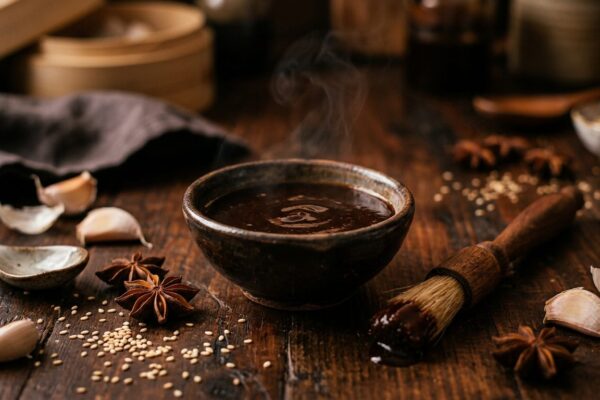
Dark soy sauce (lao chou) is aged longer, thicker, slightly sweet from added molasses or caramel, and dramatically darker. A teaspoon will paint a wok of noodles deep mahogany. It is essential for red-braised dishes, lo mein, and anywhere you want color more than salt.
Mushroom soy sauce is a dark soy infused with straw mushroom extract. It is the standard finishing soy for many Cantonese vegetarian dishes and gives a deeper, woodsier umami.
Double-fermented soy sauce takes a finished soy sauce and uses it as the brine for a second round of fermentation rather than using salt water. The result is intensely savory and is prized in southern Chinese cooking.
Japanese Soy Sauces
Koikuchi is the standard ”dark” Japanese soy sauce and accounts for over eighty percent of Japanese consumption. It is the bottle you grab off the shelf when a recipe says ”shoyu.” It is balanced, fragrant, and roughly half soybean and half wheat.
Usukuchi is the light-colored soy sauce from the Kansai region around Kyoto and Osaka. It is actually saltier than koikuchi but lighter in color, so it seasons clear soups and dashi-based dishes without staining them brown.
Tamari is brewed with little or no wheat. It is thicker, darker, less aromatic, and more deeply umami than shoyu. Tamari is the go-to for gluten-free cooks, and it pairs especially well with sashimi.
Shiro shoyu is ”white” soy sauce made mostly from wheat with very little soybean. It is pale amber, delicately sweet, and used by chefs who want soy flavor without color, particularly in chawanmushi, dashi-based broths, and pickling brines.
Saishikomi is ”twice-brewed” soy sauce, made by using finished soy sauce instead of brine in the second fermentation. It is rich, almost balsamic-like, and used as a finishing sauce for raw fish.
Korean Soy Sauces
Guk-ganjang (soup soy sauce) is the traditional Korean ganjang born as a byproduct of doenjang making. It is light in color, very salty, and used to season soups, banchan, and braises where color must stay clean.
Jin-ganjang is the everyday brewed Korean soy sauce, closer in style to Japanese koikuchi, used in marinades, dipping sauces, and braises like galbi jjim.
Yangjo-ganjang is the premium brewed Korean style, fermented for longer and prized for its complexity.
Southeast Asian Soy Sauces
Kecap manis is the sweet Indonesian soy, thickened to a syrup with palm sugar and aromatics. It is what gives nasi goreng its lacquered color.
Kecap asin is the salty Indonesian counterpart, thinner and closer to Chinese light soy.
Toyomansi is the Filipino blend of soy sauce and calamansi citrus, used as a tabletop dip.
Thin Thai soy sauce (si-iu khao) is similar to Chinese light soy, while black sweet soy (si-iu wan) is closer to kecap manis.
Comparison Table: Soy Sauce Varieties at a Glance
| Variety | Origin | Color | Salt Level | Best Use |
|---|---|---|---|---|
| Light soy (sheng chou) | China | Reddish brown | High | Stir-fries, dips, marinades |
| Dark soy (lao chou) | China | Near black | Medium | Braises, lo mein, color |
| Koikuchi shoyu | Japan | Deep brown | Medium-high | Everyday Japanese cooking |
| Usukuchi shoyu | Japan (Kansai) | Light amber | Very high | Clear soups, dashi dishes |
| Tamari | Japan | Very dark | Medium | Sashimi, gluten-free cooking |
| Shiro shoyu | Japan | Pale gold | Medium | Pickling, light broths |
| Guk-ganjang | Korea | Light brown | Very high | Korean soups and banchan |
| Jin-ganjang | Korea | Dark brown | Medium | Marinades, braises |
| Kecap manis | Indonesia | Black syrup | Low (very sweet) | Nasi goreng, satay glaze |
| Toyomansi | Philippines | Brown, citrus-tinged | Medium | Dipping sauce |
How to Buy Soy Sauce: Reading the Label
Walk into a well-stocked Asian grocery and you will face a wall of soy sauce bottles. A few label-reading habits will steer you to a good one every time.
Look for ”naturally brewed” or ”traditionally brewed.” This phrase means the manufacturer used koji and time rather than acid hydrolysis. In Japan, the legal term is honjozo; in China, look for the equivalent Mandarin phrase niang zao. If a label boasts ”soy sauce flavor” or lists hydrolyzed vegetable protein near the top, walk away.
Check the ingredient order. A great bottle reads: water, soybeans, wheat, salt. Some premium bottles add nothing else. Watch for added sugar, color, caramel, MSG, sodium benzoate, or unidentified ”flavoring.” Sweet styles like kecap manis legitimately list palm sugar; everyday brewed soy should not.
Note whether it is whole soybean or defatted. Premium bottles, particularly Japanese ones, will specify marudaizu (whole soybean) versus dasshi daizu (defatted soybean meal). Whole-soybean bottles are mellower, rounder, and more expensive.
Match the bottle to the dish. If you mostly cook Japanese, a Kikkoman or Yamasa koikuchi is the right baseline. If you mostly cook Chinese, you want both a light and a dark soy on your shelf; Pearl River Bridge, Lee Kum Kee Premium, and Wan Ja Shan are reliable. If you cook Korean, get a jin-ganjang (Sempio Jin or Chung Jung Won) for braises plus a guk-ganjang for soups. If you cook Indonesian, ABC and Bango are the dominant kecap manis brands.
Lower-sodium bottles are real. Reduced-sodium soy sauce usually has about thirty-five to forty percent less salt than standard. The flavor is slightly thinner but works fine in most cooked applications.
Storage Tips: How Long Does Soy Sauce Actually Last?
Soy sauce is so heavily fermented and so salty that it does not really ”go bad” in a dangerous sense. It will not grow mold or harbor pathogens at typical room temperature. What it does is oxidize. Once you crack the seal, the volatile aromatics start to evaporate, the color deepens, and the bright top notes flatten out. After about a year of being open at room temperature, a bottle of shoyu will taste noticeably duller than the day you bought it.
Use these rules of thumb. Unopened, soy sauce lasts two to three years past the printed best-by date with little loss in quality. Opened and refrigerated, premium and naturally brewed bottles hold their aroma for about six months and remain perfectly usable for a year or more. Opened and stored on the counter, the bottle stays safe indefinitely, but flavor starts to slip after one to two months. The fix is simple: keep your daily-use bottle in the fridge. Many Japanese premium brands now sell in airless dispensers that keep oxygen out entirely.
If you see white film on the surface, that is usually a harmless yeast called kahm yeast, particularly common on unpasteurized bottles. Skim it off; the soy below is fine. If you see actual fuzzy mold or smell something sour and off, discard the bottle.
Soy Sauce Substitution Table
Out of your usual bottle, cooking for someone with a soy allergy, or trying to lower sodium? Use this table as a starting point. Note that none of these are perfect one-to-one swaps; flavors will shift.
| Substitute | Ratio | Best For | What Changes |
|---|---|---|---|
| Tamari | 1:1 | Almost any dish; gluten-free | Slightly deeper, less aromatic |
| Coconut aminos | 1:1 (add pinch of salt) | Soy-free and paleo cooking | Noticeably sweeter, less salty |
| Fish sauce | 1:2 (half the amount) | Southeast Asian dishes | Funkier, pungent, much saltier |
| Worcestershire sauce | 1:1 | Marinades, glazes | Tangier, contains anchovy |
| Maggi seasoning | 1:1 | Stir-fries, broths | Funkier, more aggressive |
| Miso paste + water | 1 tbsp miso + 1 tbsp water = 1 tbsp soy | Soups, glazes | Thicker, less pourable |
| Liquid aminos (Bragg’s) | 1:1 | General use, lower sodium | Slightly sweeter, gluten-free |
| Mushroom broth + salt | 1 cup broth + 1 tsp salt per 1/4 cup soy | Soy-free vegan cooking | Lighter color, less depth |
| Anchovy paste + water | 1 tsp paste + 2 tbsp water per 1 tbsp soy | Pasta sauces, dressings | Fishier, saltier |
| Homemade DIY mix | Mix to taste | Emergencies only | Less authentic, but workable |
For a more detailed breakdown of substitutes by use case, see our guide to soy sauce substitutes.
Nutritional Benefits and Considerations
Soy sauce is a low-calorie seasoning. A tablespoon contributes roughly eight to ten calories, virtually no fat, about one gram of carbohydrate, and two grams of protein. The real number to watch is sodium. A standard tablespoon contains around 900 to 1,000 milligrams of sodium, close to half of the American Heart Association’s daily recommended limit. Reduced-sodium versions cut this by about 35 to 40 percent.
On the upside, brewed soy sauce contains free amino acids, including glutamate (the source of its umami flavor), small amounts of B vitamins, and trace minerals like manganese and phosphorus. Fermentation also produces antioxidants and small quantities of isoflavones from the soybeans. Several Japanese studies have suggested that the polysaccharides in soy sauce may have mild anti-allergy and digestive benefits, though the amounts you would consume in cooking are too small to treat soy sauce as a health food.
If you have soy or wheat allergies, read labels carefully. Most standard shoyu contains wheat. Genuine tamari is brewed without wheat (or with trace amounts), but always check for the gluten-free certification mark. For soy allergies, coconut aminos are the most popular substitute. Anyone managing blood pressure or kidney conditions should track soy sauce as a major sodium source.
Cooking with Soy Sauce: Five Essential Recipes
The fastest way to understand how each style of soy sauce behaves is to cook with it. These five recipes range from a five-minute dressing to a multi-step braise, and together they put light soy, dark soy, shoyu, and ganjang through their paces.
1. Soy Sauce Eggs (Shoyu Tamago)
Soft-boiled eggs marinated in a soy-mirin-sake bath are the ramen topping that proves how soy sauce can transform a single ingredient. Bring six large eggs to a gentle boil for exactly six minutes thirty seconds, then plunge them into ice water. Peel carefully. In a sealable bag combine 1/2 cup koikuchi shoyu, 1/2 cup water, 1/4 cup mirin, 2 tablespoons sake, and 1 tablespoon sugar. Add the eggs, press out the air, and refrigerate for 8 to 24 hours, flipping the bag halfway. The whites turn deep mahogany while the yolks stay jammy. Serve over ramen, rice, or noodle bowls.
2. Cantonese Soy Sauce Pan-Fried Noodles (Si Yau Chow Mein)
This is the dish that shows off the difference between light and dark soy. Boil 1 pound fresh thin Hong Kong egg noodles for 30 seconds, drain, and toss with 1 teaspoon sesame oil. Heat a wok over high heat with 3 tablespoons neutral oil and pan-fry the noodles in a flat cake for 3 minutes per side until crisp and golden. Push to one side, add 1 cup julienned yellow onion, 1 cup mung bean sprouts, and 4 scallions cut into 2-inch lengths. In a small bowl whisk 2 tablespoons light soy sauce, 1 tablespoon dark soy sauce, 2 teaspoons sugar, and 1 teaspoon sesame oil. Pour over the noodles, toss aggressively for 30 seconds, and plate. Light soy seasons, dark soy paints, sesame oil perfumes. See our stir-fry guide for wok technique.
3. Korean Soy-Braised Beef (Jangjorim)
A classic banchan that keeps in the fridge for two weeks and gets better with time. Bring 2 pounds beef brisket or eye of round, 8 cups water, 1 onion, 6 garlic cloves, 1 inch ginger, and 1 tablespoon whole black peppercorns to a boil. Skim, then simmer for 1.5 hours. Remove the beef, reserve 2 cups of the broth, and shred the meat against the grain into thick strips. Combine the reserved broth with 1/2 cup jin-ganjang, 1/4 cup sugar, 2 tablespoons mirin, and 6 smashed garlic cloves. Add the beef back along with 12 hard-boiled quail eggs (or 6 regular). Simmer for 25 minutes until the liquid reduces to a syrup. Serve cold or at room temperature with rice.
4. Shanghai Red-Braised Pork Belly (Hong Shao Rou)
The dish Mao Zedong reportedly ate every day, and the clearest argument for keeping dark soy in your pantry. Cut 2 pounds skin-on pork belly into 1.5-inch cubes. Blanch in boiling water for 3 minutes, drain. In a heavy pot, heat 2 tablespoons neutral oil with 3 tablespoons sugar over medium heat until the sugar caramelizes to a deep amber. Add the pork belly and turn to coat. Pour in 1/4 cup Shaoxing wine, 3 tablespoons light soy sauce, 2 tablespoons dark soy sauce, 1 inch ginger sliced, 4 garlic cloves, 2 star anise, 1 cinnamon stick, and enough water to nearly cover. Bring to a boil, cover, and simmer for 75 minutes. Uncover, raise heat, and reduce until the sauce coats the meat in a glossy lacquer. Read more in our red braising guide.
5. Japanese Cold Tofu with Soy Dressing (Hiyayakko)
The simplest recipe in this guide and the one that exposes a bad bottle of soy sauce fastest. Drain one 14-ounce block of silken tofu and slice into four squares. In a small bowl whisk 3 tablespoons premium koikuchi or tamari, 1 teaspoon grated ginger, 1 teaspoon finely sliced scallion, and a few drops of toasted sesame oil. Top each tofu square with a generous spoonful of dressing, a pinch of bonito flakes, and a thin sheet of toasted nori. Eat with a cold beer on a hot night. If your soy sauce tastes harsh or one-dimensional here, it is time for a new bottle.
Cooking Techniques: Getting the Most from Soy Sauce
Three habits separate cooks who use soy sauce as a generic salty splash from those who use it as a foundation flavor.
Add it to the wok, not on top of the food. When stir-frying, drizzle soy sauce around the hot edge of the wok rather than over the food. The contact with the metal triggers a flash of Maillard browning, releasing toasted, almost caramel-like aromas that you cannot get any other way. This is the heart of wok hei, the breath of the wok.
Match darkness to dish. Use light soy when you are seasoning and want minimal color shift (steamed fish, dipping sauces, clear soups). Use dark soy when you want the dish to look mahogany (lo mein, red-braised meats, fried rice meant to look brown rather than yellow). Use both in tandem for stir-fries and noodles, with light soy doing the seasoning and a teaspoon of dark soy adding visual depth.
Reduce, do not just pour. Soy sauce becomes a different ingredient when you reduce it. A simple glaze of 1/2 cup soy sauce, 1/4 cup mirin, and 2 tablespoons sugar simmered to syrup is the base of teriyaki and a dozen other Japanese sauces. Reducing concentrates the umami and tames the raw salt edge.
Frequently Asked Questions
Is soy sauce gluten-free?
Most soy sauce contains wheat and is therefore not gluten-free. The exception is tamari, which is traditionally brewed with little or no wheat. Look for a ”certified gluten-free” label since some tamari brands still include a small amount of wheat. Coconut aminos and Bragg’s liquid aminos are reliably gluten-free.
Does soy sauce need to be refrigerated after opening?
It is safe at room temperature but tastes better refrigerated. Cold storage slows the oxidation and aroma loss that flatten an open bottle within a few months. Premium bottles, particularly unpasteurized nama shoyu, must be refrigerated.
What is the difference between soy sauce and tamari?
Tamari is a Japanese soy sauce brewed with little to no wheat. It is darker, thicker, less aromatic, and more deeply savory than standard shoyu. The lack of wheat also makes it the default choice for gluten-free cooks. Substitute tamari one-to-one for soy sauce in most recipes.
What is the difference between light and dark soy sauce?
In Chinese cooking, light soy sauce (sheng chou) is the thinner, saltier, lighter-colored everyday seasoning. Dark soy sauce (lao chou) is aged longer, often sweetened with molasses, and is dramatically darker and slightly thicker. Use light soy for seasoning, dark soy for color. They are not interchangeable.
Can soy sauce go bad?
It rarely spoils in a dangerous way. The high salt content suppresses harmful bacteria. What does happen is gradual oxidation, which dulls the aroma and deepens the color. An opened bottle is at its best for about six months in the fridge, and remains usable for one to two years. Discard if you smell anything sour, see fuzzy mold, or notice an off chemical smell.
Why is some soy sauce so much more expensive?
Three factors: ingredients, time, and process. Premium bottles use whole soybeans rather than defatted soybean meal, ferment for one to four years rather than three to six months, and skip chemical hydrolysis. A bottle that took three years to brew and is shipped from a small family kura in Japan will cost ten to twenty times what a mass-market American supermarket brand costs. The difference is real but most pronounced in raw applications like sashimi.
Can I use Japanese soy sauce in Chinese recipes?
Yes, but understand the trade-off. Japanese koikuchi is roughly between Chinese light soy and dark soy in color and salt. It will season Chinese stir-fries adequately, but you will miss the visual punch of dark soy in red-braised dishes and lo mein. If you cook both cuisines often, keep a bottle of each.
Is naturally brewed soy sauce healthier?
Nutritionally the differences are small. Naturally brewed soy sauce contains more amino acid diversity, modest amounts of antioxidants from fermentation, and no chloropropanols (a class of compounds that can form during chemical hydrolysis of acid-treated soy sauce). For taste and quality, brewed soy is clearly superior. For health alone, the main number to watch in any soy sauce is sodium.
What is the best soy sauce brand to buy?
For Japanese cooking, Kikkoman, Yamasa, and Higashimaru are dependable supermarket brands, while Yugeta, Kishibori, and Yamaroku represent the premium small-batch category. For Chinese cooking, Pearl River Bridge, Lee Kum Kee Premium, and Wan Ja Shan are all solid. For Korean, Sempio Jin and Chung Jung Won. For Indonesian kecap manis, ABC and Bango. As a general rule, the small-print ”naturally brewed” label is more important than the brand name.
Can I make soy sauce at home?
Technically yes, but it is a year-long commitment requiring koji spores, food-grade fermentation vessels, climate control, and patience. A few home fermenters do it, and the results can be excellent. For most cooks, the better project is making your own miso or doenjang, which uses the same fermentation logic on a shorter timeline.
Pairing Soy Sauce with Other Pantry Staples
Soy sauce is rarely used alone. It is the salt in a flavor framework, and great Asian cooking comes from how you pair it. A few high-impact partnerships to keep in mind: soy plus mirin plus sake equals the Japanese trinity that underpins teriyaki, nikujaga, and shoyu ramen tare. Soy plus sugar plus vinegar equals the sweet-and-sour scaffolding behind Chinese and Filipino classics. Soy plus garlic plus ginger plus sesame oil is the universal Korean and Chinese marinade base. Soy plus citrus (yuzu, calamansi, lime) is the foundation of ponzu, toyomansi, and a hundred dipping sauces.
Knowing these patterns means you can improvise. A piece of fish, a splash of soy, a squeeze of yuzu, and a grating of fresh ginger is dinner. A glug of soy sauce, a spoon of hoisin, and a slick of oyster sauce is the universal Cantonese stir-fry seasoning. A teaspoon of soy stirred into hot rice with a raw egg and a dab of butter is a Japanese breakfast that costs almost nothing and tastes like ten times its price.
The Bottom Line
Soy sauce is the most versatile, most foundational, most quietly important ingredient in Asian cooking. Buy a naturally brewed bottle that matches the cuisine you cook most. Keep a light and a dark on hand if Chinese cooking is in your weekly rotation. Refrigerate the bottle you use every day. Add it to the hot side of the wok rather than the top of the food. Reduce it when you want depth. Cut it with mirin, sugar, or citrus when you want balance. Treat the bottle as a living ingredient, not a generic seasoning, and the dishes you make will be unrecognizable next to the ones you used to make with whatever salty brown liquid was on hand.
For more on Asian pantry essentials, explore our guides to miso paste, fish sauce, rice vinegar, and oyster sauce. Each one builds on the same fermentation principles as soy sauce and unlocks a different region of the Asian flavor map.

Mei Lin Chen
Mei Lin Chen is an Asian food writer and recipe developer. Melbourne-raised and London-based, she has spent over a decade exploring the rice paddies, hawker stalls, and home kitchens of South-East and East Asia. Her recipes balance traditional technique with everyday practicality.