Last updated: March 14, 2026
Georgian food is one of the world’s great undiscovered cuisines — a vibrant tradition built on walnuts, herbs, cheese, and spice that has been quietly influencing kitchens across Europe and Asia for centuries. Nestled at the crossroads of Eastern Europe and Western Asia, the Republic of Georgia has developed a culinary identity so distinct and deeply rooted that UNESCO has recognized its winemaking traditions as intangible cultural heritage. From the cheese-filled bread known as khachapuri to the aromatic walnut paste called bazhe, Georgian cuisine offers a depth of flavor that rivals any of the world’s best-known food cultures.
If you have ever tried Turkish food or Persian food and enjoyed their layered spice profiles, Georgian cuisine will feel like a thrilling new chapter in the same story. This guide covers everything you need to know: the history and regional variations, the essential ingredients to stock, the must-try dishes, key cooking techniques, and practical tips for bringing Georgian flavors into your own kitchen.
What Is Georgian Cuisine? A Brief History
Georgian cuisine (საქართველოს სამზარეულო) is the traditional cooking of Georgia, a small country of roughly 3.7 million people located in the South Caucasus region between the Black Sea and the Caspian Sea. Its food traditions stretch back thousands of years, shaped by the country’s position on ancient trade routes connecting Asia, Europe, and the Middle East.
Archaeological evidence shows that Georgians were among the earliest winemakers in human history, with grape residue found in clay vessels (qvevri) dating back to approximately 6000 BCE. This eight-thousand-year winemaking tradition is not just a historical footnote — it remains central to Georgian food culture today. Wine is not merely a beverage in Georgia; it is woven into the fabric of feasting, toasting, and hospitality.
Georgia’s location on the Silk Road meant that spices, techniques, and ingredients flowed through the region for millennia. Persian, Ottoman, Arab, and Mongol influences all left their mark, yet Georgian cuisine maintained a remarkably independent identity. The country’s mountainous terrain created isolated valleys where unique regional cooking styles developed and persisted.
The Georgian feast, called a supra, is the ultimate expression of the country’s food culture. Led by a toastmaster known as the tamada, a supra can involve dozens of dishes, hours of toasting, and an extraordinary volume of food and wine. The supra is not just a meal — it is a social institution that reinforces community bonds, celebrates milestones, and honors guests. The Georgian saying ”a guest is a gift from God” reflects how seriously hospitality is taken.
Regional Cuisines of Georgia
Despite its small size, Georgia has remarkable culinary diversity across its regions. The country’s dramatic geography — from Black Sea coastline to Caucasus mountain peaks over 5,000 meters high — creates distinct microclimates and agricultural traditions that shape local cooking.
Western Georgia (Imereti, Samegrelo, Guria, Adjara)
Western Georgian cuisine tends toward lighter, more herbaceous dishes. The subtropical Black Sea coast produces an abundance of corn, walnuts, hazelnuts, citrus, and tea. Cornbread (mchadi) and corn porridge (ghomi) replace wheat bread as daily staples. The region is famous for its extensive use of walnut-based sauces and pastes. Samegrelo (Mingrelia) is known for its spicier food, particularly the fiery adjika chili paste and elarji, a stretchy cheese-corn porridge. Adjara, on the coast, gives us the boat-shaped Adjarian khachapuri topped with egg and butter — perhaps the single most iconic Georgian dish worldwide.
Eastern Georgia (Kakheti, Kartli, Tusheti)
Eastern Georgia has a more continental climate and its cuisine reflects this with heartier, wheat-based dishes and more meat-centric cooking. Kakheti, Georgia’s premier wine region, is the birthplace of qvevri winemaking. The food here features more grilled meats, rich stews, and wheat bread (shoti or puri baked in a tone oven). Kartli, the central region around Tbilisi, blends eastern and western traditions. The mountainous Tusheti region has its own distinct dairy-heavy cuisine, including aged cheeses and a unique cottage cheese called dambal khacho.
Southern Georgia (Meskheti, Javakheti)
Southern Georgia’s high plateau cuisine shows stronger influences from neighboring Turkey and Armenia. Dishes tend to be simpler but no less flavorful, with more emphasis on legumes, dried herbs, and preserved foods suited to the harsh winters at high elevation.
Essential Georgian Ingredients
Georgian cooking relies on a distinct pantry of ingredients, many of which may be unfamiliar to Western cooks but are increasingly available at specialty stores and online. If you already cook Asian food regularly, you will find the emphasis on fresh herbs, fermented condiments, and aromatic spice blends pleasantly familiar.
| Ingredient | Georgian Name | Description | Common Uses |
|---|---|---|---|
| Walnuts | Nigvzebi (ნიგვზები) | The backbone of Georgian cuisine; used ground into pastes and sauces | Satsivi, bazhe, pkhali, badrijani nigvzit |
| Blue fenugreek | Utskho suneli (უცხო სუნელი) | Dried ground seeds with a mild, nutty aroma distinct from common fenugreek | Khmeli suneli blend, stews, walnut sauces |
| Marigold petals | Kviteli kvavili (ყვითელი ყვავილი) | Dried petals of Tagetes; adds golden color and subtle floral-earthy flavor | Spice blends, sauces, soups |
| Khmeli suneli | ხმელი სუნელი | Georgia’s signature spice blend of blue fenugreek, coriander, marigold, dill, savory, and more | Stews, soups, bean dishes, marinades |
| Adjika | აჯიკა | Fiery chili paste made with hot peppers, garlic, herbs, and spices | Condiment, marinade, seasoning for grilled meats |
| Tkemali | ტყემალი | Tart plum sauce made from wild cherry plums | Served with grilled meats, potatoes, bread |
| Sulguni cheese | სულგუნი | Brined, stretchy cheese similar to mozzarella; often smoked | Khachapuri, eaten fresh, grilled |
| Imeruli cheese | იმერული | Soft, crumbly fresh cheese from Imereti region | Khachapuri, salads, baked dishes |
| Fresh herbs | — | Cilantro, flat-leaf parsley, dill, tarragon, purple basil, summer savory used in abundance | Virtually every Georgian dish |
| Pomegranate | Brotseulis (ბროწეული) | Both juice and seeds used for tartness and garnish | Salads, sauces, garnishes, marinades |
| Dried barberries | Kotsakhuri (კოწახური) | Tiny sour red berries adding tang to dishes | Pilafs, stews, garnishes |
| Wine vinegar | — | Made from Georgian wine; provides acidity in sauces and marinades | Sauces, pickles, salad dressings |
The single most important principle of Georgian seasoning is balance: the richness of walnuts offset by sour plum or pomegranate, the heat of adjika tempered by cooling herbs, the earthiness of spice blends brightened by fresh cilantro and tarragon. If you enjoy building layered flavor profiles with ingredients like star anise, tamarind, or fish sauce, you will appreciate how Georgian cooks achieve similar complexity through a completely different palette.
12 Must-Try Georgian Dishes
Georgian cuisine has an enormous repertoire of dishes. These twelve represent the essential starting points for anyone exploring this cuisine for the first time.
1. Khachapuri (Cheese Bread)
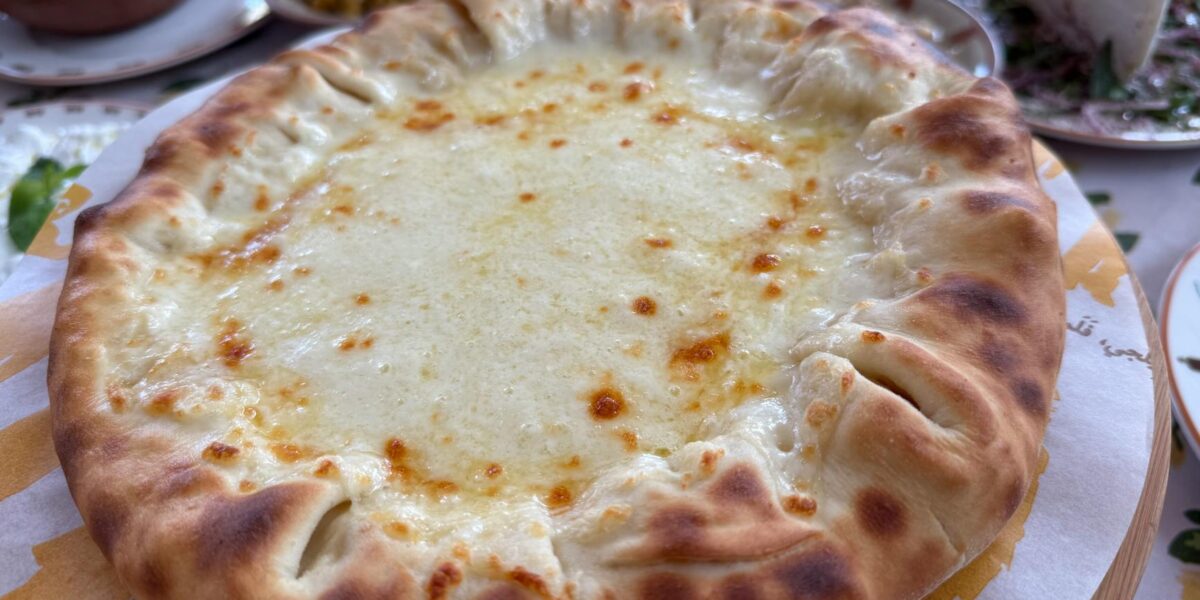
Khachapuri is Georgia’s most famous dish and its ultimate comfort food. At its core, it is bread dough filled or topped with melted cheese, but the execution varies dramatically by region. The most internationally famous version is Adjarian khachapuri — a boat-shaped bread with a molten center of sulguni and imeruli cheese, topped with a raw egg and a pat of butter that you stir together at the table. Imeretian khachapuri is a round, flat bread stuffed with cheese. Megrelian khachapuri adds extra cheese on top. Penovani khachapuri uses puff pastry. Each region has its own take, and Georgians have passionate opinions about which is best. What makes khachapuri special is the quality of the cheese — fresh, tangy Georgian cheese bears little resemblance to mass-produced mozzarella.
2. Khinkali (Soup Dumplings)
Khinkali are Georgia’s beloved dumplings — large, twisted-top parcels filled with spiced meat and broth. The traditional filling is a mixture of pork and beef (or lamb in mountain regions) seasoned with onion, cumin, chili flakes, and black pepper. The dough is gathered into pleats at the top and twisted into a knob that serves as a handle. The proper way to eat khinkali is to pick one up by the knob, take a small bite from the side, sip the hot broth trapped inside, then eat the rest — discarding the doughy knob (eating the knob is considered bad form). If you enjoy Chinese jiaozi or Japanese gyoza, khinkali offer a thrilling variation on the dumpling theme. Vegetarian versions filled with cheese, mushrooms, or potato also exist.
3. Satsivi (Walnut Sauce with Chicken or Turkey)
Satsivi is a cold walnut sauce so rich and complex that it could convert anyone to Georgian food in a single bite. The sauce is made from finely ground walnuts blended with garlic, khmeli suneli, cinnamon, cloves, saffron, and vinegar into a thick, creamy paste. It is traditionally served over poached or roasted chicken or turkey, especially during New Year celebrations. The walnut sauce should be ivory-colored, silky, and intensely flavored. Satsivi is always served cold or at room temperature, making it an excellent make-ahead dish for entertaining.
4. Badrijani Nigvzit (Eggplant with Walnut Paste)
Slices of eggplant are fried until golden, then rolled around a filling of ground walnut paste seasoned with garlic, khmeli suneli, red pepper, and vinegar, finished with a sprinkle of pomegranate seeds. This is one of Georgia’s most popular appetizers and a staple of the supra table. The combination of silky eggplant, rich walnut filling, and tart pomegranate is beautifully balanced. It is entirely vegan (when fried in oil rather than butter) and makes an impressive dish for any gathering.
5. Pkhali (Vegetable-Walnut Patties)
Pkhali is a family of dishes where cooked vegetables — spinach, beet greens, cabbage, green beans, or leeks — are finely chopped and mixed with a walnut paste seasoned with garlic, herbs, vinegar, and spices, then formed into small balls or patties and topped with pomegranate seeds. A typical supra will feature three or four varieties arranged on a single platter, creating a stunning display of colors. Pkhali demonstrates the Georgian genius for turning humble vegetables into something extraordinary through the magic of walnuts and herbs.
6. Lobio (Spiced Bean Stew)
Lobio is Georgia’s everyday bean stew, made from red kidney beans simmered with onions, garlic, herbs, and spices. The dish ranges from a thick, hearty soup to a dry, refried bean-like preparation depending on the region and cook. Common seasonings include cilantro, blue fenugreek, marigold petals, and adjika. Lobio is often served in a clay pot (ketsi) with mchadi (cornbread) on the side. It is deeply satisfying, entirely plant-based, and one of the easiest Georgian dishes to make at home.
7. Mtsvadi (Georgian Grilled Meat Skewers)
Mtsvadi is Georgia’s answer to kebab — large chunks of pork (most traditionally), beef, or lamb grilled over grapevine embers. What sets mtsvadi apart is its simplicity: the meat is usually seasoned with just salt and sometimes onion, relying on the quality of the meat and the flavor of the grapevine smoke. The skewers are served with raw onion slices, tkemali plum sauce, and fresh herbs. Georgian grilling culture, like Japanese binchotan grilling, places enormous emphasis on the fuel source. Grapevine cuttings give mtsvadi its distinctive smoky-sweet flavor that charcoal alone cannot replicate.
8. Chakhokhbili (Chicken Stew with Tomatoes and Herbs)
Chakhokhbili is a fragrant chicken stew built on a foundation of onions, tomatoes, and a generous amount of fresh herbs — particularly cilantro, basil, and tarragon. The dish originated as a pheasant stew (chakhokhbili derives from ”chakhokhbi,” meaning pheasant) but is now universally made with chicken. What makes chakhokhbili special is the ratio of herbs to everything else: a proper version uses a truly staggering amount of fresh herbs that melt into the sauce, creating layers of flavor. No cream, no thickener — just slow-cooked aromatics, tomatoes, and time.
9. Lobiani (Bean-Filled Bread)
Lobiani is the bean-filled cousin of khachapuri — yeasted bread dough stuffed with a seasoned kidney bean paste flavored with onions, herbs, and spices. Traditionally baked for the Georgian Orthodox holiday of Barbaroba (December 17), lobiani has become a year-round favorite. The filling is essentially mashed lobio tucked inside bread dough and baked until golden. Served hot with butter melting into the crust, lobiani is Georgian comfort food at its finest and proves that Georgians can make anything taste incredible when stuffed inside bread.
10. Churchkhela (Walnut Candy Strings)
Churchkhela are strings of walnuts or hazelnuts dipped repeatedly in thickened grape juice (tatara) until coated in a chewy, candle-shaped confection. Often called ”Georgian Snickers,” churchkhela are made during the grape harvest in autumn and hung to dry for several weeks. The result is a portable, shelf-stable snack that is simultaneously sweet, nutty, and slightly tangy. Traditionally, churchkhela were made as provisions for soldiers and travelers. They remain one of the most distinctive and photogenic foods in the Georgian repertoire.
11. Ostri (Spicy Beef Stew)
Ostri is a fiery beef stew featuring chunks of beef braised in a spicy tomato-based sauce with garlic, hot peppers, and fresh herbs. The name comes from the Russian word for ”sharp” or ”spicy,” and the dish delivers on that promise. Unlike many Georgian stews, ostri has a pronounced chili heat that builds as you eat. It is typically served with fresh bread to soak up the intensely flavored sauce. For those who enjoy the bold heat of Sichuan peppercorn-laden dishes, ostri provides a similarly addictive spicy experience through a different set of aromatics.
12. Elarji (Cheesy Corn Porridge)
Elarji is Mingrelia’s answer to polenta — a thick porridge made from coarsely ground white cornmeal mixed with generous amounts of fresh sulguni cheese until the cheese melts and the mixture becomes impossibly stretchy. Think of it as the Georgian equivalent of the stretchiest fondue you have ever encountered, but made with corn instead of bread. Elarji is served hot, spooned onto plates where it pulls into long, elastic strands. It is simple, dramatic, and deeply comforting.
Georgian Cooking Techniques
Georgian cuisine employs a set of cooking techniques that create its distinctive character. While some techniques overlap with neighboring cuisines, the specific applications and combinations are uniquely Georgian.
Tone (Clay Oven) Baking
The Georgian tone (or torne) is a cylindrical clay oven similar to the Indian tandoor. Bread dough is slapped directly onto the interior walls of the superheated oven, where it bakes rapidly, developing a characteristic crisp bottom and soft, slightly chewy interior. The tone produces Georgia’s two most common breads: shoti (a long, canoe-shaped bread) and puri (a round flatbread). If you have baked naan at home, the principle is identical. You can approximate tone-baked bread using a pizza stone in a home oven cranked to its highest setting.
Ketsi (Clay Pot) Cooking
Many Georgian dishes are traditionally cooked and served in clay pots called ketsi. Bean stews, egg dishes, cheese, and meat are all cooked in these unglazed clay vessels that retain heat beautifully and impart a subtle earthen quality to the food. The technique parallels Asian clay pot cooking in both its practical benefits (even heat distribution, heat retention) and its aesthetic appeal (food served in its cooking vessel).
Walnut-Based Sauces (Bazhe and Satsivi)
Perhaps the most distinctive Georgian technique is the preparation of walnut-based sauces. Walnuts are pounded or ground to a fine paste, then blended with garlic, spices, herbs, and acidic liquids (vinegar, pomegranate juice, or tkemali) to create sauces ranging from pourable (bazhe) to thick paste (the filling for badrijani and pkhali). The key is grinding the walnuts fine enough to create a smooth, emulsified sauce without any grittiness. A food processor works, but traditionalists insist on a mortar and pestle for the best texture.
Qvevri Winemaking
While technically a beverage technique, qvevri winemaking is so central to Georgian food culture that no overview would be complete without it. Large clay vessels (qvevri) are buried underground, filled with crushed grapes — skins, seeds, and stems included — and sealed with beeswax. The wine ferments and ages underground for months, producing ”amber wine” or ”orange wine” with a distinctive tannic, complex character entirely different from conventional white wine. This natural winemaking method has inspired a global movement and pairs extraordinarily well with the richness of Georgian food.
Preserving with Tkemali and Adjika
Georgian cooks are masters of preservation. Tkemali sauce (made from foraged wild cherry plums in spring and summer) and adjika paste (made from hot peppers, herbs, garlic, and spices) are prepared in large batches and stored for year-round use. This preservation tradition mirrors the fermentation traditions found across Asian cuisines — think of tkemali as Georgia’s answer to sambal oelek or sriracha, a versatile condiment that transforms simple grilled meats and breads into memorable meals.
Georgian Cuisine Compared to Neighboring Cuisines
Understanding how Georgian cuisine relates to its neighbors helps clarify what makes it unique. Here is a comparison of key characteristics across Caucasus and nearby food traditions.
| Feature | Georgian | Turkish | Persian | Armenian |
|---|---|---|---|---|
| Primary fat | Walnut oil, butter, sunflower oil | Butter, olive oil | Butter, ghee | Butter, olive oil |
| Signature spice blend | Khmeli suneli (blue fenugreek, coriander, marigold) | Baharat, isot pepper | Advieh (cinnamon, cardamom, rose) | Red pepper, cumin blends |
| Bread culture | Tone-baked shoti/puri; stuffed breads (khachapuri, lobiani) | Pide, simit, lavash | Barbari, sangak, lavash | Lavash (UNESCO-listed) |
| Dumpling tradition | Khinkali (twisted-top, broth-filled) | Manti (tiny, open-topped) | Joshpara (small, in broth) | Manti (medium, in yogurt) |
| Nut usage | Extremely heavy (walnuts in sauces, pastes, fillings, sweets) | Moderate (pistachios, hazelnuts in desserts) | Moderate (walnuts, almonds in stews and sweets) | Moderate (walnuts in some dishes) |
| Cheese culture | Central — sulguni, imeruli, and dozens of regional varieties | Important — beyaz peynir, kasar | Limited — lighvan, feta-style | Important — various regional types |
| Wine tradition | 8,000 years; qvevri (clay vessel) method | Limited (historically Ottoman restrictions) | Limited (post-1979) | Ancient tradition, reviving |
| Heat level | Moderate to spicy (adjika, chili flakes) | Mild to moderate | Generally mild | Mild to moderate |
| Herb usage | Extremely heavy (cilantro, tarragon, basil, dill, parsley in large quantities) | Moderate (parsley, mint, dill) | Heavy (herbs central to cuisine) | Moderate to heavy |
| Sour elements | Tkemali plum sauce, pomegranate, wine vinegar | Lemon, pomegranate molasses, sumac | Dried lime, verjuice, pomegranate | Lemon, pomegranate, sumac |
The Georgian Supra: Understanding the Feast
No exploration of Georgian food is complete without understanding the supra — the traditional feast that is the centerpiece of Georgian social life. A supra is not just a big dinner; it is a structured event with its own rules, roles, and rhythms.
The tamada (toastmaster) leads the supra, proposing toasts in a prescribed order: to God, to Georgia, to the ancestors, to the host, to the guests, to love, to children, to peace, and so on. Each toast is followed by everyone draining their glass (or horn) of wine. Between toasts, the table is laden with food — cold dishes like pkhali, badrijani, and satsivi already on the table when guests arrive, with hot dishes like khinkali, mtsvadi, and chakhokhbili arriving throughout the evening.
A typical supra table might include:
- Cold starters: Three varieties of pkhali, badrijani nigvzit, jonjoli (pickled bladderwort flowers), assorted cheeses, fresh herbs, bread
- Salads: Tomato and cucumber salad with walnut dressing, beetroot salad
- Hot dishes: Khachapuri, khinkali, chakhokhbili, ostri, lobio
- Grilled meats: Mtsvadi, grilled chicken, grilled vegetables
- Sauces: Tkemali, adjika, bazhe, satsivi
- Sweets: Churchkhela, gozinaki (honey-walnut brittle), pelamushi (grape pudding)
- Drinks: Wine (both red and amber), chacha (grape brandy), mineral water
The generosity of the supra reflects a core Georgian value: abundance at the table is a form of respect for guests. Hosting a supra at home (even a smaller, informal one) is one of the most authentic ways to experience Georgian food culture.
How to Build a Georgian Pantry
Getting started with Georgian cooking at home requires stocking a few key ingredients. The good news is that many Georgian staples overlap with ingredients you may already have if you cook Asian or Middle Eastern food regularly.
Must-Have Items
- Walnuts: Buy in bulk; you will use them constantly. Raw, unsalted halves and pieces are ideal.
- Khmeli suneli: Available at Eastern European or specialty spice shops. If you cannot find it, a DIY blend of ground coriander, blue fenugreek (or regular fenugreek in a pinch), dried marigold petals, dill seed, black pepper, and savory will approximate it.
- Fresh herbs: Cilantro, flat-leaf parsley, and dill are non-negotiable. Fresh tarragon and purple basil are highly desirable when available.
- Garlic: Georgian food uses garlic generously. Keep plenty on hand.
- Good quality red wine vinegar: For sauces and marinades.
- Hot red pepper flakes or ground red pepper: Georgian dried red pepper (similar to Korean gochugaru in heat and application) is used throughout the cuisine.
Nice-to-Have Items
- Tkemali sauce: Available bottled at Eastern European shops. Green (tart) and red (sweeter) varieties exist.
- Adjika paste: Also available bottled. Quality varies — look for brands from Georgia itself.
- Sulguni cheese: If unavailable, a mixture of low-moisture mozzarella and feta approximates the texture and tanginess.
- Blue fenugreek (utskho suneli): The key to authentic khmeli suneli flavor. Available from online spice specialists.
- Dried marigold petals: Subtle flavor but traditional for color and authenticity.
- Pomegranate seeds and pomegranate molasses: For garnishes and sour notes.
Georgian Meal Planning Tips
Whether you are planning a full Georgian feast or simply adding Georgian dishes to your weekly rotation, these tips will help you approach the cuisine with confidence.
For a Quick Weeknight Dinner
Start with dishes that require minimal specialized ingredients. Chakhokhbili (chicken stew) needs only chicken, onions, tomatoes, garlic, and fresh herbs — ingredients you likely already have. Lobio (bean stew) is equally approachable. Pair either with store-bought flatbread or rice. A simple walnut sauce (bazhe) can be whipped up in a food processor in five minutes and transforms plain grilled chicken or vegetables into something distinctly Georgian.
For a Weekend Project
Khachapuri dough is straightforward if you have any bread-making experience, and the shaping of Adjarian (boat-shaped) khachapuri is a fun, impressive technique. Khinkali are the ultimate weekend dumpling project — they take time to fold but freeze beautifully for future meals. If you enjoy folding dumplings, you will find the khinkali pleating technique a rewarding challenge. Plan to make a large batch and freeze half for quick weeknight boiling.
For Hosting a Georgian-Style Dinner
The key to a successful Georgian dinner party is to lean into the supra philosophy: prepare many dishes in advance, display them all at once, and let guests graze. Pkhali, badrijani nigvzit, and satsivi are all served cold or at room temperature, meaning you can make them a day ahead. Set the table with these cold dishes, bread, fresh herb platters, and cheese before guests arrive. Then bring hot khachapuri and a main stew (chakhokhbili or ostri) to the table during the meal. End with churchkhela if you can source it, or simple fresh fruit and nuts with honey.
Meal Planning Menu Ideas
Simple Georgian dinner for 2: Chakhokhbili + bread + tomato-cucumber salad + wine
Georgian vegetarian spread for 4: Lobio + badrijani nigvzit + spinach pkhali + khachapuri + fresh herbs
Full supra for 6-8: Pkhali trio + badrijani + cheese platter + khachapuri + khinkali + chakhokhbili + mtsvadi + tkemali and adjika + churchkhela + wine
Where Georgian and Asian Flavors Meet
At first glance, Georgian and Asian cuisines seem worlds apart. But look closer, and you will find remarkable parallels that make Georgian food particularly appealing to anyone who already loves Asian cooking.
Dumpling culture: Georgian khinkali share DNA with Chinese wontons and Central Asian manti. The Silk Road carried dumpling-making techniques across continents, and khinkali — with their broth-trapping pleated construction — are a stunning example of this shared heritage.
Fermented condiments: Just as East and Southeast Asian cuisines rely on fermented sauces (soy sauce, miso, gochujang), Georgian cuisine builds depth through tkemali, adjika, and naturally fermented wines and vinegars.
The importance of umami: Walnut sauces, aged cheeses, and long-cooked meat broths give Georgian food a profound savory depth that parallels the umami-rich flavors of oyster sauce and doenjang.
Fresh herb culture: Vietnamese and Thai cooks serve platters of fresh herbs alongside nearly every meal. Georgian cooks do exactly the same — a plate of fresh tarragon, cilantro, basil, and parsley is as essential to a Georgian table as it is to a Vietnamese one.
Clay pot traditions: The Georgian ketsi, the Chinese sand pot, the Japanese donabe, and the Indian handi all reflect a shared understanding that clay vessels produce uniquely delicious results through their porous, heat-retaining properties.
Frequently Asked Questions About Georgian Food
What does Georgian food taste like?
Georgian food is characterized by a balance of rich, tangy, and herbal flavors. Walnuts provide a creamy richness, while tkemali plum sauce and pomegranate add tartness. Copious fresh herbs (especially cilantro, tarragon, and basil) add brightness. Khmeli suneli spice blend contributes warm, earthy notes. The overall impression is of food that is deeply savory and complex without being overwhelmingly spicy, though dishes like ostri and adjika can pack serious heat.
Is Georgian food spicy?
Georgian food ranges from mild to moderately spicy. Most dishes are not aggressively hot, but many include chili flakes or adjika paste for warmth. The Samegrelo (Mingrelia) region is known for the spiciest food in Georgia. Compared to Thai or Sichuan Chinese cuisine, Georgian food is generally milder, but it has more heat than Japanese or Korean cuisine outside of specific dishes.
Is Georgian cuisine vegetarian-friendly?
Extremely. Georgian cuisine has one of the strongest vegetarian traditions in the world, largely because of the Georgian Orthodox Church’s strict fasting calendar — observant Georgians abstain from animal products for roughly 200 days per year. This has produced an enormous repertoire of plant-based dishes: pkhali, lobio, badrijani, lobiani, ajapsandali (vegetable stew), mchadi (cornbread), and many more. Cheese-based dishes like khachapuri and elarji are vegetarian. Vegans will find plenty of options in the bean, vegetable, and walnut-based dishes.
What cheese should I use for khachapuri?
Authentic khachapuri uses a blend of Georgian cheeses — typically sulguni and imeruli. Outside Georgia, a good substitute is a 50/50 mixture of shredded low-moisture mozzarella and crumbled feta. The mozzarella provides stretch and melt, while the feta provides the salty tanginess of Georgian cheese. Some cooks add a small amount of ricotta for creaminess. Avoid using only mozzarella, as the result will be bland.
Where can I buy Georgian ingredients?
Eastern European and Russian grocery stores are the best brick-and-mortar sources for Georgian products like sulguni cheese, tkemali, adjika, and churchkhela. Online retailers specializing in Caucasian or Eastern European foods carry khmeli suneli, blue fenugreek, and other spices. For staples like walnuts, pomegranate, and fresh herbs, any well-stocked grocery store or Asian market will have what you need.
How is Georgian food different from Russian food?
Though often conflated due to Soviet-era political ties, Georgian and Russian cuisines are fundamentally different. Georgian cuisine is Mediterranean-influenced with heavy use of walnuts, fresh herbs, cheese, and wine. Russian cuisine tends toward heavier fare with more emphasis on root vegetables, sour cream, dill, and preserved fish. That said, Georgian food became enormously popular throughout the Soviet Union, and many ”Russian” restaurants worldwide actually serve Georgian dishes like khachapuri and khinkali.
What wine pairs best with Georgian food?
Georgian amber wine (made by the qvevri method) is the traditional and ideal pairing — its tannic structure and oxidative notes cut through the richness of walnut sauces and cheese. Saperavi, Georgia’s flagship red grape, produces bold, dark wines that pair well with grilled meats and spicy stews. For a widely available substitute, try an orange wine or a medium-bodied red like Côtes du Rhône. If you prefer white, a dry Riesling or Grüner Veltliner works well with lighter Georgian dishes.
Getting Started with Georgian Cooking
Georgian cuisine rewards curiosity and generosity. Start with a simple dish — perhaps a batch of lobio or a walnut sauce to drizzle over roasted vegetables. Progress to khachapuri when you are ready for a bread project, and tackle khinkali when you want a dumpling challenge. Build your pantry gradually, adding khmeli suneli and tkemali as you find them.
The beauty of Georgian food is that it transforms simple, accessible ingredients — walnuts, beans, cheese, herbs, chicken — into dishes of extraordinary depth and flavor. You do not need expensive equipment or exotic ingredients to cook Georgian food well. What you need is good walnuts, an abundance of fresh herbs, and a willingness to be generous with both.
If you already love the complex flavors of Asian cooking — the fermented depth of miso, the aromatic heat of Thai curry paste, the satisfying ritual of hot pot — Georgian cuisine offers a parallel universe of equally rich traditions waiting to be explored. The supra table, like the hot pot table, is fundamentally about bringing people together around food. And that is a language every food lover speaks fluently.

Mei Lin Chen
Mei Lin Chen is an Asian food writer and recipe developer. Melbourne-raised and London-based, she has spent over a decade exploring the rice paddies, hawker stalls, and home kitchens of South-East and East Asia. Her recipes balance traditional technique with everyday practicality.