**Last Updated: March 2026**
# The Complete Guide to Hoisin Sauce
**Hoisin sauce** is a sweet-savory staple that brings a deep, aromatic punch to any Asian-inspired dish. Its balanced flavor makes it a must-have in every kitchen that loves bold, comforting tastes.
## Key Takeaways
– A Cantonese-origin sauce built on fermented soy, sugar, and spices.
– Offers a sweet-savory-umami profile with a hint of heat and tang.
– Works as a dip, glaze, marinade, or stir-fry base.
– Can be swapped with oyster or black bean sauce with simple tweaks.
– Homemade versions let you control sweetness, salt, and thickness.
## What Is Hoisin Sauce?
### The Etymology: Why a ”Seafood Sauce” Contains No Seafood
The Cantonese word *hoisin* comes from **hai sin jeung**, literally ”seafood sauce.” The characters *hai* (sea/ocean) and *sin* (fresh/seafood) together give the name, yet the sauce contains no seafood at all. Historians believe the original recipe may have included fermented shrimp or fish to boost umami depth in its Guangdong origins, but commercial producers eventually dropped those ingredients. The name has stuck for more than a century, even as the formula evolved into a plant-based condiment.
In Guangdong, the sauce began as a pantry staple for families who needed a quick way to add depth to simple stir-fries. Over time the recipe traveled north and south, adapting to local tastes while keeping the original name. Today we see it on menus from Beijing to Saigon, and the name remains a reminder of its maritime roots.
When we read the label, the ”seafood” part is a historical footnote, not a warning. Modern versions rely entirely on fermented soybean paste for depth, making the sauce safe for anyone avoiding fish or shellfish.
### What Is Hoisin Sauce Made Of?
The backbone of hoisin is **fermented soybean paste**, which supplies a rich, salty umami that anchors the whole flavor. We add **garlic** for its sharp, aromatic edge, and **sugar** — often brown or molasses — to balance the salt and give the sauce its glossy sheen.
A splash of **sesame oil** contributes a nutty finish, while a pinch of **chili** introduces a gentle heat that never overwhelms. **Rice vinegar** adds a bright tang that lifts the palate, and **five-spice powder** — a blend of star anise, cloves, cinnamon, Sichuan pepper, and fennel — brings the characteristic warmth that sets hoisin apart from plain soy sauce.
Each ingredient plays a specific role: the paste provides depth, the sugar offers sweetness, the vinegar lifts the palate, and the spices create a layered aroma. By adjusting any of these components we can tailor the sauce to our own taste, whether we prefer a sweeter dip or a spicier glaze. If you want to explore the broader world of Asian cooking ingredients, you’ll find that this same principle — fermented base, aromatics, seasoning — runs through many of the pantry’s most useful bottles.
### What Does Hoisin Sauce Taste Like?
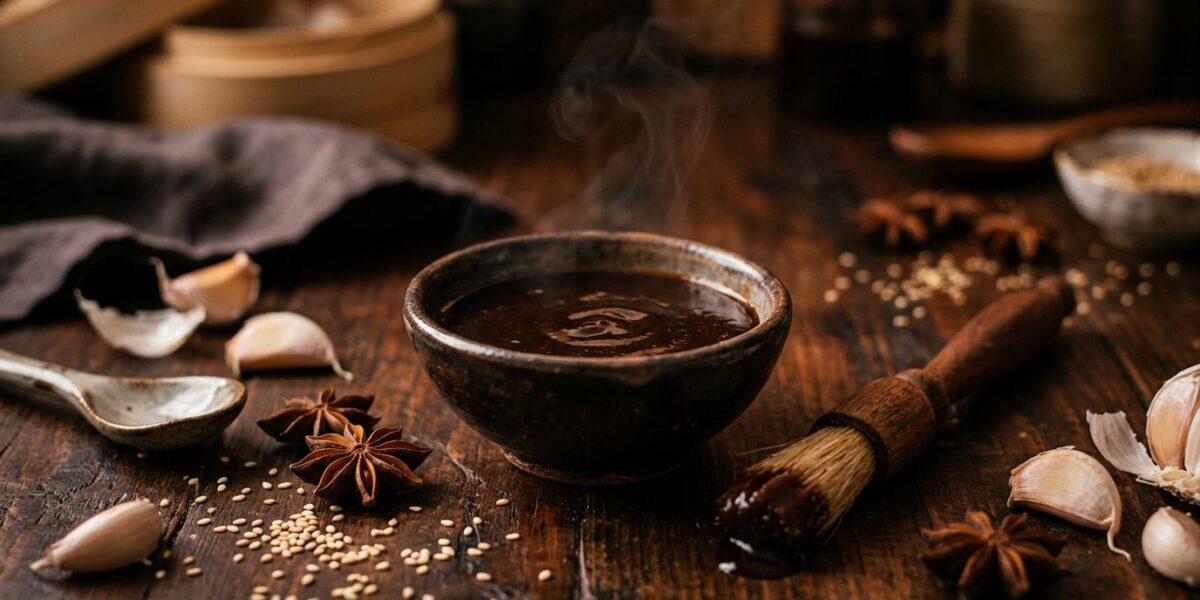
When we spoon hoisin onto a dish, the first impression is a thick, dark, glossy coating that clings to the food. The flavor opens with a sweet-savory blend, followed by a subtle tang and a whisper of heat. The fermented soybean base gives it a deep umami that simple soy-sugar mixes lack.
Compared with teriyaki, hoisin feels earthier and more complex; teriyaki leans heavily on sugar and a clean soy note, while hoisin carries the spice of five-spice and the richness of fermented beans. Think of it like the difference between a single-note chord and a full harmony — both are pleasant, but one carries considerably more depth. The sauce’s viscosity allows it to caramelise quickly, creating a lacquered surface on meats and vegetables.
Overall, the taste is a balance of sweet, salty, sour, and spicy, making it a versatile partner for everything from duck to tofu.
## How to Use Hoisin Sauce
### Peking Duck Dipping Sauce
In Northern China, the classic way to enjoy Peking duck is to spread a thin layer of hoisin on a soft pancake, then add shredded duck, scallions, and cucumber strips. The sauce’s sweet-savory depth cuts through the rich, crisp skin, while the fresh vegetables add crunch and brightness.
When we bite into the assembled roll, the warm, yielding duck meets the cool, crisp vegetables, and the hoisin ties everything together with its glossy, aromatic coating. The contrast of textures — soft pancake, tender meat, crisp veg — is intentional: hoisin’s thickness holds the whole parcel together without dripping. It is arguably the sauce’s most globally recognised application, and the one that introduced many Western cooks to its character.
We also see hoisin in Mu Shu pork, where thin pancakes wrap stir-fried pork, scrambled eggs, and wood ear mushrooms. The sauce acts as a unifying glaze, ensuring each bite carries the same sweet-savory punch.
### Vietnamese Rice Paper Rolls and Spring Roll Dipping
Vietnamese fresh rolls (*gỏi cuốn*) are traditionally served with a hoisin-peanut dipping sauce that balances salty, sweet, and nutty notes. To make it, we whisk together **2 tbsp hoisin**, **1 tbsp peanut butter**, **1 tsp rice vinegar**, and **2 tbsp warm water** until smooth, then sprinkle crushed peanuts on top.
This dip differs from the Chinese duck accompaniment: it is richer, creamier, and carries the earthy flavor of peanuts. The sauce clings to the delicate rice paper, complementing the fresh herbs, shrimp, or pork inside the roll without overwhelming them. It is a gentler use of the sauce, softened by the peanut butter and diluted to a more pourable consistency.
The Vietnamese application is a testament to how far hoisin has traveled beyond its Cantonese origins. Same sauce, different culinary tradition — and a reminder of why it earns a permanent spot in our pantry. Browse our full collection of Asian recipes to find dishes that make the most of it.
### Stir-Fries, Marinades, and Noodle Sauces
A quick hoisin-based stir-fry sauce starts with **2 tbsp hoisin**, **1 tbsp soy sauce**, **1 tsp sesame oil**, and **1 tsp rice vinegar**. We toss it with vegetables, sliced meat, or tofu, letting the sauce caramelise in the wok for a glossy finish. The ratio scales easily for larger batches.
For a char siu-style pork glaze, we marinate pork belly in hoisin mixed with a splash of soy, a drizzle of sesame oil, and a pinch of five-spice. The sugar in the sauce caramelises during roasting, giving the meat a deep amber crust and a sticky, lacquered exterior that rivals restaurant versions.
Even vegetarian dishes benefit: a drizzle of hoisin over roasted aubergine creates a sweet-savory glaze that needs nothing else. The thick texture ensures the coating stays on the vegetable, while the umami depth satisfies cravings for richer, meatier flavors. Lo mein and chow mein noodles also respond well to a spoonful stirred through at the end of cooking.
## Hoisin Sauce vs Oyster Sauce vs Black Bean Sauce
### Understanding the Differences
All three sauces share a dark colour and a place in Chinese cooking, yet each originates from a distinct base. Hoisin relies on fermented soy paste, oyster sauce on concentrated oyster extracts, and black bean sauce on fermented black soybeans. Knowing the base helps us predict how each will behave in a recipe — and helps us shop with confidence.
When we substitute one for another, we must account for sweetness, saltiness, and thickness. Hoisin is sweeter and thicker, oyster sauce is more briny with a subtle sea note, and black bean sauce is salty and earthy. The right choice keeps the dish balanced; the wrong one can tip a stir-fry too sweet or too salty.
### Comparison Table
| Sauce | Base Ingredient | Flavor Profile | Color | Best Used For | Vegan? |
|—|—|—|—|—|—|
| Hoisin Sauce | Fermented soybean paste | Sweet, savory, umami, slightly spiced | Dark brown, glossy | Dipping, marinades, stir-fries | Usually yes |
| Oyster Sauce | Oyster extract | Savory, briny, mildly sweet | Dark brown, thick | Stir-fries, vegetables, glazes | No (oysters) |
| Black Bean Sauce | Fermented black beans | Salty, earthy, funky | Black-brown | Stir-fries, steamed dishes | Usually yes |
### When to Substitute One for Another
If a recipe calls for hoisin but we only have oyster sauce, we add a pinch of sugar and a dash of five-spice to mimic the sweet-spiced depth. A reliable ratio: **2 tbsp oyster sauce + ½ tsp sugar + a pinch of five-spice**. The result is less thick but still works in stir-fries and as a glaze. Note the swap is not vegan, so plant-based cooks should lean on the miso-based quick paste instead.
Black bean sauce can replace hoisin in a quick stir-fry, but we temper its saltiness with a little honey or maple syrup and a splash of rice vinegar. The texture is thinner, so a small cornstarch slurry added to the pan helps achieve the desired gloss.
For vegetarian cooks who want the umami depth of oyster sauce without the shellfish, hoisin works well as a plant-based alternative. We increase the quantity slightly and add a dash of soy sauce to sharpen the salty note. Our full guide to oyster sauce substitutes covers all the options in detail, including ratios for each swap.
## Best Hoisin Sauce Substitutes
### Oyster Sauce Plus Sugar and Five-Spice
Mix **2 tbsp oyster sauce**, **½ tsp sugar**, and a pinch of five-spice powder. Whisk until the sugar dissolves. This blend captures the salty-sweet balance of hoisin while retaining a faint sea note from the oyster base. It is thinner than true hoisin, so it works best in quick stir-fries or as a glaze on vegetables where a lighter coating is acceptable.
The substitution is handy for dishes that call for a quick glaze on meat or firm tofu. The added sugar helps the sauce caramelise in the wok, and the five-spice introduces the warm aromatic quality that hoisin normally provides. The result is not identical but it is close enough that most diners will not notice the difference.
### Black Bean Sauce with Sweetener
Combine **2 tbsp black bean sauce** with **1 tsp honey** (or maple syrup for a vegan version). Stir until smooth. The resulting sauce is less sweet than hoisin but offers a deep, earthy flavor that pairs well with stir-fried greens and mushrooms.
Because black bean sauce is thinner and grainier, it is not ideal as a stand-alone dipping sauce. In cooked dishes, however, it mixes readily with other liquids in the pan and delivers a satisfying savory note. If you want more gloss, add a small cornstarch slurry to the wok before the final toss.
### A Quick Homemade Paste
Blend **2 tbsp miso paste**, **1 tbsp soy sauce**, **1 tbsp honey**, **1 tsp sesame oil**, a pinch of five-spice, and a pinch of chili flakes. Whisk until uniform. This quick paste captures the salty, sweet, and spiced notes of commercial hoisin while allowing us to adjust each element to taste.
The mixture is thick enough for glazing and can be thinned with a little water for dipping. It works well in a pinch when we run out of store-bought hoisin, and the miso provides a familiar fermented depth that is arguably closer to the original flavor than either of the previous two substitutes.
## How to Make Hoisin Sauce at Home
### Our Test Kitchen Recipe
We love making hoisin at home because it lets us fine-tune sweetness, heat, and thickness to our exact preference. Commercial versions often lean heavily on sugar and thickening agents, whereas our version stays true to the traditional fermented soybean concept while offering a cleaner ingredient list.
The recipe below yields about half a cup of sauce — enough for a week of cooking. We have tested it against Lee Kum Kee’s original and found it hits all the same notes: sweet, savory, lightly spiced, and deeply umami. The main advantage of making it yourself is control: if you find commercial hoisin too sweet, this version lets you dial that back entirely.
A word on the miso: white miso gives a milder, more delicate result, while red miso adds a deeper, more fermented character that is closer to the traditional soybean paste base. Either works; choose based on how bold you want the final sauce to be.
**Ingredients:**
– 3 tbsp white or red miso paste
– 2 tbsp soy sauce (or tamari for gluten-free)
– 1 tbsp dark molasses or black treacle
– 1 tbsp honey or maple syrup
– 1 tbsp rice vinegar
– 1 tsp sesame oil
– 1 clove garlic, minced
– ¼ tsp five-spice powder
– ¼ tsp chili flakes (adjust to taste)
**Method:** Whisk all ingredients together until smooth. Taste and adjust — more honey for sweetness, more vinegar for tang, more chili for heat. For an ultra-silky texture, blend briefly in a small food processor. Store in an airtight jar in the fridge for up to three weeks.
The homemade version stays vibrant because it avoids excess preservatives. Use it as a dip for fresh spring rolls, a glaze for roasted vegetables, or the base for a stir-fry sauce, and you will notice the cleaner, more balanced flavor with every use.
## Best Hoisin Sauce Brands to Buy
### Lee Kum Kee Hoisin Sauce
Lee Kum Kee, founded in 1888 by Lee Kum Sheung in Guangdong province — the same province where hoisin sauce originated — has become the global benchmark for this condiment. Their sauce is rich, balanced, and has a deep molasses-like sweetness that coats food beautifully. We see it in professional kitchens because it delivers consistent flavor without overpowering other ingredients.
The bottle is easy to find in Asian supermarkets and increasingly in mainstream UK and Australian stores. Its thick, glossy texture makes it ideal for dipping, glazing, and stir-frying, and over 130 years of production gives us confidence that the recipe has been refined to a reliable standard.
### Kikkoman Hoisin Sauce
Kikkoman, the Japanese condiment giant best known for its soy sauce, offers a hoisin that is slightly lighter in colour and less sweet than Lee Kum Kee. This version suits diners who prefer a subtler sweetness or who plan to combine the sauce with other strong flavors, such as spicy chili oil or fermented ginger paste.
Its thinner consistency means it mixes readily into sauces and marinades, giving a smooth coating without clumping. We keep a bottle on hand for quick noodle dishes and light stir-fries where a delicate touch is needed and the sauce shares the stage with other assertive flavors.
### Blue Dragon Hoisin Sauce
Blue Dragon is the supermarket staple for many UK households, stocked at major chains including Iceland, Sainsbury’s, and Tesco. It is affordable and genuinely accessible, though its consistency is thinner and its sweetness more pronounced than the premium options above.
For everyday cooking — quick stir-fries, simple dips, or a fast glaze on chicken wings — Blue Dragon does the job reliably. When we want to explore deeper, more complex flavors, we usually reach for Lee Kum Kee, but Blue Dragon remains a practical pantry staple for beginners and weeknight cooking alike.
### How to Store Hoisin Sauce
Unopened bottles stay stable in a cool, dark pantry for many months — most brands carry a shelf life of one to two years from the production date. Once opened, we always refrigerate. The sugar and fermented base can continue to develop at room temperature, affecting both flavor and food safety over time.
Refrigerated in an airtight bottle, opened hoisin keeps for three to six months. A quick check before use is sensible: if you notice a sour or off smell, visible mold, or a separated liquid that will not recombine after shaking, it is time to discard the bottle and open a fresh one.
## Frequently Asked Questions
**Is hoisin sauce the same as teriyaki sauce?**
No — they come from entirely different culinary traditions. Teriyaki is Japanese, built on soy sauce, sake or mirin, and sugar, while hoisin is Chinese, based on fermented soybean paste, five-spice, and sesame oil. The flavor profiles differ significantly: teriyaki is sweeter and straightforwardly soy-forward, whereas hoisin carries a spiced, fermented depth that teriyaki does not offer.
**Is hoisin sauce vegan?**
Most commercial hoisin sauces are vegan because they contain only plant-based ingredients. Lee Kum Kee’s standard version, for example, contains no animal products. Some brands add honey, which strict vegans may prefer to avoid — always check the label before purchasing.
**Does hoisin sauce contain seafood?**
Despite the Cantonese name translating to ”seafood sauce,” modern hoisin contains no seafood whatsoever. The original recipe may have used fermented shrimp or fish for umami, but contemporary formulations rely entirely on fermented soybeans, making the sauce safe for those avoiding shellfish or fish.
**How long does hoisin sauce last once opened?**
Refrigerated in a sealed bottle, opened hoisin keeps for three to six months. The high sugar content acts as a natural preservative, but refrigeration prevents further fermentation and flavor drift. Discard it if you detect an off odor or visible mold.
**Can I use hoisin sauce as a marinade?**
Absolutely — it is one of the most effective marinades in the Asian pantry. The natural sugars caramelise during cooking, giving meat a glossy, lacquered finish. A simple mix of hoisin, soy sauce, and a splash of sesame oil works beautifully on pork belly, chicken thighs, and pressed tofu.
**What is the difference between hoisin sauce and plum sauce?**
Plum sauce is fruit-based, made from plums or apricots, vinegar, and sugar — the result is lighter in colour, tangier, and noticeably fruitier. Hoisin is fermented soybean-based, darker, earthier, and richer in umami. Both appear on Chinese restaurant tables as condiments, but they suit different dishes: plum sauce works with lighter spring rolls, hoisin with richer preparations like Peking duck and BBQ pork.

Mei Lin Chen
Mei Lin Chen is an Asian food writer and recipe developer. Melbourne-raised and London-based, she has spent over a decade exploring the rice paddies, hawker stalls, and home kitchens of South-East and East Asia. Her recipes balance traditional technique with everyday practicality.