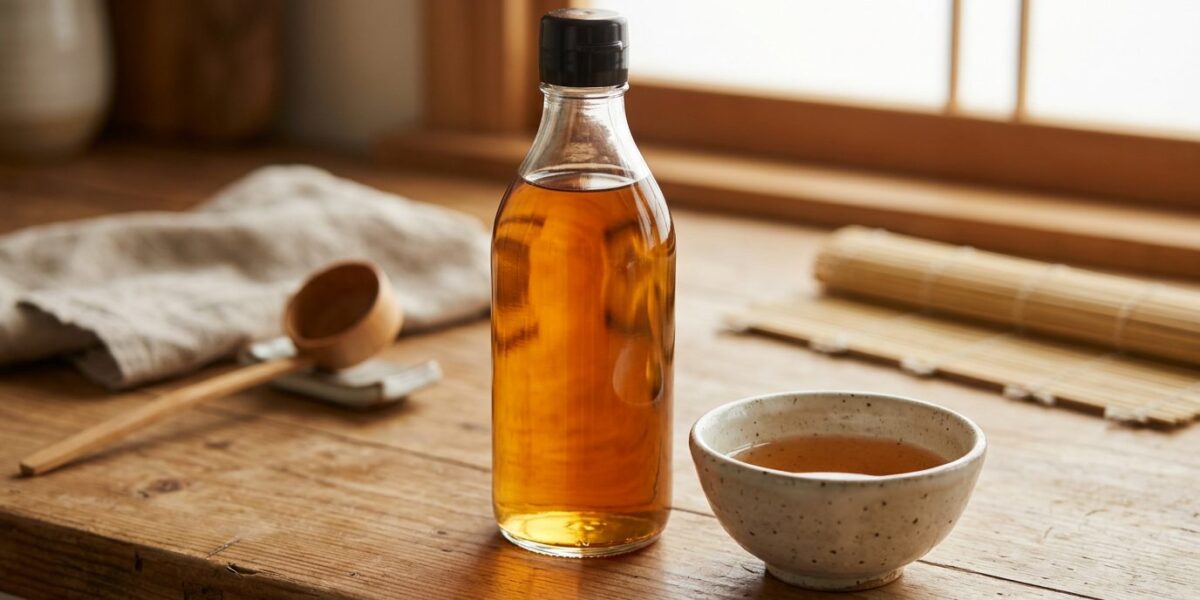
Mirin is the sweet, amber-coloured liquid that gives Japanese dishes their signature shine and subtle depth. It is the quiet hero behind teriyaki, sukiyaki and countless sauces, turning ordinary ingredients into something truly memorable.
Key Takeaways
- Three main types — hon mirin, shio mirin and shin mirin — each with a different alcohol level and price point.
- Flavor profile — sweet, syrupy, with a faint alcoholic tang and a rich umami backbone.
- Common substitutes — sake + sugar, dry sherry + sugar, or rice vinegar + sugar for a quick swap.
- Storage rules — pantry for hon mirin, fridge for shin mirin, and freezer-friendly ice-cube portions for long-term storage.
- Shelf life — unopened bottles last 1–2 years; opened bottles stay good for about three months if kept cool and away from direct sunlight.
What Is Mirin?
The Three Types of Mirin
Hon mirin, the traditional ”true” mirin, contains roughly 14% alcohol and is brewed from mochigome (glutinous rice), rice koji, and shochu or jōzō spirit. The fermentation lasts 40–60 days, allowing the rice to break down into a syrupy liquid that carries both sweetness and umami. According to the Japan Food Agency, hon mirin accounts for approximately 78% of domestic mirin production in Japan, reflecting its premium status among professional chefs and home cooks alike.
Shio mirin, often labelled ”salt mirin,” adds about 2% salt to the same 14% alcohol base. The salt is a practical tax-classification measure under Japanese law, but the flavor remains remarkably close to hon mirin, making it a sensible choice for home cooks who want the authentic taste without the higher price tag. A 2023 market survey by Kikkoman shows that shio mirin sales have risen 12% year-over-year, driven by its convenience and wider supermarket availability.
Shin mirin, sometimes called ”mirin-fu” or ”aji mirin,” contains less than 1% alcohol and relies on added sugars and corn syrup for sweetness rather than traditional fermentation. It is the most affordable option and is widely available in supermarkets outside Japan, including most major Australian chains. Despite the lower alcohol content, it still delivers the characteristic glossy finish, though the depth of flavor is noticeably milder than its fermented counterparts.
Flavor Profile
The palate of mirin can be likened to a soft amber sunrise: sweet, syrupy, and warm, with a whisper of alcohol that lifts the overall taste without overpowering it. Its Brix value sits around 45, meaning it is considerably sweeter than sake, which typically measures 12–15 Brix [Kikkoman Culinary Research]. This high sugar concentration is precisely what makes mirin such an effective glaze ingredient — those sugars caramelise under heat to create a lacquer-like finish that no other common seasoning can replicate.
Beyond sweetness, the fermentation process produces amino acids that contribute a subtle umami richness. This is why mirin works so well alongside soy sauce: where soy brings saltiness and savoury depth, mirin adds sweetness and a smooth, rounded quality that softens any harsh edges. Together, the two create one of Japanese cooking’s most iconic flavour pairings — a combination that is greater than the sum of its parts.
The alcohol in hon mirin serves an additional purpose beyond flavour. It acts as a mild solvent that helps dissolve and distribute aromatic compounds throughout a dish, which is why a teriyaki marinade made with hon mirin penetrates protein fibres more effectively than one made with shin mirin. This threefold role — sweetener, umami carrier, aromatic distributor — is what makes mirin genuinely irreplaceable in Japanese cooking.
The History of Mirin
Mirin began its life in the 16th century as a sweet beverage enjoyed by Japan’s aristocracy, much like a premium sake. The name itself translates roughly to ”sweet sake” in Japanese, a clear nod to its origins as a fermented rice wine intended for drinking rather than seasoning. Historical texts from the Muromachi period describe a thick, sweet rice liquor that was consumed at formal gatherings and offered as a gift among the ruling class.
By the Edo period (1603–1868), cooks discovered that mirin’s natural sugars could tame the sharpness of soy sauce and enhance the sheen of grilled and simmered foods. This culinary revelation transformed mirin from a luxury beverage into a kitchen essential, and its production expanded significantly to meet growing demand from restaurants and home kitchens across Japan. Historical records indicate that mirin production increased substantially during the 19th century, coinciding with the rise of sushi, tempura and other dishes that are now considered the pillars of Japanese cuisine.
The industrial revolution in Japan brought mechanised production methods that made mirin more accessible to everyday households. Shin mirin was developed in the 20th century as a lower-cost alternative, partly to work around Japan’s strict liquor tax laws. Today, mirin is exported globally and has found a permanent place in kitchens far beyond Japan — from Melbourne to London to New York — wherever cooks seek that unmistakable Japanese gloss and depth.

How to Use Mirin in Cooking
Teriyaki Glazes and Sauces
When we whisk mirin into a teriyaki glaze, the natural sugars caramelise under heat, creating a glossy, lacquer-like coating that clings to meat, fish or vegetables. This is the ”teri” in teriyaki — a Japanese word that literally means ”gloss” or ”shine” — and mirin is the ingredient responsible for it. No other common sweetener behaves in quite the same way, because mirin’s sugars are a complex mixture of glucose, maltose and other carbohydrates that brown at a gentler temperature than refined white sugar.
A classic ratio of 3 parts soy sauce to 1 part mirin yields a sauce that is both salty and sweet, perfectly balanced for glazing grilled salmon or chicken thighs. The alcohol evaporates during cooking, leaving behind a sweet-savoury balance that deepens the overall flavour without adding harsh bitterness. We often add a small amount of sake to this base, which introduces an additional layer of aromatic complexity and helps thin the glaze to the right consistency for basting.
For a quick weeknight teriyaki, we combine the soy sauce, mirin and sake in a small saucepan, bring the mixture to a simmer over medium heat, and let it reduce for three to four minutes until it thickens to a syrupy consistency. Brushed onto grilled chicken during the final two minutes of cooking, this glaze builds up in glossy layers that look as professional as anything from a Japanese restaurant. The result is a dish that is simultaneously caramelised, savoury and subtly sweet — the three qualities that define good teriyaki.
Marinades and Odor Elimination
Mirin’s mild alcohol content works like a gentle solvent, breaking down the chemical compounds that give raw fish and meat their strong, sometimes unpleasant odours. This quality is particularly valued in Japanese cooking, where fresh seafood is a daily staple and any trace of fishiness is considered a flaw. When we marinate tuna or salmon with a mixture of mirin, soy sauce and ginger, the alcohol lifts the unwanted scent while the sweetness rounds out the overall flavour profile.
The sugars in mirin also play a structural role in marinades, penetrating the protein fibres and helping to lock the seasoning in place during cooking. A short soak of just 10–15 minutes in a mirin-based marinade can make a measurable difference to the flavour depth of scallops or white fish fillets. This is especially useful for delicate proteins that would be overwhelmed by a heavy, soy-forward marinade on its own.
We have found that hon mirin is noticeably more effective than shin mirin for odour elimination, precisely because of its higher alcohol content. When working with stronger-flavoured fish such as mackerel or sardines, a brief brush of hon mirin before grilling helps neutralise the intensity while adding a beautiful caramelised sheen. This is a technique used throughout Japan’s coastal regions, where grilling oily fish is a daily ritual, and the results speak for themselves. For more ideas on Asian cooking ingredients that transform everyday proteins, our guide covers everything from fish sauce to sesame oil.
Balancing Salt and Soy Sauce
Soy sauce alone can be overpoweringly salty, but mirin acts as a natural counterweight, softening the bite while adding a subtle sweetness that makes the overall seasoning feel complete. In many traditional Japanese dipping sauces, a 3:1 ratio of soy sauce to mirin creates a harmonious blend that complements sushi, gyoza and grilled vegetables without any of the sharpness that straight soy sauce would bring. This balance is not accidental — it reflects centuries of Japanese culinary refinement, where the interplay between salt and sweet is treated as a fundamental principle of good cooking.
The sweetness that mirin contributes is different from what you would get by simply adding sugar to soy sauce. Because mirin’s sugars come from the fermentation of glutinous rice, they carry a natural richness and complexity — a gentle caramel note that plain sugar lacks. This is why experienced Japanese cooks insist on using real mirin rather than a sugar substitute, even in simple sauces where the difference might seem minor.
By adjusting the mirin proportion in a dipping sauce, we can tailor the flavour to different dishes and preferences. A lighter hand with mirin produces a sharper, more intensely savoury dip that suits raw fish beautifully, while a more generous pour creates a rounded, mellow sauce better suited to fried foods or grilled vegetables. This flexibility is one of the reasons mirin earns its place in a well-stocked Japanese pantry alongside staples like dashi, soy sauce and sake. Our full guide to Asian recipes shows how these pantry essentials come together in classic dishes.
Mirin vs Sake vs Rice Wine
The market often confuses mirin, sake and rice wine because all three originate from fermented rice, yet each serves a distinct culinary purpose with a different flavour profile. Sake is a dry, low-sweetness beverage with an alcohol range of 15–20%, while mirin is intentionally sweet and typically contains approximately 14% alcohol (or less than 1% in the case of shin mirin). Shaoxing rice wine offers a nutty, complex and savory profile with a lower sweetness level, making it a staple in Chinese braising and stir-frying rather than Japanese glazing and saucing. Understanding these differences helps us choose the right ingredient for the right application, avoiding the unwanted acidity, excess sweetness or off-flavours that come from using the wrong one.
| Ingredient | Alcohol % | Flavor | Sweetness Level | Best Used For |
|---|---|---|---|---|
| Hon Mirin | ~14% | Sweet, umami, syrupy | High (Brix ~45) | Glazes, teriyaki, dipping sauces |
| Sake | 15–20% | Dry, clean, slightly fruity | Low | Marinades, soups, deglazing |
| Rice Wine (Shaoxing) | 14–17% | Nutty, complex, savory | Low–Medium | Stir-fries, braises, Chinese cooking |
| Rice Vinegar | 0% | Tangy, acidic | Low | Dressings, sushi rice, pickles |
Why You Cannot Swap Mirin for Rice Vinegar
Rice vinegar is acidic, with a pH around 2.5, while mirin is sweet and mildly alcoholic — the two are chemically opposite in almost every meaningful way. Replacing mirin with vinegar introduces sharp sour notes that can overwhelm the delicate balance of a teriyaki glaze, a dashi-based dipping sauce, or a miso marinade. The result is not just a subtle difference; it is a fundamentally different dish with a flavour that most people would find jarring rather than pleasant.
The caramelisation chemistry also changes completely when you use vinegar instead of mirin. The sugars in mirin brown under heat to produce the glossy, lacquer-like finish that defines teriyaki, whereas vinegar simply evaporates, leaving no coating at all. This means the visual appeal that makes teriyaki so recognisable — that deep amber sheen on grilled chicken or salmon — is entirely absent when vinegar takes mirin’s place.
In practical terms, rice vinegar has its own legitimate role in Japanese cooking: it seasons sushi rice, brightens dressings and adds the clean tang that sunomono salads depend on. These are applications where its acidity is an asset rather than a problem. The key is to use each ingredient where its specific properties are a contribution, not a disruption.
When Sake Can Stand In
If we run out of mirin, the most reliable short-term fix is to combine sake with a touch of sugar — about 1 tablespoon sake plus ½ teaspoon sugar for each tablespoon of mirin required. The sugar restores the sweetness, while the sake’s higher alcohol content mimics mirin’s ability to dissolve fats and carry aromatics into the dish. This substitution works particularly well in marinades and soups where the glossy effect is less critical than the flavour balance.
For glazes, where the visual sheen matters as much as the taste, we recommend adding a small splash of honey or maple syrup alongside the sake and sugar combination. Honey’s viscosity and natural sugars caramelise in a way that is closer to mirin’s behaviour under heat, giving the glaze a more convincing finish. This is not a perfect replacement, but it produces a result that is far closer to the real thing than any other combination of pantry staples.
It is worth noting that the sake-and-sugar substitute works best when the recipe calls for mirin primarily as a flavour agent rather than as a structural ingredient. In dishes like oyakodon or nikujaga where mirin’s cooking effects — odour elimination, flavour penetration, prevention of food disintegrating — are central to the outcome, investing in a proper bottle of hon mirin is the better long-term decision. For a dish as simple and rewarding as our Pad Thai recipe, having the right balance of sweet and savoury is what separates a good result from a great one.
Best Mirin Substitutes
Sake Plus Sugar
The simplest stand-in uses sake as the base and granulated sugar to bring back the sweetness that fermented glutinous rice provides. A ratio of 1 tablespoon sake + ½ teaspoon sugar yields a liquid that closely resembles the flavour and consistency of hon mirin, particularly in cooked applications where the alcohol cooks off anyway. We stir the mixture until the sugar dissolves completely, then let it rest for a couple of minutes so the flavours meld before adding it to the dish.
This combination works well in sauces, braises and any recipe that calls for a modest amount of mirin. The sake’s dry, clean flavour provides a neutral sweetness-carrying base, and the sugar fills in the gap left by mirin’s natural rice-derived sweetness. While it lacks the fermented complexity of real mirin, the difference is often imperceptible once the sauce has reduced and the other seasonings have come together.
One practical advantage of this substitute is that sake is easier to find in many Western supermarkets than hon mirin, and a single bottle can serve double duty as both a cooking sake and a mirin substitute. If we are making a larger batch of sauce, we scale the ratio proportionally — for every 100ml of mirin called for, we use 100ml sake plus approximately 1.5 teaspoons of sugar, adjusting to taste.
Dry Sherry Plus Sugar
Dry sherry offers a nutty, slightly oxidised note that can add genuine complexity to a dish when paired with sugar. The substitution ratio is 1 tablespoon dry sherry + ½ teaspoon sugar, which emulates mirin’s sweet-savoury balance reasonably well, particularly in richer, more robust dishes. The sherry’s lower alcohol content (approximately 15%) and fuller aroma make it a good choice for mushroom-based sauces, braised meat dishes or stir-fries where a deeper, more complex flavour profile is welcome.
The oxidised quality of dry sherry — that characteristic nuttiness that comes from its unique ageing process — can actually add an interesting dimension to certain Japanese-inspired dishes, particularly those with earthy ingredients like shiitake mushrooms or burdock root. It does not replicate mirin precisely, but in these specific contexts it can produce a result that is just as satisfying in its own right.
As with the sake substitute, we dissolve the sugar fully before using the mixture and adjust seasoning at the end of cooking if needed. Dry sherry keeps well in the pantry for several months after opening, making it a practical bottle to have on hand for both this substitution and general sauce-making. It is worth avoiding sweet or cream sherry for this purpose, as the additional sweetness will throw the balance of the final dish off.
Rice Vinegar Plus Sugar (Alcohol-Free Option)
For those seeking an alcohol-free alternative, the combination of 1 tablespoon rice vinegar + 1 teaspoon sugar provides a reasonable approximation of mirin’s sweet and slightly tangy character. The rice vinegar contributes a gentle acidity that, when balanced with enough sugar, can mimic the brightness that mirin brings to a sauce without crossing into sourness. This is the most accessible option for anyone who does not use alcohol in cooking.
This mixture is best suited to dressings, light dipping sauces and cold applications where the vinegar’s acidity is less likely to dominate. In cooked glazes or braises, the vinegar note can become more pronounced as the liquid reduces, so we recommend using slightly less than the called-for amount of mirin and tasting as you go. Adding a small pinch of salt alongside the sugar helps to round out the flavour and reduce the perception of sourness.
This is also the most suitable substitute for halal cooking, where both the alcohol in hon mirin and the trace amounts in shin mirin may be a concern. Some producers offer specifically halal-certified mirin alternatives that use this general approach — rice-based sweetness with a touch of acidity — and these are worth seeking out if cooking without alcohol is a regular requirement rather than an occasional need.
How to Store Mirin
Does Mirin Need to Go in the Fridge?
Hon mirin, with its relatively high alcohol content, can be stored safely in a cool, dark pantry for up to three months after opening without any deterioration in quality. The approximately 14% alcohol acts as a natural preservative, preventing microbial growth and maintaining the flavour and sweetness that make it valuable in the kitchen. We keep our bottle away from the stove and out of direct sunlight, which is the main cause of colour and flavour degradation over time.
Shin mirin, however, contains little to no alcohol and should be refrigerated once opened to maintain its freshness and prevent off-flavours from developing. Without alcohol as a preservative, the sugars and other components are more vulnerable to microbial activity, particularly in warm weather. We keep it in the fridge for no more than three months after opening, using it up in regular cooking rather than letting it sit idle at the back of the shelf.
Shio mirin behaves more like hon mirin from a storage perspective, given its similar alcohol content, though the added salt provides an extra layer of antimicrobial protection. A cool, dark pantry is perfectly adequate for an opened bottle of shio mirin, and many Japanese home cooks store it alongside their soy sauce and sake without any refrigeration at all. If your kitchen runs particularly warm, the fridge is always the safer option for any opened bottle.
Shelf Life and Signs of Spoilage
Unopened mirin bottles typically last 1–2 years when stored away from direct sunlight and heat sources. The high sugar content combined with alcohol (in the case of hon and shio mirin) creates a stable environment that resists spoilage for an extended period, which is one of the practical advantages of keeping a bottle in a well-organised pantry. Shin mirin has a similar unopened shelf life due to its high sugar concentration, even without significant alcohol.
Once opened, both hon and shin mirin should ideally be used within three months for optimal flavour. Signs of spoilage to watch for include a cloudy or murky appearance, an off-putting smell reminiscent of fermented dairy or vinegar, or a noticeable loss of sweetness that makes the liquid taste flat. Any of these signs means it is time to replace the bottle rather than risk using an ingredient that could compromise the flavour of your cooking.
It is worth dating bottles with a marker when you first open them — a simple habit that saves the guesswork of trying to remember when a bottle was started. We also recommend buying mirin in quantities you will actually use within three months, rather than purchasing the largest bottle available on the assumption that it will keep indefinitely. A 250ml or 300ml bottle is often more practical for a household that uses mirin regularly but not in large volumes.
Freezing Mirin
To extend the life of hon mirin beyond three months, we pour it into ice-cube trays and freeze the cubes for up to six months without any noticeable loss of flavour or quality. The frozen cubes can be dropped directly into hot sauces or soups, melting quickly and delivering the same sweetness and umami richness as fresh mirin. This is a particularly useful technique if you have purchased a larger bottle than you can use within the recommended window, or if you cook Japanese food only occasionally.
Shin mirin also freezes well, though its lower alcohol content means the texture may become slightly thinner after thawing due to the way ice crystals affect the sugar solution. For cooked applications this makes little practical difference, but if you plan to use it raw in a dressing or dipping sauce it is worth tasting after thawing and adjusting the seasoning if needed. We label the tray with the date and the type of mirin (hon vs shin) to avoid confusion later.
Standard ice-cube trays typically produce cubes of approximately 15ml each, which corresponds to one tablespoon — a convenient unit that matches most recipe measurements. Silicone trays are the easiest to use for this purpose, as the frozen cubes pop out cleanly without requiring any additional effort. Once frozen solid, we transfer the cubes to a sealed freezer bag to prevent any absorption of other freezer odours.

Easy Recipes Using Mirin
Classic Teriyaki Sauce
This is the sauce that converts sceptics into believers — three tablespoons of soy sauce, two tablespoons of mirin, one tablespoon of sake and one teaspoon of sugar, whisked together in a small saucepan and simmered for three to four minutes until slightly thickened. The mirin is the ingredient that transforms this simple combination into something genuinely special, contributing both the sweet balance and the glossy sheen that makes teriyaki so visually striking. We use this sauce for grilled chicken thighs, salmon fillets, tofu steaks and even grilled aubergine with equally impressive results.
The sauce can be prepared ahead and stored in the refrigerator for up to one week in a sealed jar, making it one of the most practical condiments to have on hand for quick weeknight cooking. We brush it onto protein during the final two minutes of grilling, building up two or three coats to create the deep, caramelised finish that distinguishes homemade teriyaki from the generic bottled version. The smell as those sugars hit a hot grill is genuinely one of the great pleasures of Japanese home cooking.
For a slightly more complex version, we add a small piece of grated fresh ginger and one crushed garlic clove to the saucepan before heating. These aromatics infuse the sauce during simmering and add a warmth and depth that takes the basic recipe up a level without requiring any additional effort. Strain the sauce before using if you prefer a cleaner, glossier finish, or leave the ginger and garlic in if you enjoy the texture and intensity they bring.
Tsuyu Dipping Sauce
Tsuyu is the clear amber liquid served alongside cold soba noodles, tempura and countless other Japanese dishes, and mirin is the ingredient that transforms what would otherwise be a flat soy broth into something beautifully balanced and complex. The base formula is simple: one cup of dashi, a quarter cup of soy sauce and a quarter cup of mirin, brought to a low simmer and cooled to room temperature before serving. The ratio of dashi to soy to mirin is the critical variable — too much soy and the sauce is harsh, too much mirin and it becomes cloying, but in the right proportion it is a masterclass in Japanese flavour balance.
We bring the dashi to a gentle simmer first, then add the soy sauce and mirin and stir to combine, letting the mixture cook for two to three minutes to allow the flavours to meld properly. The brief heat treatment also mellows the raw edge of the soy sauce and allows a small amount of the alcohol in the mirin to evaporate, which produces a cleaner, more refined flavour than simply mixing the ingredients cold. The sauce keeps in the refrigerator for up to five days, making it practical to prepare a batch at the start of the week.
Tsuyu serves double duty as both a dipping sauce and a flavour base. Diluted two-to-one with hot water it becomes a light noodle broth; used neat it is the dipping liquid for tempura and cold soba; reduced slightly with additional soy sauce it transforms into a rich topping for hot udon. This versatility is exactly what makes learning to make tsuyu from scratch such a worthwhile investment for anyone serious about Japanese cooking.
Miso Glaze for Salmon or Eggplant
The combination of white miso and mirin is one of the great flavour partnerships in Japanese cooking — salty, sweet, earthy and rich all at once, with a caramelised crust that forms under the grill in a matter of minutes. The recipe is two tablespoons of white miso, one tablespoon of mirin, one tablespoon of sake and one teaspoon of sugar, whisked together until smooth and brushed generously over salmon fillets or halved Japanese eggplant before broiling. The mirin’s sugars caramelise alongside the miso’s natural fermentation sugars to produce a deep amber glaze that is as flavourful as it looks.
We broil on high for three to four minutes, watching the glaze closely as it can go from beautifully caramelised to burnt in under a minute due to the high sugar content. The tell-tale sign that it is ready is a mottled, dark amber surface with slightly charred edges — this is the Maillard reaction and caramelisation working together to create the complex, toasty flavour notes that make this glaze so distinctive. Served with steamed rice and a simple green salad, this is a ten-minute dinner that tastes like it took considerably longer.
For the eggplant version, we slice the eggplant in half lengthwise, score the flesh in a crosshatch pattern to help the glaze penetrate, and broil cut-side-up for five to six minutes before adding the miso-mirin mixture and returning to the grill for a final three minutes. The eggplant flesh absorbs the glaze deeply, creating a soft, savoury and slightly sweet result that is completely satisfying as either a side dish or a main course for a vegetarian meal. This is one of our favourite demonstrations of how mirin elevates simple ingredients into something worthy of a Japanese restaurant kitchen.
Frequently Asked Questions
What is a substitute for mirin?
The most reliable substitute is sake plus sugar — one tablespoon sake combined with half a teaspoon of sugar for each tablespoon of mirin required. For an alcohol-free option, mix one tablespoon of rice vinegar with one teaspoon of sugar, though this will add a slight tartness to the dish. Dry sherry plus sugar is another solid option, particularly in richer sauces and braises where a nuttier flavour note is welcome.
Is mirin the same as rice vinegar?
No — mirin and rice vinegar are fundamentally different ingredients. Mirin is sweet and contains alcohol (up to 14% in hon mirin), while rice vinegar is acidic and alcohol-free. Their chemical properties are essentially opposite, which is why they cannot be used interchangeably in Japanese recipes without significantly altering the flavour and texture of the dish.
What is mirin in Australia?
In Australian supermarkets, the mirin most commonly available is shin mirin (aji mirin) — a low-alcohol, sugar-enhanced version that is affordable and widely stocked. Hon mirin, the traditionally fermented variety with approximately 14% alcohol, is available at Asian grocery stores and specialty food retailers, typically at a higher price point. Brands like Takara and Kikkoman are reliable choices for both types.
Can I use mirin instead of sake?
We can substitute mirin for sake, but because mirin is much sweeter we should use roughly half the amount and reduce any added sugar in the recipe accordingly. It works well in marinades and glazes, though it is not suitable for dishes or applications that rely on the dry, clean flavour of sake — such as certain soups, steamed dishes or fermented preparations.
Is mirin halal?
Traditional hon mirin contains approximately 14% alcohol, so it is not considered halal under standard Islamic dietary guidelines. Some shin mirin products have less than 1% alcohol and are certified halal by certain manufacturers — we recommend checking the label or looking for explicit halal certification on the packaging before purchasing for halal kitchens.
How much sugar does mirin have?
Hon mirin typically contains around 45 grams of sugar per 100ml (approximately 45% Brix), and shin mirin sits in a similar range. This high sugar content is precisely what gives mirin its characteristic glossy caramelisation when heated, and why it is so effective as a glazing ingredient compared to drier cooking wines with much lower sugar concentrations.