Last updated: March 10, 2026
Hand-pulled noodles, known as la mian (拉面) in Chinese, are one of the most mesmerizing feats in all of Asian cooking. A single lump of wheat dough is stretched, folded, and pulled into dozens — sometimes hundreds — of silky, springy noodles in a matter of seconds. The technique dates back over 4,000 years in China and remains a cornerstone of Lanzhou, Xi’an, and broader Northern Chinese cuisine today.
If you have ever watched a noodle master swing and slap dough against a counter, transforming it into a cascade of perfectly uniform strands, you know the appeal. The good news: while professional-level speed takes years of practice, any home cook can learn to pull respectable hand-pulled noodles with the right dough formula, a bit of patience, and the step-by-step technique in this guide.
This complete guide covers everything from the science of gluten development to the exact hand motions you need, common mistakes (and how to fix them), practice exercises for beginners, and five classic recipes that showcase hand-pulled noodles at their best. Whether you are making a bowl of rich broth to serve them in or a quick stir-fried noodle dish, mastering la mian will transform your noodle game forever.
What Are Hand-Pulled Noodles?
Hand-pulled noodles are a type of Chinese wheat noodle made by repeatedly stretching and folding dough by hand until it separates into thin, elastic strands. Unlike cut noodles (dao xiao mian) or rolled noodles, hand-pulled noodles get their characteristic chewiness and smooth surface from the pulling process itself, which aligns gluten strands in a way that no machine can replicate.
The Chinese name la mian literally translates to ”pulled noodles” — la (拉) means ”to pull” and mian (面) means ”noodles.” In Lanzhou, the capital of Gansu Province in northwest China, hand-pulled noodles are such a fundamental part of daily life that the city is home to an estimated 1,200 noodle shops, many of which open before dawn and serve nothing but la mian in beef broth.
The technique produces noodles in a range of thicknesses, from the hair-thin mao xi (literally ”thin as a hair”) to the belt-wide da kuan noodles. Professional noodle pullers in Lanzhou classify at least nine distinct widths. For home cooks, the most practical starting point is medium-width noodles, roughly the thickness of fettuccine.
The Science Behind Hand-Pulled Noodle Dough
Understanding the science of your dough is the single biggest factor in successfully pulling noodles. Two proteins in wheat flour — glutenin and gliadin — combine with water to form gluten, the elastic network that allows dough to stretch without breaking. Hand-pulled noodle dough requires a very specific balance: enough gluten development for elasticity, but not so much that the dough becomes too tight to stretch.
Flour protein content matters. You want a medium-protein all-purpose flour (around 10-11% protein) or a blend of bread flour and cake flour. Pure bread flour (12-14% protein) creates dough that is too elastic and snaps back aggressively. Pure cake flour is too weak and tears.
The role of alkaline water (peng hui). Traditional Lanzhou noodle makers add peng hui (蓬灰), an alkaline mineral ash, to their dough. The alkalinity (high pH) relaxes the gluten network, making the dough more extensible — easier to stretch without snapping back. At home, you can replicate this effect with food-grade lye water (jian shui) or a simple baking soda solution. A ratio of 1 gram of baking soda dissolved in the dough water is a good starting point for 200 grams of flour.
Salt tightens, alkaline relaxes. Salt strengthens gluten bonds, making dough tougher and more elastic. A small amount of salt (about 1% of flour weight) adds flavor and structure, but too much will make pulling nearly impossible. The interplay between salt (tightening) and alkaline (relaxing) is the secret formula that noodle masters spend years perfecting.
Hydration level. Hand-pulled noodle dough is typically 48-52% hydration (water weight as a percentage of flour weight). This is softer than pasta dough but firmer than bread dough. The dough should feel smooth, pliable, and slightly tacky after resting — not dry or crumbly, and not sticky.
Essential Equipment for Hand-Pulled Noodles
One of the beauties of hand-pulled noodles is how little equipment you need. This is a technique born in modest kitchens and perfected over generations with bare hands and a flat surface. Here is everything you need:
| Equipment | Purpose | Notes |
|---|---|---|
| Large mixing bowl | Mixing and resting dough | Any material; needs to hold at least 1 kg of dough comfortably |
| Kitchen scale | Measuring ingredients by weight | Precision matters — volumetric cups are unreliable for flour |
| Clean work surface | Kneading and pulling | Wood, marble, or stainless steel; at least 60 cm / 24 inches wide |
| Bench scraper | Cutting and dividing dough | Metal or plastic |
| Rolling pin (optional) | Flattening dough into a sheet before cutting | Useful for biang biang-style wide noodles |
| Plastic wrap or damp towel | Covering dough during rest | Prevents drying out; critical for gluten relaxation |
| Vegetable oil | Coating dough strips before pulling | Any neutral oil works — canola, vegetable, or peanut |
| Large pot | Boiling noodles | At least 4 liters / 1 gallon for proper cooking |
You do not need a wok, stand mixer, or pasta machine. Your hands are the only tools that matter.
Hand-Pulled Noodle Dough Recipe
This master dough recipe makes enough noodles for 3-4 servings. Read through the entire pulling technique section before you begin — timing and feel are essential.
Ingredients:
- 300 g (2⅓ cups) all-purpose flour (10-11% protein)
- 150 ml (⅔ cup) warm water (about 35°C / 95°F)
- 3 g (½ teaspoon) fine sea salt
- 1.5 g (¼ teaspoon) baking soda (dissolved in the warm water)
- Neutral oil for coating (canola, vegetable, or peanut oil)
Make the dough:
- Dissolve the baking soda and salt in the warm water. Stir until completely dissolved.
- Place the flour in a large bowl. Pour in the alkaline water gradually while mixing with chopsticks or a fork, stirring in one direction to begin forming shaggy clumps.
- Once no dry flour remains, turn the dough out onto your work surface and knead for 8-10 minutes. The dough will go from rough and lumpy to smooth and slightly tacky. Press your finger into it — it should spring back slowly.
- Shape the dough into a smooth ball, place it back in the bowl, and cover with plastic wrap. Rest for 30 minutes at room temperature.
- After the first rest, knead the dough again for 2-3 minutes. It should now feel noticeably softer and more elastic. Cover and rest for another 30 minutes.
- Repeat one more time: knead 1-2 minutes, then rest 30 minutes. This triple knead-and-rest cycle fully develops the gluten while allowing it to relax.
After three rest cycles (about 1.5 hours total), your dough is ready to pull. It should feel silky, pliable, and stretch easily when you gently tug a corner without snapping back immediately.
Step-by-Step: How to Pull Noodles by Hand
This is the heart of the technique. Read through all steps first, then work through them with your prepared dough. Have a pot of boiling water ready before you begin pulling — hand-pulled noodles should go from your hands straight into the pot.
Step 1: Shape the dough into a log. On a lightly oiled work surface, roll your rested dough into a smooth log about 30 cm (12 inches) long and 4 cm (1.5 inches) in diameter. Use your palms to roll evenly.
Step 2: Flatten and cut into strips. Use your palm or a rolling pin to flatten the log into a rectangle about 1.5 cm (½ inch) thick. With a bench scraper, cut the rectangle into strips about 2 cm (¾ inch) wide. You should have 6-8 strips.
Step 3: Oil the strips. Brush or drizzle neutral oil generously over the strips. Turn them to coat all sides. This prevents sticking and helps the dough slide smoothly during pulling. Cover the oiled strips with plastic wrap and let them rest for 10-15 minutes.
Step 4: The first pull. Pick up one strip. Hold one end in each hand, with your thumbs on top and fingers curled underneath. Gently stretch the strip outward to about double its length (roughly 60 cm / 24 inches). The motion should be slow and steady — no jerking.
Step 5: The slap and fold. This is the signature move. Holding both ends, swing the stretched noodle down and slap the middle against the work surface, then bring both hands together so the noodle folds in half. You now have two parallel strands. Hook the loop end over one finger to keep the strands separated.
Step 6: Pull again. With both ends in one hand and the looped end over a finger on the other hand, pull apart gently to stretch the two strands. Repeat the slap-and-fold: swing down, slap, fold. You now have four strands.
Step 7: Continue pulling. Each slap-and-fold cycle doubles the number of strands. After each fold, the noodles get thinner. Here is the progression:
- 1 pull = 2 strands (thick, like udon)
- 2 pulls = 4 strands (wide, like pappardelle)
- 3 pulls = 8 strands (medium, like fettuccine) — good starting point for beginners
- 4 pulls = 16 strands (thin, like spaghetti)
- 5 pulls = 32 strands (very thin, like angel hair)
- 6 pulls = 64 strands (expert level)
- 7+ pulls = 128+ strands (professional mastery)
Step 8: Separate and cook. Once you reach your desired thickness, gently pull the ends apart to separate the noodle bundle. Pinch or tear off the thick, looped ends where your fingers were — these uneven bits should be discarded or saved for soup. Drop the noodles immediately into rapidly boiling water.
Step 9: Cook briefly. Fresh hand-pulled noodles cook in 60-90 seconds in rolling boiling water. They will float to the surface when done. Remove with a spider strainer or slotted spoon and transfer directly into your prepared broth or sauce.
Common Mistakes and How to Fix Them
Hand-pulled noodles have a steep but rewarding learning curve. Almost every beginner encounters these issues. Knowing the cause and fix in advance will save you time and frustration.
| Mistake | Cause | Fix |
|---|---|---|
| Dough tears or breaks when pulling | Insufficient gluten development or dough is too dry | Knead longer (10+ minutes) and ensure hydration is at least 48%. Add water 1 teaspoon at a time if too dry. |
| Dough snaps back and won’t stretch | Gluten is too tight; not enough resting time or alkaline | Rest the dough at least 30 minutes between kneading sessions. Increase baking soda by ¼ teaspoon. |
| Noodles are uneven thickness | Pulling speed or pressure is inconsistent | Pull with slow, steady, even pressure. Keep both hands moving at the same speed. |
| Noodles stick together after pulling | Not enough oil on the strips, or pulling surface is dry | Be generous with oil on both the dough strips and the work surface. |
| Dough is too sticky to handle | Over-hydrated or under-kneaded | Add flour 1 tablespoon at a time and knead until smooth. Do not dust heavily — use oil instead. |
| Noodles turn mushy when cooked | Overcooked or water was not at a full boil | Cook 60-90 seconds maximum. Water must be at a rolling boil before adding noodles. |
| Dough surface dries out and cracks | Exposed to air too long during resting | Always cover with plastic wrap or a damp towel. Never leave uncovered for more than a minute. |
| Cannot get thinner than 8 strands | Dough formula or technique needs adjustment | Increase alkaline slightly. Ensure oil coating is thorough. Practice the slap motion with more force to elongate strands. |
Practice Exercises for Beginners
Nobody pulls perfect noodles on their first try. These progressive exercises will build your muscle memory and dough intuition over several sessions.
Exercise 1: The Single Stretch (Day 1)
Make a half batch of dough (150 g flour). After resting, cut into 4 strips. Practice simply stretching one strip to double its length and back, over and over. Focus on even pressure and smooth, slow movement. Do not try to fold or multiply strands yet. When you can stretch a strip to 60 cm without it breaking, you are ready for the next exercise.
Exercise 2: The Double Fold (Day 2-3)
Using the same dough formula, practice the slap-and-fold to get from 1 strand to 4 strands (two pulls). Focus on the rhythm: stretch, swing down, slap, fold, re-grip. Your goal is to produce 4 even strands with no breaks. Repeat with all your dough strips until you can do it consistently.
Exercise 3: The Full Pull (Day 4-7)
Now aim for 8 strands (three pulls). This is where the technique starts to click. You will notice that the slap against the counter does most of the stretching work — your arms mainly guide the dough. Cook your noodles after each successful pull and taste them. Notice how the texture differs from store-bought dried noodles: chewier, more springy, with a silky surface.
Exercise 4: Speed and Consistency (Week 2+)
Make a full batch of dough. Pull all 6-8 strips in succession, aiming for consistent 8-strand noodles. Time yourself. A reasonable beginner goal is to pull one strip into 8-strand noodles in about 30 seconds. Professionals do it in under 5 seconds — but that takes years.
Exercise 5: Going Thinner (Week 3+)
Once you are consistent at 8 strands, attempt 16 strands (four pulls) and eventually 32 strands (five pulls). Each additional pull demands softer, more relaxed dough and more precise hand control. If the noodles break at any stage, go back to the previous strand count and work on smoothness before trying again.
Advanced Techniques and Tips
Once you can reliably pull 8-16 strand noodles, these advanced tips will help you refine your technique and expand your noodle repertoire.
Twisting for round noodles. The basic pull creates flat, ribbon-like noodles. For round, spaghetti-like strands, add a twist: as you pull outward, rotate your wrists in opposite directions so the dough twists along its length. This produces the classic Lanzhou-style round noodle called er xi (二细, ”second thin”).
The belt noodle (biang biang mian). Instead of pulling thin strands, flatten one dough strip with a rolling pin, then stretch and slap it into a single wide, belt-like noodle about 5 cm (2 inches) wide and 60-90 cm long. This is the famous biang biang mian of Shaanxi Province — a thick, chewy, one-noodle-per-bowl specialty typically dressed with chili oil, vinegar, and minced pork.
Temperature control. Cold dough is harder to pull. If your kitchen is below 20°C (68°F), warm the dough by kneading it briefly or placing the covered bowl near (not on) a warm stove. In very warm conditions above 30°C (86°F), the dough may become too slack — reduce resting time slightly.
Adjusting alkaline levels. If you want an even more extensible dough for thin noodle pulls, increase the baking soda to 2 grams per 300 grams of flour. Be aware that too much alkaline gives the noodles a slightly yellow color and a faint soapy taste, so find your personal balance through experimentation.
Making noodles ahead. Hand-pulled noodles are best cooked immediately, but you can pull them, dust lightly with flour, and arrange in loose nests on a floured tray. Cover with plastic wrap and refrigerate for up to 2 hours. Beyond that, the noodles begin to dry out and lose their elasticity. Do not freeze hand-pulled noodles — the texture degrades significantly.
Flour blending. For an even silkier texture, try a blend of 70% all-purpose flour and 30% bread flour. This gives you enough protein for structure while keeping the dough extensible. Some noodle makers in China use specialized high-gluten la mian flour, which has a balanced protein content specifically designed for pulling.
Five Classic Recipes for Hand-Pulled Noodles
Once you have noodles, you need something magnificent to serve them in. These five iconic preparations span the spectrum from simple to elaborate, and each showcases hand-pulled noodles in a different way.
1. Lanzhou Beef Noodle Soup (兰州牛肉面)
The king of hand-pulled noodle dishes. A crystal-clear beef broth, simmered for hours with star anise, cinnamon, and Sichuan peppercorn, is ladled over freshly pulled noodles and topped with sliced braised beef, cilantro, scallions, and a splash of chili oil. The Lanzhou original follows a strict formula: ”one clear broth, two white radish slices, three red chili oil, four green cilantro/scallion, five yellow noodles.” Make a rich bone broth as your base, then season with soy sauce, white pepper, and a touch of vinegar.
2. Biang Biang Noodles with Chili Oil (油泼面)
Wide, hand-pulled belt noodles served in a bowl with chopped garlic, Sichuan chili flakes, and ground cumin, then crowned with a dramatic pour of smoking-hot oil that sizzles and blooms the spices on contact. Toss with soy sauce, Chinese black vinegar, and a pinch of sugar. This dish is as theatrical as it is delicious — the sizzling oil pour is half the experience.
3. Tomato Egg Hand-Pulled Noodles (番茄鸡蛋拌面)
A weeknight staple in Northern Chinese homes. Stir-fry diced tomatoes in a wok until they break down into a jammy sauce, season with salt, sugar, and a splash of sesame oil, then scramble eggs directly into the sauce. Toss with freshly pulled noodles. Simple, comforting, and ready in minutes once your noodles are pulled.
4. Zha Jiang Mian (炸酱面) — Noodles with Meat Sauce
Beijing’s answer to Italian bolognese. A savory-sweet sauce of ground pork stir-fried with doubanjiang (fermented chili bean paste) and sweet bean sauce (tian mian jiang) is spooned over hand-pulled noodles. Serve with a spread of fresh julienned cucumber, radish, edamame, and bean sprouts on the side. The contrast of hot, salty sauce and cold, crunchy vegetables is what makes this dish iconic.
5. Suan La Fen-Style Hot and Sour Noodles (酸辣面)
Swap the traditional sweet potato noodles of suan la fen for hand-pulled wheat noodles and you get a heartier, chewier version of this beloved Chongqing street food. The dressing combines Chinese black vinegar, chili oil, soy sauce, minced garlic, and ground Sichuan peppercorn for a tingly, sour, spicy sauce. Top with crushed roasted peanuts, pickled mustard greens, and cilantro.
The History of Hand-Pulled Noodles
The oldest physical evidence of noodles in China was discovered in 2005 at the Lajia archaeological site in Qinghai Province: a 4,000-year-old bowl of thin noodles preserved under an overturned clay bowl, likely made from millet flour. While these ancient noodles may not have been pulled in the modern la mian sense, they demonstrate that noodle-making in China predates written history.
Written references to hand-pulled noodles appear as early as the Han Dynasty (206 BCE – 220 CE), where they were called suo bing (索饼, ”rope cakes”). By the Tang Dynasty (618-907 CE), noodle pulling was recognized as a distinct culinary skill, and itinerant noodle makers traveled from town to town.
The modern Lanzhou beef noodle soup is attributed to Ma Baozi, a Hui Muslim cook who standardized the recipe in the early 1900s. His emphasis on a clear broth, specific noodle widths, and halal preparation created the template that Lanzhou noodle shops follow to this day. In 2020, China recognized Lanzhou la mian as an intangible cultural heritage, and the dish has become a symbol of Chinese culinary soft power, with Lanzhou noodle restaurants now found in cities from New York to Nairobi.
The global spread of hand-pulled noodles accelerated in the 2010s and 2020s, driven partly by viral videos of noodle masters performing their craft. The rhythmic slap-pull-fold motion, combined with the satisfying visual of dough transforming into dozens of uniform noodles, proved irresistible on social media platforms. Today, hand-pulled noodle restaurants have become one of the fastest-growing categories in Asian dining across North America and Europe.
Hand-Pulled Noodles vs. Other Noodle Types
How do hand-pulled noodles compare to other popular Asian noodles? Understanding the differences will help you decide when la mian is the right choice for a dish — and when another noodle type might work better.
Hand-pulled vs. knife-cut noodles (dao xiao mian): Knife-cut noodles are sliced off a block of dough directly into boiling water, producing irregular, thick, chewy pieces with rough edges that grip sauce beautifully. Hand-pulled noodles are smoother, more uniform, and have a silkier bite. Choose knife-cut for thick, hearty stews; choose hand-pulled for broth soups and lighter sauces.
Hand-pulled vs. rice noodles: Rice noodles are made from rice flour and water, with no gluten. They are soft, slippery, and neutral-flavored — perfect for Southeast Asian dishes like pho and pad thai. Hand-pulled wheat noodles are chewy, springy, and have a subtle wheaty flavor that stands up to bold Northern Chinese sauces.
Hand-pulled vs. ramen noodles: Japanese ramen noodles are also alkaline wheat noodles, but they are machine-rolled and cut, giving them a more uniform, wavy texture. Hand-pulled noodles have a more artisanal, irregular character and a slightly different chew due to the pulling process aligning gluten strands longitudinally rather than in the layered pattern of rolled noodles. Try serving hand-pulled noodles in your favorite ramen broth for a cross-cultural fusion.
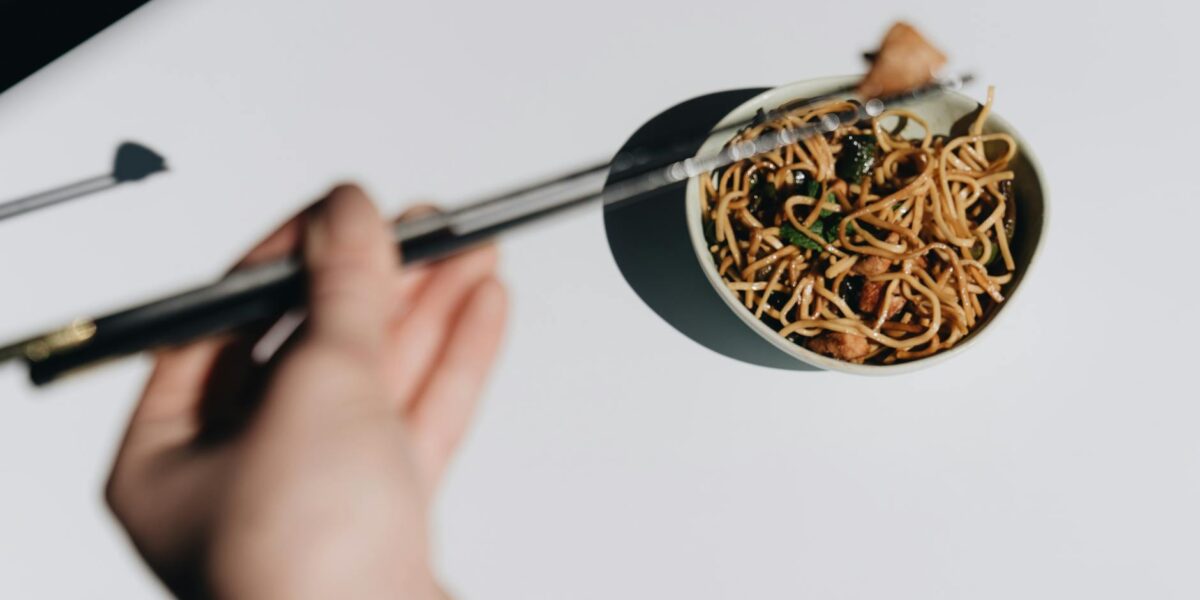
Hand-pulled vs. lo mein / chow mein noodles: Lo mein and chow mein typically use machine-made egg noodles that are boiled then stir-fried or tossed in sauce. You can absolutely use hand-pulled noodles in a stir-fry context — they will have a more rustic, chewy texture than factory noodles. For a classic stir-fried noodle dish, hand-pulled la mian adds a homemade touch that elevates the entire meal.
Frequently Asked Questions
Can I make hand-pulled noodles without alkaline water?
Yes, but the dough will be more elastic and harder to stretch. Without alkaline, you will need to rest the dough longer (at least 2 hours total) and may only be able to pull 4-8 strands before the dough resists. Adding even a small amount of baking soda (1 gram per 300 grams flour) makes a noticeable difference and is highly recommended.
What flour is best for hand-pulled noodles?
All-purpose flour with 10-11% protein content works best for most home cooks. In the US, brands like Gold Medal or Pillsbury all-purpose flour fall in this range. If you want to experiment, try a 70:30 blend of all-purpose to bread flour. Avoid 100% bread flour (too elastic) or cake flour (too weak).
How long does it take to learn hand-pulled noodles?
Most people can produce edible 8-strand noodles within 3-5 practice sessions. Reaching consistent 16-32 strand noodles typically takes 2-4 weeks of regular practice. Professional-level thin noodles (64+ strands) take months to years. The key is making dough regularly — even once a week — so your hands develop the feel for proper dough texture and pulling rhythm.
Why do my noodles always break?
The three most common causes are: (1) insufficient resting time — the gluten hasn’t relaxed enough, so the dough snaps instead of stretching; (2) dough that is too dry — add water 1 teaspoon at a time until the dough feels supple; (3) pulling too fast or jerking the dough — slow, steady, even pressure is essential, especially for beginners.
Can I make hand-pulled noodles gluten-free?
Unfortunately, no. The entire technique depends on the elastic properties of wheat gluten. Without gluten, the dough cannot stretch and fold. Gluten-free noodle alternatives like rice noodles or sweet potato noodles use completely different techniques (extruding or sheeting) and produce a different texture.
How do restaurants pull noodles so fast?
Professional noodle masters have three advantages: (1) they use specialized la mian flour with an optimized protein and alkaline balance; (2) they have perfected their dough formula through thousands of repetitions; (3) they have developed the hand speed and wrist technique through years of daily practice. In Lanzhou, apprentice noodle pullers train for 1-3 years before they are trusted with the pulling station.
What dishes are best for hand-pulled noodles?
Hand-pulled noodles excel in broth-based soups (Lanzhou beef noodle soup, simple chicken broth with scallions), tossed with thick sauces (zha jiang mian, sesame paste noodles), and dressed with chili oil (biang biang mian, you po mian). They also work well in stir-fries, though their irregular texture means they absorb sauce differently than uniform machine-cut noodles. Try them in your next stir-fry for a homemade upgrade.
Can I use a stand mixer to knead the dough?
Yes, a stand mixer with a dough hook can handle the initial kneading (5-7 minutes on medium speed), but you should still finish by hand for the last 2-3 minutes to develop a feel for the dough’s texture. The resting periods remain the same regardless of how you knead. Many noodle purists argue that hand-kneading produces better results because you can feel when the dough is ready, but a mixer works fine for the initial mix.
Tips for Serving and Storing
Serve immediately. Hand-pulled noodles are at their best within seconds of cooking. The texture degrades quickly as they cool and absorb liquid, so have your broth, sauce, or toppings completely prepared before you start pulling.
Cook in batches. If serving multiple people, pull and cook one portion at a time rather than trying to pull all your noodles at once. Fresh noodles waiting on a tray will stick and dry out. Pull, cook, serve — then pull the next batch.
Use plenty of water. Cook noodles in a large pot with at least 4 liters (1 gallon) of boiling water. Overcrowded noodles stick together and cook unevenly. Do not add oil to the water — it is unnecessary and prevents sauce from adhering.
Storing uncooked dough. If you make the dough but are not ready to pull, wrap tightly in plastic and refrigerate for up to 24 hours. Bring to room temperature (about 30 minutes) before pulling. The dough may need a brief knead to restore pliability.
Leftover noodles. Cooked hand-pulled noodles do not reheat well — they lose their signature chew. If you have leftover cooked noodles, toss them in a hot wok with oil, vegetables, and soy sauce for a quick stir-fried noodle dish. The high heat of the wok crisps the exterior and revives some of the texture.
Start Pulling Noodles Today
Hand-pulled noodles are one of the most rewarding techniques you can learn as a home cook. There is something deeply satisfying about transforming a ball of flour and water into dozens of silky, springy noodles with nothing but your hands. The first few attempts will be messy and imperfect — and that is perfectly fine. Every noodle master started with broken dough and uneven strands.
Start with the basic dough recipe in this guide, work through the practice exercises, and within a few sessions you will be pulling noodles that rival many restaurants. Pair them with a classic Chinese recipe and enjoy the unmatched freshness and texture that only hand-pulled la mian can deliver.
Ready to stock up on ingredients? Browse our collection of Asian cooking ingredients to find everything you need for hand-pulled noodles and beyond.

Mei Lin Chen
Mei Lin Chen is an Asian food writer and recipe developer. Melbourne-raised and London-based, she has spent over a decade exploring the rice paddies, hawker stalls, and home kitchens of South-East and East Asia. Her recipes balance traditional technique with everyday practicality.