Last updated: March 26, 2026
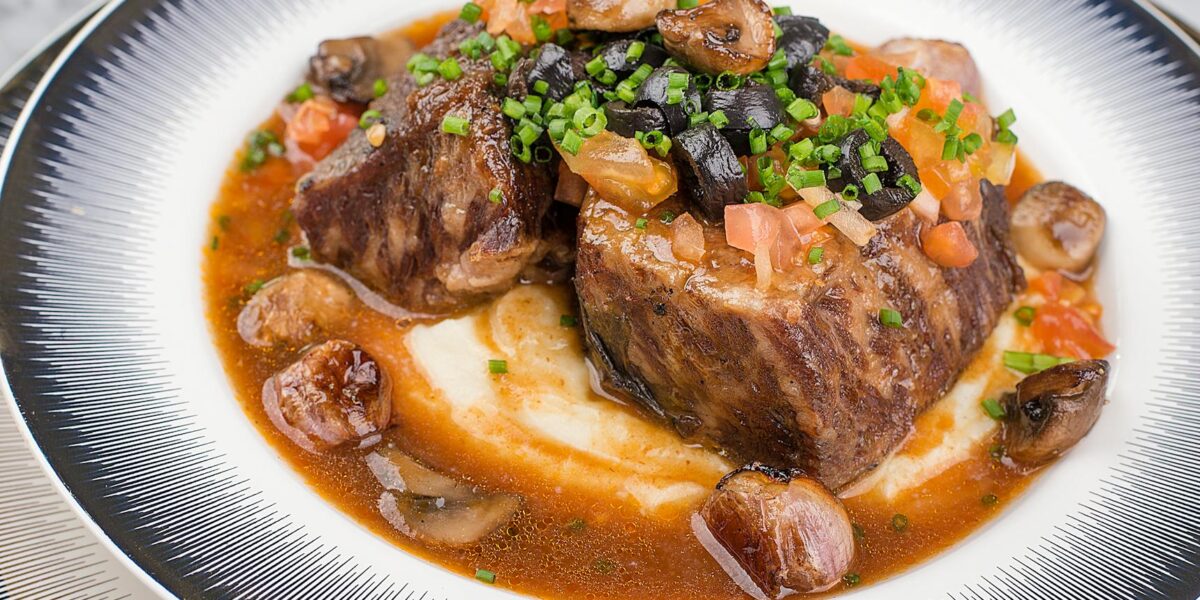
Galbi jjim (갈비찜) is the dish that quiets a Korean dinner table. The lid lifts off a heavy pot, a wave of soy-sweet steam rolls out, and someone always reaches for the rice before grace is finished. Translated literally as ”braised ribs,” galbi jjim takes meaty bone-in beef short ribs and simmers them with garlic, ginger, Asian pear, soy sauce, and rice wine until the meat slumps off the bone and the sauce coats every surface like glossy lacquer. It is a holiday dish in most Korean homes, served at Chuseok and Lunar New Year, but increasingly it has moved into weeknight rotation thanks to the Instant Pot, which compresses three hours of low-and-slow braising into roughly forty-five minutes.
This recipe walks you through the version we cook most often: bone-in short ribs blanched to clear the broth, soaked to draw out blood, then braised with chestnuts, jujubes, daikon, carrots, shiitake, and a final flourish of glass noodles. We will cover the soak, the blanch, the braise, and the rest, plus how to scale the dish for a crowd, what to serve alongside it, and how to coax the leftovers into something even better the next day. Whether you are cooking it for the first time or trying to dial in the version your grandmother used to make, this guide will get you to a pot of glossy, fragrant galbi jjim that tastes like it was simmering all afternoon.
What Is Galbi Jjim?
The word galbi means rib, and jjim refers to a category of Korean dishes that are braised or steamed in a closed vessel. Unlike its more famous cousin galbi gui (grilled marinated short ribs cooked over fire), galbi jjim is gentle, slow, and built around moisture. The cut is the same—usually English-cut bone-in beef short ribs, sometimes called flanken or LA-cut depending on how the butcher slices the bone—but the cooking method draws out collagen, infuses the meat with sweetness from fruit and aromatics, and yields a dish closer to American pot roast than to Korean BBQ.
Historically, jjim dishes belonged to celebration tables. Beef was scarce and expensive on the Korean peninsula for centuries, and a pot of slowly braised short ribs was a quiet way to mark a wedding, a major birthday, or one of the lunar holidays when extended families gathered. Today the dish has shed some of that formality. You will find galbi jjim on the menu at neighborhood Korean restaurants from Los Angeles to London, and the rise of Korean food media in the last decade has turned it into a recognizable comfort food well beyond the Korean diaspora.
Two regional styles dominate. The Seoul-style version, which is the most common, leans sweet and savory with a clear soy-based braising liquid—what we are making today. The Andong style, named for the city in North Gyeongsang Province, is bolder: it adds dried red chilies and a generous hit of black pepper for a spicier, earthier bowl. Once you have the technique down, you can lean either direction.
Why This Recipe Works
Galbi jjim has a reputation for being either too sweet, too salty, or weirdly bloody. Three small steps fix all three problems. First, a long cold-water soak pulls out residual blood that would otherwise cloud the braise and give it an iron-y aftertaste. Second, a quick blanch in boiling water removes scum, fat, and any lingering bone fragments before the meat ever touches the sauce. Third, the sauce uses Asian pear puree as both a tenderizer and a sweetener, which means you do not need as much sugar—the result is a balanced, restaurant-quality glaze that does not lacquer your tongue with sweetness halfway through dinner.
The recipe also relies on the fact that beef short ribs are a forgiving cut. They are heavily marbled, dense with connective tissue, and they can take a long, slow braise without drying out. If you overshoot the cooking time by twenty minutes, the meat just gets more tender. If you undershoot, you can simmer longer with no penalty. That makes galbi jjim a great dish for nervous home cooks—it rewards patience and forgives mistakes in equal measure.
Ingredients You Will Need
This recipe serves 4 generously as a main course, or 6 as part of a larger Korean spread with multiple banchan. Short ribs lose a fair amount of weight during soaking and blanching, so do not be alarmed when the pot looks fuller before the braise than after.
For the short ribs
- 3 pounds (1.4 kg) bone-in beef short ribs, English-cut into 2-inch pieces
- Cold water for soaking (enough to cover by 2 inches)
- 1 tablespoon kosher salt for soaking
For the braising sauce
- 1 large Asian pear (or 1 ripe Bosc pear), peeled and cored
- 1 small yellow onion, peeled and quartered
- 8 cloves garlic, peeled
- 1 (2-inch) knob fresh ginger, peeled
- 3/4 cup (180 ml) soy sauce (preferably Korean jin ganjang)
- 1/2 cup (120 ml) Korean rice wine (mirin or cheongju), or dry sherry
- 1/3 cup (80 ml) brown sugar, lightly packed
- 2 tablespoons honey
- 1 tablespoon toasted sesame oil
- 1 teaspoon freshly ground black pepper
- 4 cups (950 ml) water or low-sodium beef stock
For the vegetables and finishing
- 1 medium daikon radish (about 12 oz / 340 g), peeled and cut into 1.5-inch chunks
- 2 large carrots, peeled and roll-cut into 1.5-inch pieces
- 8 dried shiitake mushrooms, soaked in warm water for 30 minutes, stems trimmed
- 10 peeled chestnuts (fresh, vacuum-packed, or frozen)
- 8 dried jujubes (Korean red dates), pitted if very large
- 4 oz (115 g) Korean glass noodles (dangmyeon), soaked in warm water for 20 minutes
- 2 green onions, cut into 2-inch lengths
- 1 tablespoon toasted sesame seeds
- 1 small red chili or 1/2 teaspoon gochugaru, optional
Choosing the Right Short Ribs
The cut matters more for galbi jjim than for almost any other Korean braise. You want bone-in beef short ribs that have been cut English-style—across the grain into thick chunks roughly two inches square, with one piece of bone in each. This is the same cut you would use for braised short ribs in a French or American kitchen, and most North American supermarkets sell it labeled simply as ”bone-in beef short ribs” or ”English-cut short ribs.”
What you do not want is LA-galbi cut, which is the thin flanken cut used for grilled galbi—those strips have multiple bones running through them and are too thin to braise without falling apart. If your butcher only carries flanken, ask them to cut the rib plate English-style instead. Look for ribs with visible marbling and a generous cap of meat on top of the bone. Skinny, sinewy short ribs will yield a stringy braise no matter how long you cook them.
Two pounds of bone-in short ribs gives you roughly one pound of cooked meat after soaking, blanching, and simmering, so plan accordingly. For four people who like to eat, three pounds is the sweet spot.
Step-by-Step Cooking Instructions
Step 1: Soak the short ribs
Place the short ribs in a large bowl and cover them with cold water by at least two inches. Stir in the tablespoon of kosher salt and refrigerate for at least 1 hour, ideally 2 to 3 hours. The water will turn pink, then a deeper red, as residual blood leaches out. Change the water once halfway through if you can. This step is non-negotiable for a clear, clean-tasting braise. Skipping it gives you a darker, slightly metallic broth.
Step 2: Blanch the ribs
Drain the soaked ribs and rinse them under cold water. Bring a large pot of water to a rolling boil and add the ribs. Boil hard for 8 to 10 minutes, skimming off the gray foam and fat that rise to the surface. Drain the ribs in a colander and rinse them again under cold running water, scrubbing each piece briefly with your hands to remove any remaining scum. Set aside.
Step 3: Make the braising sauce
While the ribs blanch, combine the Asian pear, onion, garlic, and ginger in a blender or food processor. Pulse until very smooth, scraping down the sides as needed. Pour the puree into a measuring cup and add the soy sauce, rice wine, brown sugar, honey, sesame oil, and black pepper. Stir until the sugars dissolve.
Step 4: Build the braise
Place the blanched ribs in a heavy Dutch oven or thick-bottomed pot just large enough to hold them in two layers. Pour the sauce over the meat and add the water or beef stock—enough to nearly cover the ribs. Bring to a boil over high heat, then reduce to a gentle simmer. Cover and cook for 1 hour and 15 minutes, stirring occasionally and skimming any fat that pools on the surface.
Step 5: Add the vegetables
Drain and quarter the soaked shiitake mushrooms, reserving their soaking liquid (you can pour about half a cup of it into the pot for extra flavor—just leave behind any grit at the bottom). Add the daikon, carrots, mushrooms, chestnuts, and jujubes to the pot. Stir gently, cover, and continue simmering for 30 to 40 minutes, until the meat is fork-tender and the vegetables are cooked through but not falling apart.
Step 6: Reduce and finish
Uncover the pot and increase the heat to medium. Let the sauce reduce for 10 to 15 minutes, basting the ribs occasionally with a spoon, until it has thickened to a glossy glaze that coats the back of a spoon. Drain the soaked glass noodles and stir them into the pot for the last 3 to 4 minutes—they will absorb the sauce and turn translucent and slippery. Taste and adjust: if it needs salt, add a splash more soy sauce; if it is too salty, add a teaspoon of honey and a splash of water.
Step 7: Garnish and serve
Scatter the green onions, sesame seeds, and red chili (if using) over the top. Serve the galbi jjim immediately in the cooking pot or transferred to a deep serving dish, with steamed short-grain rice and an array of banchan on the side.
Cooking Method Comparison
Galbi jjim is traditionally a stovetop or oven dish, but pressure cookers and slow cookers can both produce excellent results with minor adjustments. Here is how the methods compare:
| Method | Active time | Total time | Texture | Best for |
|---|---|---|---|---|
| Stovetop Dutch oven | 30 minutes | 2.5 hours | Silky, deeply infused | Sunday cooking, holidays |
| Oven (300F / 150C) | 20 minutes | 3 hours | Even, fall-off-bone | Hands-off cooking |
| Instant Pot / pressure cooker | 20 minutes | 50 minutes | Tender, slightly looser | Weeknights |
| Slow cooker (low) | 15 minutes | 7-8 hours | Very soft, less glaze | All-day cooking |
If you use the Instant Pot, do the soak and blanch the same way, then sauté the meat with the sauce for two minutes, add liquid, and pressure cook on high for 35 minutes with a 15-minute natural release. Add the vegetables and noodles using the sauté function for the last 15 to 20 minutes. The slow cooker requires you to reduce the sauce on the stovetop afterward—the slow cooker simply does not get hot enough to thicken it properly inside the crock.
Tips for the Best Galbi Jjim
- Do not skip the soak. One hour minimum, and longer is better. This is the difference between cloudy and crystal-clear braising liquid.
- Blanch in heavily boiling water. A gentle simmer will not pull out the impurities; you want a hard, rolling boil.
- Use Asian pear if you can find it. The enzyme content is higher than in regular pears or kiwi, and the flavor is cleaner. If you cannot, a Bosc pear plus an extra half-teaspoon of grated ginger will get you close.
- Trim the fat after cooking, not before. The fat protects the meat during the long braise. Refrigerate the dish overnight and lift the solid white cap off the top before reheating, and you will have a much cleaner sauce.
- Brown sugar over white sugar. The molasses in brown sugar gives the sauce a darker, more layered sweetness that white sugar cannot match.
- Roll-cut the carrots and daikon. Roll-cutting (rotating the vegetable a quarter-turn between each diagonal slice) creates more surface area for the sauce to cling to.
- Soak the glass noodles separately. Adding dry noodles directly to the pot makes them gummy and uneven. A 20-minute warm-water soak is non-negotiable.
- Rest the dish for 10 minutes before serving. The flavors continue to meld off the heat, and the sauce thickens slightly as it cools.
Common Mistakes to Avoid
The most common reason home-cooked galbi jjim disappoints is over-reduction. The sauce should coat the back of a spoon, not lacquer it. If you let the liquid reduce too far, the dish goes from glossy to gluey, and the salt and sweetness become unbalanced. Pull the pot off the heat as soon as the sauce naps the meat—it will continue to thicken as it sits.
Another frequent mistake is adding the vegetables too early. Daikon, carrots, and chestnuts cook much faster than the meat, and if you put them in at the start they will dissolve into the sauce by the time the ribs are done. The 1 hour and 15 minute mark is the right window: the meat is mostly tender, the connective tissue is breaking down, and the vegetables have just enough time to take on flavor without disintegrating.
Finally, watch the salt. Korean soy sauces vary in salinity, and supermarket ”low-sodium” soy sauce can be deceptively strong. Taste the sauce after the initial braise but before the final reduction, when there is still time to dilute. If it tastes pleasantly salty at that point, it will be borderline too salty after reduction. Aim for ”just under right” before you reduce.
Variations Worth Trying
Andong-Style Spicy Galbi Jjim
The signature variation from the city of Andong, this version replaces some of the soy sauce with two to three tablespoons of gochujang and adds 6 to 10 dried Korean red chilies, soaked and roughly chopped. The black pepper goes up to a full tablespoon. The result is darker, spicier, and more pungent—a winter dish meant to warm you from the inside.
Pork Galbi Jjim
Substitute pork ribs (country-style or baby back) for the beef short ribs. The cooking time drops to about an hour, and you can lean a little harder on ginger and garlic to balance the richer pork flavor. This version is more common in budget-conscious Korean home cooking and is wonderful with kimchi.
Birthday-Style Galbi Jjim
For dol (first birthday) and major celebrations, the dish is dressed up with quail eggs, ginkgo nuts, sliced gochu peppers, and shredded egg garnish (jidan)—a yellow-and-white julienne of cooked egg yolk and white. It is the same recipe, just garnished with care.
Vegan Galbi Jjim
Swap the meat for hearty mushrooms—king oyster, portobello, and shiitake all work—and use vegetable stock plus a tablespoon of mushroom soy sauce for depth. The cooking time drops dramatically, to about 45 minutes total, but the dish keeps its identity surprisingly well.
Nutritional Information
The values below are an approximation per serving, assuming the recipe serves four. Actual values vary depending on the marbling of your short ribs and how much fat you skim before serving.
| Nutrient | Per serving | % Daily Value* |
|---|---|---|
| Calories | 620 kcal | 31% |
| Total Fat | 32 g | 41% |
| Saturated Fat | 13 g | 65% |
| Cholesterol | 120 mg | 40% |
| Sodium | 1,650 mg | 72% |
| Total Carbohydrates | 42 g | 15% |
| Dietary Fiber | 5 g | 18% |
| Sugars | 22 g | — |
| Protein | 38 g | 76% |
| Iron | 5 mg | 28% |
| Potassium | 900 mg | 19% |
*Percent Daily Values are based on a 2,000-calorie diet. Sodium is the variable you have the most control over—use low-sodium soy sauce and reduce slightly less to keep it under 1,200 mg per serving.
What to Serve with Galbi Jjim
Galbi jjim is rich, sweet, and intensely savory, and it does best surrounded by sharp, fresh, and sour flavors that cut through the braise. A traditional Korean meal sets out three to five banchan around the centerpiece, plus rice and a soup. Here is a balanced spread:
- Steamed short-grain white rice—the absolute essential. The rice soaks up the sauce and tempers the richness.
- Baechu kimchi (fermented napa cabbage) for sourness and crunch.
- Kkakdugi (cubed daikon kimchi) for a colder, sharper bite.
- Sigeumchi namul (seasoned spinach) to add a vegetal, sesame-bright element.
- Kongnamul (seasoned soybean sprouts) for crunch and a touch of bitterness.
- Miyeok-guk (seaweed soup) or a simple clear soup like mu-guk on the side.
For drinks, soju is the obvious pairing—the clean, slightly sweet rice spirit cuts through the fat without competing with the soy sauce. A crisp lager or a dry sparkling wine also works well. If you are serving wine, look for a fruit-forward red with low tannin: a young Pinot Noir, a Beaujolais, or a chilled Gamay handles galbi jjim beautifully.
Storage and Reheating
Galbi jjim is one of those dishes that is genuinely better the next day, and even better the day after that. As it rests in the refrigerator, the connective tissue continues to break down, the flavors deepen, and the fat solidifies on top, making it easy to scrape off for a leaner reheat.
- Refrigerator: Cool the dish to room temperature within two hours of cooking, then transfer it to an airtight container. It will keep for up to 4 days. Lift off the solid fat layer before reheating.
- Freezer: Transfer the meat and sauce (without the glass noodles, which turn mushy when frozen) to a freezer-safe container. Press a piece of parchment directly onto the surface to prevent freezer burn. It will keep for up to 3 months.
- Reheating on the stove: Warm gently in a covered pot over low heat with a splash of water or beef stock to loosen the sauce. Stir occasionally; the goal is to bring it back to a gentle simmer without scorching the bottom.
- Reheating in the microwave: Cover with a damp paper towel and heat in 90-second bursts at 60% power, stirring in between. This avoids the rubbery texture that high-power reheating creates.
- From frozen: Thaw overnight in the refrigerator before reheating. If you must reheat from frozen, do it slowly in a covered pot with extra liquid, breaking up the block as it warms.
What to Do with Leftovers
Half the joy of cooking galbi jjim is the second-day cooking it enables. Shred the leftover meat off the bones and stir it into a bowl of steaming hot rice with a fried egg on top—Korean galbi jjim deopbap. Or chop the meat finely and use it as a filling for kimbap or mandu (dumplings). The braising liquid, strained and reduced, is an excellent base for a quick noodle soup: thin it with stock, add napa cabbage and udon or rice noodles, and finish with green onions and chili flakes.
One of our favorite uses is galbi jjim grilled cheese. Pile shredded leftover meat on sourdough with sharp cheddar, gochujang mayo, and pickled daikon, and grill in butter until the cheese is molten. It sounds wrong; it is exactly right.
Frequently Asked Questions
Can I make galbi jjim without Asian pear?
Yes, though the result will be slightly different. A ripe Bosc or Anjou pear is the closest substitute and works well in a pinch. Half a kiwi or a quarter cup of pineapple juice will give you the enzymatic tenderizing without the right flavor profile. Plain apple sauce works if you reduce the brown sugar to two tablespoons. Avoid using only sugar—you lose the gentle, fruity backdrop that makes the dish taste like galbi jjim instead of a generic soy braise.
What can I substitute for Korean rice wine?
Japanese mirin works well, though it is sweeter—reduce the brown sugar by a tablespoon if you use it. Dry sherry, dry vermouth, or even a dry white wine will give you the alcohol-driven depth that helps tenderize the meat and balance the soy sauce. Avoid Chinese cooking wine or Shaoxing wine, which have a different flavor profile that will throw the dish off.
Why is my sauce cloudy?
Cloudiness almost always traces back to a missed soak or blanch. If you skipped either step, residual blood proteins coagulate during the braise and disperse through the liquid as a milky haze. There is no way to clear it once it happens. The good news is that the dish still tastes correct—it just looks less elegant. Strain the sauce through a fine-mesh sieve before reducing if presentation matters.
Can I make galbi jjim ahead?
Absolutely, and it is one of the few dishes where making it ahead actually improves the result. Cook through step 6 a day in advance, cool, and refrigerate overnight. Lift off the solid fat cap, reheat gently, and add the soaked glass noodles and garnishes just before serving. The flavors deepen overnight in a way that fresh-from-the-pot galbi jjim cannot match.
Is galbi jjim gluten-free?
Not as written, because traditional Korean soy sauce is brewed with wheat. To make it gluten-free, use tamari or a certified gluten-free soy sauce in the same quantity, and double-check that your rice wine is gluten-free as well (most are, but some Korean cooking wines blend in malt). The glass noodles, sometimes called sweet potato starch noodles, are naturally gluten-free.
What is the difference between galbi jjim and kalbi jjim?
Nothing—just romanization. Galbi and kalbi are two ways of writing the same Korean word (갈비). The McCune-Reischauer system favors kalbi, while the Revised Romanization (the official South Korean standard since 2000) uses galbi. Older cookbooks and many Korean-American restaurant menus still use kalbi; we use galbi here for consistency with current Korean usage.
Why are the chestnuts and jujubes important?
Both add subtle sweetness and a connection to traditional Korean celebration cooking, where chestnuts and red dates are symbolic of fertility and prosperity. Practically, chestnuts contribute a starchy, nutty texture that contrasts the soft meat, and jujubes give the sauce a faint dried-fruit perfume that is hard to replace. You can leave both out if you cannot find them—the dish will still be good, just less layered.
Can I cook galbi jjim in a slow cooker overnight?
Yes, with one caveat: the sauce will not reduce in the slow cooker because it does not reach a high enough temperature. Cook the soaked, blanched ribs with the sauce on low for 7 to 8 hours, then transfer everything to a wide pot and reduce the sauce on the stovetop for 10 to 15 minutes before serving. Add the vegetables in the last 90 minutes of slow cooking so they do not turn to mush.
How spicy is traditional galbi jjim?
Seoul-style galbi jjim—the version most home cooks make—is not spicy. The black pepper provides background warmth, but the dish is built around sweet and savory, not heat. The Andong style is genuinely spicy and uses dried Korean chilies and gochujang. If you like heat but want to stay closer to the classic, add half a teaspoon of gochugaru with the garnishes at the end.
What pairs best with galbi jjim for a dinner party?
For an easy but impressive Korean dinner, serve galbi jjim with steamed rice, a sharp napa cabbage kimchi, a bowl of seasoned spinach, and a pot of cold buckwheat tea. Start the meal with japchae or pajeon as a small course, and finish with chilled sliced fruit—Korean pear or Asian melon. The galbi jjim itself is the centerpiece; everything else exists to keep your palate fresh between bites.
The Final Bite
Galbi jjim takes time. There is no shortcut that produces an authentic version in under an hour, even in a pressure cooker, because the dish depends on the patience of soaking, blanching, and resting—steps that no machine can compress. But that time is mostly hands-off, and it is some of the most rewarding waiting in Asian cooking. The kitchen smells incredible. The sauce reduces by inches. The meat goes from firm and bone-bound to slumping and silky in a way that feels almost alchemical.
For more Korean recipes that pair well with this one, see our guides to Korean recipes, traditional kimchi, japchae glass noodles, and bibimbap. To go deeper on the building blocks of Korean flavor, our guides to gochujang and doenjang are good places to start.
Cook this once, and you will understand why galbi jjim is the dish that quiets a Korean dinner table. Cook it twice, and you will start to see how flexible the formula is—how it adapts to spicy or mild, beef or pork or mushroom, holiday spread or weeknight rice bowl. Cook it three times, and it will be in your permanent rotation. There is something about a heavy pot of glossy braised short ribs that earns a permanent spot in any kitchen, no matter where in the world that kitchen is.

Mei Lin Chen
Mei Lin Chen is an Asian food writer and recipe developer. Melbourne-raised and London-based, she has spent over a decade exploring the rice paddies, hawker stalls, and home kitchens of South-East and East Asia. Her recipes balance traditional technique with everyday practicality.