Last updated: March 26, 2026
If you have ever bitten into a glossy slice of soy sauce chicken from a Cantonese roast meat shop, peeled the lid off a styrofoam container of braised eggs at a Taiwanese night market, or watched a Hong Kong cha chaan teng cook ladle dark, fragrant liquid over freshly poached chicken, you have already met master stock. In Mandarin it is called lu shui (卤水), in Cantonese lou seoi, and in English it goes by master stock, master sauce, master broth, or red-cooked stock. It is one of the oldest and most economical aromatic systems in Chinese cooking — a single, deeply spiced soy-based braising liquid that can be cooled, strained, frozen, and reused for years, becoming richer with every use. In some restaurants in Guangzhou, Chaozhou, and Singapore, the same master stock has been simmering and resting on rotation for decades, even passed between generations of cooks the way a sourdough starter is passed between bakers.
This guide walks you through every part of the technique: what master stock actually is, how it differs from a regular braise, the equipment and pantry you need, the spice ratios that produce a balanced base, the step-by-step cooking method, the maintenance routine that keeps it safe and flavorful, the most common mistakes and how to fix them, classic dishes you can make with it (soy sauce chicken, lu wei eggs, beef shank, pork belly, tofu, peanuts, duck wings), advanced regional variations, and a long FAQ. By the end, you should be able to start a master stock this weekend and treat it as a permanent member of your refrigerator for the next several years.
What Is Master Stock (Lu Shui)?
Master stock is a reusable Chinese braising liquid built on three pillars: a savory base (water plus light and dark soy sauce, sometimes stock or rice wine), a sweetener (rock sugar, less commonly maltose or palm sugar), and an aromatic profile (whole spices and aromatics like star anise, cassia bark, fennel seed, cloves, bay leaf, dried tangerine peel, ginger, scallion, sometimes Sichuan peppercorn or licorice root). Proteins and vegetables are gently poached or simmered in this liquid until they take on a deep mahogany color, salt-sweet seasoning, and a perfume of warm spice. The hallmark of the technique is reuse: rather than discarding the cooking liquid, you strain it, chill it, and use it again, topping it up with water, soy, sugar, and a fresh spice sachet each time.
Two regional traditions sit underneath the modern Chinese master stock you see today. The Cantonese tradition (lou seoi or ”brine water”) leans lighter, sweeter, and more delicate, often using rose wine and producing the silky soy sauce chicken hung in roast meat shop windows. The Chaoshan tradition (lou bui), from eastern Guangdong, leans darker and more aggressively spiced, with heavier doses of cinnamon and Chaozhou-style five spice, and is used for goose, duck, beef shank, tofu, and offal. Taiwanese lu wei (卤味) is the night market descendant: a stall display piled high with bamboo shoots, dried tofu, lotus root, eggs, chicken feet, intestines, and quail eggs, all bathed in the same stall’s signature stock. The technique you are learning here is the common backbone of all three.
Master Stock vs. Other Braising Liquids
It is easy to confuse master stock with hong shao (red braising) or with a Western braise. They overlap, but the technique and the relationship to the liquid are different. Understanding the distinction is the difference between a one-night dinner and a multi-year kitchen tradition.
| Technique | Liquid Reused? | Color | Sweetness | Typical Cook Time | Hallmark Dishes |
|---|---|---|---|---|---|
| Master stock (lu shui) | Yes — for years | Deep amber to mahogany | Moderate, balanced | 20 min to 2 hr poach | Soy sauce chicken, lu wei eggs, beef shank |
| Hong shao (red braise) | No — single use | Glossy red-brown | Pronounced caramel | 1–3 hr braise | Hong shao rou, red-braised fish |
| Western braise | No — sauce served | Brown | None to slight | 2–4 hr braise | Pot roast, coq au vin, osso buco |
| Court bouillon | No — discarded | Pale | None | 10–30 min poach | Poached fish, shellfish |
| Japanese tare | Yes — but used as sauce, not poach | Dark | High | Brushed/dipped | Yakitori, eel |
The key conceptual shift: in a Western braise, the liquid is part of one dinner and is reduced into the final sauce. In master stock, the liquid is the long-lived vehicle, and the protein you cook in it is the dinner. The protein leaves; the stock stays. Each time you cook in it, the stock absorbs gelatin, fat, and aromatic compounds from the meat, and the spices you add steep deeper. After ten or twenty uses, the stock has a thickness and depth that no fresh batch can match.
Equipment You Need
One of the joys of lu shui is that it is forgiving on equipment. You do not need a wok, a clay pot, or any specialty hardware. What you do need is a vessel that lets you submerge a whole chicken or a slab of pork belly without the protein touching the bottom too aggressively, plus a few storage containers for the off-stove life of the stock.
- A tall, heavy stock pot or Dutch oven, 5 to 8 quarts. Tall is more important than wide — you want the liquid level to clear the top of a whole bird with minimal liquid waste. A 6-quart Dutch oven or a Chinese sand pot (shaguo) both work beautifully. Avoid thin aluminum, which scorches sugar and reacts with soy.
- A spice sachet. Cheesecloth tied with kitchen twine, a stainless mesh tea ball, or disposable tea filter bags. Loose spices in the stock fragment over time and clog the strainer; a sachet keeps cleanup sane.
- A fine-mesh strainer or chinois. Essential after each use to remove protein scum, fat, and broken aromatics.
- A wide, shallow heatproof container for cooling. A roasting pan or hotel pan works. The faster the stock drops below 40°F (4°C), the safer and more flavorful it stays.
- Food-safe storage. A glass or BPA-free plastic jar with a tight lid for refrigerator storage; quart freezer bags or deli containers for freezer storage.
- A label with the date. This is not optional. You will lose track if you do not date every use.
The Pantry: What Goes Into a Foundation Master Stock
There is no single canonical master stock recipe — every household and every shop tweaks the ratios — but there is a core grammar. Hit these proportions and you will have a stock that performs as well as a Cantonese roast meat shop’s. Adjust upward as you scale.
| Component | Ingredient | Amount (for ~3 quarts) | Role |
|---|---|---|---|
| Liquid base | Water | 2.5 quarts (2.4 L) | Volume; carries flavor |
| Liquid base | Light soy sauce (sheng chou) | 1.5 cups (360 ml) | Salt, savor, primary seasoning |
| Liquid base | Dark soy sauce (lao chou) | 1/3 cup (80 ml) | Color, mellow molasses depth |
| Liquid base | Shaoxing wine | 1/2 cup (120 ml) | Aromatic lift; cuts richness |
| Sweetener | Yellow rock sugar | 3 oz (85 g) | Balance, gloss, mouthfeel |
| Spice — required | Star anise | 4 whole pods | Anchor warmth, anise |
| Spice — required | Cassia bark or cinnamon stick | 1 stick (3 inches) | Sweet bark warmth |
| Spice — required | Fennel seed | 1 tsp | Sweet anise echo |
| Spice — required | Whole cloves | 4–6 | Sharp depth |
| Spice — required | Bay leaves | 2 | Herbal underline |
| Spice — recommended | Dried tangerine peel (chenpi) | 1 small piece | Bitter brightness |
| Spice — recommended | Sichuan peppercorn | 1 tsp | Floral numbing tingle |
| Spice — optional | Sand ginger / cardamom / licorice / galangal | 1 tsp / 2 pods / 1 slice / 2 slices | Regional signatures |
| Aromatic | Fresh ginger, smashed | 2-inch knob | Vegetal warmth |
| Aromatic | Scallions, knotted | 4 stalks | Allium freshness |
| Aromatic | Garlic, smashed | 4 cloves | Background savor |
A few notes on sourcing. Light soy sauce is the salty, thinner one labeled 生抽 — Pearl River Bridge or Lee Kum Kee Premium Light are reliable. Do not substitute Japanese koikuchi shoyu; it is sweeter and less salty and will throw the balance. Dark soy sauce (老抽) is thicker, slightly sweet, and used for color — a teaspoon-level seasoning, not a salt. Yellow rock sugar melts cleanly without the off-notes of brown sugar; if you only have white sugar, use 20% less. Shaoxing wine can be replaced with dry sherry. Whole spices should be fresh — if your fennel seed has been in the cabinet since the previous administration, replace it. Stale whole spices are a major source of weak, dusty master stock.
Step-by-Step: Building Your First Master Stock
The first batch is always slightly less rich than later ones — it has not yet been ”trained” by a few rounds of chicken or pork. That is normal. Cook a whole bird or a couple of pounds of pork belly in it and you will already taste the difference on the second use.
Step 1: Build the spice sachet
Combine the star anise, cassia, fennel seed, cloves, bay leaves, tangerine peel, Sichuan peppercorn, and any optional spices into a square of cheesecloth. Tie tightly with kitchen twine, leaving a tail long enough to hang over the side of the pot for easy retrieval. Sachet bundling matters: loose cloves and Sichuan peppercorns, in particular, will float through your strainer and find their way into someone’s mouth.
Step 2: Toast the spice sachet (optional but recommended)
Some cooks dry-toast the sachet in the empty stock pot over medium heat for 60 to 90 seconds before adding liquid. This blooms the volatile oils in the star anise and cassia and gives the finished stock a more pronounced perfume. Watch closely — burned cloves are bitter for the entire life of the stock.
Step 3: Caramelize the rock sugar (optional)
For deeper color and a faint bitter caramel note, melt the rock sugar in 2 tablespoons of neutral oil over medium-low heat in the stock pot until it turns the color of weak tea. Standing by with the soy sauce ready: the moment the sugar is amber, pour in the soy and water (carefully — it will sputter and steam). This is a Cantonese roast meat shop trick. If you skip this step, simply add the sugar with the rest of the liquid; the difference is real but not enormous on the first batch.
Step 4: Combine and simmer
Add the water, light soy sauce, dark soy sauce, Shaoxing wine, ginger, scallion knots, garlic, and the spice sachet to the pot. Bring to a gentle simmer over medium heat — never a hard boil, which scorches the soy and dulls the spices. Once you see lazy bubbles breaking the surface, drop the heat to maintain that level. Simmer 30 to 40 minutes uncovered to let the spices infuse and to allow about 10% of the liquid to reduce. Taste. The stock should be salty, sweet, and warmly aromatic — assertive but not punishing. If it is one-note salty, add a small piece of rock sugar; if flat, add half a teaspoon more dark soy.
Step 5: Cook your first protein
For a debut run, a 3 to 3.5 pound whole chicken (soy sauce chicken) is unbeatable: it teaches you the gentle poach that defines the technique and seasons the stock for everything that follows. Lower the bird breast-down into the simmering stock, return to a bare simmer, and poach 25 minutes. Turn off the heat, cover, and let stand undisturbed in the hot stock for another 30 to 40 minutes — this carryover finishes the bird without overcooking. Lift out, brush with sesame oil, and let rest 10 minutes before chopping. Other suitable first-runs: a slab of pork belly (45 to 60 minutes simmer + 30 rest), a dozen peeled hard-boiled eggs (15 minutes simmer, 4 hours steep), or 2 lb beef shank (90 minutes simmer + cool in stock overnight).
Step 6: Strain, cool, store
Remove and discard the spice sachet, the scallions, ginger, and garlic. Strain the stock through a fine-mesh sieve into a wide, shallow container. Cooling fast matters — set the container in an ice bath or a cold-water sink for 30 minutes, stirring occasionally, until the stock drops below 70°F (21°C). Transfer to clean jars or freezer-safe containers. Refrigerate for up to 5 days; freeze for up to 6 months. Label with the date and the use number (”Use 1 — March 26, 2026”).
Maintaining the Master Stock Across Many Uses
This is where master stock departs from any other braise you have made. The stock is now a living member of your refrigerator. Treated correctly, it will get richer and more interesting every time you cook in it. Treated carelessly, it will sour, separate, or become unsafe. The maintenance routine is simple but non-negotiable.
- Always re-boil before use and after use. Bring the stock to a full rolling boil for at least 3 minutes whenever you take it out of the fridge — this is your kill step against any bacteria that survived storage. After cooking and before storing, bring it back to a boil briefly, skim the foam, then cool fast.
- Strain after every use. Bits of meat, skin fragments, and broken spice can ferment. Pour through a fine-mesh strainer or chinois every single time.
- Refresh the spices on a schedule. Whole spices give up most of their oils after one to two uses. Add a fresh, smaller sachet (about 60% of the original quantity) every second or third use, or whenever the perfume noticeably fades.
- Top up the liquid level and rebalance. The stock loses volume to evaporation and to the protein. After each use, add water, light soy, a splash of dark soy, and a small chunk of rock sugar to return to the original ratio. Taste before you cook the next protein.
- Skim the fat carefully. Some fat carries flavor; too much makes the stock greasy and shortens shelf life. After chilling, lift the cold fat cap, save half, discard half.
- Refrigerate within 2 hours of cooling. Master stock at room temperature for an afternoon is a textbook food-safety problem.
- Freeze for long absences. Going on vacation? Freeze the stock. It will pick up exactly where you left off when thawed.
- Trust your nose. A healthy master stock smells like spice, soy, and roast meat. If it smells sour, fizzy, yeasty, or off, throw it out without hesitation. Decades-old shop stocks survive because they are reboiled and reused daily — at home, less frequent use means more vigilance.
Common Mistakes and How to Fix Them
| Mistake | What Happens | How to Avoid It | How to Fix It |
|---|---|---|---|
| Hard boil instead of bare simmer | Soy scorches, spices turn bitter, protein toughens | Hold at 195–205°F (90–96°C), surface barely stirring | Strain, dilute with water, add a touch of sugar |
| Too much dark soy sauce | Stock turns inky, bitter, opaque | Use dark soy as a coloring agent, not seasoning — 1:4 vs light soy max | Dilute with water and light soy in equal parts |
| Stale or insufficient whole spices | Flat, dusty, perfume-free stock | Buy whole spices in small quantities; replace yearly | Add a fresh sachet and simmer 20 minutes |
| Loose spices in stock | Cracked star anise points and Sichuan husks in food | Always use a sachet | Strain through cheesecloth-lined chinois |
| Skipping the spice refresh | Stock weakens after 3–4 uses | Add 60% sachet every 2–3 uses | Add full fresh sachet, simmer 30 minutes |
| Not topping up the liquid | Stock becomes oversalted as water evaporates | After each cook, add water + soy in original ratio | Dilute with plain water and rebalance sugar |
| Cooling slowly at room temperature | Bacterial growth, sour stock, possible food poisoning | Ice bath; refrigerate within 2 hours | If in doubt, discard — do not gamble |
| Skipping the re-boil | Foodborne illness risk on next use | Always 3-minute rolling boil before adding new protein | Boil now; do not eat anything previously poached without it |
| Cooking strong-flavored protein once and trying to recover | Lamb or sheep funk lingers for many uses | Maintain a separate ”wild meat” stock for lamb, mutton, game | Dilute heavily, refresh spices, add coffee filter–strained stock; or restart |
| Adding raw garlic late in life of stock | Garlic ferments off-notes during storage | Add garlic only when actively cooking; remove with strainer after | Strain, discard residual garlic, re-boil |
| Using thin aluminum pot | Stock takes on metallic taste | Use stainless, enameled cast iron, or clay | Transfer to inert pot; if taste persists, restart |
| Treating it like a soup | Eating the stock dilutes and depletes it | Master stock is a poaching medium, not a sauce or soup | Reduce a separate ladle to make a glaze; leave the master stock intact |
Practice Exercises: Building Your Skill
Master stock rewards repetition more than reading. The flavor logic only fully clicks once you have cooked a few different proteins in the same stock and tasted how each contributes back. Use these exercises in order; each one teaches a different aspect of the technique.
Exercise 1: The Egg Flight
Hard-boil a dozen eggs and peel them. Divide into three batches. Simmer batch one in fresh stock for 5 minutes, then steep off-heat for 30 minutes. Simmer batch two for 15 minutes, steep 2 hours. Simmer batch three for 5 minutes, steep overnight in the fridge. Eat all three side by side. You now understand how steeping time, not cook time, determines flavor depth in master stock — the lesson that governs every protein you will ever poach in it.
Exercise 2: The Soy Sauce Chicken
Poach a whole 3-pound chicken following the gentle 25-minute simmer + 35-minute steep method above. Reserve a small ladle of stock, reduce it by half with a knob of butter or a teaspoon of cornstarch slurry, and serve as a glaze. The chicken should be silky, the skin amber-translucent, the leg juices running with a faint pink at the joint but firm and safe. This is the dish that makes the technique unforgettable.
Exercise 3: Lu Wei Bowl
On a single day, simmer firm tofu (15 min + 30 min steep), shelled raw peanuts (90 min), pressed bean curd (20 min + 1 hr steep), bamboo shoots (15 min), and a few duck wings (45 min) in your stock — in that order, easiest-flavored to most-aggressive. Cool, slice, arrange on a platter with cilantro and chili oil. This is a Taiwanese night-market dinner at home and shows you how a single stock can produce a multi-course meal.
Exercise 4: The Beef Shank Test
Tie 2 lb beef shank with butcher’s twine, simmer 90 minutes, then cool overnight in the stock in the refrigerator. Slice paper-thin against the grain the next day. The shank should be deeply spiced, sliceable, and gelatinous at the edges. This dish teaches you how master stock can also be a slow-cooking medium and how overnight rest tightens texture for cold cuts.
Exercise 5: The Six-Month Audit
After your stock has been through six to ten cooks, taste a teaspoon cold against a teaspoon of freshly made stock from the same recipe. Note the differences: the older stock should taste rounder, more savory, less sharp, with a subtle ”fond” depth that comes only from accumulated meat juices. This is the payoff of the technique. If your old stock tastes flat or off instead, your maintenance routine is the culprit — usually under-refreshing the spices or letting the salt creep too high.
Advanced Tips From Roast Meat Shop Cooks
- Run separate stocks for separate animal families. Many serious shops keep one stock for chicken/pork/eggs/tofu (the ”civilian” stock) and a second for beef/lamb/duck (the ”strong” stock). Cross-contamination between them muddies both. At home, one stock is fine if you stick mostly to chicken, pork, and eggs.
- ”Train” the stock with chicken bones early. If your first batch tastes thin, simmer 1 lb of roasted chicken backs and necks in it for 90 minutes before any ”real” cooking. The gelatin and chicken fond add immediate body.
- Use rose wine (mei kuei lu chiew) for Cantonese-style soy sauce chicken. A tablespoon added at the end of cooking gives the unmistakable floral signature you taste in Hong Kong roast meat shops.
- Add a piece of dried scallop or dried shrimp to each cook. A single conpoy or a teaspoon of dried shrimp deepens the umami without making the stock taste seafoody.
- Score the protein for color. Lightly scoring the surface of pork belly or beef shank lets the dark soy and spice penetrate further, producing a deeper mahogany ring on the cut surface.
- Brush poached meats with sesame oil before resting. The oil locks in moisture, adds gloss, and is the visual signature of cha siu and soy sauce chicken.
- Reduce a small ladle into a sauce. Never reduce the master stock itself — but reduce a half-cup ladle with a teaspoon of cornstarch slurry into a glossy spooning sauce served over the sliced meat.
- Keep a stock journal. A small index card next to the jar with date, use number, what you cooked, and any tweaks. After two years it becomes a record of your kitchen.
- For a lighter ”white” master stock, omit the dark soy and use only light soy with a splash of fish sauce or salt. This Chaoshan-style ”white lou” is excellent for chicken, squid, and tofu and produces a translucent, rather than mahogany, finish.
- Do not overthink the spice mix. The five ”must-have” spices (star anise, cassia, fennel, clove, bay) cover 80% of the flavor. Everything else is regional flourish.
Recipe Examples: What to Cook in Your Master Stock
Cantonese Soy Sauce Chicken (See Yau Gai)
The classic. A whole 3 to 3.5 lb chicken, patted dry. Bring 3 quarts of master stock plus 1 tablespoon of rose wine to a gentle simmer. Lower the bird breast-down (use a wide spider or chopsticks under the wings to avoid splashing). Hold at a bare simmer 25 minutes, then turn off heat, cover, and steep 35 minutes more. Lift, drain, brush with toasted sesame oil, rest 10 minutes, chop into bone-in pieces with a cleaver, arrange on a platter, drizzle with a reduced ladle of the stock as glaze. Serve with steamed jasmine rice, scallion-ginger oil, and pickled cucumber.
Lu Wei Tea Eggs (Chaye Dan)
Hard-boil 12 eggs for exactly 8 minutes, ice-shock, then crack the shells all over with the back of a spoon — but do not peel. Submerge in simmering master stock with two tablespoons of strong black tea leaves (lapsang souchong or pu-erh) tied in a sachet. Simmer 30 minutes, turn off, steep refrigerated overnight. Peel cold to reveal the marbled brown crackle pattern. Eat sliced over rice, halved over noodles, or whole as a snack.
Lu Beef Shank for Cold Slicing
Tie 2 lb beef shank tightly with butcher’s twine into a uniform cylinder. Brown on all sides in 1 tablespoon oil over high heat (optional but adds depth). Submerge in master stock with an extra star anise. Simmer 90 minutes, then cool in the stock overnight in the refrigerator. The next day, slice paper-thin against the grain, fan on a platter, drizzle with chili oil and a teaspoon of the stock. Excellent over noodles or as part of a cold platter for Chinese New Year.
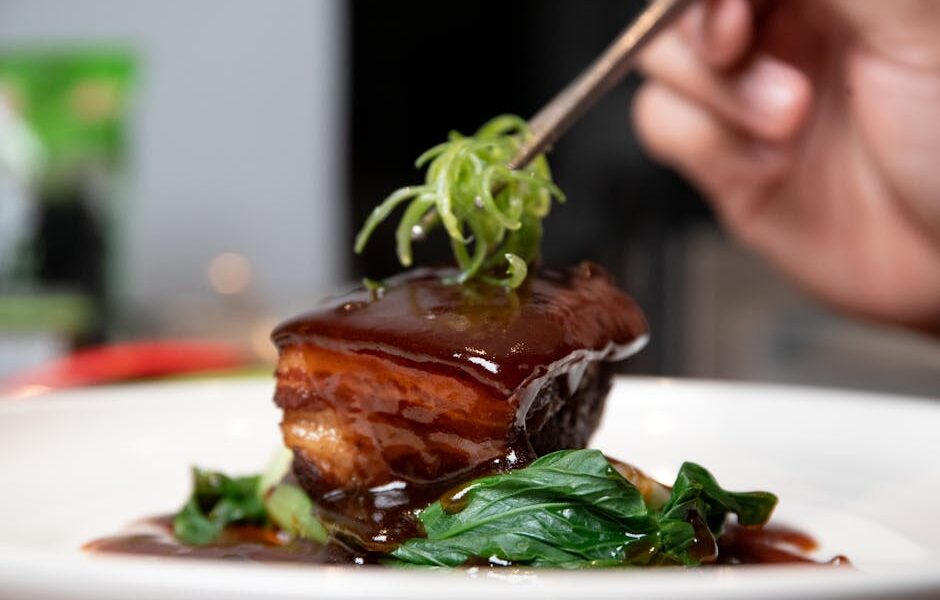
Lu Pork Belly
A 1.5 lb slab of skin-on pork belly, blanched 5 minutes in boiling water, then submerged in simmering master stock. Hold at a bare simmer 50 minutes, then steep off-heat 30 minutes. Lift out, cool to room temperature, then chill 2 hours for clean slicing. Cut against the grain into 1/4-inch slabs. Excellent over rice with a few drops of black vinegar, or stuffed into steamed bao with cilantro and pickled mustard greens.
Lu Tofu and Peanut Snack Plate
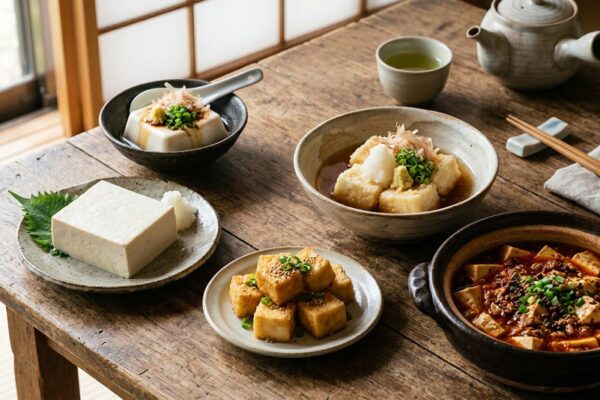
A vegetarian-friendly Taiwanese night-market plate. Simmer 1 cup raw shelled peanuts (skin on) in stock for 90 minutes until tender. Separately, simmer a brick of pressed five-spice tofu (doufugan) for 20 minutes, then steep 1 hour. Slice the tofu into matchsticks, drain the peanuts, dress both with a teaspoon of sesame oil, a pinch of cilantro, and chili oil. Eat with cold beer.
Regional Variations Around Asia
Lu shui has cousins across Asia — every culture that braised meat in a savory liquid eventually figured out reuse. Knowing the variations helps you understand which spices are essential and which are signature.
- Cantonese (Hong Kong, Guangzhou): The lightest and most refined. Lots of rock sugar, rose wine, modest spice load, and a deep mahogany finish dominated by star anise and cassia. The home of soy sauce chicken.
- Chaoshan (eastern Guangdong): Heavier on cinnamon, more aggressive sweetness, sometimes with ground galangal or sand ginger. Famous for braised goose (lou ngo) — slabs of glossy goose breast served with a garlic-vinegar dip.
- Sichuan and Chongqing: Sichuan peppercorn and dried chili are leaned into; the stock has a tingling numbing edge. Used for lu wei chicken feet, gizzards, beef heel.
- Taiwanese night market lu wei: Often slightly sweeter and lighter than mainland versions, frequently flavored with rock sugar and Taiwanese soy paste (jiang you gao). Used for an unbelievable variety of items — vegetables, mushrooms, fishballs, intestines, quail eggs.
- Singaporean and Malaysian Hokkien: Lor (滷) is the local descendant. Pork is the dominant protein and a slightly thinner, sweeter, more anise-forward stock is used. Lor mee — wheat noodles in a thickened lor gravy with braised pork — is the signature dish.
- Vietnamese kho: Not technically reused as a master stock, but the same idea of soy and caramel-braising lives in dishes like thit kho (caramel pork belly with eggs). The technique influence is unmistakable.
- Australian fine dining (Tetsuya’s, Neil Perry): A widely cited Western adaptation; chefs like Tetsuya Wakuda popularized the master stock for poaching squab and quail in modern restaurant cooking. The gateway drug for many Western cooks.
Food Safety and Stock Longevity
This is the section most home cooks skip and later regret. Master stock is shelf-stable for years only because of consistent reboiling. The high salt and sugar levels suppress most microbial growth, but they do not eliminate it. The principles are simple and align with standard food-safety guidance.
- Cool fast. Shallow container, ice bath, into the fridge within 2 hours. The danger zone is 40°F to 140°F (4°C to 60°C); minimize the time spent there.
- Refrigerate at 40°F or below. Confirm your fridge temperature with a thermometer; many home fridges run warm.
- Reboil for 3 minutes before each use. A full rolling boil, not just a simmer. This is your kill step for any organisms that grew during storage.
- Reboil before storage. After cooking, bring back to a boil, skim, then cool fast.
- If in doubt, throw it out. Sour smell, fizzy bubbles when warming, mold on the surface, off color, slimy texture — all reasons to discard. Do not gamble; the stock is replaceable, your weekend is not.
- If you will not use it within 5 days, freeze. Master stock freezes perfectly. Quart freezer bags are convenient. A frozen-and-thawed stock performs identically to a fresh-from-fridge one.
- Restaurants reuse stocks for years because they reboil daily. Use frequency is the key. A stock that lives in your fridge for 3 weeks untouched is more dangerous than one cooked in twice a week.
Master Stock and the Rest of Your Asian Pantry
Lu shui sits at the center of a constellation of Chinese aromatic techniques. If you are building out your skills, the natural neighbors to learn next are red-braising (hong shao), which uses many of the same spices in single-batch form, and char siu, which adds a roasting step to a similar marinade. The pantry overlap is significant: the same soy sauce, Shaoxing wine, star anise, and Sichuan peppercorn serve all three. If you have already learned velveting for stir-fries and wok stir-frying for weeknight cooking, master stock fills out the slow side of the same playbook — the technique you reach for on a Saturday afternoon when you want the kitchen to smell like a Cantonese roast meat shop. For a broader survey, see our overview of Asian cooking techniques every home cook should master.
Frequently Asked Questions
How long does master stock really last?
Indefinitely, in principle, if you reboil before and after each use, refresh spices, top up liquid, and cool fast. There are documented restaurant stocks in continuous use for decades. At home, with regular use (every 1–2 weeks) and proper handling, a stock easily lives for years. If neglected for more than 5 days in the fridge or 6 months in the freezer, restart.
Can I make master stock in a pressure cooker or Instant Pot?
You can build the initial spice infusion in 15 minutes on high pressure, but you should not cook protein in it under pressure — the gentle poach is what gives master-stock chicken and pork their silky texture. Use the pressure cooker for the initial spice extraction, then transfer to a regular pot for cooking.
What is the difference between master stock and soy sauce braise?
A soy sauce braise (hong shao) is single-use and reduced into a sauce. Master stock is a long-lived, reusable poaching medium that is strained and stored. The ingredients overlap heavily; the relationship to the liquid is the difference.
Can I cook fish in my master stock?
Generally no — fish leaves a fishy note that is hard to remove and that lingers across many uses. If you must, use a small portion of stock for the fish and discard that portion afterward, rather than returning it to the main jar. The same caution applies to lamb, mutton, and game.
Why does my stock taste flat after a few uses?
Almost always under-refreshed spices or evaporation that left the stock more salty than aromatic. Add a fresh half-strength sachet, simmer 30 minutes, then taste and rebalance the sugar.
Can I make a vegetarian master stock?
Yes. Use the same liquid base and spices, and ”train” the stock with dried mushrooms (shiitake), kombu, and a piece of dried bean curd skin instead of meat. The result is excellent for tofu, tempeh, mushrooms, root vegetables, and eggs. Without animal gelatin and fat, the stock will taste cleaner and brighter rather than richer over time.
What if I do not have rock sugar?
White granulated sugar works (use about 20% less by weight). Brown sugar adds a molasses note that can muddy the spices; avoid it on the first batch. Honey is too floral. Maltose, used in some Cantonese roast meat shops, gives an unmatched gloss but is hard to find — rock sugar is a fine everyday substitute.
Do I need to add new soy sauce every time?
Yes — proteins absorb salt and you must replace what they take. After every cook, top up to the original liquid level with about 70% water and 30% light soy sauce, plus a small splash of dark soy and a chunk of rock sugar. Taste before the next cook and adjust.
My stock smells slightly sour. Can I save it?
If the sourness is faint and the stock has only been in the fridge a few days, a hard 5-minute boil sometimes restores it. If the sourness is pronounced, fizzy, or accompanied by mold or off-color, discard. The cost of restarting a stock is one Saturday afternoon; the cost of a foodborne illness is much higher.
Can I freeze master stock and pick up where I left off?
Yes — this is the standard advice for home cooks who do not use the stock weekly. Freeze in 1-quart portions, thaw in the refrigerator overnight, reboil 3 minutes, top up with water and soy, and cook. The flavor is indistinguishable from a fresh-from-fridge stock.
Why do restaurants keep their master stock secret?
Because over years of use, a shop’s stock develops a unique balance of salt, sugar, spice, gelatin, and accumulated meat fond that is genuinely irreproducible. The ”secret” is partly the spice ratio but mostly the time. A stock you start today will be different from your neighbor’s stock started today, and both will be different again in five years. This is the romance of the technique — and the reason it has survived in Chinese kitchens for so long.
What proteins should I never cook in my master stock?
Strong-flavored fish, lamb, mutton, and game animals leave residual flavor that ruins the stock for delicate proteins like chicken or tofu. Keep a separate ”strong” stock if you want to cook these. Also avoid anything you would not be willing to taste in every future dish — onions in large quantities, raw garlic stored in the stock, blue cheese (yes, people have tried).
Is the spice list flexible?
Very flexible, within reason. The ”must-haves” are star anise, cassia, fennel seed, clove, and bay leaf. Everything else is regional signature — Sichuan peppercorn for tingle, tangerine peel for brightness, sand ginger for Cantonese roast meat character, licorice root for Chaoshan goose, cardamom for warmth. Start simple, build over time.
How big a batch should I start with?
Three quarts is the sweet spot for a home kitchen — enough to submerge a whole chicken or a slab of pork belly without using a giant pot, small enough to fit in a single jar in the fridge. Scale up later if you find yourself cooking weekly.
Final Thoughts: Why Master Stock Belongs in Every Asian Kitchen
Master stock is the rare cooking technique that gets better the longer you practice it — not because your skill improves, though that helps, but because the medium itself improves. The stock you start this weekend will be a different and richer thing in two years, and a different and even richer thing in five. Few other techniques in the home cook’s repertoire reward longevity that way. It is also one of the most economical: a single batch of stock costs maybe twelve dollars in soy, sugar, spices, and wine, and it produces dozens of dinners worth of beautifully poached chicken, eggs, pork belly, beef shank, tofu, and peanuts.
If you have read this far, the next step is to build the sachet and put a pot on the stove this weekend. Start with a whole chicken, since it teaches the gentle-poach rhythm faster than anything else. Strain, cool, jar, and label. Two weeks later, do eggs. A month after that, pork belly. Within a year you will have a refrigerator member that you reach for the way other cooks reach for their olive oil — automatic, grounding, foundational. That is the practical magic of lu shui, and it is more than worth the small ritual of maintenance it asks in return.

Mei Lin Chen
Mei Lin Chen is an Asian food writer and recipe developer. Melbourne-raised and London-based, she has spent over a decade exploring the rice paddies, hawker stalls, and home kitchens of South-East and East Asia. Her recipes balance traditional technique with everyday practicality.