Last updated: March 10, 2026
Afghan food is one of Central Asia’s best-kept culinary secrets — a cuisine shaped by millennia of trade, migration, and geography. Sitting at the crossroads of the Silk Road, Afghanistan absorbed flavors from Persia, India, China, and the Middle East, forging a distinct culinary identity that prizes slow-cooked meats, fragrant rice dishes, hand-pulled breads, and bold spice blends. Whether you’ve tasted kabuli pulao at a local Afghan restaurant or are discovering this cuisine for the first time, this guide covers everything you need to know about Afghan food: its history, essential ingredients, must-try dishes, cooking techniques, and how to plan an Afghan meal at home.
What Is Afghan Food? A Brief Introduction
Afghan cuisine (also called Afghani food) is the traditional cooking of Afghanistan, a landlocked country in Central-South Asia bordered by Pakistan, Iran, Turkmenistan, Uzbekistan, Tajikistan, and China. The cuisine reflects Afghanistan’s position as a cultural crossroads — you’ll find Persian-influenced rice pilafs, Indian-style spice blends, Central Asian dumpling traditions, and Middle Eastern grilling techniques all woven into a single culinary tradition.
At its core, Afghan food revolves around a few pillars: long-grain rice (often basmati), slow-cooked lamb and beef, fresh and dried fruits, yogurt, flatbreads baked in clay ovens (tandoors), and aromatic spices like cumin, coriander, cardamom, and saffron. Meals are communal, typically served on a large shared platter called a dastarkhan (tablecloth spread on the floor), and hospitality is central to Afghan dining culture.
The History and Regional Diversity of Afghan Cuisine
Afghanistan’s culinary history stretches back thousands of years. The ancient Silk Road trade routes that passed through Afghan territories brought spices from India, dried fruits from Persia, noodle-making techniques from China, and grilling traditions from the Middle East. Each wave of influence left its mark on the cuisine.
Northern Afghanistan (Mazar-i-Sharif, Balkh)
The northern regions share strong culinary ties with Uzbek and Turkmen cooking. Here you’ll find mantu (steamed dumplings), ashak (leek-filled dumplings), and rich horsemeat dishes. The cuisine leans heavily on dairy — yogurt sauces, qurut (dried whey balls), and fresh cream are staples. The fertile plains around Mazar-i-Sharif produce excellent melons, grapes, and almonds that feature prominently in local dishes.
Kabul and Central Afghanistan
As the capital and cultural hub, Kabul’s food scene blends influences from every region. This is where you’ll find the most refined versions of kabuli pulao, the national dish. Street food thrives here — bolani (stuffed flatbread), pakora (fritters), and grilled chapli kebab are everywhere. Kabul’s cuisine also shows the strongest Persian influence, with elaborate rice dishes colored with saffron and garnished with nuts and dried fruits.
Eastern Afghanistan (Jalalabad, Nangarhar)
The eastern provinces bordering Pakistan show strong Pashtun culinary traditions. The food is heartier, with more emphasis on grilled meats, naan bread, and simple yet intensely flavored dishes. Chapli kebab — a spiced meat patty — originates from this region. The warmer climate also means citrus fruits, sugarcane, and fresh vegetables play a bigger role.
Western Afghanistan (Herat)
Herat, close to the Iranian border, has the strongest Persian culinary influence. Dishes here tend to be more refined and subtly spiced. Saffron cultivation in Herat province has made it a cornerstone ingredient. You’ll find more stew-based dishes (qorma), elaborate rice preparations, and sweets influenced by Iranian confectionery traditions.
Southern Afghanistan (Kandahar)
Kandahar is famous for its pomegranates (considered among the world’s best), grapes, and dried fruits. The cuisine here is Pashtun-dominated with a focus on grilled meats, rice, and fruit-based accompaniments. Kandahari pulao, a variation of the national rice dish made with pomegranate seeds, is a regional specialty.
Essential Afghan Ingredients
Afghan cooking uses a focused set of high-quality ingredients. Many overlap with Asian cooking ingredients you may already have in your pantry, while others are unique to Central Asian cuisine.
| Ingredient | Afghan Name | Role in Cooking | Where to Find |
|---|---|---|---|
| Basmati Rice | Berenj | Foundation of pulao and other rice dishes | Any Asian or Middle Eastern grocery |
| Lamb/Mutton | Gosht-e gusfand | Primary protein for kebabs, qorma, and pulao | Halal butchers, specialty markets |
| Cardamom (green and black) | Hel | Aromatic spice for rice, tea, and desserts | Spice aisle or online |
| Cumin | Zeera | Earthy base spice for meat rubs and stews | Any grocery store |
| Coriander (seeds and fresh) | Gashneez | Flavoring for chutneys, kebabs, and garnish | Any grocery store |
| Saffron | Zafaran | Colors and flavors rice, desserts, and tea | Specialty stores; Afghan saffron is world-class |
| Dried Fruits (raisins, apricots) | Kishmish, Zardalu | Garnish for pulao, snacking, and desserts | Middle Eastern or Afghan grocery |
| Yogurt | Mast | Sauce base, marinade, and side condiment | Any grocery store (use full-fat, plain) |
| Chickpeas | Nakhod | Used in stews, snacks, and street food | Any grocery store (dried or canned) |
| Turmeric | Zardchuba | Color and mild flavor for stews and rice | Any grocery store |
| Qurut (dried whey) | Qurut | Tangy, salty topping for dumplings and soups | Afghan or Central Asian grocery |
| Leeks | Gandana | Filling for ashak and bolani | Any grocery store |
| Fresh Mint | Nana | Chutney, yogurt sauces, and garnish | Any grocery store |
| Tomatoes | Badenjan-e rumi | Base for qorma (stew) sauces | Any grocery store |
| Ginger and Garlic | Zanjabil and Sir | Aromatics for almost every savory dish | Any grocery store |
If you’re already stocking fresh ginger and garlic for other Asian cooking, you’re halfway to an Afghan pantry. The key additions are saffron, qurut, and a good supply of dried fruits and nuts.
12 Must-Try Afghan Dishes
From the national rice dish to street-side dumplings, these are the essential Afghan foods everyone should try at least once.
1. Kabuli Pulao (National Dish)
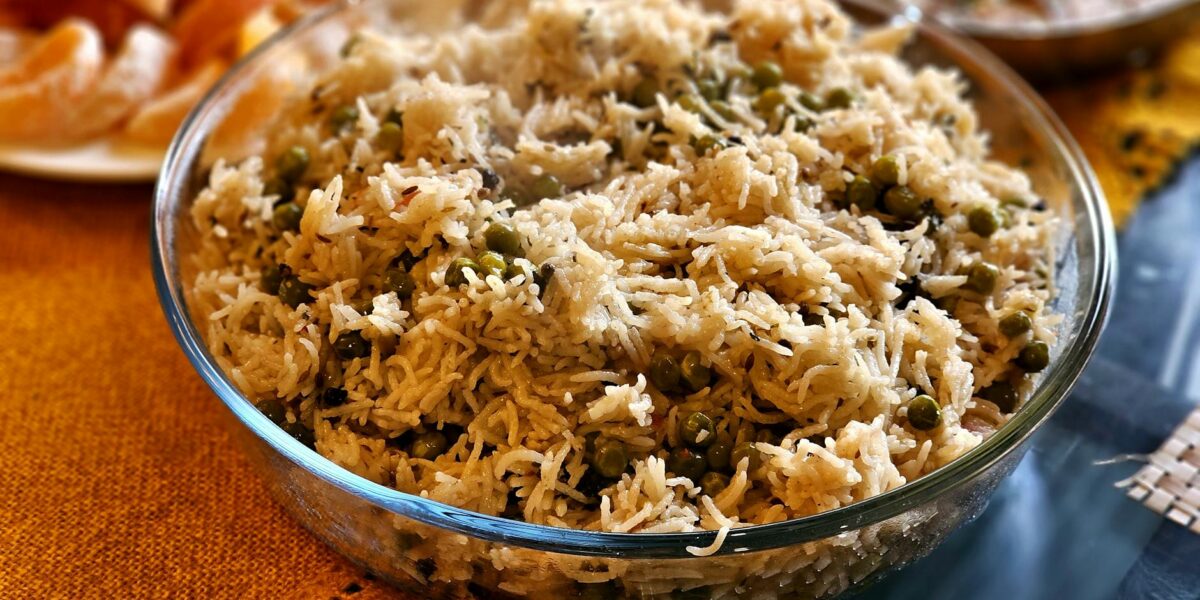
Afghanistan’s crown jewel. Kabuli pulao is a fragrant rice dish made with long-grain basmati cooked in meat broth, then layered with caramelized carrots, raisins, and almonds or pistachios. A large piece of slow-cooked lamb (often a whole shank) is buried in the center. The rice gets its golden color from caramelized sugar and sometimes saffron. Every Afghan family has their own version, and it’s served at weddings, holidays, and honored gatherings. UNESCO recognized it on the Intangible Cultural Heritage list as a symbol of Afghan identity.
2. Mantu (Steamed Dumplings)
Afghan mantu are steamed dumplings filled with seasoned ground beef or lamb, onions, and spices. What makes them distinctly Afghan is the topping: a ladle of tangy yogurt-garlic sauce, a spiced tomato-lentil meat sauce, and sometimes dried mint and qurut. They share DNA with Chinese jiaozi and Turkish manti — a living trace of Silk Road culinary exchange. If you enjoy folding dumplings, mantu are a rewarding project.
3. Ashak (Leek Dumplings)
Often called Afghanistan’s ”ravioli,” ashak are flat dumplings stuffed with gandana (leeks) seasoned with chili flakes. Like mantu, they’re served with the signature duo of yogurt sauce and meat-tomato sauce. Ashak are lighter and more herbaceous than mantu, making them a popular appetizer or side dish.
4. Chapli Kebab (Spiced Meat Patties)
A Pashtun specialty from eastern Afghanistan, chapli kebab is a flat, round patty made from ground beef or lamb mixed with onions, tomatoes, green chilies, fresh coriander, cumin, and pomegranate seeds. The patties are shallow-fried in oil until crispy on the outside and juicy inside. They’re typically served with fresh naan and a side of sliced onions and green chutney.
5. Bolani (Stuffed Flatbread)
Afghanistan’s favorite street food. Bolani is a thin flatbread stuffed with various fillings — potato, leek, pumpkin, or lentils — then pan-fried until golden and crispy. It’s served with yogurt or chutney for dipping. Bolani is essentially Afghanistan’s answer to the Indian paratha or Chinese spring roll — a portable, savory snack perfect for any time of day.
6. Qorma (Afghan Stew)
Qorma is the Afghan version of a slow-cooked stew, typically made with lamb or chicken in a sauce of onions, tomatoes, and warm spices. Variations abound: qorma-e sabzi (spinach stew), qorma-e nadroo (lotus root stew), and qorma-e shalgham (turnip stew). Unlike Indian korma, which is typically creamy, Afghan qorma tends to be lighter and more tomato-forward.
7. Aush (Afghan Noodle Soup)
A hearty noodle soup made with hand-pulled or hand-cut noodles, kidney beans, chickpeas, and yogurt. Topped with a meat sauce and dried mint, aush is Afghan comfort food at its finest — particularly popular during the cold winter months and during Nowruz (Persian New Year) celebrations. The noodle tradition connects Afghan cooking to both Chinese and Central Asian cuisines.
8. Kabob-e Chopan (Shepherd’s Kebab)
Perhaps the simplest and most delicious Afghan dish. Lamb chops or cubes of fat-tailed sheep are seasoned minimally with salt and threaded onto long metal skewers, then grilled over charcoal. The quality depends entirely on the meat and the fire. Served with fresh naan and a side of raw onion slices and green chutney, it’s a masterclass in letting good ingredients speak for themselves.
9. Sheer Khurma (Vermicelli Milk Pudding)
A rich dessert made by simmering thin vermicelli noodles in whole milk with sugar, cardamom, rose water, and a generous amount of pistachios, almonds, and dates. Sheer khurma is traditionally prepared for Eid celebrations and is a staple across Afghanistan, Pakistan, and parts of India. It’s warm, fragrant, and incredibly comforting.
10. Firni (Afghan Milk Pudding)
A delicate cold dessert made from ground rice (or cornstarch), milk, sugar, and rose water or cardamom. Firni is set in small ceramic dishes and garnished with ground pistachios. It has a silky, custard-like texture similar to Italian panna cotta. It’s served at celebrations and special occasions throughout Afghanistan.
11. Do Pyaza (Double Onion Stew)
”Do pyaza” literally means ”two onions” — referring to onions added at two stages of cooking. This lamb stew uses a large quantity of onions, first caramelized as the base, then added again toward the end for a fresher bite. Flavored with turmeric, coriander, and tomatoes, it’s one of the most comforting Afghan home-cooking dishes.
12. Shola-e Ghorbandi (Mung Bean Rice)
A wholesome one-pot dish of rice and mung beans cooked together with onions, tomatoes, and a variety of spices. It’s Afghan soul food — inexpensive, nutritious, and deeply satisfying. Often served with a dollop of yogurt and a side of pickled vegetables.
Afghan Cooking Techniques
Afghan cooking doesn’t rely on complicated equipment, but it does demand patience and attention to a few core techniques. If you’re already familiar with Asian cooking techniques, several will feel familiar.
Dampokht (Steam-Cooking Rice)
The Afghan method for cooking rice is a two-step process: the rice is first parboiled in heavily salted water (like pasta), then drained and returned to the pot with oil or butter to finish cooking over very low heat. This creates the coveted tahdig — a golden, crispy rice crust at the bottom of the pot. The technique produces perfectly separated, fluffy grains every time. If you’ve mastered cooking rice for Asian dishes, Afghan rice technique is the next level.
Tandoor Baking
Traditional Afghan bread (naan) is baked in a cylindrical clay oven called a tandoor. The dough is slapped against the inner walls where it bakes in intense, direct heat, producing bread that’s crispy on the outside and soft inside. At home, a very hot oven (500°F/260°C) with a baking stone or inverted sheet pan is the best substitute. Afghan naan comes in several styles: naan-e Afghani (oval, with finger-poked dimples), naan-e Uzbeki (round, stamped with a pattern), and naan-e roghani (enriched with oil).
Charcoal Grilling (Kebab)
Afghan kebab is always cooked over real charcoal — never gas. The fat from the meat drips onto the coals, creating aromatic smoke that flavors the meat. Skewers are wide and flat (to prevent the meat from spinning) and positioned close to the heat. The technique is similar to Japanese yakitori in its focus on direct charcoal heat, though the spicing and meat cuts are entirely different.
Slow Braising (Qorma)
Afghan stews are cooked low and slow, often for 2-3 hours, until the meat is fall-off-the-bone tender and the sauce has concentrated. The base always starts with deeply caramelized onions — a process that can take 30-40 minutes alone. This is similar to the Chinese red braising technique in its emphasis on patience and layered flavor development.
Dumpling Wrapping and Steaming
Making mantu and ashak requires hand-rolling thin dough, filling, and carefully pleating or sealing each dumpling before steaming in a multi-tiered steamer (similar to a bamboo steamer). Afghan dumplings are typically larger than their Chinese or Japanese counterparts, and the dough is rolled thinner.
Afghan Food vs. Neighboring Cuisines: A Comparison
Afghan cuisine shares ingredients and techniques with several neighboring food traditions, but has distinct characteristics that set it apart.
| Feature | Afghan | Pakistani/North Indian | Iranian/Persian | Uzbek/Central Asian |
|---|---|---|---|---|
| Primary Protein | Lamb, beef, chicken | Chicken, lamb, goat | Lamb, chicken, fish | Lamb, horse, beef |
| Rice Style | Parboiled then steamed; tahdig crust | Dum-style (sealed pot) biryani | Tahdig; jeweled rice | Plov (fried then steamed) |
| Spice Level | Moderate — aromatic, not fiery | Hot — chili-forward | Mild — herb and saffron focused | Mild — cumin-dominant |
| Bread | Tandoor naan (large, oval) | Roti, paratha, naan | Sangak, barbari, lavash | Obi non (stamped round bread) |
| Dairy Use | Heavy — yogurt, qurut | Moderate — yogurt, ghee, paneer | Moderate — yogurt, kashk | Heavy — yogurt, kaymak |
| Dumpling Tradition | Mantu, ashak (Silk Road influence) | Samosa, momo (Himalayan regions) | Limited | Manti, chuchvara |
| Signature Dish | Kabuli pulao | Biryani | Chelo kebab | Plov |
| Dried Fruit Use | Extensive — in rice, stews, desserts | Moderate — mainly in desserts | Moderate — in rice and snacks | Moderate — in plov |
The Role of Bread in Afghan Dining
Bread (naan) is sacred in Afghan culture. It’s never placed upside down, never thrown away, and if a piece falls on the ground, it’s picked up, kissed, and placed somewhere respectful. Naan accompanies every meal and often serves as an edible utensil — pieces are torn off and used to scoop up stews, wrap kebab meat, or mop up yogurt sauces.
Afghan bakeries (nanwai) are found on every block in Afghan cities. Fresh naan is baked throughout the day in massive tandoor ovens, and families send children to pick up hot bread before every meal. The most common varieties include:
- Naan-e Afghani: Large, oval, with characteristic finger dimples and nigella seeds on top
- Naan-e Uzbeki: Round, with decorative stamp patterns, slightly thicker
- Naan-e Roghani: Enriched with oil, richer and softer
- Naan-e Tandoori: Thinner, crispier, baked at very high heat
- Lavash: Paper-thin flatbread, often used for wraps
Afghan Tea Culture and Beverages
Tea (chai) is the lifeblood of Afghan social life. It’s served to guests immediately upon arrival, accompanies every meal, and is the centerpiece of business meetings, family gatherings, and everything in between. Afghanistan recognizes two main tea traditions:
Chai Sabz (Green Tea): The most common tea in most of Afghanistan, especially in the south and east. It’s brewed strong and served without milk, often with cardamom and sugar. Green tea is considered better for digestion and is the default offering.
Chai Siah (Black Tea): More common in northern Afghanistan and among Uzbek communities. It’s served with milk and sugar, similar to Indian chai. Cardamom and sometimes cinnamon are added for flavor.
Sheer Chai (Pink Tea): A unique Kashmiri-influenced tea made by boiling green tea with baking soda (which turns it red), then adding milk (which turns it pink). It has a distinctive creamy, slightly salty-sweet taste and is served on special occasions.
Doogh: A savory yogurt drink mixed with water, salt, dried mint, and sometimes cucumber. It’s the preferred accompaniment to heavy meat dishes, similar to Turkish ayran or Indian lassi.
How to Plan an Afghan Meal at Home
Afghan meals follow a generous, communal format. Here’s how to structure an authentic Afghan dinner.
For a Simple Weeknight Meal (2-3 people)
- One rice dish (kabuli pulao or plain white rice)
- One qorma (stew) or kebab
- Fresh naan or homemade naan
- Yogurt with chopped cucumber and mint
- Green tea
For a Weekend Afghan Feast (6-8 people)
- Appetizers: Bolani (potato and leek), mantu or ashak with yogurt sauce
- Main Course: Kabuli pulao as the centerpiece, plus one qorma
- Kebabs: Chapli kebab and/or lamb skewers (kabob-e chopan)
- Sides: Fresh salad (tomato, cucumber, onion with lemon juice), yogurt with garlic and mint
- Bread: Plenty of fresh naan
- Dessert: Firni or sheer khurma
- Drinks: Green tea throughout, doogh with the main meal
Meal Planning Tips
- Cook rice dishes a day ahead. Kabuli pulao reheats beautifully — in fact, many Afghans believe it tastes better the next day.
- Prep dumplings in advance. Mantu and ashak freeze exceptionally well. Make a large batch and steam from frozen when needed (add 5-7 extra minutes of steaming time).
- Marinate meat overnight. Kebab meat benefits from at least 4 hours of marinating, ideally overnight.
- Make sauces ahead. The yogurt-garlic sauce and meat-tomato sauce for dumplings can both be prepared a day in advance.
- Don’t skimp on bread. Afghans eat a lot of naan. Plan at least 1-2 pieces per person.
Afghan Spice Blends and Seasonings
Afghan cuisine relies on a few key spice combinations rather than elaborate spice pastes. The philosophy is similar to the restrained spicing found in Japanese or Central Asian cooking — enhance the natural flavors of meat and rice rather than mask them.
Char Masala (Four Spices): The quintessential Afghan spice blend, made from equal parts cinnamon, cumin, cloves, and black cardamom. It’s used in rice dishes, stews, and kebab marinades. Some families add a fifth spice (nutmeg or black pepper) to make panj masala (five spices).
Garam Masala, Afghan-style: Different from the Indian version. Afghan garam masala is typically simpler — coriander, cumin, black pepper, cinnamon, cloves, and cardamom — with less heat and more aromatic warmth.
Fresh Herb Chutneys: Fresh cilantro (coriander), mint, green chilies, garlic, and vinegar or lemon juice are pounded together to make a bright green chutney that accompanies nearly every meal. This is similar in concept to Southeast Asian sambal, serving as a fresh, spicy condiment that cuts through rich meats.
Where to Eat Afghan Food
Afghan restaurants have established a growing presence in major cities worldwide, particularly where Afghan diaspora communities have settled.
United States: The largest Afghan-American communities are in the San Francisco Bay Area (especially Fremont, sometimes called ”Little Kabul”), Northern Virginia, and New York City. Cities like Los Angeles, Houston, and Sacramento also have excellent Afghan restaurants.
Europe: Germany hosts the largest Afghan community in Europe, with Hamburg and Munich being culinary hotspots. London’s Edgware Road and surrounding areas also have excellent Afghan eateries.
Asia-Pacific: Dubai, Istanbul, and Islamabad have thriving Afghan food scenes due to geographic and cultural proximity.
What to order first: If you’re visiting an Afghan restaurant for the first time, start with kabuli pulao, an order of mantu, and lamb kebab. Add a bolani appetizer and doogh to drink. This gives you the best cross-section of Afghan flavors.
Afghan Food and Health
Traditional Afghan cuisine is surprisingly well-balanced despite its reputation for being meat-heavy. Here’s what makes it nutritionally interesting:
- High protein: Lamb, beef, and legumes (chickpeas, lentils, mung beans) provide abundant protein.
- Whole grains and complex carbs: Brown rice variations and whole wheat naan provide sustained energy.
- Probiotic-rich: Yogurt (mast) and fermented dairy (qurut) are eaten at nearly every meal, supporting gut health.
- Antioxidant spices: Turmeric, saffron, cumin, and coriander all have documented anti-inflammatory properties.
- Dried fruits and nuts: Almonds, pistachios, raisins, and dried apricots provide healthy fats, fiber, and micronutrients.
- Moderate portions of fresh vegetables: Salads, leeks, spinach, and tomatoes feature in stews and sides.
For those watching sodium or fat intake, the main areas to moderate are the amount of oil used in rice preparation and the salt content of qurut and some kebab preparations. Opting for chicken kebab over lamb and increasing the vegetable qorma dishes is an easy way to lighten an Afghan meal.
Frequently Asked Questions About Afghan Food
Is Afghan food spicy?
Afghan food is aromatic rather than spicy-hot. It uses warm spices like cardamom, cinnamon, and cumin generously, but chili heat is relatively mild compared to Indian, Thai, or Sichuan cooking. Fresh green chutney on the side provides heat for those who want it.
What makes Afghan food different from Indian food?
While both cuisines share some spices and techniques (like tandoor baking), Afghan food is generally less complex in its spice blends, uses more dried fruits and nuts, relies heavily on yogurt-based sauces rather than cream or coconut, and has a stronger emphasis on grilled meats and rice pilafs. Afghan food also has significant Persian and Central Asian influences that Indian cuisine doesn’t share.
Is Afghan food halal?
Yes. Afghanistan is a predominantly Muslim country, and virtually all traditional Afghan food is halal. Afghan restaurants worldwide almost universally serve halal meat.
Can I make Afghan food vegetarian?
Absolutely. Many Afghan dishes are naturally vegetarian or easily adapted: bolani (stuffed flatbread), ashak (leek dumplings with yogurt), vegetable qorma, shola-e ghorbandi (mung bean rice), aush (noodle soup, skip the meat topping), and all the desserts. Afghan salads and chutneys are also vegan-friendly.
What is the national dish of Afghanistan?
Kabuli pulao — a fragrant rice dish with caramelized carrots, raisins, and nuts, served over slow-cooked lamb. It was inscribed on the UNESCO Intangible Cultural Heritage list and is served at all major celebrations.
Where can I buy Afghan ingredients?
Most Afghan ingredients (basmati rice, spices, yogurt, lamb) are available at regular grocery stores. For specialty items like qurut (dried whey), Afghan saffron, and specific dried fruit blends, check Middle Eastern, South Asian, or Central Asian grocery stores. Many items are also available through online retailers like Umami Cart.
What is qurut and how do I use it?
Qurut is dried, salted whey formed into hard balls. It’s a preserved dairy product that’s been used across Central Asia for centuries. To use it, dissolve the balls in warm water to create a tangy, salty sauce that’s drizzled over dumplings (mantu, ashak) and soups. It adds a sharp, umami-rich flavor that’s unlike anything else in the Asian pantry.
How is Afghan bread different from Indian naan?
Afghan naan is typically much larger (up to 2 feet long), thinner, chewier, and baked directly on tandoor walls rather than on the side. Indian naan is smaller, puffier, and often brushed with butter or ghee. Afghan naan also commonly features nigella seeds on top and distinctive finger-poked dimples.
Bringing Afghan Flavors Into Your Kitchen
Afghan cuisine rewards patience — slow-cooked stews, carefully prepared rice, and hand-made dumplings are where the magic lies. The good news is that the ingredient list is approachable: if you already cook Asian recipes or Pakistani food, you likely have most of what you need.
Start with kabuli pulao — it’s the single best introduction to Afghan cooking and uses ingredients you can find at any supermarket. From there, work your way through bolani for an easy snack, then tackle mantu when you’re ready for a dumpling project. Each dish teaches you something about Afghan flavor philosophy: aromatic over fiery, quality ingredients over complex technique, and generosity above all.
For more on the ingredients that overlap between Afghan and broader Asian cooking, explore our complete guide to Asian cooking ingredients and how to cook rice perfectly — both are essential foundations for Afghan dishes.

Mei Lin Chen
Mei Lin Chen is an Asian food writer and recipe developer. Melbourne-raised and London-based, she has spent over a decade exploring the rice paddies, hawker stalls, and home kitchens of South-East and East Asia. Her recipes balance traditional technique with everyday practicality.