Last updated: March 25, 2026
Shanghai food is the cooking of China’s most cosmopolitan city, a glittering port at the mouth of the Yangtze River where four hundred years of trade, migration, and reinvention have produced one of the country’s most distinctive regional cuisines. Born from the older food traditions of Jiangsu and Zhejiang provinces and then transformed by the wealth and openness of treaty-port Shanghai, Shanghainese cuisine is famous for its lustrous red-braised meats, soup-filled dumplings, drunken seafood, sweet-savory sauces, and a quiet mastery of knife work that turns humble vegetables into edible silk.
If your idea of Chinese food has been shaped mostly by takeout menus or by the fiery Sichuan and Hunan dishes that dominate American food media, Shanghainese cooking will come as a quiet revelation. There is almost no chili here. Instead you will find mahogany-glazed pork belly, glassy noodles tossed in scallion oil, hairy crab steamed with ginger, and pan-fried buns whose crisp bottoms give way to a flood of hot, savory broth. This guide walks you through the history, the pantry, the must-try dishes, and the techniques that define one of Asia’s great regional kitchens.
What Is Shanghainese Cuisine?
Shanghainese cuisine, known in Mandarin as Hu cai (沪菜) after Shanghai’s one-character abbreviation Hu, refers to the cooking of Shanghai municipality and its immediate surroundings. It is sometimes folded into a larger regional category called benbang cai (本帮菜), meaning ”local style,” to distinguish hometown Shanghai cooking from the imported provincial styles that have always coexisted in the city.
Shanghainese food is a relative newcomer compared to the great regional traditions of China. Shanghai itself only grew from a sleepy fishing town into a global metropolis in the mid-1800s, after the Treaty of Nanking opened it as a trading port in 1843. The cuisine took shape during this rapid expansion, drawing heavily on the older, more refined Huaiyang cooking of Jiangsu province, the seafood-rich Ningbo style of coastal Zhejiang, and the sweet flavors of Suzhou and Wuxi. Shanghai chefs absorbed all of these and added their own urban sensibility: richer sauces, more sugar, more soy, and a flair for presentation that made even a humble pork belly look like jewelry.
Although Shanghainese cuisine is not one of the official Eight Great Traditions of Chinese cooking, it is widely recognized today as one of the most influential regional styles, and it is the dominant Chinese cuisine experienced by international travelers passing through Shanghai’s airports, hotel restaurants, and famous dumpling houses. For more on how Shanghainese cooking fits into the broader Chinese culinary landscape, see our overview of authentic Chinese recipes.
A Short History of Shanghai Food
The story of Shanghai cuisine is inseparable from the story of the city itself. Before the 19th century, the area now occupied by Shanghai was part of the Songjiang prefecture, a region of canals, rice paddies, and small fishing villages where local cooks prepared simple river-fish stews, rice dishes, and fermented preserves. The food was honest and seasonal but provincial, overshadowed by the more sophisticated kitchens of nearby Suzhou and Hangzhou.
Everything changed after 1843, when Shanghai opened as a treaty port. Within a generation, the population exploded from roughly 250,000 to several million as merchants, refugees, and laborers poured in from across China. Each wave brought its own kitchen. Cooks from Ningbo introduced salt-cured fish and yellow croaker. Migrants from Suzhou and Wuxi brought their love of sweet flavors. Cantonese, Sichuanese, Anhui, and Shandong restaurateurs all set up shop, and Shanghai’s chefs began to absorb and remix everything they tasted.
The result, by the early 20th century, was a recognizably distinct Shanghai style. Sauces grew darker and glossier with the addition of more soy and rock sugar. Knife work became finer, with influence from Huaiyang chefs who could shave a tofu block into hair-thin threads. Wine-marinated dishes grew popular alongside the booming distillery trade. And new fusion dishes emerged that you could only have eaten in Shanghai: Western-influenced pork chops with Worcestershire-style sauce, Russian-inspired beet soups served in Cantonese tea houses, and sweet pastry shops modeled on French patisseries.
Even today, when you walk the lanes of Shanghai’s old French Concession or the alleys around Yu Garden, you are walking through a living archive of this layered history. A morning bowl of xiaolongbao from a century-old shop, a lunch of red-braised pork in a corner bistro, and a dinner of hairy crab with ginger tea each tell a different chapter of the city’s culinary biography.
The Regions and Influences Behind Shanghai Cooking
Shanghai cuisine is best understood not as a single style but as a confluence of four overlapping regional traditions that together form what locals call the Jiangnan, or ”south of the Yangtze,” kitchen.
Huaiyang cuisine, from the cities of Yangzhou and Huai’an in Jiangsu province, is the most refined of the four. It is famous for delicate knife skills, clear soups, and the philosophy that ingredients should taste like themselves. Many high-end Shanghai restaurants are essentially Huaiyang restaurants in spirit, even if the menu is labeled benbang.
Suzhou-Wuxi cuisine contributed Shanghai’s love of sweetness. Dishes from these neighboring cities lean noticeably sugary, especially in braises and sauces, and the famous Wuxi-style spareribs are the spiritual ancestor of Shanghai’s red-braised pork. When people complain that Shanghainese food is ”too sweet,” they are usually tasting the Wuxi influence.
Ningbo cuisine, from coastal Zhejiang province, is the seafood backbone of Shanghai cooking. Salt-cured yellow croaker, dried shrimp, fermented fish, and pickled vegetables all entered Shanghai through Ningbo migrants and gave the cuisine a deep, briny umami underneath all the sweetness.
Hangzhou cuisine, from Zhejiang’s provincial capital, brings West Lake elegance: poached fish in vinegar, beggar’s chicken wrapped in lotus leaves, and Longjing tea-smoked shrimp. These dishes appear on Shanghai menus alongside true benbang classics, and many home cooks blur the lines without thinking twice.
Essential Ingredients in the Shanghainese Pantry
To cook Shanghai food at home, you do not need an exotic pantry. You need a small, focused collection of ingredients that combine in nearly every dish. The following table covers the essentials and explains what each one does.
| Ingredient | Mandarin Name | Role in Shanghai Cooking | Common Substitutes |
|---|---|---|---|
| Light soy sauce | 生抽 (sheng chou) | Primary salt and umami source for stir-fries and dressings | Japanese usukuchi soy sauce |
| Dark soy sauce | 老抽 (lao chou) | Adds the deep mahogany color of red-braised dishes | Indonesian kecap manis cut with regular soy |
| Shaoxing wine | 绍兴酒 (Shao xing jiu) | Aromatic rice wine used for braising, marinating, and drunken dishes | Dry sherry |
| Rock sugar | 冰糖 (bing tang) | Glassy sweetener that gives braises their famous shine | Yellow rock candy or turbinado sugar |
| Chinkiang vinegar | 镇江醋 (Zhen jiang cu) | Aged black vinegar served alongside dumplings and used in sweet-sour sauces | Aged balsamic in a pinch |
| Scallions | 葱 (cong) | Aromatic base, often slow-cooked in oil to make scallion oil | No real substitute |
| Fresh ginger | 姜 (jiang) | Counterbalances richness in pork and seafood dishes | None recommended |
| Star anise | 八角 (ba jiao) | Defining aromatic in red-braised cooking | Fennel seed in tiny amounts |
| Bamboo shoots | 笋 (sun) | Fresh or jarred, lend crispness and seasonality to many dishes | Canned bamboo shoots, drained well |
| Salted pork | 咸肉 (xian rou) | Cured pork belly used in soups and stir-fries | Pancetta or unsmoked bacon |
| Pickled mustard greens | 雪菜 (xue cai) | Sour, crunchy condiment in noodle soups and rice dishes | Sauerkraut, well drained |
| Glutinous rice cakes | 年糕 (nian gao) | Chewy oval slices stir-fried with greens and pork | Korean tteok or fresh mochi cakes |
| Hairy crab | 大闸蟹 (da zha xie) | Autumn delicacy steamed and dipped in vinegar-ginger sauce | Blue crab in season |
Two of those ingredients are particularly worth highlighting. Shaoxing wine is the soul of Shanghainese cooking, lending a sweet, faintly nutty depth to nearly every braise; if you only buy one new bottle, make it this one. Our deep dive into Shaoxing wine covers brands, grades, and storage. Rock sugar is the second non-negotiable: it melts more slowly than granulated sugar and gives red-braised dishes their characteristic glossy finish. If your braised pork looks dull rather than mahogany, switch to rock sugar.
The Flavor Profile: How Shanghainese Cooking Tastes
If you have spent time with the bold, prickling flavors of Sichuan or the searing chili of Hunan, your first taste of true Shanghainese food can feel almost gentle. The cuisine is built around four flavors in careful balance: salty, sweet, umami, and a quiet aromatic depth from wine, ginger, and scallion. Heat, when it appears at all, is incidental.
Sweetness is the most distinctive feature, and it is often misunderstood by visitors. Shanghai cooks do not season dishes to taste candy-sweet. Instead, sugar acts as a structural element that rounds out salt and softens the edge of soy sauce. A properly executed red-braised pork has just enough sugar to glaze the surface and balance the salt, but the dominant taste should still be savory. When sweetness dominates, you are usually eating a Wuxi or Suzhou dish, both of which lean further into the sugar.
Umami in Shanghainese food comes from many sources: salted pork in soups, dried shrimp in stir-fries, fermented bean paste in braises, and the long simmer of bones and ginger that forms the base of many sauces. The cuisine rarely uses MSG-heavy flavor packets the way some modern restaurants do; instead, depth is built slowly from real ingredients.
Aromatics are usually subtle. A sliver of ginger, a knot of scallions, perhaps a single star anise. Shanghai chefs prize xian, an untranslatable word that combines freshness, sweetness, and a kind of natural deliciousness. Xian is what you taste in the first sip of a clear chicken-and-ham soup, in the milk-white broth of stewed fish head, or in the tender flesh of a steamed hairy crab. It is the goal that nearly every Shanghainese dish, sweet or savory, is reaching for.
Twelve Must-Try Shanghai Dishes
The Shanghai canon is large, but a dozen dishes will give you a near-complete picture of what the cuisine is about. The following list moves from the iconic to the seasonal, with a note on what makes each dish worth seeking out.
1. Xiao Long Bao (Steamed Soup Dumplings)
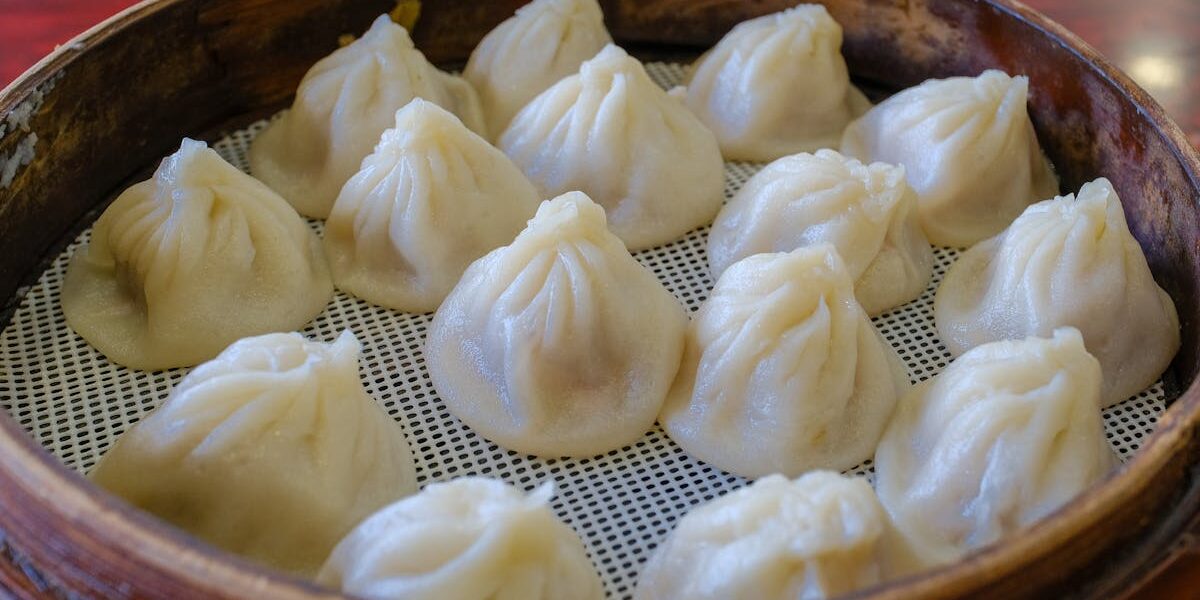
The world’s most famous Shanghai dish is also the most technically demanding. Xiaolongbao are tiny, pleated dumplings filled with seasoned ground pork and a portion of cold, gelled pork-and-skin stock. When the dumplings hit the steamer, the gel melts back into hot, fragrant broth that floods your spoon when you bite in. The skill lies in the wrapper, which must be thin enough to be translucent yet strong enough to hold the soup through twenty pleats and ten minutes of steaming. The most famous purveyor, Nanxiang, has been making them since 1900.
2. Sheng Jian Bao (Pan-Fried Pork Buns)
If xiaolongbao are the elegant dumpling, sheng jian bao are their swaggering street-food cousin. The buns are made with a leavened dough rather than thin wrappers, then pan-fried bottom-down in a wide black skillet until the bases turn deep golden brown. A splash of water and a quick lid transform the rest of the bun into something pillowy and steamed. Inside, the same gelled-stock-and-pork filling delivers a rush of broth. Order them with shaved ginger and black vinegar.
3. Hong Shao Rou (Red-Braised Pork Belly)
The undisputed soul of home-style Shanghai cooking. Cubes of skin-on pork belly are blanched, browned in oil, then simmered slowly with rock sugar, dark soy, light soy, Shaoxing wine, ginger, and star anise until the sauce reduces to a dark, glossy syrup that clings to each piece. The fat melts into something custardy, the lean pork turns silky, and the whole dish should look almost lacquered. Mao Zedong famously called hong shao rou his favorite dish, and most Shanghai families have a recipe handed down from a grandparent. Our complete guide to red-braising technique walks through the method step by step.
4. Cong You Ban Mian (Scallion Oil Noodles)
One of the simplest dishes in the cuisine and also one of the most addictive. Long, thin scallions are fried in neutral oil over very low heat for 30 to 45 minutes, until they turn crisp and almost black. The aromatic oil that results is tossed with cooked egg noodles, a splash of soy sauce, and a pinch of sugar. That is the entire recipe. The result tastes far greater than the sum of its parts: deeply savory, faintly sweet, and unmistakably Shanghainese.
5. Zui Ji (Drunken Chicken)
A cold appetizer that showcases Shaoxing wine at its best. Whole chicken pieces, usually leg and thigh, are gently poached, chilled, then submerged for 24 to 48 hours in a brine of Shaoxing wine, salt, and a few aromatics. The flesh stays juicy and tender, the skin firms up, and the wine penetrates every fiber. Sliced and served cold with a little of the marinade, drunken chicken is a quintessential summer starter.
6. Shi Zi Tou (Lion’s Head Meatballs)
Although technically a Yangzhou (Huaiyang) dish, lion’s head meatballs are a fixture of Shanghai banquet menus. Hand-chopped pork is mixed with finely diced water chestnuts and seasoned lightly, then formed into oversized meatballs that are first browned and then simmered in stock with napa cabbage. The cabbage softens into a sweet, soupy bed, and the meatballs become so tender they almost dissolve under the spoon. The name refers to their resemblance to a lion’s mane.
7. Da Zha Xie (Steamed Hairy Crab)
For two short months in autumn, hairy crabs from Yangcheng Lake are the obsession of every Shanghai food lover. The crabs are tied with twine, steamed live with a few perilla leaves, and served whole with a small bowl of black vinegar, julienned ginger, and warm Shaoxing wine on the side. Eating one is a meditative ritual: you crack the shell, dig out the rich, custardy roe (most prized in females in October, males in November), and dip each morsel of sweet white meat in vinegar. The season is so beloved that some Shanghainese families plan vacations around it.
8. Song Shu Gui Yu (Squirrel Mandarin Fish)
A banquet showpiece that originated in Suzhou and was perfected in Shanghai. A whole mandarin fish is deboned, scored in a fine crosshatch pattern, dredged in cornstarch, and deep-fried until the cuts splay outward like fur. The fried fish is then arched onto a platter and doused in a sweet-and-sour tomato sauce that hisses and crackles on contact. The presentation is theatrical, but the dish is also genuinely delicious: crisp on the outside, flaky on the inside, with a glassy lacquer of sauce.
9. Cao Tou Quan Zi (Pork Roll with Wild Clover)
This dish is a window into the older, vegetable-forward side of Shanghai cooking. Wild clover, called cao tou, is briefly stir-fried with garlic, splashed with a little white liquor, and rolled inside thin sheets of fried tofu skin or wrapped around blanched pork. The clover has a faintly grassy, slightly bitter flavor that pairs beautifully with the salt of the pork. It is one of those dishes that locals miss desperately when they live abroad.
10. Chao Nian Gao (Stir-Fried Rice Cakes)
Glutinous rice cakes shaped into thick oval slices are stir-fried with shredded pork, napa cabbage or bok choy, and a brown sauce of soy and Shaoxing wine. The rice cakes are chewy and a little sticky on the outside, almost custardy at the center, and they soak up the sauce beautifully. Many Shanghai households make this around Lunar New Year, when nian gao symbolizes a higher year ahead, but it is also a beloved everyday dish.
11. Xue Cai Rou Si Mian (Pickled Greens and Pork Noodle Soup)
The unofficial breakfast and lunch of working Shanghai. A clear pork or chicken broth is poured over alkaline egg noodles and topped with a quick stir-fry of shredded pork, sliced bamboo shoots, and chopped pickled mustard greens. The pickle is the key: it adds a sharp, sour-salty kick that wakes up the entire bowl. Many Shanghai noodle shops have been making the same version of this dish for decades.
12. Ba Bao Fan (Eight Treasure Sticky Rice)
The classic Shanghai banquet dessert. Sweetened glutinous rice is pressed into a domed bowl studded with eight types of dried fruit and nuts (lotus seeds, red dates, candied winter melon, dried longan, and others), then steamed and turned out, often with a glossy red bean paste filling at the center. Sometimes a sweet osmanthus syrup is poured over the top. It is meant to be shared, and it is the kind of dish that signals a celebration before anyone has tasted it.
Core Cooking Techniques
Shanghai cooks rely on a small set of techniques that, once mastered, will let you cook the majority of the canon at home. None of them require equipment more specialized than a wok and a steamer.
Red Braising (Hong Shao)
The signature technique. Meat (or sometimes tofu, eggs, or fish) is browned, then simmered in a sauce of dark soy, light soy, Shaoxing wine, rock sugar, ginger, scallion, and star anise until the liquid reduces to a glossy glaze. The slow simmer breaks down collagen, the sugar caramelizes, and the dark soy lacquers the surface. The technique is deceptively simple but demands attention to the sugar-to-salt ratio. Done right, the sauce should pour like maple syrup at the end and coat each piece in a polished, almost candy-like finish.
Steaming
Shanghai cooks steam more than almost any other regional cuisine in China. Whole fish are steamed with ginger and scallion to preserve their natural xian. Meatballs are steamed in stock. Hairy crabs are steamed with perilla. Even egg custards are steamed in lidded ceramic bowls until they set into a silken, tofu-like texture. Bamboo steamers stacked over a wok are the traditional setup. For technique, see our guides to using a bamboo steamer and to steaming fish the Chinese way.
Drunken Marinating
One of the most distinctive Shanghai techniques. Cooked or partially cooked proteins (chicken, shrimp, freshwater crab) are submerged in a brine made from Shaoxing wine, salt, and a few light aromatics, then refrigerated for one to three days. The wine penetrates the protein, the salt firms up the texture, and the result is served cold as an appetizer. The flavor is unmistakable: clean, faintly sweet, and unmistakably winey.
Knife Work
Influenced heavily by Huaiyang tradition, Shanghai chefs prize precision cutting. The most famous example is wensi tofu soup, where a single block of soft tofu is cut into more than five thousand thread-thin strands so fine they swim in the broth like silk. Most home cooks will never need that level of skill, but mastering basic julienne, fine dice, and angled slicing will dramatically improve any Shanghai stir-fry. A guide to Chinese cleaver technique is a good starting point.
Stir-Frying
Although less central than in Cantonese cooking, the wok is still indispensable. Shanghai stir-fries tend to be saucier than Cantonese ones, with more sugar and more soy, and they often finish with a small starch slurry to thicken the glaze. Mastering basic stir-fry technique is the gateway to dozens of Shanghai weekday dishes.
Pickling and Preserving
The damp, mild Yangtze Delta winters are perfect for pickles, and Shanghai pantries are stocked with them. Mustard greens are salted and fermented for noodle soups. Pork bellies are cured for soups and stir-fries. Vegetables are sun-dried, salted, or steeped in soy sauce. These preserves give the cuisine its background hum of salt, sourness, and umami even in dishes that look fresh and simple on the surface.
Shanghai Cuisine Compared to Other Chinese Regional Styles
One of the easiest ways to understand Shanghainese cooking is to set it next to the other major Chinese regional styles. The table below offers a quick comparison.
| Cuisine | Region | Dominant Flavors | Heat Level | Signature Dishes |
|---|---|---|---|---|
| Shanghainese | Lower Yangtze | Sweet, savory, umami, winey | Very low | Xiaolongbao, hong shao rou, drunken chicken |
| Cantonese | Guangdong, Hong Kong | Fresh, light, subtly sweet | Low | Dim sum, char siu, steamed fish |
| Sichuan | Sichuan basin | Numbing, spicy, complex | Very high | Mapo tofu, kung pao chicken, dan dan noodles |
| Hunan | Hunan | Sour, spicy, smoky | High | Steamed fish head with chopped chilies, smoked pork |
| Northern Chinese | Beijing, Shandong | Salty, garlicky, wheat-based | Low | Peking duck, jiaozi dumplings, hand-pulled noodles |
| Hakka | Migrant communities | Salty, hearty, preserved | Low | Salt-baked chicken, stuffed tofu, lei cha |
| Yunnan | Yunnan plateau | Sour, herbal, mushroom-rich | Medium | Crossing the bridge noodles, wild mushrooms |
The clearest contrasts are with Sichuan and Cantonese cooking. Where Sichuan thrives on chili and Sichuan peppercorn (read more in our guide to Sichuan peppercorn), Shanghai cuisine relies on wine and rock sugar. Where Cantonese cooking pursues lightness and the natural taste of ingredients, Shanghainese cooking embraces a darker, more lacquered aesthetic. None is better than the others; they are different answers to different questions about what makes food delicious.
How a Shanghai Meal Is Structured
A traditional Shanghai meal at home or in a restaurant usually follows a recognizable pattern. Understanding it helps when planning your own dinner or ordering at a restaurant.
Cold appetizers (liang cai) come first. These can include drunken chicken, pickled vegetables, smoked fish, marinated peanuts, soy-braised eggs, or sliced jellyfish. They are meant to be picked at slowly while everyone settles in and pours the first cups of tea or warmed Shaoxing wine.
Hot dishes follow in a flurry, all served family-style at the center of the table. There is usually one braise (often hong shao rou or red-braised fish), one stir-fry, one steamed dish, and one or two vegetable plates. The dishes are not coursed; everything arrives within a few minutes of each other and people help themselves with chopsticks.
A soup is almost always part of the meal, usually toward the middle or end. Common soups include salted pork and bamboo shoot soup (yan du xian), tofu and pickled mustard green soup, or a clear broth with meatballs and greens.
Carbohydrates arrive at or near the end. White rice is standard at home, but in restaurants you might also see scallion oil noodles, fried rice, or pan-fried buns served as a kind of late-meal closer. The order is the opposite of Western dining, where bread comes first and dessert last.
Fruit or a small sweet finishes things off. Eight treasure sticky rice for banquets, sweetened red bean soup for cold weather, or a plate of sliced fresh fruit for everyday meals. Coffee and Western-style desserts are popular in modern Shanghai, but they sit alongside rather than replacing the older traditions.
Meal Planning: A Three-Day Shanghai Home Menu
If you want to cook Shanghainese food at home for the first time, the easiest approach is to plan a small rotation of dishes that share ingredients and techniques. Here is a sample three-day plan that uses a single grocery run and builds skill progressively.
Day 1: Comfort and Confidence. Make scallion oil noodles for a fast lunch (the scallion oil keeps for two weeks in the fridge). For dinner, cook hong shao rou with steamed jasmine rice and a quick stir-fry of bok choy with garlic. Total active time: about 90 minutes, with the pork belly braising hands-off for an hour.
Day 2: Soup and Sides. Use leftover hong shao rou sauce as the base for a quick noodle bowl, topped with fresh blanched greens and a soft-boiled egg. For dinner, prepare a simple xue cai (pickled greens) and pork noodle soup, with a small plate of cold drunken chicken started the night before. The noodle soup comes together in 25 minutes once the broth is on.
Day 3: Stretching the Skills. Try chao nian gao with pork and napa cabbage, paired with a steamed whole fish (sea bass or branzino works well) topped with ginger, scallion, and hot oil. Finish with a small bowl of sweet osmanthus rice ball soup. By now your pantry will already have all the soy, wine, and sugar you need.
This kind of three-day rotation costs less than a single takeout meal for four and teaches the foundational techniques (braising, stir-frying, steaming, marinating) that underpin most of the cuisine.
Shanghai Street Food: A Quick Tour
Although fine dining gets most of the attention, the heart of everyday Shanghai eating is its street food. The classic morning lineup includes four items known together as the ”four warriors”: youtiao (fried dough sticks), doujiang (warm or cold soy milk), cifantuan (sticky rice rolls stuffed with pickles, pork floss, and a fried dough stick), and dabing (sesame flatbread). A single breakfast often combines two or three of these for under five dollars.
Through the day, vendors serve sheng jian bao from giant black skillets, hot pots of guo tie (pan-fried dumplings), bubbling vats of stinky tofu, and skewers of grilled squid and lamb that betray Shanghai’s deep connections to migrants from northwestern China. Late-night street stalls offer wonton soups, simple stir-fried noodles, and grilled river fish.
What unifies Shanghai street food is a focus on craft over volume. Even a one-cart vendor will spend hours preparing a single broth, folding wrappers by hand, or seasoning a marinade overnight. It is one of the reasons the city’s food scene has remained globally influential even as its skyline has changed beyond recognition.
Ingredients to Buy First If You Are Starting Out
You do not need to buy everything at once. The following table maps a starter pantry to the dishes it will let you cook, prioritized so that each new ingredient unlocks the maximum number of recipes.
| Tier | Ingredients to Buy | Dishes Unlocked |
|---|---|---|
| Tier 1: Foundation | Light soy sauce, dark soy sauce, Shaoxing wine, rock sugar, fresh ginger, scallions, white pepper | Hong shao rou, scallion oil noodles, drunken chicken, basic stir-fries, steamed fish |
| Tier 2: Depth | Star anise, Chinkiang vinegar, sesame oil, Sichuan peppercorn (small amount), white sugar | Lion’s head meatballs, sweet-sour pork, dumpling dipping sauces, soup bases |
| Tier 3: Authenticity | Pickled mustard greens, salted pork or pancetta, dried shrimp, jarred bamboo shoots, glutinous rice cakes | Xue cai noodle soup, yan du xian (salted pork soup), chao nian gao, congee toppings |
| Tier 4: Specialty | Hairy crab in season, fresh river fish, wild clover, lotus leaves, perilla leaves | Steamed hairy crab, beggar’s chicken, pork roll with wild clover, seasonal banquet dishes |
Tier 1 alone will let you cook a dozen authentic Shanghai dishes. Tier 2 doubles your repertoire. By the time you reach Tier 3, you are essentially cooking the way a Shanghai grandmother does. Don’t worry about Tier 4 unless you have access to specialty markets or are visiting Shanghai itself in autumn.
Tools That Make Shanghai Cooking Easier
You can cook nearly all of Shanghai cuisine with three pieces of equipment: a wok, a steamer, and a Chinese cleaver. A 14-inch carbon steel wok handles the stir-fries and braises (a properly seasoned wok will also stand in as a roasting pan and a steaming vessel). A two-tier bamboo steamer that fits inside the wok lets you steam dumplings, fish, and meatballs without buying a dedicated appliance. A Chinese cleaver handles 95 percent of the knife work; if you only own a Western chef’s knife, you will manage, but the cleaver is a better tool for the angled slicing the cuisine demands.
If you are buying a wok for the first time, our guide to choosing a wok covers the trade-offs between carbon steel, cast iron, and stainless. New cooks should also read up on how to season a wok before the first use, since an unseasoned wok will stick badly and turn rust-orange after the first wash.
Health and Nutrition Notes
Shanghainese cuisine has a reputation for being heavy and rich, and at its most indulgent (red-braised pork belly, eight treasure rice, fried squirrel fish) it certainly is. But the everyday version of the cuisine is much lighter than its showpieces suggest. Most Shanghai home cooks build meals around steamed rice, two or three vegetable dishes, a small protein, and a clear soup. Fish, tofu, leafy greens, bamboo shoots, and seasonal vegetables appear at nearly every table.
The biggest watch-outs for health-conscious eaters are sodium and added sugar. Soy sauce, salted pork, and pickled greens stack salt quickly, and rock sugar finds its way into more dishes than you might expect. Easy adjustments include using low-sodium soy sauce, halving the rock sugar in braises (most recipes are forgiving), and serving smaller portions of pork belly alongside larger portions of vegetables. The cuisine’s underlying balance, lots of vegetables and modest protein, is fundamentally healthful when you don’t lean entirely on the banquet dishes.
Frequently Asked Questions
Is Shanghai food spicy?
Almost never. Traditional Shanghainese cuisine uses very little chili, and dishes that taste hot to a Sichuan or Hunan native usually feel mild to a Shanghai diner. The dominant flavors are sweet, savory, and umami. If you want heat, you can add chili oil at the table, but it is not part of the original tradition.
What is the difference between Shanghainese and Cantonese food?
Cantonese cooking, from southern China, prizes lightness, freshness, and subtle flavors. Shanghainese cooking, from the lower Yangtze, leans sweeter, darker, and more lacquered, with heavier use of soy sauce, rock sugar, and Shaoxing wine. Both cuisines steam fish and braise meats, but a Cantonese steamed fish tastes of the fish itself, while a Shanghai red-braised fish tastes of the sauce. Both are wonderful, just very different.
Are xiaolongbao the same as soup dumplings?
Yes, the English term ”soup dumplings” almost always refers to xiaolongbao or to closely related dumplings from neighboring regions. Xiaolongbao are specifically the small, pleated, thin-skinned soup dumplings of Shanghai and Wuxi. Larger versions stuffed with crab roe (called xie fen xiao long) are an autumn delicacy.
Can I cook Shanghai food without Shaoxing wine?
You can, but the cuisine will lose much of its character. Shaoxing wine is the single most important flavor ingredient in Shanghainese cooking after soy sauce. If you cannot find it, dry sherry is the best substitute. Avoid ”cooking wine” sold in supermarkets, which is usually heavily salted and tastes harsh. A good bottle of real Shaoxing rice wine costs less than ten dollars and lasts for months.
Why is Shanghai food so sweet?
The sweetness comes mostly from rock sugar and reflects the influence of Suzhou and Wuxi cooking traditions, which lean even sweeter than Shanghai itself. The sugar is meant to round out salt and umami, not to make the dish taste like dessert. If a Shanghai dish tastes overwhelmingly sweet, it has either been cooked outside the tradition or, more likely, it is a Wuxi or Suzhou specialty served on a Shanghai menu.
Is Shanghai cuisine vegetarian-friendly?
More than you might expect. Shanghai has a long tradition of Buddhist vegetarian cooking, with mock meats made from wheat gluten and tofu skin appearing on many menus. Classic vegetable dishes include stir-fried wild clover, four heavenly kings (a stir-fry of edamame, tofu, mustard greens, and bamboo shoots), and red-braised tofu with mushrooms. That said, lard and pork stock sneak into many ”vegetable” dishes at restaurants, so vegetarians should always ask.
What kind of rice do Shanghai cooks use?
Short- to medium-grain Chinese white rice, which cooks up plump, slightly sticky, and faintly sweet. Glutinous rice (sometimes called sweet rice) is reserved for festival dishes like eight treasure rice and zongzi. Long-grain jasmine rice is more common in southern China and Southeast Asia. For more on choosing rice for Asian cooking, see our complete rice guide.
How is Shanghai cuisine different from Jiangsu cuisine?
Jiangsu cuisine is one of China’s Eight Great Traditions and includes several substyles, the most famous being Huaiyang from Yangzhou and Huai’an. Shanghai cuisine grew partly out of Jiangsu cooking, especially Huaiyang, but added more sugar, more soy, and a distinctly urban sensibility. Many high-end Shanghai restaurants are essentially Huaiyang restaurants. The cooking is closely related but not identical.
What should I order at a Shanghai restaurant for the first time?
Start with xiaolongbao (eight to ten pieces, shared) and a plate of cold drunken chicken. For mains, order one red-braised dish (pork belly or pork shoulder), one steamed dish (whole fish or meatballs), and one vegetable stir-fry. Add scallion oil noodles or chao nian gao if you want a starch beyond rice. End with eight treasure rice or a small soup of sweet rice balls in osmanthus syrup. That single meal will give you a near-complete tour of the cuisine.
Can I make xiaolongbao at home?
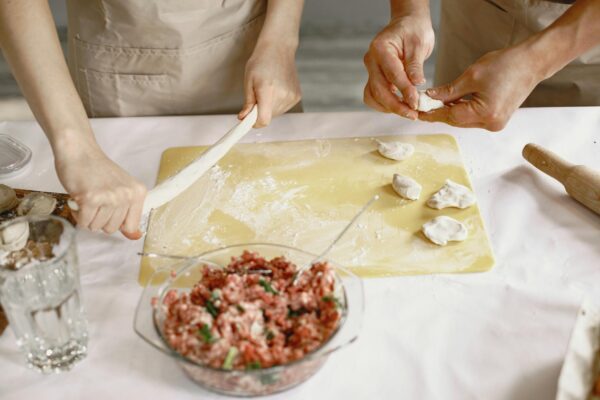
Yes, but expect a learning curve. The two challenges are the gelled stock (which sets overnight in the fridge and gets diced into the filling) and the wrappers, which must be rolled thin enough to be translucent at the edges and slightly thicker at the center. A starter step is to practice with our homemade dumpling wrapper guide and our dumpling folding tutorial. The first batch is rarely beautiful; by the third, you will have something genuinely impressive.
Going Deeper
Shanghainese food is a cuisine that rewards patience. The first time you make hong shao rou, you will probably scorch the sugar or undersalt the sauce. The second time, you will have it almost right. By the fifth time, you will be making a dish that a Shanghai grandmother would nod at, and you will understand why this cuisine has captivated travelers, writers, and chefs for more than a century.
If you want to keep exploring, our deep dives on red-braising, Shaoxing wine, and Cantonese cuisine are good next steps. The companion regional guides for Sichuan, Hunan, Yunnan, and Hakka cooking will round out your understanding of how Shanghai’s cuisine fits into the larger Chinese culinary map. And whenever you are ready to start cooking, our list of authentic Chinese recipes includes dozens of Shanghai favorites, complete with shopping lists and step-by-step instructions.
Cook one dish a week. Stock the pantry slowly. Trust the long simmer. Shanghai food is not a sprint; it is a city’s lifetime of dinners, served in the time it takes to braise a good piece of pork.

Mei Lin Chen
Mei Lin Chen is an Asian food writer and recipe developer. Melbourne-raised and London-based, she has spent over a decade exploring the rice paddies, hawker stalls, and home kitchens of South-East and East Asia. Her recipes balance traditional technique with everyday practicality.