Last updated: March 17, 2026
Uyghur food is one of the most fascinating and least understood cuisines in all of Asia. Born from the crossroads of the ancient Silk Road, the cooking of the Uyghur people blends Central Asian heartiness with Chinese technique and Middle Eastern aromatics. If you have ever walked into a hand-pulled noodle shop in New York, Los Angeles, or any major city and marveled at the stretchy, chewy laghman noodles or the cumin-crusted lamb skewers sizzling over charcoal, you have already tasted the influence of Uyghur cuisine.
This guide covers everything you need to know about Uyghur food: its history, essential ingredients, must-try dishes, cooking techniques, and how to build Uyghur-inspired meals at home. Whether you are a seasoned home cook looking for new flavors or simply curious about the food of the Xinjiang region, this article will serve as your comprehensive reference.
What Is Uyghur Food?
Uyghur food is the traditional cuisine of the Uyghur people, a Turkic ethnic group native to the Xinjiang Uyghur Autonomous Region in northwestern China. With a population of roughly 12 million, the Uyghurs have developed a culinary tradition that is distinctly different from the Han Chinese cuisines most Westerners are familiar with. Instead of soy sauce and rice, Uyghur cooking relies on wheat-based breads and noodles, lamb and mutton, cumin and chili flakes, dairy products, and the abundant fruits and vegetables of the oasis towns along the Silk Road.
Uyghur cuisine sits at a remarkable geographic and cultural intersection. To the west, it shares DNA with the pilafs, kebabs, and flatbreads of Uzbek cuisine and other Central Asian traditions. To the east, it has absorbed Chinese techniques like hand-pulling noodles and stir-frying. To the south, the aromatic spicing echoes the cooking of Pakistan and northern India. The result is a cuisine that feels both familiar and entirely unique — a lamb kebab dusted with cumin that could be from Ankara, served alongside hand-pulled noodles that would be at home in Lanzhou.
The History of Uyghur Cuisine
The history of Uyghur food is inseparable from the history of the Silk Road. For over two thousand years, the oasis cities of Kashgar, Turpan, Hotan, and Kucha served as vital stops on the network of trade routes connecting China to the Mediterranean. Merchants, monks, soldiers, and travelers from dozens of civilizations passed through these towns, and each group left traces in the local cuisine.
The earliest Uyghur culinary traditions were rooted in the pastoral nomadism of the Turkic steppe peoples. Lamb, horse meat, and dairy — particularly fermented mare’s milk and dried yogurt — were the foundations. As the Uyghurs settled in the Tarim Basin and adopted agriculture, wheat became the dominant grain. The wheat-based breads and noodles that define Uyghur cooking today date back to this agricultural transition, roughly 1,000 to 1,500 years ago.
The arrival of Islam in the 10th century brought halal dietary laws, which remain central to Uyghur food culture. Pork, a staple of Han Chinese cooking, is absent from Uyghur kitchens. Instead, lamb and mutton dominate, supplemented by beef and chicken. The Islamic influence also brought new spicing traditions, dessert styles, and the culture of communal bread-breaking that defines Uyghur hospitality.
During the Qing dynasty (1644–1912) and into the modern era, Uyghur cuisine absorbed additional Chinese influences. Stir-frying techniques, vinegar-based sauces, and the art of hand-pulled noodles — likely shared between Uyghur and Hui Muslim traditions — enriched the repertoire. Today, Uyghur cuisine stands as a living record of centuries of cultural exchange.
Regional Variations in Uyghur Cooking
Xinjiang is a vast region, roughly three times the size of France, and its cuisine varies significantly from city to city. Understanding these regional distinctions helps you appreciate the full breadth of Uyghur food.
Kashgar and the western oases: Kashgar is the cultural heartland of Uyghur cuisine. The food here leans heavily toward Central Asian traditions — rich pilafs, slow-cooked stews, tandoor-baked breads, and a love of dried fruits and nuts. Kashgar’s Sunday bazaar is one of the greatest food markets in Asia, where you can find everything from freshly baked samsa (meat-filled pastries) to enormous cauldrons of polo (pilaf).
Turpan and the eastern corridor: Turpan, one of the hottest cities on Earth, is famous for its grapes, raisins, and melons. The local cuisine reflects this abundance of fruit, incorporating sweet elements into savory dishes more than other Uyghur regions. Turpan is also known for its distinctive suoman noodles, which are thinner and more delicate than the robust laghman of Kashgar.
Ürümqi and the urban fusion zone: As the regional capital, Ürümqi is a melting pot where Uyghur food meets Han Chinese cuisine. Here you will find the most visible Chinese influences — stir-fried dishes, hot pot adaptations, and Uyghur-Chinese fusion creations like da pan ji (big plate chicken), a dish that has become famous across all of China.
Hotan and the southern Silk Road: Hotan’s cuisine features more use of locally grown walnuts, pomegranates, and rose petals. The breads here are often enriched with onion and lamb fat, and the region is known for its particularly fragrant pilafs.
Essential Uyghur Ingredients
One of the things that makes Uyghur cuisine so accessible to Western home cooks is that most of its essential ingredients are available at well-stocked grocery stores or Asian markets. Here is a comprehensive table of the ingredients you will need to cook authentic Uyghur food at home.
| Ingredient | Uyghur Name | Role in Cooking | Where to Buy |
|---|---|---|---|
| Cumin (ground and whole seeds) | Zire | The signature spice of Uyghur food; used on kebabs, in pilafs, and on breads | Any grocery store or Umami Cart |
| Lamb and mutton | Qoy göshi | The primary protein; used in kebabs, stews, pilafs, and noodle dishes | Halal butchers, specialty grocers |
| Cumin lamb chili flakes | Laza | Dried red chili flakes add heat alongside cumin in most dishes | Asian grocery stores |
| High-gluten wheat flour | Un | The base for hand-pulled noodles, flatbreads, and pastries | Any grocery store (bread flour) |
| Onions | Piyaz | Used in nearly every dish — the aromatic backbone of Uyghur cooking | Any grocery store |
| Carrots | Sébiz | Essential for polo (pilaf); Uyghurs use yellow and orange varieties | Any grocery store |
| Tomatoes and tomato paste | Pomidor | Foundation of many stewed and stir-fried dishes | Any grocery store |
| Green and red bell peppers | Kök/qizil biber | Used in stir-fries and noodle dishes for color and crunch | Any grocery store |
| Star anise | Badyan | Used in braised dishes and stews for warmth and depth | Asian grocery stores |
| Black cardamom | Qara hel | Smoky, camphor-like spice used in pilafs and braised meats | Asian or Indian grocery stores |
| Sichuan peppercorn | Hanjiao | Used in some eastern Uyghur dishes, especially da pan ji | Asian grocery stores |
| Dried fruits (raisins, apricots) | Meywe | Added to pilafs and desserts; Turpan raisins are famous | Any grocery store |
| Yogurt | Qétiq | Served alongside meals as a condiment and used in doughs | Any grocery store |
| Lamb fat (tail fat) | Quyruq meyi | Traditional cooking fat; provides distinctive richness | Halal butchers |
| Sesame oil | Künjüt meyi | Used as a finishing oil in some noodle dishes | Any grocery store or Asian markets |
12 Must-Try Uyghur Dishes
These are the dishes that define Uyghur cuisine. If you are visiting a Uyghur restaurant for the first time or planning to cook Uyghur food at home, start here.
1. Laghman (Hand-Pulled Noodles)
Laghman is arguably the most iconic Uyghur dish. These hand-pulled wheat noodles are stretched and slapped against the counter until they reach the perfect chewy thickness, then served with a savory stir-fried sauce of lamb, tomatoes, peppers, onions, and garlic. The sauce (known as say) varies by region and cook, but cumin and dried chili are almost always present. Unlike Chinese la mian, Uyghur laghman tends to be thicker and chewier, and the topping is more stew-like than soup-based. A good bowl of laghman is one of the most satisfying noodle dishes in the world.
2. Kawap (Lamb Kebabs)
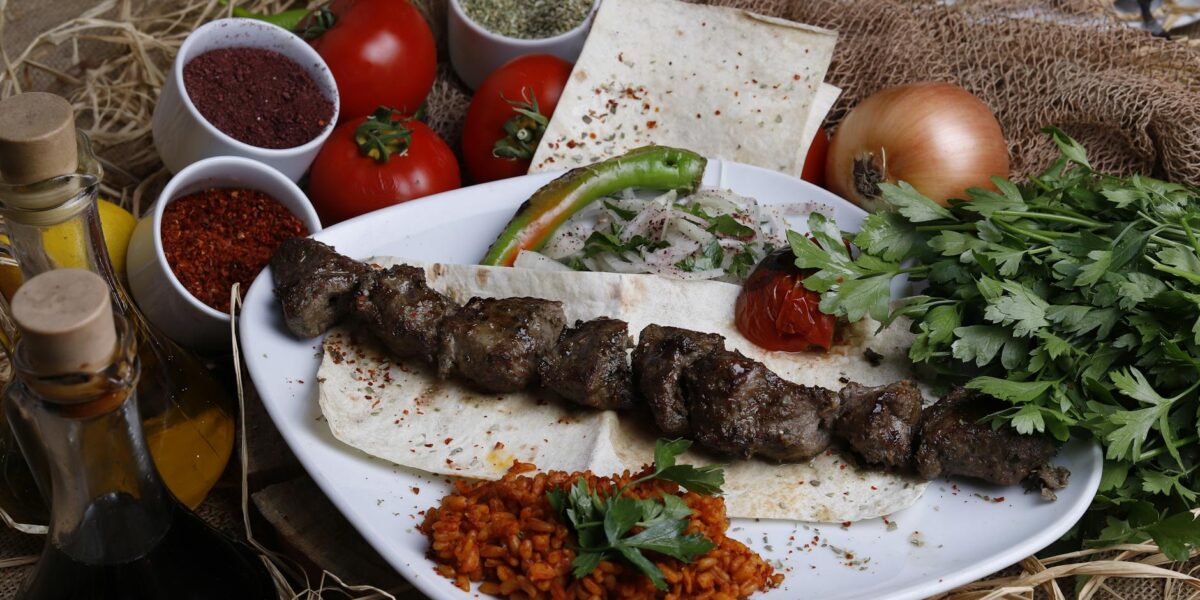
Uyghur kawap are the lamb kebabs that have conquered China and beyond. Chunks of fatty lamb — and the inclusion of small pieces of lamb tail fat between the meat is non-negotiable for authenticity — are threaded onto long metal skewers and grilled over charcoal. The seasoning is beautifully simple: cumin, chili flakes, salt, and sometimes a touch of Sichuan peppercorn. The fat renders and bastes the meat as it cooks, creating an irresistible combination of smoky, spiced, and rich. Street vendors across Xinjiang grill thousands of these skewers daily.
3. Polo (Uyghur Pilaf)
Polo is the Uyghur version of pilaf, and it is one of the great rice dishes of Central Asia. Long-grain rice is cooked with lamb, shredded carrots (both yellow and orange), onions, raisins, and a blend of cumin, black cardamom, and sometimes star anise. The dish is traditionally prepared in a massive kazan (cast-iron cauldron) for communal feasts, weddings, and celebrations. A well-made polo has distinct, fluffy grains of rice, each stained golden from the carrots and fragrant with spice. It is remarkably similar to Uzbek plov, reflecting the shared Central Asian heritage.
4. Da Pan Ji (Big Plate Chicken)
Da pan ji is a relatively modern dish that has become one of the most popular foods in all of China. A whole chicken is hacked into pieces and braised with potatoes, peppers, tomatoes, Sichuan peppercorns, dried chilies, and star anise in a rich, spicy sauce. The dish is served on an enormous platter — hence the name — and once the chicken and potatoes have been devoured, hand-pulled noodles or wide belt noodles are tossed into the remaining sauce. Da pan ji is a perfect example of the Uyghur-Chinese fusion that defines modern Xinjiang cooking.
5. Samsa (Baked Meat Pastries)
Samsa are flaky, golden pastries filled with seasoned lamb and onions, baked in a tandoor oven until the crust shatters at the slightest touch. They are the Uyghur cousin of the Indian samosa and the Central Asian somsa, but the Uyghur version is distinctive for its use of cumin and its tandoor-baked preparation. The best samsa have a paper-thin, layered crust and a juicy, intensely savory filling. They are sold at bakeries and street stalls throughout Xinjiang and are the perfect handheld snack.
6. Nan (Uyghur Flatbread)
Uyghur nan is the daily bread of Xinjiang, and no meal is complete without it. These large, round flatbreads are stamped with decorative patterns using a special tool called a chekich, then baked in a tandoor oven. Varieties range from plain nan to versions topped with sesame seeds, onions, or lamb fat. Unlike Indian naan, Uyghur nan is drier and crustier, designed to be torn and used to scoop up stews, dipped in tea, or eaten alongside kebabs. In Uyghur culture, bread is sacred — it should never be placed upside down or thrown away.
7. Manta (Steamed Dumplings)
Uyghur manta are large, pleated steamed dumplings filled with spiced lamb and onions, sometimes with the addition of pumpkin or squash for sweetness. They are steamed in tiered bamboo or metal steamers and served with a drizzle of chili oil or a side of vinegar. Manta are bigger and heartier than Chinese jiaozi, closer in size and spirit to the manti of Turkey and Central Asia. They make an excellent meal alongside a bowl of yogurt and a cup of black tea.
8. Tangza (Cold Skin Noodles)
Tangza, also known as liangpi in Chinese, are chewy, translucent cold noodles made from wheat starch. They are served at room temperature with a spicy, tangy dressing of vinegar, chili oil, garlic, and sesame paste. Tangza are the perfect summer dish — cool, refreshing, and fiery all at once. They are a beloved street food throughout Xinjiang and have become popular across China.
9. Göshnan (Meat Pies)
Göshnan are pan-fried meat pies with a thin, crispy shell and a juicy lamb-and-onion filling. Think of them as the Uyghur answer to a Chinese jianbing or a Middle Eastern sfiha. The dough is rolled thin, filled, sealed, and then fried in a shallow pool of oil until golden and crunchy on both sides. When you bite in, the meat juices burst through the crust. They are addictive, simple, and utterly satisfying.
10. Chöchüre (Uyghur Wonton Soup)
Chöchüre are small, delicate dumplings served in a clear, peppery broth — the Uyghur take on wonton soup. The filling is typically lamb seasoned with onion and black pepper, wrapped in thin dough and boiled in a light tomato-based or clear broth. A drizzle of vinegar and a scattering of fresh herbs finish the dish. Chöchüre is comfort food at its best: warm, brothy, and deeply savory.
11. Toghach (Stuffed Flatbread)
Toghach is a stuffed version of Uyghur nan, filled with spiced lamb, onions, and sometimes vegetables before being sealed and baked in the tandoor. The result is somewhere between a stuffed pizza and a meat-filled flatbread — golden, crusty on the outside, and steaming with fragrant lamb on the inside. It is a meal in itself and a staple of Uyghur bakeries.
12. Suoman Noodles (Pulled and Steamed Noodles)
Suoman is a dish of thin, hand-pulled noodles that are first steamed and then stir-fried with lamb, vegetables, and a savory sauce. The steaming step gives the noodles a unique, slightly dry and chewy texture that is different from boiled laghman. Suoman is especially popular in the Turpan region and represents the more refined side of Uyghur noodle-making.
Uyghur Cooking Techniques
Uyghur cooking relies on a relatively small set of techniques, each executed with great skill and attention to detail.
Hand-pulling noodles (tartish): The art of hand-pulling noodles is central to Uyghur cuisine. The dough — made from high-gluten flour, water, salt, and sometimes a touch of oil — is kneaded until smooth, rested, and then stretched by hand into long, uniform strands. Uyghur cooks pull the noodles by swinging them against the counter in a rhythmic, almost musical motion. Mastering this technique takes years, and skilled noodle pullers are celebrated artisans in Uyghur communities.
Tandoor baking: The tonur (tandoor oven) is the most important piece of equipment in a Uyghur bakery. Breads, samsa, and some meats are slapped onto the interior walls of the clay oven, where they bake in the radiant heat at temperatures exceeding 400°F (200°C). The tandoor produces a characteristic blistered, slightly charred crust that is impossible to replicate in a conventional oven. For home cooks, a pizza stone in a very hot oven is the best approximation.
Charcoal grilling: Uyghur kawap (kebabs) are always grilled over charcoal, never gas. The charcoal provides high, direct heat that sears the exterior of the meat while the lamb fat bastes it from within. The smoke from the dripping fat adds another layer of flavor. If you have access to a charcoal grill, Uyghur-style kebabs are one of the simplest and most rewarding things you can cook. Check out our guide to charcoal grilling techniques for more tips.
Kazan cooking (large wok or cauldron): The kazan — a large, heavy, round-bottomed iron pot — is the Uyghur equivalent of the Chinese wok. It is used for making polo (pilaf), braising da pan ji, deep-frying göshnan, and rendering lamb fat. The kazan’s thick walls distribute heat evenly, making it ideal for dishes that require long, slow cooking. A Dutch oven or large cast-iron pot works as a substitute at home.
Stir-frying: While not as central as in Chinese cooking, stir-frying plays a role in many Uyghur dishes, particularly the vegetable-and-meat toppings for laghman. Uyghur stir-fries tend to be less saucy than their Chinese counterparts, relying on cumin and chili rather than soy sauce and Shaoxing wine for flavor.
How Uyghur Food Compares to Other Asian Cuisines
Understanding where Uyghur cuisine fits in the broader landscape of Asian food helps contextualize its unique qualities. Here is a comparison with some of the cuisines it most closely relates to.
| Feature | Uyghur | Uzbek | Turkish | Northern Chinese (Sichuan/Dongbei) |
|---|---|---|---|---|
| Primary protein | Lamb, mutton | Lamb, beef | Lamb, beef, chicken | Pork, chicken, beef |
| Staple carb | Wheat noodles, nan bread | Rice (plov), bread | Bread, rice, bulgur | Wheat noodles, rice, steamed buns |
| Signature spice | Cumin, chili flakes | Cumin, coriander | Sumac, Aleppo pepper | Sichuan peppercorn, chili |
| Cooking fat | Lamb tail fat, vegetable oil | Cottonseed oil, lamb fat | Butter, olive oil | Vegetable oil, lard |
| Fermented condiments | Yogurt, vinegar | Yogurt, pickles | Yogurt, pickles, pomegranate molasses | Soy sauce, doubanjiang, black vinegar |
| Bread culture | Tandoor-baked nan (central) | Tandoor-baked non (central) | Pide, simit, bazlama | Steamed buns, bing (secondary) |
| Noodle tradition | Hand-pulled laghman (central) | Laghman (important) | Erişte (minor) | Hand-pulled, knife-cut, rolled (central) |
| Dietary laws | Halal | Halal | Halal (mostly) | No restrictions (generally) |
| Dairy use | Yogurt, dried cheese | Yogurt, kurt (dried) | Yogurt, white cheese, ayran | Minimal dairy |
| Heat level | Moderate to high | Mild to moderate | Mild to moderate | Moderate to extreme |
The Uyghur Pantry: Spices and Seasonings
The Uyghur spice palette is smaller and more focused than the complex spice blends found in Indian or Southeast Asian cooking. Here are the essential spices and how they are used.
Cumin (zire): If there is one spice that defines Uyghur food, it is cumin. Both whole seeds and ground cumin are used liberally. Cumin goes on kebabs before and after grilling, into pilaf, onto nan bread, and into virtually every savory dish. The warm, earthy, slightly nutty flavor of cumin is the signature aroma of Uyghur cooking.
Dried red chili flakes (laza): Uyghur chili flakes are coarsely ground, mildly hot, and deeply red. They are combined with cumin on kebabs, sprinkled over noodles, and used to make chili oil. Korean gochugaru or Aleppo pepper flakes make reasonable substitutes if you cannot find the authentic Uyghur variety.
Black pepper: Used more generously than in most Chinese cuisines, black pepper appears in stews, dumplings, and braised dishes.
Black cardamom: The smoky, resinous pods are added to pilafs and braised dishes. Do not confuse them with green cardamom, which has a completely different, more floral flavor.
Star anise: Used in da pan ji and slow-braised meat dishes, star anise contributes a warm, licorice-like sweetness that balances the heat of chili and the earthiness of cumin.
Cinnamon and bay leaves: These appear primarily in pilaf and braised dishes, adding layers of woody warmth. Uyghur cooks typically use cassia cinnamon rather than true Ceylon cinnamon.
Uyghur Food Culture and Dining Customs
Uyghur food culture is deeply communal. Meals are typically served family-style, with large platters of polo, big plates of da pan ji, or piles of nan placed at the center of the table for everyone to share. Tea — always black tea, sometimes with milk, sugar, or salt — accompanies every meal and every social interaction.
Bread holds a special place in Uyghur culture. Nan is never cut with a knife; it is always torn by hand. Bread should never be placed upside-down on the table, and wasting bread is considered deeply disrespectful. When guests arrive, fresh nan and tea are offered immediately as a gesture of welcome.
The bazaar (market) is the social and culinary center of Uyghur life. In cities like Kashgar and Hotan, the bazaar is a sprawling, sensory-overload experience where bakers pull nan from tandoors, noodle-makers slap laghman against counters, and kebab vendors fan clouds of cumin-scented smoke. If you ever have the opportunity to visit, plan to spend an entire day eating your way through.
Uyghur hospitality dictates that guests should always be fed generously. It is common for a host to insist that guests eat more, refilling plates and pouring more tea. Refusing food can be seen as impolite, so come hungry to any Uyghur gathering.
How to Build a Uyghur Meal at Home
Building an authentic Uyghur meal at home is more approachable than you might think. Here are some meal-planning frameworks to get you started.
Quick weeknight dinner (30 minutes): Stir-fry lamb with cumin, chili flakes, onions, peppers, and tomatoes. Serve over dried or fresh noodles (store-bought is fine). Accompany with yogurt and a simple cucumber-tomato salad.
Weekend cooking project (2 hours): Make laghman from scratch — pull the noodles by hand (or at least try) and prepare a proper say sauce with lamb, tomatoes, peppers, celery, and green beans. Serve alongside homemade nan baked on a pizza stone in your hottest oven. Add a plate of kawap if you have a charcoal grill.
Feast for a group (3+ hours): Prepare a centerpiece of polo (pilaf) in a Dutch oven. Grill a batch of cumin lamb kawap. Bake nan. Make manta (steamed dumplings) for an appetizer. Serve with yogurt, a plate of sliced tomatoes and onions, and plenty of black tea. Finish with dried fruits and nuts for dessert.
Essential tips for Uyghur cooking at home:
- Use the fattiest lamb you can find. Uyghur food depends on lamb fat for flavor — lean cuts will taste flat.
- Toast your cumin seeds before grinding them for maximum aroma.
- Do not skip the onions. Uyghur cooking uses onions as generously as French cooking uses butter.
- If you cannot find a tandoor, a pizza stone in a 500°F (260°C) oven produces decent nan.
- Serve yogurt with everything. It acts as a cooling counterbalance to the cumin and chili.
- Black tea is the traditional beverage — brew it strong and serve it in small bowls, not cups.
Where to Find Uyghur Restaurants
Uyghur restaurants have been growing rapidly in major cities worldwide, driven by both the Uyghur diaspora and increasing mainstream interest in the cuisine. In the United States, you will find excellent Uyghur restaurants in New York City (particularly in Flushing, Queens), Los Angeles, the San Francisco Bay Area, Washington D.C., and Chicago. Look for restaurants that advertise ”Uyghur cuisine,” ”Xinjiang food,” or ”hand-pulled noodles” — the presence of a noodle-pulling station is usually a sign of authenticity.
When ordering at a Uyghur restaurant for the first time, start with laghman (hand-pulled noodles), a plate of kawap (lamb kebabs), and either da pan ji (big plate chicken) or polo (pilaf). This combination will give you a comprehensive introduction to the cuisine’s range. Do not forget to order nan — eating Uyghur food without bread is like eating Italian food without pasta.
Uyghur Desserts and Drinks
While Uyghur cuisine is not known for elaborate desserts, the sweet offerings are deeply satisfying and reflect the region’s abundance of fruit and nuts.
Dried fruits and nuts: The most common way to end a Uyghur meal is with a platter of dried apricots, raisins (Turpan raisins are world-famous), walnuts, and almonds. These are served alongside tea and provide a naturally sweet finish.
Uyghur ice cream (maroshka): A stretchy, chewy ice cream similar to Turkish dondurma, made with salep (orchid root powder) that gives it an elastic, taffy-like consistency. It is often flavored with rose water or saffron.
Nut-filled pastries: Small, honeyed pastries filled with walnuts or almonds are sold at bazaars and bakeries. They are similar to baklava but typically less sweet and more nutty.
Black tea (qara chay): The standard Uyghur beverage, served at every meal and throughout the day. It is brewed strong and may be served plain, with milk, with sugar, or — in the Kashgar tradition — with salt and butter, producing a drink closer to Tibetan butter tea.
Pomegranate juice and grape wine: Xinjiang’s fruit-growing regions produce excellent fruit juices and, historically, some of China’s best wines from Turpan’s ancient grape varieties.
Frequently Asked Questions About Uyghur Food
Is Uyghur food halal?
Yes. The Uyghur people are predominantly Muslim, and their cuisine follows halal dietary laws. Pork and alcohol are not used in traditional Uyghur cooking. Lamb, mutton, beef, and chicken are the primary proteins.
Is Uyghur food spicy?
Uyghur food is moderately spicy. Dried chili flakes are used generously, and some dishes like da pan ji can be quite hot. However, the heat level is generally lower than Sichuan cuisine and is more cumin-forward than chili-forward. Most dishes can be adjusted to your preferred spice level.
What is the difference between Uyghur food and Chinese food?
Uyghur food is significantly different from the Han Chinese cuisines most people think of as ”Chinese food.” Uyghur cooking uses no pork, relies heavily on wheat bread rather than rice, features lamb as the primary protein, uses cumin as its signature spice rather than soy sauce, and incorporates dairy products like yogurt. The flavors, techniques, and cultural context are closer to Central Asian and Middle Eastern cuisines than to Cantonese or Sichuan cooking.
Can I make Uyghur food at home without special equipment?
Absolutely. While a tandoor oven and a noodle-pulling station are ideal, most Uyghur dishes can be adapted for a standard home kitchen. Use a pizza stone in a very hot oven for nan, a Dutch oven for polo, a charcoal grill (or even a broiler) for kawap, and store-bought noodles if hand-pulling proves too challenging. The flavors come from the ingredients and spices, not specialized equipment.
What are the best Uyghur dishes for beginners?
Start with cumin lamb kawap (kebabs) — they require only a few ingredients and a grill. Da pan ji (big plate chicken) is another excellent beginner dish because it is essentially a one-pot braise. Polo (pilaf) is straightforward if you follow the steps carefully. Laghman with hand-pulled noodles is the most rewarding but also the most technically challenging; consider using store-bought noodles for your first attempt.
Is Uyghur food the same as Xinjiang food?
The terms are often used interchangeably, but they are not exactly the same. Xinjiang food encompasses all the cuisines of the Xinjiang region, including dishes from Han Chinese settlers, Hui Muslims, Kazakhs, and other ethnic groups. Uyghur food refers specifically to the culinary traditions of the Uyghur people. In practice, most dishes marketed as ”Xinjiang food” outside the region are Uyghur dishes.
Where can I buy Uyghur ingredients?
Most Uyghur ingredients are widely available. Cumin, chili flakes, lamb, flour, and vegetables can be found at any grocery store. For specialty items like lamb tail fat, look for halal butchers. For spices like black cardamom and star anise, check Asian grocery stores or shop online at Umami Cart.
Bringing Uyghur Flavors Into Your Cooking
Even if you never make a full Uyghur meal, the flavor principles of Uyghur cuisine can transform your everyday cooking. Here are some simple ways to bring Uyghur flavors into dishes you already make.
Add toasted cumin and chili flakes to your next beef stir-fry for an instant Xinjiang twist. Use lamb instead of chicken in your favorite fried rice recipe and season it with cumin rather than soy sauce. Toss roasted carrots with cumin, honey, and a touch of black cardamom for a side dish inspired by polo. Make a quick yogurt sauce with garlic, salt, and dried mint to serve alongside grilled meats — it is the Uyghur equivalent of tzatziki and goes with nearly everything.
The beauty of Uyghur cuisine lies in its directness. There are no elaborate sauces to master, no fermented pastes that take months to prepare, no rare ingredients that require a pilgrimage to find. With a bag of cumin, some good lamb, a hot fire, and fresh bread, you have everything you need to cook like a Uyghur. The Silk Road brought these flavors across continents, and now they are ready for your kitchen.

Mei Lin Chen
Mei Lin Chen is an Asian food writer and recipe developer. Melbourne-raised and London-based, she has spent over a decade exploring the rice paddies, hawker stalls, and home kitchens of South-East and East Asia. Her recipes balance traditional technique with everyday practicality.