Last updated: March 15, 2026
Cantonese food is one of the most influential cuisines in the world, and for good reason. Originating from Guangdong province in southern China, Cantonese cuisine has shaped how billions of people eat — from the dim sum halls of Hong Kong to the Chinatowns of San Francisco, London, and Sydney. Its emphasis on fresh ingredients, delicate seasoning, and masterful technique makes it a cuisine that rewards both casual eaters and devoted food lovers.
If you have ever eaten at a Chinese restaurant in the West, chances are you have tasted Cantonese cooking. For much of the 20th century, Cantonese immigrants were the primary ambassadors of Chinese food abroad, and their cooking became synonymous with ”Chinese food” in many countries. But Cantonese cuisine is far more than the sweet-and-sour dishes and fried rice that many people associate with it. At its best, it is a cuisine of restraint, freshness, and extraordinary skill.
This guide covers everything you need to know about Cantonese food: its history and regional variations, essential ingredients, must-try dishes, cooking techniques, and how to plan a Cantonese meal at home.
What Is Cantonese Cuisine?
Cantonese cuisine (粤菜, Yuè cài) is one of the Eight Great Traditions of Chinese cooking. It comes from Guangdong province — formerly romanized as Canton — in southeastern China, and includes the cooking of Hong Kong, Macau, and the broader Pearl River Delta region. The Cantonese saying ”食在广州” (eating is in Guangzhou) reflects how deeply food culture runs in this part of China.
What sets Cantonese cuisine apart from other Chinese regional styles is its philosophy: let the natural flavor of the ingredient shine. Where Sichuan cooking layers bold spice and numbing heat, Cantonese cooks use lighter seasoning to preserve and highlight freshness. A perfectly steamed fish needs only ginger, scallion, and a drizzle of hot oil. A roast goose speaks for itself with crispy skin and juicy meat.
This is not to say Cantonese food lacks complexity. The cuisine demands extraordinary knife skills, precise wok control, and deep knowledge of how to coax the best out of every ingredient. Cantonese chefs are trained for years in techniques like wok hei (the breath of the wok), live seafood preparation, and the art of dim sum making.
History and Origins of Cantonese Food
The roots of Cantonese cuisine stretch back over two thousand years. Guangdong’s subtropical climate, long coastline, and network of rivers created an environment where a remarkable variety of ingredients flourished. Rice, seafood, tropical fruits, and vegetables formed the backbone of the local diet long before recorded history.
During the Tang Dynasty (618–907 CE), Guangzhou was already one of China’s most important trading ports. Arab, Indian, and Southeast Asian merchants brought spices, cooking techniques, and ingredients that influenced local cooking. The Song Dynasty (960–1279) saw the development of Guangzhou’s teahouse culture, which would eventually give rise to dim sum.
The Qing Dynasty (1644–1912) was a golden age for Cantonese cuisine. Wealthy merchants in Guangzhou patronized elaborate banquets, and a class of professional chefs emerged who refined the cuisine into an art form. The tradition of ”one dish, one flavor” (一菜一味) was codified during this period, emphasizing that each dish should have its own distinct taste and character.
In the 19th and 20th centuries, waves of Cantonese emigration carried the cuisine worldwide. Cantonese immigrants established restaurants in virtually every major city, making Cantonese food the most globally recognized style of Chinese cooking. Hong Kong’s rise as a culinary capital in the mid-20th century further elevated the cuisine, blending traditional Cantonese techniques with international influences to create dishes like fried rice, baked pork buns, and milk tea.
Regional Variations Within Cantonese Cuisine
While Cantonese cuisine is often treated as a single tradition, it actually encompasses several distinct sub-regional styles, each with its own specialties and character.
Guangzhou (Canton City) Style: The heart of Cantonese cooking. Guangzhou cuisine emphasizes soup-making (老火汤, slow-simmered soups), refined dim sum, and pristine seafood preparation. The city’s restaurants are known for their technical precision and adherence to classical techniques. Signature dishes include white-cut chicken (白切鸡), clay pot rice, and double-boiled soups simmered for hours.
Hong Kong Style: A vibrant fusion of traditional Cantonese cooking with Western, Japanese, and Southeast Asian influences. Hong Kong is credited with popularizing many dishes now considered Cantonese staples, including pineapple buns (菠萝包), Hong Kong-style milk tea, and egg tarts. The city’s cha chaan teng (tea restaurants) created a uniquely local fast-food culture. Hong Kong also elevated the art of char siu roast meats to legendary status.
Chaozhou (Teochew) Style: From the eastern part of Guangdong, Chaozhou cuisine is known for its seafood, braised dishes, and the elaborate kung fu tea ceremony. Signature dishes include cold crab, braised goose, and oyster omelets. Chaozhou cooking tends to be lighter and more delicate even than Guangzhou-style food.
Hakka Style: The Hakka people of Guangdong have their own distinct culinary tradition, characterized by hearty, salt-preserved, and braised dishes. Hakka classics include salt-baked chicken (盐焗鸡), stuffed tofu (酿豆腐), and pork belly with preserved mustard greens (梅菜扣肉). Hakka cooking reflects the group’s historically nomadic lifestyle and emphasis on preserved, portable foods.
Shunde Style: Shunde, a district near Guangzhou, is widely regarded as the birthplace of Cantonese cuisine’s finest traditions. UNESCO designated Shunde a ”City of Gastronomy” in 2014. The area is famous for freshwater fish dishes, milk-based desserts (using water buffalo milk), and an almost obsessive attention to ingredient quality.
Essential Cantonese Ingredients
Cantonese cooking relies on a relatively restrained pantry compared to some other Chinese cuisines, but each ingredient serves a specific purpose. Here are the essential items you need to cook authentic Cantonese food at home.
| Ingredient | Chinese Name | Role in Cantonese Cooking | Where to Buy |
|---|---|---|---|
| Light soy sauce | 生抽 (shēng chōu) | Primary seasoning for stir-fries, marinades, and dipping sauces | Any Asian grocery; look for Pearl River Bridge or Lee Kum Kee brands |
| Dark soy sauce | 老抽 (lǎo chōu) | Adds color and mild sweetness to braised dishes and fried rice | Asian grocery stores or online |
| Oyster sauce | 蚝油 (háo yóu) | Umami-rich sauce for stir-fries, vegetables, and noodles | Widely available; Lee Kum Kee Premium is the gold standard |
| Shaoxing wine | 绍兴酒 (shào xīng jiǔ) | Deglazing, marinades, and sauces; removes fishy or gamey flavors | Asian grocery stores; learn more about Shaoxing wine |
| Sesame oil | 麻油 (má yóu) | Finishing oil and aromatic for soups, dumplings, and cold dishes | Asian grocery stores; Kadoya is a top choice |
| White pepper | 白胡椒 (bái hú jiāo) | Preferred over black pepper; used in soups, congee, and stir-fries | Asian grocery stores; freshly ground is best |
| Ginger | 姜 (jiāng) | Fundamental aromatic; used fresh in nearly every savory dish | Any grocery store; guide to fresh ginger |
| Scallions | 葱 (cōng) | Garnish and aromatic; essential for steamed fish, congee, stir-fries | Any grocery store |
| Fermented black beans | 豆豉 (dòu chǐ) | Intensely savory paste for seafood, ribs, and stir-fries | Asian grocery stores; sold dry in bags |
| Rock sugar | 冰糖 (bīng táng) | Gives glossy finish to braised dishes and sweet soups | Asian grocery stores |
| Dried shrimp | 虾米 (xiā mǐ) | Umami booster for soups, fried rice, and stuffings | Asian grocery stores; refrigerate after opening |
| Five-spice powder | 五香粉 (wǔ xiāng fěn) | Aromatic blend for roast meats and marinades | Asian grocery stores; star anise is the key component |
| Hoisin sauce | 海鲜酱 (hǎi xiān jiàng) | Sweet-savory glaze for roast meats and dipping sauce | Widely available; see our hoisin sauce guide |
| Rice vinegar | 米醋 (mǐ cù) | Mild acidity for sweet-and-sour dishes and dipping sauces | Asian grocery stores; guide to rice vinegar |
12 Must-Try Cantonese Dishes
From the simplicity of steamed fish to the showmanship of a whole roast pig, these are the Cantonese dishes every food lover should experience at least once.
1. Dim Sum (点心)
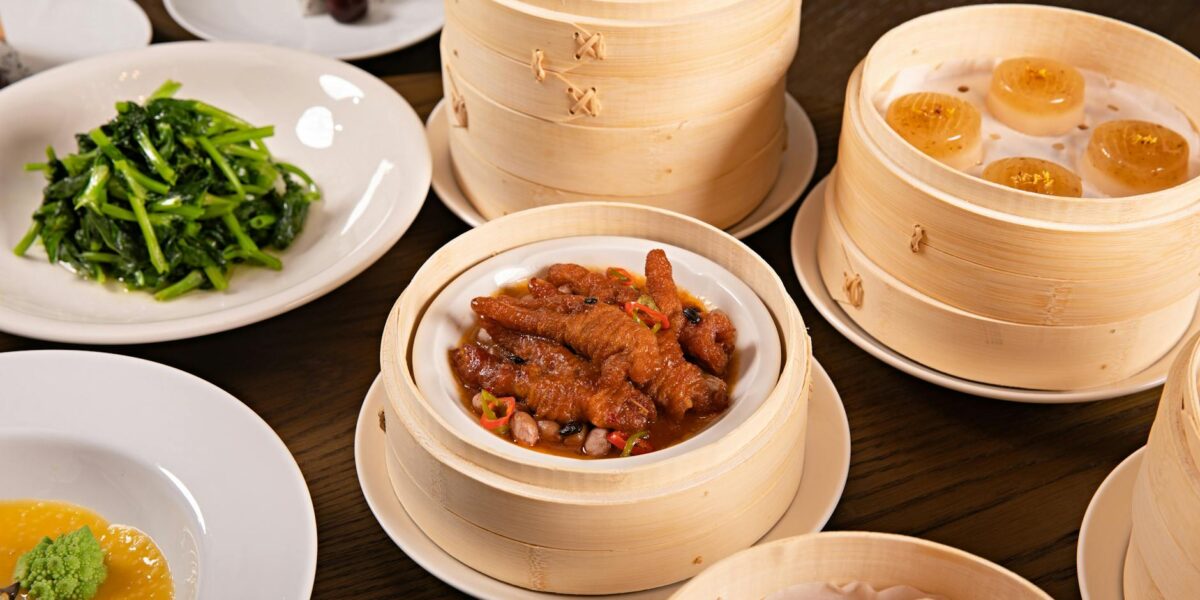
Dim sum is not a single dish but an entire dining tradition — small plates served alongside tea, typically from morning through early afternoon. The practice of yum cha (drinking tea) with dim sum is central to Cantonese social life. A typical dim sum spread includes har gow (crystal shrimp dumplings), siu mai (pork and shrimp dumplings), char siu bao (BBQ pork buns), cheung fun (rice noodle rolls), and egg tarts. The best dim sum restaurants employ dedicated specialists who spend years mastering the paper-thin wrappers of har gow or the airy dough of bao buns. Learning to fold dumplings at home is a great entry point into this tradition.
2. White-Cut Chicken (白切鸡, Bái Qiē Jī)
If one dish captures the essence of Cantonese cooking philosophy, it is white-cut chicken. A whole chicken is gently poached in water (sometimes with ginger and scallion), then plunged into an ice bath to create silky, just-set meat with a characteristic strip of pink near the bone. The bird is served at room temperature with a trio of dipping sauces: ginger-scallion oil, light soy sauce, and sometimes a garlic-chili sauce. There is nowhere to hide with this dish — it demands the finest quality chicken and perfect timing. In Guangdong, families argue passionately about which farm produces the best bird.
3. Char Siu (叉烧, Chā Shāo)
Cantonese barbecued pork, or char siu, is strips of pork shoulder or belly marinated in a mixture of hoisin sauce, honey, five-spice powder, fermented red bean curd, and Shaoxing wine, then roasted at high heat until the edges caramelize into a lacquered, slightly charred crust. The best char siu balances sweet, savory, and smoky notes with tender, juicy meat. You will find it hanging in the windows of Cantonese roast meat shops (烧腊店) alongside roast duck and crispy pork belly.
4. Steamed Fish with Ginger and Scallion (清蒸鱼, Qīng Zhēng Yú)
A whole fish — typically a live grouper, sea bass, or tilapia — is steamed until just flaky, then topped with julienned ginger and scallion, drizzled with light soy sauce, and finished with a sizzle of smoking-hot oil that blooms the aromatics. This dish is the ultimate test of a Cantonese chef’s skill: the fish must be impeccably fresh, and it can go from perfectly cooked to overdone in under a minute. Cantonese diners consider this the most important dish at any banquet.
5. Wonton Noodle Soup (云吞面, Yún Tūn Miàn)
A bowl of Cantonese wonton noodle soup is comfort food at its finest. Plump wontons filled with shrimp and pork sit in a clear, deeply flavored broth made from pork bones, dried shrimp, and dried flounder. The noodles are thin, springy, and alkaline — made with duck egg and kansui (lye water) for their distinctive bounce. In Hong Kong, wonton noodle shops are institutions, with some families running the same stall for three or four generations.
6. Roast Goose (烧鹅, Shāo É)
While Peking duck gets more international attention, many Cantonese food lovers will argue that roast goose is the superior bird. A whole goose is marinated with five-spice powder, star anise, and soy sauce, then roasted until the skin is impossibly crispy and the meat is rich and succulent. The goose is chopped into pieces and served with a sweet plum sauce. Yung Kee restaurant in Hong Kong made this dish internationally famous, but the finest versions arguably come from small shops in Shunde and Zhongshan.
7. Congee (粥, Zhōu)
Cantonese congee is rice porridge taken to an art form. The rice is cooked slowly until it breaks down into a silky, creamy consistency — a process that can take two hours or more. Popular versions include sampan congee (with seafood, peanuts, and fried dough), century egg and pork congee, and fish slice congee. Congee is a breakfast staple, a late-night snack, and the universal comfort food for anyone feeling under the weather.
8. Crispy Pork Belly (烧肉, Shāo Ròu)
Cantonese crispy pork belly, or siu yuk, is a masterpiece of texture contrast. The skin is roasted until it puffs and crackles like glass, while the layers of fat and meat beneath remain tender and succulent. Achieving the perfect crackling requires precise scoring of the skin, a salt crust, and carefully controlled oven temperature. It is one of the ”big three” items (alongside char siu and roast duck) found in every Cantonese roast meat shop.
9. Steamed Spare Ribs with Black Beans (豉汁蒸排骨, Chǐ Zhī Zhēng Pái Gǔ)
A dim sum classic and a home cooking favorite, this dish features bite-sized pork spare ribs steamed with fermented black beans, garlic, and chili. The fermented black beans contribute a deep, salty-savory funk that pairs beautifully with the richness of the pork. The ribs are often tossed with a small amount of cornstarch before steaming, which creates a light, glossy sauce. Simple to prepare and deeply satisfying.
10. Clay Pot Rice (煲仔饭, Bāo Zǎi Fàn)
Clay pot rice is Cantonese soul food. Rice is cooked in a clay pot over a gas flame, and toppings — Chinese sausage (lap cheong), chicken, mushrooms, or cured meats — are added partway through. As the rice finishes cooking, it develops a golden, crispy crust on the bottom called guoba (锅巴). The dish is finished with a generous drizzle of sweetened soy sauce. Eating your way from the soft, fragrant rice on top to the crunchy bottom layer is one of the great pleasures of Cantonese cooking. Street-side clay pot rice stalls are especially popular in Guangzhou during the cooler months.
11. Sweet and Sour Pork (咕噜肉, Gū Lū Ròu)
The original sweet and sour dish — before it was adapted for Western palates — is a Cantonese creation dating back to the 18th century. Cubes of pork are battered and deep-fried until shatteringly crispy, then tossed in a vibrant sauce of vinegar, sugar, and ketchup (a modern addition) with peppers, onions, and pineapple. When done right, the contrast between the crunchy exterior and the tangy, fruity sauce is irresistible. It remains one of the most ordered Cantonese dishes worldwide.
12. Double-Boiled Soup (炖汤, Dùn Tāng)
Cantonese soup culture deserves its own article. ”Old fire soup” (老火汤, lǎo huǒ tāng) is simmered for three to six hours, while double-boiled soups are cooked in a ceramic pot placed inside a larger pot of boiling water, creating a gentle, indirect heat that produces a remarkably clear, concentrated broth. Common combinations include pork ribs with lotus root, chicken with goji berries and red dates, and winter melon with barley. These soups are considered medicinal in Cantonese culture, with different ingredients believed to address specific health concerns based on traditional Chinese medicine principles.
Cantonese Cooking Techniques
Cantonese chefs train in a wider range of techniques than perhaps any other Chinese regional cuisine. Here are the methods that define Cantonese cooking.
Stir-Frying (炒, chǎo): The foundation of Cantonese cooking, stir-frying in Cantonese cuisine demands extremely high heat and lightning-fast execution. The goal is to achieve wok hei — the elusive ”breath of the wok” — which imparts a complex, smoky fragrance that cannot be replicated by any other means. Cantonese stir-fries tend to use lighter seasoning than Sichuan or Hunan versions, letting the quality of the ingredients come through.
Steaming (蒸, zhēng): If stir-frying is the most dramatic Cantonese technique, steaming is the most refined. The Cantonese use bamboo steamers and metal steaming racks to cook everything from whole fish and spare ribs to dumplings and rice noodle rolls. Steaming preserves the natural flavor and texture of ingredients with minimal added fat, which aligns perfectly with the Cantonese philosophy of showcasing freshness.
Roasting (烧, shāo): Cantonese roast meats are famous worldwide. The technique involves marinating proteins and then roasting them in specialized ovens, often hanging vertically over an open flame. The key to Cantonese roasting is achieving a lacquered exterior while keeping the interior moist — a balance that requires careful temperature control and expert basting.
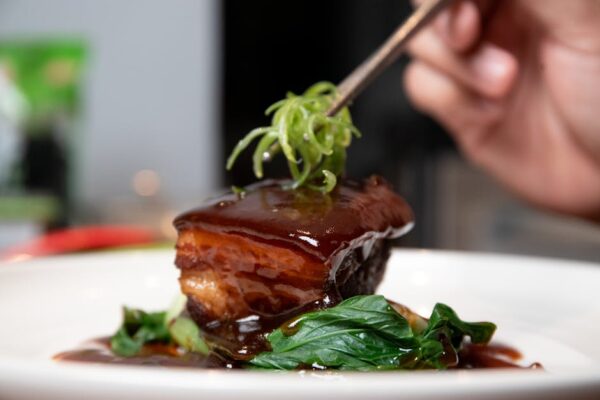
Braising and Red Cooking (焖/红烧): Cantonese braising tends to be gentler than northern Chinese styles. Ingredients are simmered slowly in a mixture of soy sauce, rock sugar, star anise, and Shaoxing wine until meltingly tender. Classic braised dishes include red-braised pork belly and braised duck with taro.
Deep-Frying (炸, zhá): Cantonese deep-frying aims for a light, crispy exterior without heaviness. Techniques like using cornstarch-based batters and double-frying ensure a shatteringly crisp texture. Spring rolls, fried wontons, and sesame balls (煎堆) showcase this technique.
Double-Boiling (炖, dùn): A uniquely Cantonese technique where ingredients are sealed in a ceramic pot and heated indirectly in a water bath. This extremely gentle cooking method produces crystal-clear soups and stews with concentrated flavor. It is the preferred method for medicinal soups and premium ingredient preparations.
Poaching (浸/灼, jìn/zhuó): Gentle poaching in flavored water or broth is used for delicate proteins like chicken and shrimp. White-cut chicken is the prime example. The key is precise temperature control — the liquid should never reach a full boil, which would toughen the protein.
Cantonese vs. Other Chinese Regional Cuisines
Understanding how Cantonese food compares to other major Chinese cuisines helps you appreciate what makes it unique.
| Feature | Cantonese (粤菜) | Sichuan (川菜) | Shandong (鲁菜) | Hunan (湘菜) |
|---|---|---|---|---|
| Flavor profile | Light, fresh, subtly sweet | Bold, spicy, numbing (málà) | Salty, savory, rich | Hot, sour, smoky |
| Key seasonings | Ginger, scallion, oyster sauce, light soy | Chili, Sichuan peppercorn, doubanjiang, garlic | Vinegar, scallion, garlic, soy sauce | Fresh chili, smoked meats, fermented black beans |
| Signature technique | Steaming, roasting | Dry-frying, braising in chili oil | Quick-frying, braising | Stir-frying, smoking |
| Protein focus | Seafood, poultry, pork | Pork, beef, rabbit | Seafood, pork | Pork, freshwater fish, poultry |
| Spice level | Mild to none | Very high | Low to medium | High |
| Famous dish | Dim sum, roast goose | Mapo tofu, kung pao chicken | Sweet and sour carp | Chairman Mao’s red-braised pork |
| Global influence | Very high — most widespread Chinese cuisine abroad | High and growing | Moderate | Moderate |
The Art of Yum Cha: How to Order Dim Sum
Dim sum is the most iconic expression of Cantonese food culture, and ordering it properly is an experience in itself. The tradition of yum cha — literally ”drink tea” — is a social ritual where family and friends gather, often on weekend mornings, to share small plates and pots of tea over hours of conversation.
At a traditional dim sum restaurant, you start by choosing your tea. Jasmine, chrysanthemum, pu-erh, and oolong are the most common options. The tea serves a dual purpose: it is a palate cleanser between dishes, and pouring tea for your tablemates is a gesture of respect and bonding.
Dim sum dishes are typically categorized by cooking method and size. Here is a guide to essential orders:
Steamed (蒸): Har gow (shrimp dumplings with translucent wrappers), siu mai (open-topped pork and shrimp dumplings), char siu bao (fluffy BBQ pork buns), and cheung fun (rice noodle rolls filled with shrimp, beef, or char siu).
Fried (炸/煎): Spring rolls, pan-fried turnip cake (萝卜糕), fried sesame balls (煎堆), and wu gok (taro dumplings with a lacy, crispy exterior).
Baked (焗): Egg tarts (蛋挞), baked char siu buns with a crumbly, sweet crust, and cocktail buns filled with coconut and butter.
Congee and noodles: Sampan congee, wonton noodle soup, and pan-fried noodles are heartier options to round out the meal.
Sweets: Mango pudding, egg custard tarts, and steamed sponge cake (马拉糕) close out the meal on a sweet note.
The general rule of thumb: order two to three dishes per person, plus one congee or noodle dish and one dessert for the table. You can always order more as you go.
Cantonese Roast Meats: A Complete Guide
No discussion of Cantonese food is complete without a deep dive into siu mei (烧味), the roast meat tradition that is arguably the cuisine’s most visible calling card. Walk through any Cantonese neighborhood and you will spot them: whole ducks, strips of char siu, and slabs of crispy pork belly hanging in the windows of roast meat shops, their lacquered skins glistening under heat lamps.
Char Siu (叉烧): Honey-glazed barbecued pork. The name literally means ”fork-roasted,” referring to the traditional method of cooking on long forks over an open flame. The best char siu has a sticky-sweet, slightly charred exterior with tender, juicy meat. It is served over rice, in buns, with noodles, or eaten on its own.
Siu Yuk (烧肉): Crispy roast pork belly. The skin is the star — it should shatter like glass when you bite into it, revealing layers of succulent fat and seasoned meat beneath. The skin is scored, rubbed with salt and five-spice, and roasted at high heat.
Siu Ngap (烧鸭) / Siu Ngo (烧鹅): Roast duck and roast goose, respectively. Both are marinated inside and out with a spiced mixture, air-dried, and roasted. Roast goose is considered the premium option, with richer, more flavorful meat. Both are served chopped with a side of plum sauce.
Pairing tip: Cantonese roast meats are traditionally served over steamed white rice with a ladle of the meat’s own juices and a side of blanched choy sum (菜心) drizzled with oyster sauce. This combination — smoky, sweet, meaty, and green — is one of the most satisfying simple meals in all of Chinese cuisine.
Cantonese Soup Culture
The Cantonese take soup more seriously than perhaps any other food culture in the world. In Guangdong, serving soup is an act of love and care — many families drink soup every single day, and a home cook’s reputation often rests on the quality of their soup pot.
There are two main categories of Cantonese soup. Old fire soup (老火汤) is simmered for three to six hours over low heat, typically using pork bones, chicken, or a combination as the base, with vegetables, herbs, and sometimes dried seafood or Chinese medicinal ingredients. The resulting broth is rich, deeply flavored, and cloudy. Double-boiled soup (炖汤) uses the indirect water-bath method described earlier, producing a clearer, more delicate broth.
Cantonese soup ingredients are often chosen based on traditional Chinese medicine principles. Cooling ingredients like winter melon and watercress are favored in summer. Warming ingredients like ginger, lamb, and dried longan are used in winter. Common medicinal additions include goji berries, red dates, astragalus root, and Solomon’s seal.
Some beloved Cantonese soups include watercress and pork rib soup, lotus root and peanut soup, papaya with fish head soup, and chicken with coconut and black-skinned chicken (silkie chicken) soup. If you visit a Cantonese home, being offered a bowl of soup is among the highest expressions of hospitality.
Planning a Cantonese Meal at Home
A well-balanced Cantonese meal follows some general principles that are easy to apply at home. Whether you are cooking for two or hosting a dinner party, these guidelines will help you put together an authentic spread.
The basic structure: A Cantonese family meal typically includes one soup, one protein dish, one vegetable dish, and steamed rice. For larger gatherings, add more dishes — the general rule is one dish per person, plus one soup and rice.
Balance of flavors: Aim for variety in taste and texture. If you have a rich, fatty dish (like crispy pork belly), pair it with something light and refreshing (like blanched lettuce with oyster sauce). If one dish is savory and intense, balance it with something subtle.
Balance of techniques: Try not to serve all stir-fried dishes. A good Cantonese meal might include one stir-fry, one steamed dish, one braised or roasted dish, and soup. This variety keeps the meal interesting and showcases different aspects of the cuisine.
Sample menu for 4 people:
- Starter: Old fire soup (pork rib and lotus root)
- Steamed whole fish with ginger and scallion
- Char siu (barbecued pork) with steamed rice
- Stir-fried gai lan (Chinese broccoli) with oyster sauce
- Fresh fruit for dessert
Sample menu for a dim sum brunch:
- Jasmine or pu-erh tea
- Har gow (shrimp dumplings) — learn dumpling folding techniques
- Siu mai (pork and shrimp dumplings)
- Char siu bao (BBQ pork buns)
- Cheung fun (rice noodle rolls)
- Pan-fried turnip cake
- Egg tarts
Meal planning tips:
- Start your soup early. Old fire soups need 3 or more hours of simmering, so start it first and let it cook while you prepare everything else.
- Prep everything before you cook. Cantonese stir-frying happens fast. Have all your ingredients cut, measured, and arranged before you turn on the wok. This Chinese technique is called mise en place, or ”zhǔn bèi” (准备) in Cantonese kitchens.
- Cook steamed dishes and stir-fries last. These are best served immediately. Time your cooking so these dishes hit the table hot.
- Invest in good rice. Cantonese meals revolve around rice. Use a high-quality jasmine rice and cook it properly — see our guide to cooking rice.
- Keep sauces simple. A well-stocked Cantonese pantry with soy sauce, oyster sauce, sesame oil, and Shaoxing wine covers the vast majority of recipes.
Where to Experience Cantonese Food
The best Cantonese food is found in Guangdong province and Hong Kong, but excellent Cantonese restaurants exist worldwide. Here are the key destinations for a Cantonese food pilgrimage.
Guangzhou, China: The spiritual home of Cantonese cuisine. Guangzhou’s restaurant scene ranges from Michelin-starred fine dining to legendary street food stalls. Do not miss the city’s famous morning tea houses for dim sum, the roast meat shops on Shangxiajiu Pedestrian Street, and the late-night congee stalls along the Pearl River.
Hong Kong: Arguably the world’s best food city, and Cantonese cuisine is its backbone. From the two-Michelin-star dim sum at Tim Ho Wan (one of the cheapest Michelin-starred meals on earth) to the legendary roast goose at Yung Kee, Hong Kong offers an unmatched range of Cantonese dining experiences. The city’s dai pai dong (open-air food stalls) serve some of the most soulful Cantonese cooking you will ever eat.
Shunde, China: The UNESCO City of Gastronomy and birthplace of many classic Cantonese dishes. Shunde is where serious Cantonese food lovers go to taste the cuisine in its purest form. The freshwater fish dishes and milk desserts here are unmatched.
Overseas: San Francisco, New York, Vancouver, London, and Sydney all have vibrant Cantonese food scenes, thanks to generations of immigration. Look for restaurants and bakeries in established Chinatowns, and seek out the newer wave of Hong Kong-style cafes and roast meat shops that have opened in recent years.
Frequently Asked Questions About Cantonese Food
What is the difference between Cantonese food and Chinese food?
Cantonese food is one of eight major regional cuisines within Chinese cooking. ”Chinese food” is an umbrella term that includes vastly different styles — from the fiery, chili-laden dishes of Sichuan to the wheat-based noodles and dumplings of northern China. Cantonese food is characterized by its emphasis on freshness, lighter seasoning, and techniques like steaming and roasting. Because Cantonese immigrants were among the first to open restaurants abroad, Cantonese cooking became the default ”Chinese food” in many Western countries.
Is Cantonese food spicy?
Generally, no. Cantonese cuisine is one of the mildest Chinese regional styles. The emphasis is on the natural flavor of ingredients rather than chili heat. That said, some Cantonese dishes do use chili — black bean sauce with chili is a common dim sum preparation, and many Cantonese restaurants offer chili oil as a condiment. But if you are sensitive to spice, Cantonese food is one of the most approachable Chinese cuisines.
What are the most popular Cantonese dishes?
The most popular Cantonese dishes include dim sum (especially har gow and siu mai), char siu (barbecued pork), roast goose, steamed fish with ginger and scallion, wonton noodle soup, congee, clay pot rice, and sweet and sour pork. Cantonese roast meats (siu mei) are also extremely popular as everyday meals served over rice.
Can I make Cantonese food at home?
Yes. Many Cantonese dishes are well-suited to home cooking. Congee, steamed fish, stir-fried vegetables, and simple soups require only basic equipment and pantry ingredients. More advanced dishes like char siu and clay pot rice take more practice but are absolutely achievable at home. Having a good wok, a bamboo steamer, and quality soy sauce and oyster sauce will cover most Cantonese recipes.
What is yum cha?
Yum cha (饮茶) literally means ”drink tea” in Cantonese. It refers to the tradition of gathering with family or friends at a restaurant to drink tea and eat dim sum. Yum cha is typically a morning or lunchtime affair and can last for hours. It is one of the most important social rituals in Cantonese culture, serving as a time for family bonding, business meetings, and community gathering.
What is the best tea to drink with Cantonese food?
The most traditional teas paired with Cantonese dim sum and meals are pu-erh (a fermented dark tea that cuts through rich, fatty flavors), chrysanthemum (light and floral), jasmine (fragrant green tea), and oolong (semi-oxidized with a complex flavor profile). Pu-erh is the most popular choice at dim sum restaurants because its earthy, slightly astringent quality cleanses the palate between bites of rich dumplings and roasted meats.
What makes Cantonese dim sum special?
Cantonese dim sum is special because of its extraordinary variety, technical precision, and social context. A dim sum menu can feature over a hundred items, each requiring specialized skills. Har gow wrappers must be translucent and contain exactly 13 pleats. Char siu bao dough must split open naturally during steaming to reveal the filling. The tradition of eating dim sum with tea in a communal setting — taking time to share, pour tea for others, and linger — makes it a uniquely convivial dining experience.

Mei Lin Chen
Mei Lin Chen is an Asian food writer and recipe developer. Melbourne-raised and London-based, she has spent over a decade exploring the rice paddies, hawker stalls, and home kitchens of South-East and East Asia. Her recipes balance traditional technique with everyday practicality.