Last updated: March 01, 2026
Yakitori is one of Japan’s most beloved street foods — bite-sized pieces of chicken threaded onto bamboo skewers and grilled over charcoal until smoky, caramelized, and impossibly juicy. Whether glazed with a sweet-savory tare sauce or simply seasoned with salt (shio), yakitori captures the essence of Japanese minimalism: great ingredients, precise technique, maximum flavor.
This yakitori recipe teaches you how to make authentic Japanese grilled chicken skewers at home — no special equipment required. We cover the classic tare-glazed thigh skewers, the essential homemade yakitori sauce, and how to turn your skewers into a satisfying yakitori don (rice bowl). You will also find tips for stovetop, oven, and outdoor grill methods so you can make perfect yakitori year-round.
If you love Japanese home cooking, check out our collection of Japanese recipes for more inspiration, from teriyaki chicken to homemade ramen.
What Is Yakitori?
Yakitori (焼き鳥) literally translates to ”grilled bird.” It originated in the Edo period (1603–1868) as a humble street food sold at outdoor stalls called yatai. Today, yakitori has evolved into both a casual snack and an elevated culinary art form, with specialized yakitori-ya restaurants in Tokyo earning Michelin stars.
At its core, yakitori is about simplicity. Small cuts of chicken — thigh, breast, skin, wing tips, cartilage, and even offal — are skewered on bamboo sticks and grilled over intense heat, typically binchotan (Japanese white charcoal). The two classic seasoning styles are:
- Tare (タレ) — A glaze made from soy sauce, mirin, sake, and sugar, brushed on during grilling for a glossy, caramelized finish.
- Shio (塩) — Simple salt seasoning that lets the natural flavor of the chicken shine, preferred for premium cuts.
In Japanese izakayas (pub-style restaurants), yakitori is the go-to drinking snack, paired with cold beer or highballs. But at home, yakitori makes an outstanding weeknight dinner — especially when served over rice as a yakitori don.
Why This Yakitori Recipe Works
Many home yakitori recipes fall short because they treat it like a simple kebab. Authentic yakitori requires attention to three things: the cut, the sauce, and the heat. Here is what makes this recipe different:
- Properly sized chicken pieces — Cut into 1-inch pieces that cook evenly and caramelize on all sides.
- Homemade tare sauce — A proper reduction that clings to the chicken, not a thin marinade that slides off.
- Multi-baste technique — The sauce is applied in layers during cooking for depth of flavor and a lacquered finish.
- Multiple cooking methods — Instructions for grill, broiler, and stovetop so you can cook yakitori regardless of your setup.
- Chicken thighs for guaranteed juiciness — Higher fat content means tender results even if you slightly overcook them.
Ingredients for Yakitori
This recipe makes approximately 16–20 skewers, serving 4 people as a main course or 6–8 as appetizers. All ingredients are available at Asian grocery stores or through Umami Cart.
For the Chicken Skewers
- 2 lbs (900 g) boneless, skinless chicken thighs
- 8 green onions (scallions), cut into 1.5-inch pieces
- 1 tablespoon neutral oil (vegetable or grapeseed)
- 16–20 bamboo skewers (soaked in water for 30 minutes)
For the Yakitori Tare Sauce
- ½ cup (120 ml) soy sauce
- ½ cup (120 ml) mirin
- ¼ cup (60 ml) sake
- 2 tablespoons sugar
- 1 clove garlic, lightly smashed (optional)
For the Yakitori Don (Rice Bowl)
- 4 cups cooked short-grain Japanese rice (see our guide on how to cook rice perfectly)
- 4 egg yolks (optional, for topping)
- Toasted sesame seeds
- Shichimi togarashi (Japanese seven-spice blend)
- Sliced green onions for garnish
- Nori strips (optional)
Essential Equipment
You do not need a charcoal grill to make great yakitori at home. Here are your options:
| Method | Equipment Needed | Heat Level | Best For |
|---|---|---|---|
| Charcoal grill | Binchotan or lump charcoal, small grill grate | Very high, direct | Most authentic flavor and char |
| Gas grill | Standard gas grill with grate | High, direct | Outdoor cooking without charcoal |
| Oven broiler | Sheet pan with wire rack | High, overhead | Year-round indoor cooking |
| Cast iron / grill pan | Cast iron skillet or wok | Medium-high, contact | Quick weeknight dinners |
Regardless of method, the key is high heat. You want the outside of the chicken to caramelize quickly while the inside stays juicy.
How to Make Yakitori Tare Sauce
The tare sauce is the soul of tare-style yakitori. Making it from scratch takes about 10 minutes and produces far better results than bottled teriyaki sauce. The sauce should be thick enough to coat the back of a spoon.
- Combine the liquids. In a small saucepan, add soy sauce, mirin, sake, sugar, and the smashed garlic clove (if using). Stir to dissolve the sugar.
- Bring to a boil. Set the heat to medium-high and bring the mixture to a boil.
- Reduce. Lower the heat to medium-low and simmer for 8–10 minutes, stirring occasionally, until the sauce has reduced by about one-third and coats the back of a spoon. It will thicken further as it cools.
- Strain and reserve. Remove the garlic clove. Transfer the tare to a small bowl. Set aside about 3 tablespoons in a separate dish for the final glaze (this portion will not touch raw chicken).
The tare improves with age. You can make it up to 2 weeks ahead and store it in an airtight container in the refrigerator. In professional yakitori restaurants, tare pots are maintained for years, gaining complexity as chicken drippings are added back into the sauce over time.
Step-by-Step Yakitori Recipe
Step 1: Prepare the Chicken
Pat the chicken thighs dry with paper towels. Trim any excess fat (leave some — it adds flavor and moisture). Cut each thigh into roughly 1-inch (2.5 cm) pieces. Uniformity matters here: pieces of similar size cook at the same rate.
Step 2: Prepare the Scallions
Cut the green onions into 1.5-inch (4 cm) segments. Use both the white and light green parts. The dark green tops can be reserved for garnish. These scallion pieces will be threaded between chicken pieces on the skewers, creating the classic negima (ねぎま) style yakitori.
Step 3: Thread the Skewers
Thread 3–4 pieces of chicken onto each soaked bamboo skewer, alternating with scallion segments. Push pieces snugly together — this prevents the chicken from spinning when you flip the skewers. Leave about 2 inches of bare skewer at the bottom as a handle.
Pro tip: If using a broiler or grill pan, you can skip skewers entirely and cook the chicken pieces loose in a single layer, then assemble on skewers after cooking for presentation.
Step 4: Preheat Your Cooking Surface
Choose your method:
- Grill: Preheat to high (450–500°F / 230–260°C). Clean and oil the grates.
- Broiler: Set oven broiler to high. Position rack 4–6 inches from the heating element. Line a sheet pan with foil and place a wire rack on top. Lightly oil the rack.
- Grill pan or cast iron: Heat over medium-high until a drop of water sizzles and evaporates immediately. Brush with a thin layer of oil.
Step 5: Grill the Skewers
- First side (3 minutes). Place skewers on the hot cooking surface. Do not move them for 2–3 minutes to develop a golden sear.
- Flip and first baste (2 minutes). Turn skewers over. Brush the seared side generously with tare sauce.
- Second baste (2 minutes). Flip again. Brush the other side with tare. The sauce should sizzle and start to caramelize on contact.
- Final baste and finish (1–2 minutes). Flip once more and give both sides a final light brush of tare from the reserved (clean) portion. Cook until the chicken reaches an internal temperature of 165°F (74°C) and the glaze is sticky and glossy.
Total cooking time is 8–10 minutes. The key is multiple thin coats of tare rather than one heavy application, which would burn.
Step 6: Rest and Serve
Let the skewers rest for 1–2 minutes. Serve immediately with a sprinkle of shichimi togarashi and sesame seeds. For shio-style, simply season the raw skewers with fine sea salt before grilling and skip the tare entirely.
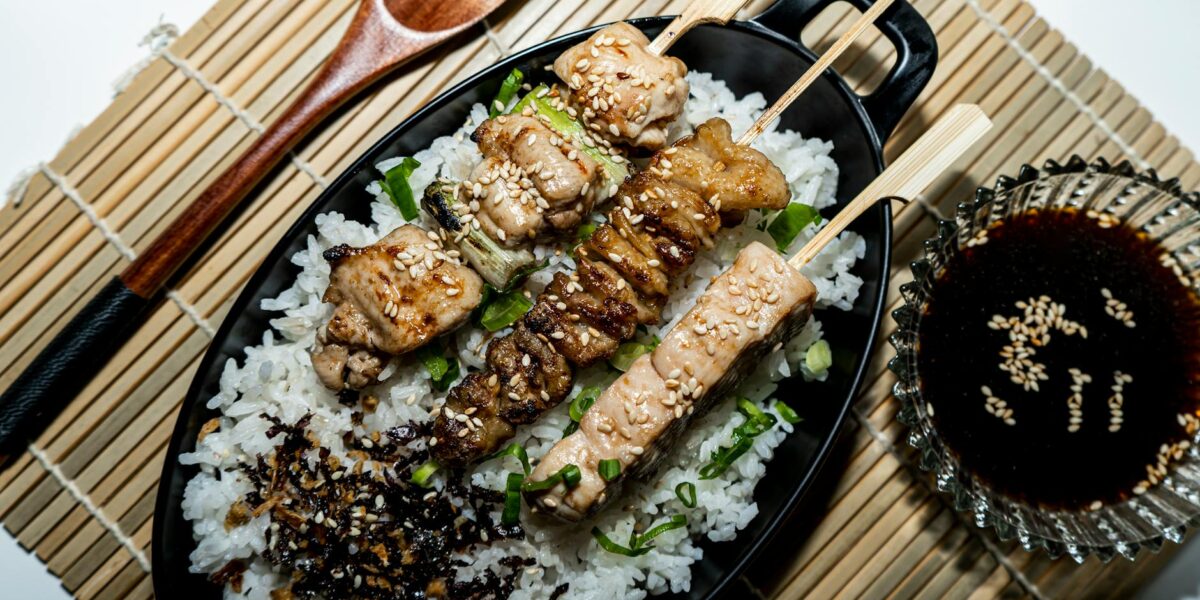
How to Make Yakitori Don (Rice Bowl)
Yakitori don transforms your skewers into a complete meal. It is one of the most popular lunch items in Japan and incredibly satisfying.
- Prepare the rice. Scoop freshly cooked short-grain Japanese rice into individual bowls.
- Slide chicken off skewers. Carefully remove the grilled chicken and scallion pieces from the skewers and arrange them on top of the rice.
- Drizzle with tare. Spoon 1–2 tablespoons of the reserved tare sauce over the chicken and rice.
- Add toppings. Top with a raw egg yolk (if using — use pasteurized eggs), sliced green onions, toasted sesame seeds, nori strips, and a dash of shichimi togarashi.
- Serve immediately. The heat from the rice and chicken will gently warm the egg yolk. Mix everything together as you eat.
For a lighter option, serve yakitori over a bed of shredded cabbage with rice on the side, or pair with a bowl of miso soup for a traditional Japanese set meal.
Yakitori Variations
Once you have mastered the basic thigh skewers, explore the full range of yakitori styles found in Japanese restaurants:
Classic Yakitori Cuts
| Japanese Name | Cut | Description | Recommended Style |
|---|---|---|---|
| Momo (もも) | Thigh meat | The standard yakitori cut — juicy and flavorful | Tare or shio |
| Negima (ねぎま) | Thigh with scallion | Alternating chicken and green onion pieces | Tare |
| Tsukune (つくね) | Ground chicken meatball | Seasoned minced chicken formed into ovals on skewers | Tare with egg yolk dip |
| Kawa (かわ) | Chicken skin | Folded accordion-style for maximum crispness | Shio |
| Tebasaki (手羽先) | Wing tips | Crispy wing sections grilled until snappy | Shio or tare |
| Sasami (ささみ) | Breast tenderloin | Lean, delicate strips often served with wasabi | Shio with wasabi |
| Hatsu (ハツ) | Heart | Dense, meaty texture with mild iron flavor | Shio |
| Sunagimo (砂肝) | Gizzard | Chewy texture, popular in izakayas | Shio |
Tsukune (Chicken Meatball Skewers)
Tsukune is one of the most popular yakitori varieties. To make them:
- Combine 1 lb ground chicken, 2 tablespoons panko, 1 beaten egg, 1 tablespoon soy sauce, 1 teaspoon grated ginger, and 2 minced green onions.
- Mix until sticky and shape into oval patties around skewers.
- Grill over medium-high heat for 4–5 minutes per side, basting with tare.
- Serve with a raw egg yolk for dipping.
Vegetable Yakitori
Yakitori restaurants also grill vegetables using the same tare glaze technique. Try:
- Shishito peppers — Thread whole and grill until blistered (1–2 minutes per side).
- Shiitake mushroom caps — Grill cap-side down first, then flip and baste with tare.
- Asparagus wrapped in bacon — A Japanese izakaya classic called aspara bacon maki.
- Cherry tomatoes — Thread and grill just until the skin pops.
- Enoki mushroom bundles — Wrap in thin slices of pork belly before skewering.
Tips for Perfect Yakitori at Home
Choosing the Right Chicken
Boneless, skinless chicken thighs are the best cut for home yakitori. They have enough fat to stay juicy under high heat and enough flavor to stand up to the tare sauce. If you can find bone-in thighs, debone them yourself — the bones can be saved for stock.
Avoid chicken breast for tare-style yakitori unless you are experienced with high-heat grilling. Breast meat dries out quickly. If you prefer white meat, try the shio (salt) style with breast tenderloins (sasami) and serve with a dab of wasabi.
Getting the Right Char
The signature appeal of yakitori is the contrast between the caramelized, slightly charred exterior and the juicy interior. To achieve this at home:
- Pat the chicken completely dry before skewering. Surface moisture prevents browning.
- Preheat aggressively. Your cooking surface should be screaming hot before the first skewer goes on.
- Do not overcrowd. Leave space between skewers so steam can escape.
- Resist the urge to move them. Let each side develop color before flipping.
Managing Bamboo Skewers
Soak bamboo skewers in water for at least 30 minutes before grilling to prevent them from catching fire. For broiler cooking, wrap the exposed ends in small pieces of aluminum foil. Metal skewers work well too, but they conduct heat and can make the chicken harder to eat directly off the skewer.
Sauce Application
The biggest mistake home cooks make with yakitori is applying too much sauce at once. The tare should be brushed on in thin, multiple coats during cooking — not used as a marinade beforehand. Each layer caramelizes before the next is applied, building up a complex, lacquered glaze. Use a silicone brush or a traditional hake (flat pastry brush) for even application.
Nutritional Information
The following nutritional values are estimates per serving for yakitori don (4 skewers over rice with tare sauce). Values will vary based on chicken cut, sauce amount, and rice portion.
| Nutrient | Per Serving (Yakitori Don) | Per Serving (Skewers Only, 4 pcs) |
|---|---|---|
| Calories | 620 kcal | 280 kcal |
| Protein | 38 g | 32 g |
| Total Fat | 14 g | 12 g |
| Saturated Fat | 3.5 g | 3 g |
| Carbohydrates | 78 g | 8 g |
| Fiber | 1 g | 0.5 g |
| Sugar | 12 g | 7 g |
| Sodium | 980 mg | 850 mg |
To reduce sodium, use low-sodium soy sauce in the tare. To reduce calories, serve the skewers with a side salad instead of over rice. Shio-style yakitori (salt only) is naturally lower in sugar and sodium than tare-style.
Storage and Meal Prep Tips
Storing Cooked Yakitori
- Refrigerator: Store cooked yakitori in an airtight container for up to 3 days. Remove from skewers before storing to save space.
- Freezer: Freeze cooked yakitori pieces in a single layer on a sheet pan, then transfer to freezer bags. Keeps for up to 2 months.
- Reheating: Reheat under a broiler for 3–4 minutes or in a hot skillet to restore the caramelized exterior. Avoid microwaving, which makes the coating soggy.
Storing Tare Sauce
Homemade tare sauce keeps in the refrigerator for up to 2 weeks in a sealed jar. It will thicken as it cools — simply warm gently before using. The sauce also freezes well for up to 3 months.
Meal Prep Strategy
Yakitori is excellent for meal prep. On the weekend, make a large batch of tare sauce and prep the chicken and scallion pieces. Store skewered (uncooked) yakitori on a sheet pan covered with plastic wrap in the refrigerator for up to 24 hours. When ready to eat, simply grill and serve over freshly cooked rice for a 10-minute dinner.
What to Serve with Yakitori
In Japan, yakitori is typically served as part of a spread. Here are traditional and modern pairings:
- Rice: Steamed Japanese short-grain rice or as a yakitori don bowl.
- Miso soup: A classic Japanese combination — try our miso soup recipe.
- Edamame: Salted and steamed as a starter while the yakitori grills.
- Pickled vegetables: Japanese tsukemono (pickles) like cucumber or daikon provide a refreshing contrast.
- Cabbage salad: Shredded cabbage with a sesame or ponzu dressing.
- Cold soba noodles: Served with a dipping sauce for a lighter meal.
- Beer or highball: Yakitori and Japanese beer are an iconic combination. A whisky highball (Japanese whisky with soda water) is the modern classic.
Common Yakitori Mistakes to Avoid
- Using the tare as a marinade. Tare is a glaze applied during cooking, not a pre-soak. Marinating in tare makes the chicken too salty and causes the sugars to burn before the meat cooks through.
- Cutting chicken pieces too large. Oversized pieces take too long to cook, drying out the exterior before the center is done. Stick to 1-inch cubes.
- Not soaking bamboo skewers. Dry bamboo catches fire and chars, leaving ash on your food.
- Cooking over low heat. Yakitori needs high, direct heat for quick caramelization. Low heat steams the chicken instead of grilling it.
- Applying sauce too early. Let the chicken get an initial sear before the first tare application. Sauce on raw chicken prevents browning.
- Single heavy application of sauce. Multiple thin coats build layers of flavor. One thick coat burns.
- Skipping the rest. Even 1–2 minutes of resting allows juices to redistribute for a more tender bite.
The History and Culture of Yakitori
Yakitori’s history is intertwined with Japan’s changing relationship with meat. For centuries, Buddhist dietary laws restricted meat consumption in Japan. When these restrictions gradually relaxed during the Meiji era (1868–1912), chicken became one of the first widely accepted meats.
Post-World War II food shortages led to the proliferation of yakitori stalls near train stations, where inexpensive chicken parts — including organs and cartilage that might otherwise be discarded — were grilled and sold as affordable, protein-rich snacks. This nose-to-tail philosophy remains central to yakitori culture today.
Modern yakitori restaurants range from casual standing bars (tachinomi) where salarymen grab a few skewers after work, to omakase-style establishments where the chef selects and grills each cut to order. The craft of yakitori grilling — managing the binchotan fire, timing each skewer, knowing exactly when to apply the tare — is considered a specialized skill that takes years to master.
In recent years, yakitori has gained a global following. Cities like New York, London, and Sydney now have dedicated yakitori bars, and the dish has become a staple of the broader Japanese food trend alongside ramen and gyoza.
Frequently Asked Questions
What is the difference between yakitori and teriyaki?
Both use similar sauce ingredients (soy sauce, mirin, sugar), but the technique and result are different. Teriyaki typically involves larger cuts of meat pan-fried or grilled and glazed with sauce, while yakitori uses small, skewered pieces grilled over intense heat with the tare applied in multiple thin layers. Yakitori sauce (tare) is also more concentrated and less sweet than most teriyaki sauces.
Can I make yakitori without a grill?
Yes. An oven broiler is the best indoor alternative. Set it to high, position the rack close to the element, and cook on a wire rack set over a foil-lined sheet pan. A cast iron grill pan also works well and gives you distinct grill marks. The stovetop method does not produce as much smokiness, but the tare glaze compensates with plenty of flavor.
What is binchotan and do I need it?
Binchotan is Japanese white charcoal made from ubame oak. It burns at extremely high temperatures with very little smoke, producing clean, intense heat ideal for yakitori. While binchotan creates the most authentic result, it is not necessary for home cooking. Standard lump charcoal, a gas grill, or a broiler all produce excellent yakitori.
Can I use chicken breast instead of thighs?
You can, but thighs are strongly recommended. Chicken breast dries out quickly under the high heat needed for yakitori. If you prefer breast meat, cut it slightly larger (to compensate for moisture loss), reduce cooking time by 1–2 minutes, and consider the shio (salt) style rather than tare, which adds additional sugar that can cause burning before the breast cooks through.
How do I prevent flare-ups on the grill?
Flare-ups happen when fat drips onto the heat source. Trim excess fat from the chicken thighs, keep a spray bottle of water nearby, and avoid applying tare too heavily (sugar in the sauce can also cause flare-ups). Position the exposed skewer handles away from direct heat.
Is yakitori gluten-free?
Standard yakitori tare contains soy sauce, which includes wheat. To make gluten-free yakitori, substitute tamari (a wheat-free soy sauce) for regular soy sauce in the tare. Shio-style yakitori seasoned with salt only is naturally gluten-free.
What is the best way to reheat yakitori?
Reheat yakitori under a broiler for 3–4 minutes or in a hot skillet over medium-high heat. Both methods help restore the caramelized exterior. Brush with a little extra tare sauce while reheating to refresh the glaze. Avoid the microwave — it makes the coating soft and the chicken rubbery.
Can I make yakitori sauce ahead of time?
Yes, and it actually improves with time. Make the tare up to 2 weeks ahead and store in a sealed jar in the refrigerator. The flavors meld and deepen. Warm it gently before using — it will have thickened in the fridge.
How many skewers per person?
For a main course (especially as yakitori don over rice), plan for 4–5 skewers per person. As appetizers or part of a larger spread, 2–3 skewers per person is sufficient. A batch of 16–20 skewers from this recipe comfortably serves 4 as a main dish.

Mei Lin Chen
Mei Lin Chen is an Asian food writer and recipe developer. Melbourne-raised and London-based, she has spent over a decade exploring the rice paddies, hawker stalls, and home kitchens of South-East and East Asia. Her recipes balance traditional technique with everyday practicality.