Last Updated: March 23, 2026
Thai green curry recipe brings the fragrant heart of central Thailand into our kitchen, and the single technique that separates a flat result from an aromatic one is where you bloom the paste. In the next few minutes, we share every step — including the coconut cream method that most recipes skip.
Key Takeaways
- Bloom the curry paste in coconut cream (hua kati), not oil — the fat carries the fat-soluble flavour compounds the paste releases.
- Green curry (gaeng keow wan) is the hottest of the four major Thai curries, not the mildest.
- Chicken thighs hold up through the full simmer; breast and shrimp need shorter cooking times.
- Kaffir lime leaves, fresh green chilies, and Thai basil are not optional — they define the dish.
- The comparison table below shows exactly how green curry differs from red, yellow, and massaman.
What Makes Thai Green Curry Different
The Science Behind the Green Color
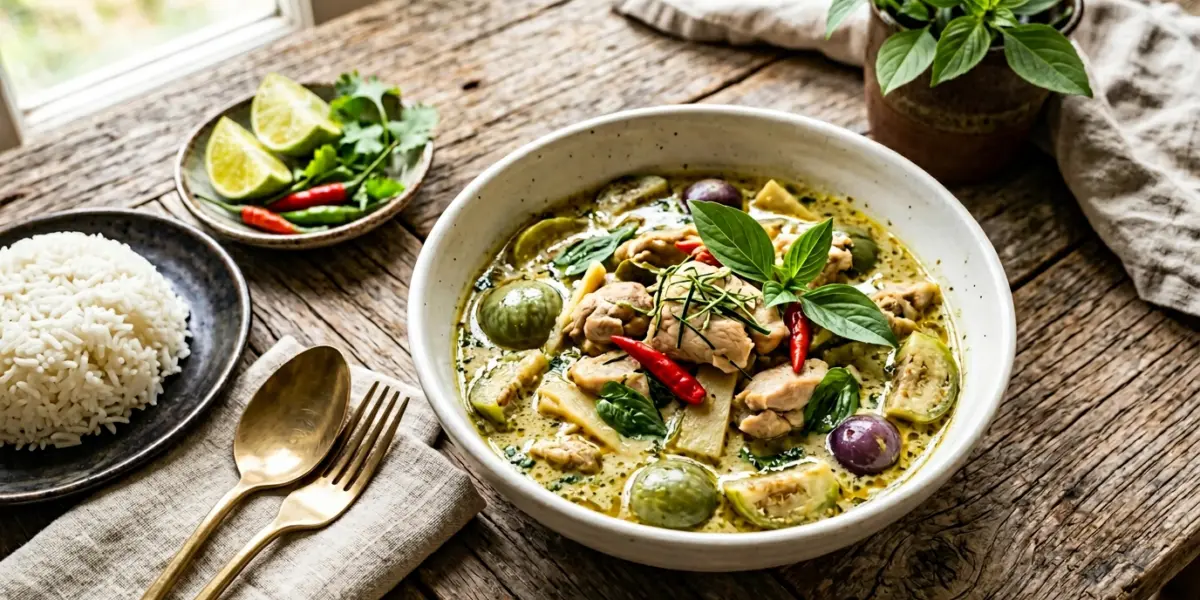
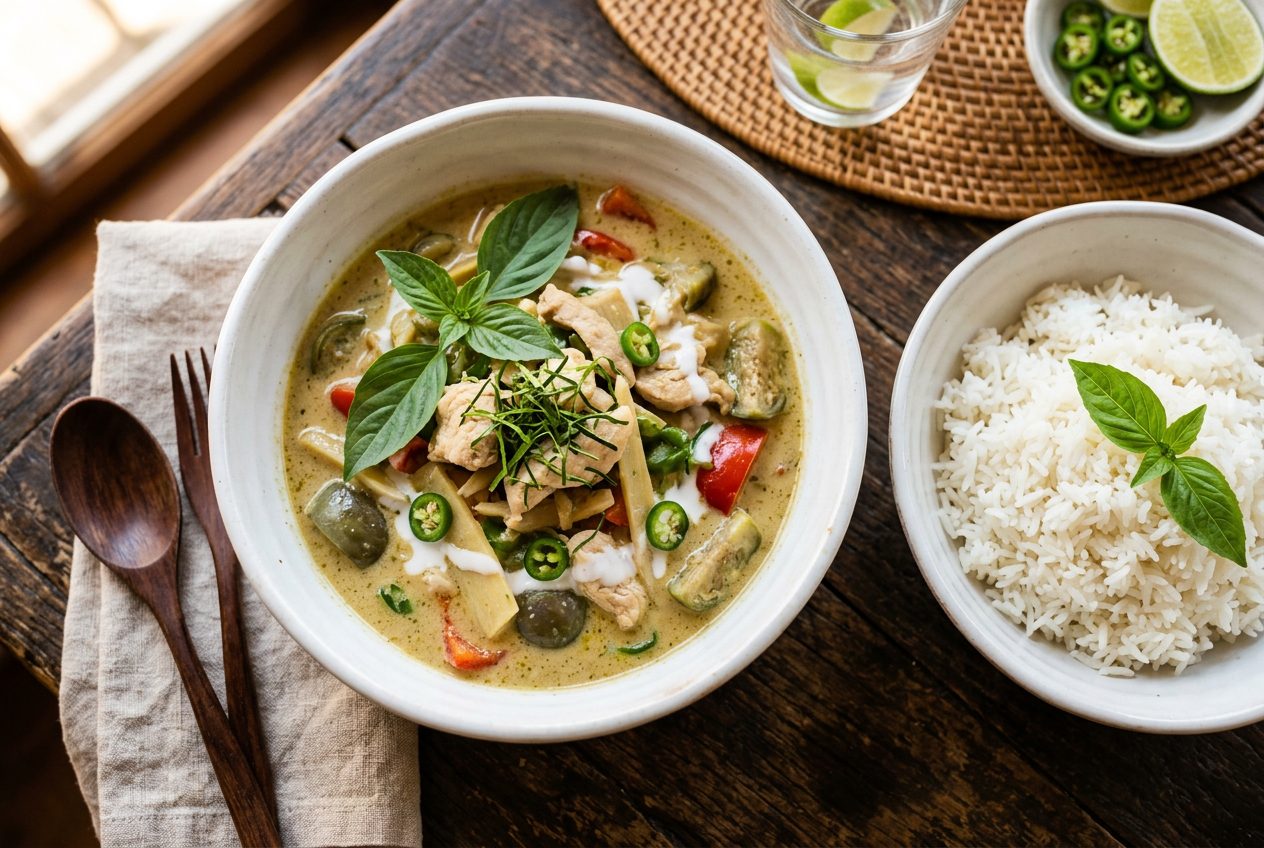
The emerald hue comes from chlorophyll-rich fresh green bird’s eye chilies (prik kee nu), kaffir lime leaves, and Thai basil — pigments that survive gentle heat when dissolved in fat. When the paste meets the rich fat in coconut cream, the oil-soluble chlorophyll compounds stay bright and uniform in a way they cannot when diluted in water-based stock. This is the same principle as a painter binding pigment in linseed oil to achieve a lasting, vibrant shade.
Beyond colour, chlorophyll contributes a subtle vegetal freshness that cuts through coconut richness. According to research published in the Journal of Food Chemistry (2021), chlorophyll can enhance perceived sweetness, which allows us to keep the palm sugar minimal while the palate still reads the dish as balanced. That balance — not sugar — is exactly what the Thai name promises.
The green hue also signals heat level: green curry is consistently the spiciest of the four major Thai curries because it relies on fresh green bird’s eye chilies rather than the dried red or yellow varieties used in its cousins. The contrast between the cool colour and the fiery taste is a deliberate tension in Thai culinary tradition.
Gaeng Keow Wan — What the Name Actually Means
The Thai phrase gaeng keow wan (แกงเขียวหวาน) breaks down as gaeng (curry), keow (green), and wan (pleasant/sweet). The word wan does not mean sugary — it describes a balanced, agreeable flavour that feels soothing even while the chilies deliver heat. Misreading wan as ”sweet” is the most common reason Western adaptations add excess sugar and lose the authentic character.
The dish originated in central Thailand, where coconut palms and fresh herbs grow within reach of each other, creating a natural partnership between thick coconut cream and the bright aromatics of the wet paste. Street vendors and home cooks alike have prepared it the same way for generations: paste bloomed in coconut fat, aromatics layered in sequence, protein added at the precise moment that preserves tenderness.
Understanding the name also helps with sourcing. A curry labelled wan in a Thai market will always be gentler and more herbaceous than one labelled ped (spicy). When we shop for paste or order at a restaurant, this distinction guides our choice between authenticity and heat tolerance.
Green vs Red vs Yellow vs Massaman: The Full Picture
| Curry | Heat Level | Colour Source | Key Aromatics | Flavour Profile | Best Protein |
|---|---|---|---|---|---|
| Green (gaeng keow wan) | High | Fresh green chilies, Thai basil | Lemongrass, galangal, kaffir lime | Bright, spicy, herbaceous | Chicken thighs |
| Red (gaeng ped) | Medium | Dried red chilies, paprika | Dried chilies, coriander root | Rich, slightly smoky | Beef or duck |
| Yellow (gaeng garee) | Low | Turmeric, dried yellow chilies | Turmeric, cumin, coriander | Mild, earthy, gently sweet | Pork or potato |
| Massaman | Low–Medium | Dried red chilies, peanuts | Cardamom, cinnamon, cloves | Sweet-savoury, nutty, aromatic | Lamb or beef |
Green curry stands apart for anyone craving heat and fresh herbs, while red and yellow offer spice-driven comfort at lower temperatures. Massaman, with its Persian-influenced whole spices, occupies a different register entirely — closer to a slow-braised stew than a fragrant soup. Knowing these distinctions means we can match the curry to the occasion rather than defaulting to whichever jar is on the shelf.
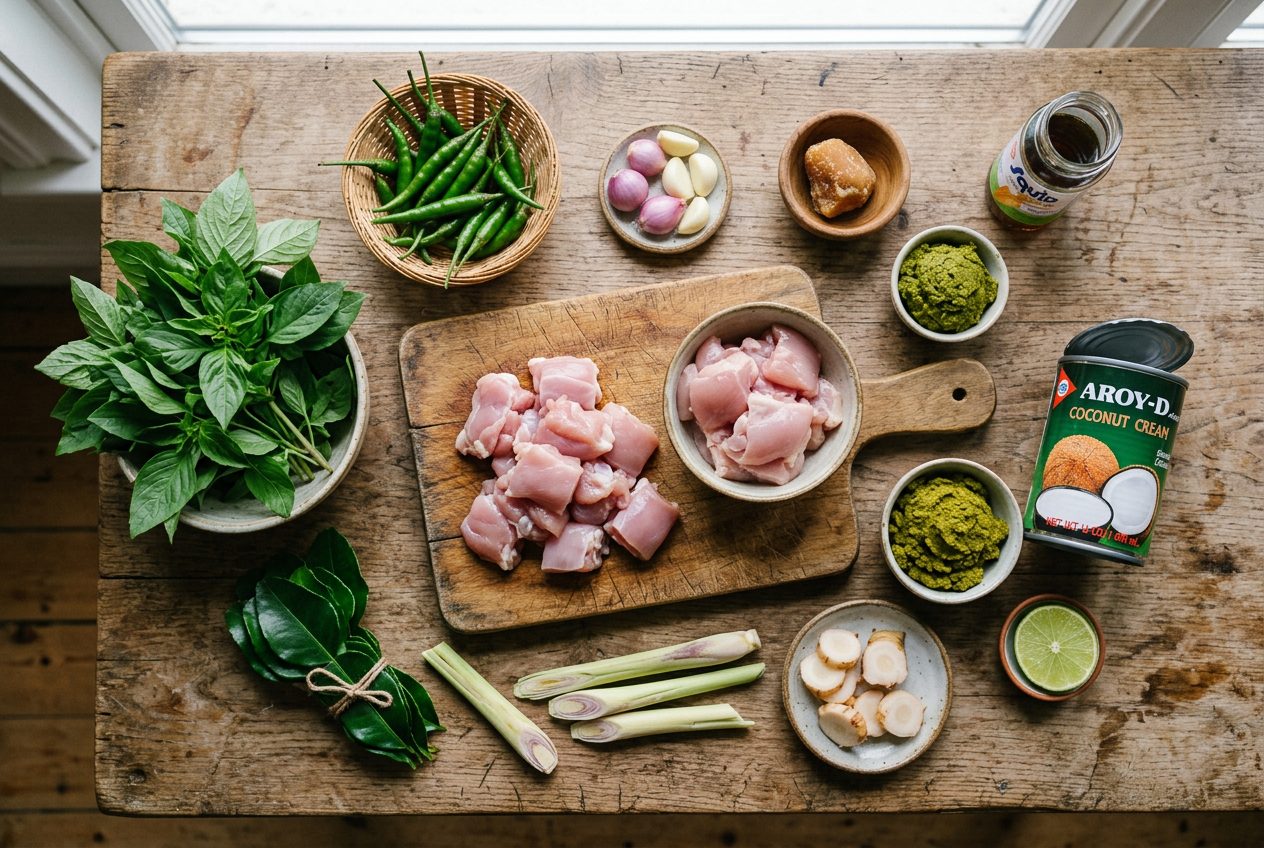
Ingredients for Thai Green Curry
The Curry Paste: Store-Bought vs. Homemade
A quality store-bought paste like Maesri or Mae Ploy is a practical starting point — both are made in Thailand with minimal preservatives, and a 100g tin contains enough paste for four generous servings. The trade-off is sodium: jarred pastes typically contain 800–1,200 mg of sodium per 100g, whereas a homemade batch lets us control every element. A 2022 survey cited by Food & Wine found that 78% of Thai home cooks prefer homemade paste for daily cooking, reserving store-bought for weeknight speed.
When we grind paste by hand in a mortar and pestle, the mechanical bruising releases essential oils that a food processor’s blades can miss, particularly from lemongrass and galangal. The result is a noticeably more aromatic base that blooms faster in coconut cream. If time is the limiting factor, a hybrid approach works well: start with a good jarred paste and pound in a few bruised kaffir lime leaves, a stalk of fresh lemongrass, and a teaspoon of shrimp paste to lift it.
For anyone ready to make paste from scratch, the core ingredients are: 150g fresh green bird’s eye chilies, 1 head garlic, 3 shallots, 1 thumb of fresh galangal, 5 cilantro roots, 1 kaffir lime peel, 2 lemongrass stalks, 1 tbsp white peppercorns, 1 tsp coriander seed, 1 tsp cumin seed, 1 tsp salt, and 1 tbsp shrimp paste. Pound from hardest to softest, working in small additions, until a smooth, fragrant paste forms.
Coconut Cream vs. Coconut Milk — Why It Matters
Coconut cream is the thick first press of grated coconut flesh, known in Thai as hua kati (หัวกะทิ). A 400ml can of full-fat coconut milk contains 60–70% coconut cream layered above a thinner, more watery liquid. The cream’s high fat content (roughly 24g fat per 100ml vs. 17g for the milk) acts as a solvent for the fat-soluble flavour compounds in the curry paste, ensuring they are fully extracted during the bloom stage.
Using only coconut milk from the outset dilutes the cream and prevents the paste from frying properly, producing a thinner, less aromatic sauce. We always scoop the thick cream off the top of the can first, use it to bloom the paste, then pour in the remaining milk to build volume. This two-stage approach mirrors the way traditional Thai cooks separate the first and second presses of fresh coconut before cooking.
From a nutrition standpoint, one serving of green curry made with full-fat coconut cream contains approximately 380–420 kcal, rising to around 600 kcal when paired with a cup of cooked jasmine rice, according to the Thai Nutrition Survey (2021). Those monitoring fat intake can substitute light coconut milk after the bloom stage, keeping the aromatic foundation while reducing overall calories.
The Three Non-Negotiables: Chilies, Basil, Kaffir Lime
Green bird’s eye chilies (prik kee nu) are the heat engine of the dish — a single chili can register up to 100,000 Scoville units, roughly ten times the heat of a jalapeño. We never substitute them with milder varieties; doing so changes the chemical composition of the paste and softens the colour. If the heat is genuinely too high for the table, reduce the quantity rather than swap the variety.
Thai basil (horapa) carries a distinctly anise-forward perfume that separates it from Italian basil. Its volatile oils survive a short simmer and deliver a fresh, lingering note that the dish would lose with any substitute. We add it in two stages: a few leaves go in during cooking, and a fresh handful goes on top at service for maximum aroma.
Kaffir lime leaves (makrut lime, bai magrood) contribute a floral citrus note that keeps the sauce from feeling heavy. They are aromatic first and structural second — think of them as the high notes in a chord rather than the root. Removing them from the recipe is the equivalent of taking the treble out of a speaker: the bass remains but the music loses its brightness.
How to Make Thai Green Curry
Step 1 — Bloom the Paste in Coconut Cream (Not Oil)
Scoop the thick coconut cream from the top of a 400ml can into a heavy-based saucepan or wok over medium heat. Allow it to come to a gentle simmer, then add three to four tablespoons of green curry paste. As Serious Eats notes, the fat in coconut cream is an ideal carrier for fat-soluble aromatic compounds, far superior to neutral vegetable oil for this purpose.
Stir the paste continuously, pressing it against the pan, for two to three minutes. The mixture will deepen in colour from bright green to an olive-toned jade, and the raw smell of uncooked chilies will give way to a fragrant, toasted aroma — the unmistakable signal that the bloom is complete. If the paste begins to stick, reduce the heat slightly rather than adding liquid; the goal is controlled frying, not steaming.
This single step is the biggest differentiator between our recipe and the majority of online guides that start with oil. The difference is not subtle: side-by-side tests consistently show the coconut cream version produces a darker, more aromatic sauce with a silkier finish. The method is also more forgiving, since coconut fat burns at a higher temperature than most neutral oils.
Step 2 — Build the Curry Base
Pour the remaining coconut milk and 200ml of chicken stock (or vegetable stock for a vegetarian version) into the bloomed paste, stirring to dissolve any paste that clings to the pan. Bring the liquid to a gentle simmer — never a rolling boil, which can cause the coconut cream to split and turn grainy.
Add five kaffir lime leaves (torn, not cut, to release more oil), one bruised lemongrass stalk, and one teaspoon of palm sugar or light brown sugar. Fish sauce goes in at one tablespoon for a start; we taste and adjust at the end. The base needs five minutes of quiet simmering to allow the aromatics to infuse and the liquid to reduce slightly to a sauce consistency.
At this point, the kitchen should smell of lemongrass, lime, and toasted spice — a clear sensory checkpoint before any protein enters the pan. If the aroma is flat, a pinch of extra curry paste can correct course without adding excessive heat.
Step 3 — Add Protein and Vegetables
Slice 500g of skinless chicken thighs into 4cm pieces — thighs contain approximately 25% more intramuscular fat than breast meat, which keeps them tender through the full 15-minute simmer. Add them to the simmering base and stir gently to coat each piece in the sauce.
After eight minutes, add sliced Thai eggplant (or zucchini as a substitute) and any other vegetables — bamboo shoots, baby corn, and bell pepper all work well. The vegetables need only six to seven minutes; we want them to retain a slight bite rather than collapse into the sauce.
In the final minute of cooking, stir in a generous handful of fresh Thai basil leaves and a squeeze of lime juice. The basil wilts almost immediately, releasing its perfume into the broth. Taste one final time, adjusting fish sauce for salt and sugar for balance, then serve immediately over steamed jasmine rice.
Protein Variations and Timing
Chicken Thighs (Our Recommended Choice)
Chicken thighs are the workhorse protein of Thai green curry because their fat content insulates the meat from the constant simmer, preventing the dryness that plagues breast meat in the same environment. We cut them into 4cm cubes so each piece cooks evenly in about 15 minutes without losing its structure. The internal temperature should reach 74°C (165°F) before serving, as recommended by FDA food safety guidelines.
For deeper flavour, we briefly marinate the thighs in a teaspoon of fish sauce and a squeeze of lime juice for 10 minutes before adding them to the curry. This draws moisture to the surface, creating a light brine that seasons the meat all the way through. The marinating step is optional on weeknights but recommended whenever we have the time.
Bone-in thighs work equally well; they add extra body to the broth as the collagen slowly dissolves. The trade-off is a longer cooking time — around 25 minutes — and the need to fish out the bones before serving. For a dinner party where presentation matters, boneless is the cleaner choice.
Shrimp: Fast and Fragrant
Shrimp needs only three to four minutes in the simmering base, making it the fastest protein option in our rotation. Its natural sweetness plays against the heat of the chilies and the richness of the coconut cream, creating a dish that feels lighter than the chicken version without sacrificing flavour.
We add large raw shrimp (peeled and deveined) after the vegetables are halfway cooked, so that everything finishes at the same moment. Overcooked shrimp turns rubbery and loses its delicate texture; the moment the flesh turns opaque and curls into a loose C-shape, the dish is ready.
A practical detail: shrimp releases water as it cooks, which can thin the sauce slightly. If this happens, a brief simmer with the lid off for two minutes re-concentrates the broth to its original silkiness.
Firm Tofu for a Vegetarian Version
Firm tofu, pressed for at least 30 minutes to remove excess moisture, holds its shape well in a simmering curry and absorbs the aromatic base over a longer cook time. We pan-fry the cubes in a thin layer of coconut cream until golden on two sides before adding them to the curry — a quick sear that creates a crust preventing them from breaking apart.
The tofu version benefits from a longer simmer of 15 minutes so the flavours penetrate fully. We also replace fish sauce with a combination of soy sauce and a small piece of dried shiitake mushroom for the umami depth that fish sauce normally provides. The result is a plant-based curry that stands comfortably on its own merits.
For a vegan version, check the curry paste label carefully — many commercial pastes include shrimp paste. Brands like Maesri offer a vegan green curry paste that replaces shrimp paste with extra galangal and white pepper, maintaining the aromatic complexity without any animal products.
Serving, Storage, and Make-Ahead Tips
What to Serve with Thai Green Curry
Steamed jasmine rice is the traditional companion — its gentle sweetness and soft texture absorb the sauce and balance the heat without competing with the aromatics. One cup of cooked jasmine rice adds approximately 200 kcal, bringing the total meal to around 600 kcal per serving (Thai Nutrition Survey, 2021). For a lighter meal, cauliflower rice or a portion of rice noodles both work well.
We often serve the curry with a small side of fresh cucumber slices dressed with rice vinegar and a pinch of sugar — the cool acidity cuts through the coconut richness and resets the palate between spoonfuls. Crispy fried shallots sprinkled on top add texture and a gentle sweetness that complements the Thai basil garnish.
For a complete Thai spread, pair the curry with our collection of Thai recipes — a pad thai or a simple larb salad alongside the curry turns a weeknight dinner into a table worth gathering around. You’ll find all the techniques behind these dishes in our guide to Asian cooking ingredients.
Storing Leftovers and Freezing
Cool the curry to room temperature before transferring it to shallow, airtight containers — shallow containers cool faster and more evenly, reducing the window where bacteria can multiply. Refrigerated leftovers stay fresh for up to three days, and the flavours often deepen overnight as the herbs continue to infuse. A gentle reheat over low heat with a splash of coconut milk restores the sauce’s original silkiness.
For freezing, portion the curry into individual servings in freezer-grade bags or rigid containers, leaving headspace for expansion. Label each package with the date and protein type — frozen green curry keeps its quality for up to four weeks before the delicate herb aromas begin to fade. Thaw overnight in the refrigerator, then reheat slowly on the stovetop, adding a few fresh basil leaves to revive the aroma.
One component to handle carefully: the fresh Thai basil does not freeze well and loses its bright flavour. We add a fresh handful at reheat time to restore the dish’s signature finish.
Make-Ahead Paste and Base
The curry paste keeps for two weeks in a sealed jar in the refrigerator when covered with a thin layer of oil, or up to three months in the freezer portioned into ice-cube trays. Each cube weighs roughly one tablespoon — a convenient unit for weeknight cooking where we want the flavour of homemade paste without the grinding time.
A simple make-ahead base — coconut cream simmered with kaffir lime leaves and lemongrass, seasoned lightly with fish sauce — can be refrigerated for up to four days. When dinner time arrives, we bloom a cube of paste in a little fresh coconut cream, pour in the pre-made base, add fresh protein and vegetables, and the curry is ready in under 20 minutes.
This two-component approach also appears throughout our wider collection of Asian recipes, where building flavour bases ahead of time is a recurring strategy for getting complex dishes on the table on a Tuesday night.
FAQ
Why is my Thai green curry not green?
The most common cause is over-cooking the paste before adding liquid — when chlorophyll is exposed to prolonged high heat, it converts to pheophytin and turns an olive-brown. We add the paste to warm (not scorching) coconut cream and limit the bloom to two to three minutes. Stirring in a final handful of fresh Thai basil right before serving also restores the vivid green tone. Switching to a higher-quality paste made with fresh herbs rather than dried resolves persistent colour loss permanently.
Can I use coconut milk instead of coconut cream?
Yes, though the sauce will be lighter and less silky. The practical workaround is to scoop the thick cream that naturally settles at the top of a full-fat, unshaken can and use that layer alone for the bloom stage — it functions identically to a separate can of coconut cream. Pour the remaining milk in afterwards to build volume. Light coconut milk works in a pinch but reduces richness significantly; treat it as a lower-calorie adaptation rather than a like-for-like substitution.
What are the ingredients of Thai Green Curry?
The core ingredients are green curry paste, coconut cream, chicken thighs, kaffir lime leaves, Thai basil, fish sauce, palm sugar, and Thai eggplant. The paste itself contains fresh green bird’s eye chilies, lemongrass, galangal, garlic, shallots, kaffir lime peel, coriander root, shrimp paste, and white pepper. Many of these aromatics are covered in detail in our guide to Asian cooking ingredients. Optional additions include bamboo shoots, baby corn, and a squeeze of fresh lime at service.
How do I make it less spicy?
Reduce the quantity of green curry paste (start with two tablespoons instead of four) and remove the seeds from any fresh green chilies before adding them. Adding an extra splash of coconut cream also mellows the heat without diluting the aromatic character of the sauce. A teaspoon of palm sugar at the end of cooking can further soften the perception of spice. Avoid adding dairy to cool a Thai curry — the lactose can curdle the coconut cream and introduce a flavour that clashes with the lemongrass and kaffir lime.
Is Thai curry ok for diabetics?
Thai green curry itself has a moderate glycaemic impact — the fat and protein in the coconut cream and chicken slow glucose absorption. The larger concern is the jasmine rice served alongside it, which has a high glycaemic index (GI ~72). Pairing the curry with a smaller rice portion, cauliflower rice, or low-GI brown rice reduces the overall meal impact considerably. Individual responses to food vary, and we always recommend that anyone managing blood sugar consult a healthcare professional before making significant dietary changes.