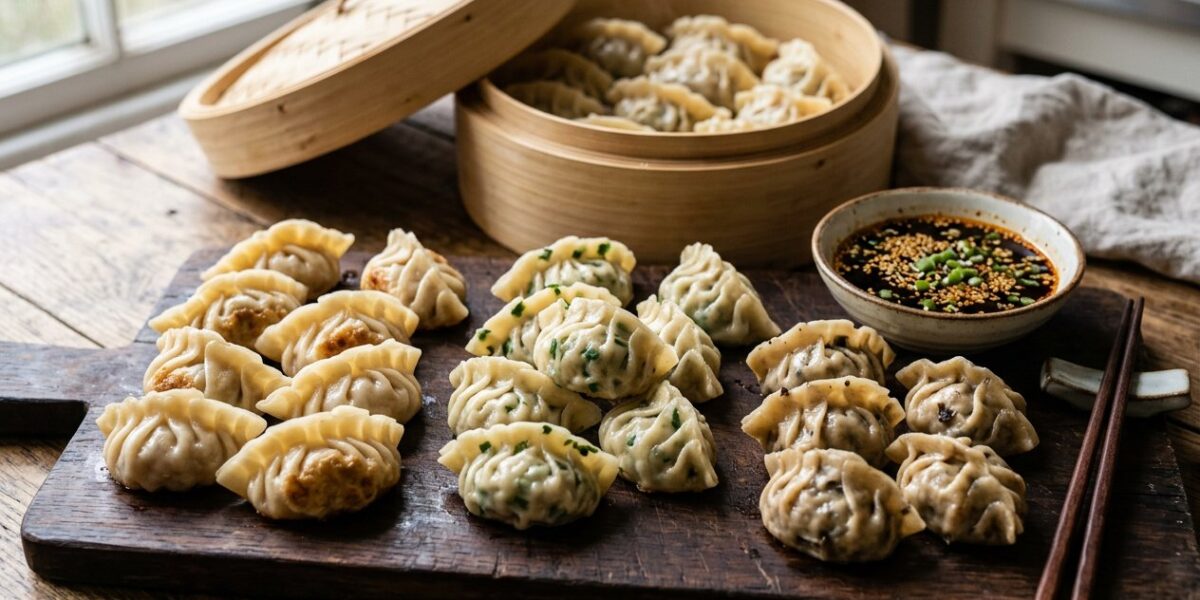
Our dumpling recipe begins with a memory of a steaming kitchen in Melbourne during Chinese New Year, the scent of ginger and sesame oil drifting through the house as we gathered around the table. We invite you to recreate that warmth in your own kitchen and discover why handmade jiaozi feel like a celebration in every bite.
Key Takeaways
- The dough-to-water ratio of 2 cups flour to ¾ cup hot water yields about 40 wrappers.
- Three filling styles cover pork, chicken, and a vegetarian option.
- Boiling, pan-frying, and steaming each give a distinct texture and flavor profile.
- Proper pleating ensures the dumplings stay sealed during cooking and freezing.
Why Making Jiaozi from Scratch Changes Everything
The 1,800-Year History Behind Every Fold
The story of jiaozi stretches back over 1,800 years to the Eastern Han Dynasty, when scholars wrapped herbs in dough to protect them from the cold. Each fold we make today echoes a tradition that once kept families fed during winter storms. The ritual of shaping the half-moon pleat is as much a cultural act as it is a culinary step, linking us to generations that folded by hand.
The ancient practice also carried a symbolic meaning: the shape resembles ancient Chinese ingots, promising wealth for the coming year. When we press the dough, we are not only sealing flavor but also sealing wishes for prosperity. This analogy of dough to coin helps us feel the weight of history in our own kitchen.
In modern times, the same technique appears in festivals across northern China, especially during Chinese New Year, where families gather to make dumplings together. The act of folding together becomes a bonding experience, a shared language of love and hope.
What Makes Chinese Dumplings Different from Other Dumplings
Chinese dumplings stand apart because the wrapper is thin, almost translucent, allowing the filling to shine through. Compared with Italian ravioli or Polish pierogi, the texture is delicate yet resilient — a balance achieved through a simple flour-water dough. The contrast between the soft interior and the slightly chewy skin creates a mouthfeel that other cuisines rarely replicate.
The flavor profile also diverges: we rely on aromatics such as ginger, garlic, and spring onion, paired with soy sauce and sesame oil, rather than cheese or tomato. This focus on umami and subtle spice gives Chinese dumplings a distinctive character. The pleating technique, whether a simple half-moon or a multi-pleat crescent, adds a visual cue that signals authenticity.
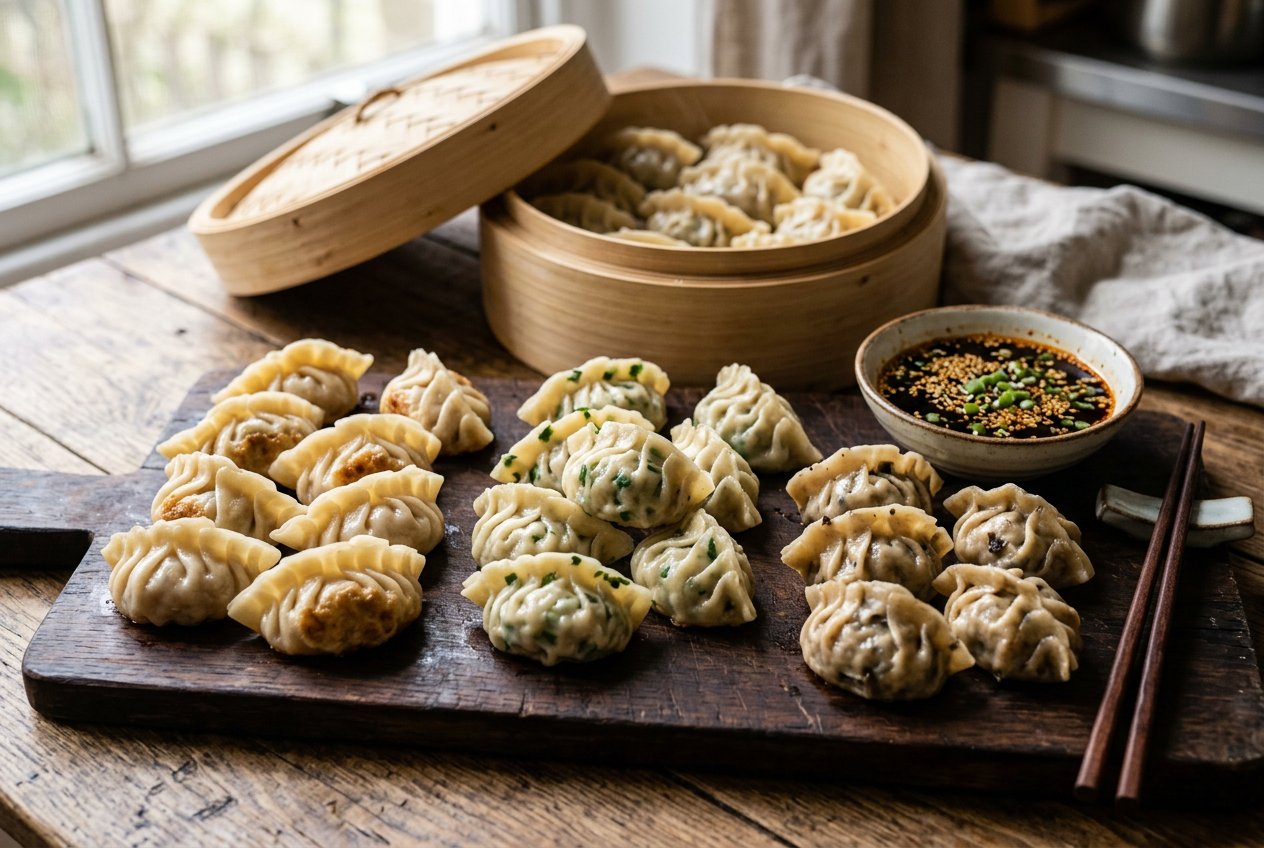
Finally, the cooking methods — boiling (shui jiao), pan-frying (guo tie), and steaming (zheng jiao) — offer three distinct experiences from a single dough. Each method highlights a different texture: silky, crisp, or airy. This versatility is why Chinese recipes built around jiaozi have found fans in every corner of the world.
Store-Bought Wrappers vs. Homemade Dough — When to Use Each
Store-bought wrappers provide convenience, especially when time is limited or when you need a large batch for a party. They are pre-rolled to a uniform thickness, which reduces the risk of uneven cooking. However, they may contain preservatives that alter the mouthfeel compared with fresh dough.
Homemade dough, on the other hand, lets us control the texture by adjusting the flour type and water temperature. Using plain flour and just-boiled water yields a dough that stretches easily and holds fillings without tearing. The tactile experience of kneading the dough also connects us to the tradition of hand-made jiaozi.
We recommend using store-bought wrappers for the first few attempts, then graduating to homemade dough once you feel comfortable with the pleating technique. This progression mirrors a language learner’s journey: start with ready-made phrases, then craft original sentences.
The Dumpling Dough — Two Ways to Make It
Classic Hand-Rolled Dough (Flour + Hot Water)
Begin by measuring 2 cups of plain flour into a bowl, then slowly pour ¾ cup of water that has been brought to a rolling boil and then cooled for a minute. The hot water gelatinizes the starch, giving the dough a supple, slightly tacky feel that is perfect for thin wrappers. Mix with a wooden spoon until a shaggy mass forms, then turn onto a lightly floured surface.
Knead the dough for 8–10 minutes, pressing and folding until it becomes smooth and elastic. Let the dough rest under a damp cloth for 30 minutes; this relaxation stage allows the gluten to settle, preventing shrinkage during rolling. After resting, divide the dough into 40 equal portions, each weighing about 15 grams, to produce the standard count of wrappers.
Roll each portion into a ball, then flatten with the palm before using a rolling pin to achieve a 3-mm thickness. The resulting sheet should be translucent enough to see the faint grain of the flour. This thickness ensures the dumpling cooks evenly, whether boiled, pan-fried, or steamed.
The Quick Shortcut — Store-Bought Round Wrappers
If you prefer speed, purchase round dumpling wrappers from an Asian supermarket; they are typically 8 cm in diameter and pre-cut to a uniform size. Before using, separate the wrappers gently to avoid tearing, and keep them covered with a damp towel to prevent drying.
These wrappers are designed for a quick cook: they hold the filling well and require no additional rolling. However, they may be slightly thicker than homemade dough, which can affect the final texture, especially when pan-fried.
For best results, give each wrapper a quick dusting of cornstarch on the surface; this creates a barrier that reduces sticking during the pleating process. The convenience of store-bought wrappers is perfect for a weekday dinner when the pantry is already stocked.
How to Roll Wrappers to the Right Thickness
Even when using homemade dough, achieving the right thickness is vital for a balanced bite. Lightly flour the work surface, then roll each ball into a circle about 8 cm across, aiming for a uniform 3-mm depth. A simple test is to hold the wrapper up to the light; if you can see the faint outline of the dough, you have reached the target.
If the wrapper appears too thick, use a rolling pin to gently stretch it outward, rotating the dough to maintain an even shape. Conversely, if it is too thin, patch the edges with a tiny piece of dough to reinforce the seam before filling.
Consistent thickness not only ensures even cooking but also helps the pleating technique hold the filling securely. The visual cue of a perfectly rolled wrapper is a small triumph that encourages us to continue mastering the craft. For a deeper look at the tools and pantry staples that make Asian cooking work, see our guide to key Asian pantry ingredients.
Three Filling Options for Every Taste
Filling 1 — Classic Pork and Napa Cabbage (Zhu Rou Bai Cai)
We start with 200 g of ground pork, choosing a blend that contains about 20% fat for juiciness. The pork is combined with 150 g of finely shredded napa cabbage that has been salted, squeezed, and drained to remove excess moisture — a step that prevents a soggy dumpling and concentrates the cabbage’s sweetness.
Season the mixture with 1 tsp soy sauce, ½ tsp sesame oil, 1 tsp grated ginger, 1 tsp minced garlic, and a pinch of white pepper. The tricolon of soy, sesame, and ginger creates a layered flavor that is both savory and aromatic. Add one chopped spring onion for a fresh bite, then mix until the ingredients are evenly coated.
The resulting filling is moist, aromatic, and slightly crunchy from the cabbage. When cooked, the pork releases its juices, marrying with the cabbage’s mild sweetness to produce a classic jiaozi taste that many associate with Chinese New Year celebrations.
Filling 2 — Chicken and Chive (Ji Rou Jiu Cai)
For a lighter protein, we use 180 g of finely minced chicken breast, which offers a delicate texture. The chicken is paired with 80 g of chopped chives, which bring a subtle onion-like flavor and a vibrant green color to the finished dumpling.
Season the blend with 1 tsp soy sauce, ½ tsp ginger, ½ tsp garlic, and a drizzle of sesame oil. The contrast between the mild chicken and the pungent chives creates a balanced profile that is both fresh and comforting.
After mixing, let the filling rest for 10 minutes; this allows the flavors to meld and the chicken to absorb the seasonings. The final mixture is tender, fragrant, and perfect for those who prefer a less fatty option than the classic pork version.
Filling 3 — Vegetarian Mushroom and Tofu (Shu Cai)
We combine 150 g of finely diced firm tofu with 120 g of shiitake mushrooms that have been rehydrated and minced. The tofu supplies a silky texture, while the mushrooms contribute an earthy depth that carries its own quiet richness.
Season with 1 tsp soy sauce, ½ tsp sesame oil, ½ tsp minced ginger, and a pinch of salt. The tricolon of soy, sesame, and ginger mirrors the pork version, providing familiarity while keeping the recipe entirely plant-based.
Add a handful of shredded carrot for color and a slight sweetness, then stir until the mixture is cohesive. This vegetarian filling holds together well during cooking and offers a satisfying bite that rivals any meat option at the table.
How to Fold Jiaozi — The Classic Half-Moon Pleat
The Basic Fold (No Experience Needed)
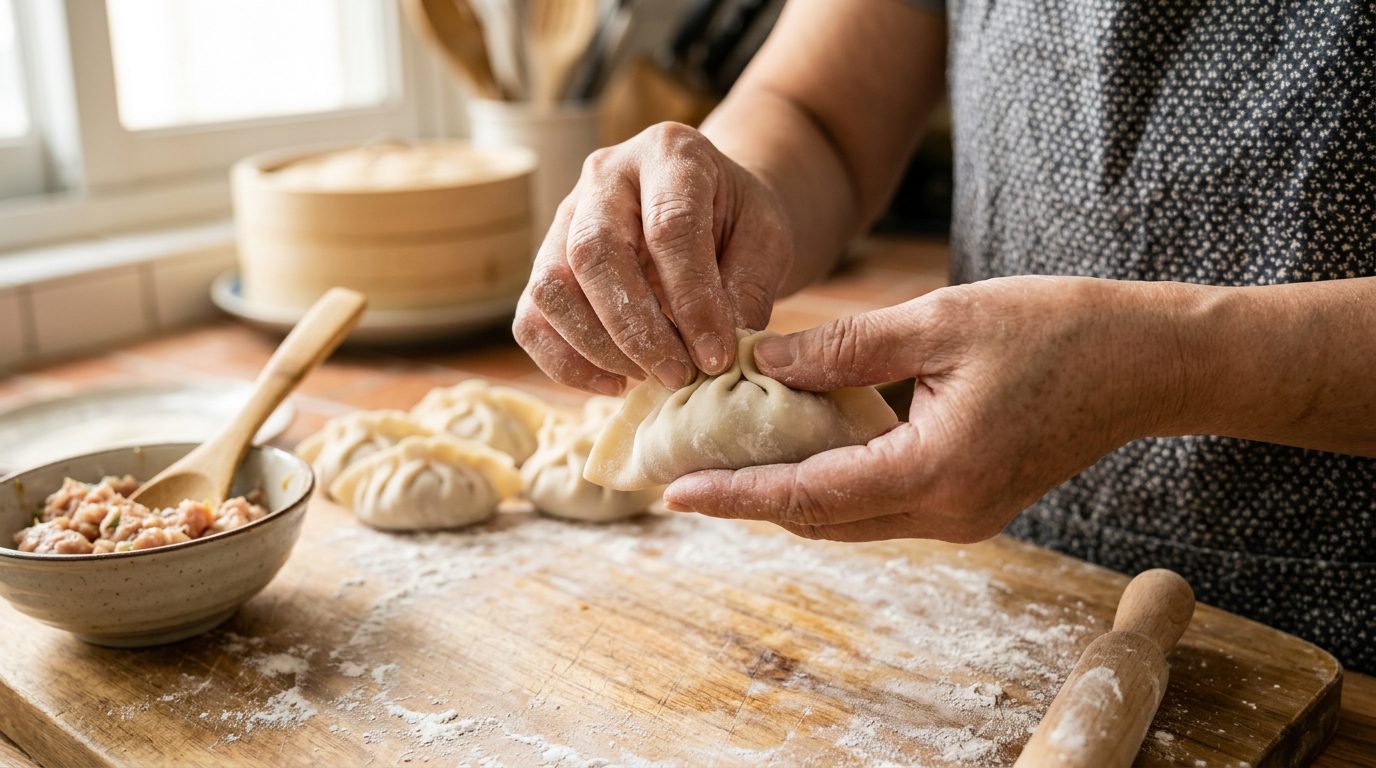
Place a teaspoon of filling in the center of a wrapper, then wet the edges with a fingertip of water. Fold the wrapper in half, aligning the edges, and press gently to seal — this creates a simple half-moon shape that is sturdy enough for boiling or steaming.
If you notice any gaps, pinch the seam again, ensuring a tight seal. The water acts as a glue, preventing the filling from escaping during cooking. This method works well for beginners and for those who need to produce a large batch quickly.
The basic fold also serves as a foundation for more decorative pleats, allowing us to experiment later without sacrificing stability. Think of it as the grammar rule you learn before you start writing poetry.
The Single-Pleat Crescent Method
For a more traditional look, start with the same filled wrapper, then bring the two corners together to form a small crescent. Pinch the pleat along the curved edge, creating three evenly spaced folds that resemble a tiny moon.
This pleating technique not only looks elegant but also reinforces the seal, reducing the chance of leaks when the dumplings are boiled. The rhythm of pinching each fold becomes a meditative practice, akin to a mantra repeated with each dumpling.
Practice this method with a few dumplings before tackling a full batch; the muscle memory develops quickly, and the visual cue of the crescent pleat signals that the dumpling is ready for cooking.
Common Folding Mistakes and How to Fix Them
One frequent error is over-filling, which causes the wrapper to burst during cooking. To avoid this, use a teaspoon of filling and leave a small margin around the edge. If a dumpling does split, simply press the torn edges together and re-seal with a dab of water.
Another mistake is uneven pleating, leading to a lopsided appearance. The fix is to align the edges before pinching and to count the folds as you go. A consistent three-fold pattern yields a uniform shape across the batch.
Lastly, forgetting to wet the edges results in a weak seal. Keep a small bowl of water nearby and dip your fingertip before each seal. This tiny step makes a big difference in keeping the filling inside, especially when pan-frying. For more hands-on guidance on knife skills, steaming, and wok technique, see our full guide to Asian cooking techniques.
Three Ways to Cook Your Dumplings
Boiled Dumplings — Shui Jiao (Water Dumplings)
Bring a large pot of water to a rolling boil, then add the dumplings in batches, ensuring they do not crowd the pot. When the dumplings rise to the surface, let them cook for an additional 2–3 minutes; this timing guarantees the filling reaches a safe internal temperature of 74°C.
The gentle boil creates a tender, silky skin that is perfect for dipping in a vinegar-ginger sauce. The floating dumplings also signal that they are cooked through, a visual cue that has guided cooks for centuries.
Serve the boiled dumplings hot, sprinkling a few sliced spring onions on top for freshness. The simple approach lets the flavors of the filling shine without distraction from the cooking method itself.
Pan-Fried Potstickers — Guo Tie
Heat a non-stick skillet over medium-high heat, then add a thin layer of oil (about 1 tbsp). Arrange the dumplings in a single layer, flat side down, and fry for 2 minutes until the bottoms turn golden brown.
Add ¼ cup of water to the skillet, then cover the pan immediately. With the lid on, let the dumplings steam for 6–8 minutes; the water will evaporate completely, leaving the bottoms crisp while the tops finish cooking in the trapped steam. When the last droplets disappear, uncover the pan and let the bottoms re-crisp for about one minute.
The contrast between the golden, crunchy base and the soft, steamed top defines a good guo tie. We serve them flat-side up, so the flat golden side greets the plate first and tells anyone looking exactly what to expect.
Steamed Dumplings — Zheng Jiao
We line a bamboo steamer with either napa cabbage leaves or a sheet of baking paper; the leaf adds a subtle fragrance while the paper prevents sticking. The dumplings sit over a pot of boiling water and steam for 8–10 minutes. As they cook, the skin becomes translucent — a clear sign that the interior is fully heated.
The texture of a steamed dumpling is gentle and slightly chewy, softer than a boiled jiaozi but still firm enough to hold its shape. The steam-only method lets the filling’s juices stay inside, giving each bite a moist, fragrant mouthfeel.
Arrange the finished dumplings on a plate lined with a cabbage leaf to prevent sticking at the table. The visual of translucent skin revealing the color of the filling inside is one of the quiet joys of making homemade dumplings.
Dipping Sauces and Serving Suggestions
Classic Black Vinegar and Ginger Dip
We combine Chinkiang black vinegar with julienned ginger in a 3:1 ratio — three tablespoons of vinegar to one tablespoon of sliced ginger. The sharp acidity of the vinegar cuts through the richness of pork filling, while the ginger’s spice lifts the overall flavor. A quick stir melds the two ingredients, and the dip is ready to accompany our potstickers or steamed dumplings.
Chinkiang black vinegar is available in most Asian supermarkets and online; it has a smoky, complex flavor that sets it apart from regular rice vinegar. If you cannot find it, a mix of balsamic vinegar and a splash of rice vinegar makes an acceptable substitute, though the flavor will be slightly sweeter.
This dip pairs particularly well with the pork and napa cabbage filling, where the vinegar’s tang provides a counterpoint to the fatty richness of the meat. It also works beautifully with the mushroom and tofu version, cutting through the earthiness of the shiitake.
Chilli Oil and Soy Sauce Blend
For a bolder complement, we whisk together 2 tablespoons soy sauce, 1 tablespoon chilli oil, 1 teaspoon sesame oil, and ½ teaspoon sugar. The salty soy base balances the heat of the chilli oil, and the sesame oil adds a nutty depth that works especially well with chicken or vegetarian fillings.
If you would like to make the chilli oil yourself, gently heat neutral oil with dried red chillies until the oil turns a deep amber; strain and cool before using. Homemade chilli oil keeps for up to a month in a sealed jar and adds a personal touch to the whole meal.
This sauce also doubles as a marinade for any leftover filling; toss it with noodles for a quick weeknight meal that uses every ingredient in the bowl.
Make-Ahead, Freezing, and Reheating
We place raw, uncooked dumplings on a parchment-lined tray and freeze them for about one hour; this firms the wrappers and prevents them from sticking together. After the initial freeze, we transfer the dumplings to a zip-top freezer bag, label with the date and filling, and store them for up to three months.
When we are ready to cook, we drop the frozen dumplings straight into boiling water, adding 3–4 extra minutes to the usual cooking time. Do not thaw them first, as the skins may split when the ice crystals melt too quickly. The same rule applies to pan-frying: add frozen potstickers directly to a hot oiled pan and increase the steaming time to 10 minutes.
For a full library of recipes that pair beautifully with these dumplings, explore our Asian recipes collection for inspiration on side dishes, soups, and sauces.
FAQ
What flour is best for dumpling wrappers?
All-purpose (plain) flour is the standard choice for most homemade dumpling wrappers and yields a tender yet sturdy skin. Some cooks blend in a small proportion of bread flour for a chewier, more elastic texture that holds up particularly well to pan-frying. Avoid self-raising flour, which introduces air bubbles that weaken the seal, and cake flour, which produces a skin that is too fragile to hold a pleated edge.
How do I stop my dumplings from sticking together?
A light dusting of cornstarch on the surface of each dumpling creates a barrier that keeps them separate while they wait to be cooked. Keep the lined tray covered with a damp cloth while you work to prevent the skins from drying out and cracking. When adding them to boiling water, lower them in one at a time and give the pot a gentle stir to stop them touching the base.
Can I make dumpling dough the night before?
Yes — wrap the rested dough tightly in cling film and refrigerate for up to 24 hours. Before rolling, let it sit at room temperature for about 30 minutes so the gluten relaxes; a brief knead can restore any elasticity lost during chilling. The flavour is unchanged, and some cooks find the rested dough actually rolls more smoothly than freshly made dough.
How long do frozen dumplings last?
In an airtight freezer bag, homemade dumplings stay at their best for up to three months. Label each bag with the production date and the filling type so you can cook the oldest batches first. While they remain safe beyond that window, the wrappers can develop freezer burn and the filling loses some of its fresh aroma.
What is the difference between jiaozi and gyoza?
Gyoza is the Japanese adaptation of Chinese jiaozi, brought to Japan after World War II by soldiers returning from Manchuria. Japanese wrappers are typically thinner and more delicate, and the filling leans more heavily on garlic and sesame oil than a traditional jiaozi does. In Japan, gyoza are almost always pan-fried rather than boiled, giving them the characteristic crispy base that has become their trademark around the world.