Last updated: March 04, 2026
Sushi rice is the soul of every piece of sushi. You can source the freshest fish and the crispest nori, but if your rice is gummy, bland, or poorly seasoned, the entire dish falls flat. Learning how to make sushi rice — properly washed, precisely cooked, and expertly seasoned — is the single most important skill in Japanese home cooking. Master it once, and you unlock everything from maki rolls to chirashi bowls, temaki hand rolls, and even onigiri.
In Japanese, sushi rice is called shari (シャリ) or sumeshi (酢飯, literally ”vinegared rice”). Professional sushi chefs — itamae — spend years perfecting their rice before they ever touch a knife. The technique involves three distinct phases: washing and soaking the raw grain, cooking it to the ideal texture, and folding in a seasoned vinegar mixture called sushi-zu. Each step has precise timing and technique that separates restaurant-quality sushi rice from the mushy, over-vinegared versions most home cooks produce.
This guide walks you through the complete process, from choosing the right rice variety to troubleshooting common problems. Whether you are making sushi rice for the first time or refining a technique you have used for years, the methods below will get you to consistently excellent results.
What Makes Sushi Rice Different from Regular Rice
Sushi rice is not simply steamed rice with vinegar splashed on top. It differs from everyday Japanese table rice (gohan) in several important ways:
The grain: Sushi rice uses short-grain or medium-grain japonica rice. These varieties have a higher amylopectin (sticky starch) content than long-grain indica rice, which gives the cooked grains their characteristic cling. The most prized varieties include Koshihikari, Sasanishiki, and Calrose. Long-grain rice like basmati or jasmine will not work — the grains are too separate and dry to hold together in a sushi roll or nigiri piece.
The seasoning: After cooking, sushi rice is dressed with sushi-zu — a mixture of rice vinegar, sugar, and salt. This seasoning does more than add flavor. The vinegar lowers the pH of the rice, which historically served as a preservation method (sushi originated as a way to ferment and preserve fish). The sugar balances acidity and enhances the natural sweetness of the grain. The salt ties everything together and suppresses bitterness.
The texture: Properly made sushi rice should be glossy, slightly sticky, and hold its shape when gently pressed, but each individual grain should remain distinct. The rice should never be mushy, gluey, or compacted. When you pick up a piece of nigiri, the rice ball should hold together but break apart easily in your mouth. Achieving this texture requires correct washing, precise water ratios, and proper folding technique.
The temperature: Sushi rice is traditionally served at body temperature (around 36–38°C / 97–100°F), not hot and not cold. This temperature maximizes both flavor perception and the soft-yet-firm texture. Rice served too hot will wilt the nori and warm the fish. Rice served cold becomes hard and loses its stickiness.
Essential Equipment for Making Sushi Rice
You do not need specialized Japanese kitchen equipment to make excellent sushi rice, but a few tools make a meaningful difference.
| Equipment | Purpose | Substitute |
|---|---|---|
| Hangiri (wooden sushi tub) | Absorbs excess moisture while you season the rice; the flat, wide surface allows rapid cooling | Large wooden cutting board or wide, shallow glass/ceramic bowl |
| Rice cooker | Consistent, hands-off cooking with precise water-to-rice ratios | Heavy-bottomed pot with tight-fitting lid |
| Shamoji (rice paddle) | Flat surface cuts through rice without crushing grains | Silicone spatula or large wooden spoon |
| Uchiwa (flat fan) | Rapidly cools rice while you fold in seasoning, creating a glossy sheen | Any flat fan, folded newspaper, or even a hair dryer on cool setting |
| Fine-mesh strainer | Holds rice during washing and allows thorough draining after soaking | Any strainer with holes smaller than a rice grain |
| Measuring cup (rice cup) | Japanese rice cups (gō) measure 180ml, different from US standard cups (240ml) | Standard measuring cup with adjustment (1 US cup ≈ 1.33 gō) |
The hangiri deserves special mention. This wide, flat tub made from cypress wood (sawara) is the professional tool for seasoning sushi rice. The untreated wood wicks moisture away from the rice as you fold in the vinegar, preventing sogginess. It also imparts a very faint woody aroma that complements the vinegar seasoning. If you plan to make sushi regularly, a hangiri is a worthwhile investment — typically $30–60 for a quality one. Before first use, season it by filling with water and a splash of rice vinegar for several hours, then air-drying completely.
How to Make Sushi Rice: Step-by-Step
This method produces 4 cups of finished sushi rice — enough for about 4 rolls or 20 pieces of nigiri. Scale up or down as needed, keeping ratios consistent.
Ingredients
For the rice:
- 2 cups (360ml using a Japanese rice cup, or 1.5 US cups) short-grain Japanese rice
- 2 cups water (adjust based on cooking method — see notes below)
For the sushi-zu (seasoning vinegar):
- 3 tablespoons rice vinegar (unseasoned)
- 1.5 tablespoons granulated sugar
- 1 teaspoon fine sea salt or kosher salt
Step 1: Measure the Rice
Measure your rice carefully. Be aware that the cup included with Japanese rice cookers (one gō, 180ml) is smaller than a standard US measuring cup (240ml). This recipe uses 2 gō. If using a US measuring cup, use about 1.5 cups of dry rice. Level off the top — do not pack the rice down.
Step 2: Wash the Rice (5–7 Minutes)
Washing is the most important step and the one most home cooks rush through. The goal is to remove surface starch that would otherwise make the cooked rice gummy and sticky in the wrong way.
Place the rice in a large bowl. Add cold water and immediately swirl the rice gently with your fingertips for 10–15 seconds. The water will turn milky white — drain it immediately. This first rinse removes the most starch and any dust or debris. Do not let the rice sit in this starchy water, as the grains begin absorbing water on contact and you do not want them reabsorbing the starch you just washed off.
Now begin the actual washing. Add fresh water and use your fingertips in a gentle swirling motion — imagine you are lightly polishing the grains against each other. Avoid crushing or breaking the grains. Drain. Repeat this washing and draining process 4–5 times, until the water runs nearly clear. It does not need to be perfectly transparent — slightly cloudy is fine. Over-washing strips too much starch and produces dry, non-sticky rice that will not hold together.
Step 3: Soak the Rice (30 Minutes)
After the final drain, let the rice sit in fresh cold water for 30 minutes. Soaking allows the grains to absorb water evenly all the way to the center, which prevents the common problem of rice that is soft on the outside but slightly chalky in the middle. This step is especially important in winter when rice is drier.
After soaking, drain the rice thoroughly in a fine-mesh strainer for 10–15 minutes. The rice should look opaque white rather than translucent. Proper draining ensures your cooking water ratio is accurate.
Step 4: Cook the Rice
Rice cooker method (recommended): Transfer the drained rice to the rice cooker bowl. Add water to the sushi rice line if your cooker has one, or use a 1:1 ratio of rice to water (measured by volume using the same cup you measured the rice with). The sushi rice line is typically slightly below the regular white rice line because sushi rice should be a touch firmer. Start the cooker on the white rice or sushi setting.
Stovetop method: Place the drained rice and water in a heavy-bottomed pot with a tight-fitting lid. Use the same 1:1 ratio. Bring to a boil over medium-high heat (you will see steam escaping and hear bubbling — do not lift the lid). Immediately reduce heat to the lowest setting and cook for 12–13 minutes. Turn off the heat and let the rice steam with the lid on for an additional 10 minutes. Do not open the lid at any point during cooking or steaming. The trapped steam is essential for even cooking.
Step 5: Prepare the Sushi-Zu While the Rice Cooks
Combine the rice vinegar, sugar, and salt in a small saucepan over low heat. Stir gently until the sugar and salt dissolve completely — this takes about 1–2 minutes. Do not let the mixture boil, as heat drives off the delicate vinegar aroma. Alternatively, microwave for 20 seconds and stir. Some experienced cooks simply stir the sugar and salt into the vinegar at room temperature until dissolved; this works but takes a few minutes longer.
Let the sushi-zu cool to room temperature before using it. Hot vinegar on hot rice creates excess steam that makes the rice soggy.
Step 6: Season and Cool the Rice (The Most Critical Step)
This is where most home cooks go wrong. The technique is not mixing — it is cutting and folding, combined with rapid cooling.
Transfer the hot cooked rice to a hangiri or a wide, shallow container. Spread it out to increase the surface area. Drizzle the sushi-zu evenly over the rice — pour it over the flat side of the shamoji held above the rice so it distributes in thin streams rather than pooling in one spot.
Using the shamoji, cut through the rice at a 45-degree angle with slicing motions, then gently fold the rice over on itself. Think of it like folding egg whites into a batter — you want to coat every grain without compressing or mashing them. Rotate the bowl 90 degrees and repeat. Continue cutting and folding for about 2 minutes.
While folding, fan the rice simultaneously. This is traditionally a two-person job — one person folds while another fans with an uchiwa. Working solo, fold for 15 seconds, then fan for 15 seconds, and alternate. The fanning serves two purposes: it rapidly cools the rice (which sets the surface starch into a glossy sheen) and evaporates excess moisture from the vinegar. This is the secret to that characteristic shine on well-made sushi rice.
The rice is ready when it reaches roughly body temperature and has a glossy, slightly translucent appearance. Each grain should be distinct but sticky enough to cling together when gently pressed. The total seasoning and cooling process should take about 5–10 minutes.
Step 7: Hold and Serve
Cover the seasoned rice with a damp kitchen towel (not plastic wrap, which traps moisture and makes the rice soggy). Use within 1–2 hours for the best texture. Sushi rice does not refrigerate well — the cold temperature causes the starch to retrograde, making the grains hard and chalky. If you must store it, keep it at room temperature for up to 4 hours. Beyond that, food safety dictates you should refrigerate, but know the texture will suffer.
When handling sushi rice for rolling or shaping, keep a small bowl of tezu (hand-dipping water) nearby — mix 1 cup water with 1 tablespoon rice vinegar. Dip your fingers in this before touching the rice to prevent sticking.
The Sushi-Zu Formula: Getting the Seasoning Right
The standard sushi-zu ratio is a starting point, not a fixed rule. Different styles of sushi use different seasoning profiles, and personal preference plays a role. Here are the traditional guidelines:
| Sushi Style | Rice Vinegar | Sugar | Salt | Character |
|---|---|---|---|---|
| Edomae (Tokyo-style nigiri) | 3 tbsp | 1 tbsp | 1 tsp | More tart, less sweet; lets the fish shine |
| Kansai (Osaka-style, chirashi, oshi) | 3 tbsp | 2 tbsp | 3/4 tsp | Sweeter, milder; complements cooked and marinated toppings |
| Home-style (general purpose) | 3 tbsp | 1.5 tbsp | 1 tsp | Balanced; works for rolls, bowls, and nigiri |
| California/fusion rolls | 2.5 tbsp | 2 tbsp | 3/4 tsp | Sweeter, milder acidity; pairs with cream cheese, avocado |
All measurements above are per 2 gō (about 1.5 US cups) of dry rice. For best results, use unseasoned rice vinegar — not ”seasoned rice vinegar,” which already contains sugar and salt in unknown proportions that make it difficult to control the final flavor. Mirin is sometimes added (1 teaspoon per batch) for additional depth and sweetness, particularly in Kansai-style preparations. A small piece of kombu kelp cooked with the rice adds a subtle umami backbone — remove it before seasoning.
Rice Cooker vs. Stovetop vs. Instant Pot
Each cooking method has trade-offs. Here is an honest comparison:
Rice cooker: The most reliable method, especially for beginners. Modern Japanese rice cookers (Zojirushi, Tiger, Panasonic) use fuzzy logic to adjust temperature and timing automatically. Many have a dedicated sushi rice setting that uses slightly less water and a slightly lower temperature to produce firmer grains. The main advantage is consistency — once you find your preferred water level, you get identical results every time. The downside is cost ($80–300 for a quality model) and counter space.
Stovetop: The traditional method and what sushi chefs use in professional kitchens (using a specialized heavy pot called a hagama). It produces excellent results but requires attention. The keys are a heavy pot, a tight lid, precise timing, and the discipline not to peek. The bottom layer of rice may develop a slight toasty crust (okoge), which is considered a delicacy in Japan but is not ideal for sushi rice. Use the lowest heat setting your stove offers.
Instant Pot / pressure cooker: Works in a pinch but is not ideal for sushi rice. Pressure cooking changes the starch structure, making the rice slightly softer and stickier than desired. If you go this route, reduce water by about 10% and use the rice setting or manual low pressure for 4 minutes with a 10-minute natural release. The results are acceptable for rolled sushi but lack the perfect texture for nigiri.
Common Mistakes When Making Sushi Rice
These are the errors that trip up most home cooks, along with the consequences and fixes:
| Mistake | What Goes Wrong | How to Fix It |
|---|---|---|
| Skipping or rushing the wash | Excess surface starch makes rice gummy and overly sticky; cloudy, starchy flavor | Wash 5–6 times until water is nearly clear; takes 5–7 minutes total |
| Using the wrong rice variety | Long-grain rice stays separate and dry; will not hold shape for sushi | Use Japanese short-grain (Koshihikari) or medium-grain (Calrose) only |
| Too much water | Mushy, waterlogged rice that falls apart and becomes paste when seasoned | Stick to 1:1 rice-to-water ratio (by volume) after soaking and draining |
| Adding vinegar to boiling-hot rice | Excess steam, soggy texture, vinegar aroma cooks off | Let rice cool for 1–2 minutes after opening; let sushi-zu reach room temperature |
| Stirring instead of folding | Crushed grains release starch, creating a pasty, gluey mass | Use cutting/folding motions with a flat paddle; never stir in circles |
| Not fanning while seasoning | Rice stays hot too long, absorbs too much moisture, loses its glossy sheen | Fan continuously or in intervals while folding; this is not optional |
| Using seasoned rice vinegar | Uncontrollable sweetness and saltiness; usually too sweet | Always use plain (unseasoned) rice vinegar and add sugar/salt yourself |
| Refrigerating finished sushi rice | Starch retrogradation makes rice hard, dry, and chalky | Keep at room temperature under a damp towel; use within 2–4 hours |
| Skipping the soak | Uneven cooking — soft exterior, slightly chalky center | Soak for at least 30 minutes in cold water after washing |
| Using metal bowl for seasoning | Vinegar reacts with reactive metals, creating off-flavors | Use wood (hangiri), glass, or ceramic for seasoning — never aluminum or copper |
The Science Behind Perfect Sushi Rice
Understanding what happens at a molecular level helps you troubleshoot and adapt the technique to different conditions.
Starch gelatinization: When rice is heated above 60°C (140°F) in the presence of water, the starch granules absorb water and swell, transforming from an opaque, crystalline structure into a translucent gel. This is gelatinization, and it is what makes cooked rice soft and edible. The key is adding just enough water for complete gelatinization without excess, which creates mushiness.
Amylose vs. amylopectin: Rice starch is composed of two molecules. Amylose is a straight-chain molecule that firms up when cooled (this is why long-grain rice, which is high in amylose, gets hard in the fridge). Amylopectin is a branched molecule responsible for stickiness. Japanese short-grain rice has roughly 15–18% amylose (compared to 22–25% in long-grain), which explains its sticky, clingy texture. Sushi rice lands in the sweet spot — sticky enough to hold together, firm enough that individual grains remain distinct.
Starch retrogradation: When cooked rice cools, the amylose chains re-crystallize, a process called retrogradation. This happens fastest between 0–4°C (refrigerator temperature), which is why cold sushi rice becomes hard. At body temperature, retrogradation is minimal, which is one reason sushi is served at that specific temperature. The vinegar in sushi-zu slows retrogradation somewhat, buying you extra time before the texture degrades.
Why fanning creates gloss: Rapid cooling with a fan causes the surface starch on each grain to set quickly while moisture evaporates. This creates a thin, firm ”shell” on each grain that reflects light — producing the glossy, pearlescent sheen characteristic of well-made sushi rice. Slow cooling allows the moisture to be reabsorbed into the grain instead of evaporating, resulting in a duller, softer surface.
Practice Exercises to Build Your Sushi Rice Skills
Like any technique, sushi rice improves with deliberate practice. Here are structured exercises that will accelerate your progress:
Exercise 1: The water clarity test. Wash a batch of rice and save a small sample of the water from each rinse in separate glasses. Line them up — you should see a clear progression from opaque white to nearly clear. If the difference between rinses 3 and 5 is minimal, you are washing efficiently. If rinse 5 is still very cloudy, you may be using too little water or not agitating enough.
Exercise 2: The grain test. After cooking, scoop out a few grains and examine them. Cut one in half with a fingernail. The interior should be uniformly translucent with no white, chalky center. If you see a white core, the rice was not soaked long enough or did not have enough water. If the grain falls apart when you try to cut it, there was too much water.
Exercise 3: The squeeze test. After seasoning, take a small amount of rice (about nigiri-sized, 15–20 grams) and gently squeeze it in your palm. It should hold together in a cohesive clump. When you place it on a plate and press it lightly from above, it should flatten slightly but not crumble. When you put it in your mouth, it should separate into individual grains with gentle tongue pressure. If it is rock-hard, you over-compressed it. If it falls apart, the rice is either under-seasoned or under-cooked.
Exercise 4: Side-by-side comparison. Make two small batches of rice using different sushi-zu ratios — one Edomae style (less sugar) and one Kansai style (more sugar). Taste them side by side and note how the sweetness level changes the overall experience. This helps you calibrate your personal preference for future batches.
Exercise 5: The speed fold. Set a 5-minute timer and practice your cutting and folding technique. The goal is to have the rice evenly seasoned and cooled to body temperature by the end. If the rice is still hot after 5 minutes, you need to spread it thinner or fan more aggressively. This builds the muscle memory for the folding motion and helps you develop a rhythm.
Advanced Tips from Sushi Chefs
Once you have the basics down, these refinements will elevate your sushi rice further:
Add kombu to the cooking water. A 3-inch piece of kombu kelp added to the pot or rice cooker before cooking infuses the rice with glutamic acid — natural umami. Remove the kombu before the water boils (or when the rice cooker switches to the ”cook” cycle). This is standard practice in many sushi restaurants and adds a subtle depth that is hard to identify but easy to miss when absent.
Use aged rice (koshinenmai). Professional sushi chefs often prefer rice that has been stored for 6–12 months after harvest rather than new-crop rice (shinmai). Aged rice has lower moisture content, absorbs the sushi-zu more evenly, and produces a firmer texture. New-crop rice, available in fall, is prized for plain eating but can become too soft for sushi. If you are using new-crop rice, reduce cooking water by 5–10%.
Season the hangiri before each use. Wipe the inside of the hangiri with a cloth dampened in diluted rice vinegar before adding hot rice. This prevents the rice from sticking and primes the wood to absorb moisture evenly.
Use red vinegar (akazu) for a traditional Edomae experience. Red vinegar, made from sake lees (kasu), has a deeper, more complex flavor than standard rice vinegar. It is the traditional seasoning for Edomae (Tokyo-style) sushi and gives the rice a faint amber tint. It is more expensive and harder to find but worth trying if you enjoy nigiri-style sushi. Use about 20% less sugar when working with red vinegar, as it has a rounder, less sharp acidity.
Monitor humidity and adjust. On humid summer days, reduce the sushi-zu quantity by about 10% — the rice absorbs atmospheric moisture and needs less liquid seasoning. In dry winter conditions, you may increase it slightly. Professional sushi chefs adjust their seasoning daily based on weather conditions.
Rest the rice before using for nigiri. After seasoning and cooling, let the rice rest under its damp cloth for 10–15 minutes. This allows the moisture to equalize throughout the batch, producing a more uniform texture when you shape it. Rice used immediately after seasoning can be slightly wet on the surface and dry inside.
Recipe Ideas Using Your Sushi Rice
Once you have mastered the technique, put it to use with these applications:
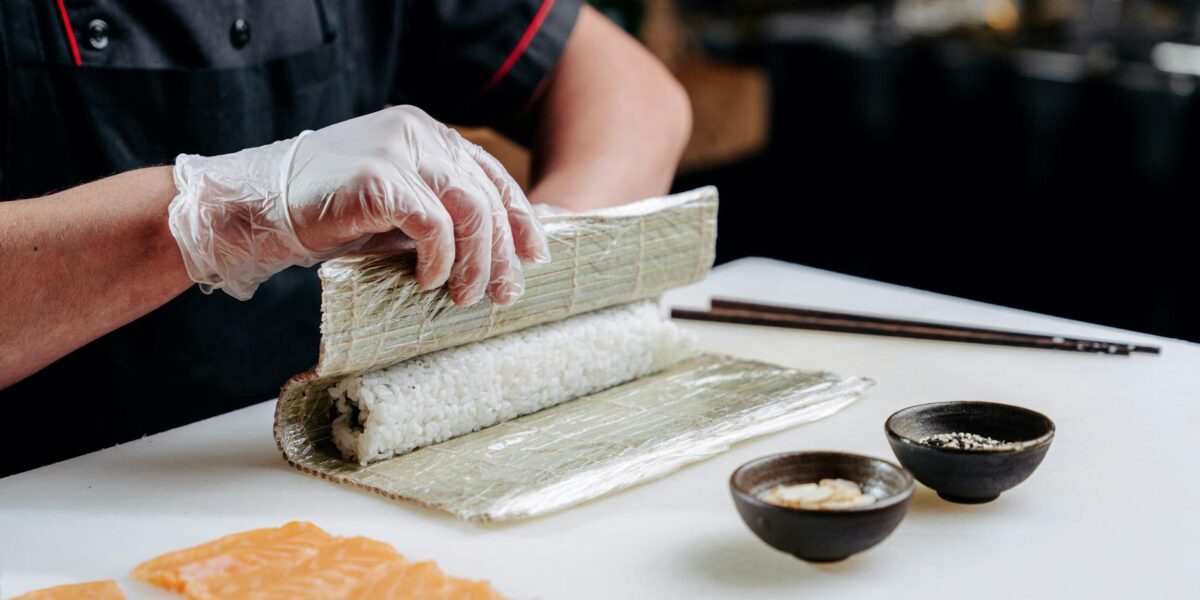
Classic maki rolls: Spread a thin, even layer of sushi rice over a sheet of nori on a bamboo rolling mat. Add fillings (cucumber, avocado, fish, cream cheese) in a line across the center. Roll tightly, seal with a bit of water on the nori edge, and slice with a wet, sharp knife. For detailed instructions and five roll variations, see our sushi roll recipe guide.
Temaki (hand rolls): Cut a nori sheet in half. Hold one piece in your palm, add a small scoop of rice to the left side, arrange fillings diagonally, and roll into a cone shape. Eat immediately — the nori should be crispy, not soggy. Temaki is the easiest sushi form for beginners and great for casual ”make your own” dinners.
Chirashi bowl (scattered sushi): Fill a bowl with sushi rice and top with an assortment of sashimi-grade fish, tamago (sweet egg), shrimp, ikura (salmon roe), cucumber, shiso leaves, and pickled ginger. Drizzle with soy sauce and serve with wasabi. Chirashi is a weeknight-friendly alternative to rolled sushi — all the flavor, none of the rolling technique.
Onigiri (rice balls): While onigiri traditionally uses unseasoned rice, sushi rice works beautifully for a tangier version. Shape into triangles, stuff with umeboshi (pickled plum), tuna mayo, or grilled salmon flakes, and wrap with a strip of nori. These make excellent packed lunches and snacks.
Inari sushi: Stuff seasoned rice into pockets of sweet simmered tofu skin (aburaage). Mix in sesame seeds, minced pickled ginger, and finely diced vegetables for variation. Inari is a beloved bento item in Japan and travels well because the tofu skin protects the rice.
Poke bowls: Sushi rice is the traditional base for Hawaiian poke bowls. Top with cubed ahi tuna or salmon marinated in soy sauce and sesame oil, avocado, edamame, seaweed salad, and a drizzle of spicy mayo. The seasoned rice is what distinguishes a proper poke bowl from a plain rice bowl with fish on top.
Choosing the Right Rice Vinegar
Not all rice vinegar is created equal, and the brand you choose affects the final product more than most people realize.
Unseasoned vs. seasoned: Always use unseasoned rice vinegar for sushi rice. Seasoned rice vinegar (sometimes labeled ”sushi vinegar”) has sugar and salt already added, but in proportions you cannot control. It tends to be overly sweet and makes it impossible to fine-tune your sushi-zu to your preference.
Japanese vs. Chinese rice vinegar: Japanese rice vinegar (komezu) is milder and slightly sweet, with an acidity around 4.2%. Chinese rice vinegar tends to be sharper. Both work, but Japanese rice vinegar is preferred for sushi rice. Popular quality brands include Marukan, Mizkan, and Uchibori. Avoid anything labeled ”distilled” or ”spirit vinegar” — these are harsh and lack the subtle sweetness of brewed rice vinegar.
Premium options: If you want to experiment, try junmai-su (pure rice vinegar) from smaller Japanese producers. These are brewed entirely from rice without added alcohol, and they have a more delicate, rounded flavor. They cost more ($8–15 per bottle) but the difference is noticeable when the vinegar is a primary flavor component, as it is in sushi rice.
Scaling Up: Making Sushi Rice for a Party
When making sushi for a group, the technique remains the same but the logistics change. Here are the key adjustments:
Plan quantities: Expect each person to eat about 1–1.5 cups of finished sushi rice at a sushi party. For 8 people, cook 4–5 gō (about 3–3.75 US cups) of dry rice. This produces roughly 8–10 cups of finished sushi rice.
Season in batches: Do not try to season more than 3 gō of rice at once unless you have a very large hangiri (15+ inches). Overcrowding the seasoning vessel means you cannot fold properly, and the rice in the center stays hot while the edges cool. Season in two batches and combine them at the end.
Keep it covered: The biggest challenge with large batches is the rice drying out before everyone has made their sushi. Keep the seasoned rice covered with a damp towel at all times. Rewet the towel if it starts to dry. If you are hosting a sushi rolling party, portion out small amounts of rice into individual bowls and keep the main batch covered.
Timing: Sushi rice is best used within 1–2 hours of being made. If you are hosting an evening dinner, start the rice about 1 hour before guests arrive. Wash and soak in the afternoon, then cook and season just before the party begins.
Frequently Asked Questions
Can I use a different type of rice for sushi?
Short-grain or medium-grain japonica rice is essential. Calrose (a medium-grain variety grown in California) is the most accessible substitute for premium Japanese short-grain rice and works very well. Arborio rice (used for risotto) is sometimes suggested as a substitute — it will work in a pinch, but it has a creamier, softer texture that is not ideal. Long-grain rice like basmati or jasmine will not work at all for sushi. For a detailed comparison of varieties, see our guide to the best rice for sushi.
How far in advance can I make sushi rice?
Sushi rice is best used within 2 hours of being seasoned. It can be held at room temperature for up to 4 hours under a damp towel. Beyond that, food safety guidelines recommend refrigeration, but cold sushi rice has a significantly degraded texture. If you need to make rice ahead, the best approach is to cook and wash the rice in advance, then season and fold just before serving.
Why is my sushi rice too sticky or mushy?
The three most common causes are: (1) insufficient washing — wash until the water is nearly clear; (2) too much cooking water — stick to a 1:1 ratio; (3) stirring instead of folding when adding the vinegar. Any one of these can produce gummy rice. Stirring in circles crushes the grains and releases their internal starch, creating a paste-like texture.
Why is my sushi rice too dry or not sticky enough?
This usually means the rice was over-washed (removing too much surface starch), the water ratio was too low, or the soaking step was skipped. It can also happen with the wrong variety of rice. Make sure you are using japonica short-grain or medium-grain rice, not long-grain.
Do I need a bamboo rolling mat to make sushi?
A bamboo mat (makisu) makes maki rolls significantly easier and tighter, but it is not required for all forms of sushi. Temaki hand rolls require no mat at all, and chirashi bowls and poke bowls are simply rice in a bowl with toppings. For a full guide on sushi rolling techniques, check out our sushi roll recipe. If you are interested in steaming techniques with bamboo equipment, see our bamboo steamer guide.
Can I use apple cider vinegar or white vinegar instead of rice vinegar?
This is not recommended. Apple cider vinegar has a fruity flavor that clashes with sushi. White distilled vinegar is too harsh and acidic (typically 5–7% acidity vs. 4.2% for rice vinegar). If you absolutely cannot find rice vinegar, a mild white wine vinegar diluted with a splash of water is the closest acceptable substitute. But rice vinegar is widely available at any Asian grocery store and most regular supermarkets — there is no good reason to substitute.
Is sushi rice gluten-free?
Yes, rice itself is naturally gluten-free, and standard sushi-zu ingredients (rice vinegar, sugar, salt) are also gluten-free. Be cautious with soy sauce — regular Japanese soy sauce contains wheat. Use tamari (wheat-free soy sauce) if you need a gluten-free option when serving sushi. Also check any seasoned rice vinegar labels, as some brands add ingredients that may contain gluten.
How do I cook rice perfectly for sushi in a rice cooker?
Use the sushi rice setting if your rice cooker has one. If not, use the standard white rice setting but reduce the water level slightly — fill to just below the corresponding line marked on the inner pot. After cooking, let the rice steam for 10 minutes with the lid closed before transferring to your hangiri or bowl for seasoning. Always wash and soak the rice before cooking, even when using a rice cooker. For more general rice cooking tips, see our complete guide.
Sushi Rice and Japanese Food Culture
In Japan, the quality of a sushi restaurant is judged first by its rice, not its fish. The word ”sushi” itself does not refer to raw fish — it refers to the seasoned rice. The kanji 鮨 and 寿司 both refer to this vinegared rice preparation, and a sushi chef’s reputation rests on the consistency and quality of their shari.
The origins of sushi rice date back to Southeast Asia, where fish was packed in salted rice and left to ferment for months. The rice was originally discarded — it was merely a preservation medium. By the Muromachi period (1336–1573), the Japanese began eating the rice along with the fish, and by the Edo period (1603–1868), the technique evolved into the fresh, vinegar-seasoned rice we know today. Hanaya Yohei, credited as the inventor of modern nigiri sushi in 1820s Tokyo, was the first to pair freshly seasoned rice with raw fish for immediate consumption rather than fermentation.
Today, sushi rice remains central to Japanese cuisine, appearing not just in sushi but in bento boxes, festival foods, and everyday home cooking. Mastering it connects you to a culinary tradition spanning centuries and opens the door to the full range of Japanese rice-based dishes.
Whether you are making your first sushi roll or aiming for restaurant-quality nigiri, the foundation is always the same: well-washed, properly cooked, carefully seasoned rice. Get the rice right, and everything else follows.

Mei Lin Chen
Mei Lin Chen is an Asian food writer and recipe developer. Melbourne-raised and London-based, she has spent over a decade exploring the rice paddies, hawker stalls, and home kitchens of South-East and East Asia. Her recipes balance traditional technique with everyday practicality.