Last updated: March 11, 2026
Persian food is one of the world’s oldest and most refined culinary traditions, stretching back more than 2,500 years to the courts of the Achaemenid Empire. Built on a philosophy of balance — sweet against sour, warm spices against cooling herbs — Iranian cuisine transforms simple ingredients like rice, saffron, dried limes, and slow-cooked meats into dishes of extraordinary depth. Whether you have tasted a fragrant plate of tahdig with its impossibly crispy golden crust, a bowl of tart ghormeh sabzi, or a skewer of juicy koobideh straight off the grill, Persian food leaves a lasting impression.
Iran sits at the crossroads of Central Asia, the Middle East, and South Asia, and its cuisine reflects centuries of Silk Road exchange. Ingredients like ginger, tamarind, and rice traveled along ancient trade routes, blending with local pomegranates, walnuts, and dried fruits to create a cuisine unlike any other. This comprehensive guide covers the history and regional diversity of Persian food, essential ingredients, must-try dishes, cooking techniques, and everything you need to start cooking Iranian food at home.
The History and Origins of Persian Cuisine
Persian cuisine is among the most historically documented food traditions on earth. Cuneiform tablets from ancient Mesopotamia — modern-day Iran and Iraq — contain some of the earliest known recipes, dating back roughly 4,000 years. These early records describe stews flavored with onions, garlic, and animal fat, foreshadowing the rich khoresht (stew) tradition that remains central to Iranian cooking today.
During the Achaemenid Empire (550–330 BCE), Persian royal feasts became legendary. The Greek historian Herodotus wrote with astonishment about the scale and sophistication of Persian banquets, which featured dozens of courses including roasted meats, elaborate rice dishes, and dried fruit confections. The empire’s vast territory — from Egypt to Central Asia — meant that ingredients, techniques, and culinary ideas flowed freely across borders.
The Sasanian period (224–651 CE) further refined Persian gastronomy. Texts from this era describe the importance of balancing flavors: sweet, sour, salty, and bitter elements in a single dish. This principle of balance (called mazaj) remains the philosophical backbone of Persian cooking. Ingredients were also classified by their perceived thermal qualities — ”hot” foods like lamb and saffron balanced against ”cold” foods like yogurt and cucumbers.
After the Arab conquest of Persia in the 7th century, Persian culinary traditions did not disappear — they spread. Persian cooking heavily influenced the cuisines of the Arab world, Ottoman Turkey, Mughal India, and Central Asia. The elaborate rice pilafs of biryani and the kebab traditions found across South and West Asia all trace roots to Persian originals. The Mongol and Timurid invasions (13th–15th centuries) brought Central Asian influences, including new noodle dishes and dumpling techniques.
The Safavid dynasty (1501–1736) is often considered the golden age of Persian cuisine. Isfahan, the Safavid capital, became a center of culinary arts, with elaborate court recipes for jeweled rice, complex stews, and intricate sweets. Many of the classic dishes eaten in Iran today were codified during this period. Modern Iranian cuisine preserves these traditions while adapting to regional ingredients and contemporary tastes.
Regional Diversity: Iran’s Culinary Map
Iran is a geographically vast country — larger than France, Germany, and the UK combined — with dramatic variations in climate, from lush Caspian forests to arid desert plains. This diversity produces distinct regional cuisines, each with signature dishes and local ingredients.
Northern Iran (Gilan, Mazandaran — Caspian Coast)
The humid, subtropical Caspian region is Iran’s rice bowl and produces some of the country’s most distinctive food. Dishes here are notably sour and herby, relying on garlic, pomegranate paste, and fresh herbs. Signature dishes include mirza ghasemi (smoky eggplant with tomato and egg), baghali ghatogh (fava bean stew with dill), and zeytoon parvardeh (marinated olives with pomegranate and walnut). Freshwater fish from the Caspian, including sturgeon, feature prominently.
Western Iran (Kurdistan, Kermanshah, Lorestan)
The mountainous western provinces have a hearty, rustic cuisine built around wheat, dairy, and lamb. Kurdish Iranian dishes favor slow-cooked stews, stuffed grape leaves, and thick flatbreads baked in tandoor-like ovens. Dandeh kabab (grilled lamb ribs) and ash-e doogh (yogurt-based soup with herbs and grains) are regional specialties.
Southern Iran (Fars, Hormozgan, Bushehr — Persian Gulf Coast)
The southern coast brings tropical and maritime flavors. Cooking here uses more fish sauce, dried shrimp, tamarind, and warm spices like turmeric, cumin, and fenugreek. Ghalieh mahi (spicy fish stew with tamarind and herbs) and sayadieh (spiced fish and rice) reflect the maritime heritage of these coastal provinces. The cuisine shares surprising similarities with South and Southeast Asian cooking due to historical Indian Ocean trade.
Central Iran (Isfahan, Yazd, Kerman)
The arid central plateau produces sophisticated urban cuisine, particularly in Isfahan and Yazd. Desserts and sweets are legendary here — qottab (almond-filled pastries), pashmak (cotton candy-like confection), and baklava. Yazd is also famous for its slow-cooked ash-e shooli (thick grain soup). The region relies heavily on dried fruits, nuts, and preserved ingredients suited to the dry climate.
Eastern Iran (Khorasan)
Khorasan, bordering Afghanistan and Central Asia, produces Iran’s finest saffron and barberries. The cuisine reflects Central Asian influences with dishes like sholeh zard (saffron rice pudding) and kashk-e bademjan (eggplant with whey). Bread culture is especially strong here, with the massive sangak loaves baked on hot stones.
Essential Persian Ingredients
Persian cooking relies on a distinctive pantry that sets it apart from other cuisines. Below are the ingredients you need to cook authentic Iranian food at home.
| Ingredient | Persian Name | Role in Cooking | Common Dishes |
|---|---|---|---|
| Saffron | Zafaran | Color, aroma, and floral flavor; the defining spice of Persian cuisine | Tahdig, sholeh zard, jeweled rice |
| Dried Limes | Limoo amani | Intense citrusy sourness with a slightly bitter, smoky edge | Ghormeh sabzi, khoresh-e gheimeh |
| Barberries | Zereshk | Tart, jewel-red dried berries used as a garnish and flavor accent | Zereshk polo, jeweled rice |
| Pomegranate Molasses | Rob-e anar | Thick, sweet-sour syrup that adds depth to stews and marinades | Fesenjan, salad dressings, marinades |
| Rose Water | Golab | Fragrant floral essence used in desserts and some savory dishes | Faludeh, sholeh zard, baklava |
| Turmeric | Zardchoobeh | Warm, earthy base flavor and golden color for stews and rice | Nearly all savory dishes |
| Basmati Rice | Berenj | Long-grain rice steamed to fluffy perfection; the centerpiece of most meals | Chelow, polo, tahdig |
| Kashk (Whey) | Kashk | Fermented dairy product with a tangy, savory flavor | Kashk-e bademjan, ash reshteh |
| Walnuts | Gerdoo | Ground into sauces or used whole in stews and stuffings | Fesenjan, cookies, baklava |
| Dried Fenugreek Leaves | Shanbalileh | Slightly bitter, maple-scented herb essential for stew blends | Ghormeh sabzi |
| Sumac | Somagh | Tart, fruity red powder used as a table condiment and in marinades | Kebabs, salads, rice dishes |
| Advieh Spice Blend | Advieh | Persian spice mix (cinnamon, cardamom, cumin, rose petals) for rice and stews | Polo dishes, stews |
Many of these ingredients are available at Asian and Middle Eastern grocery stores. Pantry staples like rice and turmeric overlap with South and East Asian cooking, making it easy to build a Persian pantry alongside your existing Asian ingredients.
15 Must-Try Persian Dishes
From crispy rice to complex herb stews, these are the dishes that define Iranian cuisine.
1. Tahdig (Crispy Rice)
Tahdig — literally ”bottom of the pot” — is the crown jewel of Persian rice cooking. A layer of rice (sometimes with lavash bread, sliced potatoes, or yogurt) is crisped to a deep golden crust at the bottom of the pot while the rest steams to fluffy perfection above. The dramatic moment of flipping the pot to reveal an intact, crackling tahdig is a point of pride for any Persian cook. The contrast between the shatteringly crisp bottom and the tender, saffron-scented rice above is addictive.
2. Ghormeh Sabzi (Herb Stew)
Often called Iran’s national dish, ghormeh sabzi is a deeply savory stew of slow-cooked herbs (parsley, cilantro, chives, fenugreek), kidney beans, dried limes, and lamb or beef. The herbs are fried until dark and intensely aromatic before simmering for hours. The dried limes burst during cooking, releasing a unique sour-bitter flavor that defines the dish. Served over fluffy white rice, ghormeh sabzi is comfort food of the highest order.
3. Chelow Kabab (Rice with Kebab)
Chelow kabab is Iran’s most iconic meal — a plate of perfectly steamed saffron rice served alongside charcoal-grilled kebabs. The most popular kebab varieties are koobideh (ground lamb or beef seasoned with grated onion and spices, molded onto flat skewers) and barg (thin slices of marinated lamb or beef tenderloin). The meal is accompanied by grilled tomatoes, raw onion, fresh herbs, and a pat of butter melted into the rice. Simple, elemental, and perfect.
4. Fesenjan (Pomegranate Walnut Stew)
Fesenjan is a stew of extraordinary complexity. Ground walnuts are slow-cooked with pomegranate molasses until the sauce turns dark, thick, and glossy, tasting simultaneously sweet, sour, and nutty. Chicken or duck simmers in this sauce, absorbing its flavors over hours. Originally from the Caspian region, fesenjan is a celebration dish often served at weddings and Nowruz (Persian New Year) festivities. The balance of pomegranate tartness and walnut richness is uniquely Persian.
5. Zereshk Polo ba Morgh (Barberry Rice with Chicken)
This festive dish pairs saffron-infused rice studded with ruby-red barberries and slivered almonds with tender braised chicken. The barberries provide pops of tartness against the fragrant, buttery rice. It is one of Iran’s most beloved party dishes and a staple at large gatherings. The visual presentation — golden saffron rice dotted with red berries — is stunning.
6. Ash Reshteh (Noodle and Herb Soup)
Ash reshteh is a thick, hearty soup packed with herbs, legumes (chickpeas, lentils, kidney beans), and flat noodles called reshteh. It is topped with kashk (fermented whey), fried onions, and fried mint oil, creating layers of flavor and texture. Traditionally served during Nowruz and when someone embarks on a journey (reshteh means ”thread,” symbolizing the threads of life), this soup is deeply nourishing and complex.
7. Khoresh-e Gheimeh (Split Pea and Lamb Stew)
A classic comfort stew of lamb, yellow split peas, tomato paste, dried limes, and warm spices, topped with crispy matchstick fries. The combination of tangy dried lime, sweet-savory tomato base, and the crunch of thin-cut fried potatoes makes gheimeh irresistible. It is one of the most common everyday meals in Iranian households.
8. Joojeh Kabab (Saffron Chicken Kebab)
Bone-in chicken pieces marinated in saffron, lemon juice, onion, and yogurt, then grilled over hot charcoal until charred and juicy. Joojeh kabab is lighter than the lamb kebabs and carries a beautiful golden color from the saffron marinade. It is a summer grilling staple and popular street food throughout Iran.
9. Mirza Ghasemi (Smoky Eggplant Dip)
A specialty of Gilan province on the Caspian coast, mirza ghasemi features whole eggplants charred over open flame until completely soft and smoky, then mashed and cooked with tomatoes, garlic, and eggs. The result is a smoky, garlicky, intensely flavorful dish served with bread. It exemplifies the bold, unrestrained flavors of northern Iranian cooking.
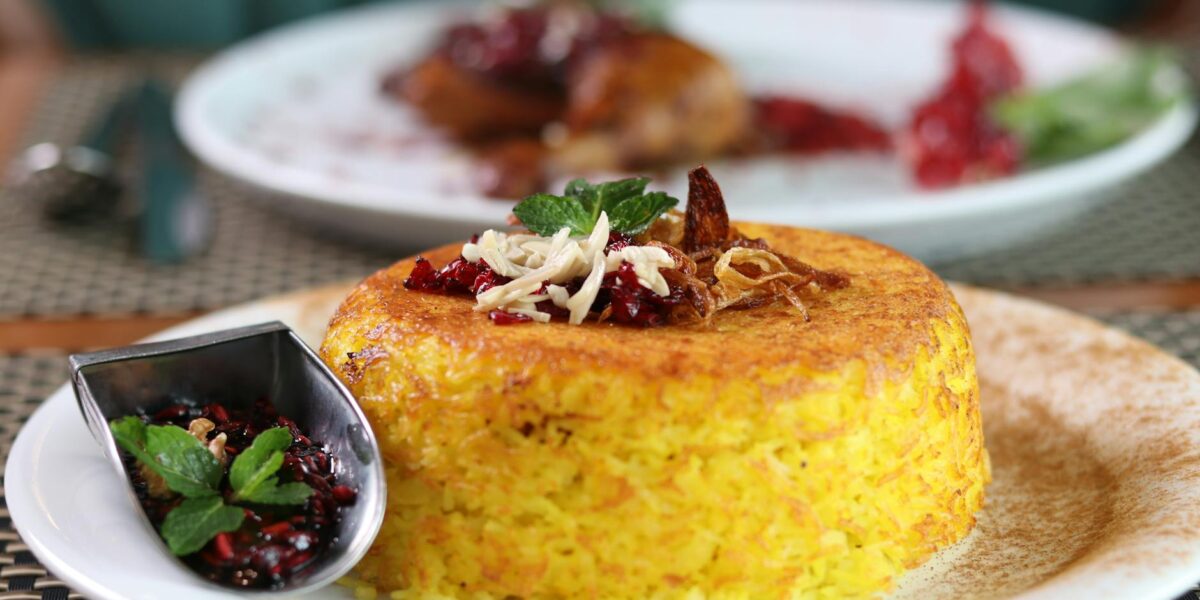
10. Tachin (Baked Saffron Rice Cake)
Tachin is a showstopper — a molded cake of saffron rice, yogurt, egg yolk, and chicken (or lamb) baked until the exterior forms a golden, crispy shell. When unmolded, it reveals layers of golden rice encasing tender meat. Think of it as tahdig taken to the extreme — the entire dish is crisp on the outside, creamy and fragrant within.
11. Dolmeh (Stuffed Grape Leaves)
Persian dolmeh fills tender grape leaves with a mixture of rice, split peas, herbs, and sometimes ground meat, all simmered in a sweet-sour sauce of tomato and pomegranate. Unlike their Greek counterparts, Persian stuffed grape leaves lean heavily into the sweet-sour balance and use a wider range of herbs. They are labor-intensive but deeply rewarding.
12. Dizi / Abgoosht (Lamb and Chickpea Soup)
One of Iran’s oldest dishes, dizi is a lamb, chickpea, white bean, potato, and tomato stew slow-cooked in individual stone crocks. The broth is poured off and served as a soup with bread, while the solids are mashed into a thick paste called goosht-e koobideh and eaten separately. This two-course-from-one-pot approach is unique and endlessly satisfying.
13. Baghali Polo (Dill and Fava Bean Rice)
Fragrant basmati rice layered with fresh dill and bright green fava beans, traditionally served with lamb shank. The aromatic dill perfumes every grain of rice, while the fava beans add pops of color and a slightly sweet, earthy flavor. A springtime favorite that showcases how Persian rice dishes go far beyond simple steamed rice.
14. Faludeh (Rose Water Frozen Dessert)
Faludeh is one of the world’s oldest frozen desserts — thin vermicelli noodles frozen in a syrup of rose water, sugar, and lime juice. Originating in Shiraz over 2,000 years ago, it predates modern ice cream by centuries. The texture is unlike anything in Western dessert traditions — icy, slippery noodles in a fragrant, slightly tart syrup. It is often served alongside bastani (Persian saffron ice cream).
15. Sholeh Zard (Saffron Rice Pudding)
A bright yellow rice pudding flavored with saffron, rose water, and cardamom, decorated with cinnamon and slivered almonds. Sholeh zard is made in large batches and distributed to family and neighbors as a nazri (religious offering), making it as culturally significant as it is delicious. The saffron gives it a distinctly Persian character that sets it apart from other Asian rice puddings.
Persian Cooking Techniques
Iranian cuisine uses a set of distinctive cooking methods that are essential to understanding its flavors and textures.
The Persian Rice Method (Chelow)
Persian rice preparation is a multi-step process unlike any other rice tradition. The rice is first soaked for hours, then parboiled in heavily salted water until just al dente. It is drained, then returned to the pot over a layer of oil (and often bread or potatoes for tahdig). The pot is tightly sealed — sometimes with a cloth-wrapped lid — and steamed over very low heat for 45 minutes to an hour. This method produces individual, elongated grains that are impossibly fluffy, never sticky, with a crispy bottom crust. Mastering this rice technique is the single most important skill in Persian cooking.
Slow-Braising Stews (Khoresht)
Persian stews are slow-cooked over low heat for two to four hours, allowing flavors to meld deeply. Unlike quick stir-fry techniques, Iranian stews rely on patience. Onions are fried until deeply golden (not just translucent), herbs are sauteed until dark and concentrated, and meat is simmered until fork-tender. The long cooking time is essential — it transforms dried limes, pomegranate molasses, and spice blends into something greater than the sum of their parts. This approach shares principles with Chinese red braising and other slow Asian braise traditions.
Charcoal Grilling (Kabab)
Persian kebabs are grilled over natural charcoal, which provides intense, even heat and a subtle smokiness. The flat, wide skewers used for koobideh allow the ground meat to cook evenly and develop a charred crust while staying juicy inside. Marinades are kept simple — saffron, onion juice, yogurt, and lemon — so that the quality of the meat and the skill of the griller are front and center. The goal is always manghal (grill) mastery: charred on the outside, moist within.
Herb Preparation (Sabzi)
Fresh herbs are not merely garnishes in Persian cooking — they are ingredients used in enormous quantities. A typical ghormeh sabzi recipe calls for several cups of finely chopped herbs. The technique of frying fresh herbs in oil until darkened and concentrated is distinctly Persian and develops flavors impossible to achieve with raw herbs. Every Persian meal also includes a platter of sabzi khordan — fresh herbs (basil, tarragon, mint, radishes, scallions) eaten raw alongside the main dishes to provide freshness and balance.
Saffron Blooming
Persian cooks grind saffron threads with a pinch of sugar in a mortar, then ”bloom” the powder in a few tablespoons of hot water. This step extracts maximum color, aroma, and flavor from the precious spice. The resulting liquid gold is added to rice, stews, marinades, and desserts. This technique ensures that even a small amount of saffron has maximum impact.
Persian Food vs. Other West and Central Asian Cuisines
Persian cuisine shares ingredients and techniques with neighboring food cultures, but key differences set it apart. Here is how Iranian food compares to other cuisines in the region.
| Feature | Persian (Iranian) | Turkish | Arab (Levantine) | Afghan | Indian (North) |
|---|---|---|---|---|---|
| Primary Grain | Long-grain basmati rice (chelow/polo) | Bulgur wheat and short-grain rice | Flatbreads and short-grain rice | Long-grain rice and bread | Basmati rice and wheat (roti/naan) |
| Signature Spice | Saffron | Red pepper flakes (pul biber) | Allspice (baharat) | Cardamom | Turmeric and cumin blend |
| Flavor Profile | Sweet-sour balance (pomegranate, dried lime) | Smoky, tomato-forward, buttery | Warm spices, olive oil, lemon | Mild, aromatic, herb-forward | Complex layered heat with dairy |
| Souring Agent | Dried lime, pomegranate molasses, verjuice | Lemon, pomegranate molasses, sumac | Lemon, tamarind | Dried plums, yogurt | Tamarind, tomato, yogurt, amchur |
| Herb Use | Massive quantities, often fried (fenugreek, parsley, cilantro) | Moderate (flat-leaf parsley, dill, mint) | Moderate (parsley, mint, cilantro) | Heavy (cilantro, mint, leek) | Moderate to heavy (cilantro, curry leaf, mint) |
| Rice Technique | Par-boil, drain, steam (tahdig crust) | Pilaf (absorption) | Pilaf (absorption) | Par-boil and steam (similar to Persian) | Absorption or dum (sealed pot) |
| Signature Stew | Ghormeh sabzi, fesenjan | Guvec, karniyarik | Bamia, fasoulia | Qorma | Curry, dal, korma |
| Dairy | Yogurt, kashk (whey), doogh (yogurt drink) | Yogurt (ayran), kaymak | Labneh, yogurt | Yogurt (mast) | Yogurt, paneer, ghee, cream |
| Grilling | Flat skewers, charcoal, minimal marinade | Vertical and horizontal, doner tradition | Charcoal, often spiced heavily | Charcoal tikka, chapli kebab | Tandoor, seekh kebab |
| Sweet Element | Rose water, saffron, pomegranate | Honey, grape molasses | Orange blossom, dates | Cardamom, sugar | Jaggery, cardamom, khoya |
The Persian Meal Structure
Understanding how Iranians eat helps you plan authentic meals at home. Persian dining follows a distinctive pattern that emphasizes abundance and hospitality.
Breakfast (Sobhaneh)
Iranian breakfast is lighter than many Asian breakfasts. Common items include fresh bread (barbari or sangak) with butter, feta cheese, walnuts, jam, honey, and cups of strong black tea. Halim (wheat and meat porridge) and adasi (lentil soup) are popular hot breakfasts during colder months. Fresh herbs, cucumbers, and tomatoes also appear on the morning table.
Lunch (Nahar) — The Main Meal
Lunch is traditionally the largest meal of the day in Iran. A typical spread includes a rice dish (chelow or polo), one or two stews or a kebab, a plate of sabzi khordan (fresh herbs), yogurt or salad, and flatbread. Meals are served family-style, with everyone sharing from central platters. Hospitality demands that the table looks abundant — leftovers are expected and welcomed.
Dinner (Sham)
Dinner is usually lighter — often leftovers from lunch, a simple soup or ash, or bread with cheese and herbs. In modern urban Iran, dinner has increasingly become the larger meal for families where everyone works during the day.
Tea and Sweets
Tea (chai) is served constantly throughout the day, brewed strong and poured into small glass cups called estekan. It is traditionally sweetened by holding a sugar cube (or nabat, crystallized sugar) between the teeth while sipping. Sweets like gaz (nougat), sohan (saffron brittle), and baklava accompany tea during social visits.
Planning a Persian Meal at Home
Cooking Persian food at home is deeply rewarding. Here is a practical guide to building complete Persian meals, from simple weeknight dinners to elaborate feasts.
Simple Weeknight Dinner
- Main: Joojeh kabab (saffron chicken) — marinate chicken in the morning, grill in 15 minutes
- Side: Simple chelow (steamed basmati with saffron butter)
- Accompaniment: Fresh sabzi platter (herbs, radishes, scallions) and grilled tomatoes
- Drink: Doogh (salted yogurt drink with mint)
Weekend Feast
- Appetizer: Mirza ghasemi with warm sangak bread
- Rice: Zereshk polo (barberry rice) with tahdig
- Stew: Ghormeh sabzi or fesenjan
- Kebab: Koobideh and barg
- Salad: Shirazi salad (diced cucumber, tomato, onion, lime juice)
- Dessert: Faludeh or sholeh zard
- Tea: Black tea with nabat and baklava
Nowruz (Persian New Year) Spread
- Rice: Sabzi polo ba mahi (herb rice with fish) — the traditional Nowruz dish
- Stew: Fesenjan (pomegranate walnut stew)
- Soup: Ash reshteh (noodle and herb soup)
- Sweets: Baklava, noghl (sugar-coated almonds), ajil (mixed nuts and dried fruits)
- Dessert: Sholeh zard (saffron rice pudding)
Where Persian and Asian Cooking Connect
If you already cook East or Southeast Asian food, you will find surprising overlaps with Persian cuisine. Rice is the centerpiece of both traditions — and Persian par-boil-and-steam technique produces results as refined as any Asian rice preparation. The use of aromatic ingredients like sesame, ginger, and turmeric bridges both worlds. Persian dried lime functions similarly to lemongrass or tamarind in Southeast Asian cooking — as a souring agent that adds complexity beyond simple citrus.
The slow-braising tradition of Persian khoresht echoes the patience required for Chinese red-braised dishes and Asian clay pot cooking. The Persian emphasis on fresh herbs parallels the herb-heavy cuisines of Vietnam and Thailand. And the kebab tradition connects directly to the satay and yakitori grilling cultures of Southeast and East Asia.
Perhaps most importantly, the Silk Road connections between Persia and East Asia are not merely historical curiosities. The biryani you make from an Indian recipe descends directly from Persian polo. The noodles of Central Asia — a bridge between Chinese and Persian traditions — show how food has always traveled. Exploring Persian cooking alongside your favorite Asian recipes is a natural extension of the same culinary curiosity.
Persian Food Etiquette and Culture
Food and hospitality are inseparable in Iranian culture. Understanding a few cultural norms will deepen your appreciation of Persian cuisine.
Taarof is the elaborate system of politeness that governs Iranian social interactions, including dining. Hosts will insist you eat more; guests are expected to initially decline before accepting. The back-and-forth is ritualized and good-natured — the goal is always to make guests feel honored and welcome.
Meals are traditionally served on a sofreh — a cloth spread on the floor — though table dining is increasingly common in modern Iran. Food is shared from central platters, and the best portions (the tahdig, the most tender kebab pieces) are offered to guests and elders first. Bread is treated with respect and never thrown away.
Tea is offered to every visitor, regardless of the occasion. Refusing tea is considered rude. The tea-pouring ritual — with its precise brewing in a two-pot samovar system and elegant small glasses — is an art form in itself.
Frequently Asked Questions About Persian Food
What is the most popular Persian dish?
Chelow kabab (rice with kebab) is considered Iran’s most iconic dish and is available everywhere from street stalls to fine restaurants. Ghormeh sabzi (herb stew) is often called the national dish and is the most beloved home-cooked meal. Tahdig (crispy rice) has become the most viral Persian food internationally, especially on social media.
Is Persian food spicy?
Persian food is aromatic and flavorful but generally not spicy-hot. Unlike Indian or Thai cuisine, Iranian cooking rarely uses chili peppers. The flavor complexity comes instead from saffron, dried limes, pomegranate, rose water, and herb blends. There are exceptions in southern Iran, where proximity to the Indian Ocean trade routes brought chili-forward cooking, but mainstream Persian cuisine prioritizes balance over heat.
What makes Persian rice different from other rice?
Persian rice is prepared using a unique par-boil, drain, and steam method that produces grains that are fully separate, elongated, and incredibly fluffy — never sticky or clumpy. The signature tahdig (crispy bottom crust) is formed during this process. This technique is distinct from the absorption method used for most Asian rice preparations and produces a dramatically different texture.
Is Persian food healthy?
Persian cuisine is built on whole ingredients — herbs, legumes, lean grilled meats, rice, yogurt, nuts, and dried fruits — with minimal processed food. The traditional emphasis on balance extends to nutrition: protein from kebabs and stews, fiber from legumes and herbs, healthy fats from walnuts and olive oil. Many Persian dishes are naturally gluten-free (rice-based) and rich in antioxidants from pomegranates, saffron, and turmeric.
What is the difference between Persian and Middle Eastern food?
While Persian food is often grouped under ”Middle Eastern cuisine,” it is a distinct tradition with its own history, techniques, and flavor profile. Key differences include the central role of rice (versus bread in Arab cuisine), the sweet-sour flavor balance (using pomegranate and dried lime), the massive use of fresh herbs, and the unique rice preparation method with tahdig. Persian cuisine predates and influenced many other cuisines in the region.
Can I make Persian food without saffron?
While saffron is iconic, it is not required for every Persian dish. Many stews (ghormeh sabzi, gheimeh) do not use saffron at all. For dishes where saffron is essential (tahdig, zereshk polo), a small amount goes a long way — even a pinch makes a difference. Turmeric is sometimes used as a color substitute, but it does not replicate saffron’s floral flavor.
Where can I buy Persian ingredients?
Persian pantry staples like basmati rice, turmeric, and rose water are available at most well-stocked Asian grocery stores. Specialty items like dried limes, barberries, kashk, and advieh spice blend can be found at Middle Eastern markets or ordered online. Many Asian cooking ingredients — rice, turmeric, saffron, yogurt — overlap with the Persian pantry, so you may already have a head start.
Start Your Persian Cooking Journey
Persian cuisine rewards the patient cook. Start with a perfect pot of chelow rice and work on your tahdig. Try a simple kebab marinated in saffron and lemon. Then graduate to a slow-simmered ghormeh sabzi or fesenjan on a weekend when you have time to let flavors develop. Each dish will teach you something about the Persian approach to food — the balance of flavors, the generosity of portions, and the deep satisfaction of cooking that connects you to one of the world’s oldest and most elegant culinary traditions.
For more cuisines to explore, check out our guides to Afghan food, Pakistani food, and Indian recipes — all neighbors whose cuisines share historical threads with Persian cooking. And browse our complete collection of Asian recipes for dishes from across the continent.

Mei Lin Chen
Mei Lin Chen is an Asian food writer and recipe developer. Melbourne-raised and London-based, she has spent over a decade exploring the rice paddies, hawker stalls, and home kitchens of South-East and East Asia. Her recipes balance traditional technique with everyday practicality.