Last updated: March 17, 2026
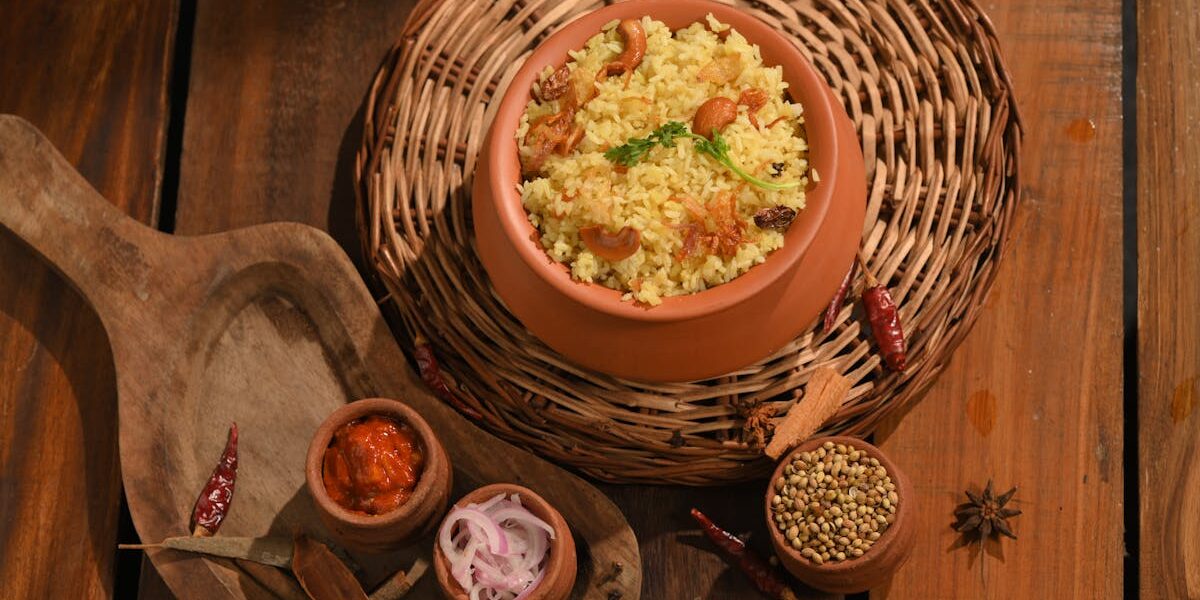
Dum cooking is the great Indian secret hiding inside your favorite biryani. It is the technique that transforms separately prepared rice and meat into a single, perfumed, layered dish where every grain glistens and every piece of lamb tastes like it grew up next to cardamom. The word dum means ”breath” in Persian, and that is exactly what this method captures: the breath of spices, the breath of steam, the breath of rice opening up in its own moisture. Once you understand how to seal a pot with dough and trust the heat, you can apply dum to biryanis, kormas, dum aloo, nihari, paya, and a dozen other slow-built classics. This complete guide explains the equipment, the science, the step-by-step sealing process, and the most common mistakes that cause a beautiful biryani to turn into a sad, mushy casserole.
What Is Dum Cooking?
Dum (also written dum pukht, literally ”breathing pot”) is the Indian and Mughal technique of finishing a dish in a sealed, heavy-bottomed pot over very low heat, sometimes with embers placed on the lid as well as beneath the base. The pot’s edge is sealed with a rope of wheat-flour dough, trapping every wisp of steam so that aromatics, fats, and water vapor recirculate continuously through the food. Because nothing escapes, ingredients cook in their own moisture and absorb the volatile oils from saffron, cardamom, mace, and rose water that would otherwise burn off into the kitchen air.
Dum is not a recipe so much as a finishing process. A lamb biryani is built in three separate streams (par-cooked basmati, marinated meat, fried onions and gravy), layered in the pot, and then given thirty to forty-five minutes of dum to marry. A dum aloo is a complete potato curry that is sealed and slow-finished so that the gravy reduces into the potatoes rather than evaporating away. The technique is the bridge between cooked components and a fully composed dish.
A Short History of Dum Pukht
The method traveled south with Persian and Central Asian cooks and was perfected in the royal kitchens of the Mughal court between the 16th and 18th centuries. The most famous popularization is credited to Nawab Asaf-ud-Daula of Awadh in the 1780s. During the great Lucknow famine of 1784, the Nawab ordered massive cauldrons of rice and meat to be set up so that famine-relief construction workers could eat for free. The food was kept warm and tender for hours by sealing the cauldrons with dough, and royal cooks tasting the result discovered that the slow-sealed method produced extraordinary flavor depth. The technique became the signature of Awadhi cuisine and gave us the lineage of dum biryanis, dum nihari, and dum kakori kebabs we know today.
Outside of Lucknow, Hyderabad developed its own celebrated dum biryani built around a raw-meat (kachchi) layering style, while Kashmir uses dum for slow-finished gushtaba and yakhni dishes. Today, even commercial restaurants in India and across the diaspora still use flour-sealed handis as a stamp of authenticity for biryani, and the technique has become a defining marker of ”real” Indian celebratory cooking.
The Science: Why Sealing Changes Everything
Conventional simmering loses up to 25 percent of a dish’s volatile aromatic compounds to the air. These compounds — the terpenes in cardamom, the safranal in saffron, the eugenol in clove — are what your nose actually identifies as ”biryani.” When you seal the pot with dough, those molecules cannot escape. They condense back into the food via the recirculating steam and dissolve into the fat layer that floats above the rice. By the time you crack open the lid, the entire dish has been bathed in aromatic vapor multiple times.
Sealing also stabilizes temperature. A sealed pot with a flour gasket holds the interior between roughly 95°C and 100°C (203–212°F) for the duration of cooking, which is exactly the range where collagen converts to gelatin in tough meats and where parboiled rice finishes hydrating without rupturing. Finally, the dough seal forces moisture to redistribute upward through the layers via capillary action, so the bottom layer of meat stews in its own juice while the top layer of rice steams in the rising vapor. The bottom develops a faint, fragrant crust (the prized tahdig-like layer Indians call simply ”the crispy bottom”), and the top stays separate, fluffy, and grain-distinct.
Equipment You Need for Dum Cooking
You do not need specialized restaurant equipment to dum at home. What matters is heavy walls, a tight-fitting lid, and a way to apply truly low heat from below. Here is the practical kit.
- Heavy-bottomed pot or handi. A traditional clay handi is ideal, but a cast-iron Dutch oven, a thick-walled enameled stockpot, or even a heavy stainless-steel pot with a sandwich base will work. Thin aluminum will scorch. Look for at least 4 mm wall thickness.
- A tight-fitting lid. The flatter and heavier, the better. Glass lids are useful for first-time dum cooks because you can sneak a look at the steam, but they are slightly less insulating than metal.
- Atta or all-purpose flour. About 1 cup (130 g) flour mixed with ½ cup water makes enough dough to seal a 24 cm pot.
- A tawa, griddle, or heat diffuser. This sits between the burner and the pot to spread heat evenly and prevent scorching the bottom layer. A cast-iron skillet works perfectly.
- An oven (optional but excellent). A 150°C (300°F) oven is the most foolproof source of all-around gentle heat, which is why many modern Indian cooks dum in the oven rather than over a flame.
- Aluminum foil (a modern shortcut). Two layers of foil pressed over the rim before adding the lid will trap steam almost as effectively as dough, with none of the cleanup.
- A wooden spoon and a slotted spoon for layering. You will be moving rice and meat in distinct strata, so avoid metal utensils that crush parboiled basmati.
The Flour-Dough Seal: How to Make and Apply It
The signature of authentic dum is the dough rope you press around the lid. It is more of a gasket than an adhesive, and it produces an almost cinematic flourish at the table when guests crack it open. Here is how to make and apply it.
- Mix the dough. Combine 1 cup atta flour (or all-purpose) with about ½ cup water. Knead briefly into a smooth, firm, slightly stiff dough — firmer than a chapati dough, similar to pasta dough. Let it rest, covered, for 10 minutes while you finish layering the pot.
- Roll a rope. On a lightly floured surface, roll the dough into a long, even rope about 1.5 cm thick and long enough to circle the pot’s rim.
- Apply to the rim. Press the rope onto the dry rim of the pot, joining the ends so the entire circumference is covered.
- Seat the lid. Place the lid on top and press down firmly so the dough flattens and squeezes outward, creating a gasket. Some cooks add a heavy weight (a small stone, a brick, or a heavy pestle) on top of the lid to ensure full contact.
- Begin dum. Place the pot on a preheated tawa over the lowest possible flame, or transfer to a 150°C (300°F) oven for 25–40 minutes depending on the dish.
After dum, let the pot rest for 10 minutes before cracking the seal — this allows the steam to settle and the rice to set. To open, run a knife around the seal to cut the dough rope, then lift the lid in one motion.
Step-by-Step: The Classic Dum Biryani Method
Biryani is the most demanding application of dum because it depends on three precisely managed sub-preparations coming together at exactly the right moment. Treat this as a master template — you can substitute chicken for lamb, paneer for meat, or add jackfruit and root vegetables for a vegetarian version.
- Marinate the meat (2–6 hours ahead). For 750 g lamb shoulder cut into 4 cm pieces, mix 1 cup full-fat yogurt, 2 tablespoons ginger-garlic paste, 2 teaspoons red chili powder, 1 teaspoon turmeric, 1 tablespoon garam masala, salt to taste, and a fistful of chopped mint and cilantro. Marinate refrigerated.
- Make the gravy base. Heat ¼ cup ghee in your dum pot. Fry 3 thinly sliced onions until deep golden-brown (these are the birista); remove half for layering. To the remaining onions, add a whole-spice tadka — 4 cardamom pods, 2 cinnamon sticks, 4 cloves, 2 bay leaves, 1 teaspoon shahi jeera — and fry 30 seconds. Add the marinated meat and cook over medium heat until the yogurt breaks and the meat releases its juices, about 15 minutes. Remove from heat.
- Par-cook the rice. Soak 2 cups aged basmati rice for 30 minutes. Bring a large pot of water to a rolling boil with 2 tablespoons salt, 2 bay leaves, 1 cinnamon stick, and 4 cloves. Drain the rice, add to the boiling water, and cook for exactly 5 minutes — the rice should be 70 percent done, still firm in the center. Drain immediately.
- Layer the pot. The meat and its gravy sit in the bottom in an even layer. On top, spread the par-cooked rice in an even blanket. Scatter the reserved fried onions, fresh mint, cilantro, and a drizzle of saffron milk (½ teaspoon saffron steeped in 3 tablespoons warm milk) over the rice. Drizzle with 2 tablespoons of ghee.
- Seal with dough. Apply the dough rope around the rim and press the lid down firmly.
- Apply low heat. Set the pot on a preheated cast-iron tawa over the lowest flame for 25 minutes. Then turn off the heat and let it rest 10 minutes without opening.
- Open and serve. Break the seal, lift the lid, and gently lift the biryani from the bottom up using a flat spoon, keeping the strata intact on the plate.
Common Mistakes and How to Fix Them
| Mistake | What Happens | Fix |
|---|---|---|
| Heat too high | Bottom scorches, rice burns, smoke leaks through dough seal | Always use a tawa under the pot and keep flame on lowest setting; or move to a 150°C (300°F) oven for foolproof gentle heat |
| Rice fully cooked before dum | Finished biryani is mushy with broken grains | Par-cook rice to 70% — drain when grains are still firm in the center; they will finish during dum |
| Too much water in the gravy | Bottom layer becomes soup; rice becomes wet | Cook the meat gravy until it is thick and the oil has separated; dum is a finishing step, not a stewing step |
| Yogurt curdles in marinade | Sauce splits, looks unappealing | Use full-fat yogurt and bring meat to room temperature before adding to hot ghee; never let yogurt hit very hot fat directly |
| Seal cracks during cooking | Steam escapes, flavor weakens, dish dries | Make dough firmer (less water) and press lid down with a weight; check seal at 10-minute mark by listening for sizzle escape |
| Opening the pot mid-dum | Loses pressure and aroma; rice cooking uneven | Trust the timer; once sealed, do not open until full rest period is complete |
| Old, low-quality basmati | Grains lack length, perfume, and separation | Use aged (1+ year) basmati labeled ”extra long grain”; soak 30 minutes before par-cooking |
| Skipping the saffron-milk drizzle | Biryani looks pale and tastes flat on top | Always steep saffron in warm milk or water and zigzag over the top rice layer for color and aroma marbling |
| Too little ghee or oil | Rice sticks to the bottom and lacks gloss | Use generous fat in the gravy and an extra drizzle over the rice — fat is the carrier of aroma in dum |
| Insufficient resting time after dum | Rice falls apart when serving | Always rest 10 minutes off heat before opening — this lets internal moisture redistribute and grains firm up |
Practice Exercises to Build Confidence
Before tackling a full meat biryani, practice the technique on smaller, lower-stakes dishes. Each exercise isolates one variable of the dum method.
- Exercise 1 — Plain dum rice. Par-cook 1 cup basmati to 70%, layer in a sealed pot with whole spices, a knob of ghee, and saffron milk. Dum for 15 minutes. The goal is to learn what perfectly finished, separated grains look like. Once you can produce a flawless plate of dum rice, every biryani will be easier.
- Exercise 2 — Dum aloo. Fry baby potatoes until golden, then simmer in a tomato-yogurt-onion gravy. Seal and dum for 20 minutes. This isolates the technique on a single component — you learn how dum reduces and concentrates a gravy without watching rice at the same time.
- Exercise 3 — Chicken dum biryani in foil. Use a foil seal (two layers pressed onto the rim before the lid) instead of dough. This lets you focus on layering and heat management without the added skill of dough handling.
- Exercise 4 — Veg dum biryani with dough seal. Use jackfruit, paneer, or mixed vegetables as the protein, and make the full dough seal. Vegetables are forgiving on timing, so you can focus on the sealing skill.
- Exercise 5 — Hyderabadi kachchi biryani. The advanced graduation exercise. Raw marinated mutton is layered with par-cooked rice and everything cooks together under dum. This requires precise judgment of meat tenderness, fat content, and timing — only attempt after the first four exercises feel reliable.
Pakki vs. Kachchi: The Two Schools of Dum Biryani
Indian biryani has two foundational dum styles, and understanding the difference is essential for choosing the right technique for your meat.
- Pakki biryani (”cooked”). The meat is fully cooked into a thick gravy before layering. The rice is par-cooked separately. The two come together under dum just long enough to marry. This is the Lucknowi (Awadhi) style and is more forgiving for home cooks. Use it for chicken, goat shoulder, and lamb leg.
- Kachchi biryani (”raw”). The meat is layered raw (after marination) with par-cooked rice and everything cooks under dum in one go. This is the Hyderabadi style. It demands perfect ratios because the meat juices flavor everything and there is no second chance to adjust seasoning. Use it for fattier cuts like goat or mutton shoulder with bone.
If you are unsure which to learn first, start with pakki — it gives you the chance to taste and correct the gravy before committing to dum. Once your pakki biryanis are consistently good, kachchi is the natural next step.
Beyond Biryani: Other Classic Dum Dishes
While biryani is the most famous dum application, the technique appears across the Indian repertoire. Each of these dishes uses the sealed-pot method for a slightly different purpose.
- Dum aloo. Whole baby potatoes braised under dum in a tomato-yogurt or Kashmiri red chili gravy. The Kashmiri version (Kashmiri dum aloo) is famously deep red from kashmiri chili and fennel.
- Dum ka murgh. Hyderabadi chicken slow-cooked in a yogurt-cashew-almond gravy under dum until the gravy reduces to a clinging coat.
- Nihari. A long-simmered shank stew finished under dum, often left overnight to develop its silky, gelatinous texture. Many traditional nihari masters seal the pot in the evening and let it rest until morning.
- Paya (trotter curry). Goat or lamb trotters cooked under dum for hours to extract collagen into a clear, lip-sticking broth.
- Kakori kebab. The minced lamb is so finely ground and emulsified that it must be finished in a covered, sealed pan to set without falling apart on the skewer.
- Gushtaba (Kashmiri). Pounded meatballs finished in a yakhni broth under a lightly sealed lid so the meatballs absorb the broth’s perfume.
- Dum macchi. Whole fish or fish steaks layered with caramelized onions and yogurt gravy, then sealed and finished gently — the fish stays moist and absorbs the spiced fat.
Regional Variations: Awadhi, Hyderabadi, Kashmiri, Bohri
Dum is a single technique, but each Indian region has stamped it with its own aromatic signature. Learning these variations is one of the most rewarding parts of mastering the method.
- Awadhi (Lucknow). Subtle, refined, fragrance-forward. Heavy on kewra water, rose water, saffron, mace, and white pepper. Less chili and tomato. Often finished with edible silver leaf (vark) for celebrations.
- Hyderabadi. Bolder and spicier. Generous use of chili, mint, fried onions, and lemon. The kachchi method is the regional signature.
- Kashmiri. Built around fennel powder, dried ginger, kashmiri red chili, and asafoetida. Yogurt-based gravies and minimal onion or garlic in the wazwan style.
- Bohri. The Dawoodi Bohra community of Gujarat has a distinct biryani style with potatoes, fried cashews, and a sweeter, milkier finish that uses both saffron and yellow food coloring.
- Sindhi. Tangier, with the addition of prunes, plums, or aamchur. The gravy is often more tomato-forward than Awadhi versions.
- Kolkata. Distinctive for its inclusion of whole boiled potatoes and a hard-boiled egg alongside meat — a Calcutta-Awadhi crossover that emerged with the exiled Nawab Wajid Ali Shah.
Dum vs. Other Slow-Cooking Methods
| Technique | Origin | How It Works | Best For | Key Difference From Dum |
|---|---|---|---|---|
| Dum (dum pukht) | India / Mughal | Sealed pot, very low heat, 25–45 min finish | Biryani, dum aloo, kormas, nihari | Specifically a finishing step on pre-cooked components, sealed with dough |
| Red braising (hong shao) | China | Long simmer in soy, sugar, aromatics | Pork belly, beef shank, eggs | Open-pot reduction; flavor builds from liquid, not trapped vapor |
| Tagine | Morocco | Conical clay lid funnels condensed steam back onto food | Lamb, chicken, root vegetables | Uses pot geometry, not a seal, to circulate steam |
| French daube | France | Wine-and-stock braise in a covered terrine, often oven-finished | Beef, lamb shoulder | Longer cook (3–5 hours); liquid carries flavor rather than trapped aroma |
| Pressure cooking | Modern global | High-pressure superheated steam | Beans, tough meats, fast biryani | Faster but lacks the slow aromatic layering of true dum |
| Steaming (zheng) | China | Indirect moist heat at 100°C | Fish, dim sum, custards | Steam is external; in dum, steam is generated from the dish’s own moisture |
| Slow-cooker / crockpot | Modern Western | Low-temperature electric simmer 4–8 hours | Stews, pulled meats | Lid not airtight; volatiles still escape; no separated, layered structure |
Advanced Tips From the Restaurant Kitchen
- Layer aromatics, not just spices. Restaurant biryanis place mint, cilantro, fried onions, ginger juliennes, lemon juice, and saffron milk in distinct bands between rice and meat. Each band releases its perfume on a different schedule during dum.
- Salt the par-cooking water aggressively. Basmati only seasons during its first hydration. Boiling water for par-cooking should taste like sea water — about 2 tablespoons salt per 2 liters. After draining, the rice retains the right base seasoning without needing more salt during dum.
- Use ghee for the top drizzle, oil for the gravy. Ghee’s milk solids brown beautifully on top of the rice during dum, creating golden flecks. In the gravy below, neutral oil or a ghee-oil mix gives more headroom for browning onions without burning.
- Preheat the tawa. Place the empty cast-iron tawa on the burner for 5 minutes before setting the dum pot on it. This stabilizes the bottom temperature and prevents temperature shock that can crack a clay handi.
- Tip the pot at the end. After resting, gently tilt the sealed pot to one side for two minutes before opening. Any excess moisture at the bottom will pool to one corner where you can leave it, rather than soaking back up into the rice.
- For oven dum, place the pot on the middle rack. Heat needs to come from all sides equally for the cleanest finish. Avoid placing the pot on the bottom rack of an oven, where the heating element can scorch the base.
- Use coal or charcoal for restaurant-style aroma. A piece of red-hot lump charcoal placed in a small steel bowl on top of the rice (with a drizzle of ghee that smokes on contact), covered for 5 minutes before the dum seal, adds a faint smoky note prized in commercial biryanis.
- Don’t oversalt the gravy. Remember the rice already carries salt from the boiling water. The gravy should taste slightly under-seasoned on its own — it will season the unsalted aromatics and saffron milk during dum.
- Aged basmati is non-negotiable. Fresh-harvest basmati lacks the starch hydration profile needed for proper grain separation. Look for bags labeled ”aged 1 year” or ”aged 2 years” — these grains absorb more water and double in length without splitting.
- Always rest before serving. Ten minutes minimum, twenty is better. Cutting into a biryani straight off the heat is like cutting into a roast straight from the oven — moisture has not redistributed and grains will fall apart.
Quick Recipe: Easy Chicken Dum Biryani (Pakki Style)
This is the most forgiving entry point into dum cooking — pakki-style chicken biryani sealed with foil instead of dough, dummed in the oven. Once you can produce this reliably, you have the foundation for every classic dum dish.
- Serves: 4
- Active time: 45 minutes
- Marinate time: 2 hours
- Dum time: 25 minutes oven + 10 minutes rest
Ingredients
- 700 g bone-in chicken thighs, cut into 2-inch pieces
- 1 cup full-fat yogurt
- 2 tbsp ginger-garlic paste
- 2 tsp Kashmiri red chili powder
- 1 tsp turmeric
- 1 tbsp garam masala
- Salt to taste
- 3 large onions, thinly sliced
- 1.5 cups aged basmati rice
- 4 tbsp ghee + 2 tbsp neutral oil
- Whole spices: 4 green cardamom, 2 black cardamom, 1 cinnamon stick, 4 cloves, 2 bay leaves, 1 tsp shahi jeera
- ½ cup chopped mint + cilantro
- ½ tsp saffron steeped in 3 tbsp warm milk
- Juice of ½ lemon
Method
- Mix chicken with yogurt, ginger-garlic paste, chili powder, turmeric, garam masala, and salt. Refrigerate 2 hours.
- Heat oil and 2 tbsp ghee in a Dutch oven. Fry onions until deep golden brown, about 12 minutes. Remove half for layering.
- To the remaining onions in the pot, add whole spices and fry 30 seconds. Add marinated chicken with all marinade. Cook over medium until oil separates and gravy thickens, about 18 minutes. Turn off heat. Sprinkle in lemon juice.
- Meanwhile, soak rice 20 minutes. Bring 2 L water to a boil with 2 tbsp salt, a bay leaf, and 2 cardamom. Drain rice, boil 5 minutes until 70% cooked. Drain immediately.
- Spread rice over chicken in the pot. Scatter reserved onions, mint, cilantro, saffron milk, and remaining 2 tbsp ghee.
- Press two layers of foil onto the pot rim and cover with the lid.
- Transfer to a preheated 150°C (300°F) oven for 25 minutes.
- Rest 10 minutes before removing the foil. Lift gently from the bottom to keep layers intact.
Dum Aloo: A Vegetarian Practice Dish
If biryani feels intimidating, dum aloo is the most accessible way to practice the technique with no meat or rice timing to manage. The dish is simply baby potatoes finished under dum in a spiced gravy, and the result is restaurant-quality with minimal risk.
- Boil 500 g baby potatoes until just tender. Peel and prick each potato with a fork so the gravy can penetrate.
- Heat 3 tbsp mustard oil (or ghee) in a heavy pot until smoking. Fry the potatoes until golden on all sides. Remove.
- To the same oil, add 1 tsp fennel seeds, 1 tsp dried ginger powder, ½ tsp asafoetida, and 2 tbsp Kashmiri red chili powder mixed with 2 tbsp water. Fry 30 seconds.
- Add 1 cup whisked yogurt, off heat, stirring continuously. Return to low heat and cook until the gravy thickens and oil separates, about 8 minutes.
- Add the fried potatoes, 1 cup water, and salt. Bring to a simmer. Sprinkle 1 tsp garam masala on top.
- Seal the pot with foil or dough and dum on the lowest heat for 15 minutes.
- Rest 5 minutes, open, and garnish with chopped cilantro. Serve with rice or naan.
How to Tell When a Dum Dish Is Done
One of the trickiest parts of dum is that you cannot peek inside without losing the whole effect. Experienced cooks read the dum pot from the outside. Here are the signals.
- Aroma. When the cardamom and saffron smell becomes intense and unmistakable around the pot, the volatiles are saturating the food. This usually happens around the 15-minute mark.
- The dough seal. A properly cooked dum will have a dough seal that is firm, lightly golden where it touched the rim, and barely damp on the inside. If it is still soft and pale, give the dish another 5 minutes. If it is dark brown or cracked, the heat was too high.
- The hiss test. Listen for a soft, even hiss escaping from any pinhole gap. A faint sizzle is good — it means steam is circulating. A roaring whistle means heat is too high.
- Bottom check. Gently tilt the pot — if it slides freely on the tawa, the rice has released. If it sticks, the bottom may be on its way to scorching; turn off the heat immediately.
- Time is the most reliable indicator. Once you have made the same dum dish three times, your timer becomes more accurate than any sensory cue. Write down your exact times for your stove and pot.
Frequently Asked Questions
Do I have to use a dough seal? Is foil okay?
Foil works very well as a modern substitute. Two layers of heavy-duty aluminum foil pressed firmly onto the rim before placing the lid create an almost airtight seal. Restaurants in India often use foil for daily service and reserve dough seals for ceremonial presentations. The flavor difference is small. Use dough when you want the dramatic moment of cracking the seal at the table; use foil for weeknight dum.
Can I dum in a slow cooker or Instant Pot?
An Instant Pot does a passable dum biryani on the ”Pressure Cook” setting at low pressure for 6 minutes with natural release. The grain separation is not quite as clean as traditional dum because the rice is fully submerged in steam, but it is fast and consistent. Slow cookers run too low and too humid — they tend to over-hydrate rice and produce a sticky result. For true dum quality, oven-finished is the best modern option.
What’s the difference between dum and steaming?
In conventional steaming, water in a separate compartment generates steam that surrounds the food. In dum, the food generates its own steam from the moisture already in the gravy, marinade, and par-cooked rice — and that steam recirculates rather than escaping. Dum is steam cooking from the inside out, infused with all the volatile aromatics of the dish itself.
How much heat is ”low heat” exactly?
On a gas stove, this is the smallest flame you can sustain without it going out — barely visible blue tongues. On an electric or induction stove, the lowest power setting (1 or 2 out of 10) is correct. The internal pot temperature should hover around 95–100°C (203–212°F). If you see vigorous steam escaping the seal, the heat is too high. In an oven, 150°C (300°F) is the standard dum temperature.
Why is my biryani mushy at the bottom and dry on top?
This is the most common failure mode. The cause is almost always too much gravy moisture combined with rice that was par-cooked past 70%. The gravy should be thick enough that a spoon dragged through it leaves a momentary trail. The rice should be firm and chalky in the center when you drain it. Together, the gravy provides exactly enough steam to finish the rice — no more.
Can I dum vegetarian or vegan dishes?
Absolutely. Vegetable biryani, mushroom biryani, jackfruit biryani, and paneer dum are all traditional. For vegan dum, substitute thick coconut milk or cashew cream for yogurt in the marinade, and use a neutral oil instead of ghee. The technique is identical — only the proteins change.
How do I prevent the bottom layer from burning?
Always use a heat diffuser — a cast-iron tawa, a griddle, or a flame-tamer disc between the burner and the pot. Use the lowest possible heat. Choose a heavy-bottomed pot (cast iron, enameled cast iron, or clay handi) rather than a thin aluminum pan. And make sure your gravy has enough fat (at least 3–4 tablespoons of oil or ghee) to provide a non-stick lubricating layer at the bottom.
How long can I keep a dum dish warm before serving?
A properly sealed dum dish stays at safe serving temperature for 45 minutes to an hour off the heat — this is one of its great virtues for entertaining. Some traditional Lucknowi cooks deliberately rest the pot for 30 minutes after dum to let flavors marry further. Do not crack the seal until just before serving.
What rice should I use besides basmati?
Basmati is the gold standard, but aged Indian rice varieties like Wayanad jeerakasala (the traditional grain for Kerala’s malabar dum biryani) or Andhra Pradesh’s nellore sona masuri are regional substitutes. Outside India, Pakistani basmati (especially Super Kernel) is excellent. Do not use jasmine, arborio, or sushi rice — they have the wrong starch profile and will turn gluey.
Is dum cooking healthy?
The technique itself is among the healthier slow-cooking methods because it requires minimal added water and preserves heat-sensitive nutrients. The healthiness of any specific dum dish depends on its ingredients — a yogurt-based vegetable dum biryani with brown basmati is genuinely nourishing, while a cream-and-cashew Mughlai dum can be very rich. The sealed-pot method also helps food retain more aromatic compounds, which means you may need less salt and chili to achieve the same flavor intensity.
How does dum compare with Chinese red braising or Japanese nimono?
All three are slow, gentle methods that build flavor over time, but they work differently. Chinese red braising (hong shao) uses an open or loosely covered pot with reducing liquid to build a glossy sauce. Japanese nimono uses a drop-lid (otoshibuta) to gently circulate broth over food at sub-simmer temperatures. Dum is unique in being a finishing step on pre-cooked components, with a fully airtight seal that traps every volatile aromatic. Each technique reflects its cuisine’s relationship to aroma, time, and ceremony.
Do I need any special Indian spices to start?
The essential dum spice kit is small: green cardamom, black cardamom, cinnamon, cloves, bay leaves, shahi jeera (or regular cumin), saffron, and a good garam masala blend. You can build excellent biryanis with just these. Kashmiri red chili powder is recommended for color, and a good turmeric is essential. Optional but transformative: mace, kewra water, rose water, and dried rose petals.
Final Thoughts: Why Dum Is Worth Learning
Dum cooking is one of the few techniques that genuinely transforms its ingredients rather than just heating them. The same chicken, rice, and spices simmered in an open pot will taste like a competent curry-and-rice plate. Sealed under dum, those same ingredients become biryani — a dish that has anchored celebrations from Lucknow to Lahore to London for four centuries. The technique is forgiving once you understand its three governing principles: cook the components separately so each is correctly seasoned, seal completely so volatiles cannot escape, and use very low heat so nothing scorches. Master those, and a flour-sealed dum pot will become one of the most rewarding tools in your kitchen.
For complementary reading on Indian slow cooking and the spices that power it, see our guides to Indian spice tempering (tadka), chicken biryani, essential Indian cuisine, and curry leaves. For technique parallels, explore Chinese master stock, Asian clay pot cooking, and Japanese kakuni braising.

Mei Lin Chen
Mei Lin Chen is an Asian food writer and recipe developer. Melbourne-raised and London-based, she has spent over a decade exploring the rice paddies, hawker stalls, and home kitchens of South-East and East Asia. Her recipes balance traditional technique with everyday practicality.