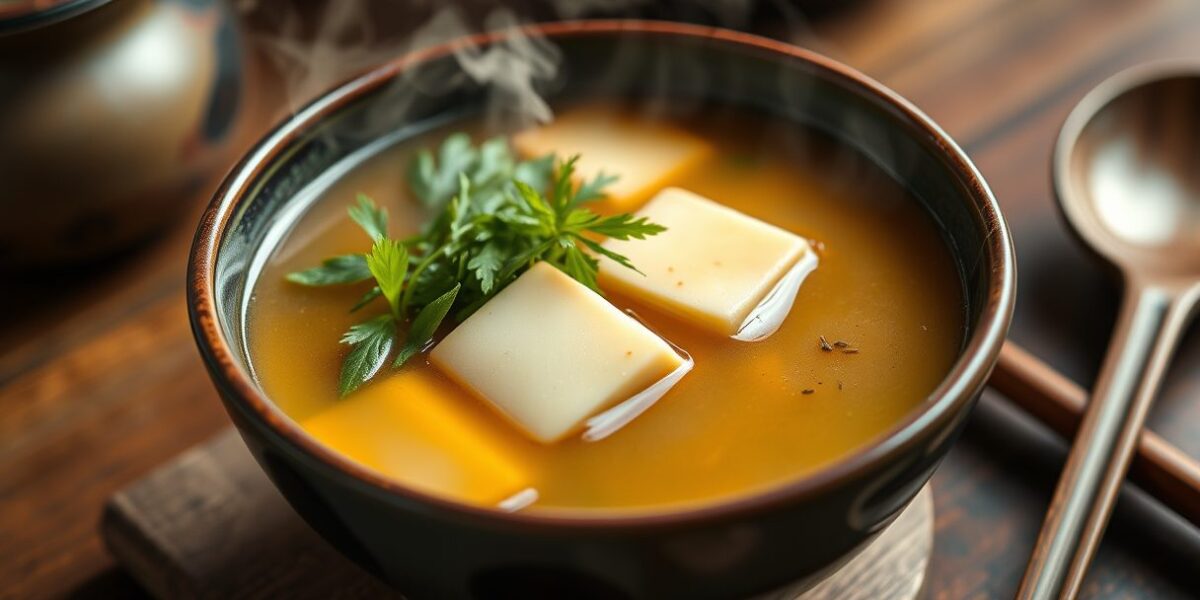
Our miso soup recipe brings one of Japan’s most beloved daily rituals into your kitchen, and we want to show you exactly how to do it properly — from dashi to the final garnish. In the sections that follow we cover the broth, the miso varieties, the technique that most recipes get wrong, and every variation worth knowing.
Key Takeaways
- Never boil miso — add off heat to preserve probiotics and aroma
- Dashi (kombu + katsuobushi) makes the authentic base; instant is an acceptable shortcut
- Shiro (white), aka (red), and awase (blended) miso all work differently in a bowl
- Miso soup takes 15 minutes when dashi is ready; 30 minutes from scratch
- Customise freely: the broth tolerates tofu, mushrooms, noodles, root vegetables
What Makes a Proper Miso Soup Base: Dashi Explained
A good miso soup begins with a clear, umami-laden dashi. The stock should feel light on the palate yet carry a deep sea-derived richness that lifts the miso. We look at three preparation styles below — from the classic kombu and katsuobushi combination to a vegetarian-friendly version and a convenient instant alternative. Without a proper base, the miso paste has nothing to amplify: it sits flat, salty, and one-dimensional.
Ichiban Dashi — Kombu and Katsuobushi from Scratch
We start by rinsing a 10-gram strip of kombu and letting it soak in four cups of cold water for thirty minutes; this gentle hydration releases glutamic acid from the kelp. The pot is then warmed slowly to about 60–70°C — we never allow the water to boil — because a rolling boil extracts bitter compounds from the seaweed. Just before the first bubbles appear, we lift the kombu out, preserving its subtle sweetness while avoiding the harsh edge of overcooked kelp. Think of it like steeping a very fine tea: time and temperature are everything.
Next we add fifteen grams of katsuobushi — the shaved bonito flakes that bring inosinate to the mix. The glutamates from kombu and the inosinates from katsuobushi create a synergistic umami effect that is several times more intense than either component alone. The flakes are stirred in off the heat and left to steep for four to five minutes, allowing their smoky notes to meld with the seaweed’s depth. We then strain the liquid through a fine mesh, discarding the flakes; the resulting dashi is clear, fragrant, and brimming with layered flavour.
Japan produces approximately 500,000 tonnes of miso annually (Japan Miso Promotion Board), a figure that reflects miso’s place not just as a condiment but as the backbone of Japanese daily cooking. Ichiban dashi is the foundation most of those bowls rest on. When you make it from scratch even once, you understand immediately why the Japanese have been doing it this way for centuries.
Kombu-Only Dashi — The Vegetarian Path
For those who avoid animal products, a kombu-only dashi provides a clean, vegetal umami that still carries genuine depth. We follow the same soaking and heating steps, but after removing the kombu we skip the katsuobushi and instead add a generous handful of dried shiitake mushrooms. The shiitake contribute guanylate, which complements the glutamate from the kelp and delivers a richer, earthier profile without any fish.
The mushrooms are steeped for six to eight minutes off the heat, then strained along with any remaining kombu sediment, leaving a broth that feels both light and nourishing. This version works beautifully with white miso, allowing the subtle sweetness of the paste to come through without competition. Many Japanese temples have served this form of dashi for centuries as part of shojin ryori — the Buddhist vegetarian cuisine — so it carries its own long tradition.
Because the flavour profile is slightly milder than the fish-based version, some cooks add a small square of dried kombu during the final simmer to deepen the stock. A splash of soy sauce or a pinch of sea salt can also round out the taste without masking the natural umami. The vegetarian dashi is worth mastering in its own right, not just as a substitute.
Instant Dashi — When It Is and Is Not Acceptable
Instant dashi granules are a staple in many Japanese households, especially on busy weekdays. A single teaspoon dissolved in four cups of hot water can replicate the basic seaweed-fish notes in minutes, making it a practical shortcut for office lunches or a quick weeknight bowl. We are not snobs about it — even professional cooks in Japan reach for the packet sometimes.
That said, we recommend checking the label carefully; a clean product will list only kombu, bonito, and salt, whereas cheaper brands may include artificial flavour enhancers or excessive additives that leave a chemical aftertaste. If you opt for the powdered form, dissolve it in a small amount of warm water before adding it to the pot to ensure even distribution. Dashi sachets — teabag-style pouches filled with real kombu and bonito — sit nicely between the two options and are worth seeking out in Japanese grocery stores.
When you have extra time, the effort of soaking kombu and simmering katsuobushi is worth the flavour boost, especially for a meal you want to feel restorative. But on a Tuesday evening when the fridge is half-empty and dinner needs to be on the table in fifteen minutes, a good-quality instant dashi is a perfectly respectable choice. The miso will still shine.
The Three Miso Types You Need to Know
Miso is a fermented soybean paste that can age anywhere from a few weeks to three years, each period shaping its colour, aroma, and intensity in a different direction. Understanding these differences helps us match the paste to the broth and to the season. For sourcing quality miso and other Japanese pantry staples, see our guide to Asian cooking ingredients.
Shiro Miso — White Miso and Its Sweet Restraint
Shiro miso undergoes a short fermentation of three weeks to three months, resulting in a pale cream hue and a gentle, sweet-salty flavour. The high proportion of rice koji in white miso means it ferments quickly and retains a natural sweetness that darker pastes lose during longer ageing. A single serving of miso soup contains roughly 40–50 calories (USDA FoodData Central), making it a light, nourishing addition to any meal.
Because shiro miso’s flavour is subtle, it works well in contexts where you want the miso to season rather than dominate — everyday miso soup, salad dressings, glazes for fish, and light marinades for tofu. We often use it as a starting point when cooking for guests unfamiliar with miso, as its approachability tends to convert even the sceptical. The pale broth it produces has an elegant, almost golden quality.
When you use white miso in soup, the bowl stays visually bright and the overall character feels refreshing rather than heavy. This makes shiro the default choice for spring and summer bowls, when lighter flavours suit the season. It is also the most forgiving paste for beginners — a little extra or less barely shifts the result.
Aka Miso — Red Miso and Its Depth of Character
Aka miso ages for one to three years, developing a deep reddish-brown colour and an earthy, bold flavour that the shorter fermentation of shiro cannot match. The higher soybean ratio and extended ageing give it a pronounced saltiness and a richer umami that can stand up to hearty ingredients like root vegetables, pork belly, or deeply browned mushrooms. This miso shines in winter soups, braised dishes, ramen broths, and any preparation that needs a solid backbone of flavour.
The Maillard reactions and complex aromatic compounds that develop during long fermentation lend aka miso a subtle nuttiness — a warmth that pairs well with toasted sesame oil or freshly grated ginger. Because it is considerably stronger than shiro, we typically use a smaller quantity — one to two tablespoons per pot — and taste carefully before adding more. Over-salting is the most common mistake with red miso.
Nagoya’s renowned miso katsu sauce, the dark braised tofu preparations of Japanese winter menus, and the gutsy ramen broths of northern Japan all rely on aka miso for their character. If you have only ever used white miso, a bowl made with red miso in the depths of winter can feel like discovering an entirely different soup. They share the same name but express entirely different personalities.
Awase Miso — The Blend That Does Everything
Awase miso combines shiro and aka in varying proportions, producing a balanced profile that works well in most applications. The blend is usually medium amber in colour, delivering a harmonious combination of sweet and savoury notes without the intensity of pure red miso or the restraint of pure white. Most supermarkets stock awase as their default miso, which is why many people encounter this type first.
| Miso Type | Fermentation | Colour | Flavour Profile | Best Used In |
|---|---|---|---|---|
| Shiro (White) | 3 weeks – 3 months | Pale cream | Mild, sweet, gentle salt | Everyday miso soup, dressings, marinades |
| Aka (Red) | 1 – 3 years | Deep reddish-brown | Earthy, bold, salty | Hearty winter soups, braises, ramen |
| Awase (Blended) | Varies | Medium amber | Balanced, versatile | General purpose miso soup, most recipes |
The versatility of awase means it pairs with both light kombu dashi and the fuller ichiban dashi, making it the safest choice when you are still learning which miso you prefer. At home, some cooks mix their own awase by combining white and red in a 2:1 ratio, adjusting the balance depending on the season and the toppings. Once you understand the individual pastes, building your own blend becomes part of the pleasure.
The Classic Miso Soup Recipe — Step by Step
Our classic version stays true to tradition while remaining approachable for cooks of any skill level. We walk through each stage, from dashi preparation to the final garnish, so you can replicate the comforting bowl we grew up loving. The steps work well for a weekday dinner or a slow weekend breakfast — the timing is entirely in your hands.
Ingredients (Serves 4)
- 4 cups cold water
- 10 g kombu (dried kelp)
- 15 g katsuobushi (bonito flakes)
- 3 tbsp white or awase miso paste
- 150 g silken tofu, cubed into 2 cm pieces
- 1 tbsp dried wakame seaweed
- 2 spring onions, thinly sliced
- Optional: 4 shiitake mushrooms, thinly sliced
We choose silken tofu for its delicate, almost custard-like texture; it absorbs the broth without falling apart, delivering a silky bite that contrasts gently with the seaweed. High-quality dried wakame can be found in Asian supermarkets or good online retailers — it rehydrates in minutes and expands dramatically, adding both texture and nutritional value. For the miso paste, we recommend sourcing a brand that lists natural fermentation and minimal additives, because the paste is doing a lot of the flavour work here.
Kombu varies in quality: look for a thick, dark greenish-black strip with a light dusty white coating, which indicates good glutamate content. Do not wipe off that white powder — it is full of flavour. If you are preparing the vegetarian version, swap the katsuobushi for a small handful of dried shiitake and follow the same steeping method described in the dashi section above.
Making the Dashi Base
Rinse the kombu briefly and place it in a medium saucepan with the cold water. Allow it to soak for thirty minutes; you will notice the water beginning to colour slightly as the glutamates release. Place the pan over medium-low heat and warm slowly, aiming for 60–70°C — the water should shimmer but not bubble.
Just as the first small bubbles form on the base of the pan, lift the kombu out with tongs and discard. Add the katsuobushi, stir gently, and immediately remove the pan from the heat. Allow the flakes to steep for four to five minutes — they will sink to the bottom as they absorb the liquid. Miso soup is consumed in an estimated 75% of Japanese households daily according to the Japan Miso Promotion Board, a statistic that speaks to how deeply this ritual is woven into Japanese life.
Strain the dashi through a fine-mesh sieve into a clean pot or bowl, pressing the flakes gently to extract every drop of flavour. The resulting liquid should be pale gold, faintly smoky, and deeply savory. Set it aside briefly while you prepare the remaining components.
Building and Finishing the Soup
Return the strained dashi to the saucepan over medium-low heat. Add the dried wakame and let it rehydrate for two minutes — it will expand to seven or eight times its dried size, shifting from a tight dark strip into soft, silky sheets. Gently lower the silken tofu cubes into the broth, being careful not to break them; they need only two to three minutes to warm through. Keep the heat low throughout.
The single most important rule in miso soup: never boil the miso. Remove the pot from heat completely, ladle a small amount of hot dashi into a separate bowl, whisk in the miso paste until fully dissolved without lumps, then pour the mixture back into the pot and stir gently. Boiling destroys beneficial probiotics — temperatures above 46°C kill most live cultures — and drives off the delicate volatile aroma compounds that make miso so appealing.
Research supports the health case for keeping things gentle: a 2017 study in Circulation Journal found that habitual miso soup consumption was associated with lower cardiovascular risk in Japanese adults, suggesting that the bioactive compounds in miso are worth preserving. Scatter the spring onions over the surface, check the seasoning — miso is salty, so taste before adding anything extra — and ladle the soup into warmed bowls immediately.
Customising Your Bowl — Variations and Add-Ins
Miso soup is one of those preparations that rewards both simplicity and creativity in equal measure: the classic three-ingredient version is just as valid as a bowl loaded with mushrooms, noodles, and seasonal vegetables. We think of it the way a French cook thinks of a pot of stock — a living, adaptable base. Browse our collection of Asian recipes for more ideas on building meals around these foundations.
Classic Additions — Tofu, Wakame, and Spring Onion
Silken tofu offers a buttery mouthfeel that absorbs the broth’s umami without overpowering it. Its subtle flavour lets the miso and dashi carry the bowl, while the soft texture provides a gentle contrast to the slightly chewy wakame. We cube it into 2 cm pieces and add it after the wakame has rehydrated, handling it carefully with a spoon rather than tongs to avoid breaking the delicate blocks.
Wakame expands seven to eight times its dried size when rehydrated, creating pleasant, silky sheets that give each spoonful body and a mild briny note. It also contributes calcium and iodine, making the bowl nutritionally richer without adding calories. One tablespoon of dried wakame is enough for a four-person pot; more than that and the seaweed begins to dominate.
Spring onions bring brightness, a slight sharpness, and colour to the finished soup. Their fresh, slightly peppery character acts as a counterpoint to the deep umami of the broth, lifting the whole bowl at the last moment. We slice them thinly and add them raw as a garnish rather than cooking them in the soup, which preserves their crunch and fresh flavour.
Heartier Bowls — Mushrooms, Noodles, and Root Vegetables
Adding sliced shiitake, enoki, or maitake mushrooms deepens the earthy character of the soup, particularly when paired with red or awase miso. Mushrooms release their own glutamates into the broth as they cook, reinforcing the existing umami in a way that feels seamless. We often sauté the mushrooms briefly in a dry pan before adding them to the dashi, which concentrates their flavour and adds a gentle browning note.
Soba or udon noodles transform the soup from a starter into a satisfying main course. Cook the noodles separately according to the packet, rinse under cold water to stop the cooking, then add them to the hot dashi just before serving. The broth coats each strand and the noodles absorb the miso flavour over the few minutes they sit in the bowl — this is why ramen shops are so careful about timing.
Root vegetables — daikon, sweet potato, thinly sliced carrot, or waxy potato — introduce natural sweetness and extra body. Japanese home cooks add what is in season and what is in the fridge; the flexibility is the point. Cut root vegetables into thin matchsticks or small cubes so they cook in the time it takes the dashi to come up to heat, usually five to seven minutes.
Seasonal and Regional Variations Across Japan
In Kyoto, cooks tend to favour a lighter shiro miso with a delicate kombu-only dashi, producing a pale, refined soup that highlights seasonal greens such as chrysanthemum leaf or thinly sliced bamboo shoot. The Kyoto style is restrained and elegant — it is miso soup as a form of hospitality. Nagoya’s version, by contrast, uses hatcho miso, an intensely dark, almost black paste fermented for up to three years, resulting in a bold, stew-like experience.
Miso soup in Japan is as varied as the seasons. Spring brings fresh clams, whose briny sweetness meshes beautifully with the miso’s umami. Summer versions may feature chilled bowls with silken tofu and ice-cold dashi, or sweet corn cut from the cob. In autumn, kabocha pumpkin and chestnuts add a golden sweetness; in winter, thick root vegetables and generous miso create a warming, sustaining bowl. Think of it the way a French grandmother thinks of her pot au feu — the ingredients change with the weather, but the pot remains on the stove.
Storing, Reheating, and Meal-Prepping Miso Soup
A well-made miso soup can be stretched across a few days with the right storage approach, making it a genuinely convenient option for busy schedules. Below we cover safe refrigeration practices, gentle reheating methods, and how to prep dashi ahead of time so weeknight assembly takes under five minutes.
How Long Does Miso Soup Keep?
Refrigerated in an airtight container, finished miso soup stays in good condition for two to three days. The tofu and wakame soften over time — not unpleasantly, but noticeably — so if you are preparing a large batch, consider storing the dashi separately and adding fresh toppings each time you reheat a portion. Never leave the soup at room temperature for more than two hours, as the broth deteriorates quickly once the miso is dissolved.
Portion the soup into individual jars or containers before refrigerating; this makes it easy to grab a single serving without reheating the whole batch. Label each container with the date so nothing gets forgotten at the back of the fridge. The broth — dashi without the miso — can be frozen for up to a month; add fresh miso and toppings when you are ready to serve.
If the soup has sat in the fridge overnight, taste it before reheating: miso intensifies as it sits, so a bowl that was perfectly seasoned the day before may taste saltier the next morning. Diluting with a splash of plain dashi or water brings it back into balance. The probiotic value will have diminished, but the flavour remains well worth eating.
Reheating Without Ruining the Miso
The same principle that governs original preparation governs reheating: never boil the miso. Warm the stored broth in a small saucepan over low heat, watching carefully to ensure it stays below simmering point. If the miso has already been dissolved into the stored soup, simply warm gently and serve as soon as the bowl is steaming.
A better approach for meal-prepped batches is to store the dashi and miso separately: keep the plain dashi in one container and a small jar of miso paste in the fridge. When you want a bowl, heat the dashi, add wakame and tofu, then whisk in fresh miso off the heat as described above. This preserves the live cultures and the fresh aroma every single time.
If the silken tofu has broken up or become watery during storage, adding a few fresh cubes at the reheating stage restores the texture. Dried wakame can also be added fresh rather than reheating the previously used pieces, which tend to go limp. The minor effort of adding fresh components at the end makes the reheated bowl feel closer to the original.
Making Dashi in Advance
Prepared dashi stores well in the refrigerator for three to five days, making it easy to have a ready supply for both miso soup and other Japanese preparations. Allow it to cool completely before sealing in an airtight container, and store away from strong-smelling ingredients that could taint its subtle aroma.
For longer storage, freeze dashi in ice cube trays and transfer the frozen cubes to a sealed bag; a standard ice cube is roughly 30 ml, so four cubes gives you approximately one cup of dashi. Pull out exactly the amount you need for a single bowl without defrosting the entire batch — this is one of our favourite kitchen habits. For more on building this kind of efficiency into Japanese cooking, see our Japanese cooking techniques guide.
When you freeze dashi made from both kombu and katsuobushi, the flavour holds well and the frozen stock reconstitutes cleanly. Some slight cloudiness may appear on thawing, which is normal and does not affect the taste. A gentle warm-up over low heat, with a quick strain if needed, returns it to its original clarity.
FAQ
What are the ingredients in miso soup?
The core components of miso soup are dashi stock, miso paste, silken tofu, dried wakame seaweed, and sliced spring onions. Many variations exist — mushrooms, noodles, root vegetables, and seasonal produce all have a place in Japanese homes. The foundation is always dashi plus miso; everything else is customisation.
Is miso soup just miso paste and water?
The simplest version can indeed be made by dissolving miso paste in hot water, and on a very cold morning it is a perfectly good bowl. However, dashi — whether from kombu and katsuobushi or a quality instant stock — provides the characteristic umami depth and structural complexity that defines a proper miso soup. Water alone makes the miso taste one-dimensional; dashi makes it sing.
Can I use instant dashi for miso soup?
Yes, instant dashi is a widely accepted shortcut in Japanese home cooking, and there is no shame in using it on a weeknight. Choose a product with minimal additives — ideally just kombu, bonito, and salt — and follow the dilution instructions on the packet. For a step up from granules, look for dashi sachets in Japanese grocers; they sit somewhere between convenience and scratch-made quality.
What type of miso is best for miso soup?
Awase (blended) miso is the most versatile choice for everyday bowls, offering balance across all seasons and ingredient combinations. Shiro (white) miso produces a lighter, sweeter soup that works particularly well in warm weather or with delicate toppings. Aka (red) miso suits heartier winter preparations with root vegetables, pork, or mushrooms. Explore all three before settling on a favourite.
Can I make miso soup without tofu?
Absolutely — many traditional Japanese miso soups contain no tofu at all. Regional and seasonal variations regularly feature only vegetables, seaweed, or clams alongside the miso and dashi. If you prefer a tofu-free bowl, simply omit it and consider adding a heartier vegetable like daikon, potato, or sweet potato to give the soup some body.
How do I stop miso soup from being too salty?
The most effective fix is to use less miso paste: start with one tablespoon per cup of dashi and taste before adding more, rather than following a recipe’s quantity blindly. Switching to shiro miso, which has a milder salt content than aka, also makes a significant difference. If a bowl is already too salty, dilute with extra plain dashi or a splash of warm water — adding more tofu or wakame also absorbs some of the intensity.

Mei Lin Chen
Mei Lin Chen is an Asian food writer and recipe developer. Melbourne-raised and London-based, she has spent over a decade exploring the rice paddies, hawker stalls, and home kitchens of South-East and East Asia. Her recipes balance traditional technique with everyday practicality.