Last updated: March 31, 2026
Filipino food is having a moment. After decades of being the quiet neighbor on the Asian food shelf, it is finally taking center stage in American supermarkets, Michelin guides, and viral short-form videos. The reason is simple. Filipino cooking marries the sour-salty intensity of Southeast Asia with the slow-braised comfort of Spanish stews and the fast-fired wok craft of Chinese trade kitchens. The result is a cuisine that is layered, deeply seasoned, and surprisingly easy to fall in love with once you understand its grammar. This complete guide walks you through the history, regions, pantry, dishes, techniques, and meal planning rhythms of Filipino cuisine so you can cook it confidently at home and order it with curiosity when you travel.
What Is Filipino Cuisine?
Filipino cuisine is the national food culture of the Philippines, an archipelago of more than 7,600 islands sitting at the crossroads of maritime Southeast Asia. It is built on a foundation of rice, fish, pork, chicken, coconut, vinegar, and citrus, and shaped by more than three centuries of contact with traders, colonizers, and migrants. Spanish friars, Mexican galleon ships, Chinese merchants, Malay seafarers, American GIs, and Japanese occupation all left edible fingerprints. What unifies the cuisine is a flavor logic Filipinos call kakanin ng panlasa in everyday cooking conversations, sometimes shortened to the simple shorthand: sour, salty, sweet, and often all three at once.
Unlike many Asian cuisines that prize a single sharp note, Filipino food is comfortable with overlap. A single bowl of sinigang might be sour from tamarind, salty from fish sauce, and faintly sweet from ripe tomatoes. A plate of tocino sausages can be saccharine and smoky in the same bite. This willingness to layer competing flavors is what gives Filipino food its instantly recognizable taste profile and its deep compatibility with rice, which sits at the center of every meal as a neutral canvas.
A Short History of the Filipino Kitchen
Before the Spanish arrived in 1521, the people of the archipelago were already eating a recognizably Southeast Asian diet. Rice was cultivated on terraced mountainsides such as Banaue in the Cordillera, fish was preserved in salt and rice as burong isda, and coconut milk thickened everyday stews. Trade with the Chinese, who had been visiting the islands for at least five centuries by then, had introduced soy sauce, tofu, noodles, and the dumpling family of dishes the Filipinos would later call siomai and siopao.
Spanish colonization, which lasted from 1565 to 1898, transformed the kitchen at the elite and urban levels. Friars planted citrus and avocados, brought tomatoes, potatoes, corn, and chilies across the Pacific from Mexico via the Manila-Acapulco galleon trade, and taught Filipino cooks how to slow-braise meat with bay leaves and vinegar in dishes that became adobo, menudo, caldereta, mechado, and afritada. Spanish-trained cooks also developed the festive lechon, a whole spit-roasted pig that remains the most photographed dish in the country.
The American period, which began in 1898, brought canned goods, evaporated milk, hot dogs, and a love of sweet breakfast foods that helped create the iconic Filipino spaghetti, the banana ketchup that goes on it, and the all-day breakfast plates known as silog. Japanese occupation in World War II is remembered mostly for hardship, but it also normalized soy-glazed grilled chicken styles that informed modern inasal traditions. Since the 1970s, the Filipino diaspora has carried these dishes to Los Angeles, Hong Kong, Dubai, Madrid, and Toronto, where second-generation chefs have pushed regional specialties back into the global conversation.
The Three Big Regions and How They Cook
The Philippines is divided into three island groups, each with distinct food cultures. Understanding them is the fastest way to make sense of the country’s 175 ethnolinguistic groups and their kitchens.
Luzon: The Sour, Garlicky North
Luzon is the largest island and home to Manila, the capital. Its food leans sour and garlicky. The Ilocano people of the northwest love bitter vegetables, fermented fish sauce called bagoong isda, and the dramatic crisp-fried pork called bagnet. The Kapampangan kitchens of central Luzon are widely considered the most sophisticated in the country and gave the world sisig, kare-kare, and the brown-sugar pork sausage tocino. The Bicol region in the southeast cooks with coconut milk and a generous amount of red chili, producing the famously fiery Bicol express and laing, dried taro leaves slow-simmered in coconut cream.
Visayas: Grilled Seafood and Sugar
The Visayas, the central cluster of islands, is sugarcane country and the heart of the country’s grilling and roasting tradition. Cebu is celebrated for its lechon, considered by the late food writer Anthony Bourdain to be among the best roast pigs on earth. Iloilo gave the world la paz batchoy, a beef-and-pork noodle soup, and chicken inasal, lemongrass-marinated chicken grilled over coconut husks and basted with annatto oil. Bacolod, the so-called sugar capital, is famous for sweet desserts and savory dishes that often run sweeter than their northern counterparts.
Mindanao: Spice, Coconut, and Halal Traditions
The southern island of Mindanao has the country’s most diverse food cultures, including the Maranao, Maguindanao, and Tausug peoples, who developed Halal kitchens shaped by Malay and Indonesian trade. Dishes such as rendang-adjacent beef randang, the yellow-rice kuning, the spicy fish curry piaparan, and grilled tiyula itum, a black soup darkened with burnt coconut, give Mindanao a flavor vocabulary closer to coastal Malaysia than to Manila. Mindanao is also the durian and pomelo capital and a major producer of coffee and cacao, which now show up in chocolate-rice porridge known as champorado.
The Filipino Flavor Compass: Sour, Salty, Sweet
If you want to cook Filipino food well, internalize the three-axis flavor compass. Almost every classic dish lives somewhere on this triangle.
- Sour is achieved with cane vinegar, calamansi, green mango, tamarind pulp, kamias bilimbi, or unripe guava. It is rarely just acid for brightness. Filipino sour is allowed to dominate.
- Salty usually comes from soy sauce, fish sauce known as patis, shrimp paste called bagoong alamang, or salted egg yolks. Multiple salty sources are often layered in the same pot.
- Sweet arrives from muscovado sugar, banana ketchup, condensed milk, ripe plantains, or coconut sap sugar. Even savory braises usually carry a faint sweetness that balances the vinegar bite.
The hot pepper note that Thai or Sichuan kitchens treat as a fourth pillar is, in most Filipino cooking, optional. Heat lives mostly in Bicol, parts of Mindanao, and the condiment bowl. The default seasoning is bracing acidity balanced by salt and round sweetness, finished with a punch of fried garlic.
Essential Filipino Pantry Ingredients
Most Filipino dishes are unlocked by a relatively short pantry. If you stock these items you can cook eighty percent of the canon.
| Ingredient | Filipino Name | What It Does | Common Substitute |
|---|---|---|---|
| Cane vinegar | Sukang maasim | Provides the signature sour backbone of adobo and paksiw braises | Apple cider vinegar at 75 percent strength |
| Soy sauce | Toyo | Salt, color, and umami in braises and marinades | Any naturally brewed Asian soy sauce |
| Fish sauce | Patis | Funky salt in soups, stews, and dipping sauces | Thai or Vietnamese fish sauce |
| Shrimp paste | Bagoong alamang | Concentrated savory note in kare-kare and binagoongan | Korean saeujeot or Malaysian belacan |
| Calamansi | Kalamansi | Tiny green citrus with a tangerine-lime flavor | 50/50 lime and orange juice |
| Tamarind | Sampalok | Souring agent in sinigang and similar soups | Tamarind paste or tamarind soup base |
| Coconut milk | Gata | Body and sweetness in Bicolano and Visayan stews | Full-fat canned coconut milk |
| Banana ketchup | Ketsup na saging | Sweet glaze for spaghetti, hot dogs, and barbecue marinades | Tomato ketchup plus brown sugar |
| Annatto seeds | Atsuete | Provides the orange color of pancit palabok and chicken inasal | Paprika or saffron for color only |
| Long-grain white rice | Bigas | Carries every meal and sets the rhythm of the table | Jasmine rice |
| Bay leaves and black pepper | Laurel at paminta | Aromatic base of adobo and most Spanish-influenced braises | None needed; both are global |
| Garlic, onion, tomato | Bawang, sibuyas, kamatis | The ginisa trinity that starts most Filipino recipes | None needed; use generously |
One small but important note: Filipino cooks treat garlic almost as a finishing herb. Fried garlic, called toasted bawang, is sprinkled over fried rice, soups, and grilled meats at the very last moment. It is what makes a humble plate of garlic fried rice and egg into a craveable breakfast.
12 Must-Try Filipino Dishes
The canon below is the shortlist most Filipino food writers agree on. None of these dishes are obscure. Each one is a cultural anchor.
1. Adobo
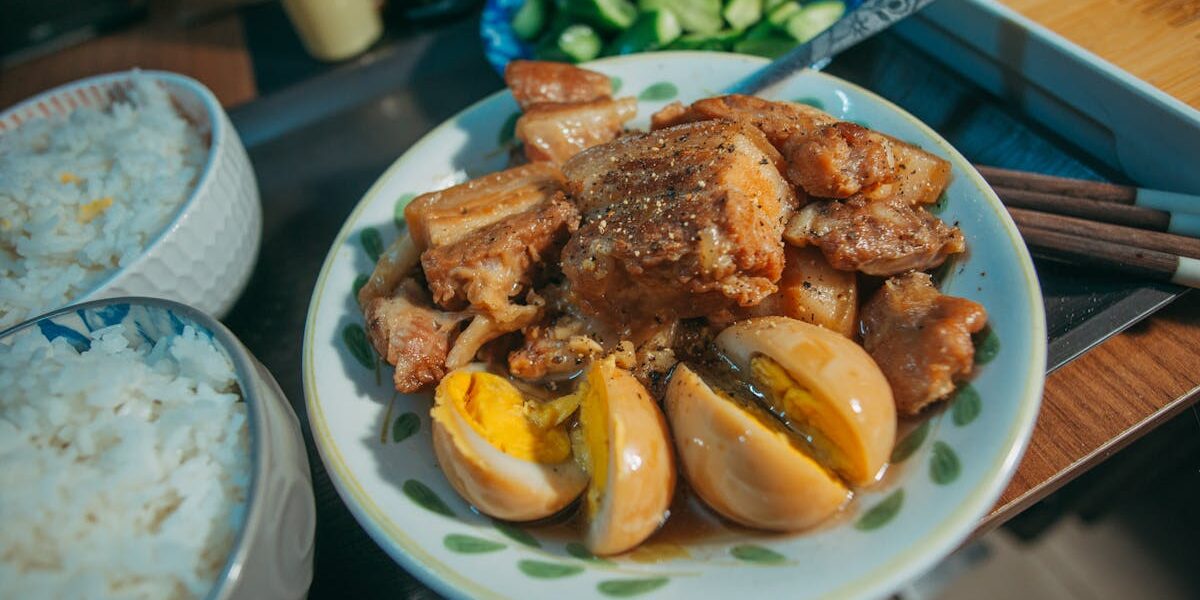
Often called the national dish, adobo is meat braised in vinegar, soy sauce, garlic, peppercorns, and bay leaves. Pork or chicken is most common, but seafood, vegetables, and even watermelon rind are fair game. The genius of adobo is that vinegar tenderizes the meat while the long simmer mellows the harsh acid into a glossy mahogany sauce. Every region and every household has its own version. Some use coconut milk, some skip the soy entirely, some add turmeric to make a yellow adobong dilaw. Start with our authentic chicken adobo recipe to taste the baseline.
2. Sinigang
Sinigang is the sour soup that defines the Filipino love of acid. Pork ribs, shrimp, beef shank, or fish are simmered with tomatoes, water spinach, daikon, eggplant, taro, and a souring agent, usually tamarind. The broth should be aggressively sour enough to make you draw breath, balanced only by salt and the natural sweetness of the vegetables. It is comfort food on a rainy day and a hangover cure on the morning after.
3. Lechon
The whole spit-roasted pig is the centerpiece of fiestas, weddings, and Christmas Eve noche buena. Cebu lechon is the most celebrated, seasoned in the cavity with lemongrass, garlic, and salt before being slowly turned over coconut-husk embers for four to six hours. The skin emerges glasslike, the meat seasoned from the inside out. Smaller versions sold by the kilo, called lechon kawali and lechon belly, bring the same crackling pleasure to a Tuesday dinner.
4. Kare-Kare
Oxtail and tripe are slow-simmered until spoon-tender, then served in a thick, golden peanut and toasted-rice sauce alongside long beans, eggplant, and banana heart. Kare-kare is traditionally finished at the table with a smear of fermented shrimp paste, whose funky punch cuts through the rich peanut base. It is the dish that proves Filipino food can be earthy and elegant in the same bowl.
5. Sisig
A Kapampangan invention, sisig is finely chopped pig face, ear, and liver, seasoned with calamansi and chili, then sizzled on a hot cast-iron plate and topped with a raw egg that cooks at the table. It is salty, fatty, sour, and crisp all at once. It has become the universal Filipino bar food and the gateway dish for many curious eaters.
6. Pancit
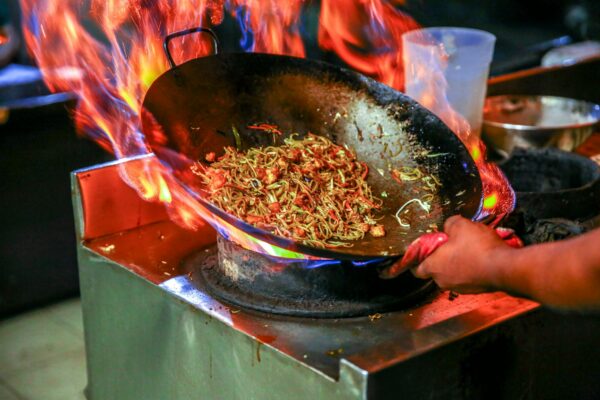
Pancit is the umbrella for noodle dishes brought by Chinese traders and adapted with local seasonings. There are dozens of versions. Pancit canton is wheat noodles with soy and oyster sauce, pancit bihon is thin rice noodles with mixed vegetables, pancit palabok is rice noodles smothered in a shrimp-orange annatto gravy, and pancit Malabon is its richer Manila Bay seafood cousin. Noodles are served at birthdays because their length is said to symbolize long life.
7. Lumpia
Lumpia is the Filipino spring roll, in two main forms. Lumpiang Shanghai are skinny pork rolls fried until shatter-crisp and dipped in sweet chili sauce. Lumpiang sariwa is the fresh, unfried version stuffed with vegetables and shrimp, draped in a brown peanut-garlic sauce. Both originated with Chinese Hokkien traders and were adopted into the Filipino kitchen long enough ago that they feel entirely local.
8. Chicken Inasal
The signature dish of Bacolod, chicken inasal is marinated in calamansi, lemongrass, garlic, and cane vinegar, then grilled over hot coals while being basted with annatto oil. It is served with garlic rice, a small bowl of chicken oil for drizzling, and a dipping sauce of soy, calamansi, and chopped chilies. Order it with the side of grilled chicken liver and the meal becomes the Visayan version of a churrasco.
9. Bicol Express
Named after the train that once connected Manila to the Bicol region, Bicol express is pork belly slowly cooked in coconut milk with shrimp paste and a generous fistful of small green chilies. The chilies are not just for show. Authentic Bicol express is hot enough to make you reach for rice every two bites. It is the dish that disproves the assumption that Filipino food is mild.
10. Halo-Halo
The country’s most photogenic dessert, halo-halo is a tall glass of shaved ice layered with sweet beans, jellies, candied fruit, leche flan, purple yam jam called ube halaya, evaporated milk, and a scoop of ube ice cream. The name means “mix-mix,” and the act of stirring it together is part of the pleasure. Halo-halo is also the gateway to the world of Filipino purple yam; if you are curious about the ingredient itself, read our guide to what ube is and how to cook with it.
11. Tapsilog and the Silog Breakfast Family
A silog is a Filipino breakfast plate made of three items: a protein, garlic fried rice called sinangag, and a sunny-side egg called itlog. Tapsilog uses cured beef tapa, longsilog uses sweet sausage, tocilog uses cured pork tocino, and bangsilog uses milkfish. A small dish of vinegar with garlic and chili sits on the side. The category is so beloved that twenty-four-hour silog diners exist in every Filipino city.
12. Lechon Kawali and Crispy Pata
Two cousins of the whole roast pig that have become the everyday version of Filipino fried pork. Lechon kawali is pork belly boiled, dried, and then deep-fried in a wok until the skin blisters. Crispy pata is the whole pork knuckle treated the same way and served with a soy-vinegar-chili dipping sauce. If you have ever attempted Cantonese-style crispy pork at home, you will recognize the technique. For a deeper dive into the related Cantonese method, see our guide on how to make crispy pork belly.
Five More Dishes Worth Knowing
Once you have the headline dozen down, push deeper into the country with these regional and home-kitchen classics.
- Laing — Bicolano dried taro leaves slow-cooked in coconut cream with dried fish, chili, and ginger until they collapse into a velvety green stew.
- Tinola — A ginger and green papaya chicken soup brightened with malunggay leaves, comfort food after a long day.
- Champorado — Sticky rice porridge cooked with native cacao tablets, served with dried fish on the side for the sweet-savory contrast Filipinos love at breakfast.
- Bistek Tagalog — Beef sirloin braised in soy, calamansi, and onions until silky, the Filipino answer to bistec encebollado.
- Pinakbet — An Ilocano stew of bitter melon, eggplant, squash, okra, and long beans seasoned with fermented fish sauce and topped with crisped pork belly.
Core Techniques of the Filipino Kitchen
Filipino cuisine relies on a small set of techniques. Each one solves a specific flavor or texture problem and shows up in dozens of dishes.
Gisa: The Aromatic Sauté
Gisa means to sauté garlic, then onion, then tomato in oil before adding everything else. It is the first move in pancit, paksiw, and most soups. The order matters because garlic needs the longest in the oil to bloom, while tomatoes need only to soften and break down.
Adobo Braising
The adobo method is a two-stage braise. Meat is first simmered in vinegar without stirring so the alcohol can cook off and tame the raw acid. Then soy sauce and aromatics are added and the pot continues at a low simmer until the sauce reduces to a glossy glaze. The technique is forgiving and works on almost any protein.
Paksiw: Vinegar Poaching
Paksiw is closely related to adobo but emphasizes a sharper vinegar finish and is typically applied to fish or pork knuckles. The cooking liquid is rarely reduced, leaving the dish brothy and bracingly sour.
Inihaw: Charcoal Grilling
Inihaw is the open-flame grilling method used for chicken inasal, pork barbecue skewers, and grilled fish. Marinades are heavy on soy, calamansi, banana ketchup, and 7-Up, which contains the sugars and acids that produce a deep lacquered char on the surface.
Ginataan: Coconut Milk Stewing
Ginataan literally means “done with coconut milk.” The technique covers savory stews such as Bicol express as well as sweet desserts such as ginataang bilo-bilo, a coconut milk soup of glutinous rice balls and tropical fruit. The trick is to add the thick coconut cream at the end so it does not break.
Kinilaw: Vinegar “Cooking” of Raw Fish
Kinilaw predates Spanish contact and is the Filipino cousin of ceviche. Raw fish, usually tuna or mackerel, is “cooked” in cane vinegar with ginger, onion, calamansi, chili, and sometimes coconut milk. It is the original Filipino flavor expression, free of any colonial influence, and remains one of the most refreshing ways to eat seafood in a hot climate.
Pritong: Deep Frying
Filipino home kitchens love the deep fry. Lumpia, lechon kawali, fried fish, fried chicken, and even fried bananas all rely on the technique. The Filipino preference is for shallow oil and high heat, which is why a wok or carbon-steel kawa is the typical vessel.
Filipino Cuisine vs. Its Asian Neighbors
Travelers often arrive in Manila expecting either Thai-like spice or Chinese-like savory umami. They get neither in the way they expect. The table below positions Filipino cooking against its nearest cousins so you can calibrate your taste expectations.
| Cuisine | Dominant Flavor | Signature Souring Agent | Default Carbohydrate | Spice Level | Typical Cooking Vessel |
|---|---|---|---|---|---|
| Filipino | Sour-salty-sweet | Cane vinegar, calamansi, tamarind | Long-grain white rice | Mild, hot in Bicol and Mindanao | Kaldero clay pot, kawa wok |
| Thai | Sour-spicy-sweet-salty | Tamarind, lime | Jasmine and sticky rice | Hot to very hot | Mortar, wok |
| Vietnamese | Fresh-herbaceous-salty | Lime, vinegar | Rice and rice noodles | Mild | Clay pot, stockpot |
| Indonesian | Sweet-spicy-aromatic | Tamarind, lime | White rice | Hot | Wajan wok, clay pot |
| Malaysian | Spicy-aromatic-coconut | Tamarind, asam keping | Rice | Hot | Wok, clay pot |
| Cantonese Chinese | Savory-umami-fresh | Black vinegar | White rice, wheat noodles | Mild | Carbon steel wok |
The cleanest takeaway is that Filipino food is unique in how comfortable it is with simultaneous sour and sweet at high intensity. Thai cooks usually pull back on sweet when they push sour. Filipino cooks rarely do. That tolerance for layered intensity is also why banana ketchup spaghetti can sit comfortably next to sinigang on the same Sunday table.
How a Filipino Meal Is Built
The Filipino table is built around shared dishes called ulam, all served at once and eaten with mounds of rice. There is no formal course structure. A typical lunch or dinner might look like this:
- A bowl of soup such as sinigang or tinola, served alongside rather than before the main dishes.
- A “wet” ulam with sauce, such as adobo or kare-kare.
- A “dry” ulam, often grilled or fried, such as inihaw na liempo or fried fish.
- A vegetable dish such as ensaladang talong, charred eggplant tossed with tomatoes and bagoong.
- A small dish of sawsawan, the dipping sauce. The default is soy plus calamansi plus chili.
- Mountainous rice. Plain steamed white rice, refilled until people stop asking.
- Fresh fruit at the end. Pineapple, mango, and papaya are constants.
The sawsawan tradition is worth dwelling on. Filipino cooks finish flavor at the table, not in the pan. You taste a bite of grilled fish, then dip the next bite in soy and calamansi and add a tiny chili for heat. The same fish becomes three different dishes over the course of one meal. This is a meaningful cultural difference from Japanese or Korean tables, where the seasoning intent is fixed by the cook.
Filipino Breakfast, Snacks, and Merienda
The Filipino day is studded with eating occasions. There is breakfast, mid-morning merienda, lunch, afternoon merienda again, dinner, and often a late-night snack called midnight ulam. The merienda category is where the country’s sweets and street foods live.
- Puto — small steamed rice cakes, often topped with cheese or salted egg.
- Bibingka — banana-leaf-lined rice cakes baked over coals during Christmas season.
- Suman — sticky rice logs steamed in banana leaves and eaten with coconut sugar or chocolate.
- Turon — saba bananas and jackfruit rolled in spring-roll wrappers and deep-fried with brown sugar.
- Ginataang bilo-bilo — warm coconut milk soup with rice balls, tapioca pearls, and ripe plantains.
- Taho — warm silken tofu in arnibal syrup, sold by street vendors at dawn.
- Kwek-kwek and isaw — orange-battered quail eggs and grilled chicken intestines, the gold standard of after-dark street snacks.
Many of these snacks fall under the umbrella of kakanin, sweets made from rice and coconut. They are a window into the pre-colonial sweet tradition that predates the Spanish-era introduction of cane sugar.
Building a Filipino Pantry from a US Supermarket
You do not need a specialty store to start cooking Filipino food, but a single trip to a Filipino or pan-Asian supermarket pays huge dividends. Here is a practical shopping order if you are starting from zero.
- Buy Datu Puti or Silver Swan cane vinegar, plus Silver Swan soy sauce. Datu Puti patis fish sauce completes the trio. These are the brand-name pantry staples in most Filipino kitchens.
- Add a jar of bagoong alamang sauteed shrimp paste, a tub of tamarind soup base, and a small bottle of banana ketchup.
- Grab a bag of bihon thin rice noodles and a bag of canton wheat noodles for pancit nights.
- Stock long-grain jasmine rice, the most common American supermarket stand-in for Filipino rice.
- Pick up a few cans of full-fat coconut milk for ginataan dishes.
- If you find calamansi in the freezer aisle as frozen concentrate, buy it. If not, use lime plus a splash of orange juice.
- Finally, source a single dried bay leaf jar, a peppercorn grinder, and a bulb of plenty of garlic. You are ready.
If you want to expand into desserts, buy a tub of ube halaya jam and a small bag of pinipig toasted young rice for sprinkling. Both are easy to find at most Filipino grocers in the US and bring you straight to halo-halo territory.
Meal Planning: A Sample Filipino Week
Filipino cooking is naturally leftover-friendly. Most braises taste better on day two, and rice ties almost any dish together. Here is a sample week that uses one weekend cooking session to feed a family of four for five days.
| Day | Breakfast | Lunch | Dinner |
|---|---|---|---|
| Sunday | Garlic fried rice, eggs, and longanisa sausage | Chicken inasal with rice and atchara pickled papaya | Sinigang na baboy, pork belly in tamarind broth |
| Monday | Pan de sal with kesong puti and brewed coffee | Leftover sinigang with rice | Chicken adobo with kalabasa squash |
| Tuesday | Champorado with dried fish | Adobo flakes on rice, topped with fried egg | Pancit bihon with mixed vegetables |
| Wednesday | Tapsilog with cured beef tapa | Pancit leftovers and sliced tomato salad | Ginataang gulay, vegetables in coconut milk |
| Thursday | Banana ketchup omelet on rice | Lumpiang Shanghai with vinegar dip | Sinangag with leftover ginataan and fried fish |
| Friday | Bibingka and hot chocolate | Bistek Tagalog with rice | Pinakbet with crispy pork |
The pattern repeats itself in most Filipino households. Sunday is the big cook. Vinegar braises and soups are made in double batches. Mondays and Tuesdays use leftovers in creative ways. Midweek pivots to noodles or vegetable-coconut stews because they are quick. Friday tends to celebrate the weekend with grilled or fried foods.
Health, Diet, and Lighter Filipino Cooking
The reputation of Filipino food as rich and meaty is only half the story. The everyday home cook is more frugal than the restaurant menu suggests. Vegetable stews such as pinakbet, tinola, and dinengdeng are the daily backbone in many provinces. Sinigang is broth-based and naturally light. Kinilaw is essentially raw fish, lime, and chili.
If you are managing sodium, the levers are clear. Cut soy sauce by a quarter and let the vinegar and aromatics carry the seasoning load. For lower saturated fat, swap pork belly for pork tenderloin or chicken thighs in adobo, and use light coconut milk in ginataan dishes. Filipino food adapts well to gluten-free diets too, because rice noodles, rice, and tamari soy sauce cover most of the canon.
Plant-based eaters have more to work with than they think. Adobong sitaw, long beans braised in vinegar and soy, is naturally vegan. Ginataang gulay swaps fish for tofu without losing the soul of the dish. Lumpiang sariwa can be filled with mushrooms, jicama, and carrots and still taste fully Filipino. The biggest hurdle for vegans is the prevalence of patis and bagoong; both can be replaced with a small amount of miso paste plus seaweed for the funky note.
Filipino Drinks, Coffee, and Dessert
The Philippines was one of the first countries in Asia to grow coffee at commercial scale, thanks to Spanish-era plantations in Batangas. Today the country produces all four major coffee varieties, including the rare liberica known as kapeng barako. Filipino coffee culture skews sweet. Most cafes serve coffee with condensed milk by default. Hot chocolate, traditionally whipped from native cacao tablets in a tall wooden batirol, is the breakfast drink during Christmas.
On the alcohol side, the national spirits are lambanog, a clear coconut palm liquor, and tuba, the fresher palm wine drunk at fiestas. San Miguel beer, founded in 1890, is the country’s oldest beverage company and still the default lager. For tropical relief, calamansi juice and the avocado-and-condensed-milk shake known as avocado smoothie are essentials.
Filipino desserts deserve their own paragraph. Beyond halo-halo, the country’s sweet table includes leche flan, a dense baked custard left from Spanish times; brazo de Mercedes, a meringue jelly roll with custard filling; and sans rival, a buttercream cake layered with cashew dacquoise. These three together demonstrate the depth of Iberian influence on the Filipino sweet tooth.
Filipino Food Around the World
The Filipino diaspora now numbers about ten million people. Wherever Filipinos have settled, the cuisine has traveled with them. In California, the Bay Area and Los Angeles have become hubs of new Filipino cooking, where chefs like Nicole Ponseca and Chad Valencia rebuilt the cuisine’s reputation in the early 2020s. New York’s Filipino restaurants pioneered the formal kamayan feast, served on banana leaves and eaten with hands. London, Toronto, Dubai, and Madrid all have growing Filipino restaurant scenes.
The 2026 wave is different from earlier diaspora waves. Younger chefs are leaning into regional rather than national identity. You will find Bicolano laing on a Brooklyn tasting menu, Maranao piaparan on a Vancouver food truck, and Ilocano bagnet in a Houston pop-up. This regional turn matches the broader shift among American eaters toward hyper-specific Asian cuisines and is one reason Filipino food is having its biggest mainstream moment yet.
Tools That Make Filipino Cooking Easier
Filipino cooks use a small kit. You probably already own most of it.
- Kaldero — A wide, heavy aluminum pot used for braises and stews. A Dutch oven is a perfect substitute.
- Kawa or kawali — A round-bottomed wok-like pan used for stir-fries and deep frying. A carbon-steel wok works just as well.
- Banga — A clay pot traditionally used for slow-cooking sinigang. Any heavy ceramic Dutch oven will do.
- Sandok and siyanse — A wooden ladle and slotted spatula, the universal Filipino kitchen pair.
- Lusong at halo — A wooden mortar and pestle used for grinding aromatics. A heavy ceramic Thai mortar works just as well.
- A grill or charcoal kettle — Essential for inihaw dishes like inasal and pork barbecue skewers.
One under-rated tip: a rice cooker becomes a serious workhorse in a Filipino kitchen. You will use it daily and often twice a day. Buy the largest one you can store. Rice is the heartbeat of the table.
Filipino Cuisine FAQ
Is Filipino food spicy?
Most Filipino food is not spicy by default. Heat lives in the Bicol region and in parts of Mindanao, where Bicol express and laing are made with handfuls of small green chilies. Elsewhere, heat is added at the table from a small dish of chopped chilies in vinegar or from siling labuyo, the local bird’s eye chili. You control the heat, not the kitchen.
What is the difference between Filipino adobo and Mexican adobo?
Filipino adobo is unrelated to Mexican adobo. The Spanish word means “marinade,” and both cuisines independently used it to describe a vinegar-based seasoning method. Mexican adobo is a dried chili paste. Filipino adobo is a vinegar and soy braise. The two share only the name and the Iberian root.
Why is rice so central to Filipino meals?
Rice has been cultivated in the Philippines for more than 3,000 years and predates every colonial influence. Filipino main dishes are designed to be eaten with rice, which is why their sauces are often intensely salty or sour. The rice tempers the seasoning. Without it, many dishes feel overpowering. A meal without rice in the Philippines is, for most people, not a meal at all.
Is Filipino food healthy?
It can be. Tinola, sinigang, kinilaw, pinakbet, and most vegetable ginataan dishes are nutrient-dense and low in saturated fat. Lechon, crispy pata, and tocino are special-occasion foods, even in Filipino homes. Pairing one rich main with one broth-based soup and one vegetable side is the traditional balance and remains the simplest way to keep meals healthy.
How is Filipino food different from Spanish food?
Three centuries of Spanish rule introduced bay leaves, paprika-style colorings, slow braising, sausage-making, and most desserts. But Filipino cooks indigenized those imports. They added local sour agents like cane vinegar and calamansi, swapped olive oil for coconut oil, and built the dishes around rice instead of bread. The result is a distinctly Filipino kitchen with Iberian inheritance, not a Spanish kitchen abroad.
Can I cook Filipino food without a Filipino grocer?
Yes. With a bottle of cane vinegar, soy sauce, fish sauce, bay leaves, garlic, peppercorns, and rice, you can make adobo, sinigang with lime as a substitute for tamarind, ginisang vegetables, and a basic pancit with any noodle. Most American supermarkets now carry coconut milk and rice noodles. Specialty items like bagoong alamang are worth ordering online once, then they last for months.
What does kamayan mean and how do I eat that way?
Kamayan literally means “by hand” and refers to a feast eaten communally without utensils on banana leaves spread across the table. Diners use the fingertips of the right hand to gather rice and ulam into a small mound, then bring it to the mouth. It is a celebration meal more than a daily one, and a beautiful introduction to the cuisine if you can find a restaurant that hosts them in your city.
What is the national dish of the Philippines?
There is no official national dish, but adobo is the unofficial answer most Filipinos give. Other contenders include sinigang, kare-kare, and lechon. A 2021 informal national survey conducted by the Department of Tourism actually crowned sinigang as the dish that most embodies the Filipino taste, citing its sourness as a national signature.
How does Filipino food fit into the global Asian food boom?
Filipino cooking is uniquely positioned because it sits at the intersection of Southeast Asian, East Asian, and Iberian traditions. As American and European diners move past pan-Asian categories toward hyper-regional cuisines, Filipino food fits perfectly. It is recognizably part of Southeast Asia, but its Spanish-era braises and Mexican-galleon ingredients make it instantly approachable for cooks who already love stews, tacos, or grilled meats.
Where to Go Next
If you are new to the cuisine, start with chicken adobo this week, sinigang next week, and pancit bihon the week after that. Once those feel like second nature, push into a Bicol express to learn the coconut-and-chili method, then a chicken inasal to master the inihaw grill. Within six weeks, you will have a working Filipino repertoire that can carry an entire month of weekday dinners.
Filipino cuisine rewards curiosity. Its sour-salty-sweet logic is unlike any other Asian cuisine, and its colonial layers make it one of the most globally connected food cultures on earth. Whether you are stocking your first pantry or planning a kamayan feast for friends, the doorway in is small and welcoming. Open a bottle of cane vinegar, peel a head of garlic, and start. Everything else builds from there.

Mei Lin Chen
Mei Lin Chen is an Asian food writer and recipe developer. Melbourne-raised and London-based, she has spent over a decade exploring the rice paddies, hawker stalls, and home kitchens of South-East and East Asia. Her recipes balance traditional technique with everyday practicality.