Last updated: March 16, 2026
Salt and pepper tofu — known in Cantonese as jiu yim dau fu (椒鹽豆腐) and in Mandarin as jiao yan doufu — is the kind of dish that converts tofu skeptics in a single bite. Pillowy cubes of soft tofu are coated in a light, lacy crust, fried until they shatter audibly under chopsticks, then tossed with a fragrant tangle of fried garlic, scallion, fresh chili, and an electric salt-and-pepper seasoning bloomed in the wok. It is the showcase appetizer of Cantonese seafood houses across Hong Kong, Guangzhou, San Francisco, Sydney, and London, and once you understand the underlying technique, it becomes one of the fastest, most satisfying recipes in your repertoire.
This guide walks you through every detail of authentic restaurant-style salt and pepper tofu: how to choose the right tofu, why a cornstarch-and-rice-flour coating gives the crispiest crust, the exact spice ratio used in Cantonese kitchens, and how to keep the tofu shatteringly crisp even after tossing with aromatics. You will get the master recipe, an air-fryer version, two regional variations (Hong Kong and Sichuan), a ten-minute weeknight method, and answers to every question that comes up the first time you make it. The whole dish, start to finish, takes about thirty minutes.
What Is Salt and Pepper Tofu?
Salt and pepper tofu is a Cantonese restaurant classic born from the broader jiu yim (椒鹽) family of dishes, which includes salt and pepper shrimp, salt and pepper squid, salt and pepper pork chops, and salt and pepper spareribs. The ”salt and pepper” name is slightly misleading: the seasoning is actually a complex blend of fine salt, white pepper, five-spice powder, and often a small amount of toasted Sichuan peppercorn or a touch of MSG or chicken bouillon. The blend is dry-toasted in a hot wok before serving, which releases its full aromatic punch.
Unlike the meat versions, tofu provides no fat or natural flavor of its own, so the entire dish is built around three engineering decisions: getting the crust crispy enough to survive a quick toss with aromatics, blooming enough flavor in the oil to coat every cube, and seasoning aggressively without burying the tofu’s clean, soybean sweetness. When all three click into place, you get a dish that is simultaneously crunchy, savory, herbal, gently spicy, and wildly addictive — the platonic ideal of vegetarian bar food.
Why This Recipe Works
- Pressed and dried tofu releases steam, not water. Pressing for 20 minutes, then patting completely dry, is the single biggest predictor of crust quality.
- A 3:1 cornstarch-to-rice-flour blend gives the lacy, glasslike crust you get at restaurants. Cornstarch alone turns gummy; rice flour alone is too sandy.
- Double frying at two temperatures (335°F to cook through, then 375°F to crisp and dehydrate) is the same technique used for Korean fried chicken and Japanese karaage, and it is the only way to keep tofu crisp after tossing.
- The spice mix is toasted in a dry wok for 60 seconds before being ground, which converts white pepper from sharp and dusty to floral and rounded.
- Aromatics are flash-fried in the same oil used for the tofu, then drained and tossed at the very end, so every cube gets coated without sogging out.
Ingredients
Serves 3 to 4 as an appetizer, 2 as a main with rice. All measurements are tested in U.S. cups and grams.
For the Tofu
- 1 block (14 oz / 400 g) medium-firm or firm tofu — not silken, not extra-firm
- 1/2 cup (60 g) cornstarch
- 3 tablespoons (25 g) rice flour (white rice flour, not glutinous)
- 1/2 teaspoon fine sea salt
- 1/4 teaspoon baking powder (optional, for extra lacy crust)
- 4 cups (about 950 ml) neutral oil for frying — peanut, rice bran, or refined sunflower
For the Salt and Pepper Seasoning
- 1 1/2 teaspoons fine sea salt
- 1 teaspoon ground white pepper
- 1/2 teaspoon Chinese five-spice powder
- 1/2 teaspoon granulated sugar (balances the salt; do not skip)
- 1/4 teaspoon Sichuan peppercorn, toasted and finely ground (optional but classic)
- Pinch of MSG or chicken bouillon powder (optional; used in most restaurants)
For the Aromatics
- 6 cloves garlic, finely minced (about 2 tablespoons)
- 2 inches (5 cm) fresh ginger, finely minced (about 1 tablespoon)
- 4 scallions, white and light green parts thinly sliced, dark green parts cut into 1-inch lengths
- 2 to 4 fresh red chilies (Fresno, Holland, or bird’s eye depending on heat preference), seeded and thinly sliced
- 1 tablespoon Shaoxing wine (optional, for fragrance at the end)
Equipment You Need
Salt and pepper tofu is forgiving on equipment, but a few choices matter. A 14-inch carbon steel wok is ideal because it holds heat well and gives you the high sides needed for safe deep frying. A heavy 3-quart Dutch oven works almost as well. You will also want a wire spider or large slotted spoon, a wire rack set over a sheet pan for resting the fried tofu, an instant-read thermometer to verify oil temperature, and a sharp knife for the aromatics. If you are new to wok cooking, our 2026 wok buying guide covers what to look for in a home-friendly model.
Step-by-Step Instructions
Step 1: Press and Cube the Tofu (20 minutes)
Drain the tofu, then wrap the block in a clean kitchen towel or several layers of paper towels. Place it on a plate, set a second plate on top, and weigh it down with a heavy can or a small skillet. Press for 20 minutes — you want to remove about two tablespoons of water. Do not skip or shorten this step. Wet tofu will spit dangerously in hot oil and prevent the crust from forming a tight seal.
Once pressed, pat the surface completely dry with fresh paper towels. Cut the block in half horizontally to make two slabs, then cut each slab into 1-inch (2.5 cm) cubes. You should end up with about 24 to 30 pieces. Cubes are traditional, but you can also cut into rectangular batons for a different presentation.
Step 2: Make the Salt and Pepper Mix (5 minutes)
Heat a small dry skillet or your wok over medium-low heat. Add the white pepper, five-spice powder, and Sichuan peppercorn (if using) and toast for 60 to 90 seconds, stirring constantly, until the spices are fragrant and the kitchen smells warm and floral. Do not let them brown. Tip the toasted spices into a small bowl and let cool for 1 minute, then stir in the salt, sugar, and MSG (if using). If your Sichuan peppercorns are whole, grind them in a mortar or spice grinder before mixing. Set the seasoning blend aside.
This blend keeps in a sealed jar for up to two months and is also excellent on roasted potatoes, popcorn, fried eggs, and grilled shrimp.
Step 3: Coat the Tofu (3 minutes)
In a wide shallow bowl, whisk together the cornstarch, rice flour, salt, and baking powder. Add the tofu cubes a few at a time and gently turn them with chopsticks or your hands until each cube is coated on all sides. Press the coating gently into any rough edges. The cubes should look dry and dusty, not pasty. If the coating is wet or clumpy, your tofu was not dried enough — pat the cubes off, dry them again, and re-coat.
Let the coated tofu rest for 5 minutes. This hydration step lets the starch absorb a little surface moisture, which is what creates the lacy, blistered texture once the cubes hit hot oil.
Step 4: First Fry — Cook Through (4 to 5 minutes)
Pour the oil into your wok or Dutch oven. You want about 2 inches (5 cm) of oil — enough for the cubes to float freely. Heat over medium-high until the oil reaches 335°F (170°C). If you do not have a thermometer, drop in a single grain of rice; it should sink slightly, then sizzle to the surface in 3 to 4 seconds.
Working in two or three batches so the oil temperature does not crash, lower the tofu cubes into the oil with a spider. Fry for 3 to 4 minutes per batch, gently nudging them apart so they do not stick. The cubes should turn pale gold and float to the surface. Remove with the spider, drain briefly over the wok, and transfer to a wire rack. Let the oil come back up to temperature between batches.
This first fry cooks the tofu through and sets the coating. The cubes will look slightly anemic and feel only lightly crisp — that is correct.
Step 5: Second Fry — Crisp and Color (2 to 3 minutes)
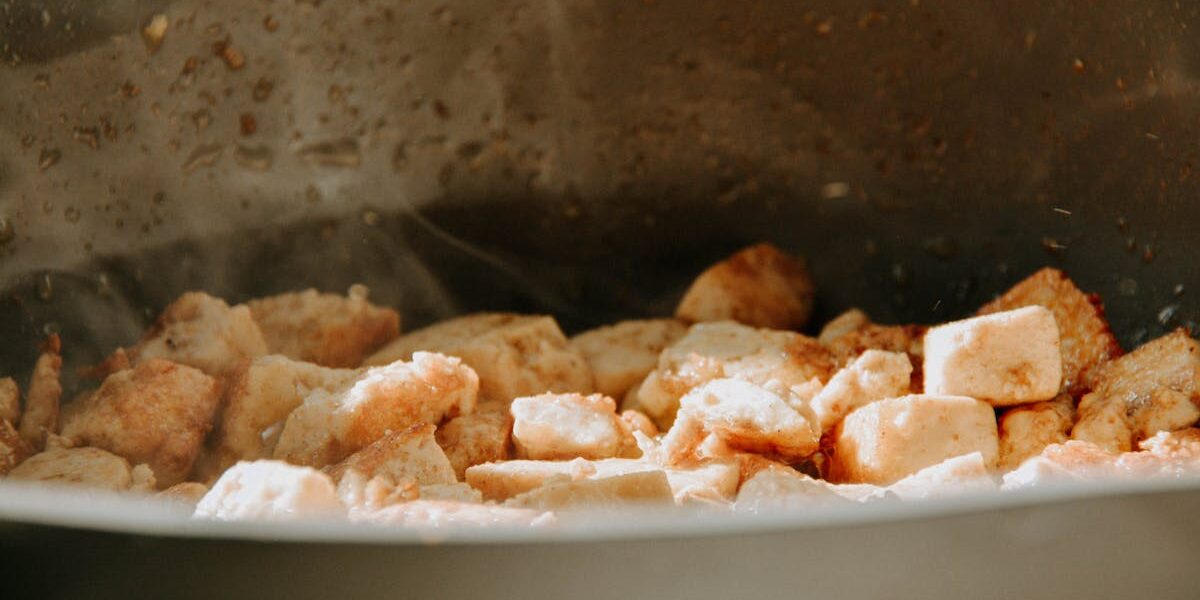
Raise the oil temperature to 375°F (190°C). Return the tofu to the wok in two batches and fry for 90 seconds to 2 minutes, until the cubes are deep golden brown and audibly crisp when they bump against the spider. This second fry drives off residual surface moisture and gives you the shattering, blistered crust that is the hallmark of the dish. Transfer back to the wire rack.
If you want to learn the underlying double-fry technique in more depth — including how it applies to karaage, popcorn chicken, and tempura — see our complete guide to Asian deep frying.
Step 6: Fry the Aromatics (90 seconds)
Carefully ladle out all but 2 tablespoons of the frying oil (save the rest for future stir-frying — strain it through a coffee filter once cool and store in the fridge for up to a month). Place the wok back over high heat. When the oil shimmers, add the minced ginger and stir for 10 seconds, then add the garlic, sliced chilies, and white parts of the scallions. Stir-fry for 30 to 45 seconds, until everything is fragrant and just turning golden — do not let the garlic brown or it will turn bitter.
Step 7: Toss and Serve (60 seconds)
Add the dark green scallion lengths to the wok, then immediately tip in the fried tofu. Sprinkle 2 to 3 teaspoons of the salt and pepper seasoning over the top. Drizzle the Shaoxing wine around the edge of the wok if using. Toss everything together with quick lifting motions for 20 to 30 seconds — long enough to coat every cube, short enough that the crust stays crisp. Taste a corner of one cube and add more seasoning if needed.
Tip onto a warm platter and serve immediately. Salt and pepper tofu waits for no one.
Recipe at a Glance
| Detail | Specification |
|---|---|
| Cuisine | Cantonese (Hong Kong / Guangdong style) |
| Course | Appetizer or main with rice |
| Diet | Vegetarian, vegan-adaptable, dairy-free |
| Prep time | 25 minutes (includes pressing) |
| Cook time | 15 minutes |
| Total time | 40 minutes |
| Yield | 3 to 4 servings |
| Difficulty | Intermediate (deep frying required) |
| Make-ahead | Spice mix and tofu pressing only; fry to order |
| Best served with | Steamed jasmine rice and a stir-fried green |
Choosing the Right Tofu
Tofu firmness is the most common point of failure in this recipe. The Chinese-American grocery aisle stocks at least five firmness grades, and only two of them work here.
| Type | Texture | Verdict |
|---|---|---|
| Silken / soft | Custardy, jiggly | Will fall apart. Do not use. |
| Medium-firm | Tender, holds shape when cubed | Ideal. Creamy interior contrasts beautifully with crust. |
| Firm | Resilient, slight bounce | Excellent. Slightly drier interior. |
| Extra-firm | Dense, chewy | Works but interior can feel rubbery. Acceptable in a pinch. |
| Pressed / super-firm (vacuum-packed) | Cheese-like, very dense | Too dense for this dish. Better for stir-fry or salad. |
Look for Chinese or Hong Kong-style tofu rather than Japanese-style if you have the option. Brands like Wo Chong, Pulmuone, House Foods (Premium line), and Hodo Foods all make blocks that perform well. Avoid sprouted or flavored tofu — the seasoning will fight your spice mix.
If you want to dive deeper into how tofu behaves under high heat and why some blocks crisp better than others, our complete guide to crispy tofu walks through the chemistry in detail.
The Spice Mix Decoded
Every Cantonese kitchen has its own jiu yim ratio. Some lean heavy on white pepper, others on five-spice, and a few add ground bay leaf or dried orange peel. Here is how the major components shape the final flavor.
- White pepper brings a clean, sinus-clearing heat that is more elegant than black pepper. Black pepper turns muddy in this context — do not substitute.
- Five-spice powder adds the warm baseline of star anise, fennel, clove, cinnamon, and Sichuan pepper. A little goes a long way; more than 1/2 teaspoon will dominate. Read more in our guide to what Chinese five-spice is.
- Sichuan peppercorn contributes the signature tingling ma sensation. Optional but transformative. Learn more about how to use it in our Sichuan peppercorn deep dive.
- Sugar is the secret ingredient. A pinch rounds out the salt and amplifies the spice perception. Without it, the dish reads as harsh.
- MSG or chicken bouillon is the flavor amplifier most home cooks omit and most restaurants include. A small pinch — about 1/8 teaspoon — adds the savory depth that makes the dish taste like it came from a takeout window.
Tips for the Crispiest Crust
- Dry, dry, dry. If there is one rule, this is it. After pressing, dry each cube individually. Surface moisture is the enemy.
- Use rice flour. Rice flour stays crisp longer than wheat flour because it lacks gluten. The 3:1 cornstarch-to-rice-flour ratio is what restaurants use.
- Verify oil temperature. An instant-read thermometer is worth every penny. Oil that is too cool gives greasy, soggy tofu; oil that is too hot burns the crust before the inside warms through.
- Do not crowd the wok. Frying too many cubes at once drops the oil temperature 30 to 50 degrees and ruins the crust. Two or three batches is normal.
- Rest on a wire rack, not paper towels. Paper towels trap steam against the crust and turn it soggy. A wire rack lets steam escape from below.
- Toss and serve immediately. The crust starts softening within four to five minutes of being tossed with aromatics. Plate the dish the moment it leaves the wok.
- Salt the coating itself. The 1/2 teaspoon of salt mixed into the starch ensures every cube tastes seasoned even if the final toss is light.
Air Fryer Salt and Pepper Tofu
An air fryer cannot match the lacy crust of true deep frying, but it gets surprisingly close — especially if you add a tablespoon of oil to the coated cubes before air frying. Use this method for weeknight cooking when you do not want to deal with a quart of frying oil.
- Press, cube, and coat the tofu exactly as written above.
- Drizzle the coated cubes with 1 tablespoon neutral oil and toss gently.
- Arrange in a single layer in your air fryer basket — work in batches if needed.
- Air fry at 400°F (200°C) for 14 to 16 minutes, shaking the basket every 5 minutes, until deep golden brown and crisp.
- Transfer to a hot wok with the fried aromatics and seasoning, toss for 20 seconds, and serve.
Compared to deep-fried, air-fried tofu has a slightly drier interior and a more uniformly golden crust. The flavor is still excellent.
Regional Variations
Hong Kong Restaurant Style
The version served at seafood houses in Sai Kung and Kowloon adds a few showy touches: deep-fried curry leaves or basil leaves tossed in at the very end for an extra layer of fragrance, and a generous sprinkle of fried garlic chips on top. Some kitchens also brush the platter with a thin smear of XO sauce before plating to add a hint of dried-seafood umami. To replicate, fry 1/4 cup of curry leaves at 350°F for 10 seconds, drain on a rack, and scatter over the finished dish.
Sichuan-Style with Ma La
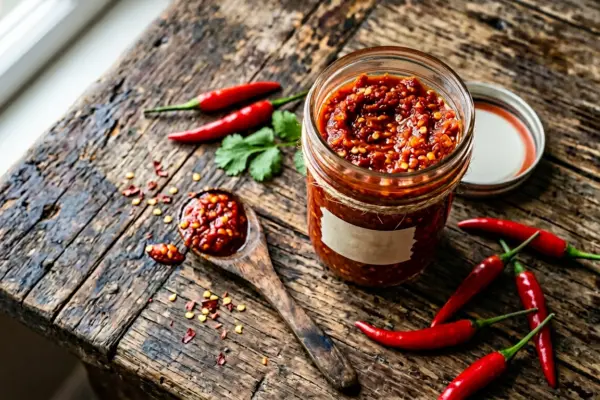
Cross the Cantonese template with Sichuan flavors and you get a numbing, fiery version that has become wildly popular in mainland Chinese hot pot restaurants and their American outposts. Triple the Sichuan peppercorn in the spice mix, add 1 teaspoon of Sichuan chili flakes (gochugaru-style coarse, not fine cayenne), and finish with a drizzle of homemade chili oil. The dish ends up with the same crisp tofu but a brighter red color and an unmistakable tingle on the lips. Our recipe for homemade Chinese chili oil is the perfect drizzle.
Taiwanese Yan Su Ji-Style Crust
Borrowed from the famous Taiwanese popcorn chicken: replace the rice flour with sweet potato starch for a coating that is more crystalline and uneven, almost like crushed cornflakes. Toss the finished tofu with fried Thai basil leaves instead of scallion greens. The texture is more dramatic and the basil adds a peppery, anise-like note that is unmistakably Taiwanese.
Vegan Restaurant Version
Already naturally vegan if you skip the chicken bouillon. Some vegan restaurants in Taipei and Vancouver brush the tofu with a thin slurry of soy milk and nutritional yeast before coating, which adds a mild cheesy depth. A few drops of mushroom seasoning powder in the spice mix replaces the umami punch of MSG.
Common Mistakes and How to Avoid Them
| Mistake | What Goes Wrong | The Fix |
|---|---|---|
| Using silken tofu | Cubes shatter when handled or fried | Use medium-firm or firm only |
| Skipping the press | Oil spits, crust steams off, soggy interior | Press at least 20 minutes; pat each cube dry |
| Frying at too low a temp | Greasy, pale, gummy crust | Verify oil at 335°F first fry, 375°F second fry |
| Crowding the wok | Oil temperature crashes; uneven browning | Fry in 2 to 3 batches |
| Skipping the second fry | Crust softens within minutes | Always double fry for shelf-stable crisp |
| Tossing too long with aromatics | Crust absorbs steam and goes limp | 20 to 30 seconds maximum, then plate |
| Using black pepper | Muddy, dusty flavor | White pepper only — non-negotiable |
| Burning the garlic | Bitter, acrid finish | Pull garlic at pale gold, not brown |
| Salting before tasting | Over-seasoned, inedible | Toss with 2 tsp seasoning first, taste, adjust |
What to Serve with Salt and Pepper Tofu
Salt and pepper tofu is rich, salty, and crisp, so it pairs best with foods that contrast or refresh. As an appetizer at a Cantonese-style spread, it sits alongside steamed seafood, a soy-braised dish, and a simple green vegetable. As a main course, build a 30-minute weeknight dinner around it with these companions:
- Steamed jasmine rice or sticky rice — neutral, slightly sweet, the ideal canvas
- Garlic stir-fried gai lan or bok choy — bitter green to cut the richness
- A clear soup like winter melon or seaweed and tofu — palate cleanser between bites
- Quick-pickled cucumbers — vinegar resets the taste buds
- Cold beer (lager or pilsner) or oolong tea — both cut through the oil beautifully
For a complete Cantonese-style menu, our guide to Cantonese cuisine walks through the essential dishes that make up a classic Hong Kong table.
Storage and Reheating
Salt and pepper tofu is, frankly, a dish for eating immediately. The crust degrades quickly once tossed with aromatics, and reheating is always a compromise. That said, here is how to handle leftovers if you must.
- Refrigerator: Store leftovers in an airtight container for up to 2 days. The crust will soften noticeably after a few hours.
- Freezer: Not recommended. The texture goes spongy and waterlogged on thawing.
- Reheating in an air fryer: 400°F for 4 to 5 minutes restores most of the crispness. The best option.
- Reheating in a hot oven: 425°F on a wire rack for 6 to 8 minutes works similarly well.
- Reheating in a wok: Quick stir-fry over high heat with a teaspoon of oil for 90 seconds will revive flavor but not crispness.
- Microwave: Avoid. Steaming the crust off entirely.
If you anticipate needing leftovers, fry the tofu in advance and store it un-tossed (without aromatics or seasoning) in an airtight container. Reheat in the oven or air fryer, then toss with freshly fried aromatics and seasoning right before serving. This is how restaurants stage the dish during a busy service.
Nutritional Information
Values are estimates per serving (recipe makes 4 appetizer servings) based on the master recipe with the tofu absorbing approximately 2 tablespoons of frying oil total.
| Nutrient | Amount per Serving | % Daily Value* |
|---|---|---|
| Calories | 295 kcal | 15% |
| Total fat | 21 g | 27% |
| Saturated fat | 2 g | 10% |
| Cholesterol | 0 mg | 0% |
| Sodium | 895 mg | 39% |
| Total carbohydrates | 16 g | 6% |
| Dietary fiber | 1 g | 4% |
| Sugars | 1 g | — |
| Protein | 11 g | 22% |
| Iron | 2.1 mg | 12% |
| Calcium | 180 mg | 14% |
| Magnesium | 45 mg | 11% |
*Percent daily values based on a 2,000-calorie diet. Sodium is the standout figure here — if you are watching salt intake, halve the seasoning blend in the toss and rely on the salt baked into the coating.
The Cultural Story Behind Salt and Pepper Tofu
The jiu yim category of dishes traces back to Hong Kong’s dai pai dong street food stalls of the 1950s and 1960s, where cooks needed flavors that could cut through the smoke of street-side propane burners and grab the attention of passing dock workers. Salt and pepper shrimp was the original star of the family — split shrimp shells fried until they crackled, then doused in a fragrant chili-and-spice mix. As the technique migrated indoors and into proper seafood restaurants in the 1970s, it expanded to include squid, pork chops, spareribs, and eventually tofu, which had the appeal of being inexpensive and giving vegetarian and Buddhist diners something to order from the same menu.
Salt and pepper tofu became a staple of Cantonese diaspora restaurants — first in Vancouver and San Francisco in the 1980s, then in London and Sydney through the 1990s. By the 2010s it had crossed over from Chinese restaurant menus into the broader vegan and plant-based recipe canon, often appearing on menus at upscale vegetarian spots like Mildred’s in London and Lovingit in New York. Its current global popularity owes much to social media: the visual contrast of golden cubes against bright green scallion and red chili photographs beautifully, and the straightforward technique translates well to short-form video.
Today, you will find recognizable versions across Chinese-speaking communities everywhere — sometimes called jiu yim dau fu on a Hong Kong menu, jiao yan doufu in Mainland China, or simply ”salt and pepper tofu” in English-language menus from Toronto to Melbourne.
Quick Reference: Step Times
| Step | Active Time | Wait Time |
|---|---|---|
| Press tofu | 1 min | 20 min |
| Make spice mix | 5 min | — |
| Coat tofu and rest | 3 min | 5 min |
| Heat oil to 335°F | 1 min | 4 min |
| First fry (2 batches) | 2 min active | 8 min total |
| Heat oil to 375°F | 1 min | 2 min |
| Second fry (2 batches) | 2 min active | 4 min total |
| Fry aromatics | 1.5 min | — |
| Final toss and plate | 1 min | — |
Frequently Asked Questions
Can I make salt and pepper tofu without deep frying?
Yes. The air fryer method described above gets you 80 percent of the way there with a fraction of the oil. You can also pan-fry the cubes in 1/2 inch of oil in a heavy skillet, turning every 90 seconds until all sides are golden. Pan-frying takes longer (about 8 minutes total per batch) and the crust is less uniformly lacy, but the flavor is essentially identical.
What if I cannot find rice flour?
Use all cornstarch (3/4 cup total). The crust will be crisp but slightly less lacy and will soften a bit faster after tossing. Avoid all-purpose flour as a substitute — the gluten makes the crust dense and bready. Potato starch is an excellent rice flour alternative if you have it on hand.
Can I prep the tofu earlier in the day?
You can press the tofu, cube it, and store it covered in the fridge up to 8 hours ahead. Coat the tofu only at the moment of frying — coated tofu sitting around will go pasty as the starch absorbs surface moisture. The spice mix can be made up to two months ahead.
How do I freeze tofu to change its texture?
Some cooks freeze and thaw their tofu before pressing to create a spongier, chewier texture that absorbs more flavor. For salt and pepper tofu, this is optional but interesting. Freeze the unopened package for at least 24 hours, thaw fully in the fridge, then squeeze gently to release water. The cubes will fry up with a more rugged, almost meaty interior. Try it once and decide whether you prefer it to the standard creamy-interior version.
Is salt and pepper tofu gluten-free?
Yes, as written, it is naturally gluten-free. Cornstarch and rice flour contain no gluten, and the spice mix contains no wheat. If you add Shaoxing wine, note that it contains wheat — substitute with dry sherry or a gluten-free Chinese cooking wine, or simply omit it.
Why is my crust falling off?
Two likely causes. First, your tofu was too wet — moisture under the coating creates steam pockets that lift the crust off. Press and dry more aggressively next time. Second, you may be turning or stirring the tofu too vigorously during frying. Once cubes hit the oil, leave them alone for the first 90 seconds so the crust can set, then nudge gently if they are sticking.
Can I use this technique for other ingredients?
Absolutely. The same coating, double-fry, and finishing technique works beautifully for shrimp, squid rings, chicken wings, pork chops cut into bite-sized pieces, and even cauliflower florets. Adjust frying times: shrimp need only 60 seconds at the second fry, while bone-in chicken pieces need 5 to 6 minutes total. The aromatics and seasoning stay exactly the same.
What can I substitute for Shaoxing wine?
Dry sherry is the closest substitute and works in a 1:1 ratio. Mirin is too sweet. Dry white wine is acceptable but lacks the toasted, slightly nutty character of Shaoxing. You can also simply omit it — the wine adds fragrance but is not essential to the dish. Read more about Shaoxing wine and its substitutes in our ingredient guide.
How spicy is this dish?
As written with seeded Fresno or Holland chilies, the heat is mild — present but in the background. To dial it up, leave the chili seeds in or use bird’s eye chilies. To make it kid-friendly, omit fresh chilies entirely and reduce the white pepper to 1/2 teaspoon. The five-spice and Sichuan peppercorn flavors will still come through clearly.
Why does my finished dish taste flat?
Three usual suspects. First, you under-seasoned — taste a corner of one cube before plating and add more salt mix if needed. Second, you skipped the sugar in the spice blend, which is the small balancer that makes everything pop. Third, your white pepper or five-spice powder is old — ground spices lose their potency within six months. If your spice jars have been open longer than that, replace them.
Can I scale this recipe up for a party?
Yes, with one caveat: tofu does not hold well after the final toss, so for a party, do the first fry up to 2 hours in advance and keep the tofu uncovered on a wire rack at room temperature. Just before serving, do the second fry, fry the aromatics, and toss. You can do the second fry in batches of 30 cubes at a time, transferring each finished batch to a warm platter and tossing all of them together at the end with the spice mix and aromatics. Plan on about 8 cubes per person as an appetizer.
Master This Dish, Then Build Outward
Salt and pepper tofu rewards practice. Make it three times in two weeks and you will internalize the rhythm: press, dry, coat, double fry, bloom aromatics, toss, plate. Once that rhythm is in your hands, the entire jiu yim family of dishes opens up — salt and pepper shrimp on Friday, salt and pepper pork chops for Sunday dinner, salt and pepper squid as the centerpiece of a Lunar New Year spread. You will also have a much sharper sense of how Cantonese restaurant cooking actually works: high heat, careful timing, and seasoning that hits hard at the very end.
If you want to deepen your wok cooking skills further, our guides to mastering Asian stir-frying and building wok hei at home are the natural next steps. Pair this tofu with a perfect bowl of restaurant-quality fried rice and a quick stir-fried green, and you have a Cantonese dinner that beats most takeout — at a fraction of the price and with the satisfying knowledge that you cooked it yourself.

Mei Lin Chen
Mei Lin Chen is an Asian food writer and recipe developer. Melbourne-raised and London-based, she has spent over a decade exploring the rice paddies, hawker stalls, and home kitchens of South-East and East Asia. Her recipes balance traditional technique with everyday practicality.