Last updated: March 15, 2026
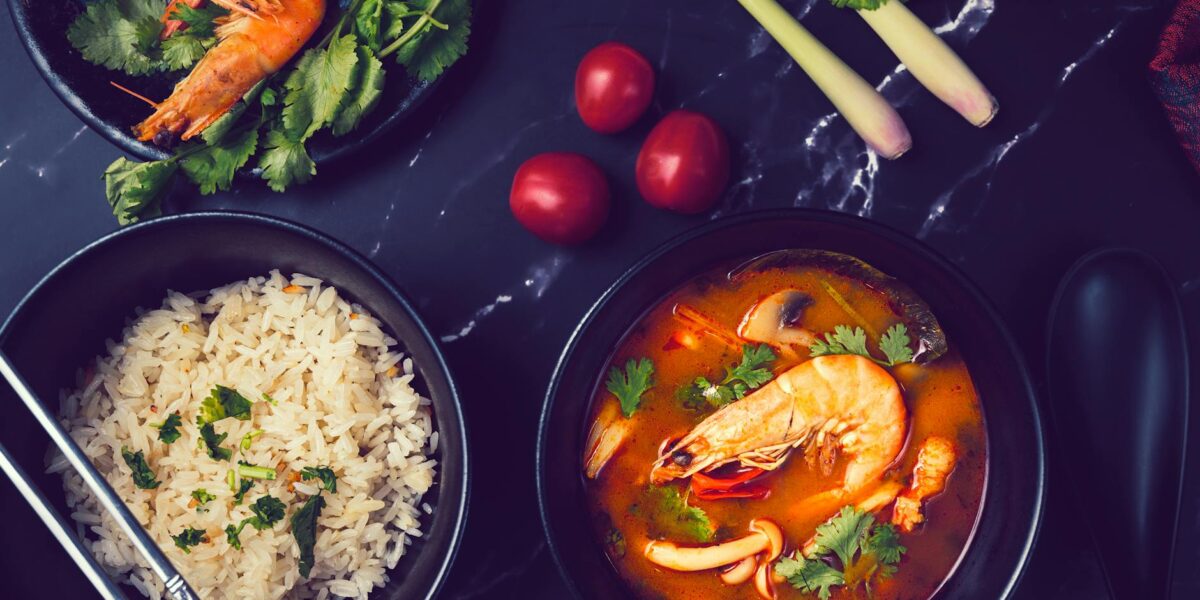
Tom yum goong is the most famous soup in Thai cuisine, and once you understand how the broth is built, it is genuinely one of the fastest weeknight soups you can make at home. A pot of fragrant lemongrass, galangal, and kaffir lime leaves simmers for less than ten minutes, gets seasoned with fish sauce and fresh lime juice, and turns into a bowl of soup that is hot, sour, salty, and aromatic all at once. The shrimp barely need to cook. The chilies do most of the work. This guide walks through the authentic Bangkok-style version with tom yum nam khon (the creamy variant with evaporated milk and roasted chili paste), explains the ingredient swaps that make or break the dish, and includes a printable ingredient list, a step-by-step method, troubleshooting notes, and a full FAQ for first-time cooks.
What Is Tom Yum Goong?
Tom yum goong (ต้มยำกุ้ง) translates literally as ”boiled” (tom) ”mixed/tossed” (yum) ”shrimp” (goong). It belongs to the family of Thai hot-and-sour soups built around three aromatic anchors — lemongrass, galangal, and kaffir lime leaves — finished with fish sauce, lime juice, and Thai bird’s eye chilies. Unlike Western soups that develop flavor through long simmering, tom yum is a fast, layered broth in which freshness and balance matter more than depth. The cook adjusts salt (fish sauce), sour (lime), heat (chilies), and sweet (sugar or roasted chili paste) at the very end, tasting as they go, until the four flavors lock into place.
There are two main versions you will see in Thailand and abroad. Tom yum nam sai is the clear-broth version, the original style served at simple roadside stalls, with no milk and no chili paste — just a transparent, ferocious broth full of herbs and shrimp. Tom yum nam khon is the creamy version, popular in Bangkok and almost universal in Thai restaurants in the United States, which adds evaporated milk and a spoonful of nam prik pao (roasted chili paste) to give the broth a rounder, slightly orange body. This recipe focuses on tom yum nam khon because it is the version most home cooks recognize, but it also explains how to make the clear version with a single ingredient change.
Why This Recipe Works
- Shrimp heads make the broth. If you can find head-on shrimp, the bright orange fat (tomalley) released when you sauté the heads is what gives restaurant tom yum its rich color and seafood depth. The recipe uses the shells and heads to build a five-minute stock before the soup starts.
- Bruised aromatics, not minced. Lemongrass, galangal, and kaffir lime leaves are bruised and added in large pieces — they perfume the broth but are not eaten. This matters because mincing them turns the soup fibrous and woody.
- Lime juice goes in off the heat. Adding lime to boiling broth makes it bitter. The pot comes off the burner before the lime juice and fresh chilies hit the soup, preserving brightness.
- Roasted chili paste does triple duty. A spoonful of nam prik pao adds color, sweetness, smokiness, and gentle heat all at once, which is why the creamy version tastes more layered than the clear one.
- The shrimp cook in 60 seconds. The soup finishes by dropping peeled shrimp into very hot broth and immediately turning off the heat. Carryover cooking does the rest, so the shrimp stay plump and snappy rather than rubbery.
Ingredients
This recipe serves 4 as a starter or 2 as a main course over rice. Every ingredient is non-negotiable for an authentic flavor profile, but substitution notes are included in the FAQ for the items hardest to source in the U.S.
For the Broth and Aromatics
- 1 lb (450 g) large head-on shrimp (16/20 count), or 12 oz peeled shrimp plus 4 oz extra shells
- 1 tablespoon neutral oil (rice bran or vegetable)
- 6 cups (1.4 L) water, divided
- 3 stalks fresh lemongrass, tough ends trimmed, bruised and cut into 2-inch lengths
- 1 thumb (about 2 inches) fresh galangal, sliced into thin coins (do not substitute ginger if you can avoid it)
- 8 fresh kaffir lime leaves, spines removed, torn
- 3 shallots, peeled and lightly smashed
- 4 cloves garlic, peeled and lightly smashed
For the Soup
- 6 oz (170 g) oyster, straw, or button mushrooms, halved or quartered
- 1 medium tomato, cut into 8 wedges
- 2 tablespoons nam prik pao (Thai roasted chili paste in oil), plus more to taste
- 3 tablespoons Thai fish sauce (nam pla), plus more to taste
- 1 teaspoon palm sugar or light brown sugar
- 1/3 cup (80 ml) evaporated milk (omit for clear nam sai version)
- 1/3 cup (80 ml) fresh lime juice (from 3 to 4 limes), plus more to taste
- 6 to 10 fresh Thai bird’s eye chilies, lightly bruised or sliced (start with 6, scale to your heat tolerance)
- 1/3 cup loosely packed fresh cilantro leaves and tender stems, roughly chopped
- 2 scallions, thinly sliced
Equipment You Will Need
- A medium (4 to 5 quart) heavy-bottomed pot or saucepan. A wide pot is better than a tall, narrow one because the surface area helps evaporate water and concentrate flavor.
- A fine-mesh strainer for the shrimp stock.
- A small skillet or saucepan for sautéing the shells and heads.
- A pestle, the flat of a knife, or a rolling pin for bruising the lemongrass.
- A citrus juicer (optional but useful — fresh lime juice is half the dish).
- A small ladle for serving and a tasting spoon for adjusting seasoning at the end.
Step-by-Step Instructions
Step 1: Prep the shrimp
Peel the shrimp, leaving the tails attached if you like the presentation. Reserve every shell and head — they are the secret to a deeply flavored broth. Devein the shrimp by running the tip of a paring knife down the back and lifting out the dark vein. Pat the peeled shrimp dry, transfer to a small bowl, and refrigerate while you build the broth. Keep the shells and heads in a separate bowl.
Step 2: Toast the shells
Heat 1 tablespoon of neutral oil in a medium saucepan over medium-high heat until it shimmers. Add the shrimp shells and heads and press down with a wooden spoon, breaking the heads open so the orange tomalley releases into the oil. Stir-fry for 3 to 4 minutes until the shells turn deep coral-pink and the oil takes on an orange tint. This step is the single biggest flavor multiplier in the whole recipe — do not skip it.
Step 3: Build the quick stock
Pour 6 cups of water into the pot with the toasted shells. Add the smashed shallots and garlic. Bring to a vigorous boil, then reduce to a steady simmer and cook uncovered for 8 to 10 minutes. Skim any gray foam that rises to the surface. Strain the stock through a fine-mesh strainer into a clean pot or large heatproof bowl, pressing on the solids with the back of a ladle to extract every drop. Discard the spent shells. You should have about 5 cups of pale orange shrimp stock.
Step 4: Bruise and add the aromatics
Return the strained stock to the pot and bring back to a simmer over medium-high heat. While it heats, use the back of a heavy knife or a pestle to bruise the cut lemongrass pieces — you want them split and frayed so the volatile oils can release. Add the bruised lemongrass, galangal coins, and torn kaffir lime leaves to the simmering stock. Cook for 5 minutes uncovered. The broth will smell intensely floral, citrusy, and slightly piney at this point — that is the signature aroma of tom yum.
Step 5: Add mushrooms and tomato
Stir in the mushrooms and tomato wedges. Simmer for another 2 to 3 minutes, just until the mushrooms are tender and the tomato wedges have softened around the edges but still hold their shape. Stir in the nam prik pao until it dissolves into the broth — the soup will take on a warm orange color and slightly thicker body.
Step 6: Season the broth
Add the fish sauce, palm sugar, and evaporated milk (if making the creamy version). Stir, return to a gentle simmer, and taste. The broth at this stage should taste salty and balanced but slightly flat — it is waiting for lime and chilies. Do not add salt; fish sauce is your salt.
Step 7: Cook the shrimp
Turn the heat up to high and let the broth come back to a vigorous bubble. Add the peeled shrimp in a single layer, stir once, and cook for 60 to 90 seconds — the shrimp should turn pink and curl into loose C-shapes. Immediately remove the pot from the heat. Carryover heat will finish cooking them while you finish the seasoning.
Step 8: Finish with lime, chilies, and herbs
With the pot off the heat, stir in the fresh lime juice and bird’s eye chilies. Taste. The soup should be sharply sour first, salty second, with the heat building a few seconds after each spoonful. Adjust with more fish sauce (for salt), more lime juice (for sour), or another teaspoon of nam prik pao (for sweetness and smokiness). Stir in the chopped cilantro and sliced scallions and serve immediately, while the herbs are still bright green and the aroma is at its peak.
The Four-Flavor Balance: Tasting and Adjusting
Tom yum is built on a deliberate four-flavor framework that every Thai home cook learns intuitively but rarely writes down. The table below maps each flavor to its ingredient, the symptom of having too little, and the fix when you have gone too far.
| Flavor | Ingredient | Too Little Tastes Like | Too Much Tastes Like | Fix |
|---|---|---|---|---|
| Salty | Fish sauce | Flat, watery, no backbone | Aggressive, sharply salty, eclipses the herbs | Add a splash of water and a squeeze of lime |
| Sour | Fresh lime juice | Heavy, soupy, lacks brightness | Astringent, makes your face pinch | Add a pinch of sugar and a teaspoon of fish sauce |
| Spicy | Bird’s eye chilies | Soup feels muted, sleepy | Burning, can no longer taste herbs | Stir in evaporated milk or a spoonful of plain rice broth |
| Sweet | Palm sugar & nam prik pao | Sharp, harsh, edges feel jagged | Cloying, dessert-like, no contrast | Add fresh lime juice in small splashes |
Always taste with a clean spoon and at least once after a 30-second pause — flavors continue to bloom in hot broth, and what tastes under-seasoned right after adding fish sauce may be perfectly balanced two minutes later. Restaurant cooks often plate one bowl, walk away briefly, and taste again before sending it out.
Sourcing the Aromatics: A Buyer’s Guide
The three aromatics that define tom yum — lemongrass, galangal, and kaffir lime leaves — are unique and not perfectly interchangeable with anything in a Western pantry. They are, however, increasingly available in U.S. supermarkets and online. Here is what to look for and where to find each one.
Lemongrass (ตะไคร้, takhrai)
Look for firm, pale yellow-green stalks at least 10 inches long, with no shriveling at the cut ends. The bottom four inches of each stalk are the most flavorful — that is where you focus when bruising. The top, papery half can be saved for stock-making but is usually too fibrous for cooking. Lemongrass freezes very well: wrap whole stalks in plastic and they keep three months frozen.
Galangal (ข่า, kha)
Galangal looks like ginger’s pale, woody cousin. Fresh galangal has a sharp, almost soapy or pine-like aroma — completely different from ginger’s spicy warmth. If you cannot find fresh, frozen galangal slices (sold in vacuum-sealed packs at most Asian supermarkets) are an excellent substitute and last six months in the freezer. Dried galangal slices work in a pinch, but they need to be rehydrated and they lack the volatile oils that make tom yum bright. Ginger is the wrong substitute — it tastes warm and earthy where tom yum needs cool and floral.
Kaffir Lime Leaves (ใบมะกรูด, bai magrut)
Also called makrut lime leaves. Fresh leaves are dark green, glossy, and figure-eight shaped (two leaf segments joined end-to-end). They contribute a perfumed citrus note that no other ingredient can replace. Tear or bruise them along the central spine to release the oils, but discard the spine itself before serving. Frozen leaves work well and are widely available; dried leaves are a poor third choice — they have lost most of their aromatic oils and the texture turns leathery.
Variations of Tom Yum
Tom yum is a template, not a fixed recipe. Once you have the broth method down, you can swap the protein, change the body, and shift the regional accent. The most common variations are listed below.
Tom Yum Nam Sai (Clear Broth)
Skip the evaporated milk and reduce the nam prik pao to 1 teaspoon (or omit entirely). The result is a transparent, very sharp, very fragrant broth that lets the shrimp and herbs take center stage. This is the original style and what you will find at most street stalls in Thailand. It is also significantly lower in calories than the creamy version.
Tom Yum Gai (Chicken)
Replace shrimp with 1 lb boneless, skinless chicken thighs, sliced into bite-sized strips. Build a quick chicken stock the same way you built the shrimp stock — by simmering the bones (or backbone if you have one) with the shallots and garlic for 15 minutes before adding aromatics. Chicken needs 4 to 5 minutes of simmering rather than 60 seconds, so add it earlier and let it cook gently.
Tom Yum Pla (Fish)
Use 1 lb of firm white fish such as snapper, sea bass, or halibut, cut into 1-inch chunks. Slip the fish into the simmering broth and cook for 3 to 4 minutes, just until opaque. Avoid stirring vigorously — fish breaks apart easily. Tom yum pla is common in central Thailand and is delicious with the clear broth treatment.
Tom Yum Talay (Mixed Seafood)
A celebratory version with shrimp, squid rings, scallops, and mussels. Add them in order of cook time — mussels first (3 to 4 minutes), then squid and scallops, and finally shrimp at the end. Bumps the bowl to a full meal and is a showstopper for guests.
Tom Yum Hed (Mushroom, Vegan)
Replace shrimp with a mixed pound of oyster, shiitake, and king oyster mushrooms, torn into chunks. Build the stock from kombu and dried shiitake instead of shrimp shells. Replace fish sauce with soy sauce or vegetarian fish sauce (look for the ”Megachef vegan” or ”Healthy Boy mushroom” brands). The umami remains intact, and the aromatic backbone is unchanged.
What to Serve with Tom Yum
Tom yum is rich, hot, and sour — it pairs best with foods that are mild, starchy, or cool to provide counterpoint. In Thailand it is almost always part of a multi-dish meal rather than the centerpiece, and is eaten alongside steamed rice, never on its own. A typical Thai table built around tom yum might include:
- Jasmine rice — the absorbent, gently floral foundation that everything else gets eaten with. A spoon of broth ladled over rice is the most common way to eat tom yum at home.
- A simple stir-fry like Thai basil chicken (pad kra pao) for a contrasting savory, dry dish.
- A cold dish such as som tam green papaya salad to provide crunch and a different kind of acidity.
- A simple steamed or stir-fried vegetable — morning glory (pak boong), Chinese broccoli (gai lan), or wing beans.
- An omelette (kai jiao) for protein and a soft, rich balance against the soup’s intensity.
If you are making tom yum as a single dish, increase the protein to 1.5 pounds of shrimp and add a handful of cooked rice noodles or thin egg noodles right before serving to turn it into a complete one-bowl meal.
Common Mistakes and How to Fix Them
Mistake 1: Boiling the soup after adding lime juice
Lime juice becomes bitter and stale-tasting when heated above 180°F for more than a minute. Always add the lime juice with the pot off the heat, and serve within five minutes of finishing. If you have leftovers, store the broth and lime juice separately and combine when reheating.
Mistake 2: Substituting ginger for galangal
Ginger has a warm, fiery, sweet aroma; galangal has a sharp, piney, almost medicinal one. Using ginger in tom yum results in a soup that tastes more like Chinese hot and sour soup than Thai tom yum. If you cannot find fresh or frozen galangal, omit it entirely and double the lemongrass — the result will not be authentic but will be far closer than using ginger.
Mistake 3: Overcooking the shrimp
Shrimp turn rubbery within 30 seconds of being overcooked. The trick is to drop them in vigorously boiling broth, count to 60, and pull the pot off the heat. Residual heat continues cooking them as you stir in the lime and herbs.
Mistake 4: Mincing the aromatics
Lemongrass, galangal, and kaffir lime leaves are fibrous and woody — they are flavor carriers, not edible ingredients. Bruise and add them in large pieces so they can be fished out (or pushed to the side of the bowl) at the table. Diners should not be biting into shards of lemongrass.
Mistake 5: Using bottled lime juice
Bottled lime juice has a stale, slightly bitter, slightly metallic edge that ruins the bright, aromatic top notes of tom yum. Fresh lime juice is non-negotiable. If limes are out of season or expensive, lemon juice with a squeeze of grapefruit is a closer substitute than bottled lime.
Nutritional Information
Per serving (recipe makes 4 starter portions), approximate values based on the creamy nam khon version with full-fat evaporated milk:
| Nutrient | Per Serving | % Daily Value* |
|---|---|---|
| Calories | 215 kcal | 11% |
| Total Fat | 7.5 g | 10% |
| Saturated Fat | 2.1 g | 11% |
| Cholesterol | 185 mg | 62% |
| Sodium | 1,420 mg | 62% |
| Total Carbohydrates | 11 g | 4% |
| Dietary Fiber | 2 g | 7% |
| Sugars | 6 g | — |
| Protein | 24 g | 48% |
| Vitamin C | 22 mg | 24% |
| Iron | 2.4 mg | 13% |
| Calcium | 105 mg | 8% |
*Percent Daily Values are based on a 2,000 calorie diet. The clear nam sai version comes in around 145 calories per serving with 5 grams of fat. Sodium is high because fish sauce is the primary seasoning — to reduce it, cut the fish sauce by one-third and finish with an extra squeeze of lime to compensate for lost umami.
Storage and Reheating
Refrigerator (up to 2 days)
Tom yum is best eaten the day it is made, when the herbs are at their freshest. If you have leftovers, strain the shrimp and aromatics from the broth and store them separately in the refrigerator. The lime juice will continue to react with the broth and grow bitter overnight, so for best results, store the broth before adding lime juice and add fresh lime when reheating.
Freezer (up to 3 months)
Strain the broth completely (no shrimp, no herbs, no lime) and freeze in 2-cup portions. When ready to use, defrost overnight in the refrigerator, bring to a simmer, add fresh aromatics if you want to refresh the flavor, drop in fresh shrimp, and finish with new lime juice and chilies. The frozen broth keeps most of its umami and herb complexity for three months.
Reheating
Always reheat tom yum gently — bring it to just under a simmer (about 180°F), not a full boil. Add a fresh squeeze of lime and a few torn kaffir lime leaves at the end to revive the aromatics. The microwave works in a pinch but the herbs will lose some of their bright top notes.
Make-Ahead Tips
- The day before: Make the shrimp stock through step 3 and refrigerate. Bruise and slice the aromatics and store in an airtight container.
- The morning of: Peel and devein the shrimp. Slice the mushrooms and tomato. Squeeze the limes.
- Just before serving: Bring the stock to a simmer, add aromatics, add mushrooms and tomato, season, cook the shrimp, finish with lime and herbs. From cold stock to ready bowl is 15 minutes.
For dinner parties, prepping the stock and aromatics in advance turns tom yum into a 10-minute show at the stove that always impresses guests. The transformation from clear stock to fragrant orange soup happens fast and looks more dramatic than the actual cooking time would suggest.
Frequently Asked Questions
What is the difference between tom yum and tom kha?
Tom yum is a hot-and-sour broth seasoned with fish sauce and lime juice. Tom kha is a coconut-milk-based soup with a sweeter, mellower profile and far less heat. They share the same aromatic trio (lemongrass, galangal, kaffir lime), but tom kha leans toward gentle and rounded while tom yum is sharp and bracing. Many U.S. Thai menus blur the line by adding coconut milk to tom yum and calling it tom yum, but in Thailand the two are distinct.
Can I make tom yum without fish sauce?
Yes, but the flavor will be noticeably less savory. Substitute light soy sauce plus a teaspoon of mushroom seasoning powder, or use a vegan fish sauce alternative. Either substitution requires slightly more salt to reach the same umami balance. For the closest possible match, look for ”Megachef vegan fish sauce” or ”Healthy Boy mushroom seasoning sauce” at Asian groceries.
What is nam prik pao and can I make it at home?
Nam prik pao is a Thai roasted chili paste made by frying dried chilies, shallots, garlic, and dried shrimp until deeply caramelized, then blending them with tamarind and palm sugar. It is what gives the creamy tom yum its rusty-orange color and underlying smokiness. You can make it from scratch (it takes about 45 minutes), but store-bought jars from brands like Maesri, Pantai, or Mae Pranom are excellent and last six months refrigerated after opening.
How spicy should tom yum be?
Authentic Thai tom yum is genuinely hot — heat is one of the four pillars of the dish, not an optional garnish. That said, the spice should still let you taste the lemongrass and kaffir lime. If your tongue goes numb after one spoonful, you have crossed the line. Start with 6 Thai chilies for a moderately spicy soup, and remove the seeds if you want flavor without intensity.
Can I use frozen shrimp?
Yes, and frozen shrimp are often higher quality than ”fresh” shrimp at U.S. supermarkets (which were almost always frozen at sea and thawed at the store). Look for raw, shell-on, head-on shrimp from countries with good sourcing standards. Thaw overnight in the refrigerator before peeling. Pre-cooked shrimp are a poor choice — they will become rubbery in the hot broth.
Why does my tom yum taste flat?
Most flat tom yum is missing acid. The single most common fix is to add more lime juice — a tablespoon at a time, tasting between additions. The second most common fix is to add more fish sauce. The third most common cause is using dried herbs instead of fresh — if your lemongrass came from a tube and your kaffir lime leaves came from a dried packet, the aromatic profile will read as muted no matter how much seasoning you add.
Can I make this in an Instant Pot or slow cooker?
Tom yum is so fast that there is no time-saving advantage to using an Instant Pot or slow cooker — the entire soup takes under 25 minutes start to finish on a stovetop. Pressure cooking also tends to over-extract the herbs and make the broth taste bitter. If you do want to use an Instant Pot, build the shrimp stock with 10 minutes of high pressure, then finish the soup on sauté mode.
Is tom yum gluten-free?
Yes, traditional tom yum is naturally gluten-free. Fish sauce, lime juice, palm sugar, and the aromatics contain no gluten. Some brands of nam prik pao include soy sauce or wheat-based additives, so check labels carefully. Choose a certified gluten-free fish sauce (Red Boat is a reliable option) if you are cooking for someone with celiac disease.
What can I substitute for kaffir lime leaves?
There is no perfect substitute — the citrusy, floral fragrance of kaffir lime leaves is unique. The closest workaround is to combine 1 teaspoon of fresh lime zest with 1 bay leaf per missing kaffir lime leaf. This gives you both the citrus aroma and a hint of the leathery, herbaceous undertone. Frozen kaffir lime leaves are widely sold at Asian groceries and online — buying a bag and freezing it solves the problem for the next year of cooking.
What is the best mushroom to use?
Straw mushrooms are the traditional choice in Thailand and are usually sold canned in the U.S. — drain and rinse them before adding. Oyster mushrooms are the easiest fresh substitute and have a similar tender texture. White button or cremini mushrooms work but absorb less of the broth’s flavor. Shiitake mushrooms add depth but also dominate the soup with their own strong umami, so use them sparingly.
A Brief History of Tom Yum
Tom yum’s origins are tied to the river-and-canal life of central Thailand, where shrimp and freshwater fish were abundant and where the wet, hot climate encouraged the use of acidic, aromatic, and chili-forward seasoning to balance heavy meals. The name ”tom yum” first appears in Thai cookbooks during the early twentieth century, though the dish itself almost certainly predates the written record by centuries. The creamy nam khon version is comparatively recent — most food historians date the addition of evaporated milk to the post-World War II period, when canned dairy became widely available in Bangkok markets.
Tom yum’s international fame took off in the 1980s and 1990s, when Thai restaurants opened in major Western cities at scale. It was named one of the world’s most delicious foods in CNN’s 2017 global food rankings and remains the single most-ordered Thai soup in U.S. Thai restaurants. The 2003 Asian financial crisis was even nicknamed the ”Tom Yum Goong Crisis” after the dish, because it began in Thailand — a sign of how thoroughly tom yum has become a cultural emblem of the country.
Final Notes from the Kitchen
Tom yum rewards three things: fresh ingredients, careful sequencing, and an honest taste-and-adjust at the end. If you find your first attempt is too sour, too salty, or too thin, you have not failed — you have just learned where your tongue calibrates the four flavors. Most experienced Thai cooks taste their tom yum three or four times in the last two minutes of cooking, splashing in more lime, more fish sauce, or another spoonful of chili paste until the bowl feels alive on the spoon.
If you want to expand your Thai cooking from here, the natural next step is to learn how to make Thai curry pastes from scratch — once you have a homemade red, green, or yellow curry paste in the freezer, dishes like green curry and massaman curry become equally fast weeknight meals. Tom yum, with its emphasis on fresh aromatics and end-of-cook seasoning, is a perfect entry point into the broader logic of Thai cooking. Once you understand how lemongrass, galangal, kaffir lime, fish sauce, and lime balance each other, you can read almost any Thai recipe and predict what it will taste like before you start cooking.
Make it once and adjust the salt-sour-spice-sweet to your own palate. Make it twice and you will start to feel where the dish wants to go on a given day — more lime when it is hot outside, more chili paste when you want comfort, more milk when you want soothing. Tom yum is endlessly recalibrating, and that is exactly why it has outlasted every cooking trend that has tried to overshadow it.

Mei Lin Chen
Mei Lin Chen is an Asian food writer and recipe developer. Melbourne-raised and London-based, she has spent over a decade exploring the rice paddies, hawker stalls, and home kitchens of South-East and East Asia. Her recipes balance traditional technique with everyday practicality.