Last updated: March 15, 2026
Uzbek food is one of Central Asia’s greatest culinary treasures — a cuisine shaped by thousands of years of Silk Road trade, nomadic Turkic traditions, and Persian sophistication. With over 200 varieties of plov (pilaf) alone, Uzbekistan’s food culture revolves around communal feasting, bread that’s treated as sacred, and a mastery of open-fire cooking that few cuisines can rival. Whether you’ve stumbled upon an Uzbek restaurant in Brooklyn, searched for ”uzbek food near me” and discovered a world of unfamiliar dishes, or simply want to understand what makes this cuisine so compelling, this guide covers everything you need to know.
Unlike many Asian cuisines that rely on soy sauce, fish sauce, or coconut milk, Uzbek cooking builds its flavors through slow-rendered animal fat, cumin-heavy spice blends, and the caramelization of onions and carrots in massive cast-iron kazans. The result is food that’s deeply savory, aromatic, and satisfying in ways that feel both unfamiliar and instantly comforting.
A Brief History of Uzbek Cuisine
Uzbekistan sits at the crossroads of ancient civilizations. The cities of Samarkand, Bukhara, and Khiva were key stops on the Silk Road, where traders from China, India, Persia, and the Arab world exchanged not just goods but cooking techniques, spices, and ingredients. This constant cultural exchange shaped a cuisine that borrows from many traditions while remaining distinctly its own.
The Turkic nomadic heritage contributed a reverence for meat — particularly mutton and beef — along with fermented dairy products and the kazan (a heavy cast-iron wok-shaped pot) as the primary cooking vessel. Persian influence brought sophisticated rice cookery, the love of dried fruits and nuts in savory dishes, and the tradition of layering flavors through slow cooking. Arab traders introduced spices like cumin, coriander, and black pepper that became foundational to the cuisine.
During the Soviet era (1924–1991), Uzbek cuisine absorbed influences from Russian and other Soviet republics’ cooking traditions, while simultaneously becoming the most celebrated Central Asian cuisine across the USSR. Plov in particular became famous throughout the Soviet Union, and oshpaz (plov masters) from Uzbekistan were sought after for major celebrations across the region.
In 2016, UNESCO recognized Uzbek plov culture as an Intangible Cultural Heritage of Humanity — a testament to how central this single dish is to the nation’s identity. Today, Uzbek food is experiencing a global moment, with restaurants opening across the United States, Europe, and Asia, introducing diners to a cuisine that has been quietly perfected over millennia.
Regional Differences in Uzbek Food
While Uzbekistan is roughly the size of California, its regional food traditions vary dramatically. The four major culinary regions each bring distinct approaches to the same foundational dishes.
Tashkent
The capital is the melting pot of Uzbek cuisine, where you’ll find every regional style represented alongside modern interpretations. Tashkent-style plov tends to be heartier and more oily than other versions, often enriched with boiled eggs, kazy (horse meat sausage), or quail eggs. The city’s chaykhanas (teahouses) are legendary — communal spaces where men gather to eat plov, drink green tea, and socialize. Tashkent is also the best place to try achichuk, the refreshing tomato-and-onion salad that cuts through the richness of heavier dishes.
Samarkand
Samarkand plov is considered the gold standard by many Uzbeks. It’s distinguished by its layered preparation — rice and meat are cooked separately, then combined — resulting in lighter, more defined flavors. The Samarkand version often includes chickpeas, raisins, and barberries, and is the style most commonly served at weddings and major celebrations. The city’s non (bread) is also famous, featuring intricate stamped patterns that identify which bakery produced it.
Bukhara
Bukhara’s cuisine reflects its history as a center of trade and scholarship. The plov here is notably rich, incorporating more dried fruits and a wider variety of spices. Bukharan Jewish cuisine, which developed over centuries in the city’s ancient Jewish quarter, adds another layer of culinary tradition — dishes like oshi sabo (Sabbath plov) show how the Jewish community adapted local techniques to their dietary laws. Bukhara is also renowned for its tandir-cooked meats, including whole legs of lamb slow-roasted in clay ovens.
Fergana Valley
The agricultural heartland of Uzbekistan, the Fergana Valley produces the prized devzira rice — a short-grain variety with a distinctive reddish hue and nutty flavor that many consider essential for authentic plov. This region excels in noodle dishes like lagman and norin, reflecting closer ties to Chinese and Uyghur culinary traditions. Fergana is also the birthplace of sumalak, a ceremonial wheat sprout pudding cooked overnight by women to celebrate the spring equinox (Navruz).
Essential Uzbek Ingredients
Uzbek cooking relies on a relatively short list of ingredients used to extraordinary effect. If you want to cook Uzbek food at home, these are the building blocks you need to understand.
| Ingredient | Uzbek Name | Role in Cooking | Where to Find |
|---|---|---|---|
| Mutton/Lamb | Go’sht | The primary protein in most dishes; bone-in cuts preferred for flavor | Halal butchers, specialty markets |
| Sheep Tail Fat | Qurdiuq / Dumba | The traditional cooking fat; renders into a rich, savory oil for frying the zirvak base | Central Asian or Middle Eastern markets |
| Yellow Carrots | Sabzi | Julienned for plov; sweeter and less watery than orange carrots | Asian grocery stores, farmers markets |
| Devzira Rice | Devzira guruch | Short-grain rice with reddish hue; absorbs fat and flavor beautifully for plov | Central Asian specialty stores, online |
| Cumin Seeds | Zira | The signature spice of Uzbek cuisine; used whole in plov and ground in kebabs | Any grocery store or Asian markets |
| Coriander Seeds | Kashnich | Often paired with cumin; adds warmth to soups and stews | Any grocery store |
| Barberries | Zirk | Tiny dried red berries adding tart contrast to rich plov | Middle Eastern or Central Asian stores |
| Chickpeas | No’xat | Added to plov and soups for protein and texture | Any grocery store |
| Cottonseed Oil | Paxta yog’i | Traditional frying oil with high smoke point; neutral flavor | Central Asian stores (vegetable oil substitutes work) |
| Non Flour | Un | High-protein wheat flour for bread, noodles, and dumplings | Any grocery store (bread flour works) |
| Fresh Herbs (Dill, Cilantro, Basil) | Ukrop, Kashnich, Rayxon | Used as garnish and in salads; basil varieties include purple basil | Any grocery store |
| Black Cumin Seeds | Sedana | Sprinkled on bread before baking; slightly bitter, aromatic | Middle Eastern or Indian grocery stores |
One ingredient deserves special attention: sheep tail fat (qurdiuq). This rendered fat is the cornerstone of traditional Uzbek cooking. It has a higher smoke point than butter, a cleaner flavor than tallow, and adds a distinctive richness that no other fat replicates. When you eat plov at an Uzbek restaurant and wonder why it tastes so different from any pilaf you’ve made at home, qurdiuq is almost always the answer. If you can’t find it, a mixture of vegetable oil and a small amount of butter approximates the effect, though purists would disagree.
12 Must-Try Uzbek Dishes
Uzbek cuisine features hundreds of dishes, but these twelve represent the essential range of flavors, techniques, and traditions that define the food.
1. Plov (Osh) — The National Dish
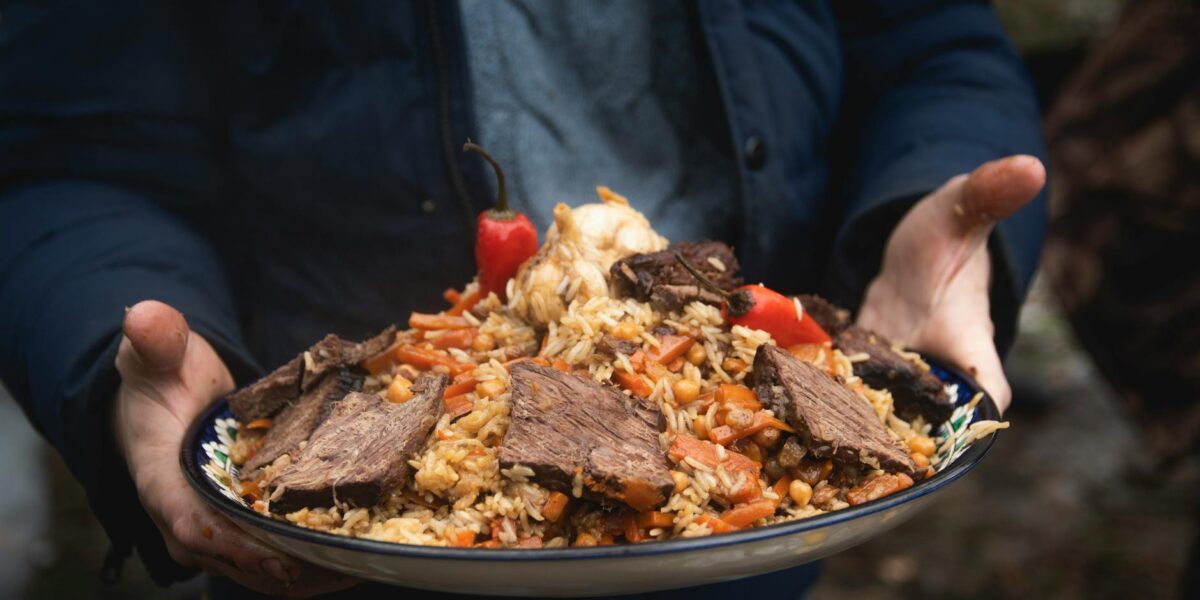
Plov is more than a dish — it’s a cultural institution. At its core, it’s rice cooked with meat, carrots, onions, and spices in a single kazan, but the technique involves building a flavor base called zirvak (caramelized onions and carrots fried in rendered fat), layering rice on top, and steaming everything together until the grains are separate, glistening, and deeply flavored. A skilled oshpaz (plov master) can cook plov for 1,000 people in a single enormous kazan over an open wood fire. Wedding plov, funeral plov, Thursday plov (a weekly tradition in many families) — there’s a version for every occasion. The best plov features a layer of crispy rice at the bottom called qazmol, similar to the Persian tahdig.
2. Shurpa — Hearty Meat and Vegetable Soup
Shurpa is a slow-simmered soup built on large chunks of bone-in mutton, potatoes, carrots, onions, tomatoes, and peppers. Unlike refined consommés, shurpa celebrates big, rustic cuts of meat and vegetables that hold their shape through long cooking. The broth is deeply savory from the marrow and fat, and seasoned simply with salt, black pepper, and fresh herbs. It’s typically served in deep bowls with fresh non bread for dipping.
3. Manti — Steamed Dumplings
Uzbek manti are large steamed dumplings filled with spiced minced mutton (or beef) and onions, sometimes with pumpkin added for sweetness. They’re steamed in a multi-tiered steamer called a mantovarka (similar to a bamboo steamer but metal) and served with a dollop of sour cream or a tomato-based sauce. The dough is rolled thin, and proper manti should be juicy inside with the meat releasing its broth when you bite through the wrapper. They’re a beloved comfort food and a test of any home cook’s skill.
4. Samsa — Tandoor-Baked Pastries
Samsa (related to the Indian samosa but distinctly different) are triangular or round pastries filled with spiced meat, onions, and sometimes pumpkin, then baked directly on the inside wall of a tandoor oven. The result is a flaky, layered pastry with a crisp exterior and juicy interior. Street vendors sell them fresh from the oven throughout the day, and the best versions have layers of pastry as delicate as puff pastry, achieved by brushing dough with rendered fat between folds.
5. Lagman — Hand-Pulled Noodle Soup
Lagman showcases Uzbekistan’s position between East and West. These hand-pulled noodles — stretched, twisted, and slapped against the counter until they reach the perfect chewy texture — are served in a rich tomato-and-meat sauce loaded with bell peppers, onions, garlic, and celery. The dish exists on a spectrum from soupy (served in broth) to dry (qavurma lagman, more like a stir-fry), with the Fergana Valley producing what many consider the best versions. The noodle-pulling technique is mesmerizing to watch and requires years of practice to master.
6. Tandir Kabob — Clay Oven Roasted Meat
Tandir kabob involves marinating large cuts of lamb (often a whole leg) with onions, salt, and cumin, then lowering them into a tandoor oven to roast slowly in radiant heat. The meat emerges fall-off-the-bone tender with a smoky crust. This is celebration food — prepared for weddings, holidays, and special gatherings. The technique is ancient, predating written recipes, and the simplicity of the seasoning lets the quality of the meat speak for itself.
7. Norin (Naryn) — Cold Noodle and Horse Meat Dish
Norin is one of Uzbekistan’s most unusual dishes for Western palates. Paper-thin hand-rolled noodles are mixed with finely shredded boiled horse meat (or sometimes mutton), raw onions, and a generous amount of black pepper. It’s served at room temperature and has an austere, elegant simplicity — just four or five ingredients combined with precision. Norin is a Tashkent specialty and reflects the nomadic heritage of using every part of the animal. It’s traditionally served with a rich meat broth on the side.
8. Chuchvara — Tiny Boiled Dumplings
If manti are Uzbekistan’s large dumplings, chuchvara are their delicate counterpart — tiny parcels of dough filled with seasoned minced meat, boiled and served in a light broth or with sour cream. Making chuchvara is a communal activity, often involving the whole family gathered around a table folding dozens of tiny dumplings. The small size means more surface area of dough to filling, making the texture and thickness of the wrapper critical. A skilled cook can fold hundreds in an hour.
9. Dimlama — Layered Meat and Vegetable Stew
Dimlama is the ultimate one-pot meal. Layers of meat, potatoes, carrots, onions, tomatoes, cabbage, and peppers are stacked in a heavy pot, sealed tightly, and left to steam in their own juices over low heat for several hours. No water is added — the vegetables release enough liquid to create the braising medium. The result is incredibly tender meat and vegetables that have melded together into something greater than the sum of their parts. It’s a practical dish with roots in nomadic cooking, where fuel conservation meant everything cooked in a single vessel.
10. Halim (Haleem) — Wheat and Meat Porridge
Halim is a thick, porridge-like dish made by slow-cooking wheat berries with meat (usually beef or lamb) until both break down into a creamy, unified mass. It’s seasoned with black pepper and served with a drizzle of oil and fresh herbs. Halim is traditional Navruz (spring equinox) food, and making it properly requires hours of stirring — a meditative, communal process. The dish has clear parallels to Persian haleem and South Asian haleem, reflecting the deep historical connections across the region.
11. Mastava — Rich Rice Soup
Mastava sits between shurpa and plov — a hearty rice soup cooked with meat, vegetables, and chickpeas in a rich broth. It’s thicker than shurpa, with the rice providing body, and finished with a dollop of sour cream (qatiq) and fresh herbs. Mastava is popular in the Fergana Valley as a warming winter dish and is often the first thing served to guests when they arrive at a home. It’s less well-known internationally than plov or shurpa but is deeply beloved within Uzbekistan.
12. Non (Lepyoshka) — Tandoor Bread
While technically not a ”dish,” non is so central to Uzbek food culture that no guide would be complete without it. These round flatbreads are baked on the inner wall of a tandoor oven, emerging with a soft, pillowy center and a crisp, golden crust stamped with intricate patterns using a chekich (bread stamp). Non is treated with deep respect in Uzbek culture — it’s never placed upside down, never cut with a knife (always broken by hand), and is the first thing served and last thing cleared from any table. Each city and region has its own style, and skilled bakers (nonvoy) are highly respected.
Uzbek Cooking Techniques
Uzbek cuisine relies on a handful of techniques perfected over centuries. Understanding these methods is key to recreating authentic flavors at home.
Kazan Cooking
The kazan — a thick, cast-iron, wok-shaped pot — is the most important cooking vessel in Uzbek cuisine. Its shape concentrates heat at the bottom while the sloped sides allow ingredients to be pushed up and out of the oil. Every plov, lagman, and shurpa begins in a kazan. The technique involves heating oil or rendered fat to very high temperatures, searing meat until deeply browned, then building the zirvak (flavor base) of onions and carrots in the same fat. The kazan’s thermal mass ensures even cooking and prevents hot spots. If you’re serious about Uzbek cooking at home, investing in a quality cast-iron kazan (or using a heavy Dutch oven or wok) is essential.
Tandoor Baking
The Uzbek tandoor (tandir) is a vertical clay oven heated by charcoal or wood fire at the bottom. Bread dough is slapped directly onto the inside walls, where it bakes in the radiant heat in just a few minutes. Meats are suspended from hooks or placed on grates inside. The tandoor reaches temperatures exceeding 400°C (750°F), creating the characteristic charred spots and smoky flavor of Uzbek non and samsa. Home cooks without a tandoor can approximate the results using a pizza stone in a conventional oven set to its highest temperature, or by using a clay pot technique.
Open-Fire Cooking
Much of Uzbekistan’s most impressive cooking happens outdoors over wood fires. Wedding plov for hundreds of guests is cooked in kazans that can be two meters across, set over log fires that are carefully managed to control temperature throughout the hours-long cooking process. The oshpaz (plov master) reads the fire, the steam, and the sound of the rice to know exactly when each stage is complete. This open-fire tradition is similar in spirit to Japanese charcoal grilling, though the techniques and equipment differ entirely.
Steaming
Steaming is the preferred method for Uzbek dumplings. The mantovarka (a multi-tiered metal steamer) allows dozens of manti to cook simultaneously. The technique requires greasing each tier to prevent sticking and maintaining a consistent steam throughout the 40–45 minute cooking time. The goal is dough that’s cooked through but still has some chew, encasing a filling that’s released its juices into a flavorful broth trapped inside each dumpling.
Uzbek Food vs. Other Central Asian Cuisines
Central Asia’s cuisines share common ingredients and techniques, but each country has developed distinct specialties. Here’s how Uzbek food compares to its neighbors.
| Feature | Uzbek Cuisine | Kazakh Cuisine | Kyrgyz Cuisine | Tajik Cuisine |
|---|---|---|---|---|
| Signature Dish | Plov (rice pilaf) | Beshbarmak (boiled meat with noodles) | Beshbarmak (similar to Kazakh) | Qurutob (bread in yogurt sauce) |
| Primary Starch | Rice (plov culture) | Wheat noodles, bread | Wheat noodles, bread | Bread, rice |
| Cooking Fat | Sheep tail fat, cottonseed oil | Horse fat, sheep fat | Sheep fat, yak butter | Cottonseed oil, sheep fat |
| Key Spice | Cumin (zira) | Black pepper, minimal spice | Minimal spice | Cumin, turmeric |
| Bread Culture | Elaborate tandoor-baked non with stamped patterns | Baursak (fried dough) | Boorsok (fried dough) | Non (similar to Uzbek, less elaborate) |
| Noodle Tradition | Strong (lagman, norin, chuchvara) | Moderate (beshbarmak noodles) | Moderate (similar to Kazakh) | Moderate (ugro, lagman) |
| Dairy Use | Moderate (qatiq/yogurt as condiment) | Heavy (kumis, shubat, qurt) | Heavy (kumis, jarma) | Heavy (qurot, chakka) |
| Horse Meat | Limited (norin, kazy sausage) | Central (many dishes) | Common | Rare |
| UNESCO Recognition | Plov culture recognized 2016 | None for food | None for food | None for food |
The most significant distinction is Uzbekistan’s rice culture. While neighboring cuisines lean heavily on noodles and bread as their primary starches, Uzbek cuisine elevated rice cookery to an art form through plov — a dish so central to the culture that it has its own professional class of cooks (oshpaz), its own ceremonial traditions, and UNESCO heritage status.
Tea Culture and the Chaykhana Tradition
Tea in Uzbekistan isn’t just a beverage — it’s a social institution. The chaykhana (teahouse) functions as a community center, meeting place, and dining hall, particularly for men. Green tea (ko’k choy) dominates in Tashkent and most of the country, while black tea (qora choy) is preferred in Samarkand and the Fergana Valley.
Tea service follows a specific ritual. The first cup poured from the pot is returned to it three times — a practice called kaytar — to ensure the tea is evenly steeped. Tea is served in small, handleless bowls called piyola, filled only halfway as a sign of respect (a full bowl implies you want the guest to finish quickly and leave). Meals begin and end with tea, and it’s offered to every visitor to a home regardless of the time of day.
Alongside tea, the dastarkhan (tablecloth or spread) is laid with dried fruits, nuts, sweets, and non before any main dish appears. This abundance of the table is a core value in Uzbek hospitality — the dastarkhan should never look empty.
Bread Culture: The Sacred Non
Bread holds a spiritual significance in Uzbek culture that goes beyond nutrition. Non is considered a gift from God, and wasting it is considered deeply disrespectful. Specific traditions govern its treatment: non is always placed face-up on the table, torn by hand rather than cut with a knife, and the person who breaks the first piece offers a prayer. When someone leaves for a journey, they bite a piece of non that’s then stored until their return — a symbolic promise of homecoming.
The varieties of non are extensive. Obi non is the everyday round bread with a depressed center, baked in the tandoor. Patir non is enriched with butter or fat, making it richer and flakier. Qatlama is a layered bread similar to a paratha, with rendered fat brushed between the layers. Each city has signature non styles, and skilled nonvoy (bakers) are celebrities in their communities. Bukhara’s non is said to stay fresh for days due to its specific flour blend and baking technique, while Samarkand’s non is famous for its intricate stamped patterns.
Uzbek Meal Structure and Dining Etiquette
A traditional Uzbek meal follows a specific progression that reflects the culture’s emphasis on hospitality and abundance.
The dastarkhan opening: Before guests sit down, the table is spread with non, bowls of dried fruits and nuts, fresh fruits, sweets, and salads (particularly achichuk). Tea is served immediately.
Soups: Shurpa or mastava is served as the first hot course, with non for dipping.
Main course: Plov or another main dish is brought out on large communal platters. Traditionally, plov is eaten by hand or with a spoon from a shared dish, though individual portions are common in restaurants.
Tea and sweets: The meal concludes with more tea and possibly halva, fruits, or other sweets.
Etiquette tips: Remove shoes when entering a home. Wash hands before and after eating (a pitcher of water and basin are traditionally provided). Accept at least a small portion of everything offered — refusing food is considered impolite. The eldest or most honored guest is served first and seated farthest from the door.
Cooking Uzbek Food at Home: Meal Planning Tips
You don’t need a tandoor or a two-meter kazan to enjoy Uzbek cooking at home. Here’s how to approach it practically.
Start with Plov
Plov is the gateway dish. You’ll need: lamb or beef (bone-in shoulder or leg cuts work best), carrots (yellow if you can find them, orange is fine), onions, rice (basmati or medium-grain), cumin seeds, and oil or butter. A Dutch oven or heavy-bottomed pot substitutes for a kazan. The key technique is building the zirvak — fry onions until deeply golden, add carrots and meat, then layer washed rice on top without stirring. Cover and steam until the rice is done. Start here, and you’ll understand the flavor profile of the entire cuisine.
Substitutions That Work
Sheep tail fat: Use a combination of vegetable oil and a tablespoon of butter. Not identical, but captures some of the richness. Devzira rice: Basmati or any medium-grain rice works well. Soak it for 30 minutes before cooking. Yellow carrots: Orange carrots are fine; cut them into thin matchsticks rather than grating them. Tandoor: A pizza stone in an oven at maximum temperature (250°C/500°F+) produces decent non. Cast-iron skillets also work for flatbreads.
Weekly Meal Plan: Uzbek Style
Monday: Shurpa — make a big pot; it reheats well the next day. Tuesday: Lagman — practice hand-pulling noodles, or use store-bought thick wheat noodles as a shortcut. Wednesday: Manti — make extra and freeze them uncooked. Thursday: Plov — following the traditional Thursday plov custom many Uzbek families observe. Friday: Samsa — if you don’t have a tandoor, bake them in a hot oven on a pizza stone. Weekend: Dimlama — layer everything in a pot and let it cook slowly while you relax. Serve with achichuk salad and fresh non.
Where to Find Uzbek Food in the United States
The Uzbek food scene in America has grown significantly. New York City leads the way, with a concentration of Uzbek restaurants in Brooklyn (particularly along the Brighton Beach and Sheepshead Bay corridor) and Queens (Rego Park and Forest Hills, home to a large Bukharan Jewish community). These neighborhoods offer some of the most authentic Uzbek food outside of Central Asia, from hole-in-the-wall samsa shops to elaborate banquet halls serving wedding-style plov.
Other cities with notable Uzbek restaurant scenes include: Philadelphia, Chicago, Dallas, Atlanta, and the San Francisco Bay Area. The ”uzbek food near me” search trend has grown steadily over the past five years, reflecting increasing American curiosity about Central Asian cuisine. Many Uzbek restaurants also serve broader Central Asian and Russian menus, so look for places that specifically highlight plov, manti, and samsa rather than just ”Russian-Central Asian” generalists.
Uzbek Ingredients You Can Buy Online
Building an Uzbek pantry is easier than you might think. Cumin seeds, coriander seeds, and chickpeas are available at any grocery store. For specialty items like devzira rice, barberries, black cumin seeds, and dried fruits, check Central Asian or Middle Eastern online retailers. Many of the core Asian cooking ingredients you may already have — including cumin, coriander, and quality rice — overlap with Uzbek pantry staples.
For lamb and mutton, seek out halal butchers who can provide the fatty, bone-in cuts that Uzbek cooking demands. Ask specifically for shoulder, neck, and shank cuts — and if they have sheep tail fat (dumba), buy it. It freezes well and transforms plov from ”good” to ”authentic.”
Frequently Asked Questions About Uzbek Food
What is the most famous Uzbek dish?
Plov (also spelled palov or osh) is Uzbekistan’s most famous dish and national icon. It’s a rice pilaf cooked with meat, carrots, onions, and spices in a single pot called a kazan. UNESCO recognized Uzbek plov culture as an Intangible Cultural Heritage of Humanity in 2016. There are over 200 regional varieties across the country.
Is Uzbek food spicy?
Uzbek food is aromatic and well-seasoned but generally not hot-spicy. The dominant spices are cumin, coriander, and black pepper — flavorful but not fiery. Unlike Sichuan cuisine or Thai food, Uzbek cuisine rarely uses chili peppers as a core seasoning. The heat level is mild enough for most palates, making it an approachable cuisine for people who are sensitive to spicy food.
Is Uzbek food halal?
Yes. Uzbekistan is a predominantly Muslim country, and traditional Uzbek cuisine follows halal principles. Pork is not used, and lamb/mutton is the preferred protein. Alcohol is not part of traditional food culture, though it is available in restaurants. The major exception is the Bukharan Jewish community, which has its own kosher adaptations of Uzbek dishes.
What is the difference between plov and pilaf?
Plov is technically a type of pilaf, but the Uzbek version is distinguished by its specific technique: building a zirvak (caramelized base of onions, carrots, and meat in rendered fat), layering rice on top without stirring, and steaming until done. Many pilaf traditions around the world toast rice in fat first; Uzbek plov relies instead on the zirvak to infuse the rice with flavor from below. The use of sheep tail fat, cumin, and specific rice varieties (like devzira) also sets it apart.
Can I make Uzbek food without lamb?
Absolutely. While lamb and mutton are traditional, beef is commonly used throughout Uzbekistan as well. Chicken works in dishes like plov and shurpa, though the flavor profile will be lighter. For vegetarian options, plov can be made with just carrots, chickpeas, and raisins (called ”lean plov”), and many side dishes like achichuk salad and non bread are naturally meat-free.
What equipment do I need to cook Uzbek food?
At minimum, you need a large, heavy-bottomed pot with a tight-fitting lid — a Dutch oven works perfectly as a kazan substitute. A large skillet or well-seasoned wok helps for quick frying. For manti, any multi-tiered steamer works (metal or bamboo). A rolling pin and flat surface are essential for noodles and dumpling wrappers. No specialized equipment is strictly necessary to start cooking Uzbek food at home.
How is Uzbek food different from Turkish food?
While both cuisines share Turkic roots, they’ve evolved in very different directions. Turkish cuisine incorporates Mediterranean ingredients (olive oil, tomatoes, seafood) and techniques (grilling, baking), while Uzbek cooking centers on Central Asian staples (animal fat, cumin, rice pilaf). Turkish food uses more vegetables and has a wider range of cold appetizers (meze), while Uzbek food is more meat-and-grain focused. The bread traditions are different too — Turkish pide and simit versus Uzbek tandoor-baked non.
What desserts are popular in Uzbekistan?
Uzbek desserts tend toward the simple and fruit-forward. Fresh melons (Uzbekistan grows some of the world’s best), dried fruits, and nuts are the most common way to end a meal. Halva — a dense, sweet confection made from flour, sugar, and fat — is popular, as is navat (crystallized sugar served with tea). Sumalak, a wheat sprout pudding made for Navruz celebrations, is a unique seasonal sweet that requires communal overnight cooking. Chak-chak (fried dough with honey) and parvarda (pulled sugar candy) are other traditional options.
The Future of Uzbek Food
Uzbek cuisine is at an inflection point globally. As diners seek out authentic, regional cuisines beyond the familiar categories of Chinese, Japanese, and Thai, Central Asian food — and Uzbek food in particular — is positioned for significant growth. The cuisine’s strengths align perfectly with current dining trends: communal eating, nose-to-tail cooking, ancient grains, fermented dairy, and spectacular open-fire techniques.
Within Uzbekistan itself, a new generation of chefs is working to document and elevate traditional recipes while exploring creative interpretations. The country’s growing tourism industry (Samarkand and Bukhara are increasingly popular destinations) introduces more international visitors to the food, creating demand back home.
For home cooks, Uzbek food offers something genuinely different from most Asian cuisines you’ve likely explored. The flavor profiles — cumin-forward, rich with rendered fat, built on the caramelization of simple ingredients — don’t overlap with the soy-ginger-sesame world of East Asian cooking or the coconut-lemongrass-chili palette of Southeast Asian food. If you’re looking to expand your repertoire into truly unfamiliar territory while using techniques (braising, steaming, bread-baking) you already know, Uzbek cuisine is where to start.

Mei Lin Chen
Mei Lin Chen is an Asian food writer and recipe developer. Melbourne-raised and London-based, she has spent over a decade exploring the rice paddies, hawker stalls, and home kitchens of South-East and East Asia. Her recipes balance traditional technique with everyday practicality.