Last Updated: March 23, 2026
Our bibimbap recipe puts every element of Korea’s most iconic mixed rice dish in your hands — from the perfectly seasoned namul toppings to the gochujang sauce ratio that makes the difference between a flat bowl and a genuinely memorable one.
Key Takeaways
- Bibimbap (비빔밥) means ”mixed rice” — the name describes both the dish and the experience of eating it.
- Five classic namul toppings — spinach, bean sprouts, carrots, zucchini, and shiitake mushrooms — give the bowl its character.
- The gochujang sauce ratio (2 tbsp gochujang : 1 tbsp sesame oil : 1 tbsp sugar : 1 tbsp water) is the foundation of authentic flavor.
- Dolsot (stone pot) creates a crispy rice crust called nurungji; a regular bowl skips the crust but is equally delicious.
- Namul can be made two days ahead — this dish rewards prep.
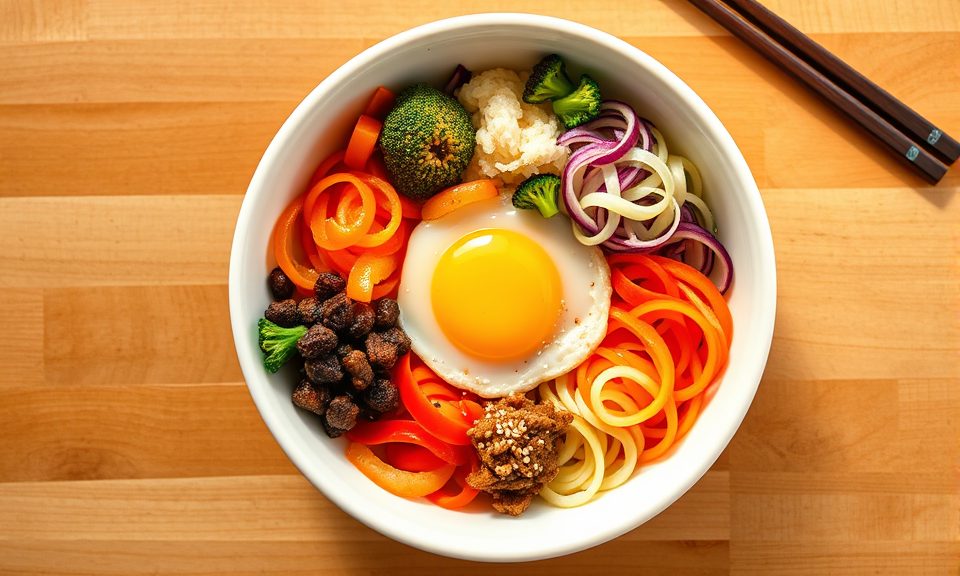
What Is Bibimbap? The Korean Mixed Rice Bowl Explained
The Meaning Behind the Name
The Korean word bibimbap (비빔밥) breaks down simply: bibim (비빔) means ”mixed” and bap (밥) means ”rice.” Think of it as a culinary contract — the dish only becomes itself once everything in the bowl has been stirred together at the table. That act of mixing is not incidental; it is the point. Every component is prepared and arranged separately so that the diner controls the final flavor balance.
The name also carries a cultural philosophy. In Korean food tradition, balance across taste categories — salty, sweet, sour, bitter, spicy — is central to a well-constructed meal. Bibimbap is perhaps the cleanest expression of that principle: five colors, five flavors, five textures, resolved in a single bowl. This five-element framework mirrors the traditional obangsaek (오방색), the five cardinal colors of Korean culture, which represent balance and harmony.
Historical records from the Joseon Dynasty, as far back as the 19th century, document a mixed rice dish that closely resembles modern bibimbap. The dish was also prepared as a practical solution on the eve of the Lunar New Year, when households needed to clear their refrigerators before the new year began — a frugal, resourceful origin story that still resonates today.
Jeonju: The Birthplace of Bibimbap
Jeonju became a UNESCO Creative City of Gastronomy in 2012, a designation that reflects the city’s centuries-long commitment to food culture. Bibimbap sits at the center of that identity. The city hosts an annual Jeonju Bibimbap Festival, and the Bibimbap Globalization Foundation is headquartered there to promote the dish internationally. When food historians and Korean chefs discuss ”authentic” bibimbap, they almost always look to Jeonju as the reference point.
The Jeonju version has two defining characteristics that separate it from all other regional styles. First, the rice: Jeonju bibimbap uses locally grown short-grain rice, cooked in beef bone broth rather than plain water, giving the grains a subtle richness before a single topping has been added. Second, the protein: instead of cooked beef, traditional Jeonju bibimbap uses yukhoe (육회), raw beef tartare seasoned with pear juice, sesame oil, and garlic. This is not a common ingredient in everyday kitchens, and we offer alternatives in the recipe below, but understanding it explains why Jeonju’s version tastes different from what you find elsewhere.
The city’s reputation is backed by numbers. A 2023 survey by the Korea Food Culture Foundation found bibimbap ranked among the top three Korean dishes most recognised internationally — alongside kimchi and bulgogi. Jeonju’s role in defining that recognition cannot be overstated.
Dolsot Bibimbap vs. Regular Bowl Bibimbap
The single biggest technical decision in making bibimbap is whether to use a dolsot (돌솥), the heavy stone pot, or a regular serving bowl. Both produce excellent results; the choice depends on texture preference and equipment.
| Feature | Dolsot (Stone Pot) | Regular Bowl |
|---|---|---|
| Heat Retention | Stays hot 20–30 minutes after serving | Cools quickly |
| Rice Texture | Crispy nurungji crust at the bottom | Uniform, soft throughout |
| Sound | Sizzles dramatically at the table | Silent |
| Cooking Time | Adds 3–5 minutes for crust formation | Ready immediately on assembly |
| Equipment Needed | Oven-safe stone or cast iron bowl | Any serving bowl |
| Best For | Special occasions, textural contrast | Weeknight cooking, easy cleanup |
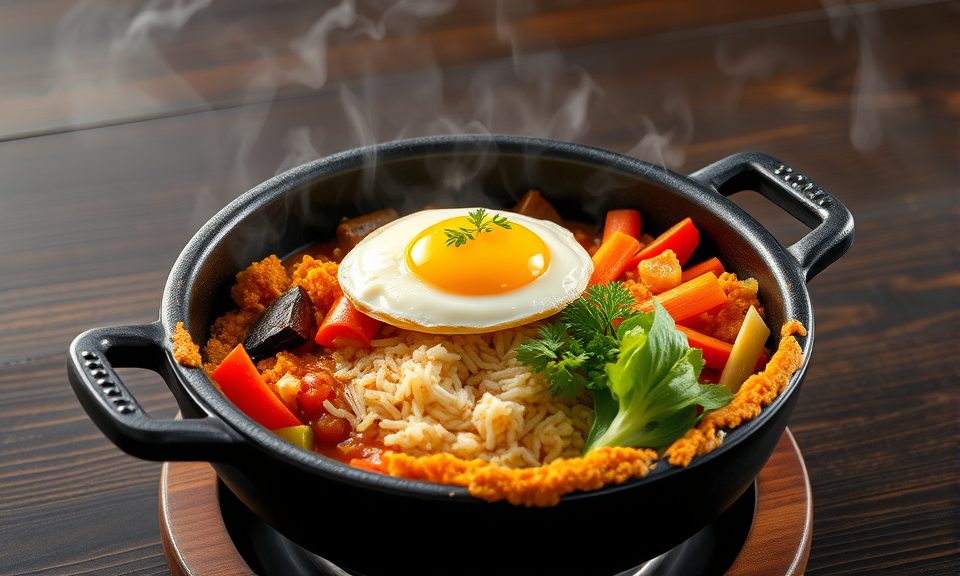
The nurungji crust that forms in a dolsot deserves its own mention. As the rice presses against the hot oil-coated stone, the grains at the base caramelise into a golden, crunchy layer with a toasted, nutty flavour. In Korea, this crust is so prized that nurungji soup — made by pouring boiling water over the leftover crust in the pot — is itself a comfort food. If you own a stone pot or a cast iron pan, the dolsot method is worth the extra few minutes.
The Ingredients You Need for Authentic Bibimbap
The Rice Foundation
Short-grain white rice is the correct choice for bibimbap. Its higher starch content gives it the slight stickiness needed to hold the toppings in place when the bowl is assembled. Long-grain varieties like jasmine or basmati behave differently and tend to fall apart when mixed with the sauce. For a healthier version, brown short-grain rice works well — the nutty flavour adds depth, though cooking time increases to around 40 minutes.
We use the absorption method: 2 cups of rice with 2.5 cups of water. Bring to a full boil, reduce heat to the lowest setting, cover tightly, and cook for 18 minutes. After the heat is off, the rice rests covered for another 10 minutes. This resting period is not optional — it allows the steam inside to redistribute moisture evenly, producing grains that are fluffy throughout rather than wet on top and dry underneath. Visit our guide on how to cook rice perfectly for a full breakdown of the method and common mistakes to avoid.
The quantity matters for bibimbap specifically. We aim for a generous cup of cooked rice per person as the base, enough to anchor all five namul toppings without the bowl becoming overwhelmed. If the rice layer is too thin, the toppings fall into each other during assembly and the pinwheel presentation is lost.
The Five Essential Namul (Seasoned Vegetables)
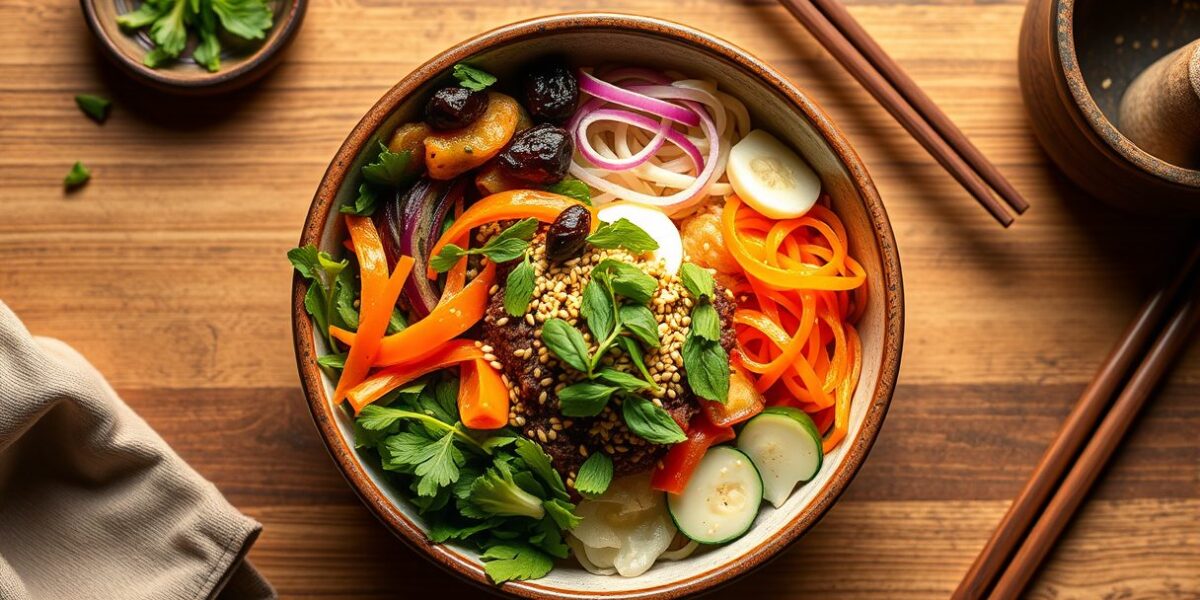
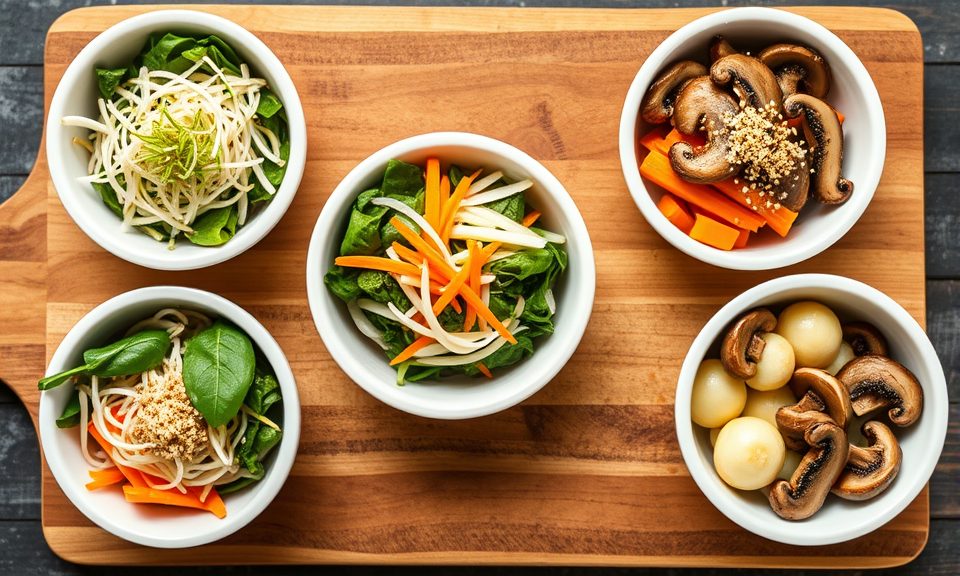
The five classic namul in bibimbap are spinach (sigeumchi, 시금치), bean sprouts (kongnamul, 콩나물), carrots (danggeun, 당근), zucchini (hobak, 호박), and shiitake mushrooms (pyogo beoseot, 표고버섯). Each is prepared and seasoned individually before being arranged in the bowl. This separateness is intentional — the diner sees and tastes each component before the final mix unifies them.
The seasoning thread through all five is consistent: sesame oil, a touch of soy sauce, minced garlic, and toasted sesame seeds. This creates flavour cohesion without making everything taste identical. The spinach is tender and garlicky; the bean sprouts are crisp and clean; the carrots bring sweetness; the zucchini is mild and buttery; the mushrooms contribute umami depth. Together, they function as a quintet — each voice distinct, the whole richer than any single part.
A practical note on colour: when arranged in the bowl, these five vegetables naturally form the obangsaek palette — green (spinach), white (bean sprouts), orange-red (carrots), yellow-green (zucchini), and dark brown (mushrooms). This is not an accident of tradition but a conscious design that has been maintained for generations.
The Protein Options
Traditional Jeonju bibimbap uses yukhoe (raw beef tartare), but for home cooking we recommend thinly sliced beef — ribeye or sirloin — briefly marinated and pan-fried at high heat. The marinade is minimal: 1 tsp soy sauce, ½ tsp sesame oil, ½ tsp sugar. The beef cooks in two to three minutes and contributes protein, iron, and the savoury richness that ties the bowl together.
For a vegetarian approach, a fried egg is the most common substitute, and it works well. The runny yolk acts as a secondary sauce when broken, adding creaminess that compensates for the absence of meat. Tofu — either firm and pan-fried or silken and served cold — is another option with clean flavour that doesn’t compete with the namul. Our broader Asian recipe collection includes several plant-based Korean dishes if you want to build a fully vegetarian Korean menu.
From a nutritional standpoint, a balanced bibimbap bowl delivers roughly 520 calories per serving, with a protein content of around 20 percent of total calories. Harvard Health Publishing has highlighted the structure of mixed grain-and-vegetable bowls as a practical model for varied nutrient intake — bibimbap, with its combination of complex carbohydrates, lean protein, and a wide range of vegetables, fits that model well.
The Gochujang Sauce
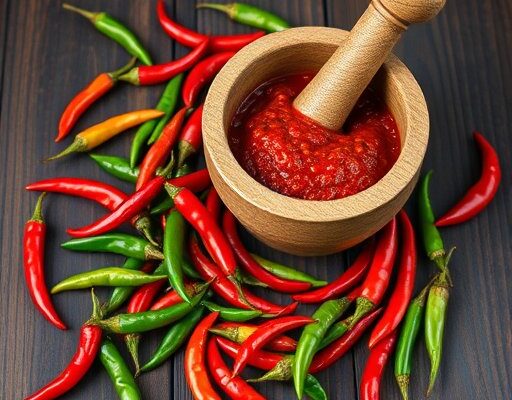
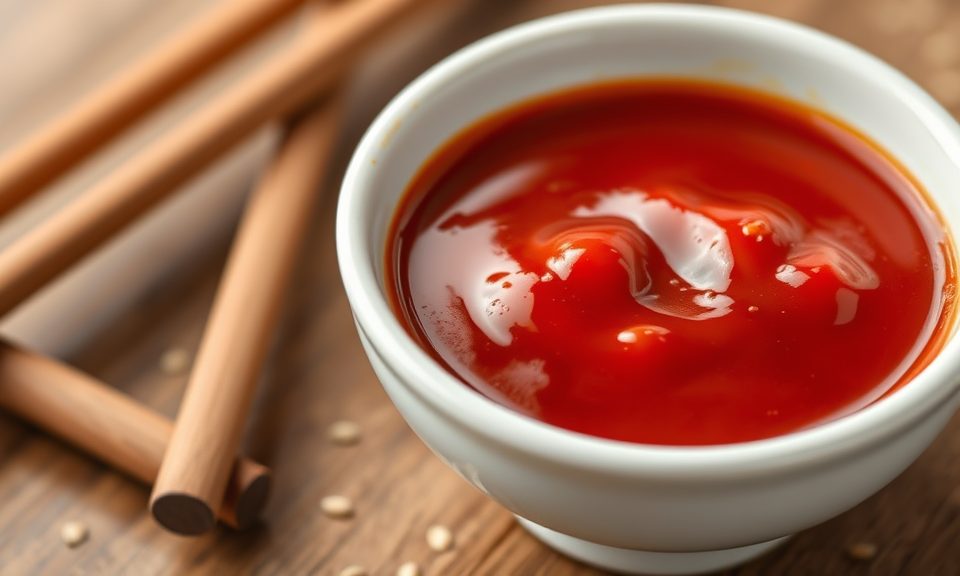
The sauce is where the dish becomes unmistakably Korean. Gochujang (고추장) is a fermented red chili paste made from dried red peppers, glutinous rice, and fermented soybeans. Its flavour is not simply hot — it is sweet, salty, umami, and fermented all at once. That complexity is what makes it irreplaceable. Browse our Asian cooking ingredients guide for sourcing tips and substitution guidance.
The standard ratio we use, drawn from traditional practice: 2 tablespoons gochujang, 1 tablespoon sesame oil, 1 tablespoon sugar, 1 tablespoon water, 1 teaspoon rice vinegar, and 1 teaspoon minced garlic. This produces a sauce that is thick enough to coat the rice without thinning the bowl, sweet enough to balance the chili heat, and acidic enough to cut through the sesame oil. Adjust the gochujang quantity to control heat level — start with 1 tablespoon if you are new to the ingredient.
The sauce keeps refrigerated for up to a week and actually improves after a day as the garlic integrates further. Many Korean households keep a jar on hand at all times — it doubles as a dipping sauce for vegetables and a marinade for grilled proteins.
How to Prepare the Namul Toppings
Spinach Namul (Sigeumchi)
Bring a pot of lightly salted water to a full boil, then blanch the baby spinach for exactly 30 seconds. Any longer and the leaves lose their bright green colour and begin to taste of boiled vegetables rather than fresh greens. Transfer immediately to a bowl of cold water to stop the cooking, then drain and squeeze firmly to remove as much water as possible — this step determines whether the namul seasons properly or waters down the sauce.
Season the squeezed spinach with half a teaspoon of sesame oil, half a teaspoon of soy sauce, half a teaspoon of minced garlic, and a pinch of toasted sesame seeds. Use your hands to work the seasoning through the spinach, separating any clumps so every strand is coated. The final texture should be tender but not limp, and the flavour should be clearly garlicky with a background of toasted sesame.
This namul is the one most prone to error because the blanching window is so narrow. We recommend doing it last among the vegetables, just before assembly, to preserve the brightest colour. If you make it ahead, store it in a sealed container and bring it to room temperature before serving — cold spinach fresh from the fridge deadens the flavour.
Bean Sprout Namul (Kongnamul)
Bean sprouts require two minutes of blanching to soften their raw edge while retaining the crisp snap that makes them appealing. Under-blanched sprouts taste harsh and grassy; over-blanched ones turn translucent and mushy. Two minutes in boiling water, then into cold water immediately, is the reliable target.
After draining, apply the same seasoning as the spinach — sesame oil, soy sauce, minced garlic, sesame seeds. Bean sprouts absorb seasoning more readily than spinach, so use a slightly lighter hand with the soy sauce unless you want a saltier note. Some cooks add a few drops of rice vinegar to the bean sprout namul specifically, which lifts the flavour and prevents the slightly sulphurous smell that raw sprouts can carry.
Bean sprouts are among the most nutritionally dense components in the bowl. They provide vitamin C, folate, and a notable amount of fibre relative to their calorie count, making them one of the reasons bibimbap holds up well nutritionally despite feeling like a rich, indulgent dish.
Carrot, Zucchini, and Mushroom Namul
Carrots and zucchini are sautéed separately — this matters because they have different moisture content and texture goals. Julienne the carrot into thin matchsticks about 5 cm long and 2 mm wide. Heat half a teaspoon of sesame oil in a pan over medium-high heat, add the carrots with a pinch of salt, and cook for two to three minutes, tossing frequently. The carrot should soften slightly at the edges but retain a light crunch in the centre.
Zucchini releases significant moisture during cooking. Julienne the zucchini slightly thicker than the carrot, season with a pinch of salt, and let it sit for five minutes before cooking — this draws out excess water. Sauté for two to three minutes. If water pools in the pan, remove the zucchini and let it drain briefly on kitchen paper before plating. This keeps the bowl dry and the presentation clean.
Shiitake mushrooms are the umami anchor of the five namul. Slice them thinly and cook in half a teaspoon of sesame oil with one teaspoon of soy sauce over medium heat for four to five minutes until they are tender and slightly caramelised at the edges. Dried shiitakes, reconstituted in water for 20 minutes and then cooked, develop an even deeper flavour — the soaking liquid can be added to rice water or soup.
How to Make Bibimbap Step by Step
Cooking the Rice
Rinse the rice under cold running water, agitating with your hand, until the water runs clear. This removes excess surface starch that would otherwise make the cooked rice gummy. Transfer to a heavy-bottomed pot, add 2.5 cups of cold water, and bring to a full rolling boil over high heat. As soon as the water boils, reduce heat to the lowest possible setting, cover with a tight-fitting lid, and cook for 18 minutes without lifting the lid.
The temptation to check the rice mid-cook is real — resist it. Every time the lid is lifted, steam escapes and the cooking process is disrupted. After 18 minutes, remove the pot from heat while keeping the lid on, and allow the rice to rest for 10 minutes. This standing time is where the rice finishes cooking in its own steam. When you finally uncover it, use a rice paddle or spatula to gently fold the rice from the bottom up, aerating it slightly before serving.
For the dolsot method, use rice that has rested for at least five minutes before assembly. Slightly cooled rice compresses and browns faster against the hot stone, which is what you want for nurungji formation. Very fresh, hot rice tends to steam rather than crisp when it hits the heated pot.
Making the Gochujang Sauce
Combine 2 tablespoons gochujang, 1 tablespoon sesame oil, 1 tablespoon sugar, 1 tablespoon water, 1 teaspoon rice vinegar, and 1 teaspoon minced garlic in a small bowl. Whisk until the sugar has fully dissolved and the mixture is smooth and glossy. Let it rest for five minutes before serving — the garlic mellows slightly and the flavours merge.
Taste the sauce and adjust: more gochujang for heat, more sugar to balance spice, more vinegar for brightness. A small amount of toasted sesame seeds stirred in at the end adds texture and a pleasant nuttiness. The sauce keeps refrigerated for up to a week and improves after a day as the garlic integrates further.
One important serving note: the sauce goes on the side, not poured over the bowl pre-assembly. Each diner adds as much as they want and mixes it in themselves. This is both a practical choice — it keeps the bowl photogenic until the moment of eating — and a cultural one, respecting each person’s heat tolerance.
Assembling the Bowl (Regular and Dolsot Methods)
For a regular bowl: place a generous cup of warm rice as a flat base. Working clockwise, arrange the five namul in separate sections around the outer ring, each one touching but not overlapping its neighbor. This pinwheel arrangement is both beautiful and functional — it allows each component to be clearly identified before mixing begins. Place the cooked beef or fried egg in the centre, drizzle with a teaspoon of sesame oil, and scatter toasted sesame seeds and sliced green onion over everything. Serve with the gochujang sauce on the side.
For the dolsot method: heat the stone pot on the highest burner setting for three to four minutes until it is very hot. Add one teaspoon of sesame oil and swirl to coat the base. Add the rice, pressing it gently into an even layer. Arrange the namul over the rice as described above. Reduce heat to medium and cook for three to five minutes — you should hear a gentle sizzling within the first minute. When the sizzling becomes louder and you can smell a faint toasted aroma, the crust is forming. Place the fried egg on top, remove from heat, and bring the pot to the table.
To eat bibimbap correctly — if there is such a thing — mix vigorously until the sauce is fully incorporated and the rice, vegetables, and protein are evenly distributed. The dish does not reward careful, separate bites; it rewards the mix.
Bibimbap Variations and Regional Differences
Jeonju Bibimbap: The Gold Standard
Jeonju’s bibimbap stands apart from every regional variation for the reasons already described: broth-cooked rice and raw beef tartare. But there are additional nuances that the city’s version preserves. Jeonju cooks traditionally include a small amount of soybean sprout grown specifically in Jeonju, where the local water quality is said to affect the sprout’s texture and flavour. The city’s doenjang (fermented soybean paste) is also used in the bowl’s seasoning at a depth that differentiates it from standard versions.
Eating Jeonju bibimbap is typically accompanied by a side of doenjang jjigae (soybean paste stew), kimchi, and small side dishes. The meal framework treats bibimbap not as a standalone bowl but as the centrepiece of a spread. If you want to replicate the full Jeonju experience at home, serve our homemade kimchi alongside — the fermented acidity cuts through the richness of the sesame oil beautifully.
Jeonju’s preservation of this culinary tradition is why food historians cite it as the starting point for understanding bibimbap. The city’s residents view the dish as heritage, not nostalgia — it is eaten daily, not just at festivals, and the standard of preparation is held to collectively.
Seoul-Style Bibimbap
Seoul’s version has been shaped by urban convenience and the sheer diversity of its population. It drops the raw beef in favour of cooked bulgogi or simply a fried egg, uses a wider range of vegetables (whatever is seasonal), and is frequently served in the dolsot to compensate for the simplified topping list. The gochujang sauce is the same, but the bowl is often assembled at speed in restaurants with a rotating selection of namul rather than the fixed five.
Seoul-style bibimbap is the version most commonly encountered outside Korea, in Korean restaurants worldwide. It is more forgiving to prepare, more adaptable to dietary preferences, and faster to put together on a weeknight. For most home cooks, it is the practical starting point before exploring the more demanding Jeonju preparation.
The flexibility of Seoul-style bibimbap has also made it a canvas for variation. Some modern Seoul restaurants serve versions with kimchi fried rice as the base, or use avocado as one of the namul toppings. These adaptations have their place, but they work best when the gochujang sauce and the fundamental structure of the bowl remain intact.
Vegetarian and Modern Adaptations
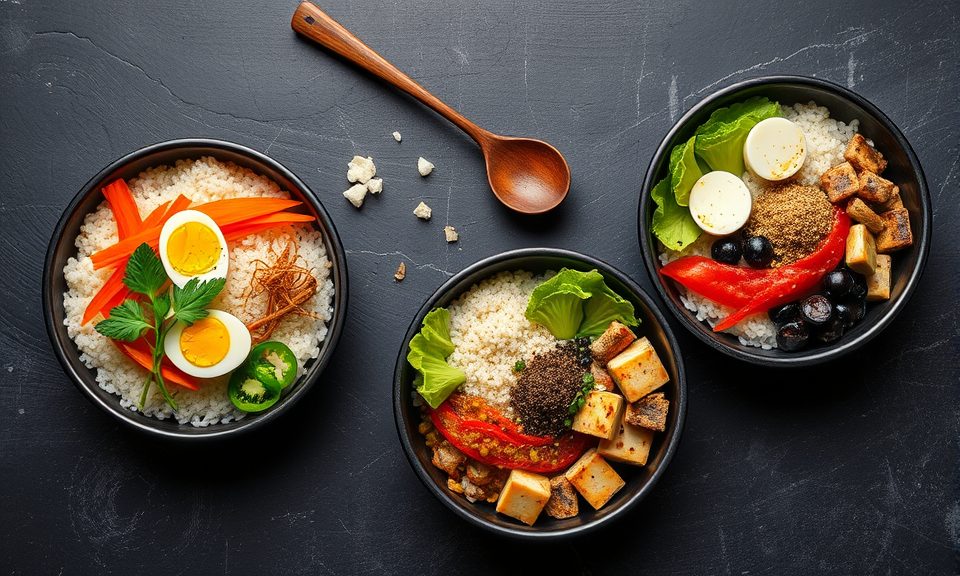
A fully vegetarian bibimbap — substituting the beef with extra vegetables, crispy tofu, or a double egg — works well because the dish’s architecture does not depend on meat for structural integrity. The five namul toppings carry more than enough flavour and texture on their own. Firm tofu, sliced and pan-fried in sesame oil until golden, provides a protein component with satisfying texture and neutral flavour that doesn’t compete with the gochujang sauce.
Modern adaptations have moved into grain bowl territory, replacing white rice with quinoa, brown rice, or cauliflower rice for a low-carb version. These substitutions change the dish’s texture significantly — quinoa, in particular, does not bind with the sauce the same way short-grain rice does — but the flavour framework remains recognisably bibimbap. For those exploring Korean cuisine broadly, our Korean recipes collection includes other dishes that pair naturally with bibimbap as part of a full spread.
The plant-based movement has embraced bibimbap specifically because it is inherently vegetable-forward. Removing meat from the bowl requires no structural creativity — the five namul were always the main event. The protein was always a supporting role, not the star.
Tips, Substitutions, and Make-Ahead Advice
Ingredient Substitutions
Gochujang is difficult to replicate exactly, but if unavailable: mix 1 tablespoon sriracha with 1 teaspoon miso paste and half a teaspoon of rice vinegar. The result lacks gochujang’s fermented sweetness but comes close enough for a weeknight. Avoid substituting with standard hot sauce alone — the dish will taste acidic and one-dimensional.
Short-grain rice can be substituted with medium-grain rice in a pinch; avoid long-grain varieties. Shiitake mushrooms can be replaced with king oyster mushrooms, oyster mushrooms, or cremini — each contributes slightly different texture but the same umami direction. For the beef marinade, tamari works as a soy sauce substitute for those avoiding gluten. Sesame oil is not easily substituted — it is the single ingredient that gives bibimbap its characteristic aroma, and no other oil replicates it.
If sesame allergy is a concern, toasted pumpkin seed oil shares some of the nuttiness, though the flavour profile is noticeably different. Use it sparingly in that case, and omit the sesame seeds throughout the namul preparation.
Make-Ahead Prep
The five namul toppings can be prepared up to two days in advance and stored separately in sealed containers in the refrigerator. Bring them to room temperature for 20 minutes before assembling — cold namul straight from the fridge dulls the flavour. The gochujang sauce improves with overnight resting and keeps for a week refrigerated.
Rice is best cooked fresh, but leftover rice works if reheated correctly. Add a teaspoon of water per cup of rice, cover loosely, and microwave for two minutes, then stir and rest for one minute. For the dolsot method, slightly stale day-old rice is actually preferable — lower moisture content means faster crust formation and a crisper nurungji.
The beef marinade can be prepared and the beef can be left marinating overnight, which deepens the flavour considerably. Marinated beef keeps in the fridge for up to 24 hours before cooking. This makes bibimbap well-suited for dinner parties where you want most of the work done in advance and assembly to take under 10 minutes.
Serving and Storage Tips
Bibimbap is best eaten immediately after assembly. The visual presentation of the separate toppings in the pinwheel arrangement lasts only until the dish reaches the table — which is part of the point. Photographing it before mixing is entirely reasonable. Waiting 20 minutes to eat it is not recommended.
Leftovers stored in the fridge can be repurposed as bibimbap fried rice the following day. Heat a pan with sesame oil, add the leftover mixed bowl, press flat, and fry without stirring for two to three minutes until a crust forms on the bottom. The result is a compressed, crispy version of the original that some argue improves on the dish itself.
Store each component separately if you plan to save leftovers for assembly later. Once the namul, rice, and sauce are combined, the moisture from the sauce changes the texture of everything within a few hours. Separated components keep well for 24–36 hours. Blanched namul can also be frozen for up to three months in sealed zip-lock bags — a useful shortcut for future bibimbap sessions.
FAQ
What does bibimbap mean in English?
Bibimbap (비빔밥) translates directly as ”mixed rice” in Korean. The name describes both the preparation method and the eating ritual — the dish is assembled with components arranged separately, then fully mixed together at the table before eating. It is one of the most literal food names in any language.
What are the 5 namul toppings in bibimbap?
The five traditional namul are spinach (sigeumchi), bean sprouts (kongnamul), carrots (danggeun), zucchini (hobak), and shiitake mushrooms (pyogo beoseot). Each is seasoned separately with sesame oil, soy sauce, and garlic before being arranged in the bowl. Their five colours reflect the Korean obangsaek tradition of five cardinal colours representing balance.
What is the difference between dolsot bibimbap and regular bibimbap?
Dolsot bibimbap is cooked and served in a heated stone pot (dolsot, 돌솥), which creates a crispy caramelised rice crust at the bottom called nurungji. Regular bibimbap is assembled in a standard bowl and served immediately, with uniform soft rice throughout. Both use the same toppings and sauce — the difference is entirely textural.
Can I make bibimbap without gochujang?
You can, but the dish will taste noticeably different. Gochujang provides heat, sweetness, fermented depth, and the characteristic red colour all at once. A substitute of sriracha plus miso paste mimics some of this, but lacks the fermented complexity. For the most authentic result, gochujang is worth sourcing — most Asian supermarkets and online retailers carry it widely.
How do I eat bibimbap correctly?
Place a small amount of gochujang sauce over the bowl according to your heat preference. Using a spoon, mix everything together vigorously until the sauce is evenly distributed and the rice is coloured a uniform light red. Eat with a spoon — bibimbap is a spoon dish in Korean tradition. The goal is a mouthful that contains a little of everything in each bite.
Is bibimbap healthy?
A standard bibimbap bowl provides a broad nutritional profile: complex carbohydrates from rice, protein from beef or egg, fibre and vitamins from five different vegetables, and healthy fats from sesame oil. The overall calorie count lands around 520 per serving for the standard recipe. Harvard Health Publishing identifies varied vegetable and protein combination bowls as a strong model for balanced eating — bibimbap fits that description precisely.
Can I freeze bibimbap?
The individual components freeze well separately. Blanched namul can be frozen for up to three months in sealed bags. Cooked beef freezes well for up to a month. Rice can be frozen in portion-sized bags. We do not recommend freezing the assembled bowl — the sauce and moisture will alter the textures of the vegetables significantly on reheating.
References: (1) UNESCO Creative Cities of Gastronomy — Jeonju, 2012. whc.unesco.org | (2) Korea.net — Korean food history | (3) Korea Food Culture Foundation — 2023 International Korean Food Recognition Survey | (4) Harvard Health Publishing — nutritional guidance for balanced bowls | (5) National Folk Museum of Korea — Joseon Dynasty food records
About the Author: Mei Lin Chen is a food writer and recipe developer specialising in authentic Asian home cooking. With over a decade of hands-on experience testing recipes across East and Southeast Asian cuisines, she brings both technical precision and cultural context to every dish she writes about on Umami Cart.