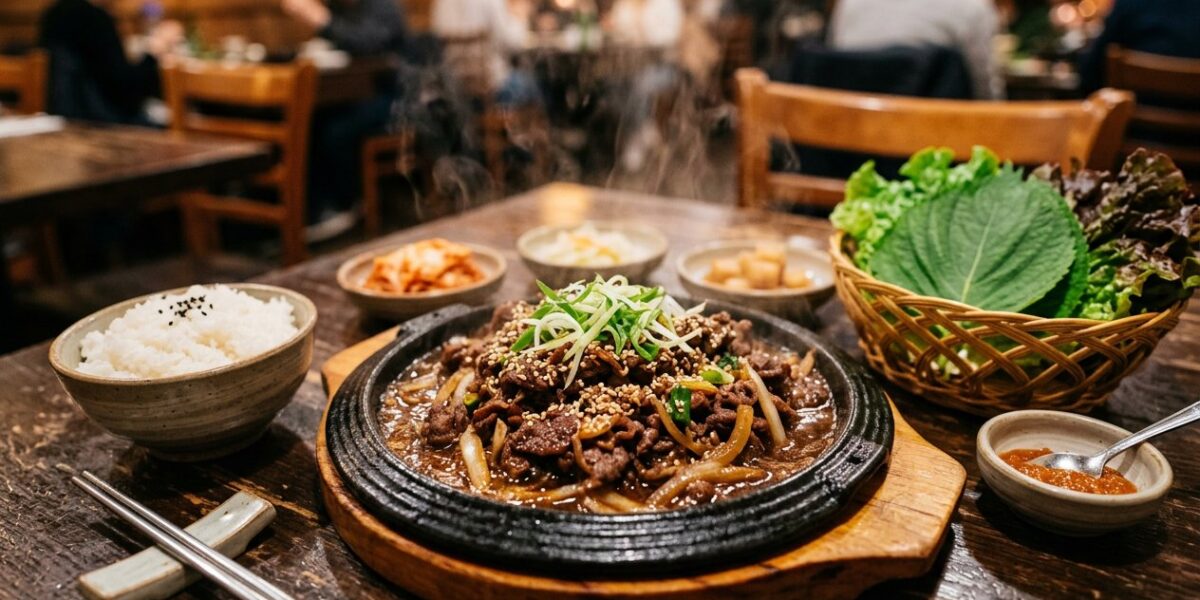
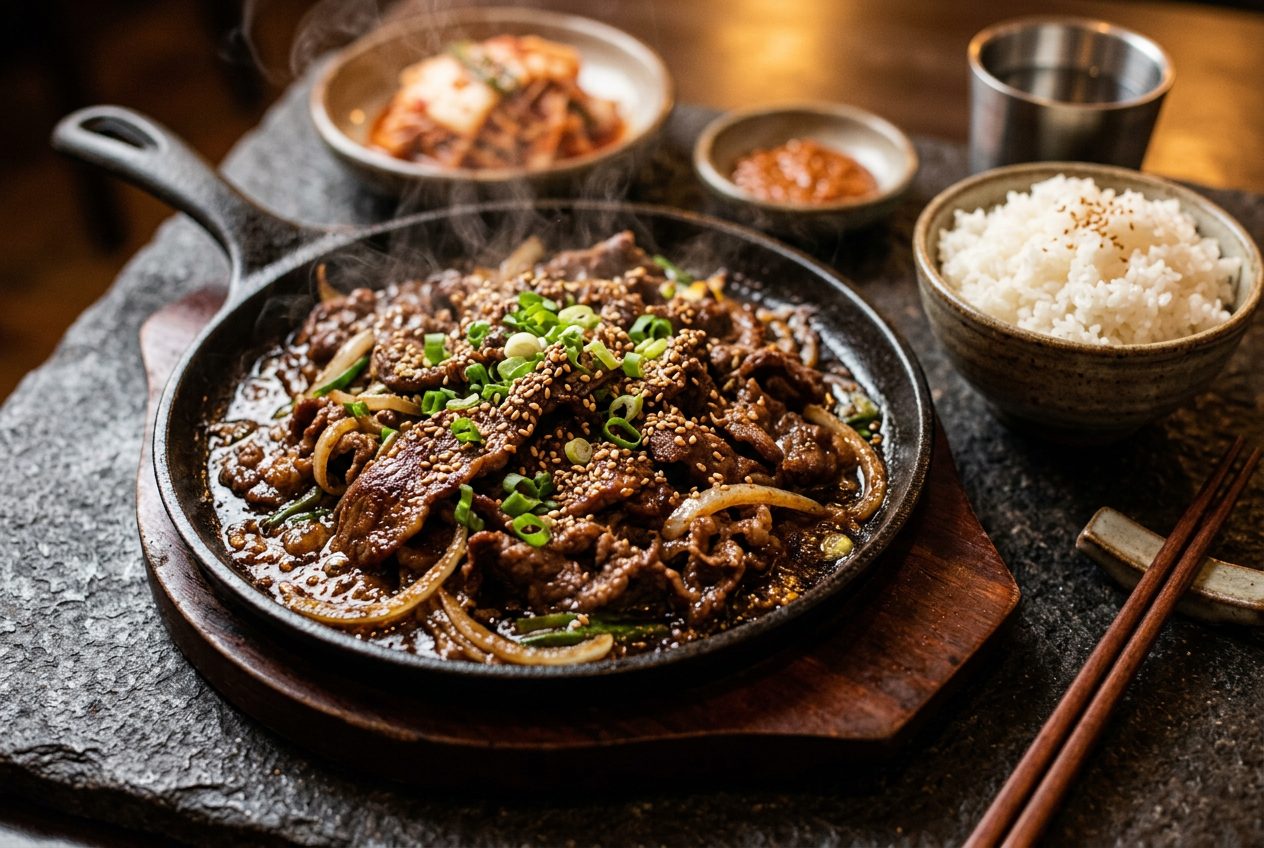
Bulgogi — literally ”fire meat” in Korean, from bul (fire) and gogi (meat) — is one of the most celebrated dishes in Korean cuisine, and once you taste those paper-thin slices of caramelised, smoky-sweet beef, you will understand exactly why it has won hearts far beyond the Korean peninsula.
Last Updated: March 27, 2026
Key Takeaways
- The best bulgogi uses ribeye or top sirloin sliced no thicker than 3mm.
- Asian pear or kiwi in the marinade contains natural fruit enzymes that actively tenderise beef fibres — this is non-negotiable for authentic results.
- Marinate for a minimum of 30 minutes; overnight delivers noticeably better depth.
- Cook in small batches over high heat to achieve caramelisation, not steaming.
- Bulgogi works on a BBQ grill, a cast iron pan, and a regular stovetop skillet — we cover all three methods below.
What Is Bulgogi? A Quick Introduction
The Meaning Behind the Name
The word bulgogi has been part of the Korean culinary lexicon since at least 1947, when it first appeared in a Korean language dictionary describing meat grilled directly over a charcoal fire. The name itself tells you the cooking philosophy: direct, fierce heat that chars the surface while leaving the interior tender. Over centuries, the dish evolved from a royal court preparation called neobiani — thinly pounded, marinated beef grilled over coals — into the beloved everyday meal Koreans (and now the world) know today.
What makes bulgogi distinct from other grilled beef preparations is the marinade. Where a Western steak marinade might lean on acid to break down muscle fibres, bulgogi relies on the natural enzymes in fruit — traditionally Asian pear, sometimes kiwi — alongside soy sauce, sesame oil, garlic, and sugar. The result is beef that is simultaneously tender, savoury, sweet, and aromatic in a way that no single-note marinade can match.
We have cooked bulgogi across home kitchens in Seoul, at a wood-fired grill in Busan, and at countless dinner tables back home for friends who had never tried Korean food. Every single time, the reaction is the same: wide eyes, then silence, then a reach for seconds.
Why Bulgogi Has Conquered the World
According to the Korea Tourism Organization, bulgogi consistently ranks among the top three most recognised Korean dishes for international visitors — alongside kimchi and bibimbap. Its global appeal is easy to understand: the flavour profile hits the savoury-sweet balance that food scientists identify as universally pleasurable, the cooking time is short, and the ingredient list is accessible even in Western supermarkets.
The Korean Wave (Hallyu) has accelerated bulgogi’s international spread significantly. A 2022 survey by the Ministry of Culture, Sports and Tourism found that Korean food awareness among international consumers rose to 73.2%, with bulgogi being the most frequently named dish. For home cooks in the West, bulgogi has become a reliable weeknight dinner — fast, flavourful, and far more interesting than a plain beef stir fry.
It also travels across protein types without losing its identity. The marinade that works beautifully on beef translates almost perfectly to chicken thighs, pork shoulder, and even firm tofu, giving you a framework that extends well beyond a single recipe.
Regional Variations Worth Knowing
Bulgogi is not monolithic. In Seoul, you will find the classic thin-sliced version cooked over a domed grill at the table, with broth and glass noodles added to the drip tray below the meat. In Gwangju (Jeolla province), gwangyang bulgogi uses a simpler soy-and-sesame marinade with thicker slices cooked quickly over charcoal — less sweet, more mineral. In Gyeonggi province, the meat is often served in a broth-rich hotpot style. Our recipe draws closest to the Seoul standard, which is the version most Western home cooks will recognise from Korean restaurants.
The Bulgogi Marinade: Every Ingredient Explained
The Foundation: Soy Sauce, Sugar, and Sesame Oil
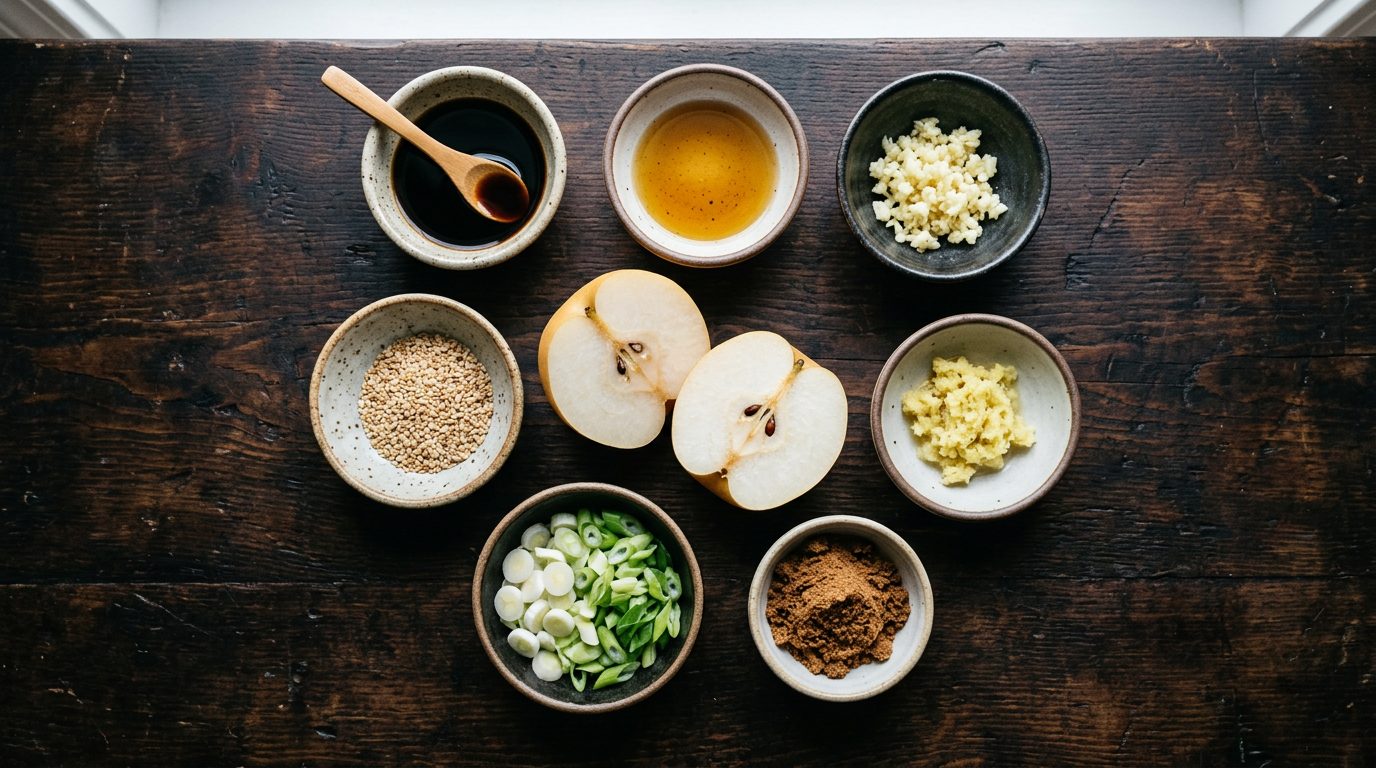
The backbone of every bulgogi marinade is soy sauce. We use 4 tablespoons for 500g of beef. Korean recipes traditionally call for either regular soy sauce (ganjang) or a combination of regular and Korean soup soy sauce (guk ganjang). If you can find Korean soy sauce, use it — it has a slightly less aggressive saltiness than Japanese soy sauce and a richer, more complex fermented flavour. Japanese soy sauce (Kikkoman, for example) is a perfectly acceptable substitute.
Sugar provides two functions: sweetness and caramelisation. We use 1.5 tablespoons of light brown sugar, which adds a subtle molasses depth that white sugar lacks. Some Korean home cooks use rice syrup (mulyeot) for a glossier finish — if you have it, substitute it at a 2:1 ratio (3 tablespoons rice syrup for every 1.5 tablespoons of sugar).
Sesame oil is non-negotiable. Use 1.5 tablespoons of toasted sesame oil, added at the end of mixing — heat degrades its aromatic compounds, so always add it last. The ratio of soy sauce to sesame oil in our recipe sits at approximately 2.5:1, which delivers sesame fragrance without making the marinade greasy. You will smell it the moment the beef hits a hot pan.
The Tenderiser: Asian Pear (and Why It Works)
Half a grated Asian pear is the ingredient that separates authentic bulgogi from imitations. Asian pear (배, bae in Korean) contains naturally occurring enzymes — primarily actinidin-adjacent compounds — along with fruit acids that physically break down the myosin proteins in beef muscle fibres. The effect is measurable: beef marinated with grated pear for two hours is demonstrably softer than beef marinated without it, even when all other ingredients are identical.
Grate the pear rather than blending it. Blending introduces too much water and dilutes the marinade. A box grater produces the right texture — a fine pulp that coats each slice evenly. If Asian pear is unavailable, kiwi (half a kiwi) is the best substitute because it contains actinidin, an enzyme with particularly strong meat-tenderising activity. Ripe bosc or bartlett pear works as a third option, though the tenderising effect is weaker.
Do not over-marinate with pear. Beyond 12 hours, the enzymes begin to over-tenderise the beef, giving it a slightly mushy texture. The sweet spot is 2–4 hours for thin slices, or up to overnight (8 hours maximum) for slightly thicker cuts.
Aromatics: Garlic, Ginger, and Green Onion
Four cloves of minced garlic are standard for 500g of beef. Korean cooking uses garlic generously — more so than most Western palates expect — and bulgogi is no exception. Freshly minced garlic delivers a sharpness and heat that jarred garlic cannot replicate. If you are short on time, garlic paste is an acceptable compromise; garlic powder is not.
One teaspoon of freshly grated ginger adds warmth and a faint citrus-like brightness that balances the sweetness of the sugar. Ginger also has mild antimicrobial properties that help keep the marinade fresh during longer marinating periods. Use fresh ginger root, grated on the fine side of a box grater or a microplane — the fibre-free juice is what you want.
Three stalks of green onion, sliced, go into both the marinade and the finished dish as garnish. In the marinade, they release allicin compounds that contribute to the savoury base note. Reserved slices on top add freshness and colour. Half a medium onion, grated or very thinly sliced, rounds out the allium backbone — particularly important if you are cooking in a pan rather than on a grill, where the onion caramelises beautifully against the pan surface.
How to Choose and Prepare the Beef
The Best Cuts for Bulgogi
Ribeye is the gold standard for bulgogi. Its fat marbling — particularly the intramuscular fat that runs through the longissimus dorsi muscle — melts at the high cooking temperatures used for bulgogi, basting the meat from within and producing those characteristic glossy, caramelised edges. The fat content in ribeye also means it is more forgiving: a few extra seconds in the pan will not turn it tough the way leaner cuts can.
Top sirloin is a strong second choice, particularly for those who prefer a leaner result. It has less marbling than ribeye but takes the marinade well and slices cleanly when partially frozen. Chuck eye — sometimes called the ”poor man’s ribeye” — is worth considering if budget is a factor; it sits adjacent to the ribeye on the carcass and has nearly comparable marbling.
Avoid cuts with large connective tissue seams (brisket, round, shank) — the short cooking time does not allow enough heat penetration to break down collagen. Pre-packaged ”bulgogi beef” sold at Korean grocery stores is typically ribeye or sirloin pre-sliced to the correct thickness; if you can access a Korean supermarket, this is the most convenient starting point.
Slicing Technique: The 3mm Rule
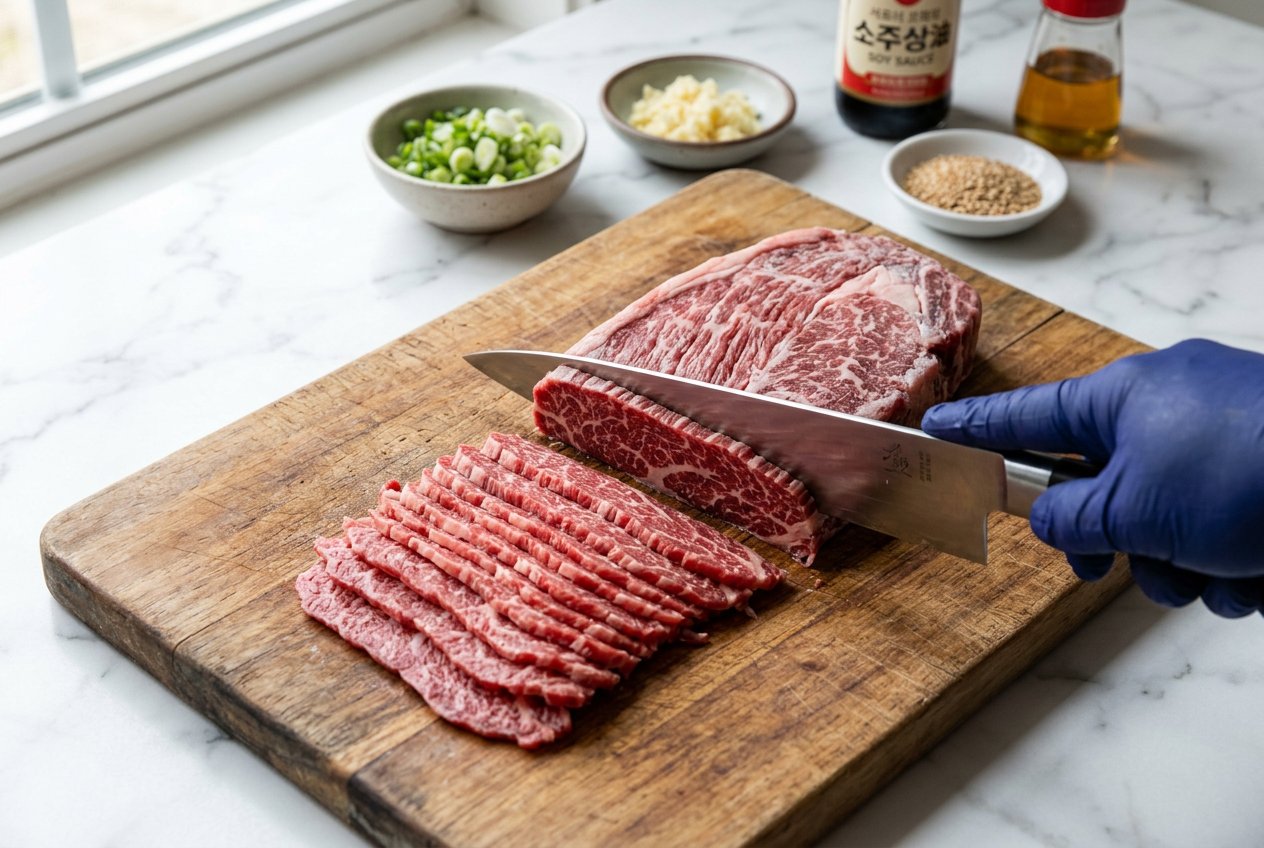
Thickness is perhaps the single most important variable after the marinade. Every slice should be approximately 3mm — thin enough to cook through in 2–3 minutes over high heat, thick enough to retain moisture and texture. Thinner than 2mm and the beef overcooks before it caramelises; thicker than 5mm and the centre stays raw while the outside burns.
The trick to achieving consistent thin slices at home is partial freezing. Place the beef in the freezer for 30–45 minutes before slicing. The meat firms up without fully freezing, giving you the resistance needed for a sharp knife to glide through cleanly. Use your sharpest knife and slice against the grain — cutting perpendicular to the muscle fibres shortens them, ensuring each bite is tender rather than chewy.
Always cut against the grain. Look at the beef before you cut: you will see lines running in one direction through the flesh. Turn the beef 90 degrees and slice across those lines. This single technique has more impact on the final tenderness of your bulgogi than almost any other preparation step.
Scoring and Preparation Tips
If your slices are slightly thicker than ideal (4–5mm), you can score the surface in a crosshatch pattern with a sharp knife — this increases the surface area exposed to the marinade and accelerates tenderisation. It is not essential for properly thin slices, but useful if your slicing is imperfect.
Pat the beef slices dry with kitchen paper before adding them to the marinade. Excess surface moisture dilutes the marinade and creates steam during cooking rather than the dry-heat caramelisation you are after. Dry beef + hot pan = caramelised edges. Wet beef + hot pan = steamed beef.
Once sliced, layer the beef into the marinade in a shallow dish or zip-lock bag, ensuring every surface is coated. Massage the marinade in gently — the goal is even coating, not breaking the fibres apart. Refrigerate immediately and do not marinate at room temperature.
The Bulgogi Recipe
Ingredients (Serves 4)
| Ingredient | Amount | Notes |
|---|---|---|
| Ribeye or top sirloin | 500g (1.1 lb) | Sliced 3mm against the grain |
| Korean or Japanese soy sauce | 4 tbsp (60ml) | Low sodium works too; adjust to taste |
| Light brown sugar | 1.5 tbsp | Or 3 tbsp rice syrup |
| Toasted sesame oil | 1.5 tbsp | Add last to preserve aroma |
| Asian pear (grated) | ½ medium | Kiwi is the best substitute |
| Garlic (minced) | 4 cloves | Fresh only |
| Fresh ginger (grated) | 1 tsp | About a 2cm knob |
| Green onions (sliced) | 3 stalks | White and green parts separated |
| Onion (grated or very thinly sliced) | ½ medium | Optional but recommended |
| Black pepper | ¼ tsp | Freshly cracked |
| Mirin (optional) | 1 tbsp | Adds gloss; omit if unavailable |
| Vegetable oil (for cooking) | 1 tbsp | Only for pan/skillet method |
| Sesame seeds | 1 tbsp | To garnish |
Step-by-Step Method
- Freeze the beef — Place the beef in the freezer for 30–45 minutes until firm but not frozen solid. This makes thin slicing much easier.
- Make the marinade — In a large bowl, combine soy sauce, brown sugar, grated Asian pear, grated onion, minced garlic, grated ginger, black pepper, mirin (if using), and the white parts of the green onions. Stir until the sugar dissolves. Add the sesame oil last and stir again.
- Slice the beef — Remove the beef from the freezer. Using your sharpest knife, slice against the grain into 3mm pieces.
- Marinate — Add the beef slices to the marinade and toss to coat every surface. Cover and refrigerate for a minimum of 30 minutes. Two to four hours is ideal for thin slices; overnight (up to 8 hours) deepens the flavour significantly.
- Bring to room temperature — Remove the beef from the refrigerator 15 minutes before cooking. Cold meat added to a hot pan drops the temperature of the pan, producing steam instead of caramelisation.
- Cook in batches — Heat your pan or grill to high. Add a thin film of vegetable oil (pan/skillet method only). Working in small batches — never crowding the pan — cook the beef for 2–3 minutes, flipping once or twice, until caramelised and cooked through. If cooking in batches, keep the cooked meat warm in a low oven (80°C / 175°F) while you finish the rest.
- Garnish and serve — Transfer to a serving plate. Scatter the green parts of the green onions and the sesame seeds over the top. Serve immediately.
Timing at a Glance
| Task | Time |
|---|---|
| Partial freezing | 30–45 min |
| Marinade prep | 10 min |
| Marinating time | 30 min – 8 hours |
| Active cooking | 10–15 min (all batches) |
| Total (minimum) | ~1.5 hours |
Cooking Methods: BBQ Grill, Cast Iron, and Stovetop
Korean BBQ Grill (The Traditional Method)
Cooking bulgogi over a direct charcoal or gas grill is the method that gave the dish its name. The intense, dry heat of a grill caramelises the marinade sugars faster than any pan, and the open flame imparts a faint smokiness that you simply cannot replicate indoors. If you have a tabletop Korean BBQ grill or a standard outdoor gas/charcoal grill, this is the method to use.
Preheat the grill on high for at least 10 minutes. The grate should be hot enough that a drop of water evaporates immediately on contact. Lay the beef slices directly on the grate — do not use a tray or foil, which will steam the meat. Cook for 1.5–2 minutes per side. The sugar in the marinade will caramelise quickly; watch carefully to avoid burning. Remove as soon as the edges char and the meat is just cooked through.
For a tabletop grill, use a domed bulgogi grill plate if available — the sloped surface channels the dripping marinade and fat away from the centre, preventing flare-ups. At a typical Korean restaurant, this tray is filled with broth and glass noodles, producing a second dish (the guksu) from the drippings. At home, a simple drip tray of foil works.
Cast Iron Grill Pan (Best Indoor Option)
A cast iron grill pan is our preferred indoor cooking method for bulgogi. The ridges create grill marks and allow fat to drain away from the meat surface, promoting caramelisation rather than braising. Cast iron retains heat exceptionally well, so even when you add cold beef, the pan recovers quickly — critical for keeping each batch searing rather than steaming.
Heat the dry cast iron grill pan over high heat for 3–4 minutes before adding any oil. Add a thin film of neutral vegetable oil and heat until the oil shimmers and just begins to smoke. Add the beef in a single layer — never stack slices — and do not touch for 90 seconds. Flip once and cook for another 60–90 seconds. Transfer and rest briefly before serving. Work in batches of no more than 150g at a time for a 25cm pan.
One practical consideration: cast iron on high heat with a sugar-based marinade generates significant smoke. Have your kitchen ventilation running at full power, or open a window. The char is worth it.
Regular Stovetop Skillet (The Weeknight Method)
A heavy-based stainless steel or non-stick skillet is the most accessible option, and it produces excellent results when used correctly. The key difference from the grill methods is that a flat pan has no ridges, so the meat cooks in contact with its own rendered juices — the result is more of a pan-fried finish than a grilled one, with slightly less caramelisation but more saucy, lacquered surface area.
Use the highest heat your stovetop allows. Add the oil, wait until it shimmers, then add the beef in small batches. Resist the urge to stir constantly — let the meat sit undisturbed for 60–90 seconds to allow the Maillard reaction to develop on the underside, then flip once. If the pan starts to accumulate too much liquid from the marinade (this happens when the pan is not hot enough or the batch is too large), increase the heat and continue cooking until the liquid evaporates and the meat caramelises.
For a more detailed look at the technique behind stir-frying beef correctly, our beef stir fry guide covers high-heat pan management in depth — the same principles apply here.
How to Serve Bulgogi
The Classic: With Steamed White Rice
The simplest and most traditional way to serve bulgogi is over a bowl of freshly steamed short-grain white rice. The rice absorbs the caramelised marinade juices, which pool at the bottom of the serving plate, and balances the intense savoury-sweet flavour of the beef. Use short-grain Korean or Japanese rice if you can find it — the higher starch content makes it slightly sticky, which means it clings to the beef rather than rolling away.
Alongside the rice and bulgogi, a traditional Korean table would include a selection of banchan (side dishes): kimchi, steamed spinach seasoned with sesame and garlic (sigeumchi namul), and pickled radish (danmuji). If you want to explore kimchi from scratch, our traditional kimchi recipe walks through the full fermentation process. Even a bowl of instant kimchi from a jar elevates a bulgogi rice bowl enormously.
For a one-bowl meal, arrange the bulgogi over rice, add a soft-poached or fried egg on top, and drizzle with a little gochujang sauce (1 tbsp gochujang, 1 tsp sesame oil, 1 tsp rice vinegar, 1 tsp sugar, mixed). This is essentially a bulgogi bibimbap — and it is outstanding. If you want the full bibimbap recipe with proper technique for all the vegetable toppings, our bibimbap recipe has everything you need.
Ssam: Lettuce Wrap Style
Ssam (쌈), meaning ”wrapped,” is one of the most tactile and communal ways to eat bulgogi. The idea is simple: take a leaf of butter lettuce, perilla leaf (kkaennip), or any tender leafy green, place a small spoonful of rice in the centre, add a piece or two of bulgogi, top with a small dot of ssamjang (fermented soybean and chilli paste), and fold the whole thing into a parcel. Eat in one bite.
The contrast of textures — cool, crisp lettuce; warm, caramelised beef; sticky rice; pungent ssamjang — is one of the great experiences in Korean food. Butter lettuce is the most widely available substitute for the Korean red-leaf lettuce (ssam chi) traditionally used. Perilla leaves, sold at Asian grocery stores, are worth seeking out for their anise-mint flavour, which cuts through the sweetness of the marinade perfectly.
Prepare a ssam table by laying out the lettuce leaves, a bowl of rice, the bulgogi, a small dish of ssamjang, and optional extras: sliced raw garlic, sliced chilli, and kimchi. Let everyone build their own wraps at the table. This format is perfect for groups because it is interactive, informal, and endlessly customisable.
Bulgogi Rice Bowls and Meal-Prep Variations
Bulgogi is one of the best meal-prep proteins we know. Cook a large batch on Sunday, portion it into containers over rice or grain bowls, and you have lunch sorted for three days. The flavour actually deepens overnight as the beef absorbs its own resting juices — many of our team prefer cold bulgogi on rice the next day, straight from the refrigerator.
Beyond the classic rice bowl, bulgogi integrates beautifully into a number of other formats. Bulgogi tacos (in small corn tortillas with shredded cabbage and a sesame-lime crema) have become a staple at Korean-Mexican fusion spots worldwide and work brilliantly at home. Bulgogi fried rice — made by stir-frying day-old rice with chopped leftover bulgogi, egg, and a splash of soy sauce — takes ten minutes and is deeply satisfying. You can also pile bulgogi onto a toasted sesame bun with gochujang mayo, quick-pickled cucumber, and shredded iceberg lettuce for a Korean-inspired burger that needs no further justification.
For more Korean meal inspiration, our roundup of Korean recipes covers everything from tteokbokki to japchae — perfect for building a full Korean feast around your bulgogi.
Make-Ahead and Storage
Marinating in Advance
The marinade itself can be made up to three days ahead and stored in a sealed jar in the refrigerator. Add the sesame oil only when you are ready to use it — stored separately from the other ingredients, the aromatics hold better. When you are ready to marinate the beef, combine the stored marinade with the sesame oil, add the fresh beef, and proceed as normal.
Marinated raw beef can be stored in the refrigerator for up to 24 hours before cooking. Beyond 24 hours, the fruit enzymes continue working and can over-tenderise the meat, giving it an unpleasant mushy texture. For longer advance preparation, marinate the beef and then freeze it — the cold stops enzymatic activity. Frozen marinated bulgogi keeps well for up to two months. Thaw overnight in the refrigerator and cook immediately once thawed.
If you are preparing for a dinner party, marinating the beef 4–6 hours ahead (or the night before, up to 8 hours) and keeping it refrigerated gives you the best flavour without any risk of over-tenderising. Bring to room temperature for 15 minutes before cooking and you are ready to go.
Storing Cooked Bulgogi
Cooked bulgogi keeps well in an airtight container in the refrigerator for up to four days. Reheat gently in a skillet over medium heat with a splash of water to prevent the sugar in the marinade from burning. Microwaving works in a pinch but tends to dry the beef out — if you do use a microwave, cover the container and heat in 30-second bursts, checking between each.
For freezing cooked bulgogi, portion it into individual servings before freezing. Lay the portions flat in zip-lock bags, squeeze out the air, and freeze for up to two months. Thaw overnight in the refrigerator. Reheated cooked bulgogi is genuinely good — the deep caramelised flavour holds through the freeze-thaw cycle better than most proteins.
Can You Make a Larger Batch?
Absolutely — bulgogi scales up cleanly. Double or triple the marinade proportionally. The only variable to watch is cooking: even with a large batch of marinated beef, cook in the same small batches (no more than 150–200g per pan session). The goal is always maximum surface area in contact with the pan and minimum moisture in the cooking environment. A crowded pan full of 1kg of beef produces steamed, grey, textureless meat. Four to five small batches cooked correctly produce caramelised, glossy bulgogi every time.
Frequently Asked Questions
Can I use chicken instead of beef for bulgogi?
Yes, and it is excellent. Boneless, skinless chicken thighs are the best substitute — they have enough fat to handle the high heat and sweet marinade without drying out the way chicken breast does. Slice the thighs into bite-sized pieces, marinate for 1–2 hours (chicken needs less time than beef because the fibres are shorter), and cook in the same way. The flavour is distinctly different from beef bulgogi but equally satisfying. Pork shoulder, thinly sliced, is another outstanding option — dweji bulgogi (pork bulgogi) is a beloved variation in its own right, often with gochujang added to the marinade for heat.
How long should I marinate bulgogi for best results?
For thin slices (3mm), a minimum of 30 minutes gives you acceptable results, and 2–4 hours gives you noticeably better flavour and texture. Overnight marinating (up to 8 hours) produces the deepest, most complex flavour — this is what we recommend whenever you have the time to plan ahead. Do not marinate for longer than 12 hours for thin slices, because the fruit enzymes in the Asian pear will begin to over-break down the muscle fibres, resulting in beef that is soft to the point of mushiness. If you need to marinate for longer than 12 hours, use a recipe without pear or kiwi, and add the fruit component only for the final 2 hours.
What is the best cut of beef for bulgogi?
Ribeye is the traditional and most flavourful choice because its intramuscular fat marbling melts during cooking and bastes the meat from within, producing the characteristic glossy, caramelised finish. Top sirloin is a leaner alternative with good flavour and a slightly firmer texture. Chuck eye offers ribeye-level marbling at a lower price point and is worth seeking out if your butcher carries it. Avoid lean cuts like round or flank for bulgogi — the short, high-heat cooking time does not allow enough collagen breakdown to make them tender, and the result will be tough.
What are the ingredients in authentic bulgogi marinade?
An authentic bulgogi marinade includes: soy sauce (the savoury base), sugar or rice syrup (for sweetness and caramelisation), sesame oil (for aroma and richness), Asian pear or kiwi (for enzymatic tenderisation), garlic, ginger, green onion, and black pepper. Some recipes add mirin (for gloss and mild sweetness), gochujang (for heat), or Korean plum extract (maesil-cheong) for a fruity, tangy note. The core six — soy sauce, sugar, sesame oil, pear, garlic, green onion — are present in virtually every authentic Korean recipe. Anything beyond those six is regional variation or personal preference.
Is bulgogi good for meal prep?
Bulgogi is one of the best proteins for meal prep. Cooked bulgogi keeps for up to four days in the refrigerator and up to two months in the freezer. It reheats well in a skillet with a splash of water, retaining much of its caramelised texture. You can also freeze the raw marinated beef (before cooking) for up to two months — thaw overnight in the refrigerator and cook straight from thawed. For batch cooking, prepare 2–3 portions of the marinade at the start of the week, marinate fresh beef in each, and stagger your cooking sessions across the week for consistently fresh results rather than reheating the same batch repeatedly.

Mei Lin Chen
Mei Lin Chen is an Asian food writer and recipe developer. Melbourne-raised and London-based, she has spent over a decade exploring the rice paddies, hawker stalls, and home kitchens of South-East and East Asia. Her recipes balance traditional technique with everyday practicality.