Last updated: March 29, 2026
Bok choy is the leafy green that bridges Asian cooking and the everyday Western kitchen. With juicy white stalks, dark green leaves, and a flavor that lands somewhere between mild cabbage and tender spinach, it has quietly become the most-purchased Asian vegetable in American supermarkets. You see it in restaurant stir-fries, hot pots, ramen bowls, dumpling fillings, and increasingly on weeknight dinner plates that have nothing to do with Asian cuisine at all.
Bok choy works because it solves a problem most home cooks face: how do you get a vegetable to the table in under ten minutes that tastes good, holds texture, and pairs with almost anything? The answer in Chinese kitchens has been the same for more than fifteen hundred years. This guide walks you through everything: what bok choy actually is, the varieties you will see at the market, how to pick the best heads, how to store them so they stay crisp, what to substitute when you cannot find any, the recipes that make it shine, and the nutrition profile that explains why dietitians keep recommending it.
What Is Bok Choy?
Bok choy (Brassica rapa subsp. chinensis) is a type of Chinese cabbage that grows in loose, open heads rather than the tight balls of European green cabbage. The name is Cantonese for ”white vegetable” — bok meaning white, choy meaning vegetable — which refers to the bright, ribbed stalks at the base of each leaf. In Mandarin it is called bai cai, and in Japan it appears on menus as chingensai. In the United States and the United Kingdom you will see it labeled bok choy, pak choi, pok choi, or Chinese white cabbage, all referring to the same vegetable or one of its close cousins.
Botanically, bok choy is a non-heading brassica, which makes it a relative of broccoli, mustard greens, turnips, and napa cabbage. The plant grows in a vase-like cluster of long, spoon-shaped leaves with thick crunchy stems. Both parts are edible, and a well-cooked dish often plays the two textures against each other: the leaves wilt quickly and absorb sauce, while the stems stay snappy and refreshing even after a long simmer.
The flavor is the reason it has traveled so well. Raw bok choy tastes faintly peppery, like a milder version of arugula. Cooked, it turns sweet, with the same gentle cabbage backbone you find in coleslaw but without any of the sulfur. It does not overpower the dishes it joins. Instead, it provides bulk, juiciness, and a fresh green note that balances rich proteins, salty sauces, and starchy noodles. That neutrality is exactly what makes it the workhorse of so many cuisines.
The History and Origin of Bok Choy
Bok choy is one of the oldest cultivated vegetables in human history. Archaeological evidence places its domestication in the Yangtze River Delta of eastern China around the fifth century AD, though wild ancestors of Brassica rapa were eaten thousands of years before that. By the Tang dynasty (618 to 907), the vegetable appeared in agricultural treatises as a staple winter crop, valued for the way it tolerated cold and stored well in cool cellars.
The vegetable spread southward into Guangdong province during the Song dynasty (960 to 1279), where local farmers selected varieties with whiter, juicier stems. This is the lineage that gives modern bok choy its English name, borrowed from Cantonese after the vegetable reached overseas Chinese communities in the nineteenth century. When workers from southern China arrived in California, Hawaii, and Southeast Asia to build railways, harvest cane, and trade goods, bok choy traveled in their seed packets. By 1900 it was being grown commercially in the Sacramento Delta and on truck farms outside Honolulu.
European traders met bok choy much later, mostly through colonial Hong Kong and Singapore. The Dutch and Portuguese carried seeds to their Asian holdings first, and only in the late twentieth century did the vegetable land in mainstream American and British supermarkets. The vegan and Asian-fusion booms of the 1990s, the rise of ramen in the 2010s, and the home-cooking surge of 2020 each pushed bok choy further into the mainstream. Today the United States Department of Agriculture lists it as one of the fastest-growing fresh vegetable categories, with annual production climbing every year since 2018.
Varieties of Bok Choy
Walk into a well-stocked Asian grocer and you will see at least three or four types of bok choy on the shelves. They are all closely related, but they behave differently in the pan and in your mouth. Knowing which one to grab can change a dish.
Standard Bok Choy (White-Stem)
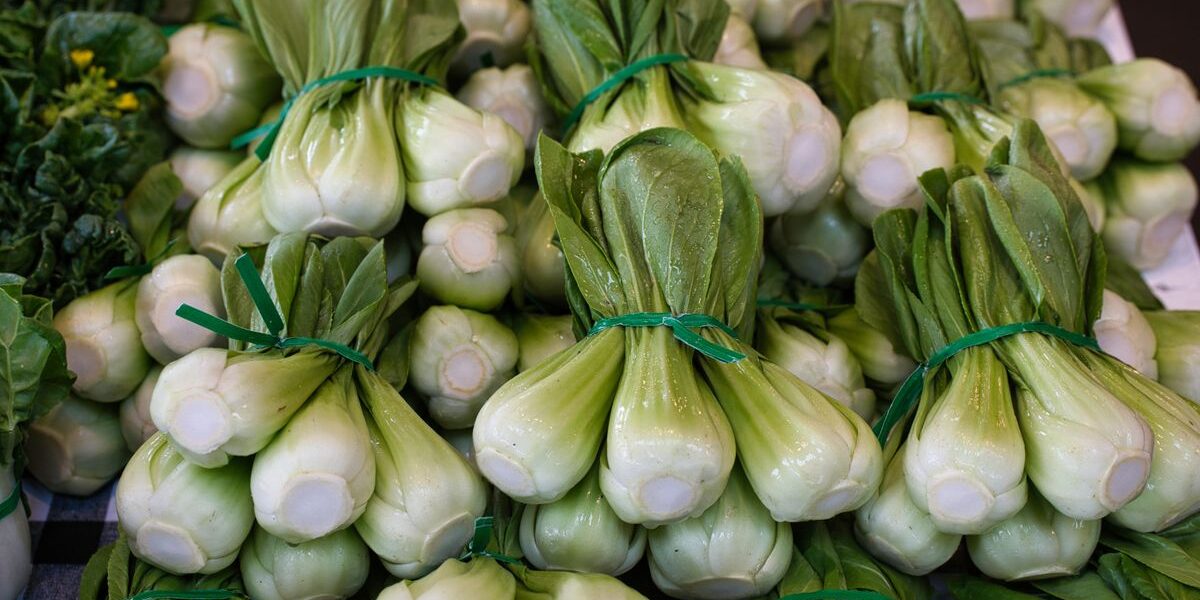
This is the classic mature variety, sold in heads roughly the size of a romaine lettuce. The stalks are bright porcelain-white and the leaves are dark forest green. The stems are crisp and the leaves are robust enough to stand up to stir-frying, braising, and soup. Use this when a recipe calls for ”bok choy” without further qualification.
Shanghai Bok Choy (Green-Stem)
Shanghai bok choy, sometimes labeled qing geng cai, looks like a smaller, all-green version of standard bok choy. The stalks are pale jade rather than white and the leaves are spoon-shaped. It is slightly more delicate and sweet, with a softer crunch. This is the variety most often served whole or halved in restaurants under sauces like garlic oyster or shiitake gravy.
Baby Bok Choy
Baby bok choy is just an earlier-harvest version of either of the above, picked when the heads are three to six inches tall. The texture is more tender, the flavor sweeter, and the cooking time shorter. Baby bok choy is what you want for plate presentations where the entire head is served as a single piece, and it is the easiest variety for new cooks because it cooks evenly in one go.
Choy Sum and Yu Choy
These look similar to bok choy but are technically different cultivars. Choy sum (literally ”vegetable heart”) has longer, thinner stems and small yellow flowers at the top. Yu choy is similar but slightly more bitter and is harvested later. Both are members of the same brassica family and can be substituted for bok choy in most stir-fries, though they have a more assertive mustard-green flavor.
Napa Cabbage
Often confused with bok choy at the supermarket, napa cabbage is a different subspecies (Brassica rapa subsp. pekinensis). It grows in tight, oblong heads with frilly pale leaves. Napa is what you want for kimchi, dumpling fillings, and slow-cooked stews. It is not interchangeable with bok choy when you need crunch, but it works as a substitute when softness is the goal.
How to Buy Bok Choy
Bok choy is sold year-round in most American supermarkets and is available at almost every Asian grocer. Quality varies more than you might expect, especially between conventional grocery and Asian markets, so a little attention at the produce aisle pays off in the final dish.
- Look at the stems first. They should be firm, pale, and free of brown bruising or black spots. Cracks along the stem indicate the head has been sitting too long under refrigeration.
- Inspect the leaves. They should stand upright, not flop sideways. Yellowing tips are the earliest sign of age. Slimy edges or holes from caterpillars are an immediate no.
- Pick up the head and feel its weight. Good bok choy feels heavy for its size, which means the cells are still full of water. A lightweight head has already lost moisture and will cook unevenly.
- Smell it. Fresh bok choy smells clean and faintly grassy. A sulfurous or sour smell means it has begun to spoil.
- Choose size for purpose. Baby bok choy works for grilled or whole-presentation dishes. Larger heads are better for stir-frying, soup, and chopping.
- Buy organic when possible. Bok choy is on most ”shop organic” lists because the broad leaves trap pesticide residue. Organic heads also tend to taste sweeter.
If you have access to a farmers market between October and April, that is often the best place to find bok choy. The cooler months produce sweeter, denser heads because the plant accumulates sugars to protect itself from frost. Summer bok choy can taste flat or even slightly bitter if the weather got too hot during growing.
How to Store Bok Choy
Bok choy is more perishable than dense cabbages. The high water content of the stems is what makes it delicious, but it also means the heads start to wilt within days of leaving the field. Storage technique matters.
Short-Term Refrigerator Storage
The simplest approach is also the best. Do not wash bok choy until you are ready to cook it. Surface moisture accelerates rot. Wrap the unwashed head loosely in a clean kitchen towel or in a paper towel, then slip it into a partially open plastic bag and place it in the crisper drawer of your refrigerator. Stored this way, bok choy keeps for five to seven days. Baby bok choy is a bit more delicate and will last three to five days.
Reviving Wilted Bok Choy
If the leaves have gone limp but no rot has set in, you can revive the head by trimming off a thin slice at the base and standing the bok choy upright in a glass of cold water for thirty minutes to an hour. Capillary action will rehydrate the stems and restore much of the crispness. This trick works for almost any leafy green and is especially effective with bok choy.
Freezing Bok Choy
Freezing is possible but changes the texture significantly. The water in the stems forms ice crystals that rupture the cell walls, leaving you with something soft and stringy when thawed. If you have a surplus, blanch the leaves and stems in boiling water for thirty seconds, shock them in ice water, squeeze out as much liquid as possible, and freeze in single portions for up to three months. Frozen bok choy works well in soups and stews where texture is less critical, but it should not be used in stir-fries.
How to Prepare Bok Choy for Cooking
Preparation determines how a dish will turn out. Bok choy holds dirt in its tightly packed base where soil tends to splash up during rain or irrigation. Skipping the wash leads to gritty bites that ruin even the most carefully built sauce.
To wash a large head, slice off the base and separate the stalks. Submerge them in a bowl of cold water and swish for a few seconds, then let them sit for two or three minutes so the grit sinks to the bottom. Lift the stalks out instead of pouring through a colander, which would dump the dirt back on top. Repeat once if the head was especially soiled.
For baby bok choy, halve the head lengthwise, fan out the leaves under running water, and shake dry. The smaller crevices need less attention because the head has not yet packed dirt deep into its center.
Once washed, decide whether to keep the head whole, halve it, or separate the stems from the leaves. Whole heads work for soups and braises. Halved heads work for grilling, roasting, and the classic restaurant presentation under sauce. Separated stems and leaves work best for stir-fries, where the thicker stems need a head start in the pan before the delicate leaves get added.
Bok Choy Substitution Table
Bok choy is widely available, but recipes call for it in styles ranging from quick stir-fries to long braises, and not every substitute works in every context. Use the table below to pick the right alternative for the cooking method.
| Substitute | Best For | Ratio | Notes |
|---|---|---|---|
| Shanghai bok choy | Any bok choy recipe | 1:1 | Direct swap, slightly sweeter and softer. |
| Napa cabbage | Soups, dumplings, slow braises | 1:1 by weight | Softer texture, milder flavor. Not ideal for stir-fry. |
| Choy sum or yu choy | Stir-fries with garlic or oyster sauce | 1:1 | More mustard-like flavor, longer stems. |
| Swiss chard | Stir-fries, soups | 1:1 | Stems are sturdier but lack the same juicy crunch. |
| Savoy cabbage | Braises, stews, dumpling fillings | 1:1 | Crinkled leaves hold sauce well, no crunchy stems. |
| Mustard greens | Garlicky stir-fries | 1:1 | More peppery, needs slightly more sugar. |
| Spinach | Soup, ramen, dumpling fillings | 1:2 (use double) | Wilts quickly and loses volume. |
| Romaine lettuce | Quick high-heat stir-fries only | 1:1 | Asian-style stir-fried lettuce works as a swap. |
| Tatsoi | Soup, raw salad, light stir-fry | 1:1 | Rosette-shaped leaves with similar mild flavor. |
If you are working from a Chinese recipe and the only ”Chinese green” available at your grocer is a generic head of baby cabbage, choose Shanghai bok choy or napa cabbage based on the method. Stir-fry calls for the green-stemmed Shanghai variety; long-simmered dishes are forgiving enough for any substitute.
5 Essential Bok Choy Recipes
The five recipes below cover the main techniques you will use for bok choy at home: a quick stir-fry, a restaurant-style braise, an addition to noodle soup, a dumpling filling, and a grilled side dish. Master these and you can apply the principles to any dish you encounter.
1. Garlic Bok Choy Stir-Fry
This is the foundational Cantonese dish that taught millions of cooks how to handle the vegetable. Heat two tablespoons of neutral oil in a wok over high heat until it shimmers. Add three sliced cloves of garlic and a small pinch of salt, and stir for ten seconds. Add one pound of bok choy with the stems separated from the leaves. Stir-fry the stems for ninety seconds, add the leaves, splash in a tablespoon of Shaoxing wine, and finish with a teaspoon of light soy sauce and a pinch of sugar. Total cooking time is under three minutes. The result is the side dish that quietly appears at every Cantonese banquet for a reason. For more on the technique, see our guide on how to stir fry.
2. Baby Bok Choy in Oyster Sauce
This is the dish you order at dim sum to clear your palate between dumplings. Blanch six halved baby bok choy heads in boiling salted water with a teaspoon of oil for ninety seconds, just until the stems turn translucent. Drain and arrange cut-side up on a serving plate. In a small saucepan, combine three tablespoons of oyster sauce, one tablespoon of light soy sauce, one teaspoon of sugar, half a cup of water, and a teaspoon of cornstarch slurry. Bring to a simmer, drizzle over the bok choy, and finish with a tablespoon of hot sesame or chili oil. The contrast between the crisp green stems and the glossy umami sauce is what makes this presentation a restaurant standard.
3. Bok Choy and Mushroom Ramen Bowl
Bok choy is the topping that elevates a noodle bowl from college food to dinner. Cook ramen noodles according to the package and divide between bowls. Pour over your favorite hot broth — chicken, miso, or shoyu all work. Top each bowl with halved baby bok choy that has been blanched for one minute in the same boiling water you used for the noodles. Add sliced shiitake or oyster mushrooms, a soft-boiled egg, sliced scallions, and a few drops of toasted sesame oil. The bok choy adds the green color, the crunch, and the gentle sweetness that balances the rich broth. Try it with our shoyu ramen recipe for a complete weeknight bowl.
4. Pork and Bok Choy Dumplings
For dumplings, bok choy goes into the filling rather than alongside it. Chop one large head of bok choy very finely, salt it lightly, and let it drain for fifteen minutes. Squeeze out as much liquid as you can — this step is critical, or your dumplings will turn watery. Combine the chopped bok choy with one pound of ground pork, two tablespoons of light soy sauce, one tablespoon of Shaoxing wine, one teaspoon of toasted sesame oil, one tablespoon of grated ginger, two minced scallions, and a pinch of white pepper. Wrap in store-bought or homemade dumpling wrappers and steam, boil, or pan-fry as you like. The bok choy keeps the filling tender and juicy without needing extra fat.
5. Grilled Bok Choy with Miso Butter
Modern restaurant menus often treat bok choy as a charred side, and it is one of the easiest grill-vegetable wins you will find. Halve four baby bok choy heads lengthwise. Brush the cut sides with neutral oil, season with salt, and grill cut-side down over high heat for two minutes until you see distinct char marks. Flip and grill the rounded side for one more minute. While the bok choy grills, mix two tablespoons of softened butter with one tablespoon of white miso paste and a teaspoon of mirin. Plate the grilled halves and dab the miso butter over the warm leaves so it melts into the layers. Finish with toasted sesame seeds and a squeeze of lemon. This dish works alongside steak, salmon, or as a standalone vegetarian course.
Nutritional Benefits of Bok Choy
Bok choy is one of the most nutrient-dense vegetables sold in American supermarkets, and registered dietitians often list it among the top ten leafy greens by overall nutritional density. The combination of low calorie count, high vitamin content, and useful trace minerals makes it a strong addition to almost any eating pattern.
| Nutrient (per 1 cup cooked, ~170g) | Amount | % Daily Value |
|---|---|---|
| Calories | 20 kcal | 1% |
| Vitamin K | 57 mcg | 71% |
| Vitamin A | 360 mcg RAE | 40% |
| Vitamin C | 44 mg | 49% |
| Folate | 70 mcg | 17% |
| Calcium | 158 mg | 12% |
| Potassium | 631 mg | 13% |
| Iron | 1.8 mg | 10% |
| Magnesium | 19 mg | 4% |
| Fiber | 1.7 g | 6% |
| Protein | 2.6 g | 5% |
The headline nutrients here are vitamin K, vitamin A, and vitamin C. Vitamin K is essential for blood clotting and bone metabolism, and a single cup of cooked bok choy provides nearly three-quarters of the daily target. Vitamin A in the form of beta-carotene supports vision and immune function. Vitamin C contributes to skin and connective tissue health and helps your body absorb the iron present in the same plant.
Beyond vitamins, bok choy contains glucosinolates — the same family of plant compounds found in broccoli and Brussels sprouts that have been studied for potential cancer-protective properties. It is also notably calcium-rich for a leafy green, with absorption rates comparable to dairy thanks to a low oxalate content. For people avoiding dairy, bok choy is one of the few green vegetables that genuinely contributes useful amounts of calcium to the diet.
The vegetable is also low in calories and high in water content, which makes it useful for adding bulk to meals without crowding out other macronutrients. A full serving runs around twenty calories, which means you can build a generous plate without worrying about portion size.
Cooking Techniques and Tips
Bok choy is forgiving, but a few principles will dramatically improve the results no matter the recipe.
- Cook stems before leaves. The stems take roughly three times as long to soften as the leaves. Whenever a recipe lets you, give the stems a head start by adding them to the pan first.
- Use high heat. Bok choy releases water as it cooks. Low heat steams the vegetable in its own moisture, leaving you with limp, gray stems. High heat evaporates that water and gives you the crisp, blistered texture you find at Chinese restaurants.
- Salt last, not first. Salting at the start draws out moisture before the pan can drive it off. Add salt or soy sauce in the last minute of cooking.
- Do not crowd the pan. Bok choy needs room for the steam to escape. If you are cooking more than a pound, work in two batches.
- Blanch before grilling or roasting. A quick thirty-second dip in boiling water sets the green color and shortens the time needed on the grill or in the oven, which prevents the outside from charring before the inside cooks through.
- Finish with fat. A drizzle of sesame oil, chili oil, or melted butter at the end carries the vegetable’s natural sweetness and gives the dish a glossy restaurant finish.
Bok Choy in Global Cuisine
While bok choy is unmistakably Chinese in origin, the way it has been adopted by other Asian cuisines and modern Western cooking is part of why it is so universally available now. In Japan, it appears in nabe hot pots and miso soup under the name chingensai. In Korea, it shows up in jjigae stews and as a quick banchan side dish, lightly stir-fried with sesame oil and garlic. In Vietnamese cuisine, it goes into pho garnishes and noodle soups, often alongside Chinese broccoli and water spinach.
Western chefs have run with it as well. You will find bok choy grilled in steakhouses, braised with butter in French bistros, tossed into kale-and-quinoa power bowls in California, and even smoked over hickory at Texas barbecue spots. The crossover works because bok choy carries the same neutral leafy sweetness as spinach or chard but holds its shape under more aggressive heat, which is exactly what wood-fired and grill-heavy menus need.
Growing Bok Choy at Home
Bok choy is one of the easiest brassicas to grow at home, and a small backyard plot or even a deep planter box can produce more vegetables than a family of four can eat. The plant prefers cool weather, which makes it ideal as a spring crop planted in March and harvested in May, or as a fall crop planted in August for an October harvest. In USDA zones 8 and warmer, bok choy can grow straight through the winter.
Sow seeds a quarter inch deep, four to six inches apart, in well-drained soil with full sun to partial shade. Water consistently — uneven watering causes the heads to bolt, sending up flower stalks and turning the leaves bitter. Harvest by cutting the entire head at the base, or harvest leaves individually for a longer cropping season. From seed to harvest takes about forty-five days for full heads and as little as thirty days for baby bok choy.
Common pests include flea beetles, cabbage worms, and aphids. A floating row cover or a light dusting of organic neem oil controls most of these without the need for synthetic pesticides. Companion planting with onions, garlic, or marigolds also helps deter the most common insect pressures.
Frequently Asked Questions
What does bok choy taste like?
Raw bok choy tastes mildly peppery, with a faint cabbage backbone and a clean grassy finish. Cooked, it turns sweet and tender, similar to a cross between spinach and a very mild green cabbage. The stems stay juicy and crisp even after cooking, while the leaves wilt and absorb whatever sauce they meet.
Can you eat bok choy raw?
Yes. Bok choy is perfectly safe to eat raw and works well in slaws, salads, and crudite plates. Slice the stems into thin batons and shred the leaves chiffonade-style. Dress with sesame oil, rice vinegar, soy sauce, and a pinch of sugar for a classic Asian-style slaw.
Is bok choy the same as pak choi?
Yes. Bok choy and pak choi are the same vegetable spelled differently in the romanization of two different Chinese dialects. Bok choy is the Cantonese transliteration; pak choi is closer to the Mandarin and is more common in British English. They refer to the same Brassica rapa subspecies.
What is the difference between bok choy and baby bok choy?
The two are the same plant at different stages of growth. Baby bok choy is harvested when the heads are three to six inches tall, before the stems toughen. It is more tender, sweeter, and cooks faster. Full-size bok choy is larger, has more pronounced white stems, and is sturdier in long-cooked applications.
Do you cook the stems and leaves together?
It depends on the dish. For stir-fries and grilling, separate the stems from the leaves and add the stems to the pan first, since they need longer to soften. For soups, braises, and steamed dishes, you can add them together and let the cooking time do the work.
Can I freeze bok choy?
Yes, but the texture changes significantly. Blanch the chopped bok choy in boiling water for thirty seconds, shock in ice water, squeeze out the excess moisture, and freeze in flat zip-top bags for up to three months. Use frozen bok choy in soups and stews where softer texture is acceptable. Do not freeze for stir-fries.
Why is my bok choy bitter?
Bitter bok choy is usually a sign of summer-grown vegetables harvested in hot weather or heads that have started to bolt — sending up flower stalks. Look for tight, intact heads and shop during cool seasons for the sweetest results. A pinch of sugar in the cooking sauce can mask mild bitterness.
Is bok choy gluten-free and vegan?
The vegetable itself is naturally gluten-free, vegan, paleo, and Whole30 compliant. Watch the sauces you pair it with — soy sauce contains wheat unless labeled gluten-free, and oyster sauce contains shellfish. Tamari and vegan oyster sauce (made with mushrooms) are common substitutes.
How much bok choy should I cook per person?
Bok choy wilts down considerably during cooking. Plan on six to eight ounces of raw bok choy per person as a side dish, which yields about three-quarters of a cup cooked. If the bok choy is the main vegetable in a noodle or rice bowl, increase to eight to ten ounces per person.
What can I substitute for bok choy?
Shanghai bok choy or choy sum are the closest matches. Napa cabbage works in soups and dumpling fillings. Swiss chard is the best widely available Western substitute. Spinach works in soups but does not have the same crunch. Romaine lettuce is a surprisingly good emergency substitute for high-heat stir-fries.
Bringing Bok Choy Into Your Kitchen
Bok choy is the rare ingredient that bridges a fifteen-hundred-year-old culinary tradition and the realities of a busy weeknight kitchen. It cooks in minutes, plays well with every protein and grain, and stores long enough in the refrigerator to land on the dinner table even when the rest of your fresh produce has wilted. The vegetable is healthy, affordable, widely available, and unfussy in a way that most Asian ingredients are not.
Start with one of the five recipes above. A simple garlic stir-fry is the gateway, and from there you will quickly find your own variations. Within a few weeks, bok choy stops being the unusual Asian green you saw at the supermarket and becomes the reliable workhorse you reach for any night of the week. That is the journey it has taken from southern China to the modern American kitchen, and yours is just the latest stop. For more on Chinese cooking techniques, explore our guide to Cantonese cuisine.

Mei Lin Chen
Mei Lin Chen is an Asian food writer and recipe developer. Melbourne-raised and London-based, she has spent over a decade exploring the rice paddies, hawker stalls, and home kitchens of South-East and East Asia. Her recipes balance traditional technique with everyday practicality.