Last updated: March 13, 2026
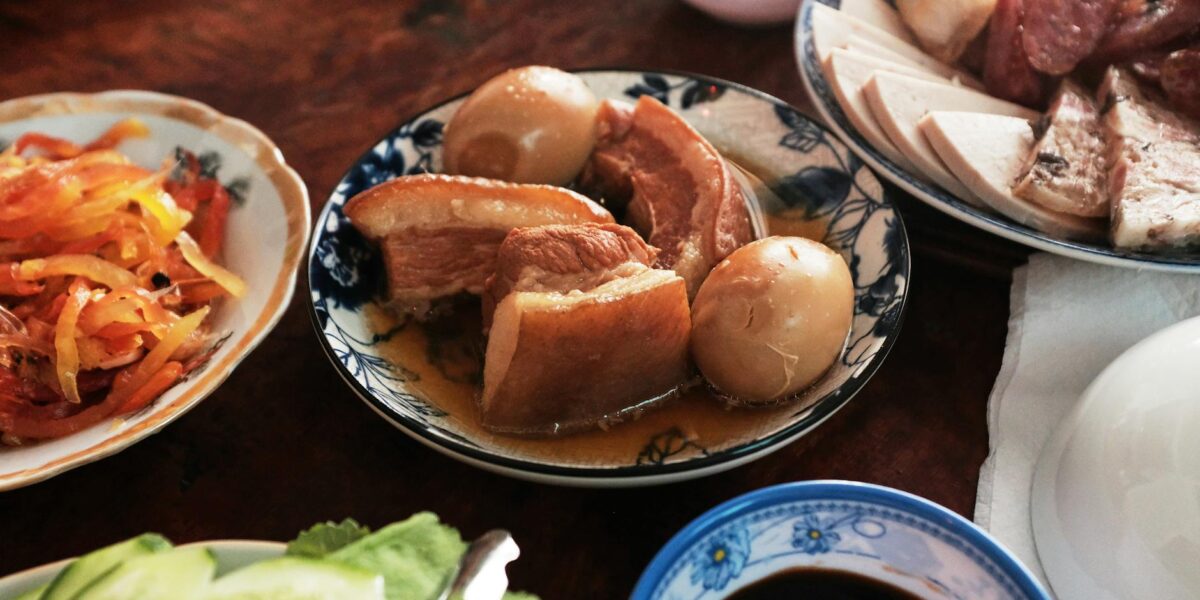
Thit kho tau is one of the most beloved dishes in Vietnamese home cooking — tender pork belly and eggs braised slowly in a sweet-savory caramel sauce made with coconut water and fish sauce. This thit kho recipe delivers the authentic southern Vietnamese flavors that families have passed down for generations, and it’s surprisingly simple to make at home. Whether you’re preparing it for Tet (Lunar New Year) or a comforting weeknight dinner, this Vietnamese caramel pork will become a staple in your kitchen.
The magic of thit kho lies in its caramel sauce — called nuoc mau — which gives the pork its signature deep amber color and complex sweetness. Combined with the umami depth of fish sauce, the gentle sweetness of coconut water, and the warmth of black pepper, every bite is a balance of sweet, salty, and savory. The eggs absorb all those flavors during the long braise, making them just as irresistible as the pork itself.
What Is Thit Kho Tau?
Thit kho tau (thịt kho tàu) literally translates to ”braised meat” in Vietnamese. The word ”tàu” in this context is debated — some scholars say it refers to ”tàu” meaning Chinese, pointing to the dish’s roots in Chinese braising traditions similar to red braising (hong shao). Others argue ”tàu” is a southern Vietnamese word for ”coconut water,” which is a defining ingredient. Regardless of etymology, the dish is unmistakably Vietnamese in flavor and tradition.
Originating in southern Vietnam, particularly the Mekong Delta region, thit kho tau has been a cornerstone of Vietnamese cuisine for centuries. The Mekong Delta’s abundance of coconut palms made coconut water a natural braising liquid, while the region’s warm climate favored slow-cooked dishes that could be prepared in advance and reheated throughout the day.
During Tet celebrations, thit kho tau holds a place of honor on the family table. Its glossy, golden-brown appearance symbolizes prosperity and good fortune, while the round eggs represent wholeness and unity. Many Vietnamese families begin preparing their thit kho days before the holiday, as the dish improves with time — the flavors deepen and the pork becomes increasingly tender with each reheating.
Why This Thit Kho Recipe Works
This recipe follows the traditional southern Vietnamese method with a few tested refinements for home cooks:
- Proper caramel technique: We build the nuoc mau (caramel color) from scratch, cooking sugar until deep amber for that signature mahogany color without bitterness.
- Coconut water braising: Authentic recipes use young coconut water — not coconut milk — for a clean, subtle sweetness that rounds out the fish sauce.
- Low and slow: A 90-minute braise on low heat renders the pork belly fat until silky and ensures the eggs absorb maximum flavor.
- Balanced seasoning: The ratio of fish sauce to sugar to coconut water has been fine-tuned so no single flavor dominates.
- Make-ahead friendly: Like many braises, thit kho tastes even better the next day, making it perfect for meal prep.
Ingredients for Thit Kho Tau
One of the beautiful things about Vietnamese caramel pork is its short ingredient list. You don’t need a dozen spices or a specialty pantry — just a handful of essential Asian cooking ingredients that create extraordinary depth of flavor.
Main Ingredients
- 2 lbs (900g) pork belly — skin-on, cut into 1.5-inch chunks. The layers of fat and meat are essential for the dish’s texture.
- 6 large eggs — hard-boiled and peeled. They absorb the braising liquid beautifully.
- 3 tablespoons granulated sugar — for making the caramel (nuoc mau).
- 1 tablespoon water — added to the sugar for caramelizing.
Braising Liquid
- 2 cups (480ml) young coconut water — fresh or packaged (not coconut milk or cream). Look for brands with no added sugar.
- 3 tablespoons fish sauce — use a quality Vietnamese brand like Three Crabs or Red Boat for the best flavor.
- 1 tablespoon soy sauce — adds color and a layer of umami.
- 1 teaspoon freshly ground black pepper — essential for authenticity.
Aromatics
- 4 cloves garlic — minced.
- 3 shallots — thinly sliced.
- 1 tablespoon vegetable oil — for sautéing.
Optional Additions
- 1 small daikon radish — peeled, cut into chunks (a popular southern addition).
- 2 dried chili peppers — for gentle heat.
- 1 star anise pod — for a subtle licorice note (more common in northern variations).
Essential Equipment
You don’t need specialized tools for thit kho tau, but having the right pot makes a difference:
- Heavy-bottomed pot or Dutch oven: Distributes heat evenly for the caramel and braise. A clay pot (nồi đất) is traditional and adds an earthy flavor.
- Medium saucepan: For hard-boiling the eggs.
- Fine-mesh strainer or spider: For removing eggs from boiling water.
- Tongs: For turning pork pieces during browning.
How to Make Thit Kho Tau: Step-by-Step Instructions
Step 1: Prepare the Pork (5 minutes)
Cut the pork belly into 1.5-inch (4cm) chunks, keeping the skin on. The skin adds body and richness to the braising liquid as it cooks. Pat the pieces dry with paper towels — this helps with browning later.
In a large bowl, toss the pork with 1 tablespoon of fish sauce (taken from the measured 3 tablespoons), half the minced garlic, and half a teaspoon of black pepper. Let it marinate while you prepare the other components. Even 10 minutes of marinating makes a noticeable difference.
Step 2: Hard-Boil and Peel the Eggs (15 minutes)
Place the eggs in a single layer in a saucepan and cover with cold water by one inch. Bring to a rolling boil over high heat, then immediately cover the pot, remove from heat, and let sit for 12 minutes. Transfer the eggs to an ice bath for 5 minutes, then peel.
Tip: For easier peeling, use eggs that are at least a week old. Fresh eggs cling to their shells. You can also add a teaspoon of baking soda to the boiling water to help loosen the shells.
Step 3: Make the Caramel (Nuoc Mau) (5 minutes)
This is the most critical step. The caramel gives thit kho its iconic deep amber color and underlying sweetness.
In your Dutch oven or heavy pot, combine the sugar and 1 tablespoon of water. Place over medium heat and stir gently until the sugar dissolves. Then stop stirring — swirl the pan instead. Watch carefully as the sugar transitions from clear to golden to deep amber. This takes 3-5 minutes.
The color should be dark amber, like strong coffee, but not black. If the caramel turns black, it will taste bitter — start over with fresh sugar. The moment it reaches the right color, you’ll add the coconut water in the next step to stop the cooking.
Step 4: Build the Braising Liquid (5 minutes)
Carefully pour the coconut water into the hot caramel — it will bubble and sputter vigorously, so stand back and pour slowly. Stir until the caramel dissolves completely into the coconut water. Add the remaining fish sauce, soy sauce, and remaining black pepper. Stir to combine and set aside.
Step 5: Sear the Pork (10 minutes)
If you used the same pot for caramel, pour the braising liquid into a bowl temporarily. Add the vegetable oil to the pot over medium-high heat. Working in batches to avoid crowding, sear the marinated pork belly on all sides until golden brown, about 2-3 minutes per side. Searing develops a flavor crust that enriches the final dish.
Add the sliced shallots and remaining garlic to the pot. Stir for 30 seconds until fragrant.
Step 6: Braise the Pork (90 minutes)
Pour the caramel braising liquid back into the pot with the seared pork. The liquid should come about three-quarters of the way up the pork. If needed, add a splash more coconut water or plain water.
Bring to a boil, then immediately reduce to the lowest simmer your stove allows. Partially cover the pot, leaving a small gap for steam to escape. Braise for 60 minutes, gently turning the pork pieces every 20 minutes.
Step 7: Add the Eggs (30 minutes)
After 60 minutes, the pork should be tender and the sauce visibly reduced. Gently nestle the peeled hard-boiled eggs into the braising liquid, spooning sauce over them. If adding daikon, add it now as well.
Continue to simmer uncovered for another 30 minutes, turning the eggs occasionally so they color evenly. The eggs will develop a gorgeous mahogany hue. The sauce should reduce to a glossy, slightly thick consistency that coats the back of a spoon.
Step 8: Season and Serve
Taste the braising liquid and adjust: add more fish sauce for saltiness, a pinch of sugar for sweetness, or more black pepper for heat. The sauce should be balanced — not too sweet, not too salty.
Serve the thit kho tau in the braising pot or transfer to a serving bowl. Slice each egg in half to reveal the amber-tinted whites. Ladle plenty of sauce over steamed jasmine rice and serve alongside pickled mustard greens (dua chua) or stir-fried bok choy for contrast.
The Caramel: Tips for Perfect Nuoc Mau
The caramel stage is where most first-timers get nervous, but it’s actually forgiving once you understand what’s happening. Here are the keys to success:
| Caramel Stage | Color | What to Do |
|---|---|---|
| Dissolving | Clear/white | Stir gently until all sugar crystals melt |
| Light caramel | Pale gold | Stop stirring, swirl pan only — too early to stop |
| Medium caramel | Amber/honey | Watch closely — it moves fast from here |
| Dark caramel (target) | Deep amber/coffee | Immediately add coconut water to stop cooking |
| Burnt | Black with smoke | Discard and start over — bitter and unusable |
Key tips: Use a light-colored pot so you can see the color change clearly. Have your coconut water measured and ready to pour before you start the caramel. The entire process from dissolved sugar to dark caramel takes only 3-5 minutes over medium heat, and the final stage happens in seconds.
Variations of Thit Kho
While this recipe covers the classic southern-style thit kho tau, Vietnamese home cooks across the country have their own interpretations. Here are popular variations worth trying:
Thit Kho with Pork Shoulder
For those who prefer leaner meat, pork shoulder (also called pork butt) is an excellent substitute. It has enough marbling to stay moist during the long braise but significantly less fat than pork belly. Cut it into the same 1.5-inch chunks and add 15 minutes to the braising time since shoulder is a tougher cut.
Thit Kho Trung Cut (with Quail Eggs)
Quail eggs are a popular alternative in Vietnamese home cooking. Use 18-20 quail eggs in place of 6 chicken eggs. Their smaller size means they absorb flavor faster and cook more evenly. Boil quail eggs for just 4 minutes, then ice bath and peel.
Northern-Style Thit Kho
Northern Vietnamese versions often skip the coconut water entirely, using plain water instead, and add star anise, cinnamon stick, and a splash of rice wine. The result is more savory and less sweet than the southern style — closer to Chinese red-braised pork in character.
Instant Pot Thit Kho
For a faster version, make the caramel and sear the pork using the Instant Pot’s sauté function. Then pressure cook on high for 25 minutes with natural release. Add the eggs after releasing pressure and let them warm through in the hot sauce for 10 minutes. The texture won’t be identical to the stovetop version, but it’s remarkably close and takes less than an hour total.
Vegetarian Thit Kho (with Tofu)
Replace the pork belly with extra-firm tofu, pressed and cut into large cubes. Pan-fry the tofu until crispy on all sides, then braise in the caramel sauce for 20 minutes. Use mushroom sauce or vegetarian fish sauce as a substitute. Add fried tofu puffs for extra texture.
What to Serve with Thit Kho Tau
Thit kho tau is meant to be part of a multi-dish Vietnamese meal. The rich, sweet-savory pork is best balanced with lighter, tangier side dishes:
- Steamed jasmine rice: Non-negotiable. The sauce is meant to be spooned over rice. Learn how to cook rice perfectly for the best results.
- Pickled mustard greens (dua chua): The tangy, crunchy greens cut through the richness of the pork belly.
- Canh (Vietnamese soup): A light vegetable soup like canh chua (sour soup) or a simple spinach and tofu soup balances the meal.
- Fresh herbs and vegetables: Sliced cucumbers, lettuce leaves, and fresh herbs like cilantro and Thai basil add freshness.
- Stir-fried greens: Quick-cooked bok choy or morning glory with garlic provides a green vegetable component.
- Nuoc cham (dipping sauce): A small dish of nuoc cham — fish sauce, lime, sugar, garlic, and chili — complements everything on the table.
Tips for the Best Vietnamese Caramel Pork
After making thit kho hundreds of times, here are the tips that make the biggest difference:
- Don’t rush the braise. Low and slow is the entire philosophy of thit kho. If the liquid is bubbling vigorously, your heat is too high. You want gentle, lazy bubbles breaking the surface every few seconds.
- Use real coconut water. Not coconut milk, not cream of coconut, not coconut-flavored water. Look for young coconut water with no added sugar. The flavor difference is significant.
- Make it a day ahead. Like all braises, thit kho improves dramatically overnight. The pork firms up slightly when cold, making it easier to slice, and the flavors meld and deepen.
- Score the eggs. Before adding eggs to the braise, gently score the whites with a fork in a few places. This allows the sauce to penetrate more deeply, giving you eggs that are flavorful all the way through.
- Skim the fat. During braising, fat will rise to the surface. Skim it periodically for a cleaner sauce. If you’re reheating the next day, the solidified fat on top lifts off easily.
- Control the reduction. The sauce should reduce by about half during cooking. If it’s reducing too fast, add a splash of water and lower the heat. If it’s too thin at the end, remove the lid and simmer until it reaches the right consistency.
- Quality fish sauce matters. This dish has very few ingredients, so each one needs to pull its weight. A premium fish sauce like Red Boat or Megachef makes a noticeable difference compared to generic brands.
Nutritional Information
The following nutritional values are approximate per serving (recipe makes 6 servings). Values are for the pork, eggs, and sauce only — rice is not included.
| Nutrient | Per Serving | % Daily Value |
|---|---|---|
| Calories | 485 kcal | 24% |
| Total Fat | 36g | 46% |
| Saturated Fat | 13g | 65% |
| Cholesterol | 285mg | 95% |
| Sodium | 820mg | 36% |
| Total Carbohydrates | 10g | 4% |
| Dietary Fiber | 0g | 0% |
| Sugars | 9g | — |
| Protein | 28g | 56% |
| Iron | 2.1mg | 12% |
| Potassium | 340mg | 7% |
Note: Pork belly is a rich cut with a high fat content. Much of the fat renders out during the long braise and can be skimmed from the sauce. Using pork shoulder reduces the fat content by approximately 40% while maintaining excellent flavor and texture.
Storage and Reheating
Thit kho tau is one of the best make-ahead dishes in all of Asian cooking. In fact, it’s one of those rare recipes that actually improves with time.
Refrigerator Storage
Transfer cooled thit kho to an airtight container with the sauce covering the pork and eggs. It keeps in the refrigerator for up to 5 days. The fat will solidify on top — this actually acts as a natural seal that helps preserve freshness. Simply scrape off excess fat before reheating if you prefer a leaner dish.
Freezer Storage
Thit kho freezes well for up to 3 months. Remove the eggs before freezing, as they become rubbery when frozen and thawed. Freeze the pork and sauce in airtight containers or freezer bags, pressing out as much air as possible. Thaw overnight in the refrigerator before reheating.
Reheating
Reheat gently on the stovetop over low heat, adding a tablespoon of water if the sauce has thickened too much. Avoid the microwave if possible — stovetop reheating preserves the pork’s tender texture better. Each time you reheat, the flavors continue to develop and improve.
The History and Cultural Significance of Thit Kho
Thit kho tau is far more than a recipe — it’s a cultural touchstone that connects Vietnamese people to their heritage, their families, and the rhythm of the Lunar New Year.
In the days leading up to Tet, Vietnamese families begin their preparations in earnest. The kitchen becomes the heart of the home as multiple generations work together to prepare the holiday feast. Thit kho tau is typically one of the first dishes made because it needs time to develop its flavors and can be safely stored and reheated throughout the multi-day celebration.
The dish’s symbolism runs deep. The round eggs represent completeness and the cyclical nature of the new year. The rich, golden-brown color of the sauce signifies wealth and prosperity. In many families, the pot of thit kho is never allowed to fully empty during Tet — as it gets low, more pork and eggs are added, symbolizing abundance that never runs out.
Among the Vietnamese diaspora, particularly in communities throughout the United States, Canada, and Australia, thit kho tau carries an additional layer of meaning. It becomes a connection to homeland, a taste of nostalgia, and a tradition passed from immigrant parents to their children born abroad. Vietnamese-American families in California’s Little Saigon, Houston’s Midtown, and other communities keep this tradition alive, often adapting the recipe to available ingredients while maintaining its essential character.
Frequently Asked Questions
Can I use coconut milk instead of coconut water?
No — coconut milk and coconut water are completely different ingredients and will give you very different results. Coconut water is thin and mildly sweet, while coconut milk is thick and creamy. Using coconut milk would make the sauce heavy and mask the caramel flavor. If you can’t find coconut water, use plain water with a teaspoon of sugar instead.
What cut of pork is best for thit kho?
Pork belly is the traditional and preferred cut because its layers of fat and meat create the most luxurious texture after braising. Pork shoulder (Boston butt) is the best lean alternative — it has enough connective tissue to become tender during the braise. Avoid pork loin or tenderloin, which will dry out during the long cooking time.
My caramel turned bitter. What went wrong?
You let it go too far. Sugar goes from perfectly caramelized to burnt in just seconds. The key is to add the coconut water the moment the sugar reaches a deep amber color — don’t wait for it to darken further. Use a light-colored pot so you can see the color clearly, and have your coconut water ready to pour before you start.
Can I make thit kho in a slow cooker?
Yes, with modifications. Make the caramel on the stovetop first (slow cookers can’t reach the temperature needed for caramelization), then transfer everything to the slow cooker. Cook on low for 4-5 hours or high for 2-3 hours. Add the eggs during the last hour. The sauce may be thinner than stovetop versions, so you can reduce it on the stove at the end.
How do I know when the pork is done?
The pork is ready when it’s fork-tender — a fork should slide in and out with no resistance. The fat layers should be translucent and gelatinous, not white and solid. If the pork still feels tough after 90 minutes, continue braising with the lid on, checking every 15 minutes.
Is thit kho gluten-free?
The traditional recipe using only fish sauce is naturally gluten-free. However, this recipe includes soy sauce, which contains wheat. To make it fully gluten-free, replace the soy sauce with tamari or simply omit it and add an extra half tablespoon of fish sauce instead.
Why is my sauce too thin?
The sauce thickens through reduction during uncovered braising. If your sauce is still thin at the end of cooking, remove the pork and eggs and simmer the sauce alone over medium heat until it reaches a syrupy consistency that coats the back of a spoon. This usually takes 5-10 minutes.
Can I double this recipe?
Absolutely — thit kho scales up beautifully, which is why it’s a natural choice for holiday gatherings and meal prep. Double all ingredients and use a larger pot. The braising time stays roughly the same since you’re not changing the thickness of the pork pieces, just the volume. You may need an extra 15-20 minutes for the sauce to reduce properly.
More Vietnamese Recipes to Try
If you love this thit kho recipe, explore more authentic Vietnamese dishes from our collection:
- Pho Recipe — The iconic noodle soup, made from scratch with a deeply aromatic bone broth.
- Banh Mi Recipe — Crispy Vietnamese baguette sandwiches with pickled vegetables and savory fillings.
- Banh Xeo Recipe — Crispy, sizzling Vietnamese crepes stuffed with shrimp, pork, and bean sprouts.
- Bun Cha Recipe — Hanoi-style grilled pork patties served with rice noodles and fresh herbs.
- Spring Roll Recipe — Both fresh and fried versions of this beloved Vietnamese appetizer.
- Vietnamese Recipes — Our complete guide to Vietnamese cuisine, from pho to banh mi and beyond.

Mei Lin Chen
Mei Lin Chen is an Asian food writer and recipe developer. Melbourne-raised and London-based, she has spent over a decade exploring the rice paddies, hawker stalls, and home kitchens of South-East and East Asia. Her recipes balance traditional technique with everyday practicality.