Last updated: March 12, 2026
Okonomiyaki is Japan’s ultimate street food — a savory, crispy-edged pancake loaded with cabbage, protein, and a tangle of irresistible toppings. The name translates loosely to ”grilled as you like it,” which tells you everything about this dish’s spirit: it’s customizable, forgiving, and endlessly satisfying. Whether you’ve fallen in love with it at a teppanyaki counter in Osaka or discovered it through Japanese food videos, this recipe will help you recreate authentic okonomiyaki at home with ingredients you can find at any Asian grocery store.
This recipe focuses on Osaka-style okonomiyaki (sometimes called Kansai-style), where all the ingredients are mixed into the batter before cooking on a flat griddle. We’ll also cover the Hiroshima-style variation, which layers the components for a dramatically different texture. With a prep time of about 15 minutes and a cook time of 10 minutes per pancake, you can have a restaurant-quality okonomiyaki dinner on the table in under 30 minutes.
What Is Okonomiyaki?
Okonomiyaki is a Japanese savory pancake made from a simple batter of flour, eggs, and dashi stock, packed with shredded cabbage and your choice of protein. It’s cooked on a flat griddle or in a skillet, then generously topped with okonomiyaki sauce (a sweet-savory brown sauce similar to Worcestershire), Japanese mayonnaise, bonito flakes, and dried seaweed powder.
The dish has deep roots in Japanese food culture. It evolved from a simple flour-and-water crepe called funoyaki during the Edo period (1603–1868), which was originally a sweet snack. By the 1930s, cooks in Osaka had transformed it into a savory meal by adding cabbage, meat, and seafood. After World War II, when rice was scarce and wheat flour was plentiful thanks to American imports, okonomiyaki became a cheap, filling staple across Japan. Today, it’s one of the country’s most beloved comfort foods, with dedicated restaurants in virtually every Japanese city.
There are two major regional styles. Osaka-style (Kansai-style) mixes everything into the batter before cooking — it’s the version most commonly found outside Japan and the one we’re making today. Hiroshima-style builds the pancake in layers: a thin crepe, mountains of cabbage, noodles (usually yakisoba), protein, and a fried egg on top, all pressed together on the griddle. Both are delicious, and we’ll cover both approaches.
Why This Okonomiyaki Recipe Works
This recipe is designed for home cooks using a standard stovetop and skillet. Here’s what makes it reliable:
- Nagaimo (Japanese mountain yam) in the batter — This is the secret ingredient that gives okonomiyaki its signature light, fluffy interior. Grated nagaimo adds moisture and a subtle stickiness that prevents the pancake from becoming dense. If you can’t find it, we include substitutes below.
- Proper dashi-based batter — Using homemade dashi or dashi powder instead of plain water builds umami into the pancake from the inside out.
- Resting the batter — A 10-minute rest allows the gluten to relax, which keeps the pancake tender rather than chewy.
- Medium heat and patience — Okonomiyaki needs about 4–5 minutes per side on medium heat. Rushing it with high heat gives you a burnt outside and raw center.
- Homemade okonomiyaki sauce — The sauce recipe included here uses pantry staples and tastes better than most bottled versions.
Ingredients for Okonomiyaki
Here’s everything you need for 2 large okonomiyaki pancakes (serves 2–4 people). All ingredients are available at well-stocked Asian grocery stores or online at Umami Cart.
Batter
- 1 cup (120g) all-purpose flour
- ½ cup (120ml) dashi stock, cooled (or ½ teaspoon dashi powder dissolved in ½ cup water)
- 2 large eggs
- 3 inches (75g) nagaimo, peeled and finely grated (optional but highly recommended)
- ¼ teaspoon salt
- ½ teaspoon baking powder
Filling
- 3 cups (about 250g) green cabbage, finely shredded
- 4 strips thinly sliced pork belly (about 120g) — or substitute shrimp, squid, or bacon
- 3 green onions, thinly sliced
- 2 tablespoons tenkasu (tempura scraps) — or crushed plain potato chips in a pinch
- 2 tablespoons pickled red ginger (beni shoga), chopped
Toppings
- Okonomiyaki sauce (or tonkatsu sauce — see homemade recipe below)
- Japanese Kewpie mayonnaise
- Katsuobushi (bonito flakes)
- Aonori (dried green seaweed flakes)
For Cooking
- 1 tablespoon neutral oil (vegetable, canola, or rice bran oil)
Essential Ingredient Notes
Nagaimo (山芋) — Also sold as yamaimo or Japanese mountain yam, this is a long, beige root vegetable with a slimy, mucilaginous texture when grated. It’s the key to a light, airy okonomiyaki. When grated into the batter, it acts almost like a binding agent that traps air, giving the pancake a custard-like interior. You can find it in the refrigerated produce section of most Japanese and Korean grocery stores. Handle it with gloves if your skin is sensitive, as the raw slime can cause mild itching. If unavailable, substitute with ¼ cup grated potato mixed with 1 tablespoon of plain yogurt.
Tenkasu (天かす) — These are crunchy tempura batter bits, the crispy scraps left over from frying tempura. They add an amazing crunch and richness to the batter. Find them in bags near the tempura section. If unavailable, crush some plain rice crackers or use panko breadcrumbs toasted in a dry pan.
Beni shoga (紅しょうが) — Pickled red ginger that’s been dyed with red perilla leaves. It adds a sharp, tangy bite that cuts through the richness of the pork and mayo. Don’t confuse it with sushi ginger (gari), which is milder and sweeter. Beni shoga comes in thin strips and is bright red.
Okonomiyaki sauce — This thick, sweet-savory sauce is the soul of the dish. Otafuku is the most popular brand. It tastes like a fruitier, thicker version of Worcestershire sauce with a hint of sweetness. You can substitute tonkatsu sauce, which is very similar, or make your own (recipe below).
Kewpie mayonnaise — Japanese mayo made with rice vinegar and egg yolks only (no whites), giving it a richer, tangier flavor than American mayo. It comes in a distinctive soft squeeze bottle with a red cap. The thin nozzle lets you drizzle decorative lines across the okonomiyaki.
Step-by-Step Cooking Instructions
Step 1: Make the Batter
In a large mixing bowl, whisk together the flour, dashi stock, and salt until smooth. The batter should be slightly thinner than American pancake batter. If using nagaimo, grate it directly into the bowl using a fine grater — it will be slimy and goopy, which is exactly what you want. Stir to combine. Add the baking powder and whisk briefly. Let the batter rest for 10 minutes at room temperature.
Step 2: Prepare the Cabbage and Filling
While the batter rests, finely shred the cabbage. You want thin strips, roughly ⅛-inch wide and 2 inches long. The fineness matters — thick chunks won’t cook through properly and will make the pancake hard to flip. Slice the green onions and chop the beni shoga.
Step 3: Combine Batter and Filling
Crack the eggs into the rested batter and stir until just combined. Add the shredded cabbage, green onions, tenkasu, and beni shoga. Fold everything together gently — you want to coat the cabbage with batter without deflating it. The mixture will look very cabbage-heavy with just enough batter to hold it together. This is correct. A batter-heavy okonomiyaki will be dense and doughy; you want it to be mostly vegetables.
Step 4: Cook the First Side
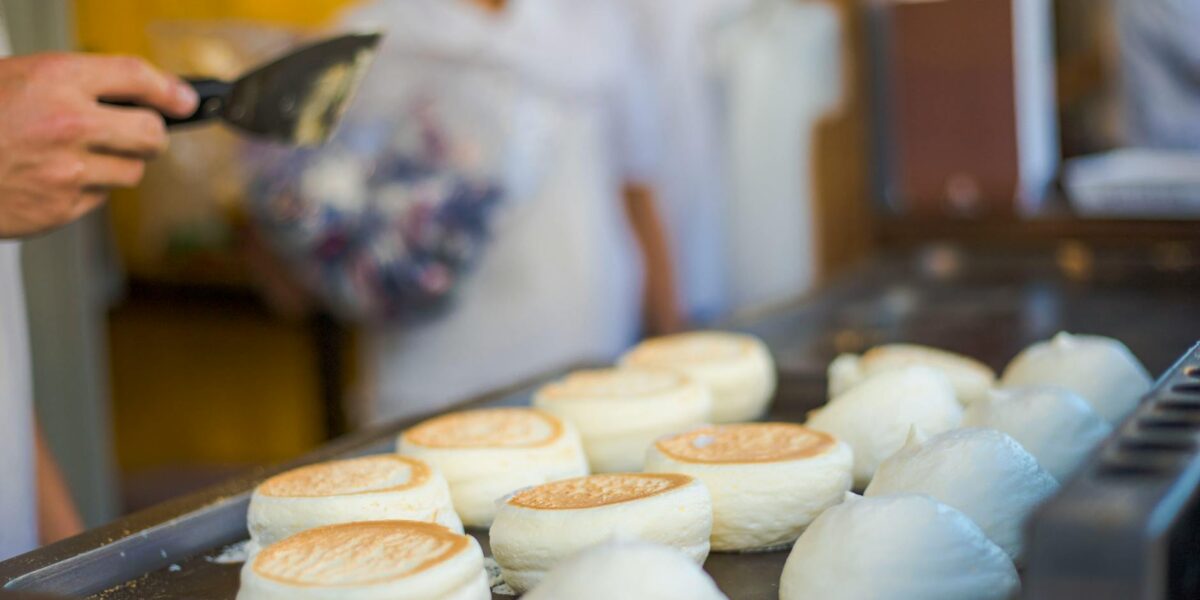
Heat a large nonstick skillet or well-seasoned cast iron pan over medium heat. Add ½ tablespoon of oil and swirl to coat. Scoop half the batter mixture into the pan and use a spatula to gently shape it into a round disc about 7 inches (18cm) in diameter and ¾ inch (2cm) thick. Don’t press it down — you want it fluffy, not flat.
Lay 2 strips of pork belly across the top of the pancake (they’ll end up on the bottom when you flip). Cook undisturbed for 4–5 minutes until the bottom is golden brown and the edges start to look set. You can peek by gently lifting an edge with a spatula.
Step 5: The Flip
This is the moment that intimidates people, but it’s easier than you think. Slide a large, wide spatula under the pancake. In one confident motion, flip it over. Don’t hesitate — a quick, decisive flip works better than a slow, careful one. If your pancake breaks slightly, just push it back together. It’s very forgiving.
Pro tip: If you’re nervous, use two spatulas — one underneath and one on top to stabilize — or slide the pancake onto a plate, place another plate on top, invert, and slide it back into the pan.
Step 6: Cook the Second Side
Now the pork belly is on the bottom, sizzling and crisping in its own fat. Cook for another 4–5 minutes until the pork is crispy and cooked through and the center of the pancake is set. Press the top gently with the spatula — it should feel firm but slightly springy, not mushy. If you have a cooking thermometer, the center should read at least 165°F (74°C).
Step 7: Add Toppings and Serve
Transfer the okonomiyaki to a plate (pork side up for the best presentation). Now comes the fun part — the toppings:
- Brush or drizzle a generous amount of okonomiyaki sauce over the entire surface.
- Squeeze Kewpie mayo in thin lines across the top (crosshatch or zigzag patterns are traditional).
- Pile a handful of bonito flakes (katsuobushi) on top. They’ll dance and wave from the residual heat — this is one of the most mesmerizing sights in Japanese cooking.
- Sprinkle aonori (green seaweed flakes) evenly over everything.
Serve immediately while hot. Cut into quarters with a spatula and eat with chopsticks or a fork. Repeat with the remaining batter for the second pancake.
Homemade Okonomiyaki Sauce
If you can’t find bottled okonomiyaki sauce (Otafuku brand is the gold standard), you can make a very close approximation with pantry staples. This recipe makes enough for 2–3 okonomiyaki.
- 3 tablespoons Worcestershire sauce
- 2 tablespoons ketchup
- 1 tablespoon oyster sauce
- 1 tablespoon honey or sugar
- 1 teaspoon soy sauce
Whisk all ingredients together in a small bowl until the sugar dissolves. That’s it. The combination of Worcestershire (tangy, complex), ketchup (sweet, tomato-y), oyster sauce (deep umami), and soy sauce (salty depth) creates a remarkably good approximation of the real thing. Taste and adjust sweetness or saltiness to your preference.
Osaka-Style vs. Hiroshima-Style Okonomiyaki
The rivalry between Osaka and Hiroshima okonomiyaki is one of Japan’s great food debates. Here’s how they compare:
| Feature | Osaka-Style (Kansai) | Hiroshima-Style |
|---|---|---|
| Method | Mixed — all ingredients folded into batter | Layered — components stacked on griddle |
| Batter | Thick, substantial, holds everything together | Thin crepe, used as a base layer |
| Cabbage | Shredded and mixed in | Piled high in a mound, steamed as it cooks |
| Noodles | Optional add-in (called modan-yaki) | Essential — yakisoba noodles are always included |
| Egg | Mixed into batter | Fried separately, placed on top |
| Height | About 1 inch thick | 2–3 inches tall when stacked |
| Difficulty | Beginner-friendly | More advanced — requires griddle skills |
| Where to try | Osaka’s Dotonbori district | Hiroshima’s Okonomimura food village |
For home cooking, Osaka-style is the way to start. It’s simpler, more forgiving, and requires no special equipment beyond a good skillet. Once you’ve mastered it, try the Hiroshima-style for a more dramatic presentation.
Hiroshima-Style Okonomiyaki Variation
If you want to try the layered Hiroshima approach, here’s the method:
- Make a thin crepe: Pour a thin layer of batter (about 3 tablespoons) onto an oiled griddle or large skillet and spread it into a 7-inch circle.
- Layer the cabbage: Pile 2 cups of shredded cabbage on top of the crepe. It will look like way too much — that’s normal. Drizzle a tiny bit of batter over the cabbage to help it stick together.
- Add pork belly: Lay strips of pork across the top of the cabbage mound.
- Flip carefully: After 3–4 minutes, use two spatulas to flip the entire stack. Press down gently to compress the cabbage. Cook for 5 minutes.
- Cook the noodles: In a separate area of the griddle (or another pan), stir-fry 1 portion of yakisoba noodles with a splash of soy sauce. Form them into a round disc the same size as the pancake.
- Stack: Place the pancake on top of the noodle disc.
- Fry an egg: Crack an egg onto the griddle and break the yolk. Place the entire pancake-noodle stack on top of the egg. Cook 1 minute until the egg sets.
- Flip and top: Flip so the egg is on top. Apply sauce, mayo, bonito flakes, and aonori.
Popular Okonomiyaki Variations and Add-Ins
The beauty of okonomiyaki is in its name — ”as you like it.” Here are popular variations you’ll find across Japan and in restaurants worldwide:
Seafood Okonomiyaki (Seafood Mix) — Replace pork belly with a combination of shrimp, squid, and scallops. Add them directly to the batter before cooking. Seafood okonomiyaki is particularly popular in coastal areas of Japan.
Modan-yaki (Modern-yaki) — Osaka-style okonomiyaki with yakisoba or udon noodles mixed into the batter. It’s essentially a carb-on-carb celebration that’s incredibly satisfying. Cook the noodles briefly first, then fold them into the batter mixture.
Negiyaki — A thinner, crispier version loaded with green onions instead of cabbage. The batter is spread thinner and the result is more like a savory crepe. Popular in Osaka as a lighter alternative.
Cheese Okonomiyaki — Add ½ cup of shredded mozzarella or cheddar to the batter, or place sliced cheese on top during the last minute of cooking. Very popular with younger diners in Japan.
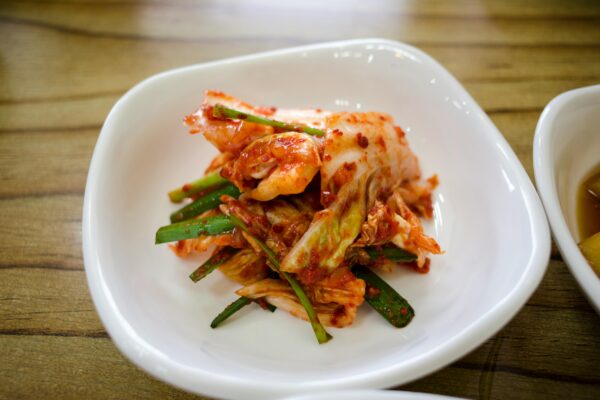
Kimchi Okonomiyaki — Add ½ cup of drained, chopped kimchi to the batter. The fermented tang pairs wonderfully with the sauce and mayo. A Korean-Japanese fusion that’s become a modern classic.
Vegetarian/Vegan Okonomiyaki — Skip the pork, use vegetable dashi, and replace the egg with a flax egg (1 tablespoon ground flaxseed mixed with 3 tablespoons water). Add corn, edamame, mushrooms, or diced crispy tofu for protein. Use vegan mayo for topping.
Tips for Perfect Okonomiyaki Every Time
Shred the cabbage finely. This is the single most important tip. Thick, chunky cabbage won’t cook through and makes the pancake difficult to flip. Use a sharp knife or mandoline to get thin, even shreds about ⅛ inch wide.
Don’t press the pancake down while cooking. It’s tempting to flatten it with a spatula, but this squeezes out air and moisture, making it dense. The only exception is Hiroshima-style, where you press gently once after flipping to help the cabbage compact.
Use medium heat, not high. High heat will burn the outside before the inside cooks through. Medium heat gives you a golden, crispy exterior and a fully cooked, fluffy interior. Be patient.
The cabbage-to-batter ratio matters. Your mixture should be mostly cabbage with just enough batter to loosely hold it together. If you can’t see any cabbage, you’ve used too much batter. A good ratio is approximately 2 parts cabbage to 1 part batter by volume.
Commit to the flip. A hesitant, slow flip is more likely to fail than a quick, confident one. Get your spatula fully underneath, take a breath, and go for it. If it breaks, push it back together — nobody will know once the toppings go on.
Let it rest for 1 minute after cooking. Just like a steak, a brief rest lets the interior set up. Cut into it immediately and the center may seem slightly underdone; wait 60 seconds and it’ll be perfect.
Make nagaimo your priority ingredient. If you can find only one specialty ingredient, make it nagaimo. It transforms the texture from a dense cabbage pancake into something light and almost custardy. The difference is dramatic.
Nutritional Information
Approximate nutritional values per serving (1/2 of one large okonomiyaki, without sauce and mayo toppings):
| Nutrient | Amount per Serving | % Daily Value* |
|---|---|---|
| Calories | 320 kcal | 16% |
| Total Fat | 14g | 18% |
| Saturated Fat | 4.5g | 23% |
| Cholesterol | 115mg | 38% |
| Sodium | 480mg | 21% |
| Total Carbohydrates | 32g | 12% |
| Dietary Fiber | 2.5g | 9% |
| Sugars | 4g | — |
| Protein | 16g | 32% |
| Vitamin C | 28mg | 31% |
| Calcium | 72mg | 6% |
| Iron | 2.4mg | 13% |
*Percent Daily Values based on a 2,000-calorie diet. Adding okonomiyaki sauce adds approximately 25 calories and 400mg sodium per tablespoon. Kewpie mayo adds approximately 100 calories and 1g carbs per tablespoon.
How to Store and Reheat Okonomiyaki
Refrigerator storage: Let cooked okonomiyaki cool completely, then wrap tightly in plastic wrap or place in an airtight container. Store without toppings — add sauce, mayo, bonito flakes, and aonori fresh when reheating. Keeps for 2–3 days in the refrigerator.
Freezer storage: Wrap each cooled pancake individually in plastic wrap, then place in a freezer-safe bag. Remove as much air as possible. Okonomiyaki freeze beautifully for up to 1 month. The cabbage does soften slightly upon thawing, but the flavor remains excellent.
Reheating — skillet method (best): Heat a lightly oiled skillet over medium heat. Cook the okonomiyaki for 2–3 minutes per side until heated through and the exterior is crispy again. This method restores the texture closest to fresh.
Reheating — oven method: Preheat to 375°F (190°C). Place okonomiyaki on a baking sheet and heat for 8–10 minutes. This works well for reheating multiple pancakes at once.
Reheating — microwave method (fastest): Microwave on high for 1.5–2 minutes. The pancake will be soft rather than crispy, but it’s quick and convenient. For slightly better texture, microwave for 1 minute then finish in a hot skillet for 30 seconds per side.
Batter storage: The raw batter (without cabbage and fillings mixed in) can be refrigerated for up to 24 hours. Add the cabbage and fillings just before cooking to prevent the cabbage from releasing moisture and making the batter watery.
Equipment You’ll Need
You don’t need any specialized Japanese cooking equipment to make great okonomiyaki at home. Here’s what works:
- Large nonstick skillet or cast iron pan (10–12 inches) — The larger the better, as okonomiyaki are typically 7–8 inches in diameter and you need room to maneuver the spatula. A well-seasoned cast iron pan gives the best crust.
- Wide spatula — A fish spatula or large flat spatula is ideal for flipping. In Japan, they use special okonomiyaki spatulas called kote or hera.
- Large mixing bowl — For combining the batter and fillings.
- Fine grater — For the nagaimo. A Microplane or the fine side of a box grater works well.
- Mandoline or sharp knife — For shredding cabbage finely and evenly.
If you want to go all-in, an electric griddle or teppanyaki hot plate set in the middle of the table lets everyone cook and customize their own okonomiyaki — which is exactly how it’s done at many restaurants in Japan.
The History and Culture of Okonomiyaki
Okonomiyaki’s history reflects broader shifts in Japanese food culture. The dish’s precursor, funoyaki, was a thin wheat crepe sweetened with miso that Sen no Rikyu, the legendary tea master, reportedly enjoyed in the 16th century. By the Meiji era (1868–1912), a sweeter version called sukesoyaki was popular at festivals and street stalls.
The transformation into a savory dish happened in the 1930s, when Osaka street vendors started adding cabbage, green onions, and whatever proteins were affordable. The dish was called issen yoshoku (”one-cent Western food”) — a nod to its cheap price and the Western influence of using wheat flour, which was considered modern and cosmopolitan at the time.
World War II cemented okonomiyaki’s place in Japanese culture. With rice scarce during and after the war, wheat flour became a staple through American food aid. Osaka and Hiroshima, both heavily bombed during the war, rebuilt their food cultures around affordable, filling wheat-based dishes. Okonomiyaki became a symbol of resilience and resourcefulness — a meal that could feed a family using whatever ingredients were available.
The Hiroshima style developed slightly differently, influenced by the city’s rebuilding efforts in the 1950s. Street vendors near the city’s reconstruction zones developed the layered technique, adding noodles for extra substance. Today, Hiroshima’s Okonomimura building houses over 20 okonomiyaki shops across multiple floors — a pilgrimage site for fans of the dish.
In modern Japan, okonomiyaki is both casual street food and a sit-down dining experience. Many restaurants feature large teppan griddles built into the tables, where diners cook their own pancakes. In Osaka’s Dotonbori entertainment district, you can find okonomiyaki restaurants on nearly every block. The dish has also spread globally, with dedicated restaurants in cities from New York to London to Sydney.
Frequently Asked Questions
What does okonomiyaki taste like?
Okonomiyaki has a complex, deeply savory flavor profile. The cabbage provides sweetness and freshness, the pork adds richness and a salty crunch, and the batter is subtly flavored with dashi umami. But the real flavor bomb comes from the toppings — the sweet-tangy okonomiyaki sauce, the creamy acidity of Kewpie mayo, the smoky-oceanic hit of bonito flakes, and the seaweed fragrance of aonori. All together, it’s a combination of sweet, savory, tangy, and umami in every bite.
Can I make okonomiyaki without nagaimo?
Yes, you can. The pancake will be slightly denser and less fluffy, but still delicious. To compensate, you can add an extra egg for moisture and lightness, or mix in ¼ cup of grated potato plus 1 tablespoon of plain yogurt to approximate nagaimo’s texture. Some cooks also add an extra ¼ teaspoon of baking powder.
What’s the best cabbage for okonomiyaki?
Regular green cabbage (the round, pale green variety commonly found in Western supermarkets) is perfect. In Japan, spring cabbage (haru kyabetsu) is prized for okonomiyaki because it’s sweeter and more tender. Savoy cabbage also works well due to its tender leaves. Avoid red cabbage (too tough) and napa cabbage (too watery).
Can I use a wok instead of a skillet?
A wok is not ideal for okonomiyaki because of its curved shape — you need a flat surface for the pancake to cook evenly. A flat-bottomed pan or griddle is much better. If a wok is truly your only option, you could try using a flat wok lid as a cooking surface, but a regular skillet is strongly recommended.
Is okonomiyaki gluten-free?
Traditional okonomiyaki is not gluten-free, as it contains wheat flour and soy sauce-based toppings. However, you can make a gluten-free version by substituting the all-purpose flour with a 1:1 gluten-free flour blend (Bob’s Red Mill or King Arthur work well), using tamari instead of soy sauce in the homemade sauce, and checking that your oyster sauce is gluten-free. The texture will be slightly different but still very good.
How do I prevent the okonomiyaki from falling apart when flipping?
Three things help: First, make sure the bottom is fully cooked and golden before attempting the flip — it should slide easily when you shake the pan. Second, use the widest spatula you have to support as much surface area as possible. Third, be decisive — a quick, confident flip works much better than a slow, cautious one. If all else fails, the plate-flip method (slide onto plate, invert with another plate, slide back into pan) is foolproof.
What can I serve with okonomiyaki?
Okonomiyaki is typically served as a standalone meal in Japan, but you can complement it with a simple miso soup, steamed rice, a light cucumber salad dressed with rice vinegar, or edamame. For a full izakaya-style spread, pair it with yakitori, gyoza, and cold beer or highballs.
How many calories are in okonomiyaki?
A standard pork okonomiyaki contains approximately 500–650 calories per pancake (before toppings). Adding sauce and mayo brings it to roughly 650–800 calories. A half-pancake serving is about 320 calories without toppings. This makes it a moderate-calorie meal, comparable to a large sandwich or a serving of pasta with sauce. Seafood or vegetable versions are typically 15–20% lower in calories.
What’s the difference between okonomiyaki and Korean pajeon?
While both are Asian savory pancakes, they’re quite different in practice. Korean pajeon (green onion pancake) uses a thinner, crispier batter and focuses on green onions as the star ingredient, often with seafood. It’s served with a soy-vinegar dipping sauce. Okonomiyaki has a thicker, fluffier batter, relies heavily on cabbage, and is topped with a sweet brown sauce and mayo. The textures, flavors, and eating experiences are distinct.
Can I make the batter ahead of time?
You can make the batter (without the cabbage) up to 24 hours in advance and store it in the refrigerator. Add the cabbage, eggs, and other fillings just before cooking. Adding cabbage too early draws out moisture, resulting in a watery batter and a soggy pancake. If you’ve already mixed everything, cook within 15 minutes for the best results.
Bring the Flavors of Osaka Home
Okonomiyaki is one of those rare dishes that’s simultaneously impressive and approachable. It looks dramatic on the plate with its layers of sauce, dancing bonito flakes, and emerald dusting of aonori — but it’s essentially a cabbage pancake that comes together in under 30 minutes. Once you make it a few times, it becomes the kind of weeknight meal you can throw together without a recipe, using whatever vegetables and proteins you have on hand.
Start with the Osaka-style recipe above, nail the basics, then experiment. Add cheese, kimchi, corn, or mochi. Try the Hiroshima-style layered version for a weekend project. Invite friends over and set up a griddle in the middle of the table so everyone can cook their own — that communal, cook-it-yourself experience is a huge part of what makes okonomiyaki special in Japan, and it translates beautifully to home entertaining.
For the most authentic experience, stock up on nagaimo, dashi, tenkasu, beni shoga, Otafuku sauce, and Kewpie mayo. You can find all of these at your local Asian grocery store or shop them online. Once you have these ingredients in your pantry, okonomiyaki becomes a meal you can make any night of the week.

Mei Lin Chen
Mei Lin Chen is an Asian food writer and recipe developer. Melbourne-raised and London-based, she has spent over a decade exploring the rice paddies, hawker stalls, and home kitchens of South-East and East Asia. Her recipes balance traditional technique with everyday practicality.