Last updated: March 03, 2026
Nepali food is one of Asia’s best-kept culinary secrets. Shaped by the dramatic geography of the Himalayas, the fertile Terai lowlands, and centuries of trade between Tibet, India, and Southeast Asia, Nepalese cuisine offers a depth of flavor that surprises even seasoned food lovers. From the iconic momo dumplings served on every street corner in Kathmandu to the nourishing daily ritual of dal bhat, Nepali food tells the story of a resilient mountain nation through its spices, fermented vegetables, and communal dining traditions.
In this complete guide, we explore the history, regional diversity, essential ingredients, must-try dishes, cooking techniques, and meal planning tips that make Nepali food so extraordinary. Whether you are visiting Nepal for the first time or recreating these flavors in your home kitchen, this guide will give you everything you need to understand and enjoy traditional Nepali food.
A Brief History of Nepali Food
Nepal sits at the crossroads of South and Central Asia, and its cuisine reflects that unique position. The country’s food traditions have been shaped by geography, religion, trade routes, and the dozens of ethnic groups that call Nepal home.
Historically, Nepal’s food culture was divided along altitudinal lines. In the high Himalayan regions bordering Tibet, the diet centered on barley, buckwheat, yak meat, and butter tea — staples that could withstand harsh winters at elevations above 3,000 meters. In the middle hills, where most of Nepal’s population lives, rice paddies and terraced farms produced the grain that would become the foundation of the national dish, dal bhat. The southern Terai plains, with their subtropical climate and proximity to the Indian state of Bihar and Uttar Pradesh, contributed a love of flatbreads, pickles, and robust spice blends.
The Newar people of the Kathmandu Valley developed what many consider the most sophisticated culinary tradition in Nepal. Newari cuisine, with its elaborate feast culture called ”bhoye,” features dozens of courses including fermented meats, bone marrow soup, rice crepes, and an astonishing variety of pickles and chutneys. When the Shah dynasty unified Nepal in the 18th century, Newari food culture began spreading beyond the valley, mixing with other regional traditions.
Trade along the ancient salt routes between Tibet and India brought ingredients like Sichuan pepper (known locally as timur), dried yak cheese, and various spice blends that distinguish Nepali food from its Indian neighbors. The arrival of chili peppers from the New World via Portuguese traders, and later the influence of British colonial-era India, further diversified the Nepali pantry.
Today, Nepali food is gaining international recognition. The global momo craze, fueled by Nepali diaspora communities in the US, UK, Australia, and the Middle East, has introduced millions of people to Himalayan flavors. Meanwhile, a new generation of Nepali chefs is reinterpreting traditional dishes for modern audiences while preserving the essence of this ancient cuisine.
Regional Cuisines of Nepal
Nepal is a small country, roughly the size of Arkansas, but its dramatic elevation changes — from near sea level in the Terai to the summit of Mount Everest — create extraordinary culinary diversity. Understanding Nepal’s regional cuisines helps explain why Nepali food is so much more varied than most outsiders expect.
The Kathmandu Valley and Newari Cuisine
The Newar people of the Kathmandu Valley are considered the original inhabitants of this fertile basin. Newari cuisine is Nepal’s most elaborate food tradition, featuring dishes like choila (spiced grilled buffalo), chatamari (Newari rice crepes often called ”Nepali pizza”), yomari (steamed rice flour dumplings filled with molasses), and bara (lentil pancakes). Newari feasts can include over 30 separate dishes, each with ritual significance. The cuisine makes extensive use of buffalo meat, fermented bamboo shoots, and mustard oil.
The Himalayan North
In regions like Mustang, Dolpo, and the Sherpa homeland of Solukhumbu, the cuisine shares deep roots with Tibetan food. Staples include tsampa (roasted barley flour), thukpa (hearty noodle soup), tingmo (steamed bread), and yak butter tea (po cha). Dried meats, hard cheese, and high-calorie foods are essential for survival at altitude. Buckwheat dishes are common, including dhido (a thick porridge) and buckwheat pancakes.
The Middle Hills
This is the heartland of dal bhat culture. Communities of Gurung, Magar, Tamang, Rai, and Limbu people each have distinct food traditions. The Limbu people of eastern Nepal are known for kinema (fermented soybean) and their love of pork and fermented vegetables. Gurung cuisine features gundruk (fermented leafy greens) and dishes seasoned with timur and jimbu (Himalayan herb related to chives). The middle hills produce much of Nepal’s rice, millet, and maize.
The Terai Lowlands
Nepal’s southern plains share culinary DNA with North Indian cuisine. Flatbreads like roti and paratha are more common here than rice. Tharu cuisine, from the indigenous Tharu people, features unique dishes like ghonghi (river snail curry), dried fish preparations, and a variety of wild greens. The Terai is also Nepal’s breadbasket, producing rice, lentils, sugarcane, and tropical fruits.
Essential Ingredients in Nepali Cooking
Nepali cuisine uses a focused but distinctive set of ingredients. While it shares some pantry staples with Indian and Tibetan cooking, several ingredients are uniquely Nepali or used in distinctly Nepali ways. Many of these can be found at Asian grocery stores or ordered from online retailers like Umami Cart.
| Ingredient | Nepali Name | Description | Key Uses |
|---|---|---|---|
| Sichuan Pepper | Timur | Tongue-numbing peppercorn with citrusy aroma; Nepal’s signature spice | Momos, pickles, meat dishes, chutneys |
| Mustard Oil | Tori ko Tel | Pungent, golden oil with a sharp bite; the primary cooking fat | Stir-frying, pickling, salad dressings |
| Fermented Leafy Greens | Gundruk | Sun-dried and fermented mustard greens or radish leaves; probiotic-rich | Soups, side dishes, pickles |
| Fermented Soybeans | Kinema | Sticky, pungent fermented soybean similar to Japanese natto | Curries, soups, side dishes |
| Himalayan Herb | Jimbu | Dried herb with an onion-garlic flavor unique to Nepal | Tempering for dal, vegetable dishes |
| Turmeric | Besar | Golden-yellow rhizome used fresh and dried | Dal, curries, rice dishes, marinades |
| Cumin Seeds | Jeera | Earthy, warm spice essential for tempering | Dal bhat, meat curries, chutneys |
| Fenugreek Seeds | Methi | Slightly bitter seed used in pickles and spice blends | Achaar, vegetable curries, flatbreads |
| Dried Red Chilies | Sukeko Khursani | Various local varieties from mild to very hot | Chutneys, achaar, curry pastes |
| Rice | Chamal | Medium-grain white rice; the foundation of every meal | Dal bhat, beaten rice dishes, sel roti |
| Lentils (various) | Dal | Black lentils, yellow lentils, split peas | Daily dal, soups, fritters |
| Ghee | Ghiu | Clarified butter used for richness and ritual cooking | Rice, sel roti, festival foods |
| Beaten Rice | Chiura | Flattened, dried rice flakes; Nepal’s essential snack grain | Snacks, breakfast, Newari feasts |
| Ginger | Aduwa | Fresh ginger root used extensively in cooking and tea | Curries, momos, tea, chutneys |
15 Must-Try Nepali Dishes
These are the dishes that define Nepali food, from everyday staples to festival specialties. If you are exploring Nepalese cuisine for the first time, start here.
1. Dal Bhat Tarkari (Lentils, Rice, and Vegetable Curry)
Dal bhat is not just a dish — it is the foundation of Nepali life. Eaten twice daily by most Nepalis, this complete meal consists of steamed rice (bhat), lentil soup (dal), vegetable curry (tarkari), and a side of pickle (achaar). The saying ”dal bhat power, 24 hour” is a national motto that reflects how this balanced meal fuels everyone from Himalayan trekkers to rice farmers. Each household has its own dal bhat style, and regional variations are endless. The dal is typically tempered with cumin, turmeric, garlic, and jimbu. Restaurants and homes traditionally offer unlimited refills.
2. Momo (Nepali Dumplings)
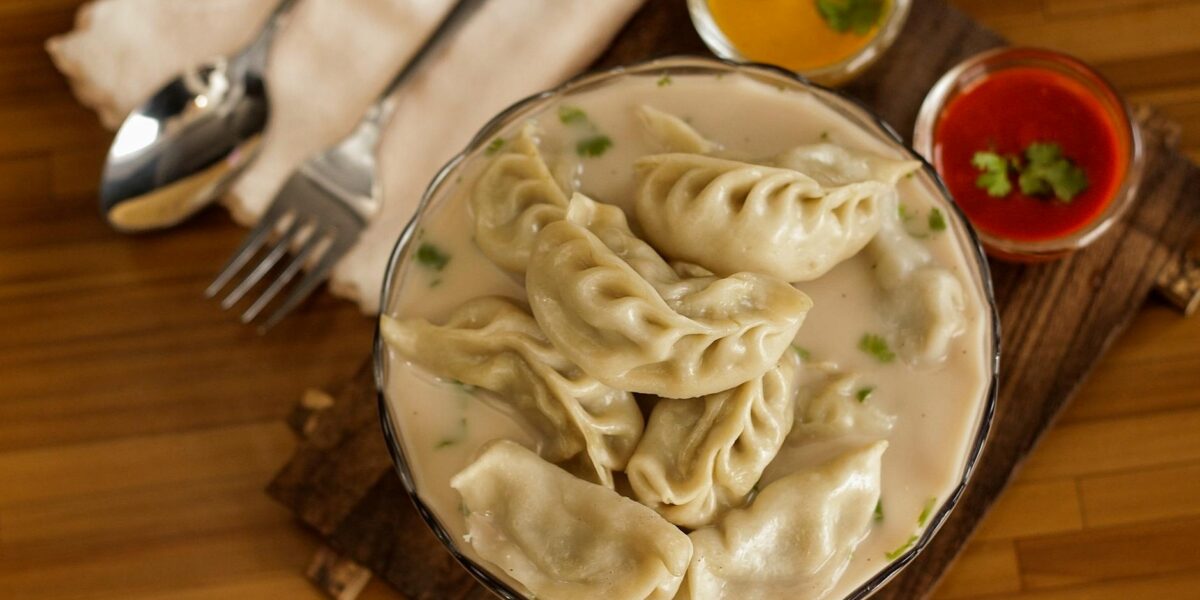
Momos are Nepal’s most beloved street food and arguably its greatest culinary export. These crescent or round-shaped dumplings are filled with spiced buffalo meat, chicken, or vegetables, then steamed, fried, or served in a spicy soup (jhol momo). The key to great momos is the filling, which typically includes onion, garlic, ginger, cilantro, and timur. They are always served with a fiery tomato-based achaar. If you enjoy Chinese jiaozi or Japanese gyoza, momos will feel familiar yet distinctly different thanks to the Nepali spice blend.
3. Choila (Spiced Grilled Meat)
A signature Newari dish, choila is made from grilled or charred buffalo (or chicken) meat that is diced and tossed with mustard oil, timur, chilies, ginger, garlic, and fresh herbs. The result is a cold salad-like dish with smoky, spicy, and numbing flavors. It is traditionally eaten with chiura (beaten rice) and is a centerpiece of Newari feasts and festivals.
4. Sel Roti (Nepali Ring Doughnut)
Sel roti is a crispy, slightly sweet ring-shaped bread made from rice flour batter. It is deep-fried to golden perfection and eaten during Dashain and Tihar, Nepal’s biggest festivals. The batter is made by grinding soaked rice with sugar, ghee, and sometimes cardamom or banana. Unlike Western doughnuts, sel roti has a denser, crunchier texture and a subtle sweetness that pairs beautifully with spicy achaar or a cup of Nepali milk tea.
5. Gundruk Ko Jhol (Fermented Greens Soup)
Gundruk is Nepal’s answer to kimchi — sun-dried and fermented leafy greens (typically mustard leaves or radish tops) that develop a sour, tangy, and umami-rich flavor. The most popular preparation is gundruk ko jhol, a clear soup made by simmering the fermented greens with tomatoes, garlic, and timur. It is served as a side dish with dal bhat. Gundruk is rich in probiotics and was traditionally a way to preserve vegetables during Nepal’s long winters. If you enjoy the tang of Korean kimchi, you will love gundruk.
6. Thukpa (Himalayan Noodle Soup)
Borrowed from Tibetan cuisine and adapted with Nepali spices, thukpa is a warming noodle soup filled with vegetables, meat (often chicken or buffalo), and hand-pulled or store-bought noodles in a flavorful broth. It is the go-to comfort food in Nepal’s cooler regions and has become a popular street food nationwide. Thukpa is similar to other Asian noodle soups like Japanese ramen or Vietnamese pho, but uses a simpler broth seasoned with garlic, ginger, turmeric, and timur.
7. Chatamari (Newari Rice Crepe)
Often called ”Nepali pizza,” chatamari is a thin rice flour crepe topped with minced meat, egg, vegetables, or a combination. It is cooked on a flat pan and served as a snack or appetizer. Chatamari originated in the Kathmandu Valley and is a staple of Newari celebrations. The rice flour base gives it a unique nutty flavor and slightly crispy texture that sets it apart from Indian dosas or French crepes.
8. Kwati (Nine-Bean Soup)
Kwati is a traditional Nepali soup made from a mixture of nine different sprouted beans, simmered with ginger, garlic, turmeric, and cumin. It is traditionally prepared during the festival of Janai Purnima (the sacred thread festival) and Gun Punhi. Beyond its ritual significance, kwati is considered highly nutritious and is eaten as a health tonic during the monsoon season. The sprouting process makes the beans easier to digest and increases their nutritional value.
9. Yomari (Sweet Steamed Dumplings)
Yomari is a Newari delicacy — a steamed dumpling made from rice flour dough and filled with chaku (molasses) and sesame seeds, or khuwa (reduced milk solids). Shaped like a fish or fig, yomari is the centerpiece of the Yomari Punhi festival celebrated in December. The sweet, warm filling enclosed in the chewy rice flour wrapper makes this one of Nepal’s most beloved festival foods.
10. Sekuwa (Nepali Grilled Meat Skewers)
Sekuwa is Nepal’s version of barbecued meat — chunks of goat, chicken, pork, or buffalo marinated in a blend of timur, cumin, coriander, garlic, ginger, and mustard oil, then grilled over charcoal. It is one of Nepal’s most popular street foods, especially in the evening, when sekuwa stalls fire up across cities and towns. The timur-forward marinade gives sekuwa its distinctive citrusy, numbing character that sets it apart from other Asian grilled meats like Japanese yakitori or Korean bulgogi.
11. Bara (Lentil Pancake)
Bara is a savory Newari pancake made from ground black lentil batter, shaped into a disc, and pan-fried until golden. It can be served plain, topped with an egg (anda bara), or with minced meat (keema bara). Crispy on the outside and soft inside, bara is a popular breakfast and snack food in the Kathmandu Valley and is an essential component of Newari feasts.
12. Juju Dhau (King Yogurt of Bhaktapur)
Juju dhau, meaning ”king of yogurt” in Newari, is a sweetened, creamy yogurt set in traditional clay pots. Made exclusively in the ancient city of Bhaktapur, this dessert has a silky, custard-like texture achieved through slow fermentation with buffalo milk. The clay pot absorbs excess moisture, creating an extraordinarily thick and rich yogurt. Juju dhau is considered an essential offering at Newari festivals and ceremonies.
13. Dhido (Buckwheat or Millet Porridge)
Dhido is a traditional Nepali staple made by cooking buckwheat or millet flour in water until it forms a thick, dough-like porridge. It is eaten in place of rice, particularly in the mountainous regions where rice does not grow well. Dhido is typically served with gundruk soup, meat curry, or a spicy achaar. Its neutral flavor absorbs the accompanying curries and sauces, much like plain steamed rice does in other Asian cuisines.
14. Aloo Achaar (Spicy Potato Salad)
Achaar is the Nepali word for pickle or condiment, and aloo achaar — a spicy, tangy potato salad — is the most popular variety. Boiled potatoes are tossed with roasted sesame seeds, timur, lemon juice, green chilies, cilantro, and mustard oil. It accompanies dal bhat, momos, and virtually every other Nepali meal. The combination of nutty sesame, numbing timur, and sharp mustard oil creates a flavor profile that is unmistakably Nepali.
15. Chatpate (Nepali Street Snack Mix)
Chatpate is Nepal’s favorite street snack — a spicy, tangy, crunchy mix of puffed rice, diced potatoes, chickpeas, onions, tomatoes, cilantro, lemon juice, and a generous amount of chili powder and spices. Vendors mix it fresh to order in large bowls, and each serving is a flavor explosion of sour, spicy, and crunchy textures. It reflects the Indian chaat tradition but with distinctly Nepali seasonings.
Nepali Cooking Techniques
Nepali cooking techniques range from simple, everyday methods to specialized processes passed down through generations. Understanding these techniques is key to recreating authentic Nepali flavors at home.
Tadka (Tempering)
Like Indian cooking, Nepali cuisine relies heavily on tadka — the technique of blooming whole spices in hot oil or ghee to release their essential oils before adding them to a dish. Nepali tadka typically uses mustard oil rather than ghee, and the signature combination includes cumin seeds, dried red chilies, fenugreek seeds, and jimbu. This final tempering is poured over dal just before serving, creating a fragrant sizzle that defines the dish.
Fermentation
Fermentation is central to Nepali food culture. Gundruk (fermented leafy greens), sinki (fermented radish root), kinema (fermented soybeans), and various alcoholic beverages like tongba (fermented millet beer) are all products of traditional fermentation. These techniques developed as ways to preserve food during Nepal’s harsh winters and monsoon seasons, but they also create complex umami flavors and probiotic benefits.
Charcoal Grilling
Dishes like sekuwa and choila rely on direct charcoal grilling to achieve their distinctive smoky flavor. In Nepal, meat is often grilled over open flames or charcoal using simple wire grills or metal skewers. The technique is similar to other Asian grilling methods but the marinades and spice blends are uniquely Nepali.
Steaming
Steaming is the preferred cooking method for momos, yomari, and tingmo. Traditional Nepali steamers are multi-tiered metal or bamboo units that allow large batches of dumplings to be cooked at once. Proper steaming technique — not overcrowding the steamer, maintaining a consistent steam flow — is essential for momos that are juicy and tender rather than soggy or undercooked.
Stone Grinding
Traditional Nepali chutneys and achaar are prepared using a silauto and lohoro — a stone mortar and pestle that grinds spices, roasted tomatoes, and sesame seeds to a coarse paste. This method creates a texture and flavor depth that blenders cannot replicate, as the stone slowly crushes and bruises ingredients rather than chopping them.
Nepali Food vs. Other Asian Cuisines: A Comparison
Because Nepal sits between India, Tibet, and the broader Asian culinary world, it is helpful to understand how Nepali food relates to and differs from its neighbors. This comparison table highlights the key differences.
| Feature | Nepali Food | North Indian Food | Tibetan Food | Southeast Asian Food |
|---|---|---|---|---|
| Primary Grain | Rice, millet, buckwheat | Rice, wheat | Barley (tsampa) | Rice, rice noodles |
| Primary Cooking Fat | Mustard oil, ghee | Ghee, vegetable oil | Yak butter | Coconut oil, palm oil |
| Signature Spice | Timur (Sichuan pepper) | Garam masala | Minimal spicing | Lemongrass, galangal |
| Fermented Foods | Gundruk, kinema, sinki | Yogurt, pickles | Yak butter tea, chang | Fish sauce, shrimp paste |
| Dumpling Style | Momos (steamed, fried, jhol) | Samosas, gujiya | Momos (simpler filling) | Spring rolls, wontons |
| Heat Profile | Moderate, with numbing timur | Complex layered heat | Mild | Sharp chili heat with sour notes |
| Daily Staple Meal | Dal bhat tarkari | Roti with sabzi and dal | Tsampa with butter tea | Rice with multiple dishes |
| Protein Sources | Buffalo, goat, chicken, lentils | Chicken, lamb, paneer, lentils | Yak, mutton | Pork, seafood, chicken |
| Condiment Style | Tomato-timur achaar, sesame chutneys | Mango chutney, raita | Chili oil | Sambal, nam pla, nuoc cham |
| Feast Culture | Newari bhoye (30+ courses) | Thali (multiple small dishes) | Simple communal meals | Family-style shared plates |
The Role of Festivals in Nepali Food
Nepal is one of the most festival-rich countries in Asia, and food plays a central role in virtually every celebration. Understanding festival foods helps explain the diversity and depth of Nepali cuisine.
Dashain (September/October) is Nepal’s longest and most important festival, celebrating the goddess Durga’s victory over the demon Mahishasura. Families slaughter goats and prepare elaborate meat dishes, sel roti, and special rice dishes. It is a time when even vegetarian-leaning families may eat meat.
Tihar (October/November), the festival of lights, features sel roti, anarsa (rice flour sweets), and special treats prepared for crows, dogs, and cows on successive days. On the final day, sisters prepare elaborate meals for their brothers.
Yomari Punhi (December) is the Newari festival specifically dedicated to yomari dumplings, marking the end of the rice harvest. Entire neighborhoods come together to make and share yomari.
Janai Purnima (August) is when kwati, the nine-bean soup, is prepared in every household. The sprouted beans symbolize renewal and health.
Indra Jatra (September) is a Kathmandu Valley festival featuring Newari street food, including samay baji — a ceremonial plate of chiura, bara, choila, achaar, boiled egg, and black soybeans.
Nepali Drinks and Beverages
No guide to Nepali food is complete without its drinks. Beverages in Nepal range from everyday teas to fermented alcoholic specialties.
Chiya (Nepali Milk Tea) is the national drink, consumed multiple times daily. It is prepared by boiling black tea with milk, sugar, and sometimes cardamom, ginger, or cinnamon. Every tea stall has its own recipe, and the quality of a household’s chiya is a matter of pride.
Butter Tea (Po Cha) is the staple drink of Nepal’s Himalayan communities. Made with churned yak butter, salt, and tea, it provides essential calories and fat for life at high altitude. The salty, rich flavor takes some getting used to for newcomers but is deeply satisfying in cold weather.
Tongba is a traditional fermented millet beer from eastern Nepal. The fermented millet is served in a wooden or bamboo container with hot water poured over it. You sip it through a bamboo straw, adding hot water as you go. It is warming, slightly sour, and mildly alcoholic.
Raksi is a distilled spirit made from millet or rice, often produced at home. It is potent, clear, and an essential part of celebrations and offerings.
Lassi is a yogurt-based drink that Nepal shares with India. It is served sweet, salty, or plain, and is particularly refreshing in the warmer Terai lowlands.
Meal Planning Tips for Nepali Food at Home
Ready to cook Nepali food at home? Here are practical tips for planning your meals, whether you are making a simple weeknight dinner or an elaborate Nepali feast.
Start with Dal Bhat
If you can make one Nepali meal, make it dal bhat. Cook steamed rice, prepare a simple yellow lentil dal with turmeric and cumin tempering, sauté a seasonal vegetable curry (tarkari), and make a quick tomato achaar. This covers all the food groups and is endlessly customizable. Our dal recipe is a great starting point that can be adapted with Nepali seasonings.
Build Your Nepali Pantry
Stock these essentials: mustard oil, timur (Sichuan pepper), cumin seeds, turmeric, dried red chilies, fenugreek seeds, sesame seeds, and black lentils. With these ingredients plus onions, garlic, ginger, and tomatoes, you can make the vast majority of Nepali dishes. Browse the Asian cooking ingredients guide for help sourcing these items.
Weeknight Nepali Dinner Plan
Monday: Dal bhat with aloo tarkari (potato curry) and tomato achaar
Tuesday: Chicken momo with spicy dipping sauce
Wednesday: Thukpa with vegetables and whatever protein you have on hand
Thursday: Chana dal (chickpea lentil curry) with rice and gundruk ko jhol
Friday: Sekuwa-style grilled chicken skewers with chiura and choila-inspired salad
Nepali Dinner Party Menu
For a Nepali-themed gathering, serve a Newari-inspired spread: start with chatpate as an appetizer, then bara (lentil pancakes) and momos. For the main course, serve dal bhat with two tarkari options, choila, and several types of achaar. Finish with juju dhau (or regular thick yogurt with honey) and sel roti. Serve Nepali milk tea throughout the evening.
Substitutions and Shortcuts
If you cannot find timur, use Sichuan peppercorns as a close substitute. Mustard oil can be substituted with a mix of vegetable oil and a touch of wasabi or horseradish for a hint of pungency. Gundruk is hard to find outside Nepal, but you can approximate its tang with sauerkraut or kimchi in a pinch. For jimbu, use a combination of dried chives and a tiny amount of asafoetida.
Where to Eat Nepali Food
Nepali restaurants have proliferated in major cities worldwide, driven by growing diaspora communities. In the US, cities like New York (Jackson Heights, Queens), the Dallas–Fort Worth metroplex, and Columbus, Ohio have thriving Nepali food scenes. Look for restaurants that serve momo, dal bhat, and Newari specialties — these are good indicators of authenticity. In Nepal itself, the best food is often found not in restaurants but in homes and at street stalls. The Ason and Thamel neighborhoods of Kathmandu are excellent for street food exploration.
Nepali Food for Special Diets
Nepali cuisine is naturally accommodating to many dietary needs:
Vegetarian and Vegan: Dal bhat is inherently vegetarian, and many versions are vegan (using mustard oil instead of ghee). Gundruk, most achaar, and many tarkari dishes are plant-based. Nepal has a strong tradition of vegetarian cooking, especially among Hindu Brahmin communities.
Gluten-Free: Rice is the primary grain, and most Nepali dishes are naturally gluten-free. Buckwheat dhido, rice-based sel roti and chatamari, and all dal and tarkari dishes are safe for gluten-free diets. Watch out for thukpa and momo wrappers, which use wheat flour.
High-Protein: Between lentil-based dal, sprouted bean soups like kwati, fermented soybeans (kinema), and various meat dishes, Nepali food offers excellent protein variety. A standard dal bhat meal with meat tarkari provides a well-rounded macronutrient profile.
Frequently Asked Questions About Nepali Food
What is the national dish of Nepal?
Dal bhat tarkari is considered Nepal’s national dish. It consists of steamed rice, lentil soup, vegetable curry, and pickle, and is eaten by most Nepalis twice a day. It is more than a meal — it is a cultural institution that represents the balance and simplicity at the heart of Nepali food culture.
Is Nepali food the same as Indian food?
No. While Nepali and North Indian cuisines share some ingredients and techniques (like tempering spices in oil and using lentils and rice), Nepali food has distinct characteristics. The use of timur (Sichuan pepper), mustard oil as the primary cooking fat, fermented foods like gundruk and kinema, Tibetan-influenced dishes like thukpa and momos, and Newari feast traditions all set Nepali food apart from Indian cuisine.
What is timur and why is it important?
Timur is a spice closely related to Sichuan pepper that grows in the Nepali hills. It has a distinctive citrusy aroma and creates a numbing, tingling sensation on the tongue. Timur is the signature spice of Nepali cooking, used in momo achaar, choila, sekuwa marinades, and many other dishes. It is what gives Nepali food its unique flavor identity.
Are momos from Nepal or Tibet?
Momos have roots in Tibetan cuisine but were adopted and transformed in Nepal, where they became a national obsession. Nepali momos differ from Tibetan versions in their spicier, more complex fillings (using timur, cilantro, and onion) and the essential tomato-based achaar that accompanies them. Today, momos are as much Nepali as they are Tibetan — much like how ramen is considered Japanese despite its Chinese origins.
Is Nepali food spicy?
Nepali food ranges from mild to moderately spicy. The heat level is generally lower than Thai or Sichuan cuisine, but the numbing quality of timur adds a different kind of intensity. Many dishes are seasoned to be flavorful rather than fiery, though achaar and chutneys can pack serious heat. Spice levels vary by region, with Terai food tending to be spicier and Himalayan food milder.
Can I make Nepali food at home without special equipment?
Yes. Most Nepali dishes require nothing more than a regular pot, a pan, and a steamer (for momos). A mortar and pestle is helpful for making authentic achaar but a food processor works too. If you enjoy Asian cooking techniques like stir-frying and steaming, you already have the skills for most Nepali cooking.
What are the best Nepali dishes for beginners?
Start with dal bhat — it is simple, forgiving, and teaches you the fundamentals of Nepali flavor (tempering spices, balancing lentils and rice, making achaar). From there, try thukpa (an easy one-pot meal) and aloo achaar (a quick side dish). Once you are comfortable, tackle momos, which require more skill in wrapper-making and folding.
Where can I buy Nepali ingredients?
Most Nepali cooking ingredients are available at South Asian or general Asian grocery stores. Umami Cart carries many of the essential spices, lentils, and specialty items. For harder-to-find ingredients like gundruk, kinema, or jimbu, look for Nepali-specific grocery stores in areas with large Nepali communities, or search for them online.
Final Thoughts on Nepali Food
Nepali food deserves a place alongside the world’s great cuisines. Its combination of Tibetan warmth, Indian spice mastery, and uniquely Himalayan ingredients like timur, gundruk, and jimbu creates a flavor profile that is unlike anything else in Asia. From the humble perfection of dal bhat to the celebratory complexity of a Newari feast, Nepali cuisine rewards exploration at every level.
As more people discover momos, as Nepali restaurants open in cities worldwide, and as a new generation of cooks shares family recipes online, the world is finally beginning to appreciate what Nepalis have known all along: this is food worth celebrating, studying, and savoring. Whether you start with a steaming plate of dal bhat or a basket of juicy momos dipped in fiery achaar, you are tasting centuries of Himalayan tradition in every bite.

Mei Lin Chen
Mei Lin Chen is an Asian food writer and recipe developer. Melbourne-raised and London-based, she has spent over a decade exploring the rice paddies, hawker stalls, and home kitchens of South-East and East Asia. Her recipes balance traditional technique with everyday practicality.