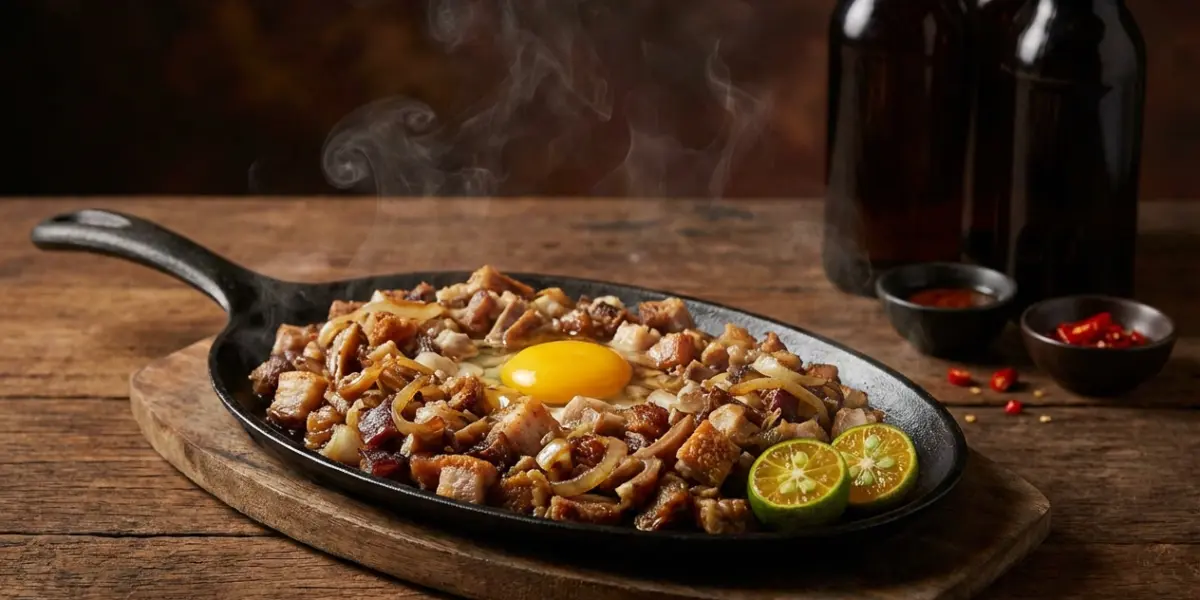
Sisig is one of the most beloved dishes in the Philippines — a sizzling, smoky, tangy pork dish served on a scorching cast iron plate. Once you taste the combination of crispy charred pork, sharp calamansi, and fiery chillies, it becomes clear why this dish has gone from a regional street food specialty to a national obsession.
What Is Sisig?
Sisig originates from Pampanga, a province in Central Luzon often called the culinary capital of the Philippines. The word ”sisig” actually predates the sizzling plate version most people know today — it originally referred to a method of preparing fruit or meat with an acidic souring agent, typically vinegar or citrus. Early records of the term appear as far back as the 17th century, when it described a salad of green papaya or guava dressed with salt and vinegar.
The modern sisig as we know it was pioneered by Lucia ”Aling Lucing” Cunanan, a cook from Angeles City, Pampanga. In the 1970s, she began sourcing pork heads from the U.S. Clark Air Base and cooking them into what would become the definitive version of the dish. Her recipe — boiling the pork, grilling it over charcoal until charred, then chopping it finely and seasoning with calamansi and chillies — became the gold standard. Aling Lucing is now widely recognised as the ”inventor” of sisig, and her original eatery in Angeles City remains a pilgrimage site for food lovers.
The sizzling plate presentation came later and added a theatrical element that helped the dish spread nationwide and eventually abroad. Traditional sisig uses pork face (maskara) and ears for their combination of soft skin, cartilage, and fat, along with chicken liver for a rich, iron-forward depth of flavour. Pork belly is commonly added or substituted in home cooking because it is far easier to source. The result is a dish with wildly contrasting textures — chewy, crispy, tender — all in the same spoonful.
Ingredients
This recipe makes enough to serve 4 people as a main dish alongside rice, or 6 as a pulutan (appetiser or drinking snack).
For the Pork
- 700g (1.5 lb) pork belly, skin on
- 300g (10 oz) pork ears (2 ears), cleaned and trimmed
- 150g (5 oz) chicken liver
- 1 tbsp whole black peppercorns
- 4 cloves garlic, crushed
- 2 bay leaves
- 1 tsp salt (for boiling water)
For the Sisig
- 1 large white onion, finely diced
- 4–5 red bird’s eye chillies (siling labuyo), thinly sliced — adjust to heat preference
- 2–3 green chillies (finger chillies or jalapeños), thinly sliced
- 3 tbsp calamansi juice (about 6–8 calamansi) — substitute with a mix of 2 tbsp lime juice and 1 tbsp lemon juice if calamansi is unavailable
- 2 tbsp soy sauce
- 1 tsp ground black pepper
- 2 tbsp neutral oil (for sautéing)
- 2 tbsp mayonnaise (optional — see Tips)
- 2 large eggs (for serving, one per plate or one for a shared platter)
- Salt to taste
How to Make Sisig
- Boil the pork. Place the pork belly, pork ears, peppercorns, crushed garlic, bay leaves, and salt in a large pot. Cover with cold water by at least 5cm (2 inches). Bring to a boil, then reduce heat and simmer for 45–55 minutes, until the pork belly is tender and the ears are soft enough to be pierced easily with a skewer. Drain and let the meat cool to room temperature, then refrigerate uncovered for at least 1 hour. Cold, dry meat will char much better on the grill.
- Cook the chicken liver. While the pork is cooling, pan-fry the chicken livers in a dry or lightly oiled skillet over medium-high heat for 2–3 minutes per side until cooked through but still slightly pink inside. Do not overcook — liver becomes grainy and bitter when overdone. Set aside to cool, then chop finely.
- Grill or broil the pork until charred. This step is non-negotiable for authentic sisig. If you have a charcoal grill, use it — the smoke adds an irreplaceable flavour. If not, use your oven’s broiler (grill setting) on maximum heat or a cast iron grill pan over high heat. Grill the pork belly and ears for 8–12 minutes per side, turning once, until the surface is deeply caramelised and charred in places. The skin of the pork belly should blister and crisp. Let rest for 5 minutes.
- Chop finely. Use a sharp heavy knife or a cleaver to chop the grilled pork belly and ears into small pieces, roughly 1cm (½ inch) in size. You want the pieces small enough to mix evenly but large enough to retain their varied textures. Keep the pieces from the ears and belly separate at first so you can assess the balance.
- Sauté the aromatics and combine. Heat the oil in a large heavy skillet or wok over high heat until smoking. Add the diced onion and cook for 2–3 minutes until softened and lightly charred at the edges. Add the chopped pork and chicken liver, toss well, and cook for another 3–4 minutes, pressing the pork against the pan occasionally to develop a little more crust. Add the soy sauce, half the calamansi juice, sliced chillies, and black pepper. Toss everything together and taste. Adjust seasoning with more calamansi, soy sauce, salt, or chilli as needed. If using mayonnaise, stir it in off the heat and fold through.
- Serve on a sizzling plate with egg. Heat a cast iron sizzling plate or heavy skillet directly on the burner until it is smoking hot — this takes 4–5 minutes on high heat. Carefully transfer the sisig onto the hot plate. Crack an egg directly onto the sizzling sisig. Bring it to the table immediately — the egg will continue cooking on the residual heat. Serve with steamed white rice and extra calamansi wedges on the side.
Tips for the Best Sisig
- The char is everything. The defining quality of great sisig is the contrast between tender interior and crispy, slightly charred exterior on the pork. Do not skip or rush the grilling step. A pale, steamed-looking piece of pork belly will produce flat, greasy sisig with no depth. You want genuine colour — deep golden brown to black at the edges.
- Refrigerate the pork before grilling. After boiling, chilling the meat uncovered in the fridge for 1–2 hours (or overnight) removes surface moisture. Dry meat chars. Wet meat steams. This single step makes a significant difference in the final texture.
- Mayonnaise is controversial — but worth understanding. Purists from Pampanga strongly object to mayonnaise in sisig, and Aling Lucing’s original recipe contains none. However, it has become widespread in Metro Manila and abroad, where it adds a creamy richness that tempers the acidity and heat. If you are making sisig for the first time, try it without mayo first to understand the base flavour, then experiment. Use Japanese mayonnaise (Kewpie) if you do add it — its slightly sweeter, more umami profile works better than standard Western mayo.
- A cast iron skillet is a fine substitute for a sizzling plate. Restaurant sisig is served on a purpose-made cast iron sizzling plate with a wooden base. At home, a well-seasoned cast iron skillet heated on the stovetop works equally well. The key is getting it genuinely hot before adding the sisig — you should hear a loud sizzle the moment the pork hits the surface.
- Calamansi makes a real difference. If you can source fresh calamansi from a Filipino or Asian grocery store, use them. The flavour is brighter and more floral than lime, with less of the bitter edge that straight lime can carry. If substituting, use a combination of lime and lemon rather than lime alone, and squeeze it over the finished dish at the table rather than cooking it in, to preserve the freshness.
Variations
Chicken Sisig
Replace the pork belly and ears with 700g (1.5 lb) of bone-in chicken thighs and drumsticks. Boil until cooked through (about 25–30 minutes), then grill over charcoal or under a hot broiler until the skin is well charred. Strip the meat off the bones, chop finely, and proceed with the recipe exactly as written. Chicken sisig is leaner and milder than the pork version, making it popular with those who want a lighter dish. Some versions add a small amount of chicken skin, crisped separately, to replicate the textural contrast of the pork ear.
Tofu Sisig
Press 400g (14 oz) of extra-firm tofu under a heavy pan for 30 minutes to remove excess moisture, then cut into small cubes. Fry in neutral oil over high heat until deeply golden and crispy on all sides — do not rush this step, as soft tofu sisig is a disappointment. Combine with the same aromatics, calamansi, soy sauce, and chillies. Tofu sisig is often made with mayonnaise to compensate for the tofu’s neutral flavour. It is a good option for vegetarians, though the absence of the grilled pork fat means the flavour profile is noticeably lighter.
Bangus (Milkfish) Sisig
Bangus sisig is particularly popular in Cavite and along Manila Bay, where milkfish farming is a major industry. Use one large whole bangus (about 800g / 1.75 lb), deboned and butterflied. Season with salt and grill whole over charcoal until the skin is crispy. Scrape the flesh off the skin, break it into flakes, and combine with the sisig aromatics. The skin can be crisped further in oil and crumbled on top as a garnish. Bangus sisig has a clean, mildly sweet flavour with none of the fattiness of pork, and it pairs particularly well with the acidity of calamansi.
What to Serve With Sisig
Sisig is traditionally served as pulutan — food meant to accompany beer or spirits — but it works equally well as a main dish over steamed white rice. In the Philippines, a plate of steaming jasmine rice alongside sisig is one of the most satisfying combinations imaginable. The rice absorbs the savoury, citrusy juices from the sizzling plate and balances the intensity of the chillies.
Beyond rice, sisig pairs well with garlic fried rice (sinangag) for a heartier meal. A simple side of sliced tomatoes with fish sauce (bagoong-style) or a quick cucumber and onion salad dressed with cane vinegar will cut through the richness and add freshness to the plate. If serving as part of a larger Filipino spread, sisig works alongside sinigang (sour tamarind soup), kare-kare (oxtail peanut stew), or a simple vegetable dish like pinakbet.
Storage and Reheating
Sisig keeps well in the refrigerator for up to 3 days in an airtight container. Store it without the egg, and without the mayo if possible — both are better added fresh. The flavours actually develop and deepen overnight, and many cooks find day-two sisig more complex than freshly made.
To reheat, the best method is in a very hot cast iron pan or wok over high heat. Spread the sisig in a single layer and let it sit undisturbed for 1–2 minutes before tossing — this allows the base to re-crisp rather than steam. Avoid the microwave if you can, as it softens the pork and drives off the aromatic compounds that make the dish fragrant. If you must microwave, do so in short 30-second bursts on medium power and finish with a squeeze of fresh calamansi to revive the brightness.
Sisig does not freeze well due to the texture of the pork ears and skin — the collagen breaks down on thawing and the pieces lose their bite. If you want to prepare ahead, you can freeze the boiled and grilled pork before it is chopped and seasoned. Thaw overnight in the fridge, then chop and continue from Step 4.